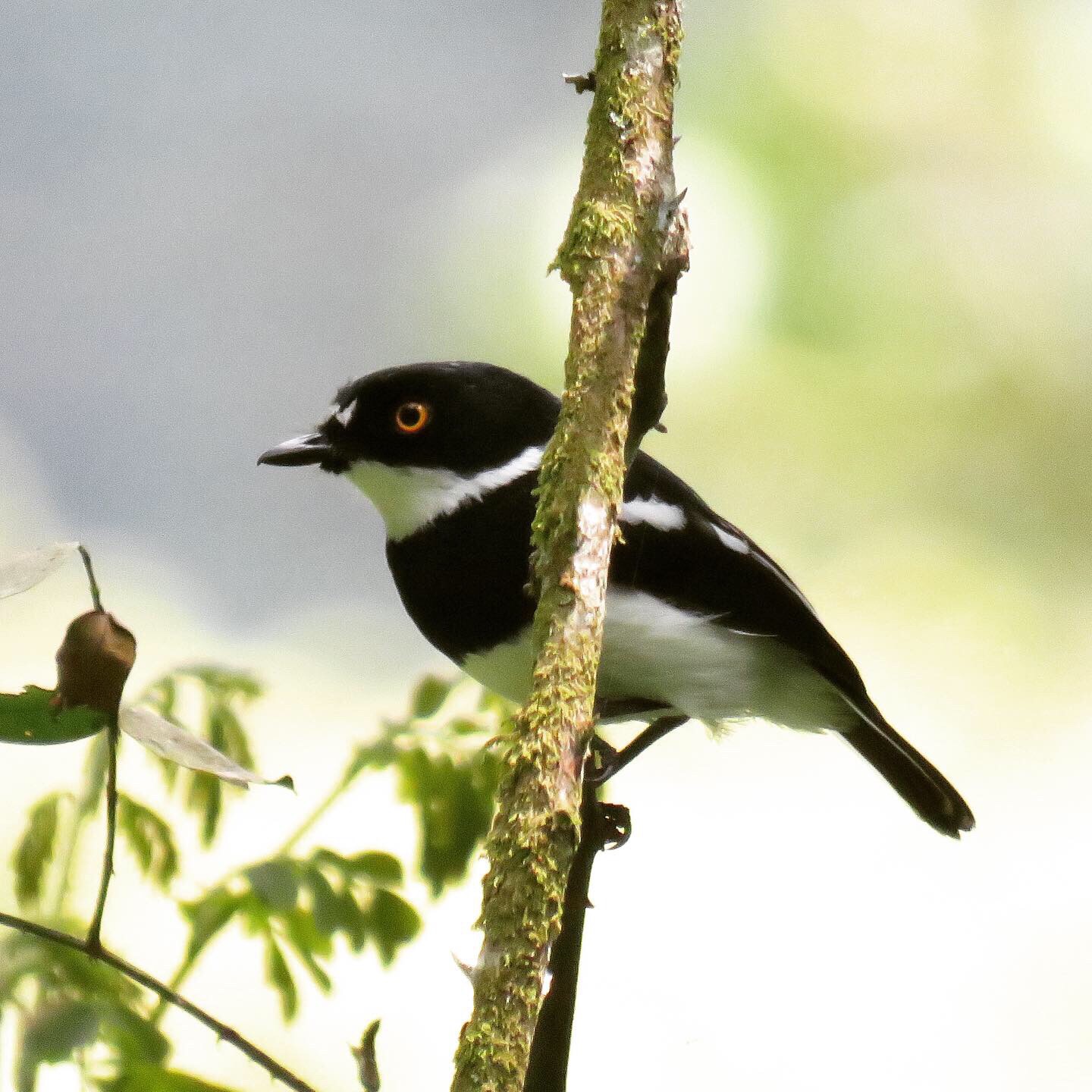
Albertine Rift endemic
Gishwati-Mukura National Park, Rwanda
Albertine Rift endemic
Gishwati-Mukura National Park, Rwanda
In Costa Rica, where tourism has been shut down and our own business interests completely on hold, I have resilience of family farms on my mind, which may seem quite a narrow focus but it is my choice, for now. Even with that narrow focus, as always I enjoy stories about this little country’s contributions to the world (click above). But Costa Rica is not the only little country doing remarkable things, it just happens to be where I live and work.
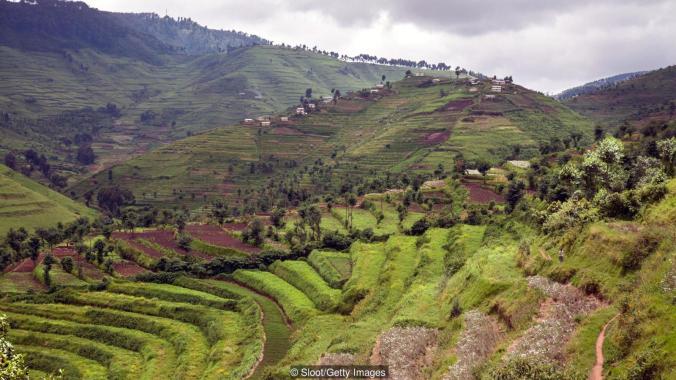
Rwanda has had experience in similar health crises, managing to successfully contain Ebola from its borders in 2019
This hunger for stories about little countries and their phenomenal achievements keeps me searching for stories to share here each day. And I just found one worth sharing. BBC’s website has a story in their travel section today on what they believe will be the five most resilient economies in terms of recovery from the current combined health and economic crisis. They use the 2019 Global Resilience Index to make some baseline inferences and then share their own expert opinion on how this would translate to recovery. I was struck that Rwanda, a country I have been musing about since Seth’s field work there last year, was in their top five:
Rwanda
We felt confident that the Rwandan government would handle the situation way better than in our home countries Continue reading
Lake Somerville State Park & Trailway, Texas
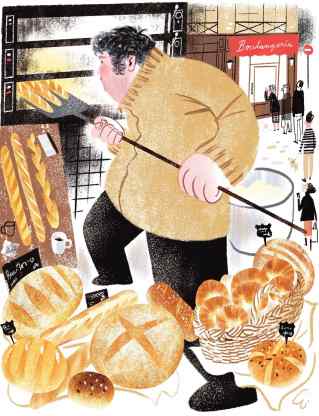
The bread from Bob’s boulangerie united a neighborhood of food fanatics. Illustration by Leo Espinosa
My first mention of Bill Buford was so brief, you might have missed it–just a link to an event he was moderating. The second was a link to his writing. And then another link to his writing. I am glad to see that he is still harvesting from his experience living in Lyon. It is a city that I have been to twice, with exceptional food memories which I will save for another time. For now I will just mention that one baker in Costa Rica has recently mastered the art of world-class bread-making, including baguette and chiabbata. During these challenging times for this country’s family farms it occurs to me, thanks to Bill Buford’s story, that ensuring the survival of this bakery is worthy of attention as well:
Baking Bread in Lyon
For a newcomer to the city, a boulangerie apprenticeship reveals a way of life.
In Lyon, an ancient but benevolent law compels bakers to take one day off a week, and so most don’t work Sundays. An exception was the one in the quartier where I lived with my family for five years, until 2013. On Sundays, the baker, Bob, worked without sleep. Late-night carousers started appearing at three in the morning to ask for a hot baguette, swaying on tiptoe at a high ventilation window by the oven room, a hand outstretched with a euro coin. By nine, a line extended down the street, and the shop, when you finally got inside, was loud from people and from music being played at high volume. Everyone shouted to be heard—the cacophonous hustle, oven doors banging, people waving and trying to get noticed, too-hot-to-touch baguettes arriving in baskets, money changing hands. Everyone left with an armful and with the same look, suspended between appetite and the prospect of an appetite satisfied. It was a lesson in the appeal of good bread—handmade, aromatically yeasty, with a just-out-of-the-oven texture of crunchy air. This was their breakfast. It completed the week. This was Sunday in Lyon. Continue reading

Vijayapur, Karnataka

‘You need to imagine a plant as a huge brain’ … the plant neurobiologist Stefano Mancuso. Photograph: Alessandro Moggi
Thanks to Amy Fleming for this book review:
The secret life of plants: how they memorise, communicate, problem solve and socialise
Stefano Mancuso studies what was once considered laughable – the intelligence and behaviour of plants. His work is contentious, he says, because it calls into question the superiority of humans
I had hoped to interview the plant neurobiologist Stefano Mancuso at his laboratory at the University of Florence. I picture it as a botanical utopia: a place where flora is respected for its awareness and intelligence; where sensitive mimosa plants can demonstrate their long memories; and where humans are invited to learn how to be a better species by observing the behaviour of our verdant fellow organisms.
But because we are both on lockdown, we Skype from our homes. Instead of meeting his clever plants, I make do with admiring a pile of cannonball-like pods from an aquatic species, on the bookshelves behind him. “They’re used for propagation,” he says. “I am always collecting seeds.”
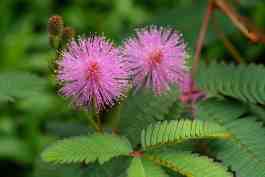
Flower power … Mancuso’s team has shown that Mimosa pudica can retain learned information for weeks. Photograph: Alamy
Before Mancuso’s lab started work in 2005, plant neurobiology was largely seen as a laughable concept. “We were interested in problems that were, until that moment, just related to animals, like intelligence and even behaviour,” he says. At the time, it was “almost forbidden” to talk about behaviour in plants. But “we study how plants are able to solve problems, how they memorise, how they communicate, how they have their social life and things like that”. Continue reading

3 month old chick
Darien, Panama
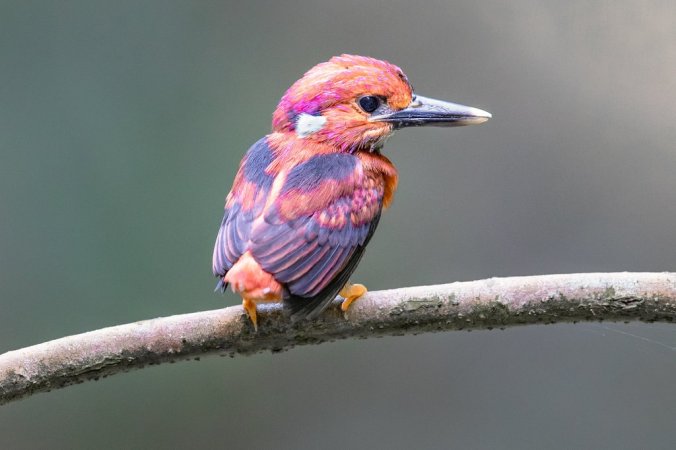
Credit…Miguel David De Leon/Robert S. Kennedy Bird Conservancy
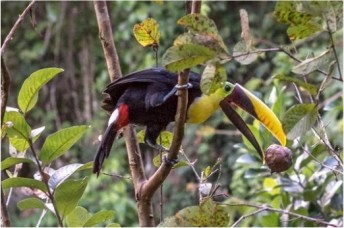 My first love of birds took shape in the Osa Peninsula of Costa Rica in the late 1990s. Toucans first, on the Drakes Bay side of the peninsula in 1997 when we had a family getaway at a lodge run by a bird-loving eco-couple. Then starting in 1999 when our company started managing lodges, on the other side of the Osa I had extended exposure to scarlet macaws, almost invariably in pairs. The love was real, and meaningful but not yet as serious as it would become. It was not until moving to India in 2010 that I seriously understood the power of birds to shape our appreciation of nature.
 I can pinpoint the day, because it was at the intersection of when Milo took this photo of an owl, and when we started the bird of the day feature, which has been a daily contribution of this platform ever since. That is about the same time that my appreciation of nature, which I had thought to be quite strong already, became as strong as it is today. And this article below reminds me of that day, not least because of the number of medical doctors who are contributors to our daily feature. My profound thanks to Cara Giaimo (again) and especially to the doctor of whose story she shares:
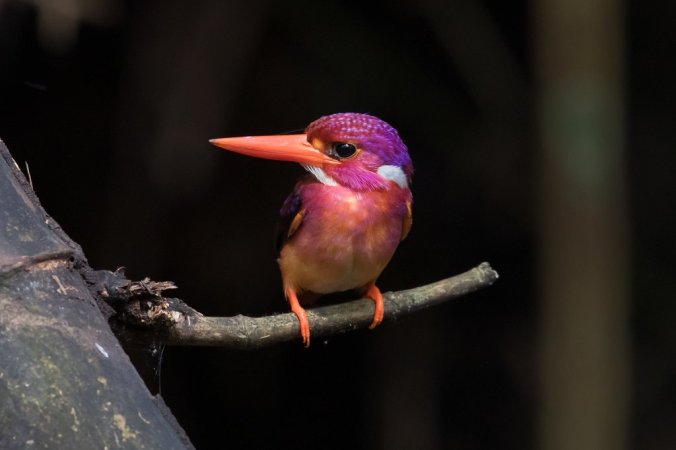
A juvenile kingfisher, with its distinctive black bill.Credit…Miguel David De Leon/Robert S. Kennedy Bird Conservancy
How an Eye Surgeon Got a Picture of This Rare Pastel Bird
The elusive South Philippine dwarf kingfisher is difficult to photograph, and there were no known photographs of its fledglings.
On March 11, Dr. Miguel David De Leon — a vitreoretinal surgeon in Mindanao, the southern island of the Philippines — worked a full morning at the medical center.When he got home, “I was exhausted,” he said.But he pulled it together, lugged his camera an hour uphill and clambered into his bird hide. Continue reading
male
Darien, Panama

Trey Hill on his farm in Rock Hall, Maryland. MICHELLE FRANKFURTER/FERN
Gabriel Popkin came to my attention twice when I was based in Belize, and had an obsession with Mayan foodways that led to a year of thinking about how to commercialize brosimum alicastrum in the USA. That seemed to have been in vain, except here we are on the trail again. Gabriel Popkin came to my attention a third time in 2017 and then I did not see any of his work again until today. It is good to see it again:
Can ‘Carbon Smart’ Farming Play a Key Role in the Climate Fight?
Markets are emerging to pay farmers to store more carbon in the soil by using improved agricultural practices. But flows of greenhouse gases into and out of soil are complex, and some scientists are questioning whether these efforts will actually help slow global warming.
Trey Hill shows off the carbon-rich soil under his crops. GABRIEL POPKIN/FERN AND E360
Trey Hill led a small group of fellow farmers to a field outside his office in Rock Hall on Maryland’s Eastern Shore. It was a cloudy February day, but the ground was alive with color — purple and red turnip tops mixing exuberantly with green rye, vetch and clover, and beneath it all, rich brown soil. Hill reached down, yanked a long, thick, white daikon radish from the earth and showed his visitors sumptuous coffee-colored clods clinging to hairy rootlets. Those clumps, he explained, hoard carbon — carbon that’s not heating the planet. Continue reading

Outskirts of Boise, Idaho

Strawberries at Greens Berry farm in Wexford, Ireland. Photograph: John Greene
With farmers on our mind, recently, and especially the ability of family farms to get harvesting and distribution done we are watching for stories like this:
Farmers across Europe bank on improvised armies of pickers to save harvest
Growers from Ireland to Spain says coronavirus lockdown has stopped migrant workers from arriving
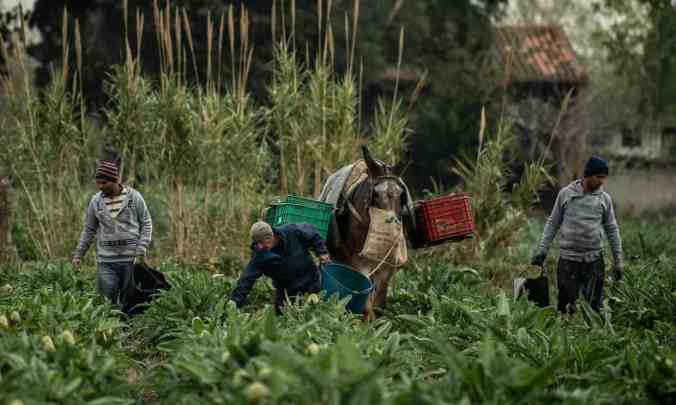
Workers on a farm at El Prat del Llobregat, near Barcelona, harvest artichokes in March. Photograph: David Ramos/Getty Images
At this time of year John Greene is usually preparing to welcome dozens of Slovakian strawberry pickers for another harvest at his farm in County Wexford in south-east Ireland.
The work is arduous and repetitive and he relies on their experience and stamina to get the fruit picked, packed and sold.
Greene surveyed his fields this week with foreboding. “I look out my window and there’s no one to pick it. None of them are on site at the moment.”
His pickers remain in Slovakia, immobilised by a continent-wide lockdown. It is a similar story for hundreds of thousands of other seasonal agricultural workers who cannot travel just at a time when Europe needs them for harvests. Continue reading

Bijapur, Karnataka
Davis Huber
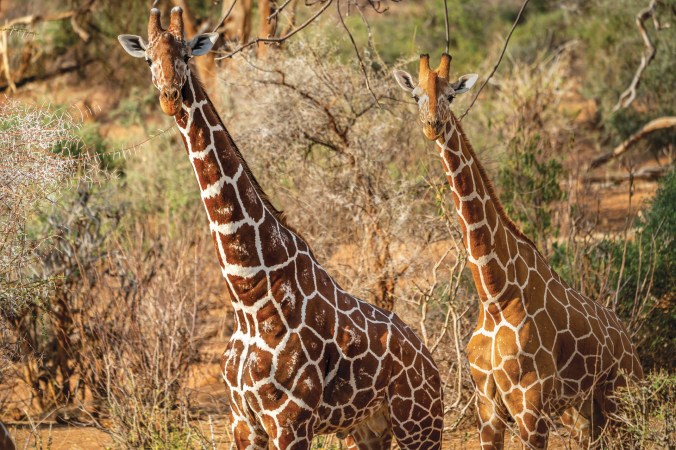
A little over seven years ago the great science writer Ed Yong first came to my attention, and he has featured dozens of times in these pages ever since, never failing to enlighten me. When I saw his recent work on giraffes in the Atlantic I neglected to post it here, but I am correcting that now. It is important work, and I now know he has taken leave from his book-writing assignment from which that story is derived. He has taken leave so he can explain to us something much more pressing. I learned that in his conversation here:

I recommend listening to him talk about reporting his most recent work, which he says is the most important work he has done to date.
Karnataka

Bailey Miller, a postdoctoral researcher at the University of Utah, dived off the Research Vessel E.O. Wilson to explore an ancient underwater cypress forest in the Gulf of Mexico off of Dauphin Island, Ala.
Thanks to JoAnna Klein, who now more than ever is appreciated for the reminder of the wonders of natural history:
A Forest Submerged 60,000 Years Ago Could Save Your Life One Day
Before this underwater forest disappears, scientists recently raced to search for shipworms and other sea life that might conceal medicine of the future.
An ancient log, home to shipworms, which may help researchers discover new medicines.
DAUPHIN ISLAND, Ala. — It was 6 a.m. at the dock on a Tuesday in December, and the weather did not look promising. Fog hovered over the water, and the engine of the Research Vessel E.O. Wilson rumbled.
Our ship disappeared into the mist, and by 7:30 the crew, a team of biologists, chemists and microbiologists, reached its destination. The sun lounged on obsidian water, masking a secret world where land and sea swap places, and past, present and future collide.
This is the underwater forest. Its unusual residents, shipworms and related marine organisms, could serve as incubators of unexpected medicines, churning out new lifesaving formulas and compounds that may not be found anywhere else on the planet. But first the group of scientists had to manage to dive 60 feet beneath the ocean’s surface to recover their unusual subjects, a task made more challenging by three days of uncooperative weather.
Another log recovered from the underwater forest.
“Underwater forest” is not a metaphor — this is a not a coral reef or a sea grass bed that resembles surface woodlands but bona fide trees with roots and leaves. For thousands of years, this cypress grove — about two football fields long and five feet wide — lay silent, preserved within an oxygen-less tomb of sand and sediment. Then came Ivan.
In 2004, the hurricane, category 5 before making landfall, ripped through the Gulf of Mexico, with winds up to 140 miles per hour kicking up 90-foot waves. The storm scooped up nearly 10 feet of sand from the seabed, awakening the sleeping forest beneath. Continue reading
female – Dunwoody, GA
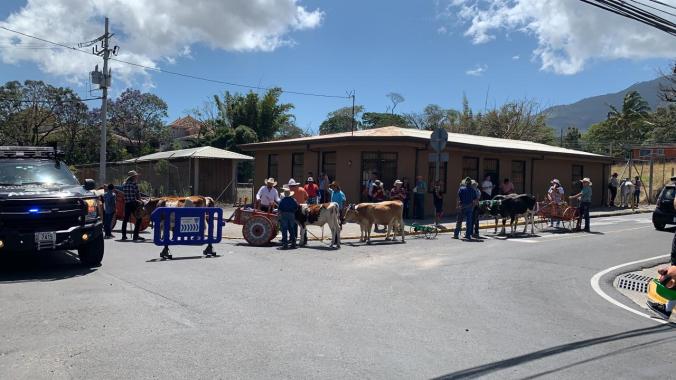
March 8, 2020 will remain a memorable date for me. I was walking down the mountain to pick up something from the store, and I came upon this gathering close the location where the feria happens in Escazu.
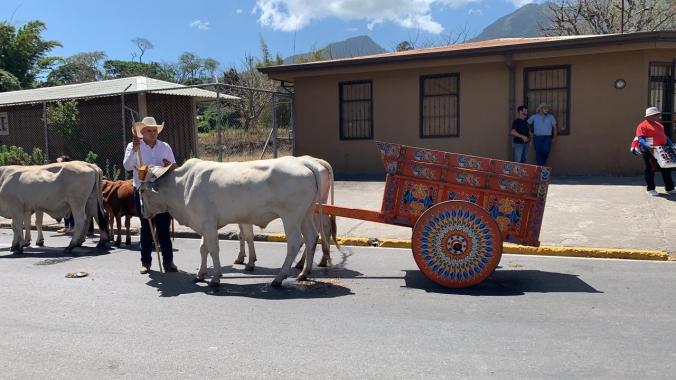
It will remain memorable because I was aware of the growing crisis in other parts of the world, but at this moment did not yet see it in perspective. Nor, on this lovely morning, did I have reason yet to think about family farms the way I am thinking about them today.
Uttarakhand
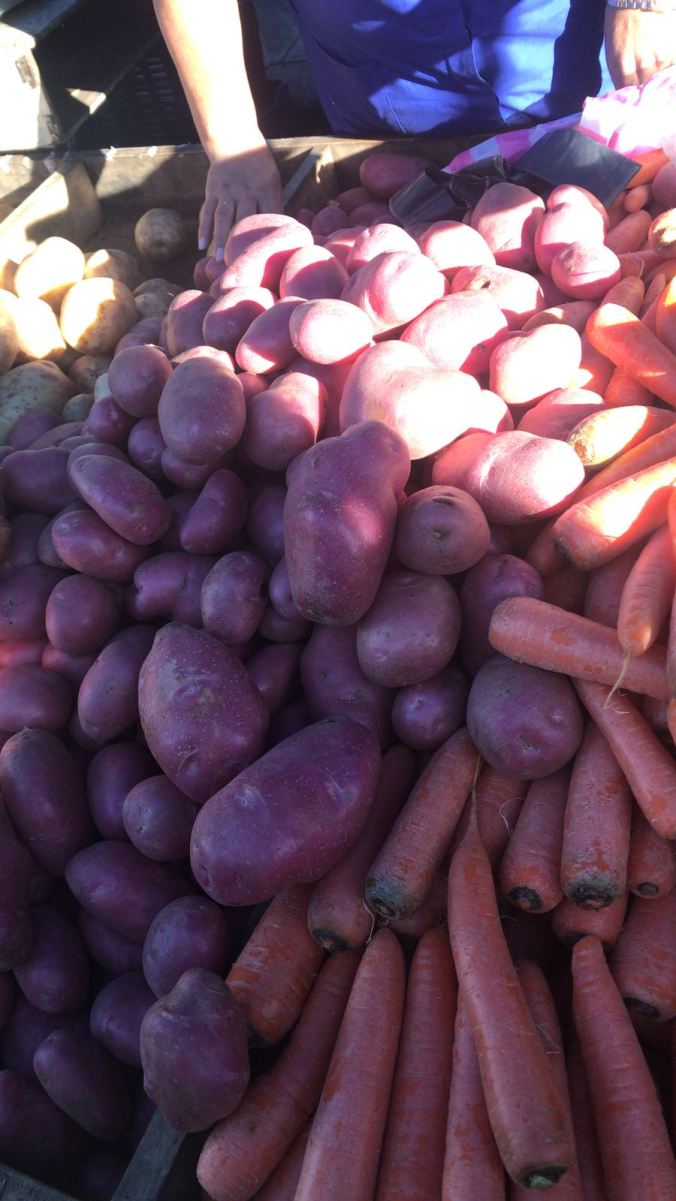
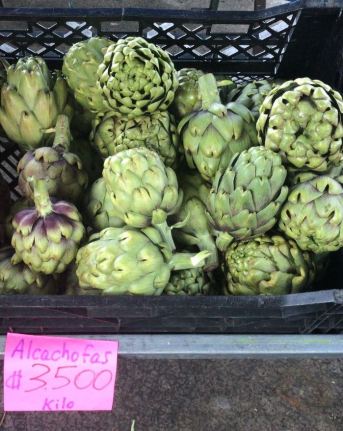 Since the 1990s, when we moved to the town of Escazú in Costa Rica’s Central Valley, every Saturday morning begins at the farmer’s market, locally known as a feria. A rustic, informal gathering when we started shopping there, with little variety to select from, we bought basics like carrots and potatoes back then. We moved to India in 2010 and when we returned to Costa Rica in 2018 and resumed this Saturday ritual, we discovered what is now a remarkably wide selection of fruits and vegetables, dairy products and freshly roasted coffees, meats and fish, as well as handicrafts. Artichokes were our happiest surprise.
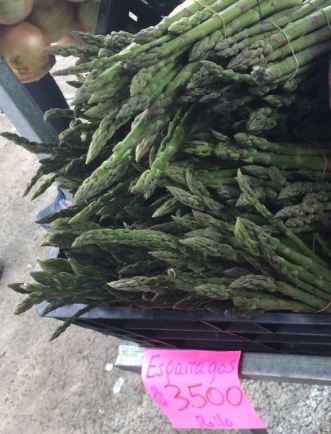 Asparagus is a close second. There is a vermiculturist who sells compost, and she also offers the service of bringing worms to your garden to set up a home garden composting system. There are families who we have known these two decades whose kids have taken over the farm, and the market responsibilities.
The farmer’s market in Ithaca, NY–our family’s benchmark when we arrived in Costa Rica, was more festive than the experience in Escazú’s feria. Later, we came to enjoy the elegance of our neighborhood marché in Paris. Likewise, while living on the island of Kalamota, our Saturday ritual was a ferry ride to Dubrovnik harbor where we would shop for the week at the excellent poljoprivredno tržište, a farmer’s market that in addition to fresh fruits and vegetables introduced us to ajvar (roasted sweet pepper salsa), walnut liqueur, and other Croatian delicacies. My memory of the farmer’s market in India where we shopped for nearly seven years is for some reason dominated by bananas.
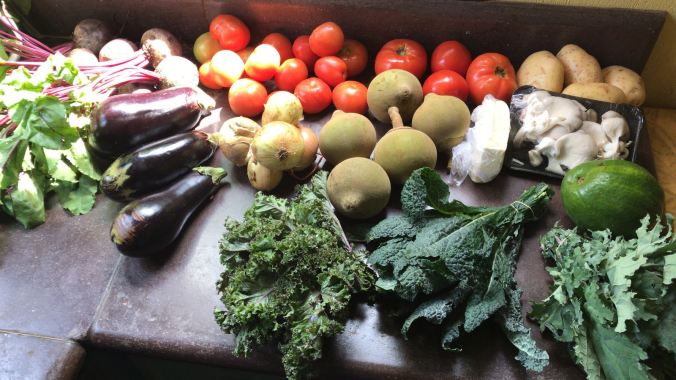
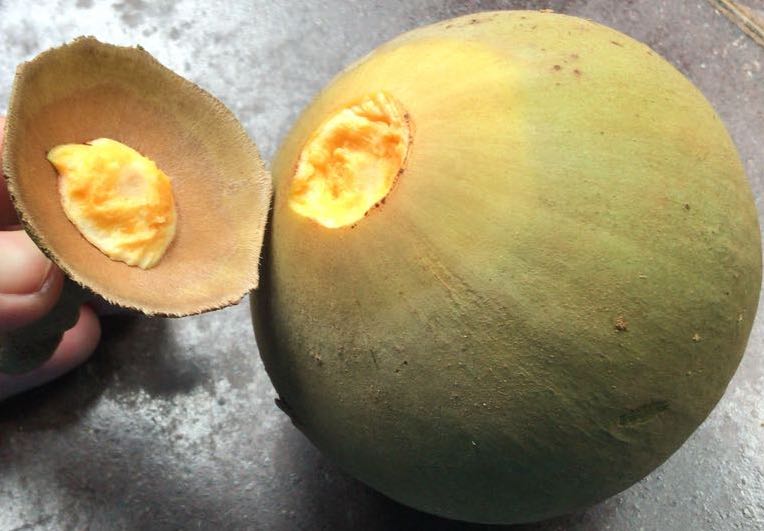 Now in Escazú’s feria we regularly find oyster mushrooms, two varieties of eggplant, three varieties of kale, and four varieties of avocado, not to mention this fruit that is unlike any I have seen or tasted anywhere else that we have lived or traveled. The farmer who offered it to me earlier this month explained how to open and eat it. He wanted to gift me some to take home to try, and buy the following week if I liked it. Instead, I told him I liked the sample, bought a few and suggested I would find him next week if the ones I bought did not taste as good. He laughed and we settled for that. For all their differences, Escazú’s feria does what the Ithaca, Paris, Dubrovnik and Kochi farmer’s markets do besides providing fresh produce: allow townspeople to know the farmer’s who grow their food.
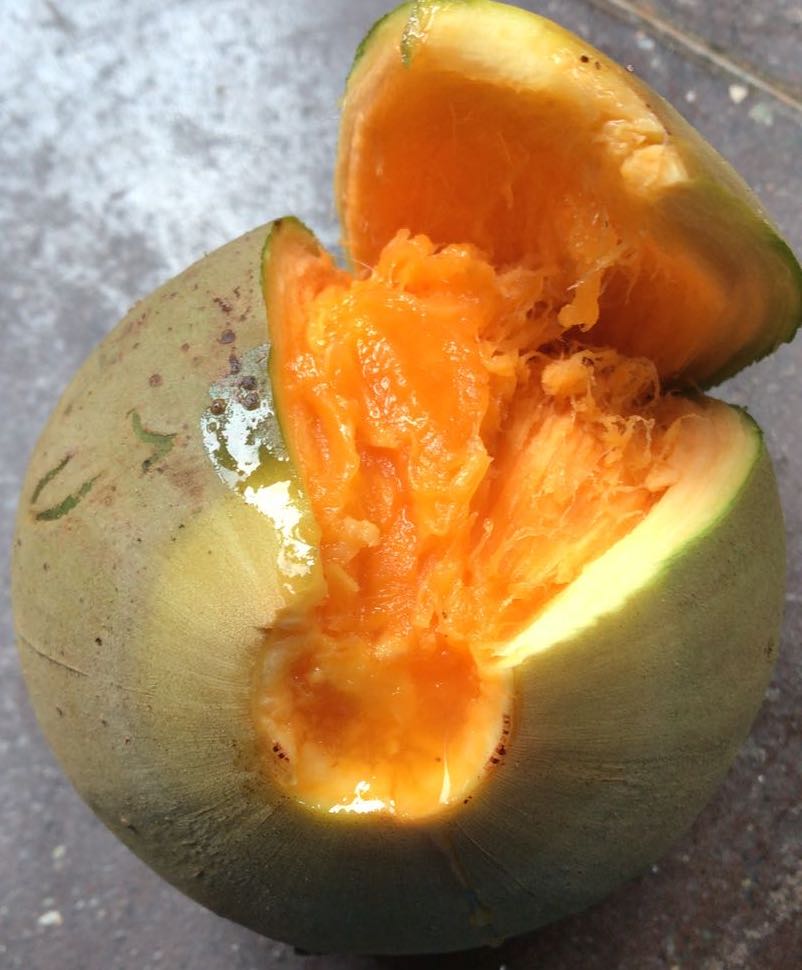 That has been on my mind since nine days ago, when we decided that we would not shop in this crowded space, even if it remains open. I realized that it is likely to close the way many places are being forced to close currently, in part because it is a confined space and also because it is a cash economy, neither of which will help flatten the curve the way this country is working so hard (and so far, relatively effectively) to do.
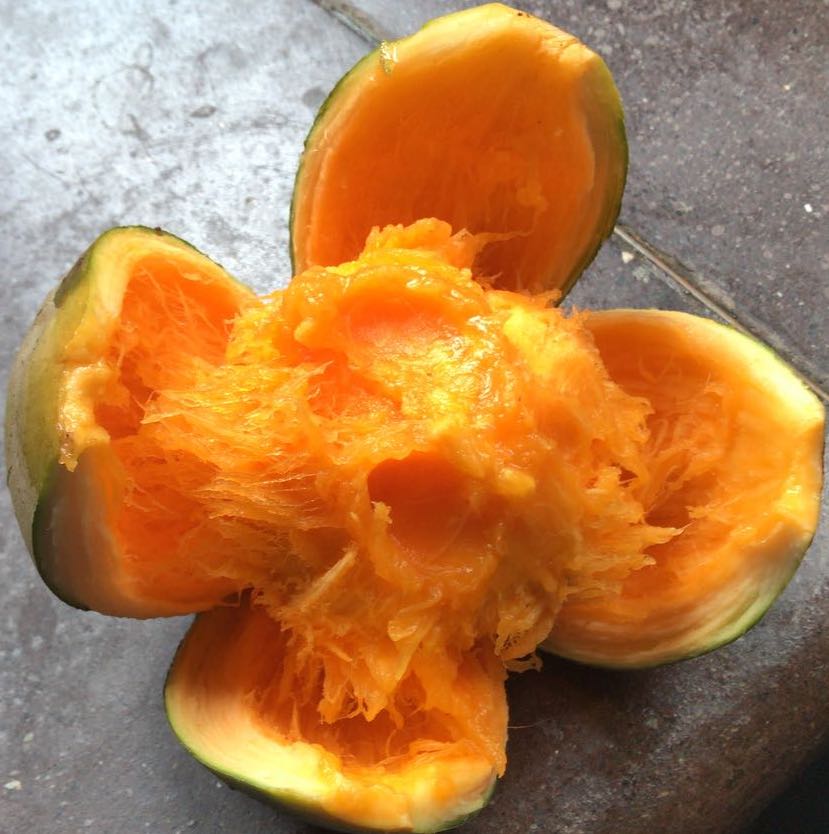 But on my mind is not how I will miss the produce and the experience so much as wondering what I personally might do to ensure that the families whose farms depend on the feria make it through the next months. It occurs to me that the Community Supported Agriculture model gives farmers in the USA an alternative to these markets. One my sister is a member of in Atlanta is an example of a successful CSA. I have started imagining a social enterprise, limited in time and scope for this exact purpose: a 6-month single-purpose business that will receive the produce of these farmers, clean it and distribute it to homes that have always shopped at these ferias, and especially those who can afford to pay for the service, in the interest of supporting the family farms who serve the ferias of the Central Valley. My recent business interests, which I have enjoyed sharing about in these pages are anyway going to be on hold. April 1 to September 30, 2020 maybe I will be on a new mission.


 Organikos