Creative Canine Collaboration

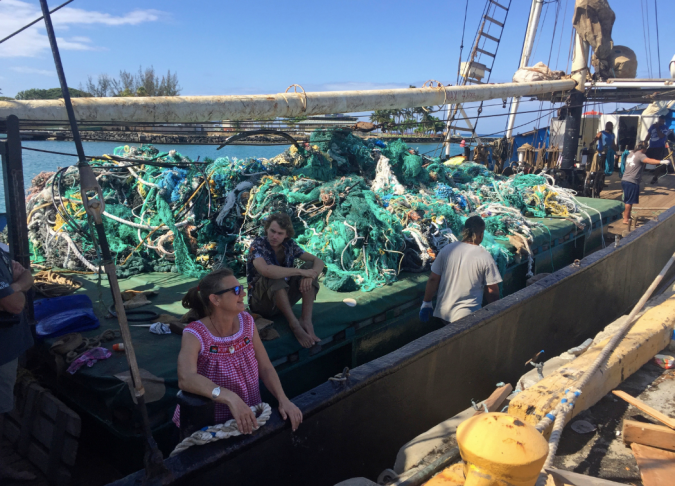
A team of specially-trained hunting dogs has been helping conservationists and researchers find rare turtles in Iowa. KATE PAYNE/IPR

Thanks to Iowa Public Radio for some good conservation news from the Heart Land.

Specially Trained Dogs Help Conservationists Find Rare Iowa Turtles

An eastern Iowa conservation group is taking an unconventional approach to tracking rare turtles on its land. Iowa Public Radio tagged along with a man who’s trained his hunting dogs to find the reptiles for researchers. Counting the creatures will help conservationists manage the land better.

It’s a cool morning on a nature preserve owned by Bur Oak Land Trust in Johnson County. I’m scouring a shady hillside with John Rucker and his four Boykin spaniels, looking for turtles.

“Find turtle, find turtle,” Rucker calls to his dogs. He turns to me and says, “did I tell you I’m the only person in the world that does this?”

When he’s not living off the grid in rural Montana, Rucker travels the country with his specially-trained hunting dogs, helping scientists and conservationists find turtles.

“This is Rooster,” John says, introducing the dogs. “This is Jenny Wren. She’s the one that gives me my litters. And that’s Mink. No, that’s Jaybird, and that’s Mink.”

We make our way through the undergrowth, checking in brush piles and under old logs. When the dogs find a turtle, they’ll pick it up and bring it back to be counted.

“You will notice that as soon as they strike a scent trail their tails will start wagging furiously, and then their whole demeanor becomes extremely excitable,” Rucker explains.

Citizen conservationist Judy Felder is one of the volunteers out hunting today.

“It’s sort of like a religion for me,” Felder says. “Nature is important and somebody has to defend it, protect it, preserve it.” Continue reading

Collective Action’s Pre-historic Remains

lead_720_405 (8)

Nobuaki Mizumoto first saw this fossil at the dinosaur museum in his hometown. MIZUMOTO / PROCEEDINGS OF THE ROYAL SOCIETY B

Collective action, mentioned in the title of a 2011 post on this platform and many times since, is a concept puzzling enough in the here and now. Or in the case of my doctoral dissertation, the recent past.

An Incredible Fossil Contains a Whole School of 259 Fish

How did they all die at once?

In 2016, Nobuaki Mizumoto was visiting the dinosaur museum in his hometown of Katsuyama, Japan, when he came across an unexpected display—not of a dinosaur, but of a school of fish. It was embedded in limestone shale and exhibited in a corner with no particular fanfare. Yet the 50-million-year-old fossil was clearly extraordinary: 259 tiny fish bodies with eyes and spines and even fins. All but a few faced the same direction, as if frozen mid-swim.

Mizumoto does not specialize in fish or fossils, but he does study the collective behavior of termites at Arizona State University. He became intrigued by the idea that this fish fossil showed collective behavior, too. When fish form schools, they have to coordinate their swimming, staying together without crashing into one another. Continue reading

Climate Change Demands Political Change

Inslee-announcement_AP_19060695481892_web.jpg

Inslee announcing his run for the Democratic presidential nomination on March 1 at a solar panel installation company in Seattle. AP PHOTO/TED S. WARREN

We have been diligent, if not perfect, about keeping politics off this platform. For anyone who takes climate change seriously, and who understands how important the USA is to the future of the planet due to its outsized carbon footprint as well as its historic geopolitical influence, that is a tough constraint. But this interview is a must read, thanks to one of our favorite climate conversationalists:

Tackling Climate Change? Governor Jay Inslee Has a Plan for That

Jay Inslee has made climate change the centerpiece of his campaign for the Democratic nomination for president. In an e360 interview, the Washington governor talks about why a full-scale national mobilization is needed to address what he calls an “existential crisis.”

Jay Inslee is often called the “climate change candidate.” The two-term governor of Washington state launched his presidential campaign in March at a solar panel installation company in Seattle. He said he was joining the crowded field of Democratic candidates because “we are the first generation to feel the sting of climate change, and we are the last generation that can do something about it.”

Inslee has since unveiled two major climate change proposals. One would require“zero-emission” electricity generation across the U.S. by 2035. The other calls for the federal government to invest $3 trillion over a decade to upgrade buildings, create “climate-smart infrastructure,” encourage “clean manufacturing,” and research “next-generation” energy technologies. Representative Alexandria Ocasio-Cortez, of New York, one of the authors of the Green New Deal, recently tweeted that Inslee’s plans were “the most serious + comprehensive” of any of the candidate’s. Continue reading

Rewilding in an Unexpected Landscape

Elk are the most common mammals at the reserve. Photograph: Valery Yurko

Most examples of rewilding are defined as human intervention to return wildlife back into habitats where they’ve long disappeared. Thanks to the Guardian for this highly unusual one where the human population are the ones who have left – due to bizarre circumstances, to be sure – and the wildlife have slowly returned to reclaim the habitats left behind.

It’s heartening to believe that the animals may illustrate Nature’s power to heal where human’s have so severely faltered.

Chernobyl: the wildlife haven created when people left

Rare and endangered animals have thrived in the Chernobyl disaster zone since it was evacuated in 1986, as a new wildlife tour in southern Belarus shows

It is 5.30am in southern Belarus. A pink moon hangs over flat fields tinged with frost, and as we arrive at the checkpoint on the edge of the Chernobyl Exclusion Zone, five hours’ drive south of the capital, Minsk, a dawn chorus of cranes and hoopoes is in full swing.

This may seem an unlikely place to come wildlife watching, but I’m here with the first eco-tour of the Palieski state radioecological reserve (as the Belarusian section of the zone is called).

It was in April 1986 that probably the world’s worst nuclear accident happened, just over the border in northern Ukraine – a dramatisation of the disaster is currently showing on Sky Atlantic. Chernobyl town was evacuated and the exclusion zone today covers 2,600 sq km in Ukraine and 2,100 sq km in Belarus.

Ukraine turned its part of the zone into a tourist attraction several years ago – 50,000 people visited the nuclear reactor and ghost town of Pripyat last year, and it has even hosted a rave. But Belarus didn’t open its Palieski reserve to visitors until last December.

The Ukrainian site is now popular for its eerie ghost town and reactor ruins, but on this side of the border it’s all about the wilderness, and our tour will be a nature-watching trip like no other. The reserve claims to be Europe’s largest experiment in rewilding, and the unlikely beneficiaries of nuclear disaster have been the wolves, bison and bears that now roam the depopulated landscape, and the 231 (of the country’s 334) bird species that can also be found here. Continue reading

Rwanda, Third Message

Rw3a.jpeg

The image above was taken after the last giraffe photo, but I do not know where. Today Seth sent more photos after he and his colleagues hiked up, through a national park, to the upper reaches of a volcano.

Rw3b.jpeg

Hiked to the summit of Visoke volcano in the national park, the toughest hike I’ve done just for elevation (got up to 3711 meters asl) through the wettest slush mud

Seth is plenty verbal. But under these circumstance I appreciated the parsimony of words in his message accompanying the photos. I have been at that altitude and it does not encourage chit chat.

Rw3c.jpeg

We have lived and worked in beautiful places; again, all I can say is I look forward to Ghana.

Rw3d.jpeg

And again, my favorite image is not the one I would have expected.

Bees, Conservation & Otherworldy Honey

28tupelo6-jumbo.jpg

In the well-kept hives tended by beekeeper Fred Merriam in Georgia, every bee has a job to do. Credit Stephen B. Morton for The New York Times

Kim Severson last caught my attention about a year ago. She covers food culture for the New York Times, and this is the fifth time we have found a story of hers a perfect fit for our platform’s themes. Food intersecting with conservation is always welcome, and honey specifically is on my mind these days. Honey bees? Always of interest. During our transition from India back to Costa Rica over the last two years we spent much of our time in Atlanta. The honey in this story was available in the farmer’s market we shopped at, and we occasionally indulged. I am gratified to learn more about it here:

On the Trail of Tupelo Honey, Liquid Gold From the Swamps

Hurricanes, blights and encroaching development have cut into the harvest in Florida and Georgia, but a small cadre of beekeepers still fiercely pursues this lucrative prize.

merlin_154619529_3adf4217-2fb6-45e2-9622-c088f0e9668e-jumbo.jpg

Tupelo trees, which produce small, nectar-filled light green and white flowers for two weeks each spring, rise out of swamps in the Altamaha River Basin in southeastern Georgia. Credit Stephen B. Morton for The New York Times

ODUM, Ga. — The most expensive honey in America starts in these mucky Southern swamps, where white Ogeechee tupelo trees twist up out of water so dark you can’t tell if that was an alligator or a snake that just broke the surface.

merlin_154619466_43169437-afce-47a8-b91e-64cb3cfb39b0-superJumbo.jpg

Tupelo honey fresh from the comb has a distinctive light green tint. Credit Stephen B. Morton for The New York Times

For two precious weeks each spring in this slice of southeastern Georgia and in the Florida Panhandle, tupelo trees bloom with pale, fragile flowers that look like pompoms for tiny cheerleaders. Beekeepers tuck their hives along the banks, or occasionally float them out into the water on rafts. Then the bees get to work, making honey that looks and tastes like no other.

Good tupelo will glow with a light green tint, especially when it’s fresh from the comb and bathed in sunlight. The first taste is of cinnamon with a tingle of anise. That gives way to a whisper of jasmine and something citrusy — tangerine rind, maybe? The honey is so soft, light and buttery that the only logical move is to chase it with another spoonful. Continue reading

Rwandan Charismatic Megafauna (& Honey)

RwElephant.jpeg

Seth sent a few more messages, in the form of images, from Rwanda. One day soon I will describe what he is doing there, but for now the images say more than enough.

RwGiraffe.jpeg

While elephants are a childhood favorite animal for Seth, he had seen Asian elephants in the wild, so that probably made seeing giraffe the charismatic topper so far.

RwZebra.jpeg

Once zebra is added to the list of species seen, it might start feeling like all is well in the wild (even if we know it is not).

RwBuck.jpeg

Waterbuck with African Fish-Eagle

One of the few photos that had any words to explain was this one, which is to be expected of a birder in the realm of charismatic megafauna.

RwHoney1.jpeg

But of all the photos, the one that caught my eye was the one above, which I do not yet have an explanation for but it is in surrounded by the following photos which put it in some context.

RwHoney2.jpeg

That gives a hint.

RwHoney3.jpeg

This answers the question.

RwHoney4.jpeg

And this makes it crystal clear. Seth had already sent an image from an earlier field visit that he knew would catch my attention.

RwHoney5.jpeg

The origins of Organikos can be traced to a project I led in 2005 in Paraguay, where I had the idea that wild-hunted honey from the Pantanal region could share the taste of place with the world while at the same time providing much-needed cash infusion to the honey hunters and the protection of their wilderness areas. Seth knows that story and knows to send me photos of honey from wild places as a polite indication that the idea was a good one, if not original.

RwHoney6.jpeg

Everglades & Birds & Signals

macstone-4579.jpg

Wood Storks nesting in the Everglades. Photo: Mac Stone

Thanks to By Andy McGlashen, the Associate Editor of Audubon Magazine, for this bright spot on the horizon, a signal that long shot comebacks are possible:

Last Year’s Everglades Breeding Bonanza Was the Biggest in More Than 80 Years

An official report says that South Florida’s wading birds had an even better 2018 than we thought.

macstone-3430.jpg

Wood Storks in the Everglades. Photo: Mac Stone

A year ago, Everglades scientists and environmentalists were ecstatic about what looked like a blockbuster breeding season for South Florida’s wading birds. Turns out, it was far better than those early estimates indicated. New data show that the region hosted its biggest colonies of waders in more than 80 years, offering a flashback to the historical Everglades and a glimpse of how the ecosystem again could look once restored.

All told, wading birds built 138,834 nests throughout South Florida, with 122,571 of them in the Everglades, according to an annual report released last week by the South Florida Water Management District. That’s about three and a half times the average for the past 10 years, making it the strongest nesting season since before the region’s hydrology was transformed with engineering projects that made development possible but also contributed to steep declines in wading bird numbers. Continue reading

Weavers at Hand

This video expresses the concept of artisan ethos in almost too many ways to count: from the centuries old traditions of weaving in India , to creative communities coming together to rebuild cultural patrimony in the face of natural disasters, not to mention the well-crafted visual storytelling of the piece itself. (Kudos yet again to Anoodha and her Curiouser team for their own style of weaving.) Continue reading

Supporting The Climate Strikers

Strike350.jpg

McKibben-ClimateStrike.jpg

Young people have used strikes to call attention to the climate disaster. Now they’ve challenged adults to do the same.Photograph by Jane Barlow / Getty

Bill MkKibben makes the case that It’s Not Entirely Up to School Students to Save the World:

…What all of these people have in common is a strong sense that business as usual has become the problem, and that it needs to be interrupted, if only for a day. The climate crisis is a perplexing one because, mostly, we just get up each day and do what we did the day before, as if an enormous emergency weren’t unfolding around us. That hasn’t been true of past crises: during the Second World War, oceans may have separated American civilians from the fighting, but every day they were aware of the need to change their ways of life: to conserve resources, buy bonds, black out their windows at night if they lived on the coast.

The climate emergency, however, is deceptive. Unless it’s your town that day that’s being hit by wildfire or a flood, it’s easy to let the day’s more pressing news take precedence. It can be hard to remember that climate change underlies so many daily injustices, from the forced migration of refugees to the spread of disease. Indeed, the people who suffer the most are usually those on the periphery—the iron law of climate change is that the less you did to cause it the more you suffer from it. So we focus on the latest Presidential tweet or trade war instead of on the latest incremental rise in carbon dioxide, even though that, in the end, is the far more critical news.

A one-day work stoppage—a decision to spend a day demanding action from governments or building a bike path—is a way to break out of that bad habit…

He is promoting the idea that all of us should get involved now, and there are some useful guidelines for how to do so:

Strike.jpg

School strikers are calling on everyone: young people, parents, workers, and all concerned citizens to join massive climate strikes and a week of actions starting on September 20.

People all over the world will use their power to stop “business as usual” in the face of the climate emergency. We will join young people in the streets to demand an end to the age of fossil fuels and emergency action to avoid climate breakdown.