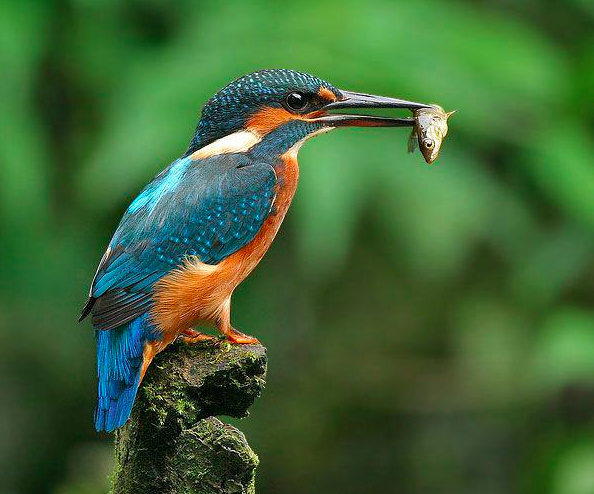
male – Uttarakhand
A Summer in Rwanda
I’ve already been here a month, and Crist has shared some of my photos from brief missives that I’ve sent home, so I am overdue for an explanation of what I’m doing in Rwanda this summer.

A view from the Nyamirambo neighborhood of Kigali
At first I was in the country with four classmates from the Yale School of Forestry and Environmental Studies (FES) and our professor, Dr. Amy Vedder, who started working in Rwanda back in the late seventies, studying mountain gorillas in Volcanoes National Park and, with her husband Dr. Bill Weber, helped set up the tourism program that has now become the cornerstone of the country’s economy. The six of us were participating in the Rwanda Study Tour, an opportunity for five Yale FES students to learn about conservation as practiced in this tiny nation of twelve million people.
Bird of the Day: Cachar Wedge-billed Babbler
Cyprus & the Right Side of Conservation

Lionfish, armed with venomous dorsal spines that enable them to deter predators, are more normally associated with warm tropical waters. Photograph: Arno Enzerink /www.stockphotogr/Arno Enzerink
After writing about some of Cyprus’ environmentally destructive actions, it feels good to hear about these positive organized efforts to eradicate this marine threat. Lionfish have long been on our radar, but this is the first we’ve heard of their spread through European waters.
Perhaps a new venue for eradication idea exchange is in order!
Cyprus begins lionfish cull to tackle threat to Mediterranean ecosystem
Cyprus has held its first organised cull of lionfish after numbers of the invasive species have proliferated in recent years, threatening the Mediterranean ecosystem and posing a venomous danger to humans.
“They’re actually very placid,” said Prof Jason Hall-Spencer, a marine biologist, after spearing 16 of the exotic specimens in the space of 40 minutes in the inaugural “lionfish removal derby” off the island’s southern coast. He added: “The problem is they are not part of the natural ecosystem and we are seeing them in plague proportions.”
Lionfish, armed with venomous dorsal spines that enable them to deter predators, are more normally associated with warm tropical waters of the South Pacific and Indian Ocean. Almost two decades ago the non-native tropical fish began to enter US waters, appearing in the Atlantic after pet owners started releasing outsized lionfish from home aquariums into the sea. Now they have reached Europe. In 2012, after initial sightings off Turkey, Israel and Lebanon, they were spotted off Cyprus. Three years later they had appeared further south in Greece, Italy and Tunisia, testimony, scientists say, to their ability to both enter new territories and spawn at record rates.
As numbers proliferate, so have fears of the flamboyantly coloured fish posing the biggest ecological setback to ecosystems in the Mediterranean – which is already under pressure from pollution, tourism and over-exploitation. In the EU, Cyprus has become “the first line of defence” against the lionfish invasion. Continue reading
Bird of the Day: Red-tailed Hawk
Loess Bluffs National Wildlife Refuge, MO
Reduce Is Best Because Recycle Is Costly & Re-Use Is The Next Big Thing

Starbucks at South Terminal, Gatwick. The scheme is being launched by Starbucks and environmental charity Hubbub. Photograph: Zute Lightfoot
We have been using this cup since early 2017, and it really should have replaced the paper cup by now. But slow as the pace is, we are happy to read the news of this experiment and wish it well:
Gatwick hosts UK’s first airport reusable coffee cup trial
Customers buying coffee from South Terminal Starbucks will be able to borrow free refillable cup
A sign will remind passengers to return their cup before they board a flight
The UK’s first airport reusable coffee cup trial gets under way this week at Gatwick, offering passengers the opportunity to borrow and return refillable cups in a bid to help cut waste and tackle “throwaway” culture.
Customers buying hot takeaway drinks from Starbucks will have the option to borrow a free reusable cup instead of using a paper cup, which they can then drop off at a designated point before boarding their flight.
The trial – starting on Monday in Gatwick’s South Terminal – will help customers reduce their disposable cup usage in a manageable “closed loop” environment that could be used in any travel hub. The scheme is being launched by Starbucks in partnership with the environmental charity Hubbub with support from Gatwick, the UK’s second largest airport. Continue reading
Bird of the Day: Chestnut Teal

Sydney, New South Wales, Australia
Free The Seed
Today, just four giant companies control more than 60 percent of all the world’s seed sales.
Thanks to the New York Times for this opinion:
Save Our Food. Free the Seed.
By Dan Barber
Additional reporting and graphics by Ash Ngu. Photographs by Ruth Fremson
Flowering curly kale, a variety called Baltisk Rod Purpurkal, being grown for seed at Fresh Roots Farm in Montana. The farm is collaborating with the Organic Seed Alliance on a toolkit for farmers who want to produce seed.
Not long ago I was sitting in a combine tractor on a 24,000-acre farm in Dazey, N.D. The expanse of the landscape — endless rows of corn and soybeans as precise as a Soviet military parade — was difficult to ignore. So were the skyscraper-tall storage silos and the phalanx of 18-wheeled trucks ready to transport the grain. And yet what held my attention were the couple of dozen seeds in my palm — the same seeds cultivated all around me.
We are told that everything begins with seed. Everything ends with it, too. As a chef I can tell you that your meal will be incalculably more delicious if I’m cooking with good ingredients. But until that afternoon I’d rarely considered how seed influences — determines, really — not only the beginning and the end of the food chain, but also every link in between.
The tens of thousands of rows surrounding me owed their brigade-like uniformity to the operating instructions embedded in the seed. That uniformity allows for large-scale monoculture, which in turn determines the size and model of the combine tractor needed to efficiently harvest such a load. (“Six hundred horsepower — needs a half-mile just to turn her around,” joked the farmer sitting next to me.) Satellite information, beamed into the tractor’s computer, makes it possible to farm such an expanse with scientific precision.
The type of seed also dictates the fertilizer, pesticide and fungicide regimen, sold by the same company as part of the package, requiring a particular planter and sprayer (40 feet and 140 feet wide, respectively) and producing a per-acre yield that is startling, and startlingly easy to predict.
It is as if the seed is a toy that comes with a mile-long list of component parts you’re required to purchase to make it function properly. Continue reading
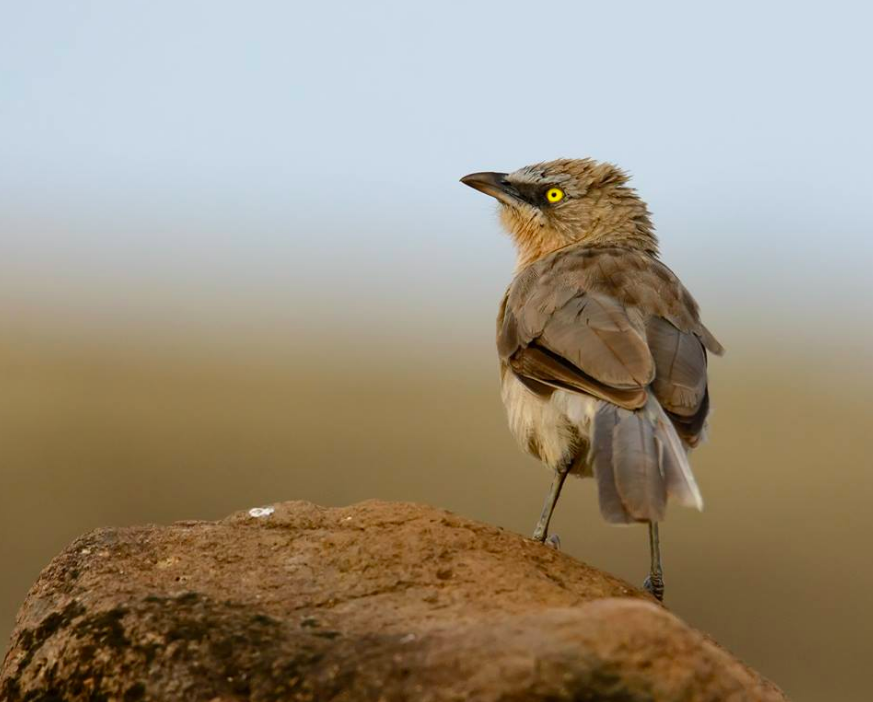
Bird of the Day: Blood Pheasant
Doom Is A Four Letter Word
We have balanced doom scenarios and their best explainers with plenty of stories about innovations, entrepreneurial initiatives and insights that lay out why nature deserves our protection and how to take action. It is clear to me that the last three decades of gentle prodding on the issue of climate change has been insufficient, and that more deep dive examination of the consequences we have created is the only effective tool left for us. But by that I do not mean a steady diet of only doom scenarios. Jon Gertner, the author of the forthcoming book “The Ice at the End of the World,” has this to say:
Maybe We’re Not Really Doomed After All
We have the brains to slow down climate change. Do we have the will?
As the effects of a warming climate intensify and a sense of impending catastrophe grows stronger, it’s becoming easier to give in to environmental despair. Having spent the past five years studying the Arctic and traveling around Greenland, I feel the pull as well.
Glaciers and sea ice are melting at an alarming rate; temperatures are rising at a steady clip. To make matters worse, the Trump administration’s recent efforts to ignore a fact-based, scientific approach — rejecting, for instance, the use of computer projections to assess how a warming world might look after 2040 — leads me to worry that climate denialism is moving from the scientific fringes to the institutional center.
Still, it’s worth considering that things may not be as bad as they appear. I say this with a full understanding that most indicators are pointing in the wrong direction. Yet I also feel we’re in danger of losing sight of two crucial and encouraging aspects of our predicament. Continue reading
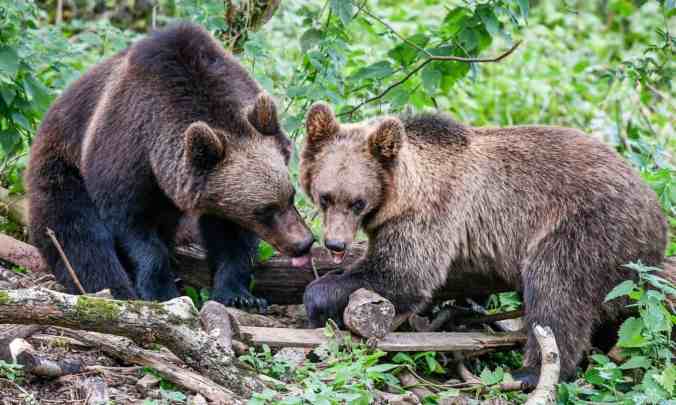
Bird of the Day: Woodland Kingfisher
France Acts On Waste

A dump site in Castries, France. By 2023, unwanted, unsold goods in the country will have to be donated, reused or recycled. Xavier Malafosse/Sipa, via Associated Press
Food waste has been a topic regularly featured in these pages. And reducing carbon footprint obviously involves reducing waste in general. Palko Karasz reports on this almost unbelievable example of waste that had escaped our attention until now, and we are impressed by France’s decisive action:
France to End Disposal of $900 Million in Unsold Goods Each Year
LONDON — France plans to outlaw the destruction of unsold consumer products, a practice that currently results in the disposal of new goods worth 800 million euros, or more than $900 million, in the country each year.
By 2023, manufacturers and retailers will have to donate, reuse or recycle the goods, Prime Minister Édouard Philippe said on Tuesday of the measure, which the government billed as the first of its kind.
“It is waste that defies reason,” Mr. Philippe said at a discount store in Paris, according to Agence France-Presse, and he called the practice “scandalous.”
Under a new measure that will be part of a bill set to be debated by the government in July, destroying unsold goods could result in financial penalties or prison time. Continue reading
Bird of the Day: Indian Silverbill
Trick Question From Rwanda

A recent message from Rwanda, in spite of what I said about Seth being plenty verbal, was as quiet as what you see above. Amie, whose eye inclines this way and makes sure our platform shares stories like this, thought it was the fruit we were supposed to guess the identity of. Because of my coffee focus of the last year, and Seth’s experience planting coffee, I immediately thought it was about whatever pest might be ravaging the leaves. Neither. Continue reading
The Fate Of Food
An interview about a book that picks up on themes that we have been following since we started this platform:
‘Fate Of Food’ Asks: What’s For Dinner In A Hotter, Drier, More Crowded World?
Environmental journalist Amanda Little says the sustainable food revolution will include meat cultured in a lab, 3-D printer food, aquaculture and indoor vertical farming.
TERRY GROSS, HOST:
This is FRESH AIR. I’m Terry Gross. Climate change is affecting the weather. And droughts, floods, storms and unseasonal temperatures are affecting the global food supply. Tech startups, as well as mega companies, are developing new, high-tech ways of growing vegetables and fruits, farming fish and growing meat without harming animals.
3D food printers, laboratories where meat is grown from cultured animal cells, robots that can weed crops without using chemicals and indoor farms where vegetables are grown without soil or sun are some of the new approaches investigated by Amanda Little in her new book “The Fate Of Food: What We’ll Eat In A Bigger, Hotter, Smarter World.”
She’s traveled to 13 states and 11 countries researching changes in our food system. Her reporting on energy, technology and the environment has been published in The New York Times, The Washington Post, Rolling Stone and other publications. She’s a professor of journalism and science writing at Vanderbilt University.
Amanda Little, welcome to FRESH AIR. Tell us some of the ways in which climate change is affecting the global food supply. Continue reading
Bird of the Day: Black-headed Jay
Creative Conservation
I just checked the index of my dissertation to see if this book to the right is listed. It is not. Strange.
Rarely has a single idea had so much impact on me. Creative destruction, a concept that Joseph Schumpeter is most famous for, comes from that book. I will not try to explain it here because either you already know what it means or else you should really read it from the source.
In my dissertation I was interested in the impact of the efforts of entrepreneurs–specifically every single one of the thousands of entrepreneurs that started up a hotel business from the 1880s to the 1980s on both the Canadian and US side of Niagara Falls–to join together to develop a mutually beneficial solution when facing a collective threat. In this century-long story I had metrics to determine how those efforts impacted the likelihood of a hotelier’s staying in business after starting up. Niagara Falls was at risk of being ruined as a natural attraction. Hoteliers on each side of the border joined one another, cooperating with their direct competitors, to find a solution to that risk. Hoteliers, independently of the actions of those on the other side, jointly invested in conservation initiatives. The rich quantitative data show that on the side of the border that invested more heavily in conservation, over the course of 100 years hotels had fewer failures (permanent closure) overall. Bravo, Canada. Continue reading
Bird of the Day: Black-billed Thrush
Parque del Acueducto, Cali, Colombia
Authentica’s Culture Is Conservation
About one year in to our time in India Amie got us involved in an initiative that helped reduce our carbon footprint by ensuring that the bags we used in our hotel gift shops contained no plastic. Instead we used bags made from recycled newspaper. We were fortunate enough to have an intern from Amherst College that summer who wanted to work on this. His enthusiasm for the project was so infectious that other interns joined him. Being from Korea, Sung Ho Paik has what I believe is K-pop accompanying his video below.
We were still expanding this initiative with intern assistance years later. Items sold in our gift shops in Kerala followed the lead of the takeaway bag initiative, and elephant paper may be an extreme example but is a useful segue to what is on my mind today. We had the opportunity to join forces with an excellent local design firm in their idea to launch a retail concept with the kind of products that we have always believed in. We believe in ideas that support entrepreneurial conservation with great design.
Authentica springs from these roots, and the culture of conservation is clearly a guiding force in what will be on offer.