female – Ventanilla, Peru
Bird of the Day: Blue-black Grassquit
female – Ventanilla, Peru
female – Ventanilla, Peru
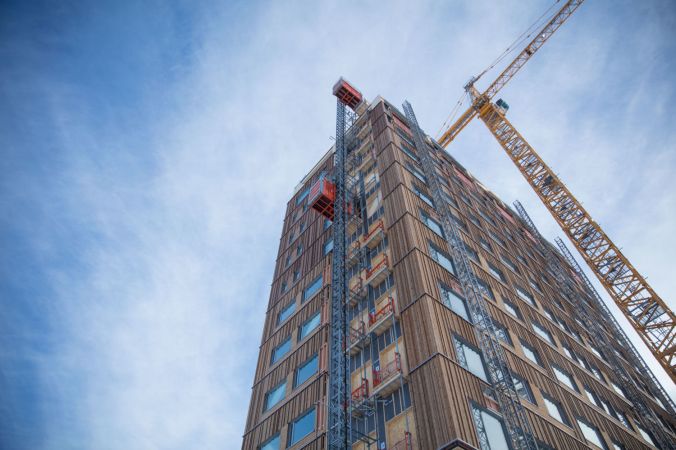
Mjösa Tower, the world’s tallest wooden building, under construction in Brumunddal, Norway. ANTI HAMAR
Thanks to Yale e360 and especially to Jim Robbins, as always, for keeping us up to date on the most interesting new developments in our natural world and its built spaces:
As Mass Timber Takes Off, How Green Is This New Building Material?
Mass timber construction is on the rise, with advocates saying it could revolutionize the building industry and be part of a climate change solution. But some are questioning whether the logging and manufacturing required to produce the new material outweigh any benefits.
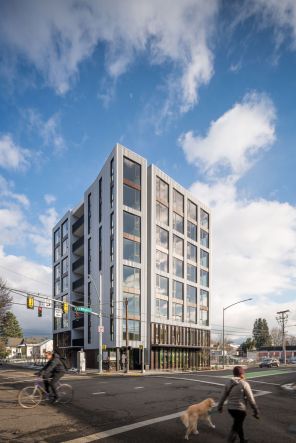
Carbon 12 in Portland, Oregon is the tallest building in the United States made with mass timber. COURTESY OF KAISER + PATH
2 / 4The eight-story Carbon 12 building in Portland, Oregon is the tallest commercial structure in the United States to be built from something called mass timber.
If the many fervent boosters of this new construction material are right, however, it is only one of the first mass timber buildings among many, the beginning of a construction revolution. “The design community in Portland is enthralled with the material,” said Emily Dawson, an architect at Kaiser + Path, the locally-based firm that designed Carbon 12.
The move to mass timber is even farther along in Europe. That’s because mass timber – large structural panels, posts, and beams glued under pressure or nailed together in layers, with the wood’s grain stacked perpendicular for extra strength – is not only prized as an innovative building material, superior to concrete and steel in many ways, it is also hoped it will come into its own as a significant part of a climate change solution. Continue reading
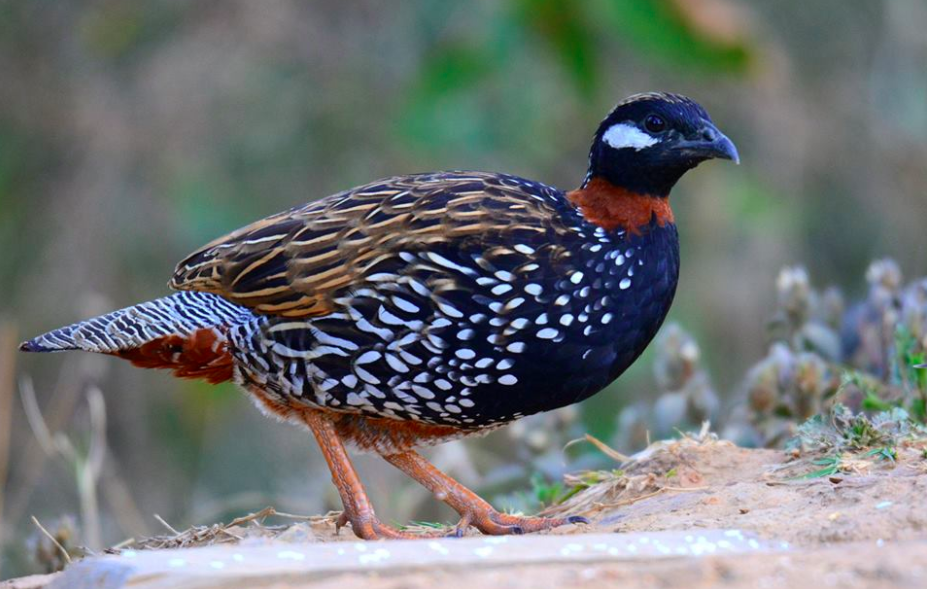
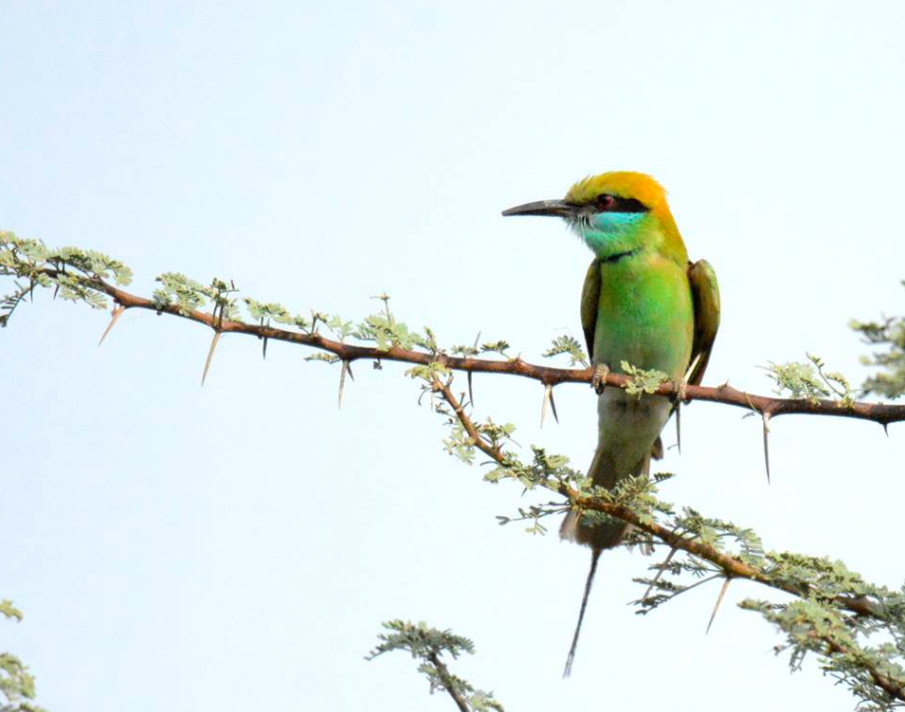
male – Uttarakhand
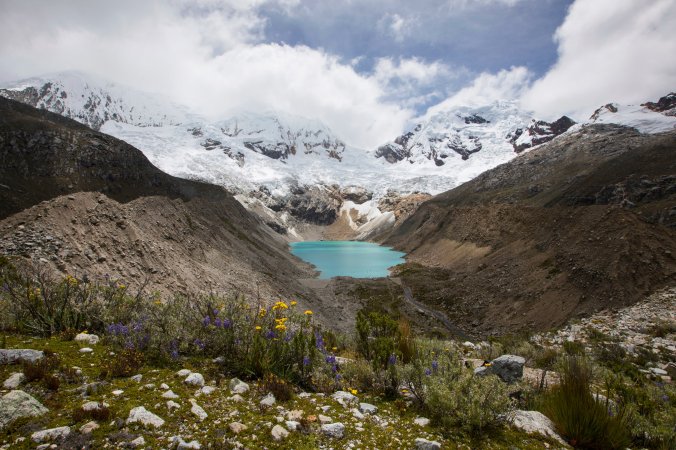
Lake Palcacocha in the Peruvian Andes. Felipe Fittipaldi for The New York Times
Brooke Jarvis, whose mastery of the complex environmental story we have pointed to a couple times already, shares the story below about a novel legal approach to fighting climate change. It is long, detailed and even more complex than the other stories we have seen by her. But if her subject prevails, the result may be even more profound as well. These two photos alone should draw you in. Thanks to the New York Times Magazine:

The city of Huaraz in the Peruvian Andes. Felipe Fittipaldi for The New York Times
In the mountains far above the red-brick city, behind a locked gate, there is a great, green valley. Its high stone walls are streaked by waterfalls; its floor dotted with flowers and grazed by horses and cows. Six boulder-strewn miles beyond the gate, the valley ends abruptly at an enormous wall of rock and ice. Beneath it lies a stretch of calm, bright water in milky turquoise — Lake Palcacocha. Though few of its residents have ever seen this lake, the city below lives in fear of it. Continue reading
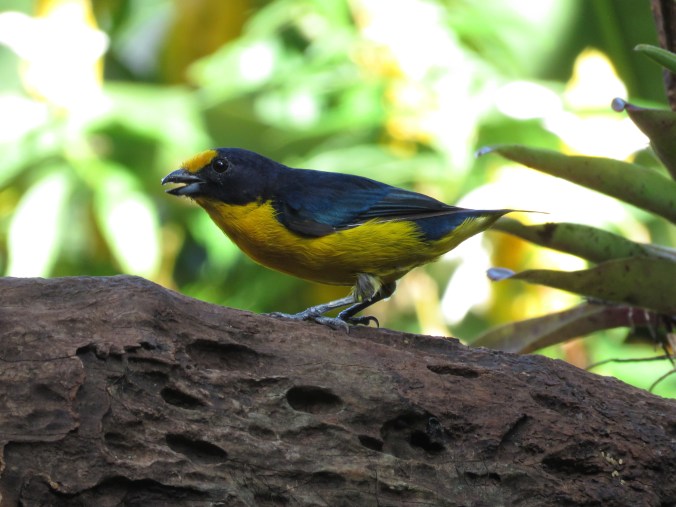
Iguazú, Argentina
 The blurb from his own university’s news service is enough to catch your attention:
Drawing on advances in social science, evolutionary biology, genetics, neuroscience, and network science, “Blueprint” attempts to show how and why evolution has placed us on a humane path — and how we are united by our common humanity.
For too long, the author contends, scientists have focused on the dark side of our biological heritage: our capacity for aggression, cruelty, prejudice, and self-interest. But natural selection has given us a suite of beneficial social features, including our capacity for love, friendship, cooperation, and learning. Beneath all our inventions — our tools, farms, machines, cities, nations — we carry with us innate proclivities to make a good society.
There are not many reviews available yet, but here is one:
KIRKUS REVIEW
A social scientist looks at the good and bad sides of human character, arguing that we are evolutionarily inclined “to make a particular kind of society—a good one full of love, friendship, cooperation, and learning.”…
…A refreshingly optimistic view of our kind.
If, like me, you had previously only known of him due to this incident, the blurb and the review are catchy enough to warrant further attention. So I found an interview he recently gave (on a podcast I would not normally have sought out, but it was all I could find) and listening to him talk about it has made me want to find this book and have a read.
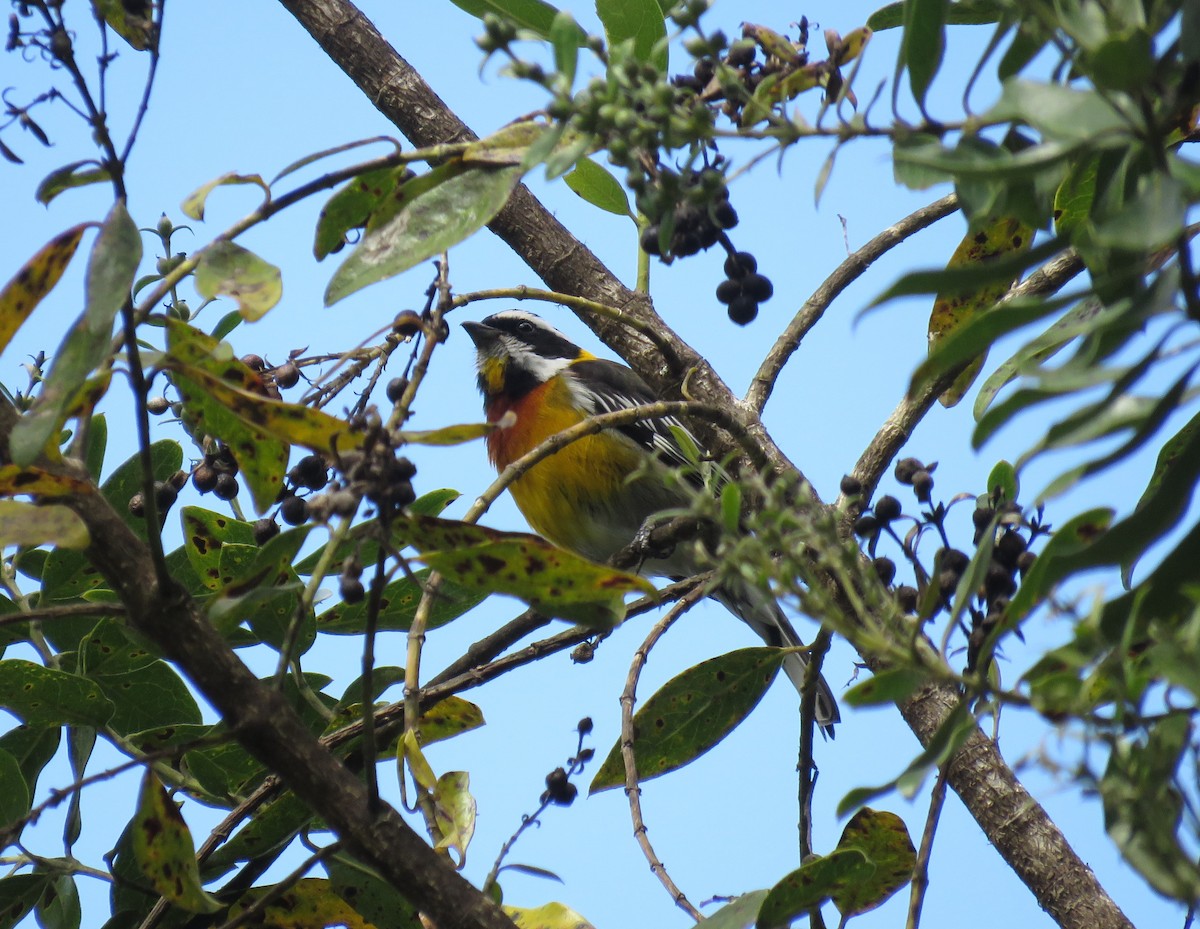
Parque Nacional Valle Nuevo, Dominican Republic
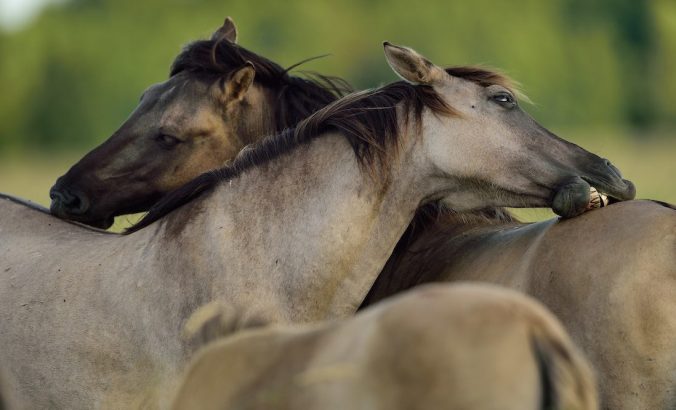
The group of 23 wild Konik horses which arrived in the Ukrainian village of Orlovka on March 26 represents the first translocation of such animals into the Danube Delta. SOLVIN ZANKL / REWILDING EUROPE
Thanks, as always, to our friends at Rewilding Europe for another story about an animal we always think of as one of the oldest examples of domestication, and its role in rewilding:
Natural grazing in the Ukrainian Danube Delta boosted by arrival of Konik horses
Representing the first ever translocation of Konik horses into the Danube Delta, the shipment of 23 animals travelled by road from Latvia to the Ukrainian village of Orlovka. By helping to create and maintain mosaic landscapes, their grazing will help to boost biodiversity in the Danube Delta rewilding area.
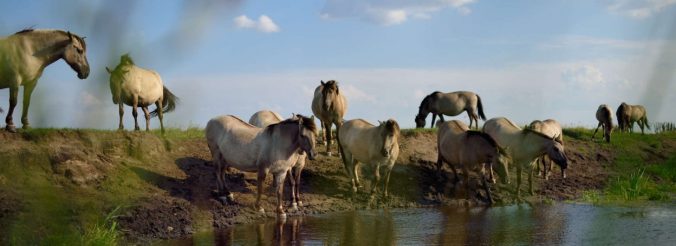
The sturdy Koniks, which lived over 20 years in the wild in Latvia, are well-suited to life in the Danube Delta. SOLVIN ZANKL / REWILDING EUROPE
Two herds of wild Konik horses will soon be roaming the landscapes of the Ukrainian Danube Delta, boosting the area’s biodiversity through their natural grazing. A shipment of 23 horses (made up of two family groups) arrived in the small delta village of Orlovka on March 26, having made the long road journey from Latvia. Despite the lengthy trip of around 1800 kilometres, which took nearly two days and two nights, all of the animals were pronounced fit and well on arrival by a veterinarian. Continue reading
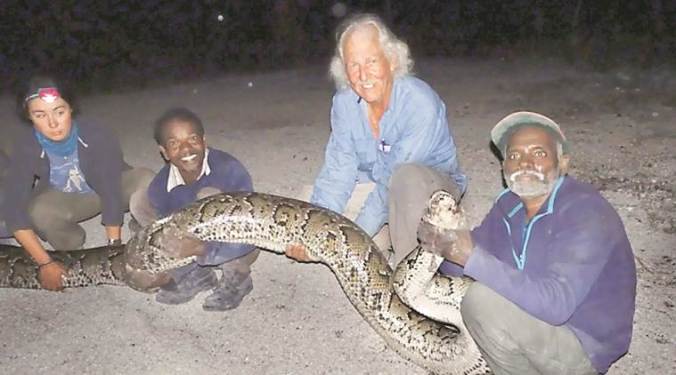
We missed the story last year about two men in the photo above, from southern India, who were brought to the Florida habitat where invasive pythons are doing enough damage that we started paying attention eight years ago. We are thinking about it again, thanks to the Guardian:
Snake hunters have captured what they say is the largest python ever found in the swamps of the Florida Everglades: a pregnant female more than 17ft (5.2 metres) long and weighing 140lb, or 63.5kg.
The team from the Big Cypress National Preserve posted news of their record-setting catch in a Facebook post that also noted the giant reptile was carrying 73 eggs.
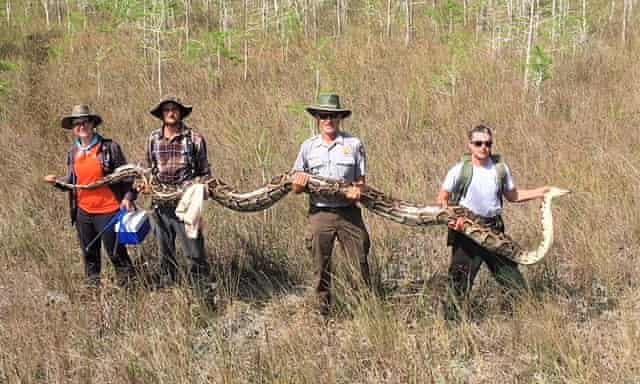
Big Cypress National Preserve group captures 17ft female python on 4 April. Photograph: Big Cypress National Preserve/Facebook
Environmentalists have been struggling to find ways to eradicate Burmese pythons, a non-native species, from the 1.5m-acre wilderness since the 1980s, when some were released into the wild as overgrown pets. Others escaped from a breeding facility wrecked by Hurricane Andrew in 1992. Continue reading

Sattal, Uttarakhand

I have shared the photo above on this platform once before. I wrote a series of reflections on the village where that photo was taken, and today I share a riff on all that. That photo was enlarged to take up an entire wall of our office in India, as a reminder to me each day of the purpose behind what I was doing. Our company’s mission includes education. It is mostly about conservation. That building, which I photographed 10+ years ago, after it had recently been abandoned, has been a reminder for me that one of these days I am determined to share whatever I can from our work in that village.
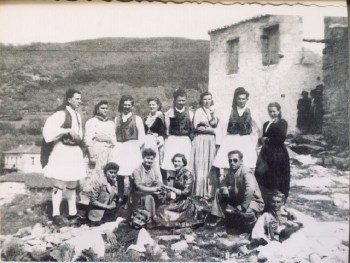
This photo was taken of Bangor Vamvakou immigrants in 1949 as they returned to their village. Top left is Nikos Niarchos, a relative of the Greek shipping tycoon. From Top Left, the others are: Vasso Anglesi; George Limberogiannis; Eleni Markos; Panayiotis Servetis; Vasso Kokini; Katsilis Demetrios and Anna Leakou. Middle Row, from Left: Pota Anglesi; Angeliki Skoufi; Eleni Hatzi and Panos Dialialis. At bottom, Left to Right, are Yiannis Limberogiannis and Harris Belbekis.
Thanks to an online publication I follow for news from Greece I found this story that helps explain why I thought of the photo above just now. It gives me both hope and tangible ideas of what might be done. It starts with a group of immigrants in Bangor, Maine whose life trajectory was like that of so many others from the Lakonia region of Greece, including my mother. And the story leads back to a foundation that has been referenced once before in our pages, but this time the foundation’s work hits closer to home:
The saying goes that it takes a village to raise a young person. But sometimes it takes young people to raise up a village, and this is exactly what’s happening in the Laconian village of Vamvakou.
Vamvakou is a short drive from Vourthonia, my mother’s village. So this video below strikes a chord.
Some of the images from Mamvakou could as easily have been taken in Vourthonia.
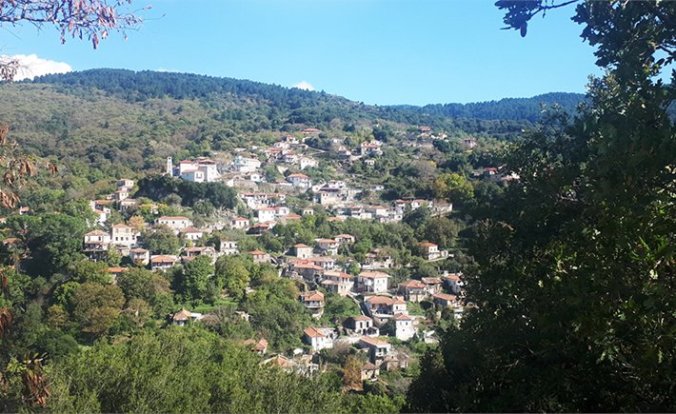
Source: SNF
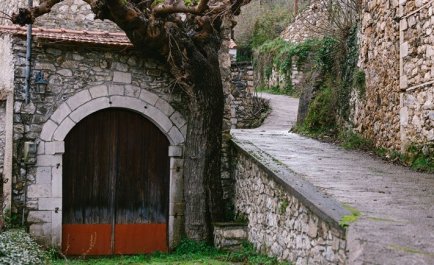
Source: SNF
But it is the story of what is happening in that village that captures my imagination:
Can a once-thriving mountain village, today home to only nine inhabitants, come to life again?
Can it fill with visitors, permanent inhabitants, and model businesses while retaining its traditional character? This is the wager laid by a group of five young people who want to revitalize the village of Vamvakou, 900 meters up the slopes of Mount Parnon in the southeastern Peloponnese.
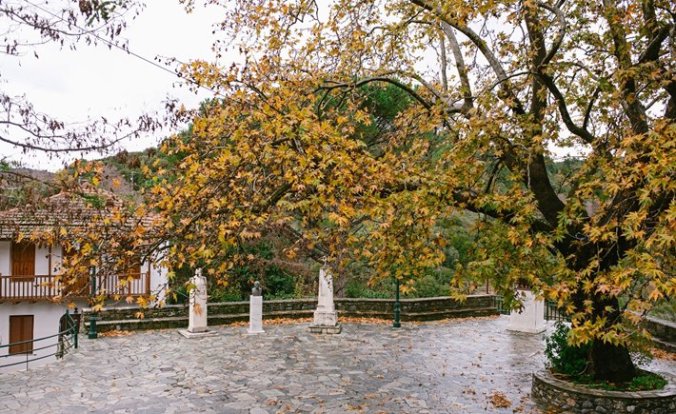
Source: SNF
To realize this ambitious project, the five friends, Haris Vasilakos, Anargyros Verdilos, Eleni Mami, Tasos Markos, and Panagiotis Soulimiotis established the “Vamvakou Revival” Social Cooperative Enterprise and decided to move to the village. Continue reading
Marin Headlands, California
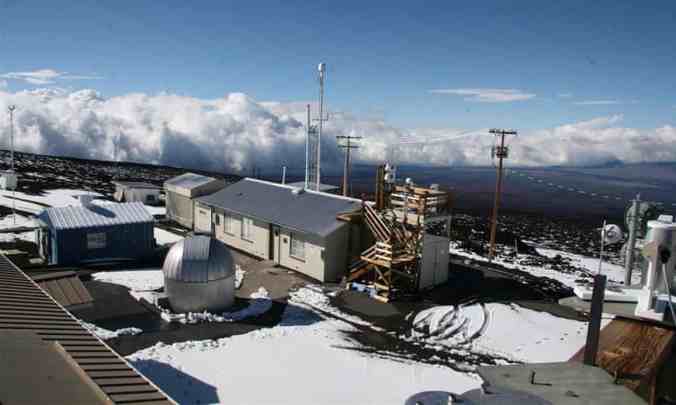
The Mauna Loa weather observatory in Hawaii. The Guardian will publish the Mauna Loa carbon count every day. Photograph: Courtesy of NOAA
Our thanks to the Guardian for this reminder of our shared responsibility:
Why the Guardian is putting global CO2 levels in the weather forecast
As CO2levels climb, the carbon count is a daily reminder we must tackle climate change now
The simplest measure of how the mass burning of fossil fuels is disrupting the stable climate in which human civilisation developed is the number of carbon dioxide molecules in the atmosphere.
Today, the CO2 level is the highest it has been for several million years. Back then, temperatures were 3-4C hotter, sea level was 15-20 metres higher and trees grew at the south pole. Worse, billions of tonnes of carbon pollution continues to pour into the air every year and at a rate 10 times faster than for 66m years.
At the dawn of the industrial revolution, CO2 was at 280 parts per million (ppm) in the atmosphere. By 1958, when the first measurements were made at Mauna Loa in Hawaii, it had reached 315ppm. It raced past 350ppm in 1986 and 400ppm in 2013.
The Guardian will now publish the Mauna Loa carbon count, the global benchmark, on the weather page of the paper every day.
“When I read the letter from Guardian reader Daniel Scharf encouraging us to include information on climate change in our weather forecasts, we thought it was a fantastic idea,” said the Guardian’s editor-in-chief, Katharine Viner. Continue reading
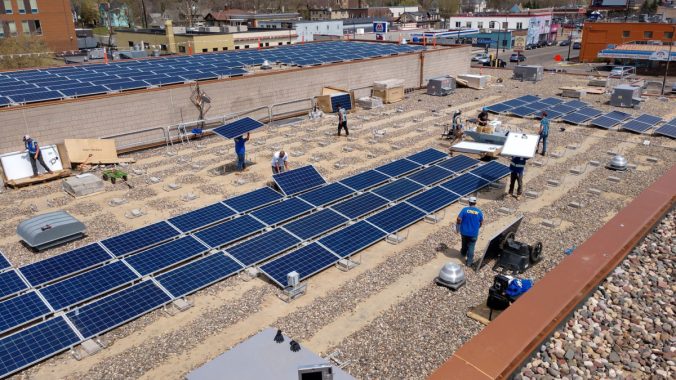
EnterA 204-kilowatt community solar array being installed on the roof of the Shiloh Temple International Ministries in Minneapolis. COURTESY OF COOPERATIVE ENERGY FUTURESa caption
Thanks to Maria Gallucci and Yale e360 for this:
Energy Equity: Bringing Solar Power to Low-Income Communities
Millions of Americans lack access to solar energy because they cannot afford the steep upfront costs. Now, more than a dozen states are adopting “community solar” programs that are bringing solar power and lower energy bills to low-income households from New York to California.
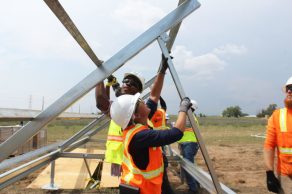
Workers receive job training while building a shared solar farm in Platteville, Colorado. COURTESY OF GRID ALTERNATIVES
Isbel “Izzy” Palans lives in a small cabin nestled among mountain peaks and towering trees in the Colorado Rockies. Her home is often shaded and, during the long winters, buried under heaps of snow. Her monthly utility bills show credits for solar electricity production, but no solar panels are affixed to her roof. Instead, the power comes from a solar array some 60 miles away in a nearby valley.
Last year, the panels nearly slashed her energy bill in half. “I’ve been thrilled,” said Palans, a 76-year-old retired waitress who relies partly on Social Security benefits to make ends meet.
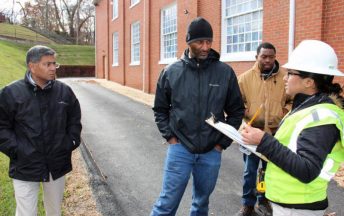
Solar contractor Brad Boston (center) and utility representatives meet with engineer Pranay Kohli to discuss a community solar project at DuPont Park Seventh Day Adventist Church in Washington, D.C. COURTESY OF GROUNDSWELL
Palans is a subscriber to a 145-kilowatt solar array project run by Holy Cross Energy, a rural utility cooperative. Built with state funding, the program provides solar credits to more than 40 low-income households in western Colorado that otherwise wouldn’t have the financial or technical means to access renewable energy. The venture is just one of a growing number of so-called “community solar” projects across the United States focused on delivering renewable energy — and the cost-savings it can provide — to low-income households, from California to Minnesota to Massachusetts. Continue reading
Najafgarh Dwarka Road, Delhi
 Authentica, mentioned a couple of times prior to the current series of posts, has the character of a startup but its goal is the opposite of disruption.
A major disruption already happened, and if one of the antonyms of disrupt is organize, then that is what we are doing. Authentica is part of a nascent movement in Costa Rica to provide market opportunities to artisans, farmers, food producers and others who design, craft, grow and cook things that are essentially Costa Rican. The disruption they faced is not the story we want to tell. The reversal of that disruption is the story. One example is Organikos. Continue reading

Photo Credit: Stephen Crafts
Santiago Island, Galapagos, Ecuador
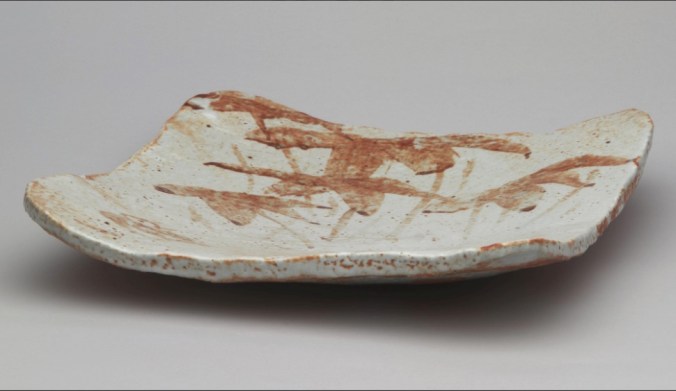
Kitaoji Rosanjin. Square platter with rounded edges. 1954
In preparing to exhibit things we believe represent Costa Rica well enough that we would want travelers to take some such things home with them, MOMA’s The Value of Good Design provides a valuable pause. The image above, from the MOMA show, is an example of good design of a tactile thing. As the video below shows that is what good design means in MOMA’s estimation, namely things that you want to look at as much as you want to touch or use.
Costa Rica, and its visitors, would benefit from an exhibition of things that are useful, inspiring, and/or in good taste. Our contribution to this effort has focused on coffee, so we are inclined to think about taste in the gustatory sense, as in what flavors and aromas please. This type of pleasure is more ephemeral than something you can look at and touch over and over.
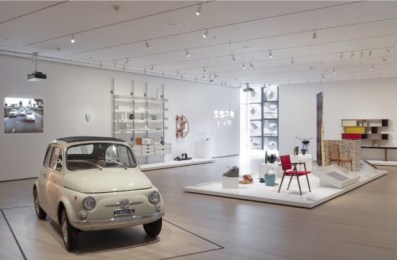 Another sense of good taste, which also has value: we do not consider it in good taste to sell things in Costa Rica that are foreign-made replicas of Costa Rican traditional arts and crafts. And that has been very much on our mind. It is a challenge we have signed on to. The MoMA exhibition inspired Nikil Saval to share a few thoughts about How “Good Design” Failed Us and they strike me as relevant to our own current challenge to be tasteful:
In 1958, the American radical sociologist C. Wright Mills was invited to address the International Design Conference, in Aspen. The lecture he gave, “Man in the Middle: The Designer,” criticized a number of its audience members for being willing dupes in the grand illusion that was consumer society. Continue reading

 Organikos