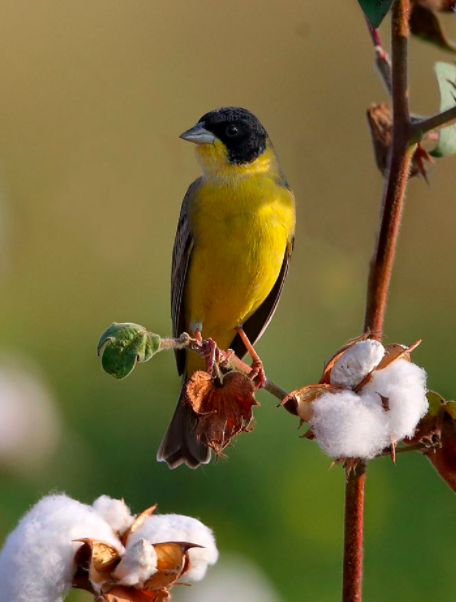
This species breeds in Eastern Europe and spends summers in the cornfields of Bellary, Karnataka
Bellary, Karnataka
This species breeds in Eastern Europe and spends summers in the cornfields of Bellary, Karnataka
Bellary, Karnataka
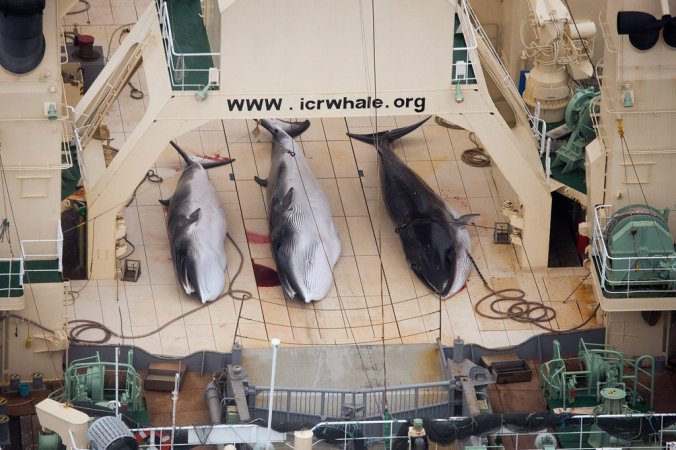
A photo from 2013, released by the environmentalist group Sea Shepherd, showing minke whales on the deck of a Japanese ship in the Antarctic. Japan says it will restrict whalers to its own waters as it resumes commercial whaling. Credit Tim Watters/Sea Shepherd Australia, via EPA, via Shutterstock
I had to read to the end to see Paul Watson’s name, and more importantly his proclamation on the significance of Japan’s withdrawal. It has been a long time since we have seen him or Sea Shepherd in our pages. My thanks to Daniel Victor and his employer for this important story:
Japan to Resume Commercial Whaling, Defying International Ban
Japan said on Wednesday that it would withdraw from an international agreement and resume commercial whaling, a defiant move to prop up an industry that still has cultural significance there, despite plummeting demand for whale meat.
Yoshihide Suga, Japan’s chief cabinet secretary, said the country would leave the International Whaling Commission, which established a moratorium on hunting whales that took effect in 1986.
The international agreement never stopped Japanese whaling, because it allowed the country to continue killing whales for scientific research while selling the meat. Critics considered the research a sham, little more than a cover for commercial whaling. Continue reading
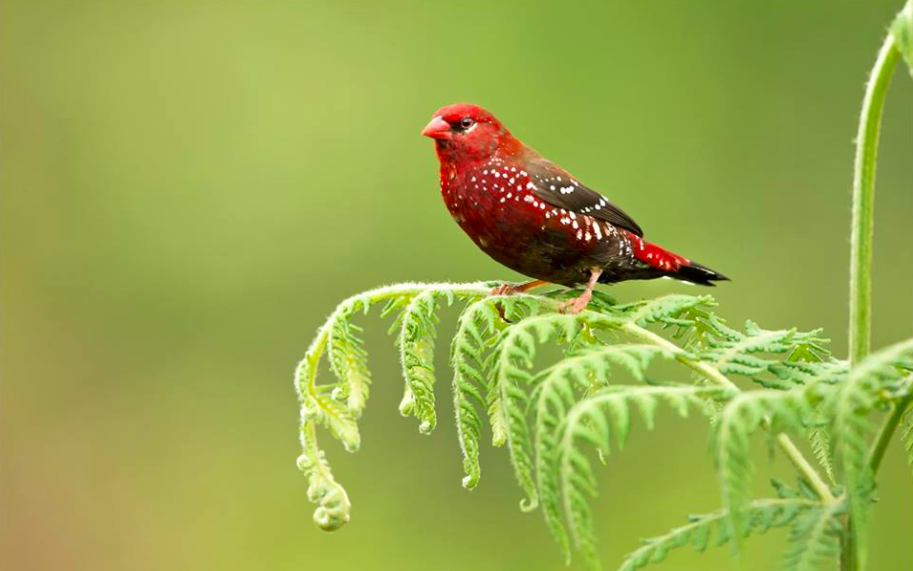
Kotagiri, Tamil Nadu
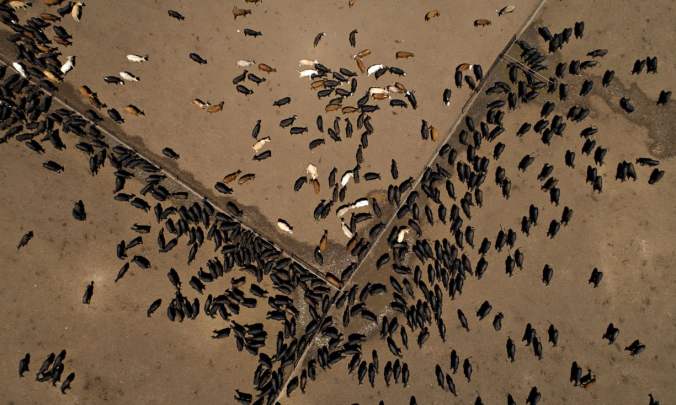
Beef cattle stand at a ranch in this aerial photograph taken above Texas. Meat and dairy accounts for just 18% of all food calories and around a third of protein. Photograph: Daniel Acker/Bloomberg via Getty Images
Them refers to the kinds of mammals in the photo above. Us refers to us humans. In keeping with yesterday’s post, Oliver Milman’s op-ed provides an excellent reminder that virtually all mammals living on planet earth today are we humans and the animals we farm for eating. There are still other species of mammals holding on, if barely, but they are being pushed to extinction largely due to the amount of meat we eat. Another good reason to go vegetarian, or vegan, or more simply just eating much less meat:
Why eating less meat is the best thing you can do for the planet in 2019
Eating meat has a hefty impact on the environment from fueling climate change to polluting landscapes and waterways
Recycling or taking the bus rather than driving to work has its place, but scientists are increasingly pointing to a deeper lifestyle change that would be the single biggest way to help the planet: eating far less meat. Continue reading

Juvenile – Mpala Research Center, Kenya
Our cohabitation with animals on this planet is imperiled. There is no choice but to keep track of these things as best we can with art, with essays, with whatever it takes. Thanks to Rachel Riederer (again) for adding her words and links to images and videos on this topic:
The Not-So-Uplifting Year in the Animal Kingdom
During a year that saw the stripping away of environmental protections, the most resonant stories served as sombre warnings rather than warm-fuzzy generators.
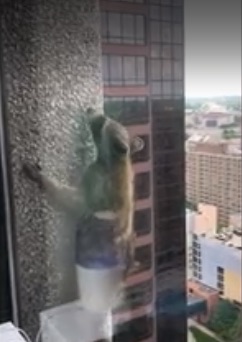
The skyscraper-climbing raccoon made it to the top of UBS tower in St Paul, Minnesota, where officials were waiting for it.
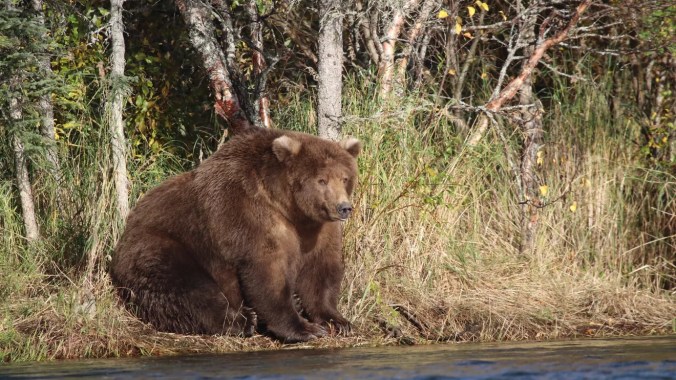
I can’t count the number of animal stories that appeared in my timelines this year with comments like, “Everything is garbage, so here’s this.” There was the cat who was reunited with her family after the Camp Fire, in California, and the parrot who was adopted after getting kicked out of an animal shelter for swearing too saltily. Among the bears preparing for hibernation at Katmai National Park, a female named Beadnose became famous for being the most gloriously round. There was the baby raccoon who scaled a skyscraper in St. Paul, “Mission Impossible” style, stopping occasionally for naps in window ledges along the way. (It was trapped, released, and promptly made the subject of a children’s book.) Stories from the animal world offer reliable moments of escapism—the ones we see in viral videos are usually cute, or tame, or strange and majestic, and glimpsed from a safe distance. But the animal stories that resonated most with me this year were the ones that hinted at a more ominous trend: that we humans are encroaching on nature in ways both glaring and subtle, putting the human and animal worlds into ever more intimate, and ever more fraught, contact.
Katmai National Park’s bear 409 (aka “Beadnose”) won the 2018 competition for fattest bear. According to the park, when “she is not raising cubs, this bear is usually one of the fattest females.” NPS Photo/A. Ramos
The most influential animal of the year might be the unfortunate sea turtle who got a straw stuck—really, deeply, seriously stuck—up his nose. In an uncomfortable ten-minute video posted to YouTube, a marine biologist slowly extracts the straw, which is brown and crumpled and disgusting. The turtle’s nose bleeds, and throughout the ordeal, it opens its mouth as if to bite the biologist’s hand—or howl in pain. The video, filmed in 2015, in Costa Rica, became part of this year’s debate over plastic straws and was used by proponents of straw bans to show how such a small object, used and disposed of without a thought, can cause substantial suffering down the line.
© Twitter Screengrab from the viral video
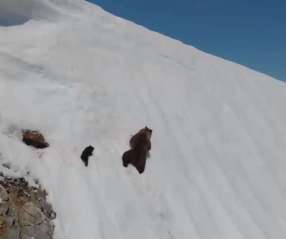
A baby bear became an overnight Internet star when it was captured in a video that looked, at first, like a sweet inspirational tale. In aerial drone footage, the cub was shown repeatedly slipping down the side of a snowy ledge and trying mightily to make its way to the top, where its mother waited. Ultimately, the cub prevailed, and the video was embraced on social media as a tribute to the power of perseverance. But then drone operators and ecologists began weighing in: the drone that took the video had likely alarmed the bears; you can see the mother bear swatting the air as the drone flies closer. The machine’s operator, in chasing the bears for footage, had potentially driven them into a dangerous situation. Suddenly, the viral cub was transformed from a feel-good fable into a cautionary tale about how humans can imperil animals just by trying to get a good look at them. Continue reading
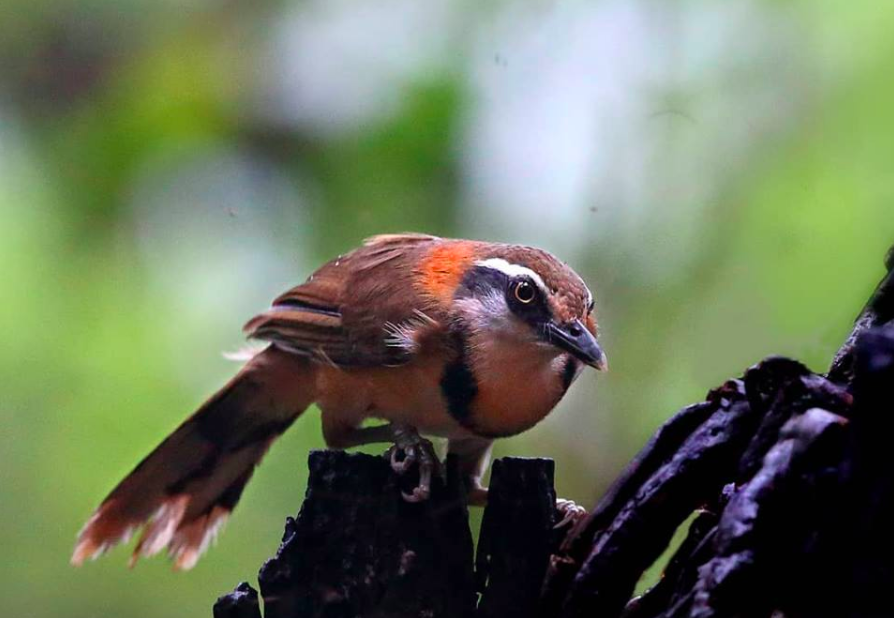
Dehing Patkai Wildlife Sanctuary, Assam
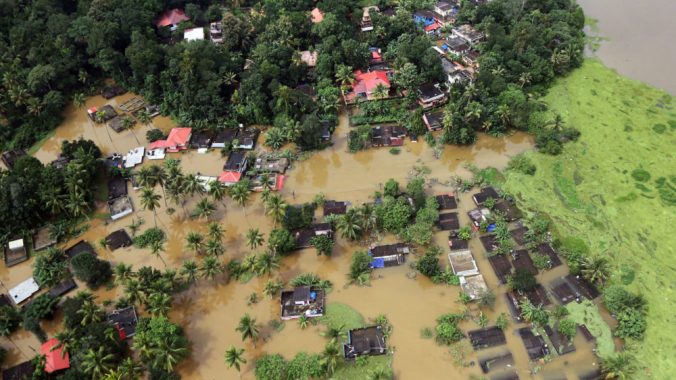
Partially submerged houses in Kerala, India last August. REUTERS / SIVARAM V
Any picture of a houseboat reminds me of our good fortune to live among the people of Kerala’s backwaters from 2010-2017. The photo below is no exception and I thank Fred Pearce, writing for Yale e360, for bringing to my attention the scale of misfortune facing our old neighbors from the most recent flooding. I knew about the disaster, but had not read in any detail until now what this implies for the future. Maybe this fortune could be applied to address those challenges:
In India, Nature’s Power Overwhelms Engineered Wetlands
The picturesque Kerala backwaters in southern India, increasingly popular with tourists, form a network of engineered canals, lagoons, lakes, and rice paddies. But a fatal monsoon deluge has highlighted the global problem of how developed wetlands often lose their capacity to absorb major floods.
Floodwaters inundated much of Kerala’s low-lying coastal plain, including the village of Pandanad, pictured here. MANJUNATH KIRAN / AFP / GETTY IMAGES
In India, they call the state of Kerala in the country’s far south “God’s own country.” That wasn’t how it felt last August, when monsoon floods devastated its densely populated low-lying coastal plain. Around 500 people drowned, in an area best known to outsiders for its placid backwaters, a network of brackish lakes, lagoons, and canals where growing numbers of Western tourists cruise the picturesque waterways aboard luxury houseboats.
A luxury houseboat moored along Lake Vembanad near the tourist town of Kumarakom in Kerala. FRED PEARCE / YALE E360
Now that the floodwaters have abated, questions are being raised about whether the disaster was made worse by water engineering projects in the backwaters designed to feed the state’s population and attract tourists. Increasingly, Kerala residents are wondering if “God’s own country” is damned as well as dammed.
The floods came out of the Western Ghats. This chain of mountains down the west side of India is one of the country’s wettest places, drenched from June to September in monsoon. In early August, the rains there were exceptionally intense and unremitting. The rivers flowing from the mountains west toward the Arabian Sea dumped their water into the backwaters on a coastal plain that is largely below sea level.
Sixty-mile-long Lake Vembanad, at the heart of the backwaters, rose up and flooded surrounding wetlands and rice paddies, cities, and farming villages. A quarter-million people took refuge in 1,500 relief camps; 6,200 miles of roads and 115 square miles of farmland were damaged. Cochin International Airport was awash. Continue reading
Today’s absurd news of a government shutdown in the USA provided me an important indicator that nothing much shocks me anymore. And that seems as dangerous as the shocking things that now fail to shock. In the last week I resolved to take care with words. And I stand by that. But still, watch the video above and see if you can resist the headline’s claim:
Americans Should Be ‘Screaming Mad’ About Amazon’s Free Money
You may have heard by now that Amazon’s new headquarters will soon call the New York and Washington, D.C., metropolitan areas home. Continue reading
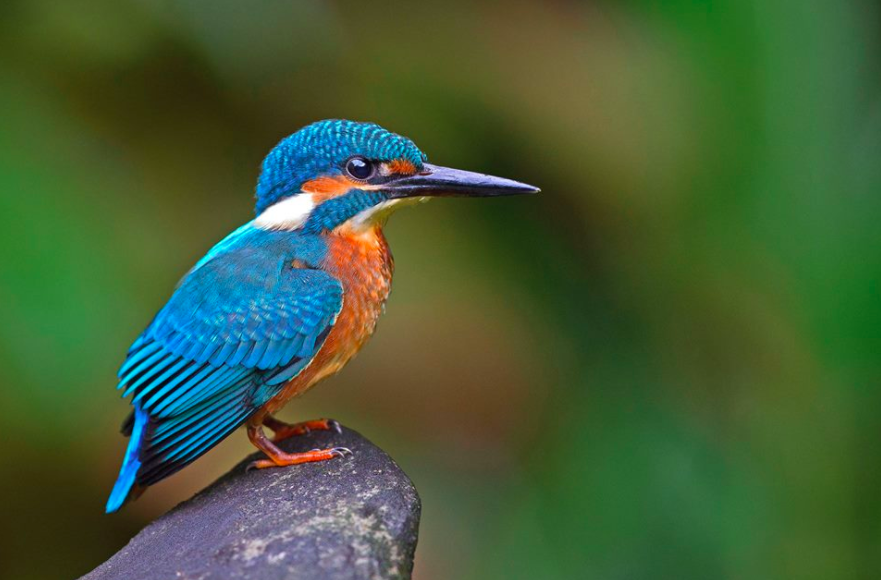
Mysore, Karnataka
Thanks to National Public Radio (USA) for this brief story by Maia Stern, which expands our knowledge of foraged wild foods:
The first insect that Pascal Baudar ever tried eating was an ant he found in his kitchen. The verdict? “It tasted like some kind of chemical,” says Baudar.
Most people would have probably given up on the bug-eating experiments right there. But Baudar? He’s made it part of his life’s calling. Continue reading
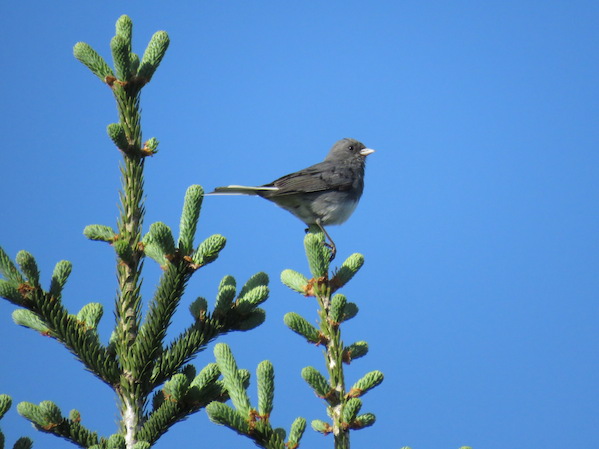
Blue Ridge Parkway, North Carolina
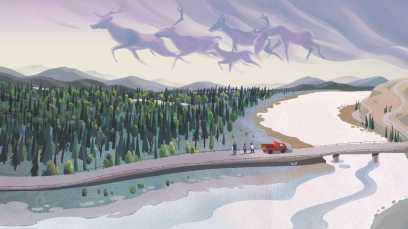
Cornelia Li
Thanks to Hilary Rosner for her penetrating longform reporting on these species at the edge of existence, part of the Atlantic’s Life Up Close project (and thanks for the support provided by the HHMI Department of Science Education for such a publication):
Pulling Canada’s Caribou Back From the Brink
First Nations communities are leading the effort to rescue the last remaining caribou herds from extinction.
Cornelia Li
On a family vacation last summer, driving along the empty highways of northern Idaho near the Canadian border, I saw an unlikely road sign—a relic. Diamond-shaped with a yellow background, the sign featured the familiar black silhouette of a deerlike animal. But unlike those on deer-crossing signs, the animal pictured had large antlers and appeared to be ambling toward the road, not leaping. It took me a moment to realize that it was a caribou.
Seeing a caribou wander onto an Idaho highway is about as likely as watching a UFO land there. The South Selkirk herd—the only remaining caribou herd that roamed the continental United States—has dwindled to just two animals, both female. “Not even Noah could save them,” a Canadian biologist told me. Last spring, scientists declared the herd functionally extinct. Continue reading
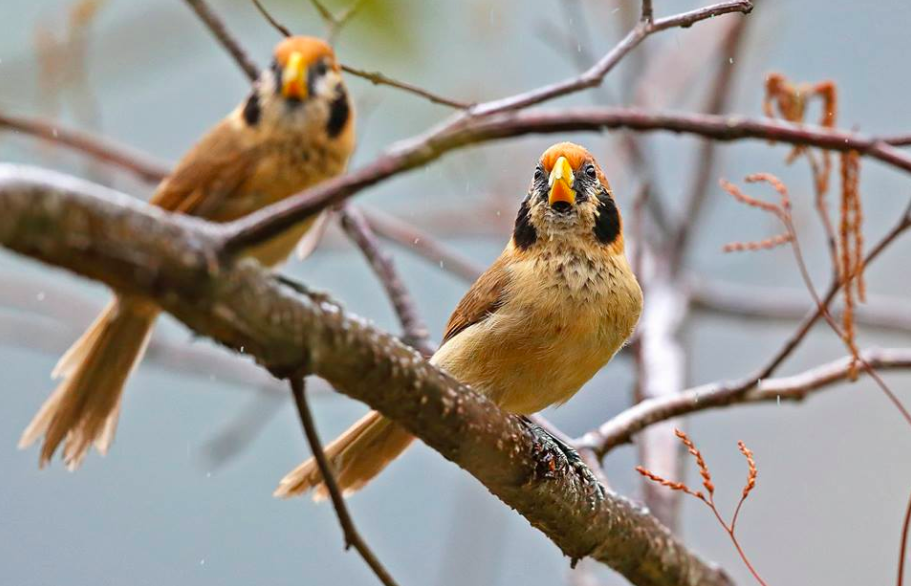
Walong, Arunachal Pradesh
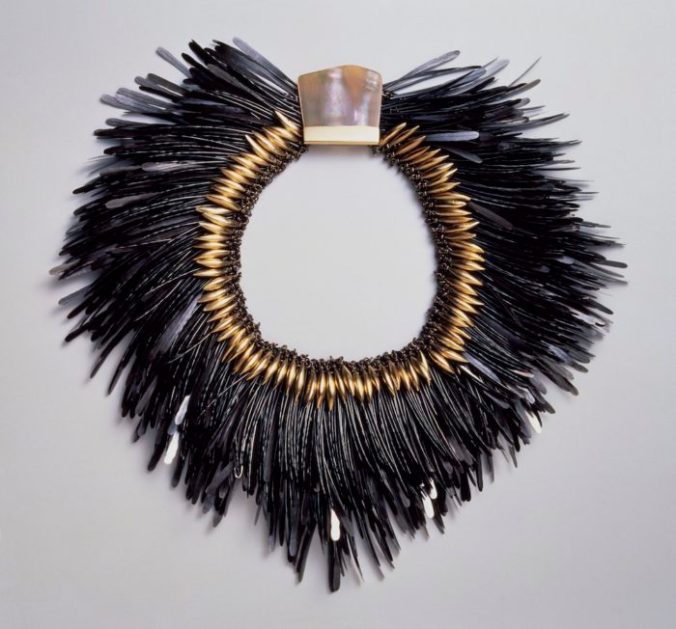
Necklace, designed by Tone Vigeland (Norwegian, born 1938)

Book, Histoire naturelle des oiseaux de paradis et des rolliers: suivie de celle des toucans et des barbus (Natural History of Birds of Paradise and Rollers: Followed by that of Toucans and Barbets), Volume 2; 1806; Written by François Levaillant (French, 1753–1824); Illustrated by Jacques Barraband (French, 1767–1809); Smithsonian Libraries, QL674.L65 1806
An exhibit at the Cooper Hewitt comes to my attention thanks to Dylan Kerr, whose essay The Mandarin Duck and Avian Art at the Cooper Hewitt makes an interesting link between the choices Rebeca Mendez made as a curator and a recent unusual bird sighting in New York City:
For the past several weeks, New Yorkers have been abuzz over a mysterious visitor. A mandarin duck, an intricately colored waterfowl native to East Asia, has taken up residence alongside the mallards in the Central Park Pond, drawing crowds and inspiring memes, dog costumes, and a Twitter account (bio: “I’m not from around here”). Pundits have argued that the frenzy betrays a desire for good news. But perhaps, the Mexico City-born designer Rebeca Méndez suggested the other day, something deeper is at play. “In our own normal life, we have patterns that we are so used to.
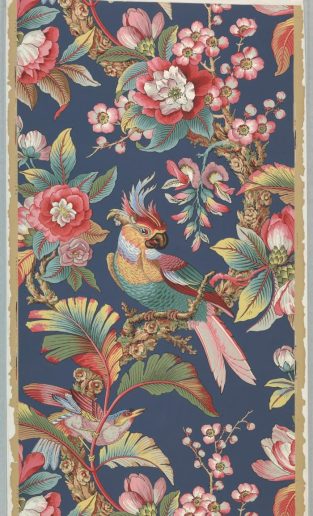
Sidewall; 1905–13; Manufactured by Zuber & Cie (Rixheim, Alsace, France); Block-printed on paper; Gift of James J. Rorimer, 1950-111-10
My immediate reaction is yes. We are bombarded with more negative information more quickly, more constantly than ever in my lifetime. We need relief, and nothing like an exotic bird coming to town to bring it:
When something”—an anatine interloper, say—“comes in and breaks that, it’s incredibly exciting,” she said. “The world suddenly collapses—it’s like a wormhole from far-east Asia to Manhattan.”
Méndez recently curated an exhibition of avian art at the Cooper Hewitt, Smithsonian Design Museum, across the street from the Park. It’s part of the “Selects” series, in which the museum invites a guest to put together a show from objects in its collection. Continue reading
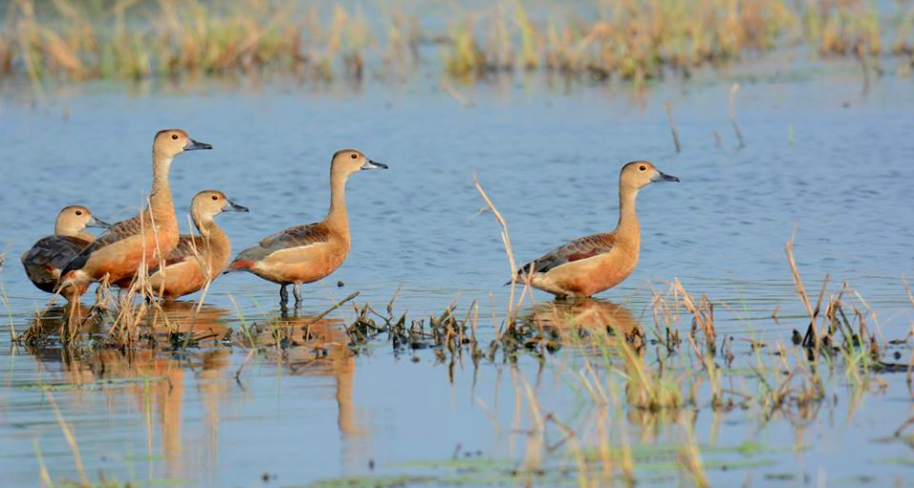
Kandakadavu backwaters, Kerala
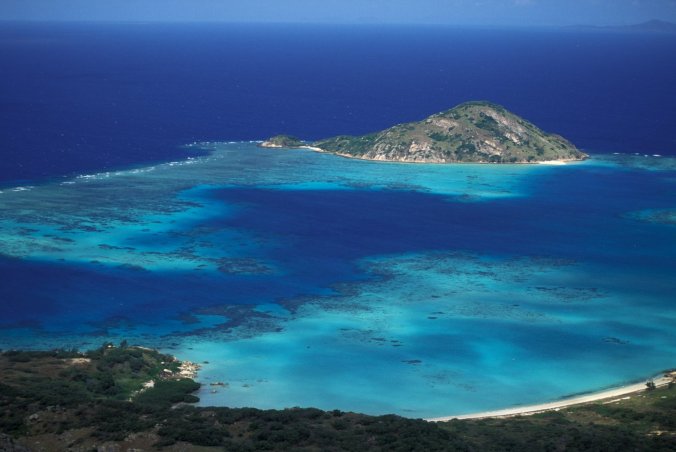
Researchers studied the carbon storage of deep-water seagrasses living at Lizard Island, Australia. Education Images/UIG via Getty Images
Thanks to National Public Radio for this:
Amid a sea of dire climate change news, researchers say they’ve found a rare bright spot.
A meadow of seagrass among Australia’s Great Barrier Reef — estimated to be twice the size of New Jersey — is soaking up and storing carbon that would otherwise contribute to global warming.
Scientists call this carbon-removal powerhouse a “blue carbon sink.” The term refers to an ocean or coastal ecosystem — including seagrasses, salt marshes and mangrove forests — that captures carbon compounds from the atmosphere, effectively removing carbon dioxide, a known greenhouse gas that contributes to climate change. Continue reading
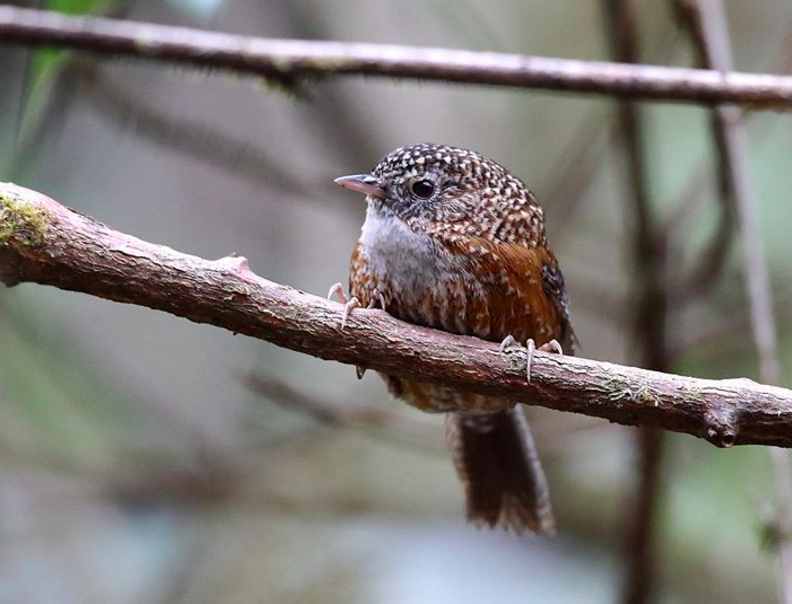
Eagle’s Nest Wildlife Sanctuary, Arunachal Pradesh

‘Eco-warriors’ and ‘climate hawks’: is it time to ease up on the war metaphors? Photograph: Amelia Bates/Grist
We connected a series of dots that we felt told a story. Get mad. I know I sure have felt mad in the midst of such alarming inaction. Maybe there is a better way to motivate and get something tangible done. Considering the stakes, I am willing to listen to and try just about anything. And in this essay Kate Yoder reminds me that when we launched this platform in 2011 we felt sure that wordsmithing was part of the solution we wanted to highlight. All that we have been saying since then, and how we have been saying it, was meant to be about a better future–so back to the words for inspiration:
To take on climate change, we need to change our vocabulary
When we talk about saving the planet, we employ the narrative of war. Does it only deepen our divisions?
A study found the language of war was effective in conveying urgency to participants. But does it work for everyone? Photograph: Damian Klamka/Zuma Wire/Rex/Shutterstock
Each dead house fly was worth a quarter, my mom told us kids, but I never earned any money. Every time I cornered a fly, I pictured goo marks left on the wall – spots splayed with tiny black guts and twisted legs. My halfhearted swats gave even the most sluggish fly time to escape.
That I genuinely couldn’t hurt a fly might have been something I picked up in church. I grew up attending a Mennonite congregation in Indiana. We weren’t the bonnet-wearing, buggy-riding sort, but we embraced some traditions, like the Anabaptist teaching of nonviolence. This sometimes expressed itself in an instinct for conflict avoidance.
So I was surprised when violence crept into my speech three years ago when I started working as a journalist covering climate change. Some ancient spirit took hold of me, and I found myself deploying the narrative of war. Carbon tax proposals were “battles” to be fought. Greenhouse gas emissions had to be “slashed”. “Eco-warriors” and “climate hawks” were leading the charge. Continue reading



 Organikos