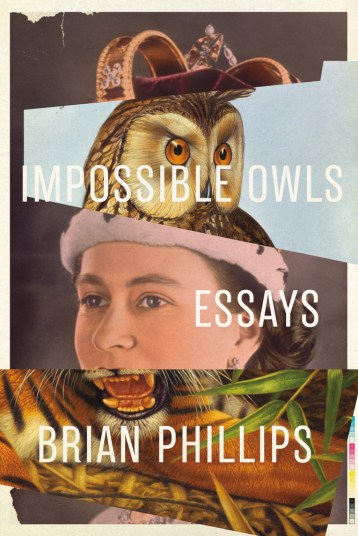
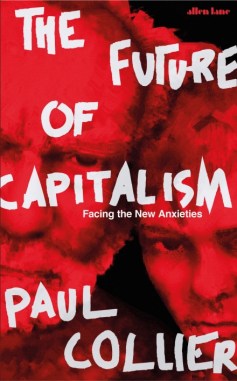
 I have a few more books, in addition to this history, on my reading list. Reihan Salam, the executive editor of National Review, provides this preview of the Oxford economist Paul Collier‘s new book:
You might expect that Paul Collier, a noted development economist at Oxford who has devoted most of his professional life to the uplift of the global poor, would see himself as a “citizen of the world.” But that’s not quite right. Collier grew up in Sheffield, a once-flourishing English steel town that provided working-class families like his own with a modicum of prosperity and stability, and that has since struggled in the face of import competition and the loss of many of its most ambitious citizens to London and other dynamic cities. He attributes his prodigious accomplishments in no small part to the cooperative character of the community, and the nation, in which he was raised.
National loyalty, far from being inimical to a more just and decent world in which all, including the world’s poorest, can flourish, is seen by Collier as a firmer foundation for global cooperation than abstract cosmopolitanism, which all too often serves as a mask for unenlightened self-interest. The question animating his small but wide-ranging book “The Future of Capitalism” is whether the sense of rootedness that so defined the Britain of his youth can be restored…
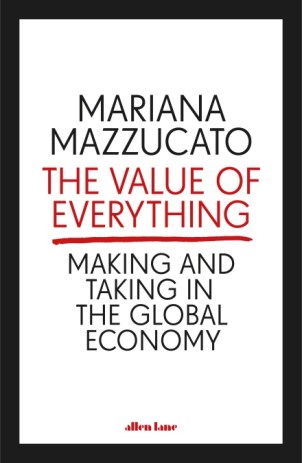 Read the whole review here. My second encounter with Paul Collier was this panel discussion on Intelligence Squared. The way in which the world’s developing economies view capitalism is as important as the current changes in how mature developed economies view capitalism. For that reason I am also looking forward to Mariana Mazzucato’s most recent book, to the right. Surprisingly I had never heard of her before listening to her muse about various influences in her life that led to her distinct voice on how value is created by societies. Her self-introduction makes me wonder how she did not show up in our pages previously:
I’m a Professor in the Economics of Innovation and Public Value at University College London (UCL), and Director of UCL’s Institute for Innovation and Public Purpose . My work is focused on the economics of innovation; patient finance; economic growth and the role of the State in modern capitalism. I advise policy makers around the world on how to achieve economic growth that is more innovation-led, inclusive and sustainable. My 2013 book, The Entrepreneurial State: debunking public vs. private sector myths, looks at the ‘investor of first resort’ role that the State has played in the history of technological change — from the Internet, to biotech and clean-tech — and the implications for future innovation and for achieving public-private partnerships that are more symbiotic. In 2016 I co-edited a book called Rethinking Capitalism: Economics and Policy for Sustainable and Inclusive Growth focusing on the need for new economic thinking to drive more effective economic policies. My new book The Value of Everything, available in UK and US edition, looks at the need to revisit the difference between value creation and value extraction, and the problems that arise when one is confused with the other.




 Yesterday’s
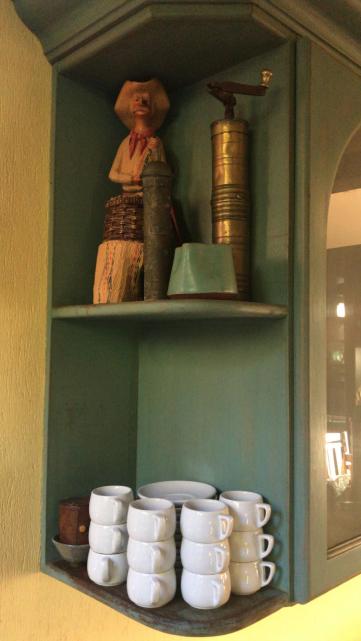 In the 2+ decades since that analysis, times have been difficult for the artisans of Costa Rica even as the tourism sector as a whole has grown dramatically. It is enough to say that something must be done in Costa Rica to valorize the artisans who have been able to hang on, and to likewise showcase the remarkable renaissance of artesania in this amazing country. The campesino in the photo to the right is from an artisan who carves coffee wood, with coffee farmers his primary subject. We received that carving as a gift in 1998 and we recently met the artisan who made it. He has managed to hang on.

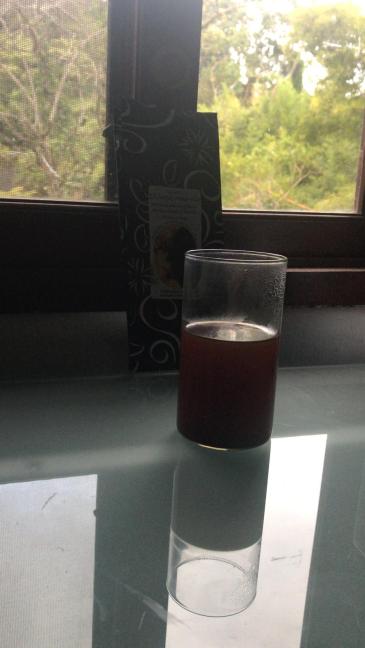
 The new morning, the first of the new year, started just like any other. Coffee. But a
  It is organic, washed (as opposed to natural process, or anaerobic or other new fangled methods) and medium-roasted. I use a nondescript filter brew machine, and I grind the beans slightly on the coarse side. Maybe I just woke up ready to enjoy the new year, but this tastes like one of the best new coffees I have sampled in the past 12 months. I have lost track of the count, but I have tasted several dozen varietals. This one stands out, perfect for my palate. The fact that it is organic, selected and roasted by friends for their own cafe, makes me think that we will have more of it before too long.

 When I see the name Peter Matthiessen the first thing I think of is a recording of his voice on my telephone ten years ago. I knew he would be passing nearby and had invited him to see