Libraries As Palaces For The People

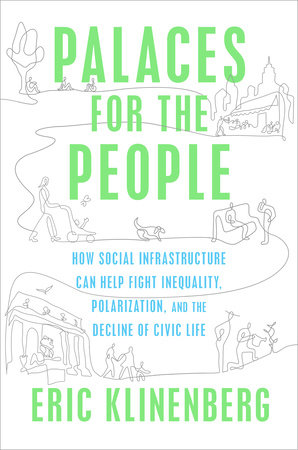
9781524761165We have had more stories in seven years about libraries, and librarians and books than most other topics, so we are pleased to pass along this reference to a book about libraries (among other essential elements of social infrastructure). In 20 minutes on this podcast the ideas in this book are discussed by the author:

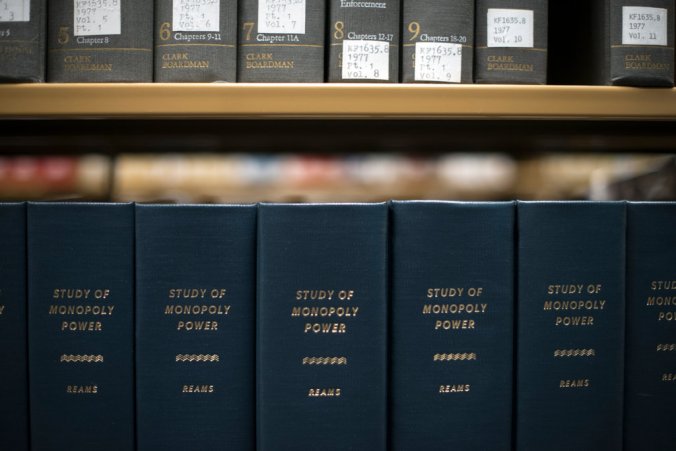
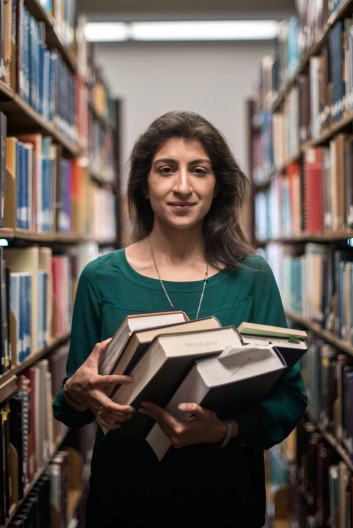
Eric Klinenbergprofessor of sociology and director of the Institute for Public Knowledge at New York University and the author of Palaces for the People: How Social Infrastructure Can Help Fight Inequality, Polarization, and the Decline of Civic Life (Crown, 2018), argues that the future of democracy lies in shared spaces, like libraries and parks.

Economics, Prodigy & A Better Future

merlin_140063802_2cbcf897-0703-4f45-9abd-01cca30177ca-jumbo

At the S.M.U. library in Dallas, Ms. Khan was finding inspiration from books that predated the price-based era of monopoly law. Credit Brandon Thibodeaux for The New York Times

I have resisted placing orders through Amazon about as steadfastly as humanly possible in the economic and cultural life Amazon has now taken such a prodigious role in. I have had plenty of hints of what the key points are in the growing debate about the company and why to resist it. Thanks to this excellent profile by David Streitfeld, I have a better understanding of why this is so important, and thanks to Lina Khan I have faith that the only way to counter prodigious power is with the power of prodigy:

Amazon’s Antitrust Antagonist Has a Breakthrough Idea

With a single scholarly article, Lina Khan, 29, has reframed decades of monopoly law.

09Khan1.print-superJumbo-v2.jpg

In early 2017, when she was an unknown law student, Lina Khan published “Amazon’s Antitrust Paradox” in the Yale Law Journal. Credit Brandon Thibodeaux for The New York Times

The dead books are on the top floor of Southern Methodist University’s law library.

“Antitrust Dilemma.” “The Antitrust Impulse.” “Antitrust in an Expanding Economy.” Shelf after shelf of volumes ignored for decades. There are a dozen fat tomes with transcripts of the congressional hearings on monopoly power in 1949, when the world was in ruins and the Soviets on the march. Lawmakers believed economic concentration would make America more vulnerable.

At the end of the antitrust stacks is a table near the window. “This is my command post,” said Lina Khan.

It’s nothing, really. A few books are piled up haphazardly next to a bottle with water and another with tea. Ms. Khan was in Dallas quite a bit over the last year, refining an argument about monopoly power that takes aim at one of the most admired, secretive and feared companies of our era: Amazon.

The retailer overwhelmingly dominates online commerce, employs more than half a million people and powers much of the internet itself through its cloud computing division. On Tuesday, it briefly became the second company to be worth a trillion dollars. Continue reading

Riverford, A Model Of Organic Farming In The UK

We first heard the name of the farmer on a favored music-oriented podcast, and then the name of his farm. After listening to his story, and his musical tastes, we had to learn more:

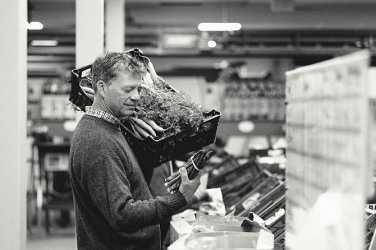
guy-singh-watson-4.jpgSelf-confessed veg nerd, Guy Singh-Watson has over the last 30 years taken Riverford from one man and a wheelbarrow delivering homegrown organic veg to friends, to a national veg box scheme delivering to around 50,000 customers a week.

Guy is an inspirational, passionate, opinionated and admired figure in the world of organic farming, who still spends more time in the fields than in the boardroom. Continue reading

Omnivore’s Dilemma In A Shark Species

07tb-sharks-jumbo.jpg

A bonnethead shark in the shallows of Florida’s Pine Island Sound. Credit Getty Images

I do not know why it has been so long since we last linked to a story by her, and I will remain on the lookout for more excellent science writing by her, but for now a quick thanks to Veronique Greenwood for this:

The Omnivorous Sharks That Eat Grass

Diminutive bonnethead sharks are the first omnivorous sharks known to science, which could change our understanding of what some sharks eat.

merlin_143308854_1e868ce5-fc07-4d7f-b6cb-4bf4d92684b8-jumbo.jpg

After researchers caught bonnethead sharks for study, they received a daily meal consisting of a wad of seagrass wrapped in a piece of squid, resembling a large inside-out sushi roll. Credit Samantha Leigh

Sharks are not known for their taste for greenery. But at least one species of shark enjoys a salad of sea grass as well as the prey it hunts.

The bonnethead shark, a diminutive species that reaches up to 3 feet in length, lives in the shallow sea grass meadows off both coasts of the Americas. It eats small squid and crustaceans ferreted from the swaying underwater fronds. But, researchers who have carefully monitored everything going in and out of captive bonnetheads say in a study published in Proceedings of the Royal Society B that they also eat large quantities of seagrass. The grass isn’t just passing inertly through the sharks’ guts. They extract nutrition from it just as they do from the meaty portion of their diet. These sharks must, therefore, be reclassified as omnivores — the first omnivorous sharks known to science. Continue reading

Teaching Lego To Play Well By Eliminating Plastic

merlin_137674503_7ad52e7b-462c-4daf-897b-9940119cd67b-jumbo.jpg

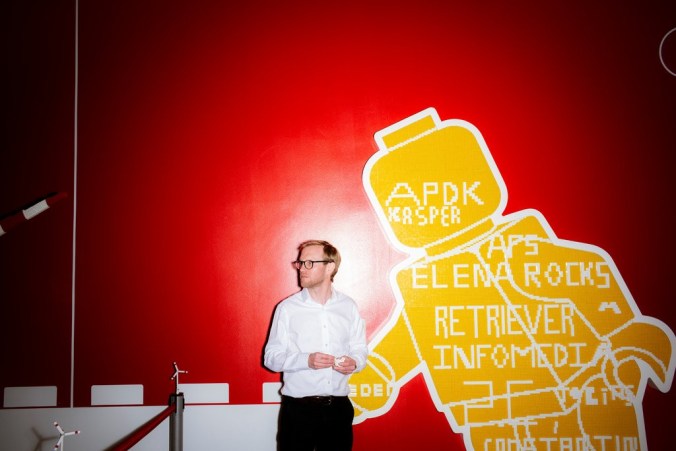
Tim Brooks, Lego’s vice president for environmental responsibility, says the company emits about a million tons of carbon dioxide each year. Credit Carsten Snejbjerg for The New York Times

For a company, and a product, that has been a part of so many lives for so long–and especially one whose name means to play well, it is still a shock to be reminded of their carbon footprint. And three years after first reading about their commitment, it is good to read details of their plan and progress:

Lego Wants to Completely Remake Its Toy Bricks (Without Anyone Noticing)

merlin_137674470_486eb273-ba3b-4808-857f-956b9cb7f533-jumbo.jpg

At Lego, petroleum-based plastics aren’t the packaging, they’re the product — and the bricks making up these dinosaurs have barely changed in more than 50 years. Credit Carsten Snejbjerg for The New York Times

BILLUND, Denmark — At the heart of this town lies a building that is a veritable temple to the area’s most famous creation, the humble Lego brick. It is filled with complex creations, from a 50-foot tree to a collection of multicolored dinosaurs, all of them built with a product that has barely changed in more than 50 years.

A short walk away in its research lab, though, Lego is trying to refashion the product it is best known for: It wants to eliminate its dependence on petroleum-based plastics, and build its toys entirely from plant-based or recycled materials by 2030. Continue reading

Greening Indian Cities

Another creative commitment to Green Innovation. Thanks to the Times of India for this story about how Ahmedabad embraces green walls, goes vertical:

Aapnu Amdavad has a lot to boast about. From being the first city to have been declared India’s first Unesco World Heritage City to being home to some prime educational institutes, this city has gained prominence on the global map. Having said that, the city has its share of dark spots too. The fast diminishing green cover in the city is one of them. India’s fifth largest city has a tree cover of approximately 35 crores (as per a 2017 census), which although is 13% more than the number of trees in 2013, is still not enough. The ongoing metro project has also led to a lot of felling of trees. Taking into consideration all this, Ahmedabad Municipal Corporation (AMC) has decided to build vertical gardens in the city. It recently set up a small vertical garden along one of the pillars at the flyover at Helmet crossroads.

What are vertical gardens? Essentially vertical gardens are the kind of gardens that grow vertically, along walls or pillars, with the help of trellis (which are wooden frames) or similar support systems. Continue reading

Behavioral Science & Green Innovation

5749.jpg

Green registration plates are already in use in China. Photograph: Roman Pilipey/EPA-EFE/Rex/Shutterstock

The UK, whatever other challenges it may be experiencing, is proving itself creatively committed to green innovation:

Green number plates ‘could boost sales of electric cars’ in UK

Behavioural insights unit proposes new colour for registration plates to help ‘normalise the idea of clean vehicles’

Superpods & Ocean Heroes

OHeroes.jpgThis National Public Radio (USA) story led us to the video above, and then the source website, where we discovered several initiatives that are worth a closer look:

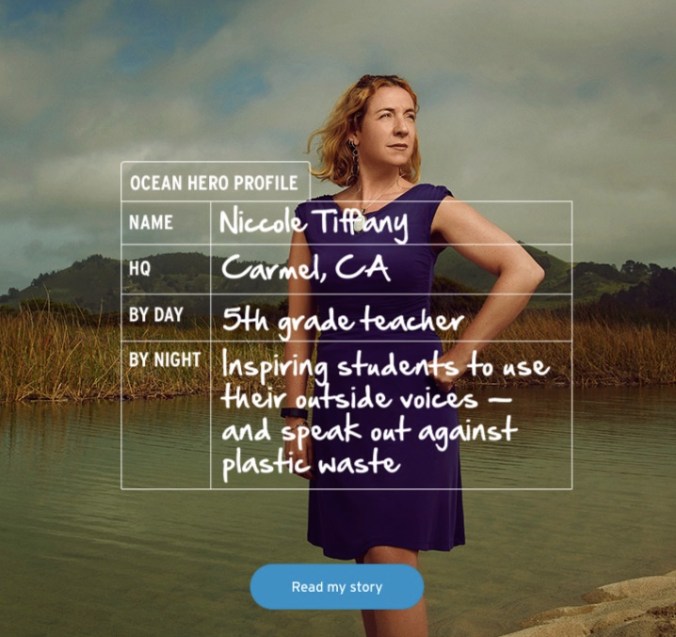
Ocean action: In 2017, Carmel-by-the-Sea’s City Council voted to require that restaurants stop using single-use plastic straws and utensils and instead provide only compostable to-go serviceware—and only upon request. The law took effect in the spring of 2018. The impetus came from a group of fifth-grade students from Carmel River Elementary School. They spoke at community forums and Carmel City Council meetings to advance the idea. Mayor Steve Dallas later credited them with playing a pivotal role in getting the ordinance enacted. “When it finally passed, the students were ecstatic,” says teacher, Niccole Tiffany, of her students. “It was a big lesson on the power of kids’ voices in actively creating change.” (Read more of her story here)

OceanHero.jpg

Thanks to the Monterey Bay Aquarium for programs that inspire local citizens, especially youth, to environmental activism like this:

Saving Our Seas One Sip at a Time with “No Straw November”

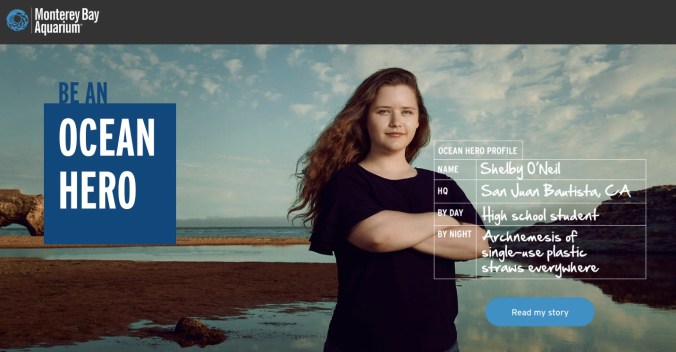
Ocean action: Shelby O’Neil, a high school student from San Juan Bautista, created a successful campaign called “No Straw November,” asking people to pledge not to use plastic straws for one month. She’s earned national exposure through the Martha Stewart Living magazine and the Leonardo DiCaprio Foundation. She convinced Alaska Airlines to ditch plastic straws and toothpicks on all its flights (a story picked up by Fortune magazine). Shelby was even flown to the headquarters of Delta Airlines to promote her campaign; spoke at Dreamforce, the annual user conference hosted by Salesforce.com in San Francisco; and won unanimous California Coastal Commission support for “No Straw November.” But she didn’t stop there. “For a Girl Scout Gold Award, I created a nonprofit called Jr Ocean Guardians,” says Shelby, “teaching younger schoolchildren the importance of the oceans and how they can help.” Continue reading

Wind Powering 590,000 Homes

WindFarm.jpg

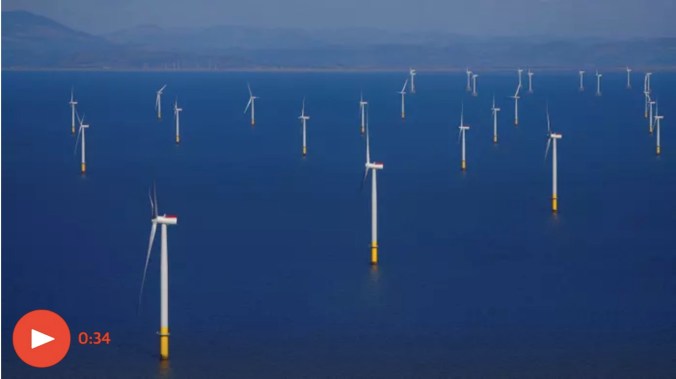
 Drone footage shows world’s largest offshore windfarm – video

Thanks to the Guardian for this news about harnessing wind at a record scale:

World’s largest offshore windfarm opens off Cumbrian coast

Walney Extension will power 590,000 homes amid fears Brexit could stifle growth

ChartWind.jpg

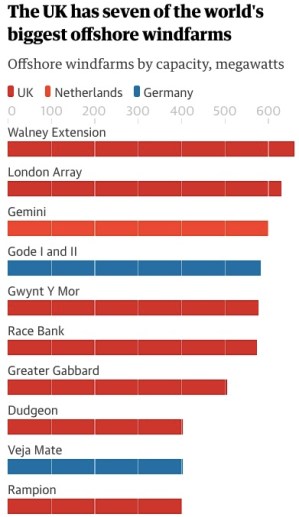
Guardian Graphic | Source: Renewable

The world’s biggest offshore windfarm has officially opened in the Irish Sea, amid warnings that Brexit could increase costs for future projects.

Walney Extension, off the Cumbrian coast, spans an area the size of 20,000 football pitches and has a capacity of 659 megawatts, enough to power the equivalent of 590,000 homes.

The project is a sign of how dramatically wind technology has progressed in the past five years since the previous biggest, the London Array, was finished.

The new windfarm uses less than half the number of turbines but is more powerful.

Matthew Wright, the UK managing director of Danish energy firm Ørsted, the project’s developer, said: “It’s another benchmark in terms of the scale. This – bigger turbines, with fewer positions and a bit further out – is really the shape of projects going forward.” Continue reading

The Visual Shero of Afrofuturism

A still-life of accessories from various films that Carter has worked on: the headpiece of Queen Ramonda, in “Black Panther”; cufflinks for Martin Luther King, Jr., in “Selma”; and the dancing shoes worn by Shorty, a character in “Malcolm X,” who was played by Spike Lee. Photographs by Awol Erizku

In film and theatre, costume design is often as important as a setting and script to craft the sense of both character and story. It’s debatable whether non-fiction or fiction is more challenging, but Ruth E. Carter’s work carries the story for either one, with an attention to detail that brings the viewer back into history or forward into new worlds.

Be sure to click through the article for more of Awol Erizku’s dynamic photos, as well as watch the video below for more images and Carter’s own explanation of her work.

RUTH E. CARTER’S THREADS OF HISTORY

Throughout her career, the costume designer for “Black Panther” has created visions of black identity, past and future.

Ryan Coogler’s “Black Panther” is a rare thing: a big-budget superhero movie that is unabashedly serious about great clothes. The film’s costume designer, Ruth E. Carter, evoked the fictional African kingdom of Wakanda by melding sci-fi with global fashion history, drawing influence from sources including the color symbolism of the Maasai people, samurai armor, and the jewelry of Ndebele women. She realized her vision with the help of an international team of researchers, buyers, tailors, beaders, and engineers, and by exploring the possibilities of 3-D-printing technology. For her efforts, she has been lauded as one of the essential visual storytellers of Afrofuturism. Continue reading