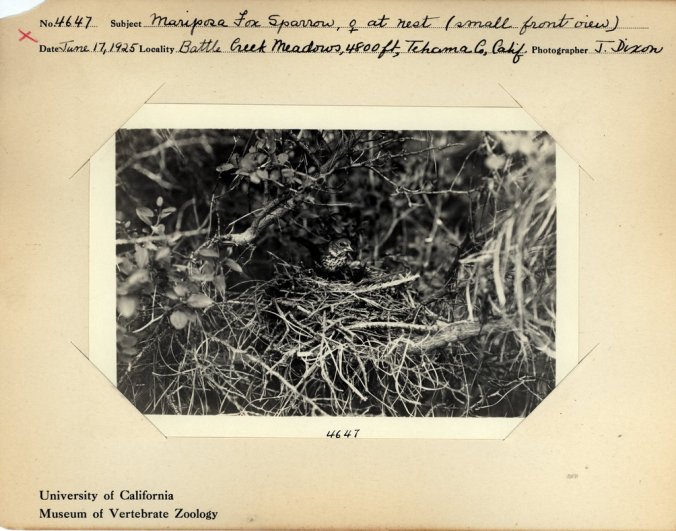
A Mariposa fox sparrow in its nest in 1925, observed during Dr. Joseph Grinnell’s surveys of California fauna. Credit Museum of Vertebrate Zoology, University of California, Berkeley
Retracing the steps of a century-old wildlife survey, ecologists find that birds are making remarkable adaptations to climate change.
More than a century ago, zoologist Joseph Grinnell launched a pioneering survey of animal life in California, a decades-long quest — at first by Model T or, failing that, mule — to all corners and habitats of the state, from Death Valley to the High Sierra.
Ultimately Grinnell, founding director of the Museum of Vertebrate Zoology at the University of California, Berkeley, and his colleagues produced one of the richest ecological records in the world: 74,000 pages of meticulously detailed field notes, recording the numbers, habits and habitats of all vertebrate species that the team encountered.
In 2003, museum scientists decided to retrace Grinnell’s steps throughout the state to learn what changes a century had wrought. And that’s why Morgan Tingley, then an ecology graduate student at the university, found himself trekking through the Sierra for four summers.
Dr. Tingley wanted to know how birds had fared since Grinnell last took a census. Years later, the answer turned out to be a bit of a shock. Continue reading →
Thanks to Blake and Jen for all their awesome work. Also thanks to Sara Ventiera (a new food and travel writer for us to follow!) and her colleagues at National Public Radio (USA) for keeping us connected to such heroics:
Hell’s Backbone Grill is located in Boulder, Utah, about 250 miles south of Salt Lake City. The restaurant’s owners are fighting Trump’s plans to slash the size of nearby Grand Staircase-Escalante National Monument by more than half. Ace Kvale
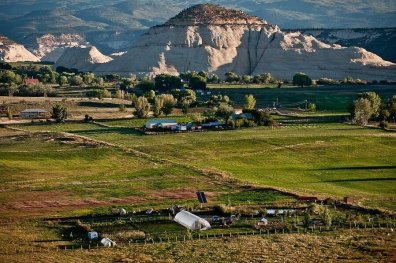
Standing between peach and cherry trees on her 6.5-acre Utah farm, Blake Spalding points to the Kaiparowits Plateau. The looming bluff is dotted with thousand-year-old pinyon pine and juniper trees.
“That is one of the areas they’re hoping to mine,” she tells a group of visiting chefs from Salt Lake City. “It’s full of dinosaur fossils and more than 650 documented species of wild bees.”
The remote and sustainable restaurant has become a destination for travelers seeking a taste of its terroir-driven fare. Ace Kvale
Nearly 20 years ago, Spalding and her business partner, Jen Castle, founded Hell’s Backbone Grill in Boulder, Utah, on the edge of the then-newly designated Grand Staircase-Escalante National Monument, about 250 miles south of Salt Lake City. The remote and sustainable restaurant has become a destination for culinary travelers seeking a taste of its terroir-driven fare. It’s an amalgam of Mormon pioneer, Western range cowboy and traditional Southwest flavors, like juniper lamb posole or grilled pork chops with Boulder crabapple barbecue sauce. Continue reading →
“We completely regret what happened,” a spokesman for the cruise company said, adding the bear was killed in self-defense.
Hapag-Lloyd Cruises is not the worst company in the world but it sure is trying hard. And they are in a very dirty business. The lead photo in this story by Yonette Joseph is just too depressing to share here, so the map is shown instead. That photo requires viewing as an act of witness to the cruise industry’s lack of ethics, so read on and click through:
LONDON — A polar bear was shot and killed on Saturday after it attacked and injured a guard from a cruise ship that had stopped at an Arctic archipelago, the Norwegian authorities said.
The death of the bear at the hands of another cruise ship employee drew condemnation on social media, with some calling it “abhorrent” and others questioning killing the polar bear for “acting like a wild animal.” Continue reading →
A wheat field in Mouchamps, France. There are very few genetically modified crops grown in Europe compared to the United States. Credit Regis Duvignau/Reuters
In Europe, plants created with gene-editing technologies will be stringently regulated as G.M.O.’s. But older crops whose DNA has been altered will be left alone.
Mushrooms that don’t brown. Wheat that fights off disease. Tomatoes with a longer growing season.
This week, the court ruled that gene-edited crops are genetically modified organisms, and therefore must comply with the tough regulations that apply to plants made with genes from other species.
Many scientists responded to the decision with dismay, predicting that countries in the developing world would follow Europe’s lead, blocking useful gene-edited crops from reaching farms and marketplaces. The ruling may also curtail exports from the United States, which has taken a more lenient view of gene-edited foods.
“You’re not just affecting Europe, you’re affecting the world with this decision,” said Matthew Willmann, the director of the Plant Transformation Facility at Cornell University. Continue reading →
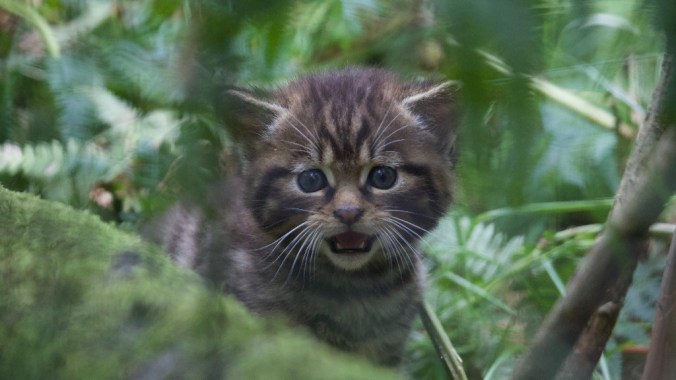
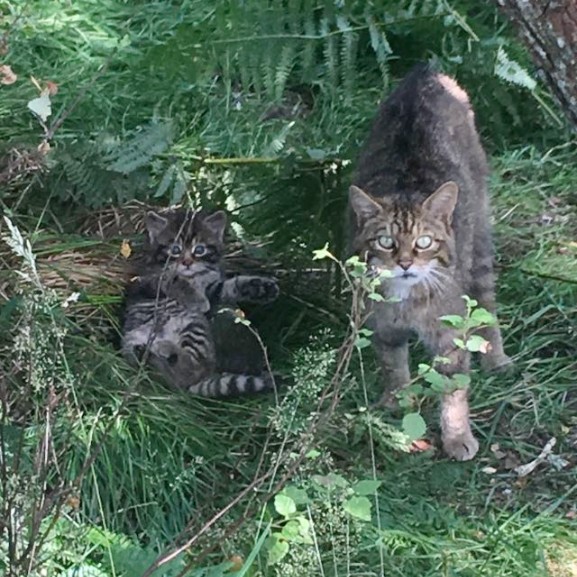
Thanks to our friends at Alladale for sharing this with us yesterday. (to not disturb the kittens at this time, these photos by Innes MacNeill are from an earlier litter and further content will follow will about the new ones, so we recommend you subscribe here to their newsletter):
Conservation efforts for the critically endangered Scottish wildcat have had another boost as Alladale Wilderness Reserve welcomes the arrival of two kittens. These kittens, who are part of the captive breeding programme and whose parents were given the go-ahead for breeding following genetic testing by the Royal Zoological Society of Scotland (RZSS), have the potential to play a key role in the long-term conservation of this near-extinct native species.
Working together with RZSS, Scottish Wildcat Action and other wildlife conservation organisations across Scotland, Alladale Wilderness Reserve and The European Nature Trust (TENT) are supporting the development of effective, long term plans focused on wildcat recovery through reintroductions. This work follows other successful models of endangered cat conservation, like that of the Iberian lynx in Spain and Portugal whose population has been saved in recent years following numerous reintroductions. Continue reading →
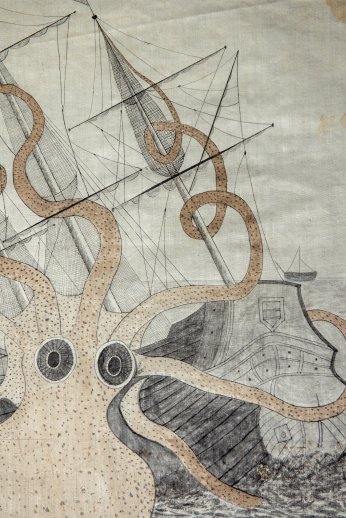
“Colossal Octopus,” 1828–1840, by Orra White Hitchcock, one of America’s first female scientific illustrators, on view at the American Folk Art Museum. Credit George Etheredge for The New York Times
Women remain grossly underrepresented at the highest echelons of American science, and continue to face absurd claims of “innate” inferiority, whether from former Harvard presidents or senior engineers at Google. But until the mid-19th century — when the sciences became professionalized, and when Charles Darwin and others put Christian doctrine under pressure — a woman’s place was in the laboratory, or among the geology and zoology specimens.
Back then the humanities (classics and philosophy, especially) were understood as masculine academic pursuits. It was the more genteel disciplines of natural science, astronomy, chemistry, botany and anatomy, to which women of a certain class gravitated.
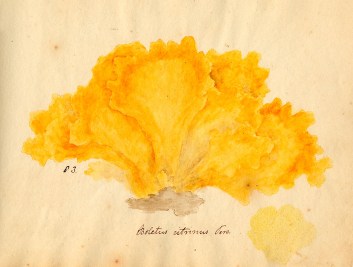
Orra White Hitchcock’s “Fungi Selecti Picti, Vicinity of Conway, Massachusetts” (1821), watercolor, pencil, pen and ink, and ink wash on paper in sewn album. Credit Smith College Special Collections
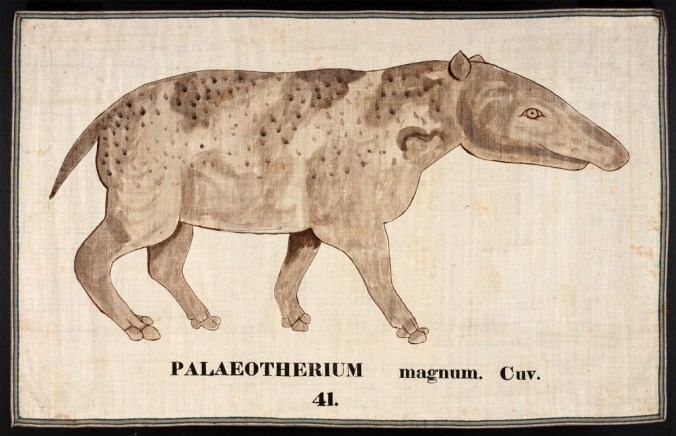
Orra White Hitchcock (1796-1863) was one of the most remarkable women from this more egalitarian age of scientific study. She had a deep knowledge of botany, zoology and paleontology, and she was also an artist — though that “also” would have seemed unnecessary to her. She produced two albums of botanical illustrations, and later, as introductory materials for her husband’s classes, she diagramed volcanoes, sketched the skeletons of extinct fish and mammals, and drew undulant squids and octopuses on large cotton sheets.
They’re all united at the American Folk Art Museum in “Charting the Divine Plan: The Art of Orra White Hitchcock,” a handsome and unexpectedly passionate exhibition on art, science and education in the early American republic. More than 100 watercolors and classroom charts are here, from painstakingly accurate paintings of reeds and mushrooms to boldly colored abstractions of the earth’s crust and core, and they share space with a splendid array of diaries and correspondence, redolent with the Hitchcocks’ intertwined loves for science, God and each other. Continue reading →
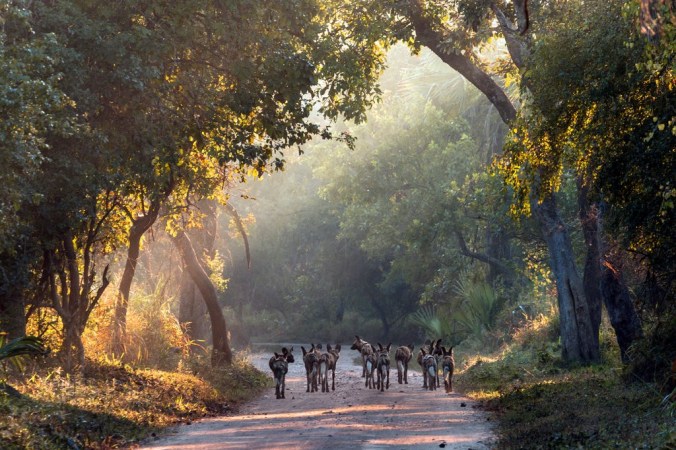
Wild dogs, apex predators missing from Gorongosa National Park for decades, have been reintroduced and are slowly making a comeback, part of an ongoing experiment in reviving the park ecosystem after years of devastating war. Credit Brett Kuxhausen/Gorongosa Media, via Associated Press
At Gorongosa National Park, scarred by civil war, scientists are answering fundamental questions about ecology and evolution, and how wildlife recovers from devastation.
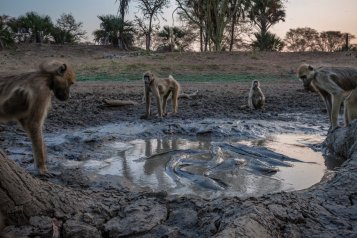
Baboons and sharptooth catfish in the Mussicadzi River in the park during the dry season. The baboons in Gorongosa are brazen and plentiful, as there aren’t many leopards to keep them in check. Credit Piotr Naskrecki & Jen Guyton/NPL/Minden Pictures
GORONGOSA NATIONAL PARK, MOZAMBIQUE — The 14 African wild dogs were ravenous, dashing back and forth along the fence of their open-air enclosure, or boma, bouncing madly on their pogo-stick legs, tweet-yipping their distinctive wild-dog calls, and wagging their bushy, white-tipped tails like contestants on a game show desperate to be seen.
Since arriving at the park three months earlier, as they acclimated to their new setting and forged the sort of immiscible bonds that make Lycaon pictus one of the most social mammals in the world, the dogs had grown accustomed to a daily delivery of a freshly killed antelope to feast on. Continue reading →
Is the evidence for fish-eating better than simply taking a fish oil pill? Composite: Getty
Paul Greenberg, author of The Omega Principle: Seafood and the Quest for a Long Life and a Healthier Planet (Penguin Press), is making the rounds with an important argument; get the short version here in the Guardian:
Omega-3 is one of our favourite supplements – but a huge new study has found it has little or no benefit for heart health or strokes. How did it become a $30bn business?
The omega-3 industry is in a twist. Again. Last week, Cochrane, an organisation that compiles and evaluates medical research for the general public, released a meta-analysis – a study of studies – to determine whether or not omega-3 pills, one of the world’s most popular dietary supplements, reduced the risk of coronary heart disease. After comparing 79 trials involving 112,059 people, the researchers could find “little or no difference to risk of cardiovascular events, coronary heart deaths, coronary heart disease events, stroke or heart irregularities”.
I can’t say that I was particularly surprised. Over the past 15 years, more than 20 studies have shown a similar lack of effect. But what does surprise me is how we continue to look at the world of fish and seafood through the amber lens of a fish oil capsule. Omega-3s do something in our bodies – and probably something important. But without the larger context of the marine organisms that contain them, omega-3s get lost in the noise of human metabolism and modern marketing.
Study says the date by which we consume a year’s worth of resources is arriving faster
Humanity is devouring our planet’s resources in increasingly destructive volumes, according to a new study that reveals we have consumed a year’s worth of carbon, food, water, fibre, land and timber in a record 212 days.
As a result, the Earth Overshoot Day – which marks the point at which consumption exceeds the capacity of nature to regenerate – has moved forward two days to 1 August, the earliest date ever recorded.
Earth Overshoot Day falls on 1 August this year – marking the point at which consumption exceeds the capacity of nature to regenerate
Guardian graphic. Source: Overshootday.org
To maintain our current appetite for resources, we would need the equivalent of 1.7 Earths, according to Global Footprint Network, an international research organisation that makes an annual assessment of how far humankind is falling into ecological debt. Continue reading →





The omega-3 industry is in a twist. Again. Last week, Cochrane, an organisation that compiles and evaluates medical research for the general public, released a meta-analysis – a study of studies – to determine whether or not omega-3 pills, one of the world’s most popular dietary supplements, reduced the risk of coronary heart disease. After comparing 79 trials involving 112,059 people, the researchers could find “little or no difference to risk of cardiovascular events, coronary heart deaths, coronary heart disease events, stroke or heart irregularities”.




 Organikos