Progress Through Yeast

yeast_wide-eb654133785982b6ac43f4ee0d2913b4aab254fa-s1600-c85.jpg

Fresh and dried yeast. It might not look like much, but it has shaped the way we eat and live, according to a new book. Maximilian Stock Ltd./Getty Images

Thanks to Menaka Wilhelm:

The Rise Of Yeast: How Civilization Was Shaped By Sugar Fungi

An imagined conversation between two yeast cells appears in Kurt Vonnegut’s 1973 novel Breakfast of Champions. “They were discussing the possible purposes of life,” Vonnegut writes. If that’s not absurd enough, their existential discussion takes place against a weird, dismal backdrop, “as they ate sugar and suffocated in their own excrement.” Little did they know, their little yeasty lives had an important, human-centric purpose. “Because of their limited intelligence, they never came close to guessing that they were making champagne.” Continue reading

Finn The Wonder Dog, And Other Introduced Species

KarenAndrew_Finn-1-1260x708

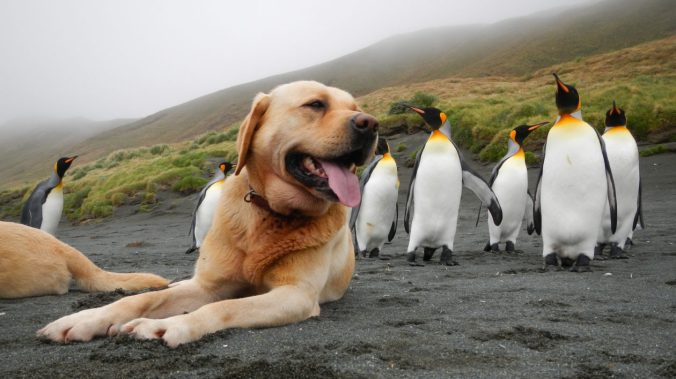
Finn the Wonder Dog on Macquarie Island with king penguins. Photo © Karen Andrew/New Zealand Department of Conservation

Thanks to Ted Williams at Cool Green Science for this article about the eviction of an invasive species in a remote location with charismatic species both native and introduced:

16051893298_01a0a7f12f_k-1260x708.jpg

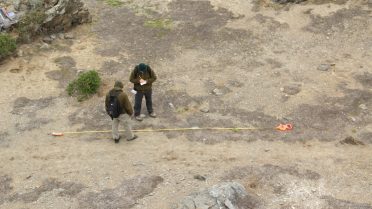
Choros Field Work. Photo © Island Conservation

Early in the 20th century settlers on the islands of Chañaral and Choros off northern Chile had a brainstorm: They’d create a ready supply of fresh meat by unleashing European rabbits.

It worked out as well as rabbit introduction in Australia. Continue reading

Starbucks Taking Some Responsibility

5118

Thanks to the Guardian’s consumer affairs correspondent, Rebecca Smithers, for this:

Starbucks trials 5p takeaway cup charge in attempt to cut waste

People buying hot drinks in cardboard cups in 35 London branches will pay ‘latte levy’

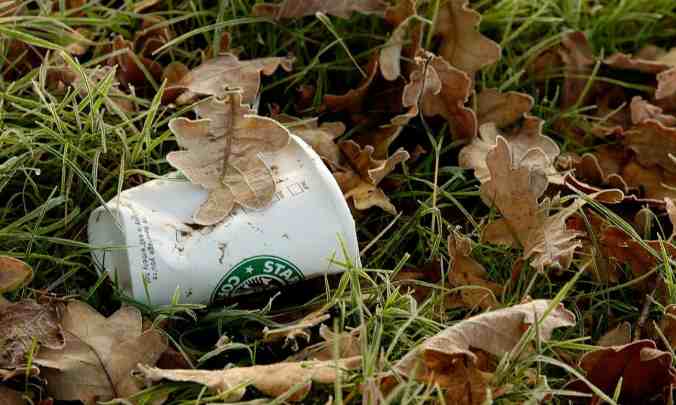
Starbucks will be the first UK coffee chain to trial a “latte levy” – a 5p charge on takeaway coffee cups – under plans that aim to reduce the overuse and waste of 2.5bn disposable cups every year.

In the latest offensive in the war against plastic waste, the chain said it hoped the move, starting on Monday, would help change behaviour and encourage customers to switch to reusable cups instead. Continue reading

Enlightenment & Optimism

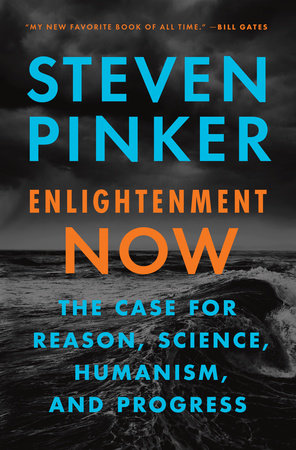
9780525427575.jpegSteven Pinker has featured in these pages plenty of times for the quality of his writing. Recently he was featured in a joint interview with Bill Gates that we meant to link to, but never did. And meanwhile we linked to this story about optimism; now this:

…If you think the world is coming to an end, think again: people are living longer, healthier, freer, and happier lives, and while our problems are formidable, the solutions lie in the Enlightenment ideal of using reason and science.

Is the world really falling apart? Is the ideal of progress obsolete? In this elegant assessment of the human condition in the third millennium, cognitive scientist and public intellectual Steven Pinker urges us to step back from the gory headlines and prophecies of doom, which play to our psychological biases…[continue reading on the book’s website]

The book came to our attention thanks to a smart op-ed:

merlin_132531638_bf5b1cdd-75e4-4b98-96d1-b77255ff8edd-master768

Steven Pinker, a psychology professor at Harvard, calls himself an Enlightenment man. Credit Chona Kasinger for The New York Times

…Pinker’s philosophical lens prevents him from seeing where the real problems lie. He calls himself an Enlightenment man, but he’s really a scientific rationalist. He puts tremendous emphasis on the value of individual reason. The key to progress is information — making ourselves better informed. The key sin in the world is a result either of entropy, the randomness that is built into any system, or faith — dogma clouding reason. Continue reading

A Pro-Environment Form Of Apartheid

4928

Jonathan Watts, over at the Guardian, has this news:

Britain and Europe must ban palm oil in biofuel to save forests, EU parliament told

Forest peoples affected by plantations urge EU to enact ban despite diplomatic opposition

If Britain and other European nations are to fulfil forest protection goals, they must ban the use of palm oil for biofuel and tighten oversight of supply chains, a delegation of forest peoples told parliamentarians this week.

The call for urgent, concrete action comes amid an increasingly heated diplomatic row over the issue between the EU and the governments of major palm-producing nations such as Indonesia, Malaysia and Costa Rica.

The European parliament voted last April to prohibit sales of biofuels made from vegetable oils by 2020 in order to meet its climate goals. This was followed by a related vote last month. Whether and how this might be implemented is now being considered by the European Commission and member states.

Continue reading

Interpreting Climate News

ArcticTemps.jpg

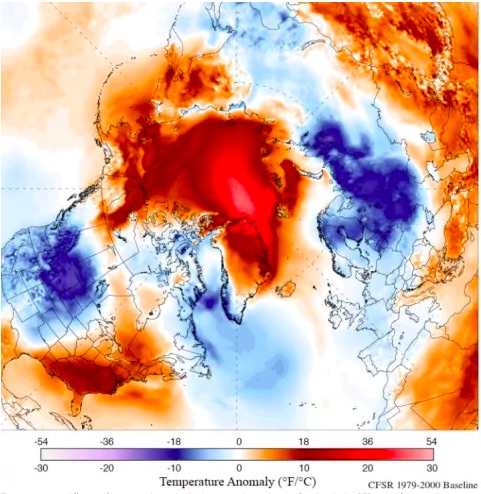
The temperature difference from normal over the Arctic averaged over the next five days in the GFS model forecast. (University of Maine Climate Reanalyzer)

Is it cataclysm or is it a rendering of what we already thought we knew? In case you missed it, there was some startling news that came with this image to the left, that does not look like anything we have ever seen. And the article starts like this:

While the Eastern United States simmers in some of its warmest February weather ever recorded, the Arctic is also stewing in temperatures more than 45 degrees above normal. This latest huge temperature spike in the Arctic is another striking indicator of its rapidly transforming climate.

On Monday and Tuesday, the northernmost weather station in the world, Cape Morris Jesup at the northern tip of Greenland, experienced more than 24 hours of temperatures above freezing according to the Danish Meteorological Institute. “How weird is that?” tweeted Robert Rohde, a physicist at the University of California at Berkeley. “Well it’s Arctic winter. The sun set in October and won’t be seen again until March. Perpetual night, but still above freezing.”

This thaw occurred as a pulse of extremely mild air shot through the Greenland Sea.

Warm air is spilling into the Arctic from all sides. On the opposite end of North America, abnormally mild air also poured over northern Alaska on Tuesday, where the temperature in Utqiaġvik, previously known as Barrow, soared to a record high of 31 degrees (minus-1 Celsius), 40 degrees (22 Celsius) above normal. [continue to the article]

Alarming? We think so. Clear? We do not think so. Eric Lach, Deputy News Editor at The New Yorker, has this brief helpful interpretation, with a much easier to understand illustration:
The-Current-Today-Big-Climate-Change.jpg

Many media outlets now regularly cover instances of extreme weather in remote corners of the world. How should readers understand these reports? Photograph by Esther Horvath / Redux

How to Read Today’s Big Climate-Change Headline

This week brought news from the Arctic. “Arctic temperatures soar 45 degrees above normal, flooded by extremely mild air on all sides,” the Washington Post declared, in a headline. The article below that headline detailed how, on Monday and Tuesday, at the northern tip of Greenland, temperatures rose above freezing for a full twenty-four-hour period—extremely unusual for this time of year—while temperatures across “the entire Arctic north of 80 degrees latitude have averaged about 10 degrees (6 Celsius) above normal since the beginning of the calendar year.”

All sorts of media outlets now regularly cover instances of extreme weather in remote corners of the world. And yet how should readers understand these reports? Are the ups and downs of climate change something to follow in the newspaper, like the Mets or the Yankees? [continue to the post]

Why Optimism Is Not Naive Right Now

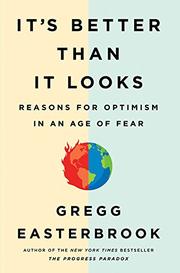
9781610397414If you only have a minute, this will do, courtesy of Kirkus Review (read the remaining couple paragraphs of that review by clicking on the book cover to the left):

Cheer up, world: we’re killing each other less, except in our cars, and living in a boom. Thus this contrarian pep talk by longtime Atlantic contributor Easterbrook (The Game’s Not Over: In Defense of Football, 2015, etc.).

Optimism is out of style, but by the author’s account, it shouldn’t be. When Donald Trump came into office, the unemployment rate was low enough that the number “would have caused economists of the 1970s to fall to their knees and kiss the ground.”…

But in less than half an hour you can get the author’s spoken digest of the book here:

Easterbrook1.jpg

And if that interests you, and you want more but not the whole book, try this, courtesy of Carnegie Council for Ethics in International Affairs:

Getting To No On Plastic

5514

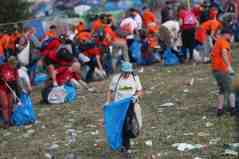
The cleanup … Glastonbury 2017. Photograph: Matt Cardy/Getty Images

This headline in the Guardian–Glastonbury festival set to ban plastic bottles in 2019accompanying the photo to the right is well timed for me:

Emily Eavis says festival is working on ‘enormous project’ to ban plastic bottles on site when it returns after year off in 2018

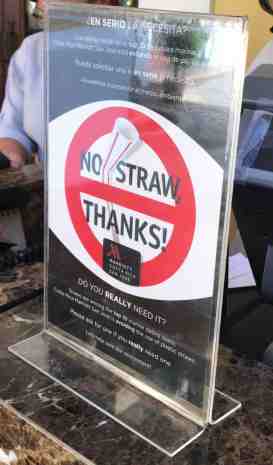
MarriottNoStraw.jpgThat story continues after the jump, but I want to add to this post an image I just photographed when visiting the Costa Rica Marriott Hotel San Jose that was built more than two decades ago. Amie and I were friends with the managers of that property from the mid- to late-1990s, but had lost track of what this property has been up to lately. And I was very happy to learn today that they have recently earned five leaves in the CST program, whose board of directors I served on in the mid- to late-1990s. Bravo, Marriott! And as I snapped this photo, I was told that starting next month this property will have no straws, even if someone says they “really need one” (as the text on the sign says near the bottom). Double bravo!

We have reported on efforts in India, during our years there, to reduce noise pollution using similar signage. Whoever designed this sign for the Marriott property in Costa Rica was thinking along the same lines, graphically speaking. While I am in Costa Rica this week, I hope to have more to report, but for now, back to Glastonbury: Continue reading

Bats Are More Important Than You May Realize

Sullivan-A-Fatal-Disease-Ravaging-Americas-Bats

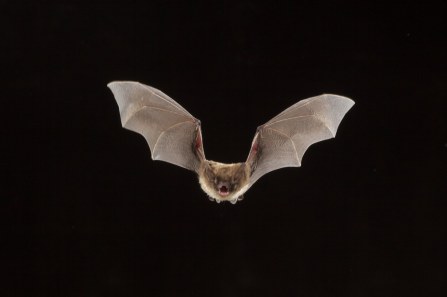
Since white-nose syndrome was first identified, just twelve years ago, it has spread to thirty-one states. The consequences—for bats, humans, and the U.S. economy—could be disastrous. Photograph by Michael Durham / Minden Pictures / Getty

Once you see the photo to the left, more than likely you will bypass this post. We have found this over dozens of occasions when we have posted about this animal. But think twice; read this first (thanks to J. R. Sullivan, an editor for Men’s Journal writing on the New Yorker website):

Late last summer, the biologist Mark Gumbert began flying over the farmlands of Iowa, looking for bats. As the animals foraged and moved through the night, he followed from above, circling the rivers and fields in his single-engine Cessna 172, trying his best not to lose the signals from their transmitters. Over the past decade or so, Gumbert has pioneered the study of bat migrations using radio telemetry, a method of wildlife tracking typically reserved for caribou, moose, and other big game, which tend to travel at moderate speeds. “A wolf running across the ground can move pretty quick, but they’re not going to run all night,” Gumbert told me recently. A bat, on the other hand, can be nearly impossible to trail on foot or by truck. Gumbert and his team at Copperhead Environmental Consulting were the first to observe an entire migration from the air, and they have since conducted surveys in New York, North Carolina, Ohio, Tennessee, West Virginia, and elsewhere. But the project that brought Gumbert to Iowa was unlike any he had undertaken before—tracking the northern long-eared batMyotis septentrionalis, a species that is among those most threatened by a dangerous fungal disease called white-nose syndrome. Continue reading

Coffee, Birds & India Forever

merlin_133986233_bd3304d6-db53-4670-b4fa-812f01167101-master675.jpg

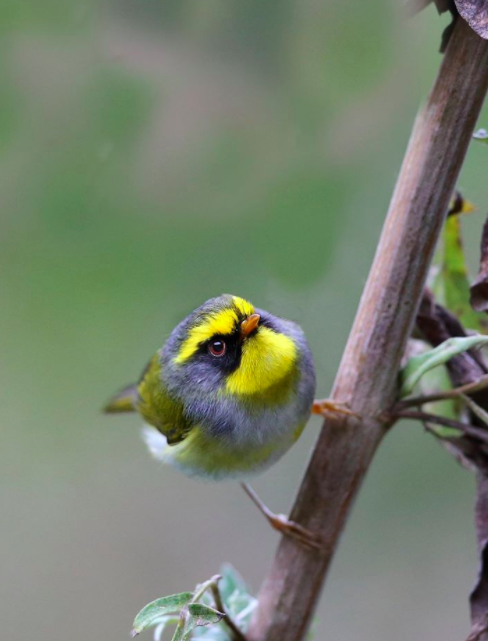
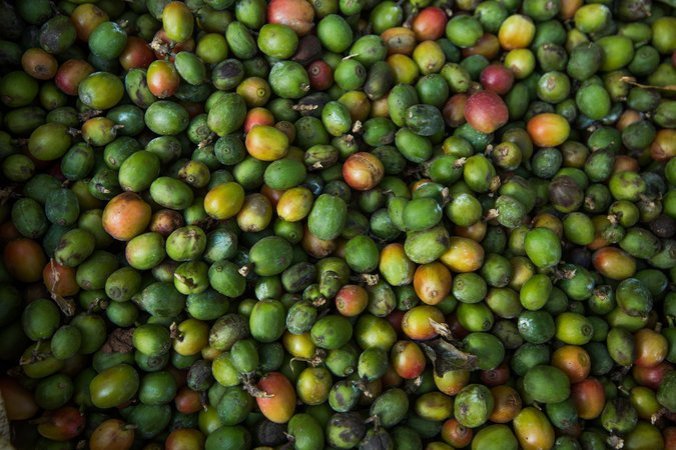
Ah, our favorite trifecta of the 2010-2017 era: coffee and birds and India! (Not to mention that the 2 species of birds featured in the article have graced this site in our Bird of the Day feature!) Just because we are back in Costa Rica does not mean the topics covered in this article are any less important to us. Thanks to Karen Weintraub for this:

Coffee Beans Are Good for Birds, Fancy Brew or Not

17TB-COFFEE4-master675

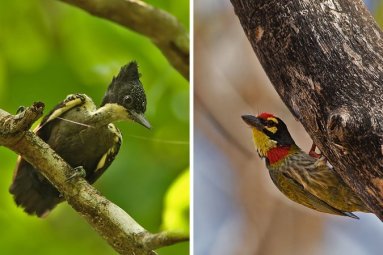
Left, a heart-spotted woodpecker. Right, a coppersmith barbet bangalore. Credit Left, Ramki S.; Right, Shashank Dalvi

Birds are not as picky about their coffee as people are.

Although coffee snobs prefer arabica beans to robusta, a new study in India found that growing coffee does not interfere with biodiversity — no matter which bean the farmer chooses.

In the Western Ghats region of India, a mountainous area parallel to the subcontinent’s western coast, both arabica and robusta beans are grown as bushes under larger trees — unlike in South America, where the coffee plants themselves grow as large as trees, said Krithi Karanth, who helped lead the study, published Friday in the journal Scientific Reports. Continue reading