The Wisdom Of Wolves

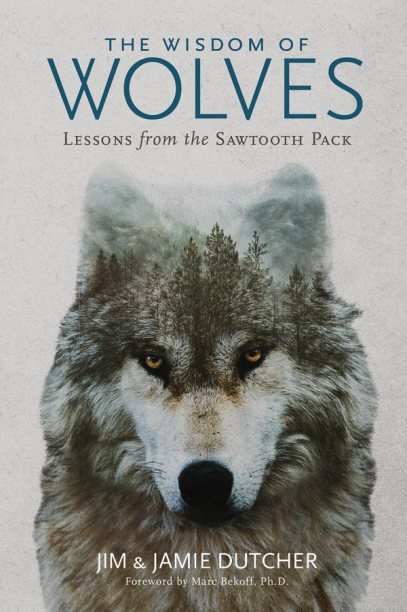
WisdomofWolvesCover.600x900.jpgWe first heard of the book here, so thanks to Public Radio station WNYC. However, in the blurb for the podcast interview with the authors, the link to the book went directly to Amazon. Must it forever more be so? Hope not.

So, click the image to the left to go to the actual source of the book, which seems a more worthy place to consider purchasing it, even though here too they give you the option to buy on Amazon. But there is a slight favoring of the publisher, National Geographic, in the purchase options. Here’s what they say:

CURIOSITY. COMPASSION. FAMILY FIRST.

After living among the wolves of The Sawtooth Pack for years, Jim and Jamie Dutcher present a new book, The Wisdom of Wolves: Lessons from the Sawtooth Packproviding groundbreaking observations of their unique experience.

As strong, and just as immediately recognizable as the ties that unite a human family, the emotional bonds shared among wolves are far more complex than ever realized, and now are detailed in this exceptional book. Continue reading

Know Your Packaging

girl-juicebox_wide-4eff0c88df284307072a9da33247352693ffef88-s1600-c85.jpg

Because of layers of material that can be difficult to separate, many containers for juices and broths have traditionally been destined for landfills. But recycling them is getting easier. KidStock/Getty Images

Natalie Jacewicz, a science writer based in New York City has this illuminating story on packaging:

In The Recycling World, Why Are Some Cartons Such A Problem?

Scoot over, cans; cartons are moving in on your shelf space. Specifically, the soft, light rectangular containers commonly associated with juice boxes — “aseptic cartons” to the carton literati.

“They’re growing in popularity,” says Jason Pelz, vice president of recycling projects for the Carton Council, an industry group. “Broth is predominantly in aseptic packaging now, and you see a lot of coconut water in it.”

Aseptic cartons pack several environmental upsides, with one big catch: Traditionally, these containers have been quite difficult to recycle. To take stock of the promises and challenges of this supermarket sensation, I talked to experts on all things carton. Continue reading
Rewilding In New Jersey

It has been some time since we featured a story on rewilding, which occasionally involves iconic urban areas. New Jersey may not sound iconic, but it is the home to one of the masters of long form so we are happy to share this late great masterpiece of his:

Direct Eye Contact

The most sophisticated, most urban, most reproductively fruitful of bears.

Improbably, I developed a yearning, almost from the get-go, to see a bear someday in the meadow. While I flossed in the morning, looking north through an upstairs bathroom window, I hoped to see a bear come out of the trees. If this seems quixotic, it was. This was four miles from the campus of Princeton University, around which on all sides was what New Yorkers were calling a bedroom community. Deer were present in large familial groups, as they still are in even larger families. They don’t give a damn about much of anything, and when I walk down the driveway in the morning to pick up the newspaper I all but have to push them out of the way. Beforehand, of course, I have been upstairs flossing, looking down the meadow. No bears. Continue reading

Geothermal Cooking, Just Because

merlin_125685548_c436b8e6-ebb0-4c57-8c2a-b2fcbf46e20b-master768.jpg

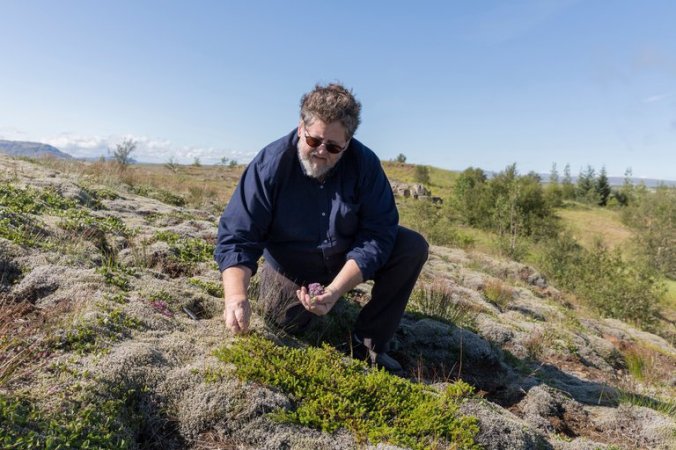
Jon Sigfusson, the chef at Fridheimar, a restaurant in Reykholt, Iceland, picking herbs for cooking lamb. Credit Bara Kristinsdottir for The New York Times

Thanks to Peter Kaminsky, who helps answer the question Why Cook Over an Icelandic Geyser? and does so with gusto:

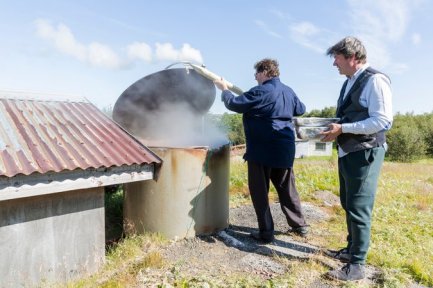
REYKHOLT, Iceland — Standing in the mud of the Myvatn geyser field in northern Iceland, Kolla Ivarsdottir lifted the lid of her makeshift bread oven. It had been fashioned from the drum of an old washing machine and buried in the geothermally heated earth. All around us mudpots burbled and columns of steam shot skyward, powered by the heat of nascent volcanoes.

merlin_125685812_85ded439-31d9-4c03-b718-389cf79b405a-master675.jpg

Mr. Sigfusson, left, and Kjartan Olafsson, a restaurant critic and fish exporter, putting food into the communal geothermal oven. Credit Bara Kristinsdottir for The New York Times

Ms. Ivarsdottir, a mother of three who sells her bread in a local crafts market, reached into the oven and retrieved a milk carton full of just-baked lava bread, a sweet, dense rye bread that has been made in the hot earth here for centuries. She cut the still-hot loaf into thick slices. It is best eaten, she said, “completely covered by a slab of cold butter as thick as your hand, and a slice of smoked salmon, just as thick.” We settled for bread and butter — still a supernal combination. Continue reading

Henry Worsley & The Importance Of Making Dreams Come True

r31463.jpg

Before Henry Worsley set off alone, his family painted messages on his skis. “Come back to me safely, my darling,” his wife wrote.
Photograph by Sebastian Copeland

If you have not read it yet, go straight to it. If you have read it already, next you will want to listen to the author, the subject (via field recordings) and the subject’s wife.

r31492.jpg

Henry and Joanna Worsley at the Korean War Veterans Memorial, in Washington, D.C., in 2015. Worsley served in the British Army for thirty-six years.
Photograph courtesy Joanna Worsley

We have linked to stories about explorers, though none specifically about Shackleton, in the past. The subject of this story has something important to say about his hero, and it is worth hearing his voice as well as his wife’s (click here).

The author, who we have linked to more than once, gave two excellent interviews about his process as a long-form story-teller, and if this is your thing, then you will want to listen to both, first here and more recently here.

The White Darkness: A Journey Across Antarctica

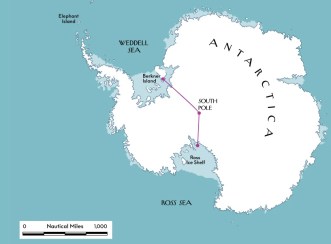
A solitary journey across Antarctica.

By David Grann

I. Mortal Danger

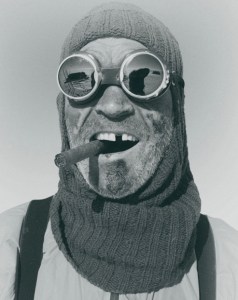
Worsley.jpgThe man felt like a speck in the frozen nothingness. Every direction he turned, he could see ice stretching to the edge of the Earth: white ice and blue ice, glacial-ice tongues and ice wedges. There were no living creatures in sight. Not a bear or even a bird. Nothing but him.

It was hard to breathe, and each time he exhaled the moisture froze on his face: a chandelier of crystals hung from his beard; his eyebrows were encased like preserved specimens; his eyelashes cracked when he blinked. Get wet and you die, he often reminded himself. The temperature was nearly minus forty degrees Fahrenheit, and it felt far colder because of the wind, which sometimes whipped icy particles into a blinding cloud, making him so disoriented that he toppled over, his bones rattling against the ground. Continue reading

Progress In Mongolia Looks Like This

ger-1-0e1df16a975c6ffe1af6e84d8e3715f248383a0c-s1600-c85.jpg

Odgerel Gamsukh has a started a company to create a green community in the unplanned and polluted sprawl outside of Ulaanbaatar. Katya Cengel for NPR

My one visit to Ulaanbaatar was in 1984, so I have outdated perspective, but I do recall the haze. I did not know it was from coal, associating it more with the Soviet gloom that I grew up believing was a permanent shadow on those lands. The military guards patrolling the train station were ominous at first sight. And one of them walked up to my buddy, grabbed his camera and ripped the film out of it. Yikes. No photo ops for us. But when our train, the Trans-Siberian, left the station I saw that Mongolia is one of the most blessedly beautiful landscapes I had seen, or have seen since. Multiple rainbows alway on the horizon. Thanks to Katya Cengel and NPR for this reminder that the sun is always shining somewhere in Mongolia:

To Fight Pollution, He’s Reinventing The Mongolian Tent

It takes the taxi driver three tries to find the neighborhood and at least another three wrong turns on narrow unpaved roads before he locates the company’s front gate. Each time he gets turned around the driver reaches for a cell phone. On the other end of the line Odgerel Gamsukh directs the driver to Gamsukh’s garage door business. Neither man seems bothered by the multiple interruptions and resulting delay. Mongolians are used to it taking a little extra time to get around, especially in the ger areas of Ulaanbaatar.

ger-4_custom-4d916c8e94c81b0b2fa6d78bf27f78ac78ab344c-s1600-c85.jpg

Gamsukh’s designs are displayed on his desk.
Katya Cengel for NPR

If street addresses mean little in the city center, where residents commonly give directions based on landmarks instead of street names, they mean even less in the surrounding ger areas, named for the circular felt tents in which many residents live. In these neighborhoods, the route that takes you from one place to another is sometimes a grass-covered hill. That is because the government has yet to catch up with the city’s rapid growth. Sixty years ago only 14 percent of Mongolia’s population lived in the capital of Ulaanbaatar, the country’s largest city. Today it is approximately 45 percent, more than one million people. The majority of them, 60 percent, live in ger areas that often lack basic services such as sewer systems, running water and trash collection. The coal that area residents burn to warm their homes is the main cause of winter air pollution that now rivals Beijing’s. Continue reading

When Edward O. Wilson Has Something To Say In Writing, Reading It Is A Top Priority

04wilson-master768

Credit Jillian Tamaki

Edward O. Wilson invariably focuses our attention on the planet in new and interesting, not to mention critically important, ways. Here he goes again, and the supporting graphics, highly informative maps, alone are worth the read:

The 8 Million Species We Don’t Know

The history of conservation is a story of many victories in a losing war. Having served on the boards of global conservation organizations for more than 30 years, I know very well the sweat, tears and even blood shed by those who dedicate their lives to saving species. Their efforts have led to major achievements, but they have been only partly successful.

The extinction of species by human activity continues to accelerate, fast enough to eliminate more than half of all species by the end of this century. Unless humanity is suicidal (which, granted, is a possibility), we will solve the problem of climate change. Yes, the problem is enormous, but we have both the knowledge and the resources to do this and require only the will. Continue reading

Disruption Reconsidered

lead_960 (14)

Gabrielle Lurie / Reuters

Derek Thompson, writing in the Atlantic recently, has a very readable consideration of the fashionable obsession with disruptors, a topic we give too little attention to in these pages. So, a small step forward:

Airbnb and the Unintended Consequences of ‘Disruption’

Tech analysts are prone to predicting utopia or dystopia. They’re worse at imagining the side effects of a firm’s success.

The U.S economy is in the midst of a wrenching technological transformation that is fundamentally changing the way people sleepworkeatshoploveread, and interact.

At least, that’s one interpretation. Continue reading

Toys-R-Greening


720.jpg

Pieces such as leaves, bushes and trees will be made entirely from plant-based plastic. Photograph: Maria Tuxen Hedegaard/Lego

Among contributors to this platform, the number of lego pieces bought over the last fifty years likely aggregates into the hundreds of thousands. And yes, we all eventually knew that the product is petroleum-based and therefore worthy of reconsideration in for the next generation. But they have remained irresistible anyhow, and so we are glad to hear the company is moving in a new direction. Rebecca Smithers, the Consumer affairs correspondent for the Guardian, offers this news on where the company is going with green:

First sustainable Lego pieces to go on sale

Range including leaves, bushes and trees made entirely from plant-based plastic sourced from sugar cane will be available later this year

The first Lego pieces made from plant-based plastic sourced from sugar cane will go on sale this year, the company has announced.

The 85-year-old Danish toymaker said production has begun on a range of Lego botanical elements or pieces such as leaves, bushes and trees, made entirely from plant-based plastic. They will start appearing in Lego box sets with bricks and mini-figures later this year. Continue reading

Writers, Thinkers, Birders

Petrusich-Dont-Mess-with-the-Birds.jpg

A proposed Republican amendment threatens to weaken the protections in the Migratory Bird Treaty Act of 1918. Photograph by Ernest Manewal / Camera Press / Redux

Thanks to writers who become birders, and this one in particular:

Don’t Mess with the Birds!

By Amanda Petrusich

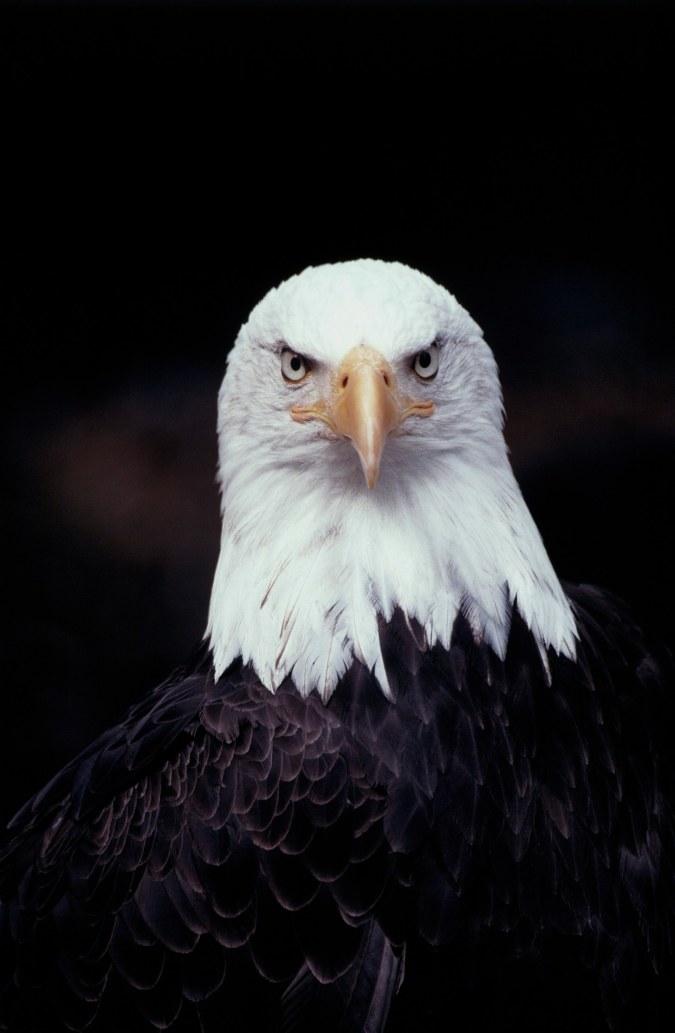
Catskill, New York—the small Hudson River town where the American painter Thomas Cole lived and worked, from 1825 to 1847—is also home to the RamsHorn-Livingston Sanctuary, which contains four hundred and thirty acres of tidal marsh, upland forest, and fallow farmland, and is presently occupied by common loons, great blue and green herons, wood ducks, mallards, a pair of bald eagles, northern harrier and red-tailed hawks, ruffled grouse, merlin falcons, eastern screech and great horned owls, belted kingfishers, pileated woodpeckers, warblers, scarlet tanagers, blue-gray gnatcatchers, a tiny and nervous-looking thrush known as a veery, and various other species of birds whose names, I will admit, are perilously delightful to type. There is also a beaver. Continue reading