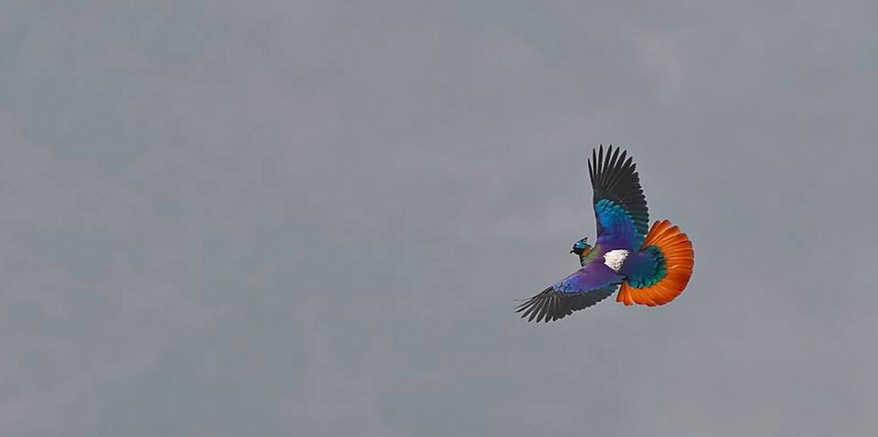
Lungthung, Sikkim
Lungthung, Sikkim

Patagotitan cast, in a hangar. D. Pol.
Thanks to Ed Yong, at the Atlantic, for expanding our horizons beyond the farm to table movement and reminding us that discoveries are still bringing new/old wonders of the planet Earth to the attention of scientists, and then to the rest of us via museums:
…Patagotitan lived during the Cretaceous period around 101 million years ago. And for some reason, it frequented the area that eventually became the Mayo family’s farm. Carballido and Pol’s team returned to the site more than a dozen times, disinterring every fossil they could find. In the process, they built a road and partially removed a hill. Eventually, they recovered bones from at least six Patagotitan individuals. And their bones reveal that they were in their prime—young, still growing, and not yet at their full adult size. Continue reading
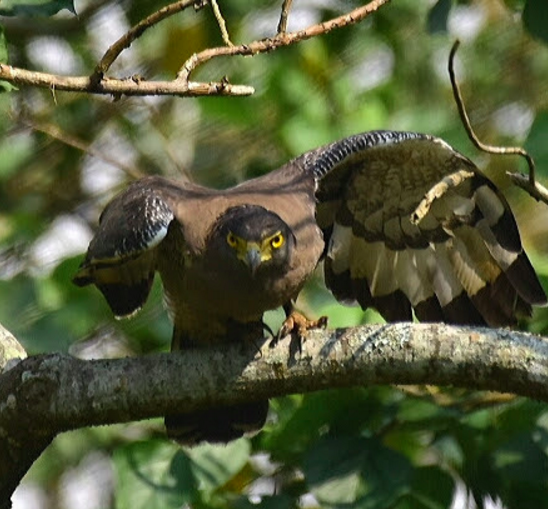
Valparai, Tamil Nadu

Rebecca Solnit, the essayist-turned-progressive-icon, at home in San Francisco. Credit Trent Davis Bailey
We have appreciated her in these pages over the years without really knowing anything about her, so thanks to Alice Gregory for this (may we just say that it seems odd to find it in the Entertainment section of the New York Times Magazine; why not the Arts section, or even the Politics section?):
How Rebecca Solnit Became the Voice of the Resistance
Subjects that the author and essayist Rebecca Solnit has written about, some at considerable length, include Irish history, atlases, Alzheimer’s, a traveling medical clinic, natural disasters, urban planning, tortoises, walking, gentrification, Yosemite National Park and Apple Inc.
‘‘There’s something interdisciplinary at best and wildly wandering at worst about how I think,’’ she told me recently over the phone from San Francisco, where she lives and works. ‘‘I am interested in almost everything, and it can sometimes seem like a burden.’’ She cited Virginia Woolf and Henry David Thoreau as the writers most important to her: ‘‘Each of them wrote exquisitely about experiential, immediate encounters with the tangible world but could also be very powerful political polemicists. And the arc of their work describes a space in which you can be both.’’ Continue reading

Chan Chich Lodge, Orange Walk District, Belize

Daniel Poloha/shutterstock.com
Thanks to the Conversation for highlighting the potential of this inspiring technology.
How farming giant seaweed can feed fish and fix the climate
Bren Smith, an ex-industrial trawler man, operates a farm in Long Island Sound, near New Haven, Connecticut. Fish are not the focus of his new enterprise, but rather kelp and high-value shellfish. The seaweed and mussels grow on floating ropes, from which hang baskets filled with scallops and oysters. The technology allows for the production of about 40 tonnes of kelp and a million bivalves per hectare per year. Continue reading
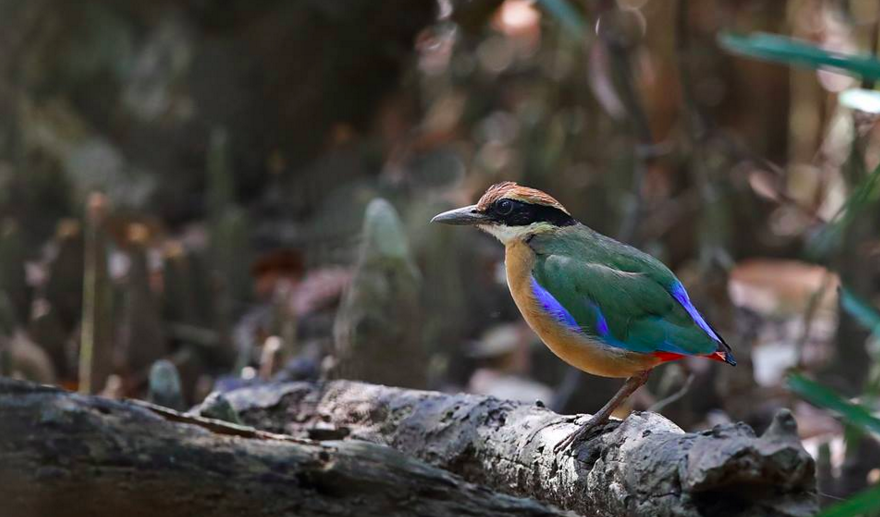
Bhitarkanika National Park, Odisha

We have found that when travelers can support a cause they believe in while traveling, they will go out of their way to do so. When our hotelier colleagues make it easier for a traveler to support a cause, we can only celebrate it:
The Standard Telephone Co. Wants YOU to Ring Your Rep
Over the past few months, we’ve been thinking a lot at The Standard about what we can do to support positive, productive activism. As we’ve gone out and talked to people who are engaged in this very thing, one piece of advice we’ve heard again and again is this: speak up! There are lots of ways to take action, lots of ways to make a difference, but there is no substitute for the simple act of making your voice heard. Continue reading

Sultanpur outskirts, Haryana

Galápagos finches, which helped inspire the theory of evolution, are under urgent threat. Will a controversial scientific technique be their deliverance? Photograph by Mint Images Limited / Alamy
Thanks to Brent Crane writing in the Elements section of the New Yorker’s website:
A Tiny Parasite Could Save Darwin’s Finches from Extinction
Five years ago, George Heimpel, an entomologist at the University of Minnesota, travelled to Trinidad in search of insect larvae. He was after several kinds in particular—Philornis downsi, a fly whose parasitic young feed on the hatchlings of tropical birds, and various minuscule wasp species whose own offspring feed on those of the fly. Continue reading

Hobart, Tasmania, Australia

SANDY SKOGLUND
Food Still Lifes installed, 2017
Sandy Skoglund, an artist who seven years ago came to our attention in this brief video (thanks to the Public Broadcasting Service), has a show called Food Still Lifes that will be open for five more days. It is not what we would have expected from that introductory video. It is more than the odd she projected then, and more oddly beautiful than we would expect of luncheon meat (for example):

Credit© Sandy Skoglund; Courtesy of the artist and RYAN LEE Gallery, New York. “Luncheon Meat on a Counter,” 1978.
Look at a few more of these, you will want more. And bigger. Continue reading
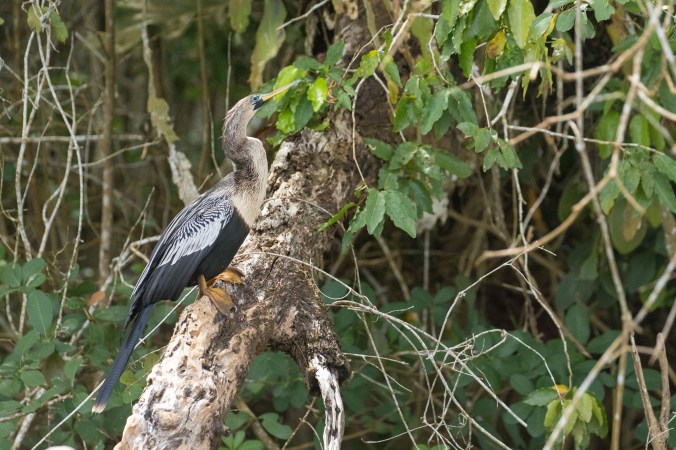
New River above Lamanai, Orange Walk District, Belize
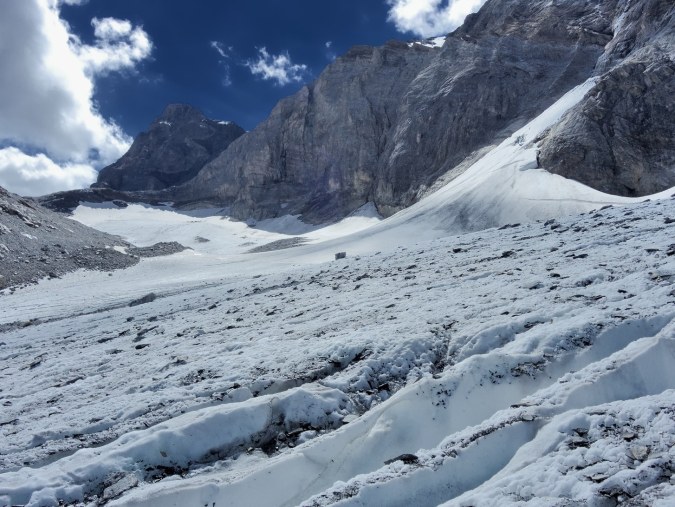
The global glacier meltdown may be bad for those of us who live in the present, but it’s giving archeologists an exciting window into the past. Photograph by Zacharie Grossen / Wikimedia Commons
An Ancient Lunchbox Emerges from the Ice
In the past century, the glaciers and ice fields of the European Alps have lost half their volume to global warming, and their continued retreat, like that of glaciers everywhere in the world, is accelerating. By 2100, many scientists predict, they will have all but disappeared. The meltdown has already disrupted the region’s sensitive mountain ecosystems and tourist resorts—some local communities have taken to laying protective white blankets over the snow and ice—but it has also opened up new avenues of scientific inquiry. Continue reading
Tumling, Nepal

“Dance,” a sculpture made in 2000 by Honda Shoryu, in “Japanese Bamboo Art: The Abbey Collection,” at the Metropolitan Museum of Art. Credit Jake Naughton for The New York Times
Bamboo is an important part of the ecosystem in just about every place where we have worked over the last two decades; thanks to Roberta Smith for this:
Vijayapura, Karnataka
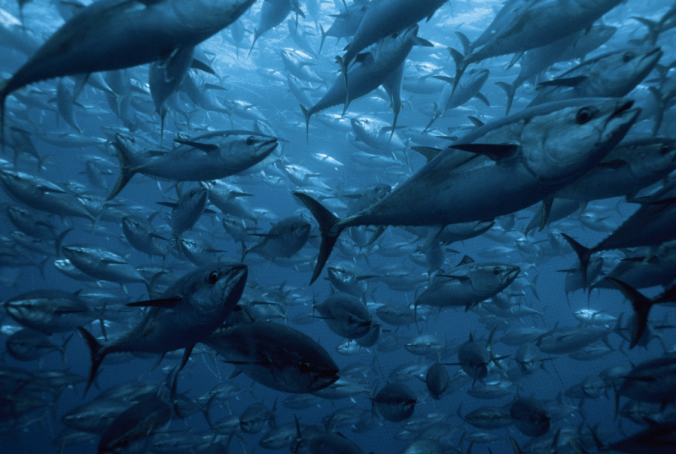
A school of bluefin tuna in a fishery tow cage. Countries around the world have begun to negotiate a treaty that would create marine protected areas in waters beyond national jurisdiction. Credit Paul Sutherland/National Geographic, via Getty Images
Still a long way to go and many tough issues to be resolved but a good start…
Nations Will Start Talks to Protect Fish of the High Seas
More than half of the world’s oceans belong to no one, which often makes their riches ripe for plunder.
Now, countries around the world have taken the first step to protect the precious resources of the high seas. In late July, after two years of talks, diplomats at the United Nations recommended starting treaty negotiations to create marine protected areas in waters beyond national jurisdiction — and in turn, begin the high-stakes diplomatic jostling over how much to protect and how to enforce rules.
“The high seas are the biggest reserve of biodiversity on the planet,” Peter Thomson, the ambassador of Fiji and current president of the United Nations General Assembly, said in an interview after the negotiations. “We can’t continue in an ungoverned way if we are concerned about protecting biodiversity and protecting marine life.”
Without a new international system to regulate all human activity on the high seas, those international waters remain “a pirate zone,” Mr. Thomson said. Continue reading
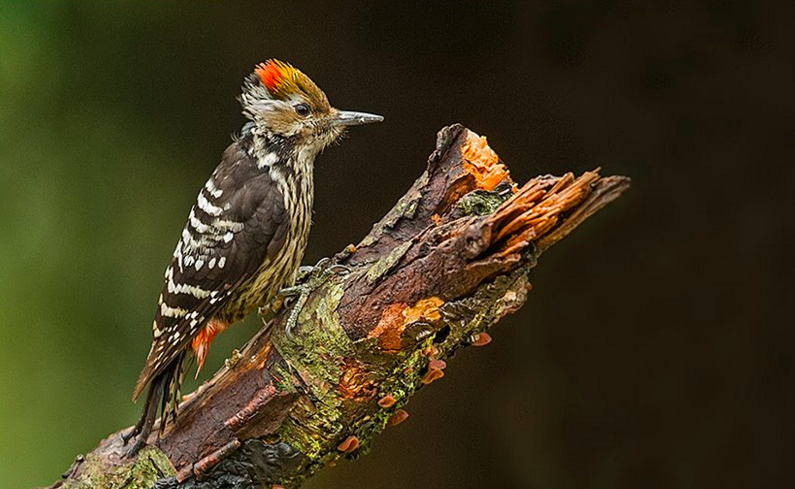
male – Pangot, Uttarakhand
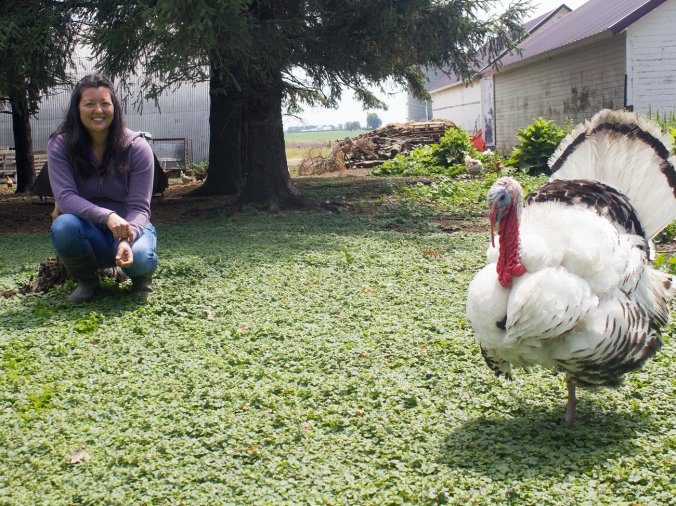
Farmer Wendy Johnson markets hogs, chickens, eggs and seasonal turkeys. She also grows organic row crops at Joia Food Farm near Charles City, Iowa. Amy Mayer/Harvest Public Media
Thanks to Harvest Public Media, Amy Mayer and the folks at the salt over at National Public Radio (USA):
How, And Why, Some Farmers Are Bringing Livestock Back To The Prairie
On a cloudy summer day, Iowa farmer Wendy Johnson lifts the corner of a mobile chicken tractor, a lightweight mesh-covered plastic frame that has corralled her month-old meat chickens for a few days, and frees several dozen birds to peck the surrounding area at will. Soon, she’ll sell these chickens to customers at local markets. Continue reading
 Organikos