
Male
Morro do Aquário, Brazil
Male
Morro do Aquário, Brazil
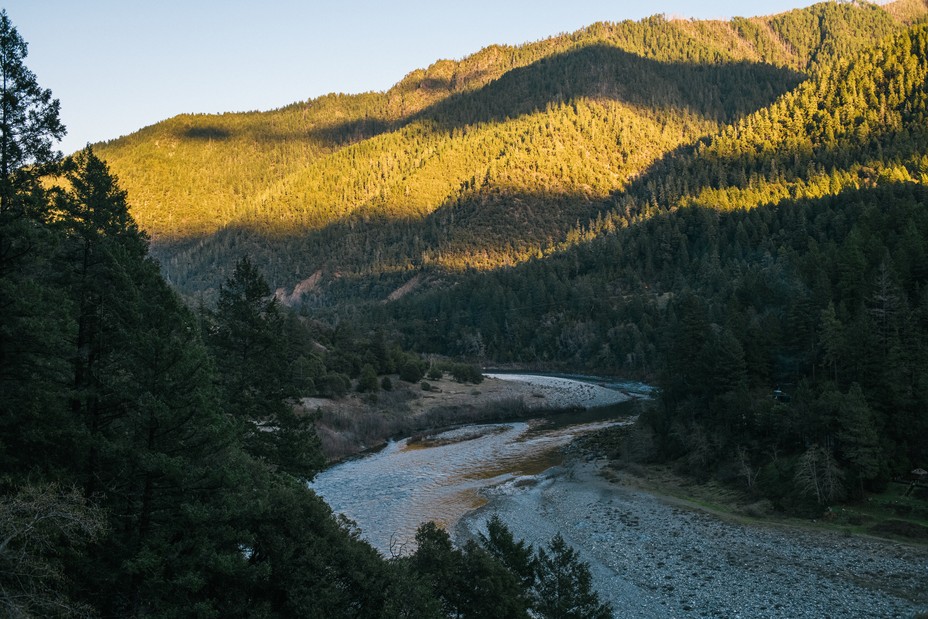
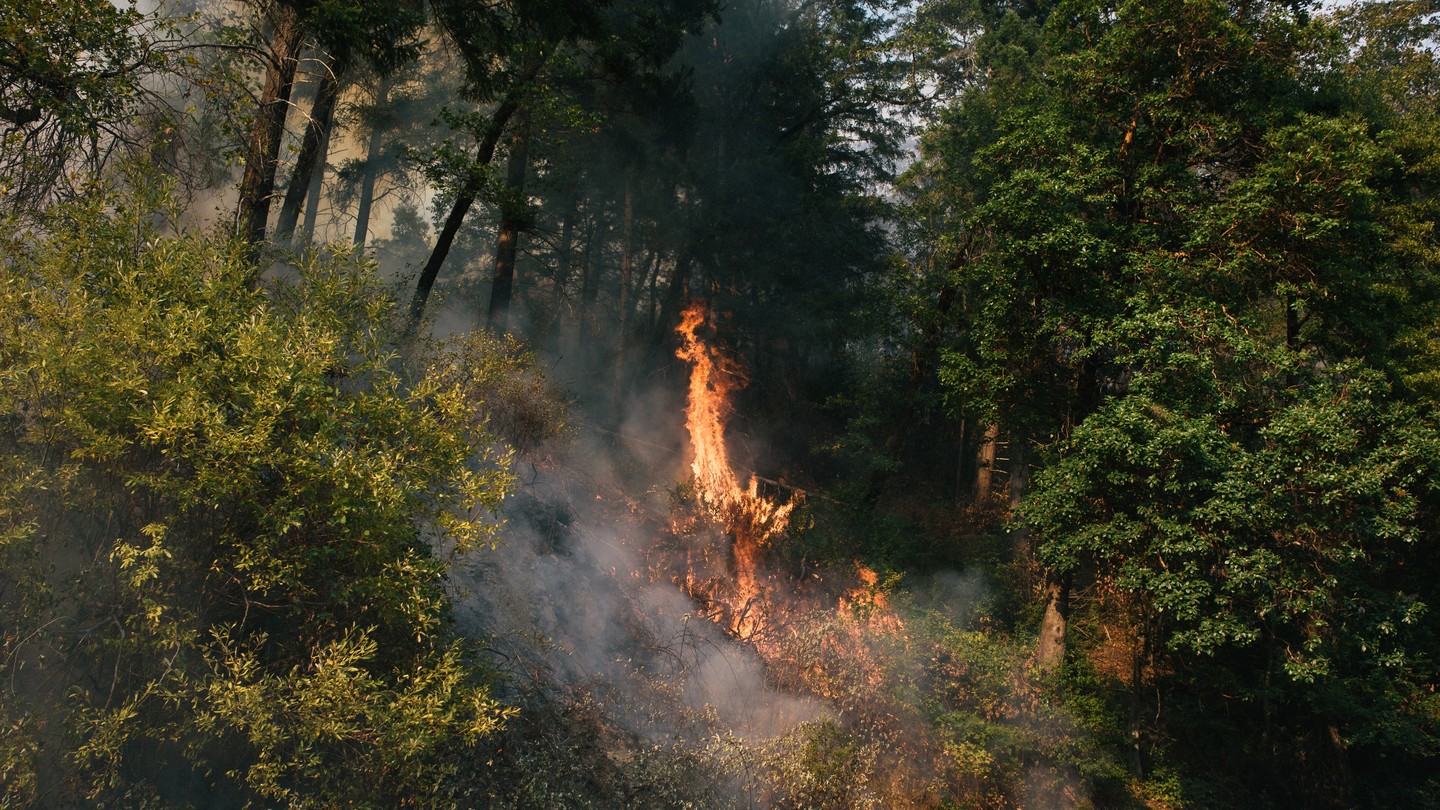
View of the Klamath from Orleans, California, ancestral Karuk territory. For millennia, the Yurok, Karuk and Hupa of northern California, and indigenous tribes worldwide, passed the use of fire down through generations as a means of land stewardship and survival. Light, frequent burning created fire-adapted landscapes.
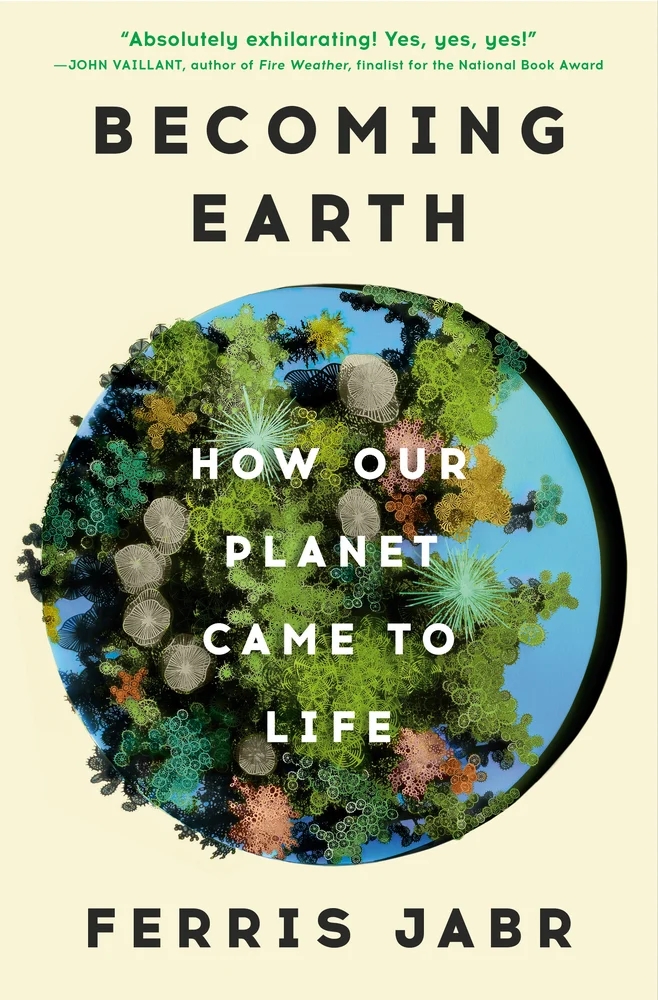 I recall during the pandemic reading the work of Ferris Jabr, which expanded on our understanding of the social networking of trees, an idea I remain compelled by. Now he has a book, adapted for The Atlantic. In the essay form he focuses on the value of indigenous knowhow handed down generation to generation for centuries. He highlights how fire is a wild, powerful element of nature, wielded as a tool for stable life of ecosystem and society.
Detail of a landscape during a cultural prescribed burn training (TREX) hosted by the Cultural Fire Management Council and the Nature Conservancy in Weitchpec, California. (Alexandra Hootnick)
THE DEEP CONNECTION BETWEEN LIFE AND FIRE
How wildfire defines the world
Perched on a densely forested hill crisscrossed with narrow, winding, often unsigned roads, Frank Lake’s house in Orleans, California, is not easy to find. On my way there one afternoon in late October, I got lost and inadvertently trespassed on two of his neighbors’ properties before I found the right place. When Lake, a research ecologist for the United States Forest Service, and his wife, Luna, bought their home in 2008, it was essentially a small cabin with a few amenities. They expanded it into a long and handsome red house with a gabled entrance and a wooden porch. A maze of Douglas firs, maples, and oaks, undergrown with ferns, blackberries, and manzanitas, covers much of the surrounding area. Continue reading

Winter Plumage
Granger Lake, TX
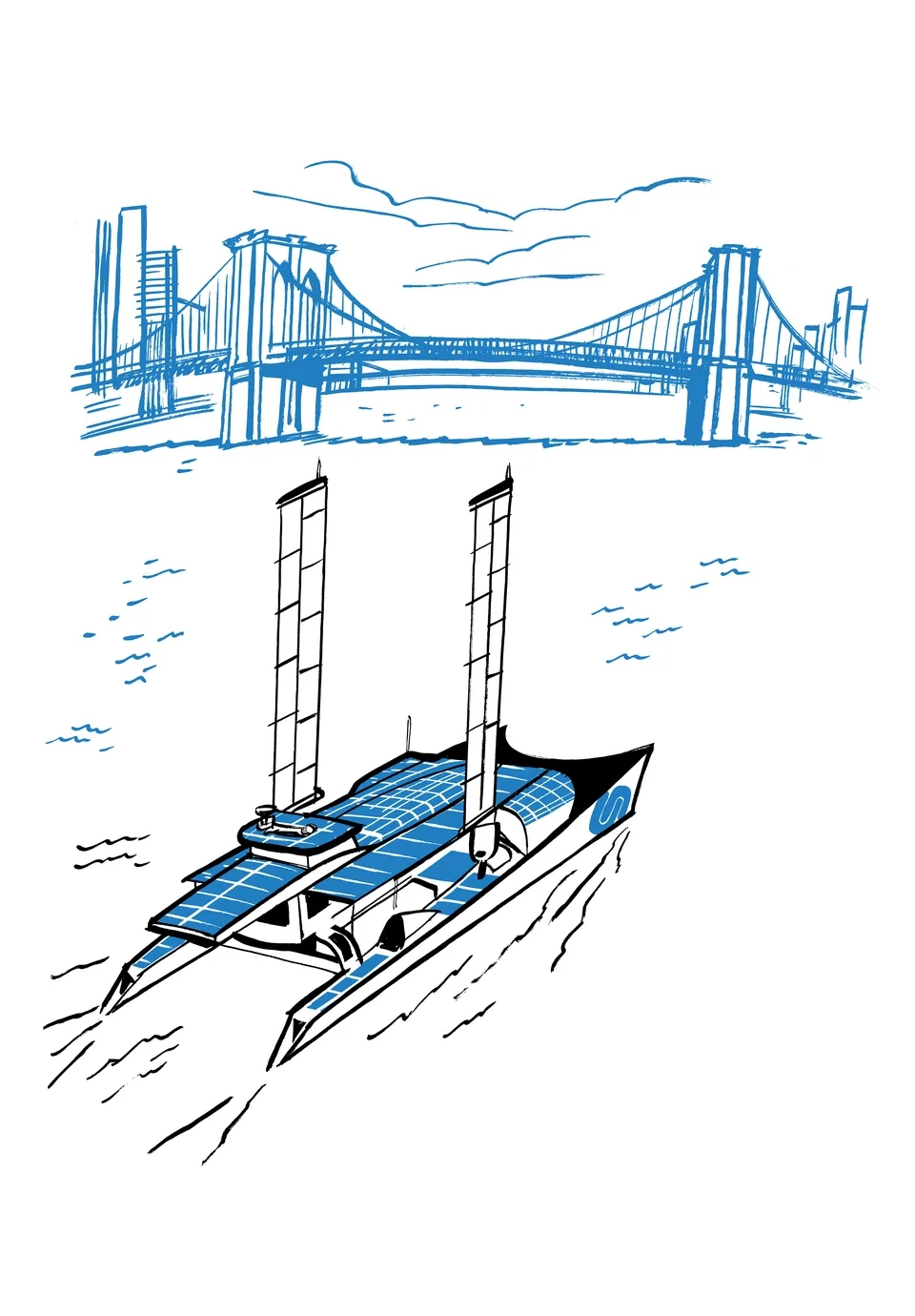
Illustration by João Fazenda
Our thanks to Adam Iscoe, writing in the New Yorker, for this:
An Around-the-World Eco-Voyage Makes a Pit Stop Near Wall Street
Energy Observer, a ship equipped with solar panels and a hydrogen fuel cell, has spent the past seven years circumnavigating the globe, powered by sun, water, and salads.
One phrase that describes New York’s waterways is “diesel-powered”: supersized container ships, megayachts, oil tankers, garbage barges. But not every ship that comes to town is on a Greenpeace watch list; there are also schooners, plus the odd outrigger canoe. And recently a hundred-foot-long former racing catamaran from France, which had been retrofitted with solar panels and a hydrogen fuel cell, docked near Wall Street. Continue reading
Thekkady, Kerala

Screenshot
Cute kitten videos are everywhere, and we avoid posting them here. But due to the Cairngorms rewilding efforts in Scotland this type of video is different, so our thanks as always to the Guardian:
Wildcat kittens born outside captivity in Cairngorms a ‘major milestone’
Adult cats were released into national park last year after British population had come close to extinction
The birth of wildcat kittens in the Cairngorms national park has been hailed as a “major milestone” in efforts to rescue the secretive mammals from extinction in the UK. Continue reading
Bulgaria
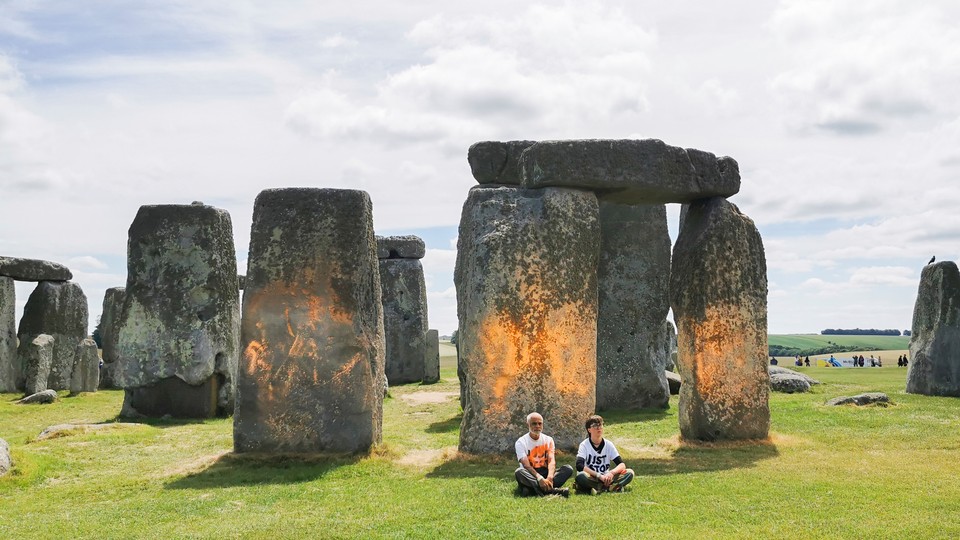
Just Stop Oil via AP
On this platform dedicated to environmental and conservation topics, purposeful stone alteration has appeared in our pages exactly once before. Environmental vandalism, likewise. I appreciate this essay by Tyler Austin Harper, an assistant professor of environmental studies at Bates College and a contributing writer at The Atlantic, about a recent act of environmental vandalism:
Maybe Don’t Spray-Paint Stonehenge
Climate protests should be pro-humanity.
They run toward Stonehenge in white shirts. just stop oil is emblazoned on the front, marking them as emissaries of a British climate-activism group. The pair—one of them young, the other older—carry twin orange canisters that emit a cloud of what looks like colored smoke (we later learn it’s dyed corn flour). Continue reading

Buraco das Araras, Brazil

Rapapawn / Grist
Thanks as always to Grist for offering analysis that nudges us to keep our interest in recycling in the realm of the real:
How the recycling symbol lost its meaning
Corporations sold Americans on the chasing arrows — while stripping the logo of its worth.
It’s Earth Day 1990, and Meryl Streep walks into a bar. She’s distraught about the state of the environment. “It’s crazy what we’re doing. It’s very, very, very bad,” she says in ABC’s prime-time Earth Day special, letting out heavy sighs and listing jumbled statistics about deforestation and the hole in the ozone layer. Continue reading

Comanche Bluff Trail, Williamson County, TX

image: la boca
The Economist makes a compelling case for us all to be more bullish on solar–not that we needed much convincing:
The exponential growth of solar power will change the world
An energy-rich future is within reach
It is 70 years since at&t’s Bell Labs unveiled a new technology for turning sunlight into power. The phone company hoped it could replace the batteries that run equipment in out-of-the-way places. It also realised that powering devices with light alone showed how science could make the future seem wonderful; hence a press event at which sunshine kept a toy Ferris wheel spinning round and round. Continue reading
Ouranoupoli, Greece
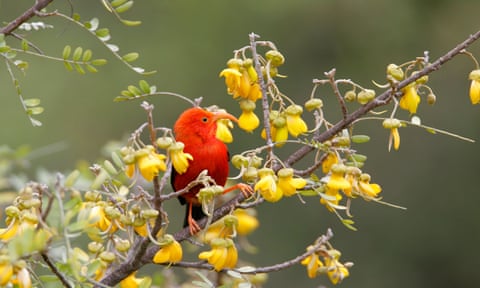
The scarlet honeycreeper, or ‘i’iwi, has a 90% chance of dying if bitten by an infected mosquito. Thirty-three species of the bird are already extinct. Photograph: Photo Resource Hawaii/Alamy
We had not heard of such risk to birds before, but this may be the rare case of mosquitoes potentially serving a good purpose:
Millions of mosquitoes released in Hawaii to save rare birds from extinction
Conservationists hope insects carrying ‘birth control’ bacteria can save honeycreeper being wiped out by malaria
Millions of mosquitoes are being released from helicopters in Hawaii in a last-ditch attempt to save rare birds slipping into extinction. Continue reading

Hanchinal Lake, Bijapur

Greenhouse roofs reflect sunlight in Kunming, China. FABIO NODARI / ALAMY STOCK PHOTO
Fred Pearce, in Yale e360, offers reason to further consider the greenhouse:
Could the Global Boom in Greenhouses Help Cool the Planet?
As agricultural greenhouses proliferate, researchers are finding that their reflective roofs are having a cooling effect. Some experts see this as an unintended experiment with lessons for cooling cities, but others point to the environmental damage that greenhouses can cause.
The world is awash with greenhouses growing fresh vegetables year-round for health-conscious urbanites. There are so many of them that in places their plastic and glass roofs are reflecting sufficient solar radiation to cool local temperatures — even as surrounding areas warm due to climate change. Continue reading

Morro do Aquário, Brazil
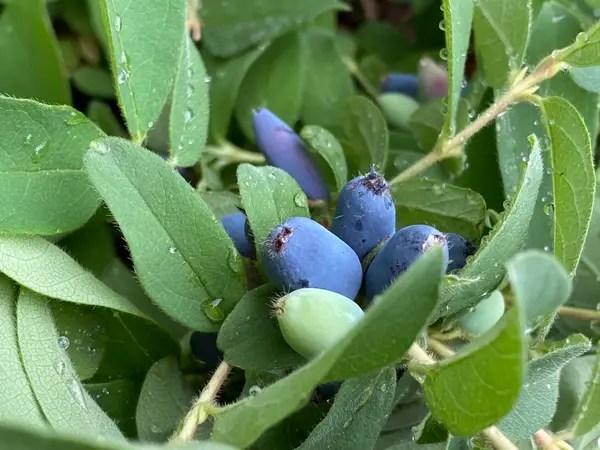
Allyson Levy and Scott Serrano describe their arboretum as “an aesthetically arranged experiment station to test interesting and useful plants” — like honeyberry, a honeysuckle relative with blue fruit that ripens very early. Hortus Arboretum & Botanical Gardens
Hortus is an inspiration. Our thanks, as always, to Margaret Roach for sharing on the broad and diverse topic of gardens and gardening:
Ms. Levy and Mr. Serrano are visual artists who moved to Stone Ridge, N.Y., 25 years ago. Hortus Arboretum & Botanical Gardens, their 21-acre undertaking, began as a backyard garden. Mia Allen
How One Couple Turned Their Backyard Into an Arboretum
Their passion for fruit you’ve never heard of started small. Now they have a botanical garden that’s open to the public.
This is what happens if you stay put, and keep digging holes: An effort that begins innocently enough — planting a garden at home — may grow on you. And it could morph into an arboretum. Continue reading
Seewinkel National Park, Austria
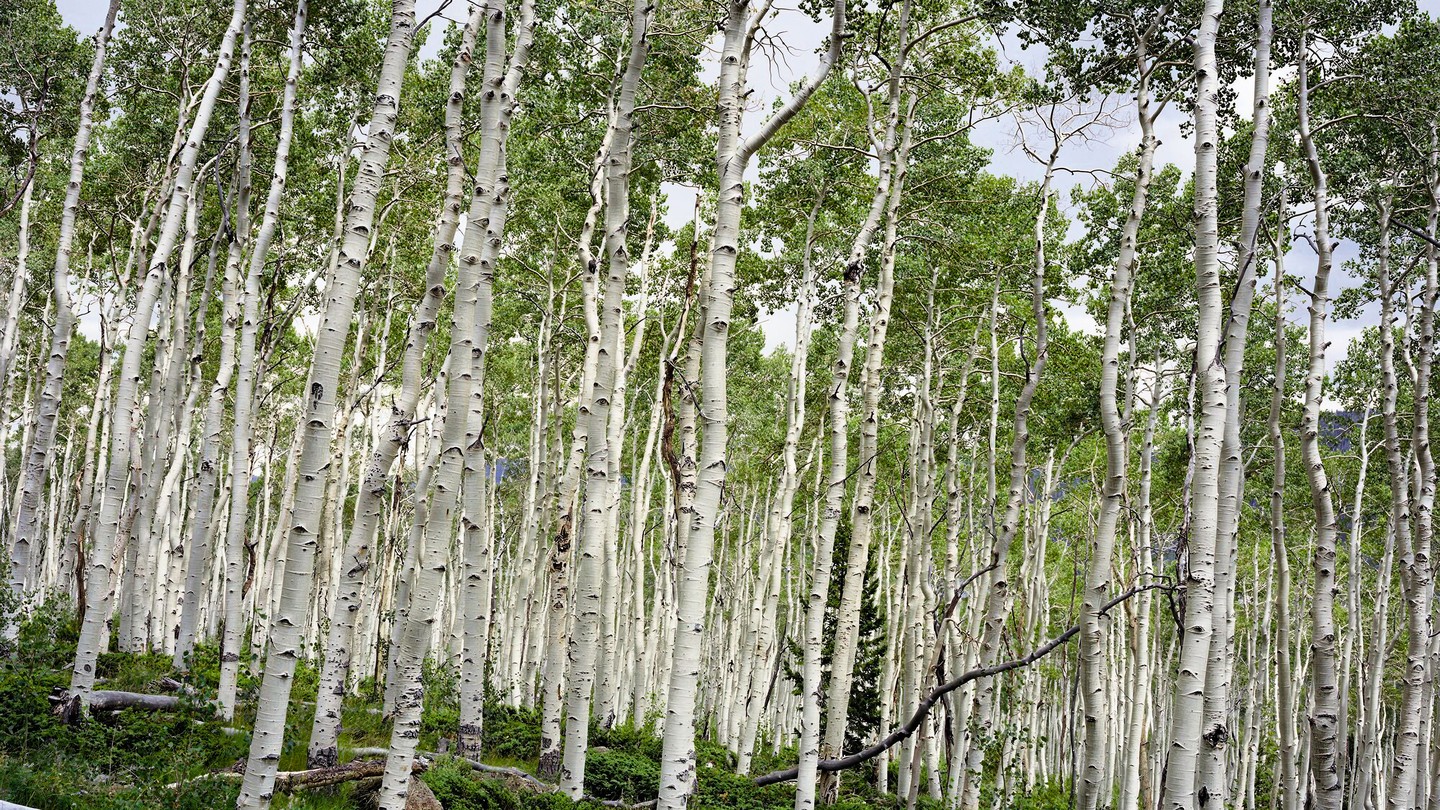
Aspen (Pando), Utah III 2023 (Courtesy of Steidl Publishers / Yancey Richardson Gallery)
Writing for The Atlantic, Clint Smith introduces us to this amazing book:
THE MAGIC OF OLD-GROWTH FORESTS
Photographing some of the oldest—and largest—living organisms on the planet
When i was a boy, I loved climbing the old oak trees in New Orleans City Park. I would hang from their branches and fling my legs into the air with unfettered delight. I would scoot my way up the trees’ twisting limbs until I was a dozen feet off the ground and could see the park with new eyes. These were the same trees my mother climbed as a young girl, and the same ones my own children climb when we travel back to my hometown to visit. Live oaks can live for centuries, and the memories made among them can span generations. Continue reading


 Organikos