We’ve mentioned Cabo Pulmo here several times in the context of marine conservation, as well as from a personal visit. Although I still haven’t had a chance to go out on a scuba diving expedition here, a couple weeks ago Jocelyn and I were able to accompany some Villa del Faro guests on a snorkeling trip outfitted by Cabo Pulmo Sport Center, which is run by members of the Castro family mentioned in the posts linked above. The tour took two hours, but I’ve condensed the experience into almost fifteen minutes of video that I took on a rented GoPro:
Southern Roots Run Deep

Ms. Gomez grew up pulling mangoes from the trees and buying sugar cane from the vendors gathered outside her parochial school. Evan Sung for The New York Times
While Crist may have had the good fortune to enjoy a taste of Kerala with Asha Gomez during travel away from our home there, I was busy exploring the market byways for local ingredients and food ways. What a fascinating story to hear that Asha is actually experiencing that same sense of discovery and exploration within her own home state.
It looks like Crist might have gotten his wish for Asha to come to Kerala, after all!
A Chef’s Quest in India: Win Respect for Its Cooking
“I think I had disconnected myself from this place in some way by saying for so long that the U.S. was home,” said Ms. Gomez, 47, who had moved from the Indian state of Kerala to the state of Michigan as a teenager. “There is still so much a part of me here. I think I had forgotten that.”
Ms. Gomez had come to this land of ports, tea estates and spice gardens not only to reconnect with a part of herself, but also to find new ways to use her camera-ready personality and kitchen chops to lasso Kerala’s beautiful food culture and drag it back to the United States.
“I have to remove people from the mentality that all Indian food should be clumped up into nine dishes that are not really Indian dishes,” she said. “Not all Indian food belongs on a buffet line at $4.99. Indian food is 5,000 years of tradition and history, and it belongs right up there with French cuisine.”
Her frustration over American interpretations of the beloved coconut-scented fish curries, dosas and carefully layered beef biryanis of her homeland echoes the lament of countless cooks who have immigrated from countries like China, Mexico or Vietnam only to find their food mangled to meet the limitations of a new country’s palate and relegated to its cheap-eats guides.
“I wish I could say to every immigrant cook in America, ‘Why do you think your food should be any less than any other cuisine that comes from anywhere else in the world?’” Ms. Gomez said. Continue reading
Model Mad, Mayors

Mayor Bill Peduto of Pittsburgh, left, and Mayor Ann Hidalgo, of Paris, are outspoken supporters of the Paris climate accord. Credit Justin Merriman for The New York Times (Peduto); Christophe Ena/Associated Press
She has been featured in these pages due to her creative approach to governance more than once. We are happy to see Ann Hidalgo again, this time providing another example of the “don’t just get angry–do something with creative ferocity” ethos implied in these constant observations of model mad. And we are especially grateful for the joint commentary with Pittsburgh Mayor Bill Peduto, who we hope to see more of:
…Though separated by an ocean and a language, we share a desire to do what is best for our citizens and our planet. That means putting aside parochial politics and embracing the global challenge of fighting climate change. In doing so, we can create a cleaner, healthier, more prosperous world for Parisians, Pittsburghers and everyone else on the planet. Continue reading
Bird of the Day: Tickell’s Thrush
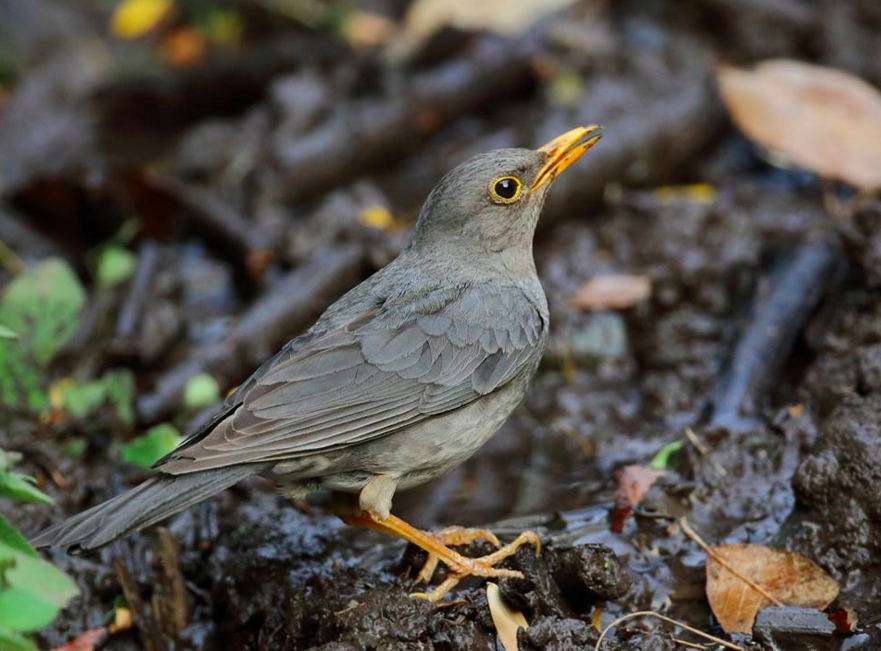
Jogeshwar, Uttarakhand
Paul Nicklen Way North & Way South

Paul Nicklen/Paul Nicklen Gallery
I listened to this interview while walking the trails at Chan Chich Lodge this morning, so had no photos to look at. And yet, it was vivid. And highly relevant to what we do here. I will let you listen to get what I mean.
Six photos accompany this story on the Fresh Air website, and those are curated for the podcast. If you only have time for photos click over to Paul Nicklin’s website, but the interview with him is worth every one of the 48 minutes. If you only have ten minutes to listen, go to 22:30 and if you do not find yourself bursting into a mix of laughter and other unidentified emotions, let me know; it means one of us may need some professional help:
Polar Photographer Shares His View Of A Ferocious But Fragile Ecosystem
Conservation photographer Paul Nicklen has spent more than two decades documenting the ice and wildlife in some of the most inhospitable places on Earth — the Arctic and the Antarctic. Continue reading
Rancher’s Life In The High Plains

The scale of the cattle farming at Gallon Jug is modest compared with the tradition of grazing on public lands typical of ranching in the western USA. But they share some common ground such as the horse-based cowboy (note below that women are also in the saddle in some places such as Montana). Something not discussed in the ideological battles over public lands that got to a boiling point in the last couple years–the intangible patrimony of a way of life–is worth a couple minutes of your consideration and this article lays it out, part of a series the Guardian is running:
In Montana, land transfer threatens the American rancher’s way of life
Ranchers in the west have been struggling for decades. Now a new threat looms: public land might be taken away from them Continue reading
Bird of the Day: Social Flycatcher

Gallon Jug Estate, Belize
Organic, Bird-Friendly Cold Brew Coffee At Chan Chich Lodge

At All Day, a coffee shop in Miami that’s on the must-visit list of coffee fanatics, cold brew is the foundation of the menu. Credit John Van Beekum for The New York Times
Apparently it is iced coffee season up north. It is intern season here at Chan Chich Lodge. Maybe an intersection? Emily, from an agriculture and environmental engineering background, and Alana who is an aspiring sustainable hospitality developer are off to the races, as they say. They were out in the forest yesterday with GPS tools, a GIS mapping app and the assistance of Migde and Hector on the trails, developing a more scientific way of estimating the incidence of Ramon trees in our 30,000 acres.
More on that from them. But more on coffee from me. We have been cultivating an estate coffee unique to Belize, organic and as bird-friendly as you will find. Let’s add cold brew to your list of summer experimentation? Migde and Hector, aka bartender and waiter and therefore defacto coffee baristas, will be setting up the instrumentation in the kitchen.
How Cold Brew Changed the Coffee Business
Blue Heart of the Planet

The United Nations Ocean Conference is underway to support the implementation of Sustainable Development Goal 14: Conserve and sustainably use the oceans, seas and marine resources for sustainable development.
The importance of collaboration between public and private sectors to brainstorm innovative solutions to environmental issues is becoming increasingly clear, as is the reality that states and local governments will be the stronger voices for climate activism.
The health of the planet and our oceans are interchangeable, and Sylvia Earle has been the spokesperson for that truth for decades.
Take the extra 18+ minutes to listen to her 2009 TED Prize Talk here.
Biomimetic Yarn-Bombing

Image © 2016 CHOI+SHINE
I’ve long been fascinated with urban space art installations in general, and fibre based pieces in particular. Somehow I missed hearing about the Singapore based i Light Marina Bay Light Art Festival in March, but I’m happy to have discovered it now.
The festival is an annual event, and this year’s theme of Biomimicry and Sustainability strike multiple chords. London/Seoul based architectural firm Choi+Shine created The Urchins for this site specific installation.
This project is inspired by sea urchin shells, which are enclosed yet light weight, delicate and open. Their textured and permeable surface interacting with light creates openness, while the pattern’s mathematical repetition brings visual rhythm and harmony. Against light, the sea urchin natural form reveals one of the most spectacular patterns found in nature. Continue reading

Bird of the Day: Greater Yellow-naped Woodpecker
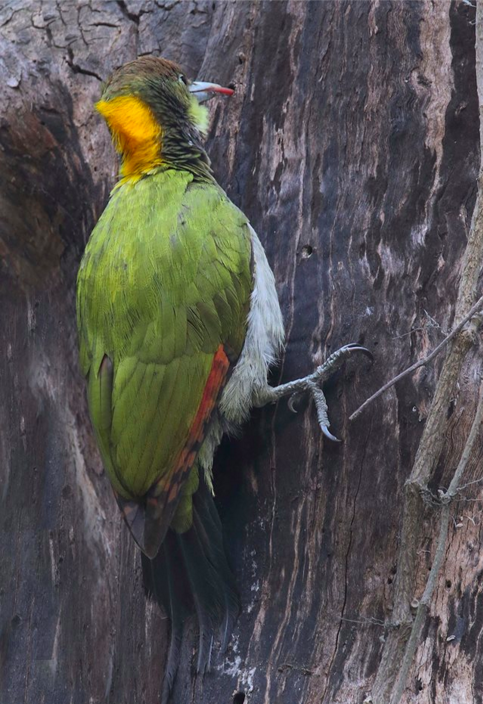
Sattal, Uttarakhand
Keep This Place Out Of Bounds

The letters come amid fears that the Trump administration will favor the powerful mining lobby, increasing the risk, particularly, of uranium contaminating water flowing into the Grand Canyon. Photograph: Stephen Yelverton Photography/Getty Images
Arizona officials, sensing an opportune moment, are using one of the most iconic places on earth to make a point. And the point is at one with the reason given for the USA pulling out of an environmental treaty, that every last buck to be raked out of the earth is more important than the earth as a whole, or a particular spot on the earth, or those living on the planet generations from now. The headline and story below fail to shock. This is how things are lately. Getting numbed to it is not an option. Arizona officials have made their point clear, but the point cannot be conceded. Boundaries still exist and must be protected. Thanks to the Guardian for its vigilance in its This is Your Land series:
Grand Canyon at risk as Arizona officials ask Trump to end uranium mining ban
Exclusive: Powerful regional officials to ask administration to end 20-year ban, saying it is unlawful and inhibits economic opportunity Continue reading
Stanford Earth’s Rosemary Knight
Thanks to Stanford News for this short video on important innovation related to ensuring we all stay hydrated well into the future:
Mapping groundwater from the air
Stanford Earth’s Rosemary Knight recently spearheaded a project to map underground freshwater resources and forecast the intrusion of saltwater into aquifers beneath the California coastal town of Marina. The project, a collaboration between Stanford, the Marina Coastal Water District, and Aqua Geo Frameworks, involved a low-flying helicopter towing a giant, instrument-laden fiberglass hoop that generated ground-probing magnetic fields that penetrated 1,000 feet beneath the surface.
Bird of the Day: Paradise Flycatcher

female – Bandipur Tiger Reserve, Karnataka
First Day at Chan Chich

Hi! My name is Emily, and I am one of the La Paz interns for summer 2017. As an environmental science and engineering student, I have never had an internship at a hotel, let alone one in a remote location in a foreign country. However, the College of Agriculture and Life Sciences at Cornell University has prepared me for work in another large aspect of the Chan Chich property: sustainable agriculture. Ultimately, this is where my work will lead me, but until then I am becoming integrated with the lodge as a whole.
My first surprise during my experience so far was the actual lodge itself. On the drive to Chan Chich, we passed a great deal of farmland, with each area becoming less and less populated as we went on. However, as we turned down a road marked Chan Chich, the landscape instantly changed from cleared pastureland to a road densely surrounded by large trees draping over us as we drove. Soon, a sprinkling of lights entered our view, dotting the driveway and welcoming us to Chan Chich. Suffice it to say that my time searching Chan Chich on Google and Instagram did not do it justice. The greens of the grass and trees blended with the variety of flowers abundant across the property. The lodge and cottages were far more magnificent in real life making them feel humble and authentic while also luxurious all at once.
Sea Shepherd & Cuvier’s Beaked Whales
It has been a long while since our last link to Sea Shepherd news, shame on us, but today we rectify it with news from Seth and Jocelyn’s neighborhood–actually on the Pacific side of Mexico’s Baja California Sur but as close as most people get:
Sea Shepherd Records Never Before Seen Footage of Rare Cuvier’s Beaked Whales During Expedition in Mexico
Sea Shepherd’s research vessel the R/V Martin Sheen returned to Mexico’s Guadalupe Island to continue its study of Cuvier’s beaked whales, capturing never before seen drone footage of these rare and elusive cetaceans.
During the two-week expedition, Mexican lead-scientist Gustavo Cardenas Hinojosa and American collaborator Jenny Trickey, deployed various acoustic devices to compare their effectiveness. The scientists will return and leave these devices for a longer period of time. Continue reading
Foraging Forays
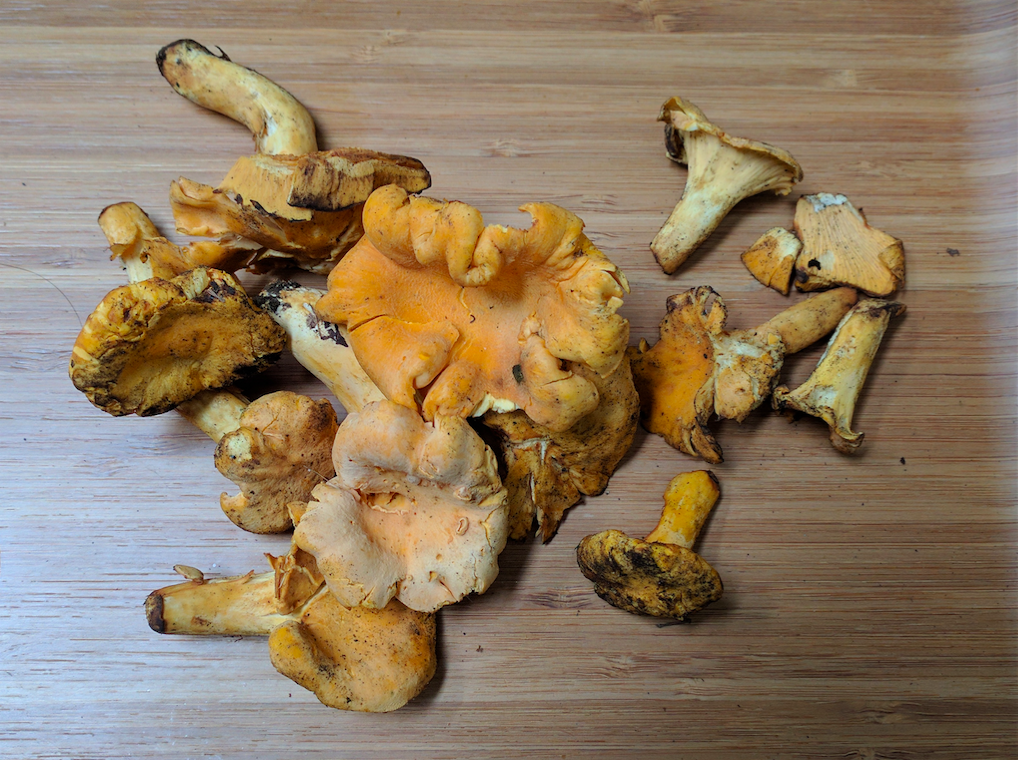
Taking a break from packing for my upcoming return to Belize, I joined a group of old friends from the Georgia Mushroom Club in a foray near the Georgia/South Carolina border. Fresh air, a walk in the woods, good company, and foraging for mushrooms – what better way to spend a morning?
The weather has been warm and wet, great conditions for mushrooms and we were happy to find patches of chanterelles. As we searched we talked about Chan Chich Lodge and Belize, and that we’re in the midst of brainstorming collaborations with the staff and local community who carry the ancestral knowledge of the old Mayan and Belizean foodways, and chefs who focus on foraging in the creation of their menus. We’ve recently discovered a variety of foods that are plentifully available from the Chan Chich forests, and are excited to incorporate them into our culinary story. Continue reading
Bird of the Day: Vigor’s Sunbird
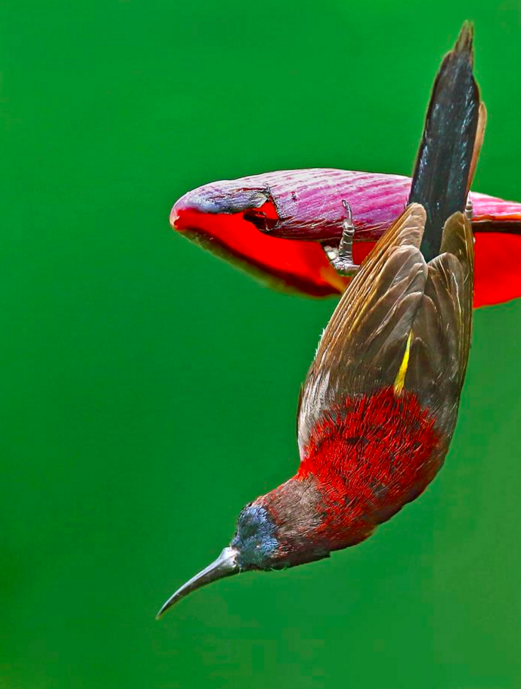
Goa, India
Rome Rewilded

Image: Planet World / Flickr
Thanks again to one of our most reliable sources for the summary of conservation-oriented science, and specifically to Brandon Keim for this one:
An Anthropocene wildness grows in Rome
Even in one of the most densely urbanized places on Earth, wildness and natural abundance may yet flourish again, sustained by both neglect and stewardship. Continue reading
Climate, Agriculture & Disruption

Journalist Chris Clayton writes for an audience filled with climate skeptics: farmers and leaders of agricultural businesses. He’s telling them that a changing climate will disrupt their lives. Courtesy of Chris Clayton
From the salt over at National Public Radio (USA), here is an interview in keeping with the spirit of yesterday’s post on peaches:
…Clayton is a Midwesterner and agricultural policy editor at DTN/The Progressive Farmer. He’s also the author of The Elephant in the Cornfield: The Politics of Agriculture and Climate Change, which describes in detail how farmers and farm lobbyists have dealt — or, more often, refused to deal — with a changing climate.
It has sometimes put Clayton in an awkward spot, as he acknowledged when I reached him this week in his office in Omaha, Neb.
Does it make you nervous, as a reporter at a farm publication, talking about climate change?
All the time. I feel like the guy who has to tell people things they don’t want to hear. But if I simply ignore the topic or ignore the issues, am I doing anybody any favors? Continue reading
 Organikos