
male – Herman, Nebraska
male – Herman, Nebraska
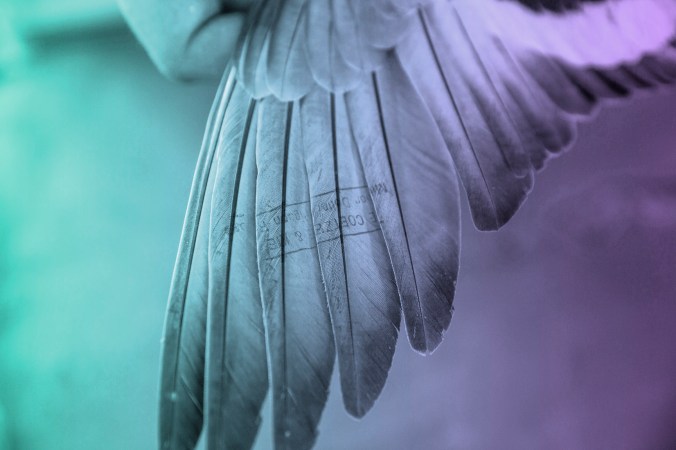
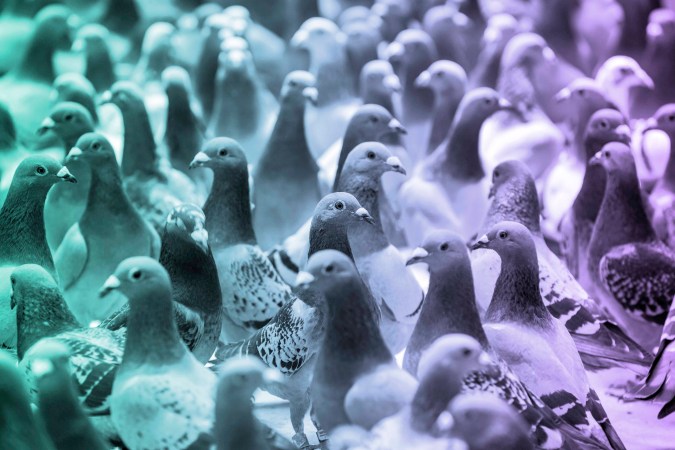
There are two dynamic illustrations in this piece by David Samuels that cannot be replicated here, but are worth visiting the website of The Atavist for, so the images above and below are placeholders. Anyway, the words are the thing so I take a paragraph from near the end as an example of why to read this:
…In the 1970s in Brooklyn, where I grew up, pigeons were everywhere, which is probably why I am here. Some of my earliest gray-scale memories include pigeons, which fluttered and occasionally nested on the windowsill of the first place I was aware enough of to call home, a housing project near the Brooklyn Bridge built for working families like mine. There was a bona fide pigeon coop on the roof of a building nearby, like in the famous scene from On the Waterfront. Sometimes I could see a man on the roof waving a flag, which in my imagination was red but in fact could have been any color. The pigeons he guided back to their loft every night were a promise of safety that New York City in the 1970s was obviously unable to keep, which is why my parents moved to the suburbs, where the birds in the trees outside my window twittered and cooed in foreign tongues that signified nothing…
I am not surprised that this is the article on their website that I gravitated to. The author wrote an item in the New Yorker at a time when I was just completing many years of work in Montenegro and Croatia, and I knew the landscape he was describing well, and still he brought the place alive for me in a way that living there had not. He does not need photos, gifs, or other illustrations to make his words dance better. And in this piece he does something even more magical, providing a correction for me.
Seven years in south India had at least one unexpected effect on me, and it is embarrassing. I developed a passionate dislike for pigeons. Pigeons caused continuous problems in one of the properties we developed and managed, an urban location pigeons loved as much as people. And pigeons express their love in messy ways, so they became my bane. At our home, pigeons would coo on the window sill and I remember that at the time I posted this, which was peak pigeon problem, my enthusiasm for conservation was red hot but I had an unwanted, guilty ability to imagine why passenger pigeons disappeared. Reading David Samuels just now, I have snapped out of that.
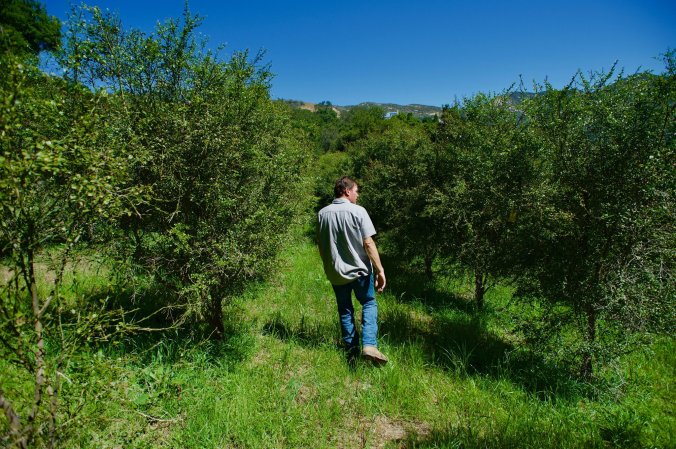
Jay Ruskey is one of the first farmers to be growing coffee commercially in California. His coffee plants share the farm with avocado and cherimoya trees and passion fruit vines. Credit Morgan Maassen for The New York Times
It always seemed that California could grow just about anything, so why did it take so long for this to happen? Thanks to Stephanie Strom for this story in the New York Times:
GOLETA, Calif. — There is a new crop growing in Southern California’s famous avocado groves — coffee.
About two dozen farms between San Diego and here, just outside Santa Barbara, are nurturing coffee bushes under the canopies of old avocado trees, in what may be the first serious effort in the United States to commercialize coffee grown outside Hawaii, home of Kona coffees. Continue reading
Bangalore, Karnataka
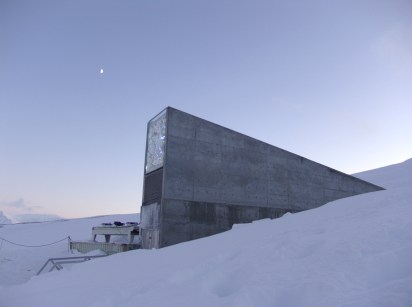
The Svalbard Global Seed Vault in Norway. (Credit: Mari Tefre/Svalbard Globale frøhvelv)
Our favorite doomsday machine, which we never tire of hearing about and sharing on this platform each time it has demonstrated its visionary worthiness, is back in the news. Discover Magazine brought this to our attention today: Continue reading
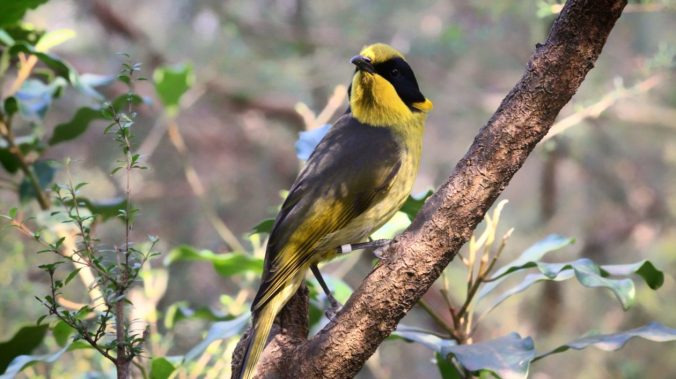
The Helmeted Honeyeater, a subspecies of the Yellow-tufted Honeyeater and the state bird of Victoria. Photo © Dylan Sanusi-Goh / Wikimedia Commons
Thanks to the Nature Conservancy for its conservation and scientific work in Australia, and for this finding shared on Cool Green Science:
…Recognizable common names are often critical for species protection, but subspecies miss out on this public perception benefit. A new paper argues that standardized English names are key to conservation success for Australia’s fantastic avifauna, and creates a definitive list for every subspecies on the continent. Continue reading

Munduruku people demonstrate in front of the Brazilian Ministry of Mines and Energy, calling for the suspension of construction of the Belo Monte hydroelectric plant. Photograph: Lunae Parracho/Reuters
Thanks to John Vidal and the Guardian for this coverage in Latin America:
The rains had been monumental throughout April 2014. By early May, the operators of the 219 MW Cachoeira Caldeirão dam being built in Brazil’s remote Amapá state knew that levels on the Araguari river were dangerously high. If some water was not released fast, the whole thing might collapse. There would be no danger to people because any run-off would be absorbed by two other dams downstream, the hydropower company thought.
But communications failed and no one warned the small town of Ferreira Gomes, nestled on the banks of the Araguari nearly 50km away. Continue reading

Gallon Jug Estate, Belize
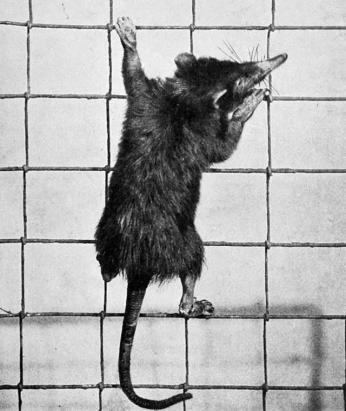
In a new paper, researchers argue that oddball animals like the Cuban solenodon should be more aggressively protected. COURTESY NEW YORK ZOOLOGICAL SOCIETY / WIKIMEDIA COMMONS
Our focus is on developing and managing entrepreneurial opportunities to protect natural areas. More protection is better than less, we naturally assume. That is why we are intrigued by this blurb about a new scientific finding: “a small but strategic increase in protected lands could triple the amount of bird and mammal species preserved worldwide.”
The headline to this short item–CONSERVATIONISTS COULD BE SAVING MORE BIODIVERSITY IN LESS SPACE–has us clicking, and we thank the New Yorker’s commitment to science writing, and specifically Michelle Nijhuis for it:
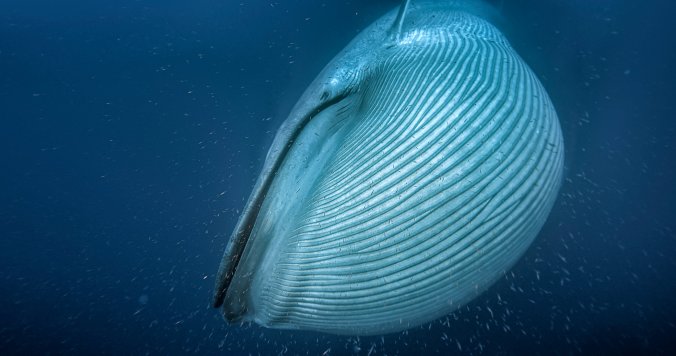
A blue whale off the coast of California. CreditSilverbackFilms/BBC
Ed Yon’g posting on the Atlantic website pursued the same natural history question as Nicholas St. Fleur’s How Whales Became the Biggest Animals on the Planet, and both science writers provide their specific source as seen here in the Times article:
…In a study published Tuesday in the journal Proceedings of the Royal Society B, a team of researchers investigated gigantism in baleen whales, the filter-feeding leviathans that include blue whales, bowhead whales and fin whales. The marine mammals became jumbo-size relatively recently, they found, only within the past 4.5 million years. The cause? A climatic change that allowed the behemoths to binge-eat…
The number of written words in both is about the same, and the quality of writing is comparable, but the photos in the Times article magnify the words there by, it seems, a thousand times, which explains why we are linking to another whale scale story a second day in a row:
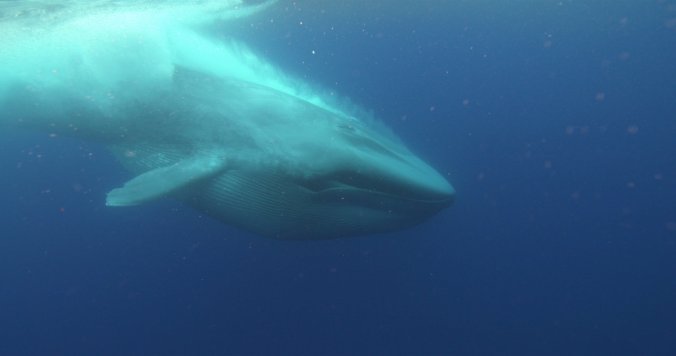
Baleen whales became big around the same time as when ice sheets began covering the Northern Hemisphere. CreditSilverbackFilms/BBC
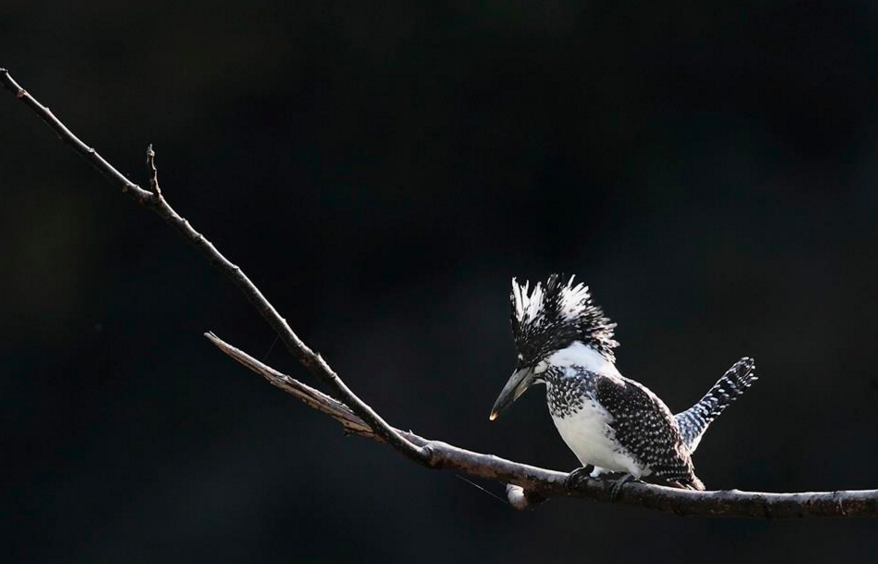
Sattal, Uttarakhand

Thanks as always to Ed Yong, who keeps the fires under our wonder about whales well stoked:
Why Did The Biggest Whales Get So Big?
… and perhaps more importantly: when?
Five years ago, on a boat off the southern coast of Sri Lanka, I met the largest animal that exists or has ever existed. Continue reading
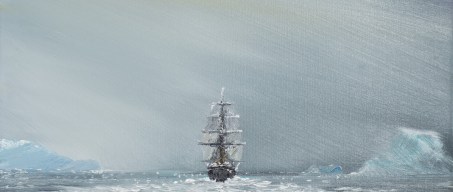
IMAGE: Discovery En Route to Antarctica (detail), by Vincent Alexander Booth, 2014. © Private Collection / Bridgeman Images.
Lewis Lapham has shown up in our pages here exactly once in the past. Mainly because, in the six years we have been posting on this platform, his own publication was not as accessible as others we have been linking to. Surely there was a purpose to the walls constructed around it, but we are happy that, for whatever reason, they have come down. Just the illustration above and the quotations below should make you want to read more:
Evolution has arranged that we take pleasure in understanding—those who understand are more likely to survive.
—Carl SaganI’m sorry I know so little; I’m sorry we all know so little. But that’s kind of the fun, isn’t it?
—Vera Rubin

We sample the opening two paragraphs after the jump below, and recommend savoring his writing, but we also have been on the podcast bandwagon since we started on this platform. If you have already been enjoying Lewis Lapham’s publication, and wishing it were available in an audible format, today is your lucky day (click the soundcloud banner here to listen). Continue reading

Masinagudi, Tamil Nadu
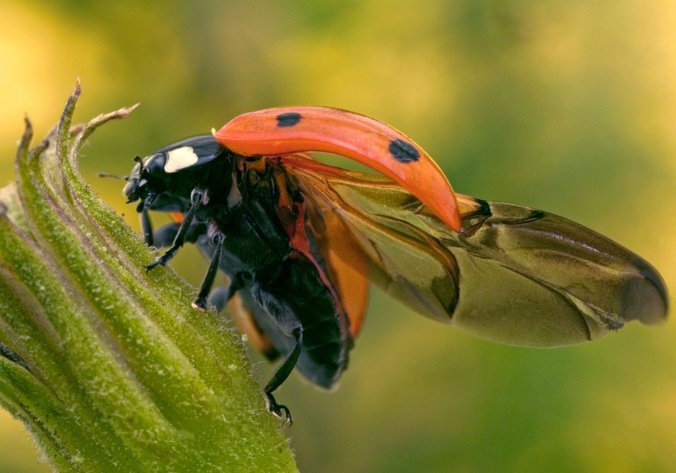
After ladybugs fly, they tuck their wings into a sliver of space between their abdomen and the colorful outer wings for which they are best known. Credit Jean-Michel Labat/Science Source
Even without words this item from the Science section would tell a full story just with the gif below, which captures what any of us might remember being awed by as a kid. Thanks to Joanna Klein for this:
Ladybugs Pack Wings and Engineering Secrets in Tidy Origami Packages
The ladybug is a tiny insect with hind wings four times its size. Like an origami master, it folds them up into a neat package, tucking them away within a slender sliver of space between its abdomen and the usually polka-dotted, harder wings that protect it. Continue reading
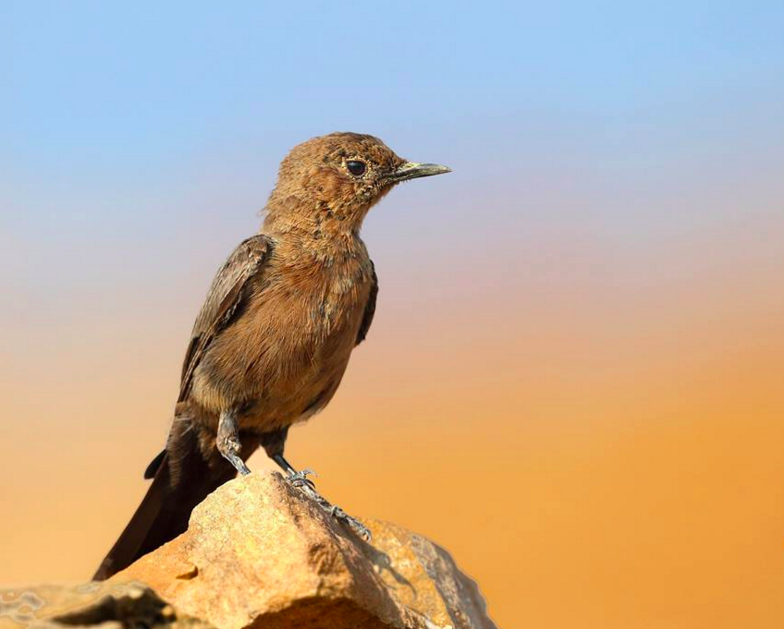
(Jaisalmer, Rajasthan)
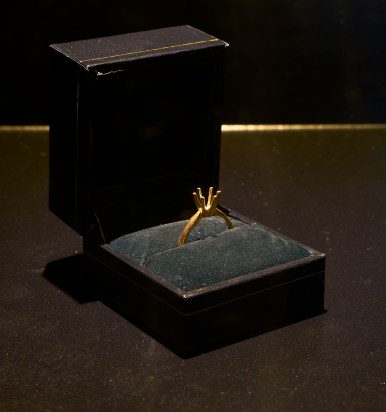
Jill Magid: “Una carta siempre llega a su destino”. Los Archivos Barragán. MUAC, 2017.
Last year when I was first spending extended time at Chan Chich Lodge, I got to experience the reality of what had up to then been a cliche phrase–a force of nature. I had some minor experience with earthquakes, certainly other-worldy, and I have witnessed flooding and historic snowstorms. Nothing had ever exhilarated me for hours on end the way this hurricane did.
And what I chose to do during that experience has stuck with me as much as the hurricane itself. So I had to visit the website of the museum where this exhibit is hosted. And I had to read what happened after the end of that story:
…One premise of Magid’s work is that the ring is not and will never be for sale. It can be accepted only by Zanco and only in exchange for the archive… When addressing claims that she had disrespected Barragán’s legacy, she shook her head. “Not only do I love his work, but the questions around his archive—what is accessible and what is not—affect the way his legacy goes forward,” she said. Continue reading
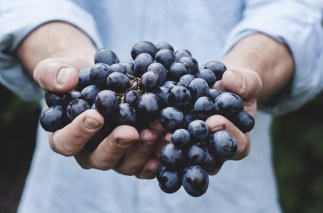
Image: Pixabay
Thanks to Emma Bryce for A more nuanced approach to reducing insecticides on our food, shared via Anthropocene:

male (Atlanta, Georgia)
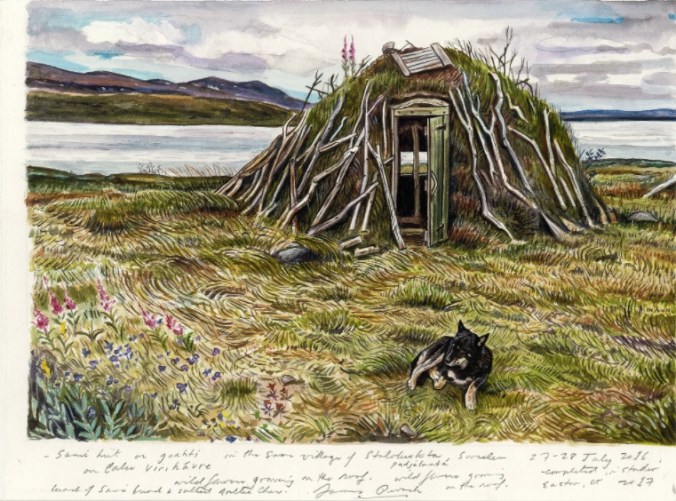
A Sami reindeer herders’ hut on Lake Virihaure in Padjelanta National Park. Credit Paintings by James Prosek, courtesy of the artist and Schwartz-Wajahat, New York
A Botanist in Swedish Lapland
By
The plan was to retrace part of a journey that Carl Linnaeus made in 1732 when he was 25, from Uppsala, just north of Stockholm, to the northernmost region of Sweden, known as Swedish Lapland. Linnaeus kept a detailed journal of his travels, often called his “Lapland Journal,” with maps of the mountains, rivers and lakes, drawings and his squiggly handwriting. Continue reading
 Organikos