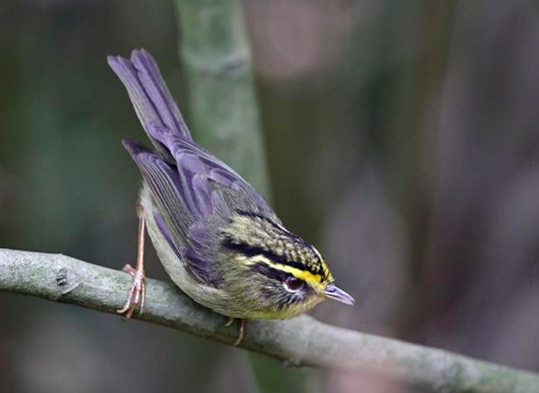
Bhalukpong, Arunachal Pradesh
Bhalukpong, Arunachal Pradesh
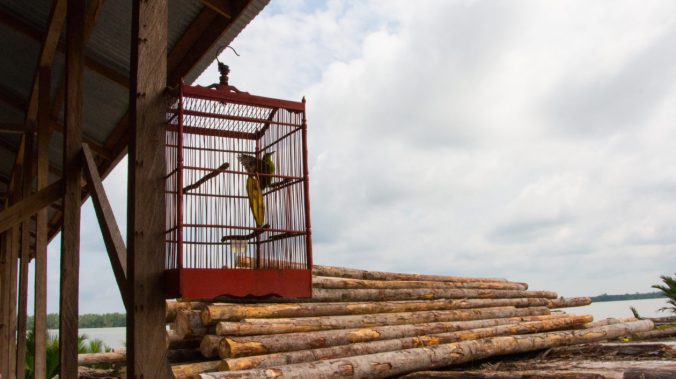
A caged songbird overlooks a logging yard in East Kalimantan, Indonesia. Photo © The Nature Conservancy (Justine E. Hausheer)
Thanks to Justine E. Hausheer for Modeling Logging’s Impacts on Biodiversity & Carbon in a Hypothetical Forest over at Cool Green Science:
Tropical forests are widely celebrated for their biodiversity and increasingly recognized for their carbon sequestration potential. But what’s less often acknowledged is halting logging entirely will make climate change worse, as wood is one of the most sustainable building materials.
So how can conservationists help nations meet the demand for wood products and protect forests, while minimizing both biodiversity loss and carbon emissions? Continue reading
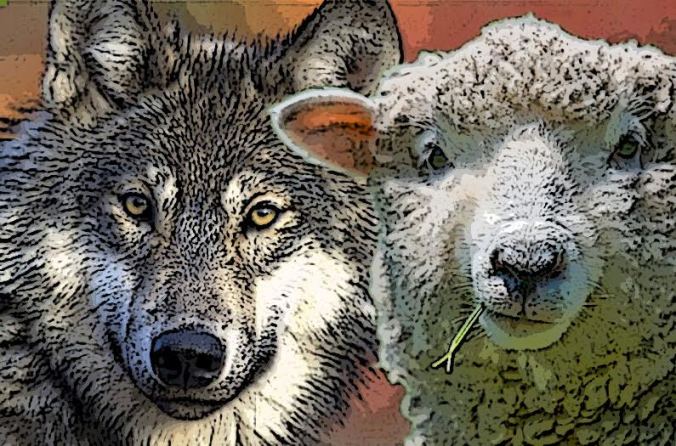
In 2007, a family of wolves in Idaho’s Sawtooth National Forest killed nine sheep. Ranchers who owned the sheep asked government wildlife managers to kill the wolves; but local wolf supporters and conservationists protested, asking instead for a non-lethal solution. So began what became the Wood River Wolf Project, a landscape-scale, multi-year experiment in how ranchers, livestock, and wolves can live together peacefully. Continue reading

Tony Konecny, the head of coffee operations at Locol, outside the branch in the Watts neighborhood of Los Angeles. CreditEmily Berl for The New York Times
We have no reason to debate the logic of a more reasonably priced cup of quality coffee:
Has Coffee Gotten Too Fancy?
By
LOS ANGELES — The $1 cup of coffee is divisive, as drinks go.
For some, it’s a staple of the American morning: a comforting routine, a good deal. Anything that costs more than $1 is needlessly expensive, a waste of money — the coffee from a deli, diner or doughnut cart is all you need to start the day. For others, the $1 cup is suspiciously cheap. Maybe it tastes bad, or its production does harm to the land and is unfair to laborers. If you have to pay more, then that is probably a reflection of a drink’s true cost. Continue reading
Jamnagar, Gujarat
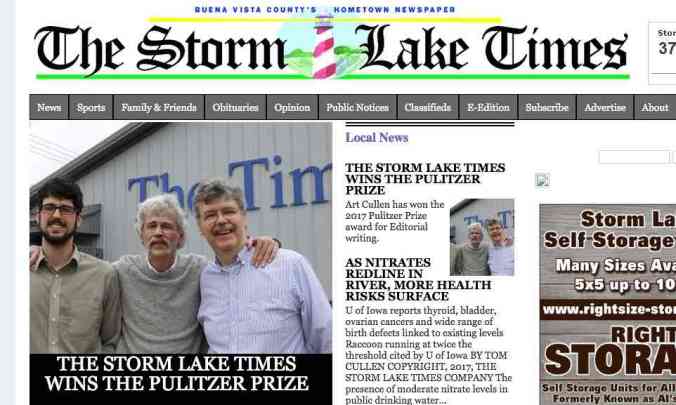
A front page screen shot of Iowa’s Storm Lake Times, which has won a Pulitzer Prize. Photograph: Storm Lake Times
There seems to be a tradition in the field of journalism in the USA whereby one publication celebrates another’s victory in the Pulitzer awards race. Thanks to the Guardian for its shout out, from across the water, to this little publication. As a member of a small organization with multiple family members working together; an organization that editorializes about food as much as anything else; an enterprise that persists against the odds; I particularly like the David & Goliath ring of this:
Tiny, family-run Iowa newspaper wins Pulitzer for taking on agriculture companies
Art Cullen owns the 3,000-circulation Storm Lake Times with his brother John. His wife and son also work at the paper Continue reading

We, among millions of others, had to have a listen. It would be useless to comment on it, but we pass it along to the few people who have not yet heard about it. The only comment here, besides the advisory that it was produced for a mature audience, might be the conclusion that in the model mad series we have been running, this one takes the cake. Maybe with this one we need to close out that series. Until we see something better, that’s it.

Preening – Vijayapura, Karnataka
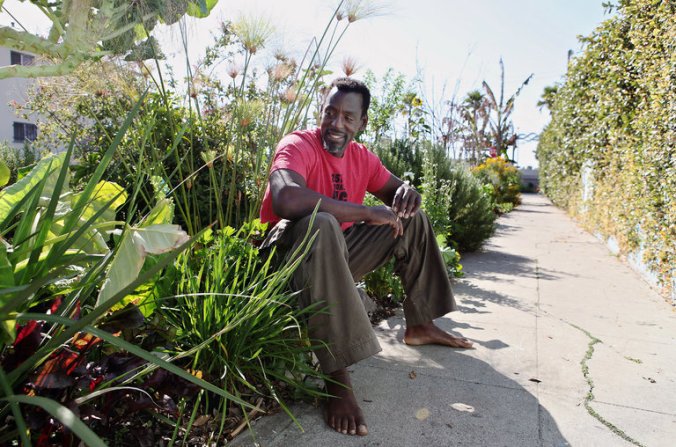
Ron Finley in a garden outside his home in Los Angeles. Credit Emily Berl for The New York Times
When Amie passed along a link to him way back when, it was all fresh news about an amazing challenge set up by an urban charismatic. Now that challenge has been turned around and amped up and we link again to Ron to help him gets what he needs:
Fighting Eviction, a Gardener Turns to Organic Industry Giants for Help

Kyle DeNuccio, right, on Lake Batur in Bali, a gap year stop. CreditKyle DeNuccio
I am currently interviewing candidates to join us for summer internships, and possible university gap year projects at Chan Chich Lodge. Most importantly the projects will focus on various food-related initiatives, some longstanding goals and others more in the spirit of random variation. We have had plenty of awesome interns, as well as wondrous wanderers and sometimes sabbaticalists join us here and there for more than two decades, and we feel qualified to claim that this fellow (who reminds me a bit of this fellow) speaks truth:
Independence Days: My Perfect Imperfect Gap Year
By
Midway through a lackluster freshman year at the University of San Diego, I called my parents and told them I planned to leave school after the spring semester. Continue reading
Valladolid, Mexico
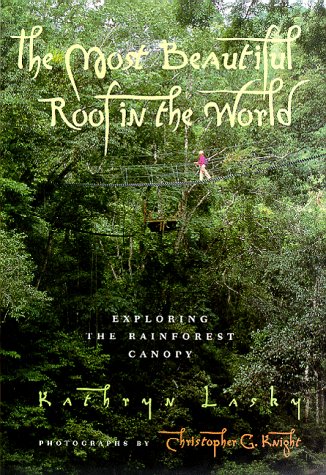 After posting this quick thought about foraging, I sent a link to Meg, and she reminded me that she had not only been to Belize but that there is a book about her time here.
As I explored the book I realized that it was first published 20 years ago, incidentally the year when I first visited Belize. I also discovered that the book is in wide circulation among educators in the USA, for hopefully obvious good reasons:
Journey along with Dr. Meg Lowman, a scientist who, with the help of slings, suspended walkways, and mountain-climbing equipment, has managed to ascend into one of our planet’s least accessible and most fascinating ecosystems–the rain-forest canopy. “Fresh in outlook and intriguing in details, this book will strengthen any library collection on the rainforest.”–Booklist Continue reading
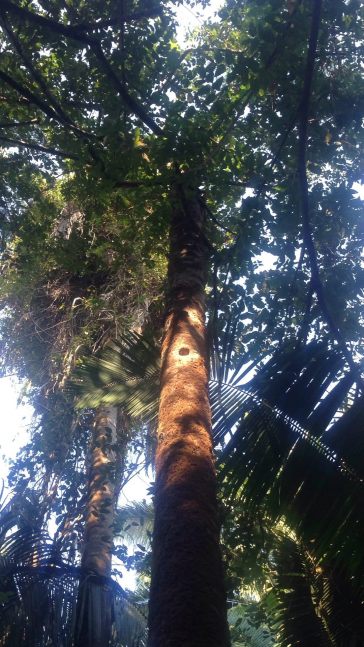 Each morning at dawn, and then again at dusk, I walk the trails at Chan Chich Lodge. The walks serve multiple purposes, but they also serve no particular purpose; and when I get that just right, ideas present themselves.
This tree, not a standout in any way I can see, is a marker for me now. It is on a trail where I have had some wonderful wildlife sightings, the best of which, camera-less, was with a tapir. More recently, a troupe of peccaries was snouting around the base of this tree.
And most days there are two species of primate in the vicinity, each challenging the other for territory in their own way–one with grunting howls and the other by shaking clusters of branches vigorously to appear more intimidating than their common name, spider monkey, would imply. Yesterday, a Newtonian inspiration, tailored to my own interests, came to me right here. I saw these bursts of light on the tree trunk at the same moment that I heard a plop in the leaves on the ground right in front of the tree.
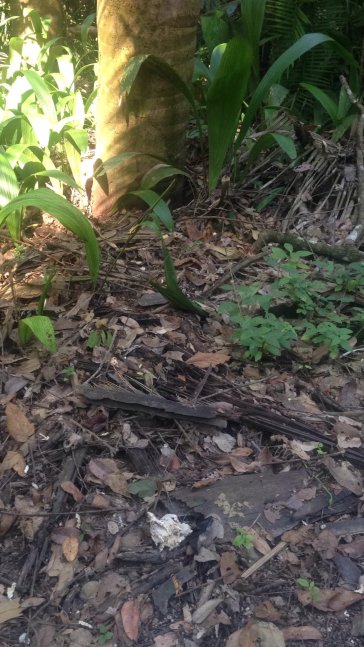 Instead of an apple, and instead of my head, it was some sort of a fungus, a cluster of mushrooms by the look of it, that fell from the canopy into the ground cover. Gravity already having had its heyday of consideration, I instead turned my thoughts to the possibility of a new dimension to the Chan Chich Lodge food program.
I had never heard of mushrooms growing in the forest canopy, but why should I not expect such a thing? I know from our friend Meg, among others, that the vast majority of biodiversity in a rainforest is concentrated in the canopy. So, hmmmm. Is it an edible one?
I snapped these photographs and sent them to one of the two fellows who I always consult on these matters. Answer: too dry to make a positive id. Don’t eat. Of course I will not! But, and here’s the closest I will get to a Newtonian moment of inspiration… Continue reading

male – Estero San Jose del Cabo, BCS, Mexico
 Thanks to EcoWatch for this note about the Google site that helps residents of major cities in the USA think more clearly about solar as an option:
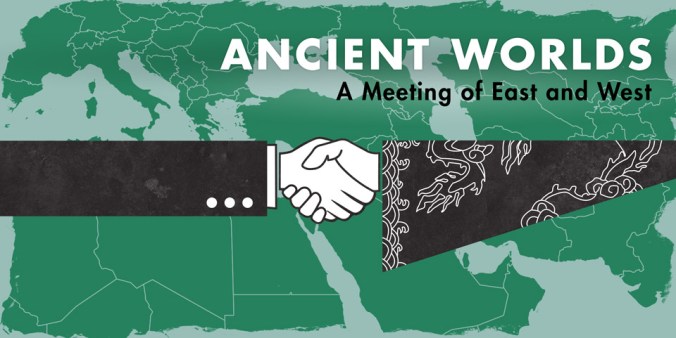
The podcast of this discussion kept sitting there, waiting to be listened to, since last July. Finally I had time to focus on it, and wow. It is worth an hour of your time if you have had the opportunity to live in both East and West and still wonder how to make sense of the experiences; and if you appreciate historical parallels as learning tools:
There’s a new school of history that’s revolutionising the way we look at the past. For centuries, our history has been taught in separate chunks, with the classical, European world divided from China and the East. This traditional, somewhat lazy history of civilisation, zeroing in on the Western Mediterranean, drastically restricts our understanding of the world – and the crucial ideas and problems that have affected human civilisation as a whole; from politics to religion; from war to money. Continue reading
 I just listened to a conversation with Mr. Bregman, and as he explained the premise for his book I was struck: times like these are exactly when the seeds for utopian thinking are in the most fertile soil. The book itself is not likely my cup of tea, but I am impressed by this man’s effort to bring us this, now.
Cory Doctorow’s essay, over at Wired, is a perfect read to continue the thoughts on choices we make related to utopia versus dystopia:
…The difference between utopia and dystopia isn’t how well everything runs. It’s about what happens when everything fails. Here in the nonfictional, disastrous world, we’re about to find out which one we live in. Continue reading
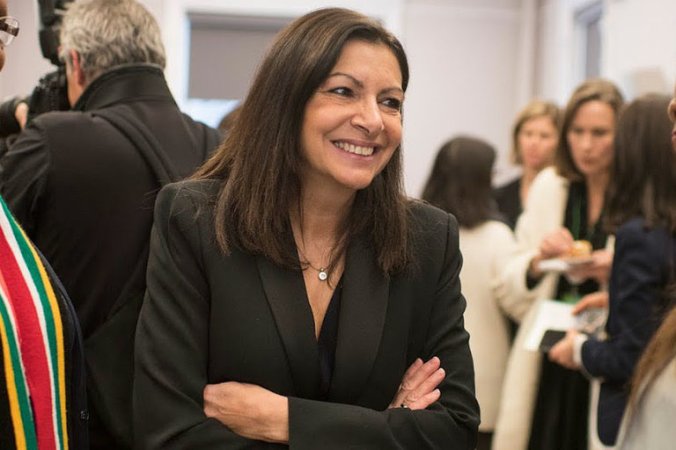
Anne Hidalgo, the Paris mayor, said she was “convinced that together, cities, businesses and citizens will save the planet. Their alliance is critical.” Credit Scout Tufankjian/C40
We started this model mad series of links to share stories of people, and of public institutions, and of private enterprises among others finding creative outlets for expressing resistance to powerful interests determined to undermine environmental responsibility. This governor was a favorite among our readers, so we expect this mayor will join the upper ranks of appreciation:
Anne Hidalgo, mayor of Paris, is also chairwoman of C40, a network of the world’s biggest cities committed to addressing climate change. As mayor, despite strong opposition, she has closed parts of the city — including along the bank of the Seine River — to traffic. Recently, I asked Ms. Hidalgo about her interest in environmental issues and why women are important to the solutions. Continue reading
 Organikos