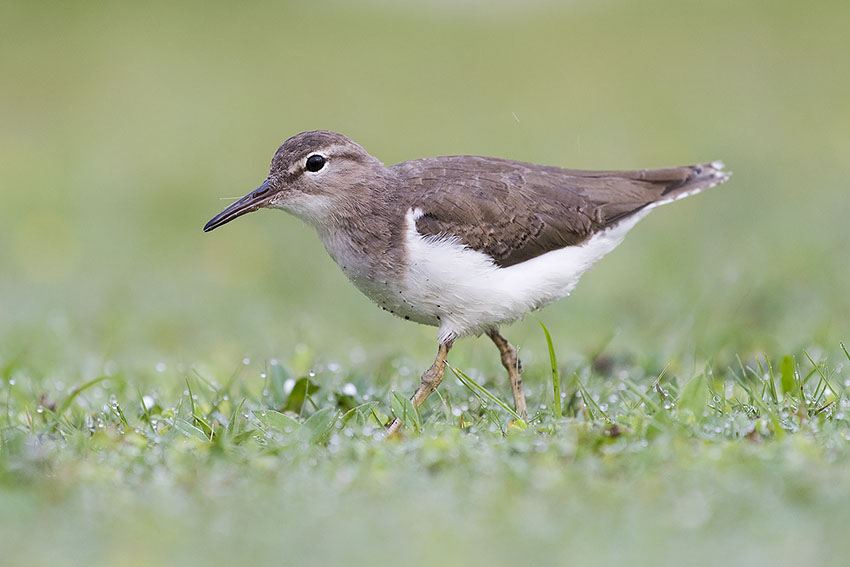
Crooked Tree, Belize
Food For The Ages
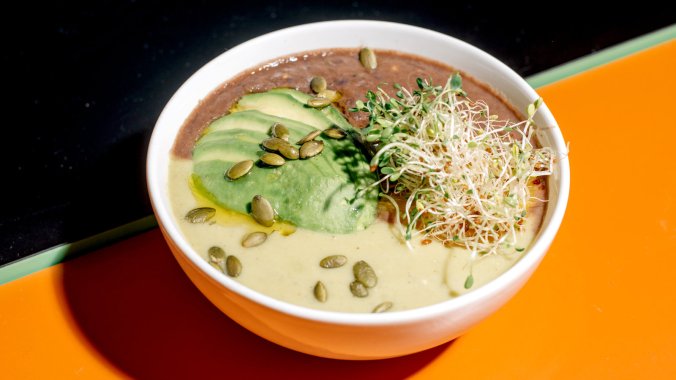
Cole Wilson for The New York Times
Shoutout to our food friends in Ithaca, among other places and to all the back to the land folks who make our food better in terms of both taste and ecology:
The Hippies Have Won (the Plate, at Least)
By
The current food mood may also be a reaction to the more exhausting aspects of life in the digital era.
“It’s a weird mixture of technology and palo santo” — iPhones and incense — said the chef Gerardo Gonzalez, suggesting that people who live online may be moved to seek out the restorative properties of natural foods. “You’re constantly in this thing that’s not reality, and eating food can be the most real act you can partake in.”
It’s Moosewood’s world. We’re just eating in it. Continue reading
Green Farming Productivity

Image: Austin Valley via Flickr
Thanks to Anthropocene, for this article, which adds to today’s green food theme:
On many farms, reducing pesticides probably won’t hurt profit or yields
Mangroves Need Intent And Action

Image: Irish Typepad / Flickr
Thanks to Anthropocene for this summary by Brandon Keim of new scientific findings showing that Good intentions alone won’t grow new mangroves:
Perhaps no single ecosystem is more emblematic of nature’s benefits to humans than mangrove forests. Lining tropical and subtropical coastlines worldwide, they’re nurseries for countless species and protect inland areas from hurricanes and storms. They’re an environmental feature beyond our wildest technical capacities. Continue reading
Keeping Those Scarlet Macaws Out Of Harm’s Way
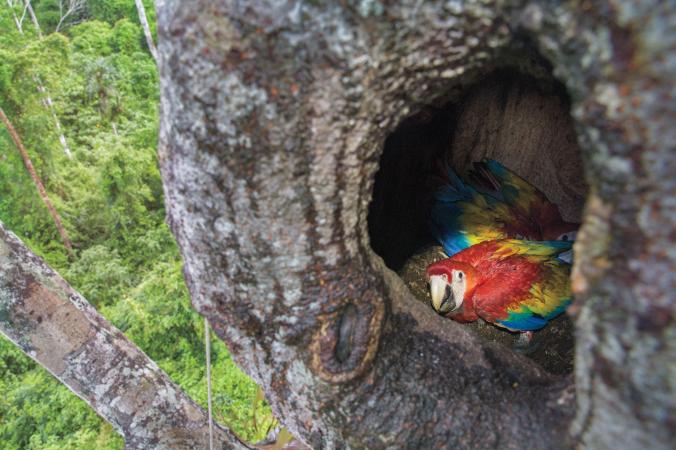
Two Scarlet Macaws chicks sit in their nest in the cavity of a quamwood tree in Belize’s Chiquibul Forest. Photo: Camilla Cerea/Audubon
Thanks to the neighbors of Chan Chich for bringing to my attention this article by Martha Harbison in the current issue of Audubon Magazine, which touches on the topic I referenced back here, not far from Chan Chich Lodge as the bird flies (so to speak):
…To keep macaw chicks safe, a team of rangers spends night and day watching over the birds’ nests and homes.
The Scarlet Macaw’s last, best defense against wildlife poachers doesn’t look like much: just a ramshackle collection of tarps, makeshift tables, plastic five-gallon buckets, jungle hammocks, and a cook fire, hidden in the dense understory of a tropical hardwood forest near the fraught and uncomfortably porous border between Belize and Guatemala. Continue reading
Bird of the Day: Barn Swallow

Hassan, Karnataka
Plant, Coffee Table Baiting
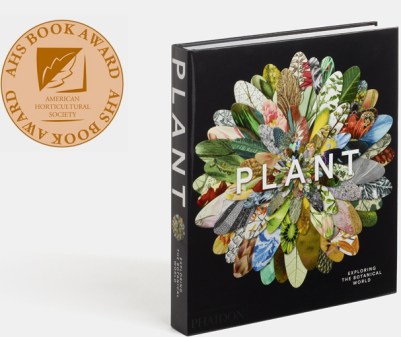 Photos by Penn, Steichen and other classic masters share the pages with some of today’s greatest photographers in this book. It brings our attention to flora in both natural and still-life settings, making this kind of debate irrelevant.
Floral arranging, an art form, can be seen as baiting, in a way. We are mindful of the fact that most of the world increasingly lives in urban settings. While our job is to provide access to the wonders of wild nature, there is a vital role for plants in the daily lives of urbanites to remind them to get back to nature from time to time. If this book provides coffee tables daily reminders of that imperative, we are all for baiting.
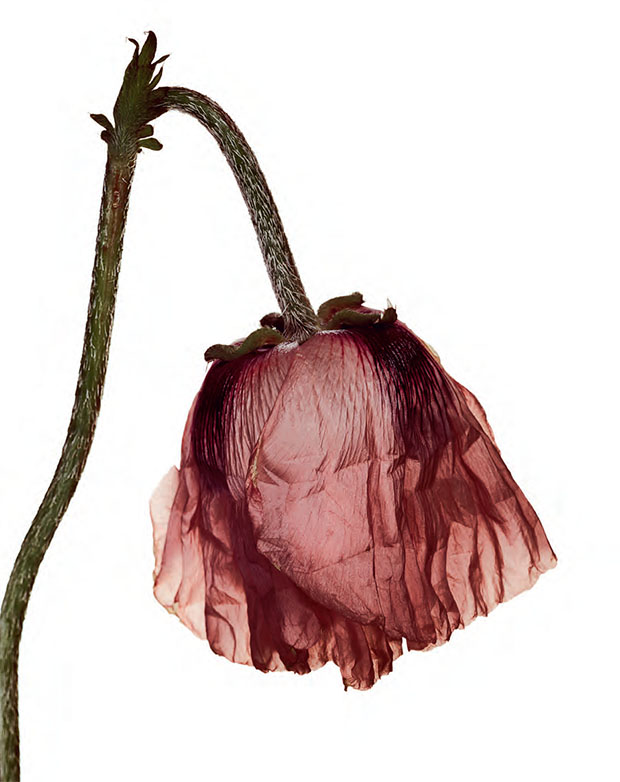
Single Oriental Poppy (C), 1968 by Irving Penn. From Plant: Exploring the Botanical World
Plant wins American Horticultural Society Book Award!
Plant is ‘an art exhibit in book form’ says one of the judges – and who are we to disagree? Continue reading
To Bait Or Not To Bait, A Debate

A great gray looks up after plunging into the snow, while hunting north of Two Harbors, Minn. The great gray is one of the world’s largest species of owl. Derek Montgomery for MPR News
We have never had, nor can I picture us having this debate at Chan Chich Lodge or any other wildlife setting we are responsible for managing; nonetheless, since we all live in glass houses of one sort or another, it is worth a moment to read this and ponder (thanks to Dan Kraker and Minnesota Public Radio, USA):
Earlier this winter, photographer Michael Furtman was driving along the North Shore of Lake Superior in search of great gray owls. Several of the giant, elusive birds had flown down from Canada looking for food.
He pulled off on a dirt road where he had seen an owl the night before. One was there, perched in a spruce tree, but so was a pair of videographers filming them.
“I backed off, I was going to just let them have their time with the bird,” Furtman says. “And then I saw them run out and put a mouse on the snow.” Continue reading
Landscaping’s Latest Lovechild
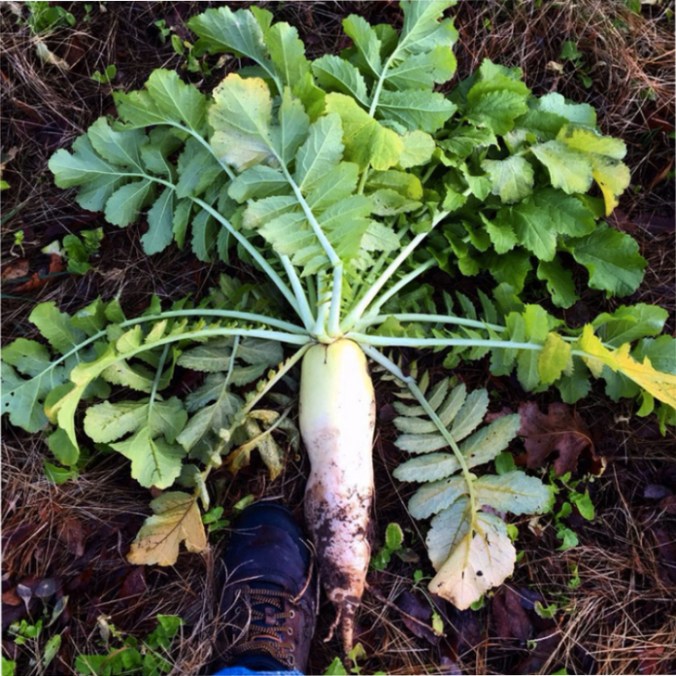
Tillage radish is similar in shape, size, taste, and color to daikon radish. Image courtesy of MVVA.
Do not let the gloom, or the investigative questions of the day, get the better of you. Instead, back to the land. This radish brings a smile. Not least because its story comes via a publication I have just become aware of:
THE DRILLING RADISHES OF ST. LOUIS
Oilseed radish, or Raphanus sativus, goes by the name “tillage radish,” “radish ripper,” “fracking radish,” and the comic book-worthy “turbo radish.” It can reach its two-inch-wide taproots down six feet, breaking up compacted soil and rebalancing nutrient levels, and is commonly put to work as a cover crop in agricultural fields. Continue reading
Model Mad, Whitehouse
 We have been suggesting that the model mad behavior in these particularly odd times is not to fight fire with fire, but to fight it with effective extinguishers. There are plenty of creative, as well as otherwise enlightened approaches you should consider. Here’s another. If what you hear out of the White House is infuriating you, consider what this Whitehouse has to say:
Sheldon Whitehouse is a politician with a great name, a bad haircut, and a pissed-off attitude. The second-term Democratic junior senator from Rhode Island has built his career around two seemingly unrelated issues—climate change and money in politics—and he’s just written a book to demonstrate how intimately connected they turn out to be. Continue reading
Rare Birds, Climate Change & Dialogue

Jerry Taylor, founder of the Niskanen Center, a libertarian think tank.
We like birds. We like rare birds. Jerry Taylor sounds worthy of attention. Thanks to Marc Gunther and Yale 360 for Climate Converts: The Conservatives Who Are Switching Sides on Warming:
It’s hardly being noticed, given the current political atmosphere in Washington. But a small yet growing number of Republicans, conservatives, and libertarians are starting to push for action on climate.
As liberal Democrats and conservative Republicans pull farther apart in the long-running, increasingly polarized debate over climate change, Jerry Taylor is a rare bird — Continue reading
Possibly Impossible

The Impossible Burger. Photo via Forbes.
Impossible? We have liked what we have seen, more than once. But we remain open-minded in both directions. Thanks to Dana Perls, senior food and technology campaigner, for the article Is “Food-Tech” the Future of Food? posted on Medium, that raises the right kinds of questions:
…On the surface, the Impossible Burger’s goal to reduce meat consumption sounds important. There are urgent problems with animal factory farming. But at a time when consumers are pushing for more sustainably produced real food, are these biotech products the right answer? Continue reading
Bird of the Day: Sarus Crane

Bharatpur Bird Sanctuary, Rajasthan
Birdwatching 101, Mid-May, Chan Chich Lodge
 You probably cannot do much better, if you are just getting interested in birdwatching, than to have a primer like this one. The author, in the pantheon of ornithology according to the birdwatchers I know, spends half an hour sharing some of the basics in this podcast:
This week’s Please Explain is all about birdwatching. We chat with ornithologist David Allen Sibley, a leading expert in the field. Sibley is the author of The Sibley Guide to Birds, a reference work and field guide for the birds found in the North American region. He offers details and illustrations of 810 species of birds, with information about identification, life history, vocalizations, and geographic distribution. According to the Audubon Society, “There are 47 million birdwatchers. But there is only one David Sibley.”
In the final minutes Mr. Sibley answers a question that has been of interest to the staff of Chan Chich Lodge in recent months. Do bird feeders have any adverse effect on the birds they attract? In short, no. So today we returned the hummingbird feeders to their longstanding perches on the dining room deck. Birds, staff, and guests are all happy with this decision.
This podcast serves as a good reminder of an opportunity we are inviting birdwatchers of all skill levels to join us for. We have already posted about it here, and earlier here as well. Come join the fun!
Model Mad, Markets

Leigh Wells
On a day often reserved for gags and laughs, we instead repeat, without much cheer but plenty of conviction, two of our favorite words: entrepreneurial conservation. Two opinion pieces today highlight the role of both government and market forces as vehicles of environmental protection. When government must take action, as John D. Leshy and Mark Squillace point out, there is a law that allows the President of the United States to protect nature in the public interest. That law is endangered, and it is not okay, these model mad legal scholars remind us. They also point out that markets have tended to follow and reward the actions Presidents have taken to protect natural monuments in the last 111 years since that law was enacted.
A former Mayor of New York City, who also has credibility when it comes to market forces, reminds us in another editorial that with or without a President’s leadership we can still make progress on our environmental commitments. But only if all the rest of us are fully on board, and ready to shake things up when needed, providing all the more reason for each of us to keep all these model mad examples fresh in mind. If you only have time for one quick read at the moment, make this the one:
Climate Progress, With or Without Trump
Sony’s Prizes, And A Few Images From Chan Chich Lodge

This photo above was taken about a thousand miles south of where I am posting from, at Chan Chich Lodge in Belize. It won a prize in Sony’s annual photo contest, which we always enjoy reading and gawking at. Even though the photographer was in Panama, he might as well have been here, where I believe we have this same species in the forests surrounding the Lodge:
Cautelosa / Cautious. Taken on June 12, 2016, while working in the field, this iguana was near a small creek had done several reptile shots until I got this one.
© Jonatan Banista, Panama, 1st Place, National Awards, 2017 Sony World Photography Awards
As I have noted earlier, we are fortunate to have guests who do not only focus on the top of the food chain. A couple more of my recent favorites follow, adding to those already credited to Yvonne & Martin. Continue reading
Food We Enjoy Reading About, For Inspirational Purposes
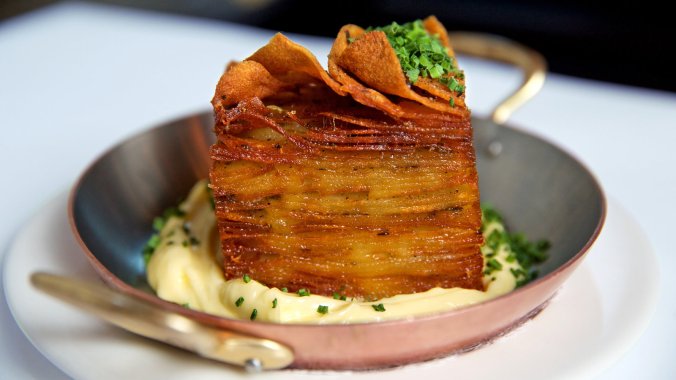
Credit Benjamin Norman for The New York Times
As noted yesterday, and earlier, we have food on our mind recently, so more than ever I am following reviews and other food stories in the various publications I read. Even when he is tough on his subject, Pete Wells delivers the reader something to brighten the day. This review has a few paragraphs that define his style to me, including a graceful set of kisses followed by a bracing slap on the cheek:
…Restaurants don’t need to do new things if they do the old things right.
The leg of lamb has not been reinvented. Having spun on a rotisserie under a coat of herbs, it is carved off in long strips, like shawarma, and draped over very soft flageolets. A cheese soufflé appetizer recalls the warm pot de fromage at Cherche Midi; it’s delicious, even if it is breadier than a classic soufflé, more like a Gruyère-and-Parmesan popover. Continue reading
Bird of the Day: Purple-rumped Sunbird
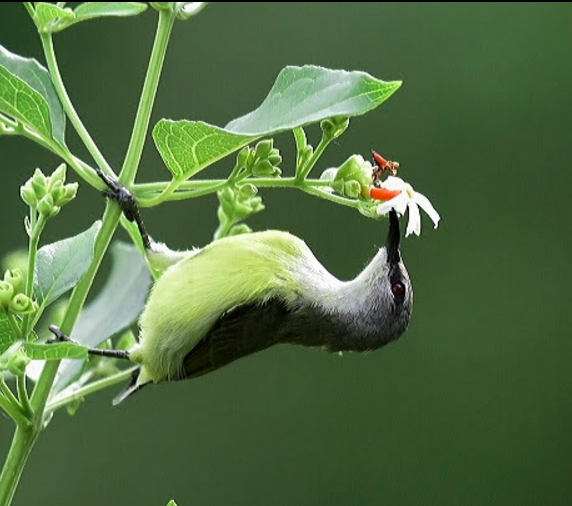
Pudukkottai, Tamil Nadu
Getting A Restaurant Ready
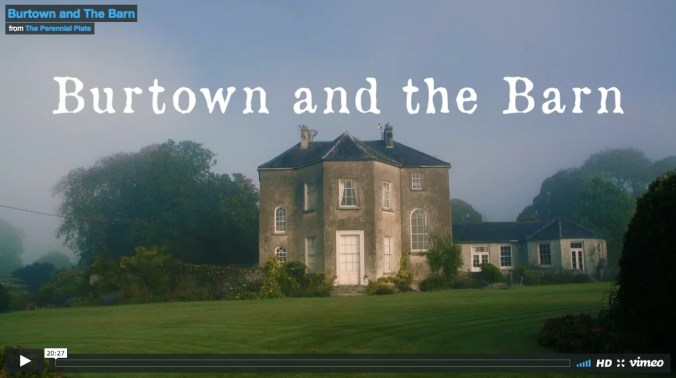
Thanks to the Atlantic and its author Erica Moriarty for A Restaurant Brings New Traditions to an 18th-Century Irish Home, with video by The Perennial Plate. These are 20 minutes well spent, especially if you have been through a similar process more than once recently, and even more so if you are contemplating doing so again:
Since the 1700s, the Fennell family has lived on the same property in County Kildare, Ireland. In the past, they were able to generate income from their small farm to support themselves. Continue reading
America’s Best Idea Just Got Better

In our current political climate we continue to applaud those who stand up for science, nature and culture. It’s been particularly heartening to watch the steward’s of our national parks create a virtual protective shield around the vision they’re charged to protect.
My personal standing ovation goes to the partially anonymous park ranger who spends his spare time creating downloadable maps of all our country’s national parks, by state, from A to Z. (F, Q, U and X seem to be the only letters missing…) In addition to maps, site visitors find all sorts of experiential tips to prepare for safe exploration.
Glacier Maps
If you’re looking for a Glacier map, you’ve come to the right place; currently I’ve collected 28 free Glacier National Park maps to view and download. (PDF files and external links will open in a new window.) Here you’ll find a bunch of trail maps, along with other maps such as campgrounds and the shuttle bus. You can also browse the best-selling Glacier maps and guidebooks on Amazon. Continue reading
 Organikos