What To Expect When You Are Expecting An EPA

121415_stavins_184_605.jpg

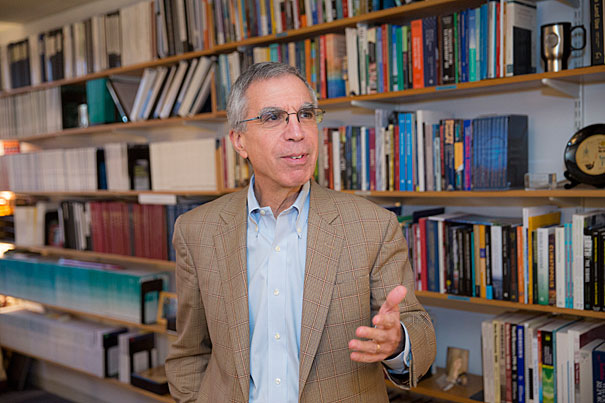
“For some environmental problems that are truly localized, there is little argument against a state approach,” said Stavins. “However, for environmental problems that are interstate … and for a global commons problem, such as climate change, the federal government really should take the lead.” File photo by Kris Snibbe/Harvard Staff Photographer

We are thankful to the Harvard Gazette for this summary of Professor Stavins by Alvin Powell:

The Senate’s confirmation of former Oklahoma Attorney General Scott Pruitt as administrator of the Environmental Protection Agency (EPA) has alarmed environmentalists.

In Oklahoma, Pruitt prided himself on fighting the agency he will now run, with his website describing him as “a leading advocate against the EPA’s activist agenda.” He sued the agency to fight regulation and expressed doubt about the human causes of climate change, though he moderated those views in his confirmation hearings.

Robert Stavins is the Albert Pratt Professor of Business and Government at the Harvard Kennedy School, director of the Harvard Project on Climate Agreements, and a past member of the EPA’s Science Advisory Board. The Gazette asked him about the EPA’s future under Pruitt. Continue reading

Beyond Zen Architecture

karuizawa-japan-slide-ABND-master675.jpg

There is not a single right angle in the Hoshino Wedding Chapel’s cascading concrete arches and soaring interior of inlaid stone. CreditPhotograph by Mikael Olsson. Producer: HK Productions

Anyone who followed our design and development process, or who has been to the property we created on the beach in Kerala between 2012-2014, will understand why this architecture, from one of Japan’s masters, speaks to us:

Otherworldly Architecture in Japan’s Magical Mountainside

In the leafy hamlet of Karuizawa, distinctive design is the expression of the uninhibited self. Continue reading

Her Majesty’s Secret

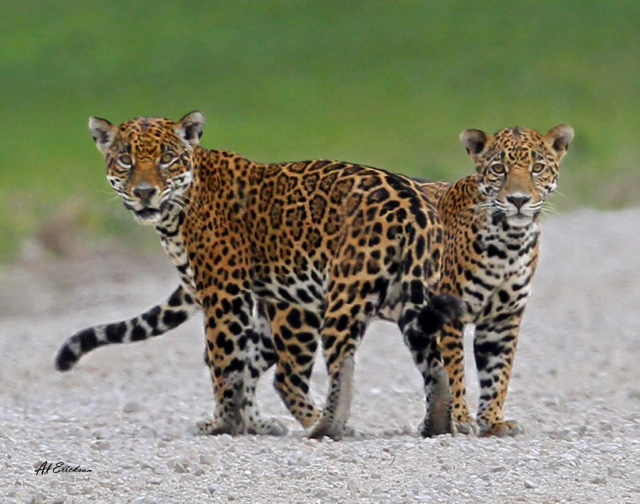
adolescjags

The guests of Chan Chich Lodge who had the good fortune to see her majesty last week were kind enough to share their photos. Thanks again to Al Erickson for his follow up visit the day after the mother jaguar was spotted, back to the same general location; this time he spotted these two adolescents wandering on the road. They must have been out of sight the day prior, mother guarding her secret while she posed for a portrait. This day, no secrets. Only pride.

For Consideration, On Climate Change

Nijhuis-AreConservationistsWorryingTooMuchAboutClimateChange-1200.jpg

This post on the New Yorker website from some months ago caught our attention but we resisted linking it here for some reason now forgotten. But it should be read by anyone interested in conservation and climate change. The title is provocative, no doubt attractive to deniers but instead meant to raise attention on an issue we are sure most people of all walks of life, and all around the world have reason to be concerned about:

ARE CONSERVATIONISTS WORRYING TOO MUCH ABOUT CLIMATE CHANGE?

By Michelle Nijhuis

In January of this year, James Watson, an Australian scientist who works for the Wildlife Conservation Society, noticed an image that had been tweeted by a friend of his, a physician in Sydney. With a chain of progressively larger circles, it illustrated the relative frequency of causes of death among Australians, from the vanishingly rare (war, pregnancy and birth, murder) to the extremely common (respiratory disorders, cancer, heart disease). It was a simple but striking depiction of comparative risk. “I thought, ‘Why hasn’t anyone done something like this for the rest of nature?’ ” Watson recalled.

The answer was that, until recently, nobody had the data. While many scientists have studied the vulnerability of individual species or groups of organisms (corals, say, or birds) to extinction, only in 2010 did ecologists, conservationists, taxonomists, and naturalists begin to more comprehensively assess the threats posed to species of all kinds—an effort to assemble what the biologist E. O. Wilson has called a “barometer of life.” Continue reading

Baltimore Water Wheel & A Vision Of Recovery

baltwheel

If Mr. Trashy has a silly ring to it, so be it. The medium is the message:

USING THE POWER OF NATURE TO KEEP OUR HARBOR CLEAN

The Inner Harbor Water Wheel, or “Mr. Trash Wheel” to locals, combines old and new technology to harness the power of water and sunlight to collect litter and debris flowing down the Jones Falls River.

The river’s current provides power to turn the water wheel, which lifts trash and debris from the water and deposits it into a dumpster barge. When there isn’t enough water current, a solar panel array provides additional power to keep the machine running. When the dumpster is full, it’s towed away by boat, and a new dumpster is put in place. Voilà!

Thank you, Mr. Trash Wheel.

BaltWaterWheel1.jpg

Great Backyard Bird Count at Villa del Faro

a male Xantus' Hummingbird, endemic to Baja California Sur

a male Xantus’ Hummingbird, endemic to Baja California Sur, photographed during the GBBC

For last year’s GBBC, I was working in Costa Rica, in the Central Valley. This time around, I was on the job in Baja California Sur, Mexico, at Villa del Faro. Over the course of the four days that comprise the Great Backyard Bird Count, I was able to go out three mornings and one afternoon in search for birds.

By the last day, I had seen most of the usual suspects, although I was unable to spot a Pyrrhuloxia, one of my favorite species here in Baja, which is quite shy. In total, however, I saw 38 species around Villa del Faro, which has a hotspot with 76 species, so I saw exactly half the birds recorded here so far (and two of them were only just reported for the first time yesterday).  Continue reading

You Had Us At Sweet Potato

logoWe have only recently discovered this resource but I expect you will start seeing a flow of interesting stories. sourced from Harvest Public Media, that touch on topics of interest to us here. For example, the mere mention of sweet potatoes was enough to get us interested:

011317_sweet_potatoes_chopped

According to the USDA, sweet potato consumption in the U.S. nearly doubled in just 15 years, from about 4 pounds per person in 2000. (U.S. Department of Agriculture/Flickr)

Sweet potatoes are undergoing a modern renaissance in this country.

While they have always made special appearances on many American tables around the holidays, year-round demand for the root vegetables has grown. In 2015, farmers produced more sweet potatoes than in any year since World War II. Continue reading

Thank You National Public Radio (USA)

gettyimages-461032685-d9e390da618284547ffcceb14e2c93177fe08e0a-s1400-c85.jpg

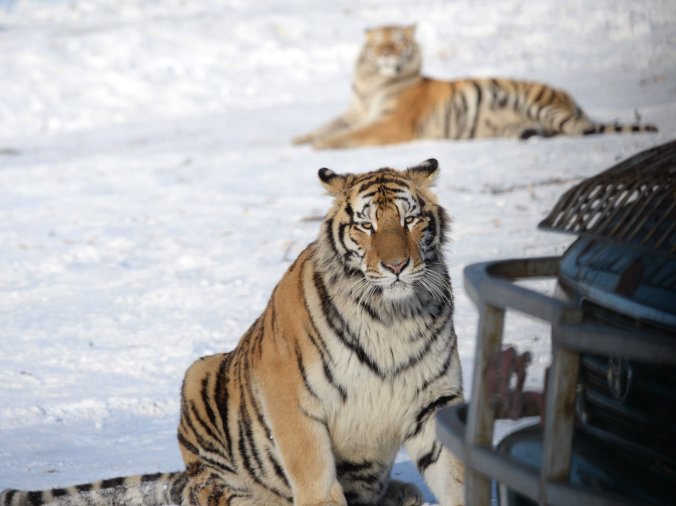
In this 2014 photo, two Siberian tigers rest beside a gamekeeper’s vehicle at the Harbin Siberian Tiger Park in China’s Heilongjiang province. Goh Chai Hin/AFP/Getty Images

We watched this video, from a link on social media that sometimes offers excellent, informative material related to the animal kingdom, wilderness, and conservation; but this turned our stomach so we are happy that NPR gives it exactly the kind of attention it deserves:

The Problem With That Video Of Tigers Squaring Off With A Drone

By Colin Dwyer

The video of about a dozen hefty Siberian tigers chasing and batting a flying drone from the sky seemed a lighthearted reprieve from the more serious news of the day. But since sharing the footage, we’ve become aware that it may conceal a darker story. Continue reading

A Serving Of Tradition, If You Please

mexico-mole-slide-DWS8-jumbo.jpg

We are close to this tradition, geographically anyway, both in Belize and in Baja California Sur where members of our team are, so we must pass this along:

The New Age of Traditional Mexican Mole

The country’s top chefs are reinventing the complex sauce — 10, 20, even 30 ingredients at a time. Continue reading

If You Happen To Be In The Deep South

25TB-Eclipse-master768.jpg

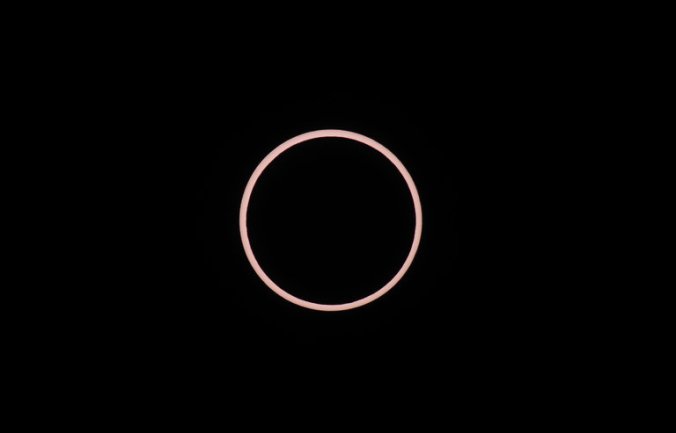
An annular solar eclipse as seen in Utah in May 2012. A similar “ring of fire” eclipse will be visible in the southern hemisphere on Sunday. CreditRobyn Beck/Agence France-Presse — Getty Images

For our friends and colleagues in the south, both in the Americas and in Africa, an astrophysical rarity will be in the night sky, not to be missed:

Cue the Johnny Cash music. On Sunday, a “ring of fire” eclipse will blaze over parts of South America and the southern and western tips of Africa. Scientifically known as an annular eclipse, this solar phenomenon occurs when the moon moves in between the sun and the Earth but is too far away to completely block the sun as it would during a total solar eclipse.

“Because you have this thin little ring around the edge of the moon where the sun pokes out, it gives it that ring of fire effect,” said C. Alex Young, a solar astrophysicist from NASA. Continue reading

Oh Amazon, Where Art Thou?

time-lapse-tablet.jpg

By The New York Times

It is a heavy read, but now is not the time to shrink away from the tough news. Something can be done, and something must be done. Soon. Thanks to the New York Times for the reporting on this topic:

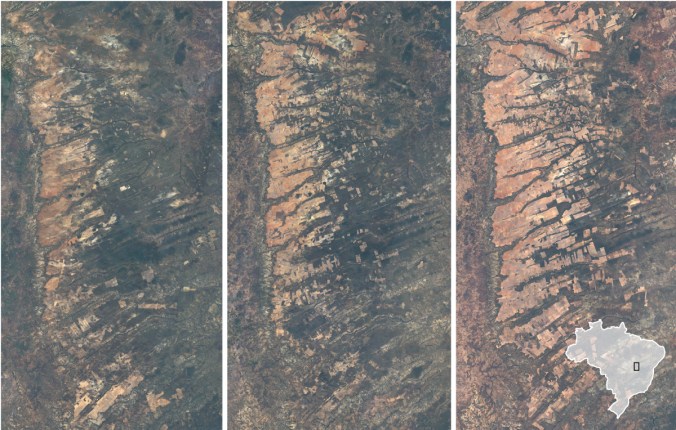
Amazon Deforestation, Once Tamed, Comes Roaring Back

A decade after the “Save the Rainforest” movement captured the world’s imagination, Cargill and other food giants are pushing deeper into the wilderness. Continue reading

Scott Chaskey, Inspiration

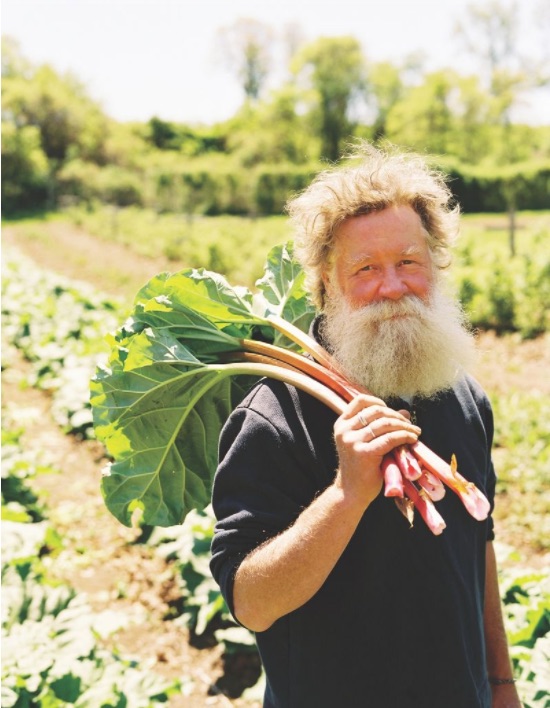
Chaskey.jpgI had not heard of him before, but as we move the Chan Chich Lodge farm to table program forward it is instructive to listen to him speak about his journey:
Farmer, poet, and pioneer of the community farming movement, Scott Chaskey is the kind of progressive thinker that doesn’t come around often. Weaving together his passion for farming and prose, the 66-year-old has penned multiple books on the community farming movement, creating a road-map for Americans who want to live off the land as a community. He talks to Here’s the Thing host Alec Baldwin about deciding to “eat consciously,” watching his love for the earth go global, and the food his kids hid from him when they were little.

This also has me looking at his books: Continue reading

Forest Attrition Distance

24tb-forests-master768.jpg

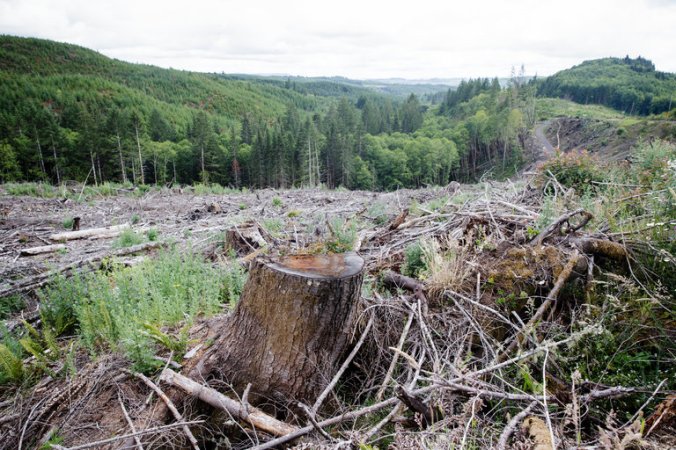
A forest in Oregon along Highway 30, part of which has been clear-cut. Researchers say the average distance to the nearest forest from any point in the continental United States widened in the 1990s. Credit Leah Nash for The New York Times

Thanks to the Science section of the New York Times, for the description of the research as well as for the name of the measurement:

How Far to the Next Forest? A New Way to Measure Deforestation

Looking Forward To The Debate On Nature As Climate Technology

Nature_Poster.jpg

We cannot help wondering, with the political upheavals in the USA and Europe, what will become of our commitments to take care of serious environmental issues, and specifically climate change; we are looking forward to this debate on the Intelligence Squared podcast, and will post a reminder when the podcast drops:

NATURE: OUR BEST CLIMATE TECHNOLOGY?

It was historic. The 2015 Paris climate agreement saw every member country of the UN pledge to cut its carbon emissions to zero by the second half of this century and keep global warming at well below 2°C above pre-industrial levels.

There’s just one problem. To reach this goal the world would need to shut down all of its coal-fired power stations by 2025 and ditch the combustion engine entirely by 2030. To reach its own targets, the UK will need to decarbonise the vast majority of its electricity supply within a mere 15 years. Eliminating fossil fuels this way is going to be extremely challenging. An extra lever is needed to reach the Paris climate targets. But from where? Continue reading

Model Mad, Icon


petrusich-harrybelafonteandthesocialpowerofsong-800

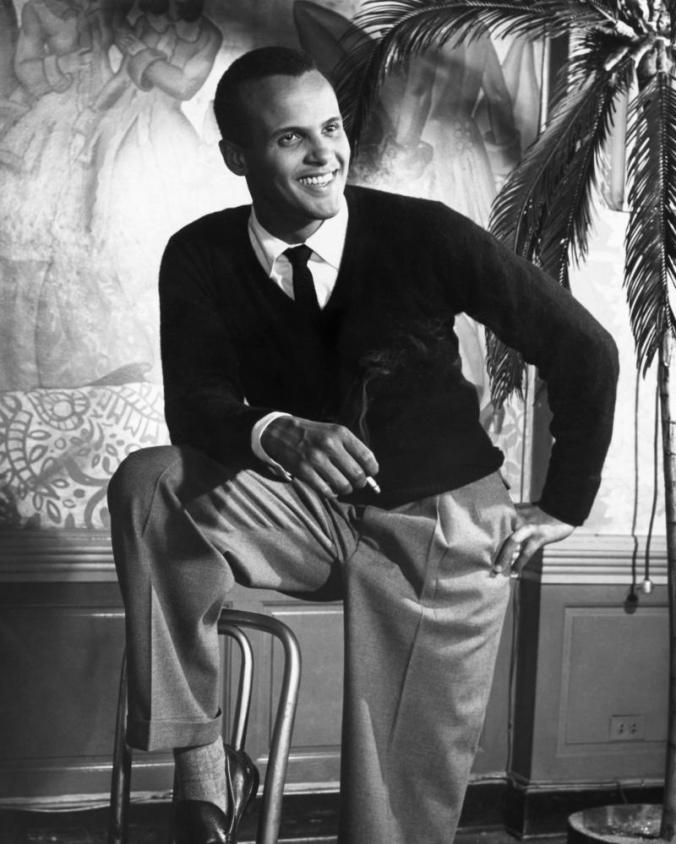
A new anthology of the work of Harry Belafonte, pictured here in the nineteen-forties or fifties, reiterates his standing in American music. PHOTOGRAPH BY BETTMANN / GETTY

There was an editorial a few days ago that alerted us to the birthdays of two buddies, each on icon in his own right, who have 70 years of solidarity in the tough times, and best of times too. It also alerted us to the time since our last post with the model mad theme, so here is one more:

HARRY BELAFONTE AND THE SOCIAL POWER OF SONG

By Amanda Petrusich

Sixty-one years ago, in 1956, Harry Belafonte recorded a version of the Jamaican folk song “Day-O,” for his third studio album, “Calypso.” It opens with a distant and eager rumbling—as if something dark and hulking were approaching from a remote horizon. Belafonte—who was born in Harlem in 1927, but lived with his grandmother in a wooden house on stilts in Aboukir, a mountain village in Jamaica, for a good chunk of his childhood—bellows the title in a clipped island pitch. The instrumentation is spare and creeping. His voice bounces and echoes as it moves closer. It sounds like a call to prayer. Continue reading