Bengaluru Outskirts, Karnataka
Bengaluru Outskirts, Karnataka

New York City’s Blue Hill restaurant is the biggest buyer of “Habanadas,” a habanero bred to be heatless, so the focus is on its melon-like flavor. Courtesy of Blue Hill
A few reasons to read this include Dan Barber and his Blue Hill being mentioned in the opening sentence; plus the arrival of our new chef at Chan Chich Lodge, hinted at last month; plus the fact that many of our guests cannot tolerate the heat of habaneros; plus our plan to expand the variety of salsas produced at Gallon Jug Farm; plus the fact that the plant breeder responsible for this innovation is in one of our favorite places for agricultural innovation:
This Heatless Habanero Packs All Of The Flavor With None Of The Burn
by Tove Danovich
For Dan Barber, the celebrated chef of the New York City restaurant Blue Hill, each course of a meal is an opportunity to tell a story. One of these stories is about a pepper — an aromatic, orange habanero without any heat. Continue reading

In the face of Trump, many artists report feelings of paralysis. Should they carry on as before, nobly defying the ruination of public discourse? Or seize on a new mission, abandoning the illusion of aesthetic autonomy? PHOTOGRAPH BY ERICH AUERBACH/HULTON ARCHIVE/GETTY
Alex Ross asks the right question, in our view of the importance of finding a new model of behavior to reflect mad, with his opening question and the whole first paragraph prepares you for a worthy read:
MAKING ART IN A TIME OF RAGE
What is the point of making beautiful things, or of cherishing the beauty of the past, when ugliness runs rampant? Those who work in the realm of the arts have been asking themselves that question in recent weeks. Continue reading
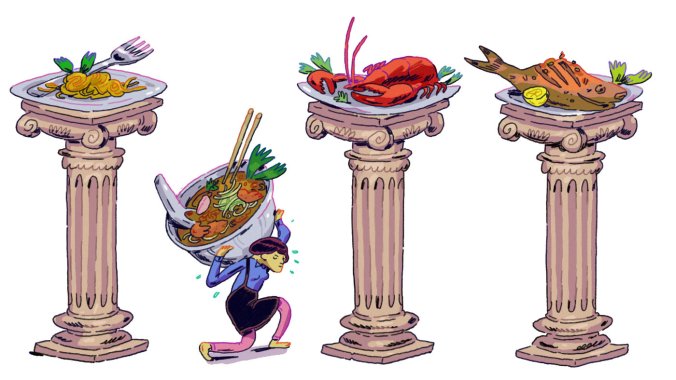
Alex Reynolds/NPR
We appreciate that an immigrant restaurant owner has the courage to state the unpopular but important facts underpinning one of the popular memes of our time (thanks as always to the salt over at National Public Radio in the USA):
Cheap Eats, Cheap Labor: The Hidden Human Costs Of Those Lists
by Diep Tran
Everyone loves a cheap eats list. A treasure map to $1 tacos! $4 banh mi! $6 pad Thai! More often than not, the Xs that mark the cheap spots are in the city’s immigrant enclaves. Indeed, food media is never so diverse as when it runs these lists, its pages fill with names of restaurateurs and chefs of color.
These lists infuriate me.

Sivarpanam Palace, Tamil Nadu
What a decent man, we say every time we see news of Jimmy Carter. This story is no exception, and we especially appreciate the example he is setting with this action:
PLAINS, Ga. — The solar panels — 3,852 of them — shimmered above 10 acres of Jimmy Carter’s soil where peanuts and soybeans used to grow. The panels moved almost imperceptibly with the sun. And they could power more than half of this small town, from which Mr. Carter rose from obscurity to the presidency. Continue reading

Ocelot curious about the red light of the camera
For years the camera traps at Chan Chich Reserve have been capturing images of wildlife both day and night. In addition to helping to document the size and health of the population of a specific species within the reserve, the cameras also capture the particular behavior of the species.
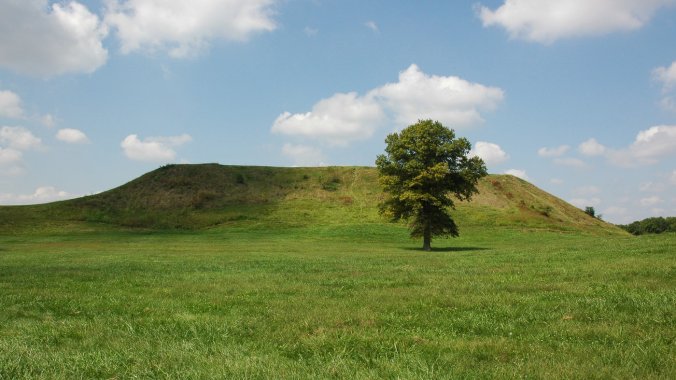
Cahokia Mounds State Historic Site in Collinsville, Ill. A thriving American Indian city that rose to prominence after A.D. 900 owing to successful maize farming, it may have collapsed because of changing climate. Michael Dolan/Flickr
Thanks to National Public Radio (USA) and the folks at the salt for raising our awareness of another corn-influenced culture we knew nothing about until just now:
1,000 Years Ago, Corn Made This Society Big. Then, A Changing Climate Destroyed It
by Angus Chen
About a 15-minute drive east of St. Louis is a complex of earthen mounds that once supported a prehistoric city of thousands. For a couple of hundred years, the city, called Cahokia, and several smaller city-states like it flourished in the Mississippi River Valley. But by the time European colonizers set foot on American soil in the 15th century, these cities were already empty. Continue reading

male (Atlanta, Georgia)

Young Woman with a Water Pitcher
by Johannes Vermeer (Dutch, Delft 1632–1675 Delft)
In these current times when Art, Culture and Civility appear to be under constant attack, news that museums and galleries – both private and public – are opening their virtual archives of Public Domain artworks to be just that, public, is newsworthy.
For example, a click on the image to the left takes viewers to the Metropolitan Museum’s website that includes not only the full details of the painting (description, catalogue entry, provenance and exhibition history, etc.), but also a hyperlink to a map of the gallery where viewers can find the actual painting, and related objects within the museum’s vast collection.
We’re happy to know that museums, whether virtual or physical, still provide inclusive space to breathe deep.
Met Museum Makes 375,000 Images Free
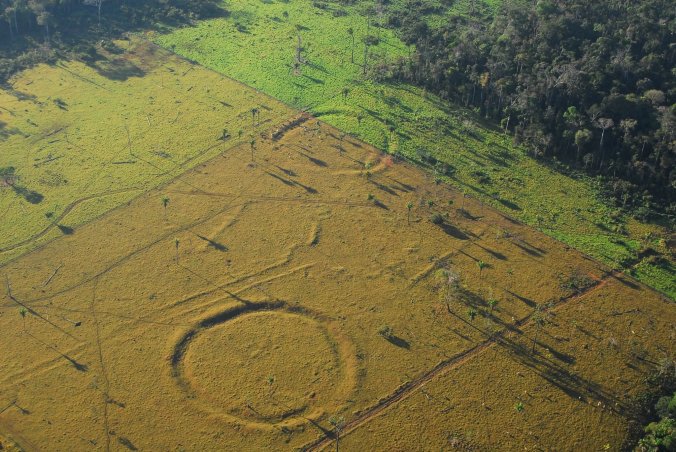
New research suggests people were sustainably managing the Amazon rain forest much earlier than was previously thought. Credit Jenny Watling
Anything with the word Amazon in it, when it refers to the rainforest ecosystem in South America, is worthy of marvel. Joanna Klein offers this story, in the Trilobites feature at the New York Times, that is one of the more surprising finds we have seen in a long time:
Deep in the Amazon, the rain forest once covered ancient secrets. Spread across hundreds of thousands of acres are massive, geometric earthworks. The carvings stretch out in circles and squares that can be as big as a city block, with trenches up to 12 yards wide and 13 feet deep. They appear to have been built up to 2,000 years ago.
Were the broken ceramics found near the entrances used for ritual sacrifices? Why were they here? The answer remains a mystery. Continue reading

We studiously avoid wading into the realm of popular music here, but today we make an exception. Not for the sake of the music itself (the greatest hits of a band celebrating 50 years of working together), but because we have just discovered that one of our favorite artists, featured here more than once, was the cover artist for the album above. Yes, we see we are a few years behind the times on this story, but better late than never when it comes to Walton Ford:
Rolling Stones Gorilla Logo Artist Slams Critics
Walton Ford offering limited-edition etching of widely seen gorilla logo Continue reading

female (Atlanta, Georgia)
 After a year of waiting, the paper that I wrote with Justin and John is finally published! This is a journal article that arose from an accidental encounter with a juvenile Barn Owl in a small cave that I noticed on the side of a trail we were on while exploring the Hellshire Hills. This southern region of Jamaica is not one in which we expected to see the Golden Swallow, but we wanted to check anyway, as well as look out for some of the rare tropical dry scrub species we might find in the area, like the Jamaican Iguana, previously thought extinct.
I briefly hinted at this paper in an old post after our return from Jamaica, but didn’t mention it after that since I knew a published article would tell the story more fully, albeit more technically and with science instead of storytelling as a priority. In the cover photo above I’ve included a link to the PDF version of Caribbean Naturalist journal issue 37, which contains our article, but I also want to summarize our findings in lay terms for those less familiar with the biological jargon.
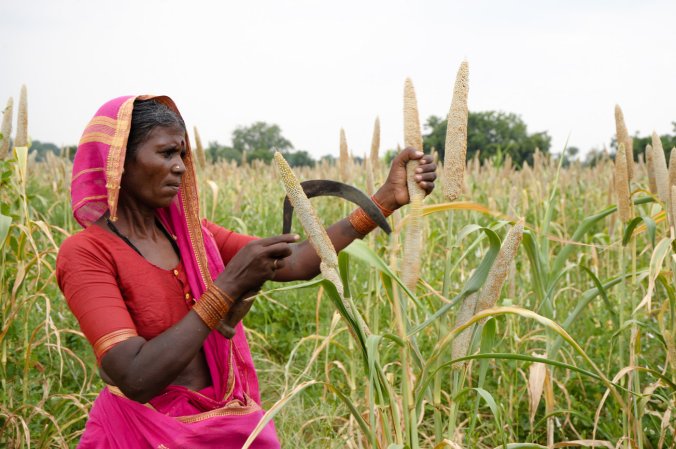
A woman farmers harvests pearl millet in Andhra Pradesh, India. Millets were once a steady part of Indians’ diets until the Green Revolution, which encouraged farmers to grow wheat and rice. Now, the grains are slowly making a comeback. Courtesy of L.Vidyasagar
Thanks to the folks at the salt for this note on millet:
Getting people to change what they eat is tough. Changing a whole farming system is even tougher. The southern Indian state of Karnataka is quietly trying to do both, with a group of cereals that was once a staple in the state: millet. Continue reading

Golden State point guard Stephen Curry is one of Under Armour’s highest-paid endorsers. Credit Gary A. Vasquez/USA Today Sports, via Reuters.
Still no shortage of model mad stories two weeks in to this series. Are we all ready to “jump off” like this man, who put a good portion of his livelihood on the line to speak his mind:
Stephen Curry became the latest athlete to weigh in on President Trump when he took issue with comments made about the president by the chief executive of his primary sponsor, Under Armour.
In an interview with CNBC on Tuesday, Under Armour’s Kevin Plank described Trump as “a real asset” to the country.
In an interview on Wednesday with The San Jose Mercury News, Curry responded, Continue reading

Bagalkot, Karnataka
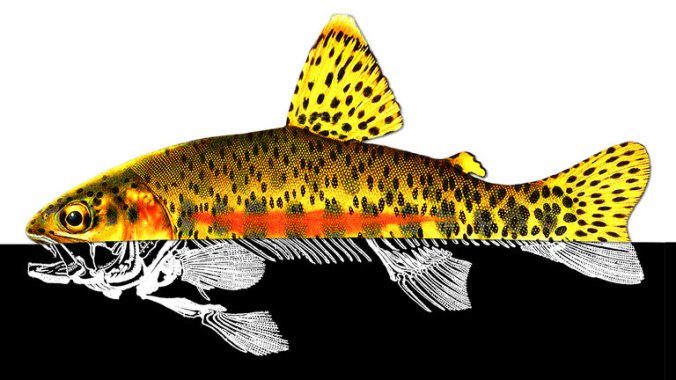
Leigh Guldig
Please take a few minutes to read what follows to the end, and share it as far and wide as you can. Our thanks to Chris Wood–president and chief executive of Trout Unlimited, which needs and deserves our support for exactly the reason stated below–for writing, and the New York Times for publishing this clear statement:
THE eastern brook trout, whose native haunts in the Appalachians are a short drive from my home in Washington, is a fragile species. It requires the coldest and cleanest water to survive, and over the past two centuries, its ranks have been decimated by all that modern society could throw at it. Today it lives in a fraction of its historic range.
One reason? Thousands of miles of prime brook trout streams have been polluted by poorly regulated historic coal mining, and what has been lost is difficult to bring back. Groups like Trout Unlimited have worked with partners to restore more than 60 miles of wild trout streams damaged by acid mine drainage in Appalachia. But it is hard, painstaking work — it has taken the better part of two decades and millions of dollars, and the fact is that it would take many lifetimes to revive all the streams in need of resuscitation. Continue reading
Thanks to the Nature Conservancy’s Cool Green Science, and specifically Lisa Feldcamp, for this note and video on adaptive coastal folks:
“It hurt my heart to see how [the beach] had been deteriorated,” says Norris Henry of St. Andrew’s Development Organization. “I know in the past there was a nice beachfront, where you can play cricket, you can play football, you can run. But it’s so sad to see it is no longer there.” Continue reading
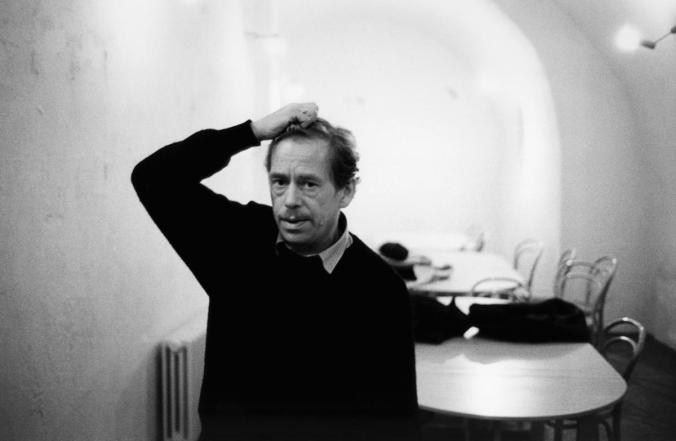
The Cold War–era writings of the Czech writer Václav Havel offer ideas on how dissidents can resist “the irrational momentum of anonymous, impersonal, and inhuman power.”PHOTOGRAPH BY MIROSLAV ZAJIC / CORBIS VIA GETTY
This post by Pankaj Mishra fits the bill for the theme we have been following, as the excerpted several paragraphs below will illustrate:
VÁCLAV HAVEL’S LESSONS ON HOW TO CREATE A “PARALLEL POLIS”
…Born in 1936, Havel came of age in Czechoslovakia, whose Communist rulers repeatedly imprisoned and continuously surveilled him while suppressing many of his writings. Defiant right until 1989, when he engineered the fall of the Communist regime, Havel came to be celebrated in the West as a “dissident,” a word commonly used to describe many in Communist countries who valiantly struggled against a pitiless despotism. Continue reading
 Organikos