Thanks to Phaidon for its always-interesting new books for coffee table-pondering:
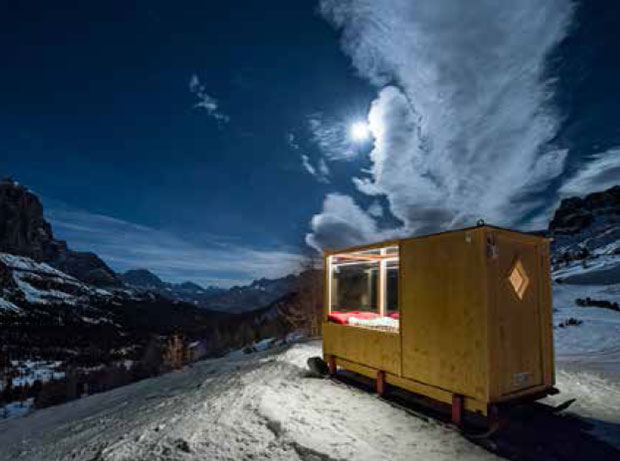
Adaptable, intelligently put together, responsive to local conditions and able and willing to travel almost anywhere with ease – but enough about you, we’re here to tell you about mobitecture. What’s mobitecture we hear you ask? Well it’s mobile architecture and Mobitecture is the name we’ve smartly bestowed on it in our latest book.
Mobitecture looks at 250 examples of mobile architecture from around the world that enable the almost universal dream of upping sticks, moving somewhere and changing the way your world looks. The structures in it roll, inflate, unfold, flat-pack or pop-up, slide on sleds and float across water in a book that brings together a spectacular collection of structures in which to revel, live, work, pause – or just simply escape. Continue reading →
Thanks to Anthropocene for this summary of the latest findings on how far we can expect renewable resources to take us in our efforts to reduce our carbon footprint:
Many climate policies and models consider biomass carbon-neutral. The argument is that carbon emitted during burning the biomass is balanced out by the carbon that plants and trees sequester. But that understanding is flawed. Continue reading →
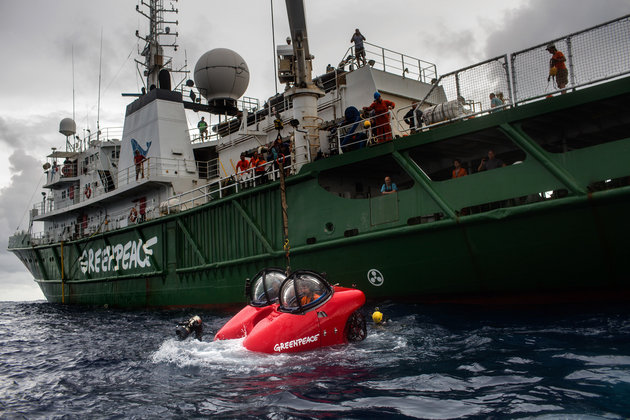
Thanks to the old school model mad outfit, Greenpeace, for bringing this to our attention in a fresh press release today, that adds urgency to earlier announcements starting last year on this rare and unexpected find:
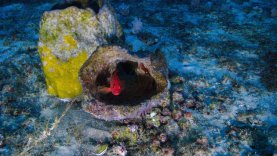
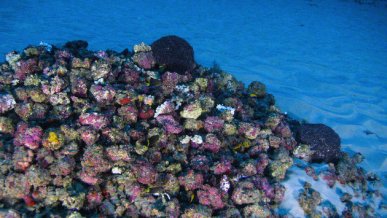
Amapá state, Brazil, 28 January 2017 – Greenpeace Brazil has captured the first underwater images of the Amazon Reef, a 9500 km2 system of corals, sponges and rhodoliths located where the Amazon River meets the Atlantic Ocean – an area that the Brazilian government has opened for oil exploration.
GREENPEACE
A team of experts, including several oceanographers who announced the discovery of the reef last year, have joined the Greenpeace ship Esperanza on an expedition to document this new biome, which runs from French Guyana to the Brazilian state of Maranhão, an area larger than the cities of São Paulo or London.[1] Oil companies Total and BP could start drilling in this area if they obtain authorization from the Brazilian government. Continue reading →
Canadian scientists were not allowed to talk to the media on certain topics during the premiership of Stephen Harper. Photograph: Alamy
Thanks to the Guardian for reporting on the decision by some Canadian scientists to model mad in that distinctly polite, mild-mannered and highly effective way they have of doing things up north:
For nine years under Canada’s previous government, science suffered harsh restrictions. Now US scientists may be facing a similar fate
by Ashifa Kassam in Toronto
Canadian scientists – who were muzzled for nearly a decade by the country’s previous Conservative government – have been making contact with their counterparts in the US to offer their support and solidarity amid mounting fears that Donald Trump’s presidency will seek to suppress climate science.
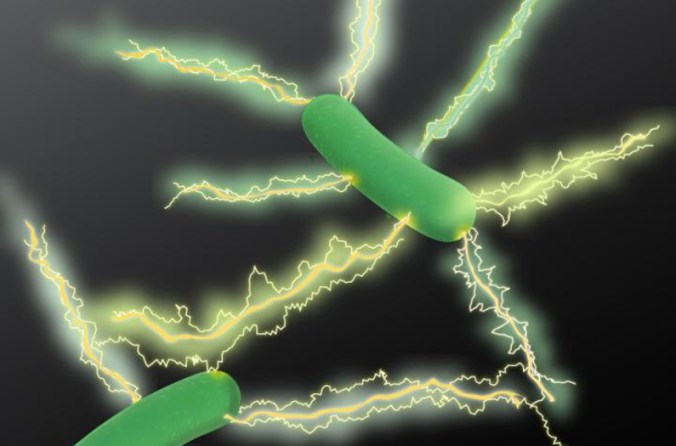
Protein filaments just 3 nanometers wide that are produced by certain species of bacteria could be a key to environmentally friendly electronics manufacturing, according to microbiologists at the University of Massachusetts at Amherst.
Scientists discovered the filaments, dubbed “nanowires,” about 5 years ago. Bacteria use them to make electrical connections with other bacterial cells or to generate reactions with metals in the environment. Continue reading →
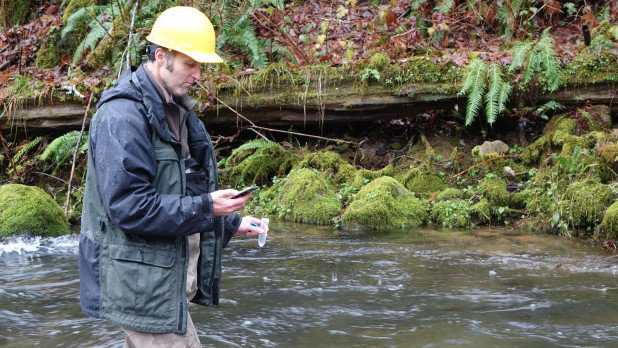
Biologist Shaun Clements counts down the seconds before emptying a vial of synthetic DNA into a stream near Alsea, Oregon. Jes Burns/Oregon Public Broadcasting/EarthFix
Thanks to the salt, at National Public Radio (USA):
Multiple Twitter accounts claiming to be run by members of the National Park Service and other U.S. agencies have appeared since the Trump administration’s apparent gag order. The account owners are choosing to remain anonymous. David Calvert/Getty Images
“Rogue” accounts that have the look of those by real federal agencies are spreading like wildfire on Twitter.
The AltUSNatParkService Twitter account has gained more than 1 million followers and inspired the creation of many more “unofficial resistance” accounts for specific national parks and other entities, including accounts like Rogue NASA and AltUSForestService. Continue reading →
Thanks to EcoWatch for identifying these companies for speaking out, as is their right and responsibility as much as their self-interest–a good self-interest in conservation–and providing another example of model mad, corporate style:
The most anticipated outdoor recreation event of the year just finished in Salt Lake City, Utah, where hundreds of outdoor brands from small business outfitters to industry pioneers like Patagonia and Black Diamond Equipment gathered to witness the cutting-edge in outdoor gear. Continue reading →
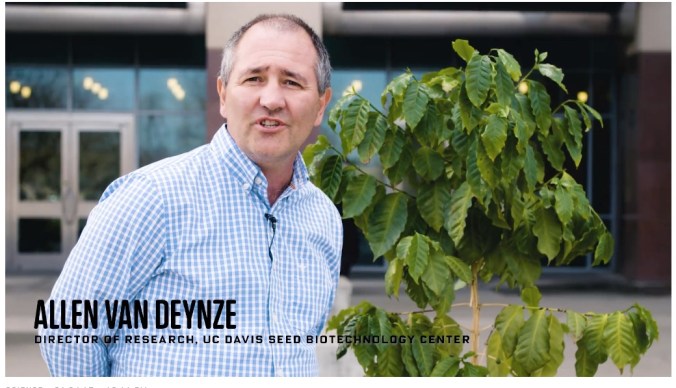
We always wondered why, with the selective breeding of tomatoes, experts favored appearance over flavor. We have an answer in “A Genetic Fix to Put the Taste Back in Tomatoes” by Kenneth Chang:
Over the decades, taste has drained out of supermarket tomatoes.
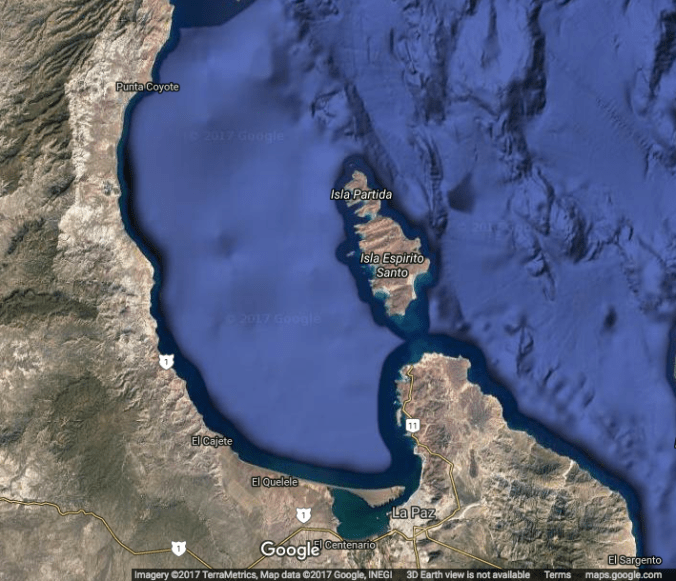
Last week, Jocelyn and I took the three-hour drive from Villa del Faro to La Paz, the capital of Baja California Sur. After about seventy minutes on the dirt coastal road that runs along the East Cape, one reaches the asphalt road near La Ribera, which connects to Mexico’s Route 1, a well-paved highway that runs from San José del Cabo all the way north to Tijuana (1,654km away). Before heading anywhere near that far, however, we turned off at the La Paz exit, to explore the port city home to over 200,000 people.
If you look at a map of the geography surrounding La Paz, you can see that it is quite sheltered from the ocean, with a chunk of land protecting it on the east side, a thin strip closing in from the west, and a long bay running to the north, all this in the relatively calmer Gulf of California. In 1535 the Spanish conquistador Hernán Cortés tried to start a colony in the area, but it wasn’t fully settled till over sixty years later.
Today, the main tourist attractions to La Paz are marine in nature, Continue reading →
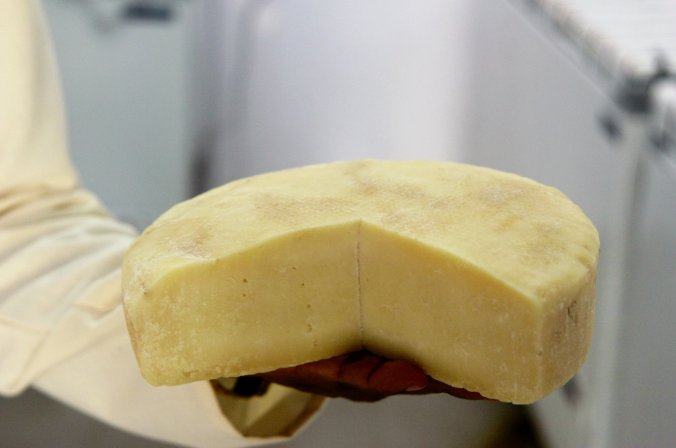
Since our setting up shop in India in 2010 we have seen many improvements all around us, all much more important than cheese. But, finally, even the cheese is making life here better. Thanks as always to the folks at the salt, from National Public Radio (USA):
In a monastery tucked away in a quiet back lane of Bangalore, India, Benedictine monks of the Vallombrosian Order are using their European connections to meet rising demand for fresh, Italian-style cheese in this South Asian country. Continue reading →
The website itself is not exactly scintillating, but click the banner above to read the mission statement. Better yet, read Ed Yong’s scintillating explanation of how and why this organization came to be, and what it is doing:








 Organikos