Model Mad, Museum

04MOMATRAVEL3-master768.jpg

“K+L+32+H+4. Mon père et moi (My Father and I)” right, by Charles Hossein Zenderoudi, on display at the Museum of Modern Art in New York. Credit Sam Hodgson for The New York Times

When the two words model mad first occurred to us, it was simply to thank one of our favorite people for continuing to resist wrongness in new, clever manner, without losing his cool and thereby keeping it effective. Since then we have found a story almost every day that illustrates the fertile ground of protest created in recent times. And today, thanks to the New York Times, we see another one:

MoMA Takes a Stand: Art From Banned Countries Comes Center Stage

By

President Trump’s executive order banning travel and rescinding visas for citizens of seven majority-Muslim nations does not lack for opponents in New York — from Kennedy Airport, where striking taxi drivers joined thousands of demonstrators, to the United Nations, whose new secretary general, António Guterres, said the measures “violate our basic principles.

Now the Museum of Modern Art — which in past decades has cultivated a templelike detachment — is making its voice heard as well. In one of the strongest protests yet by a major cultural institution, the museum has reconfigured its fifth-floor permanent-collection galleries — interrupting its narrative of Western Modernism, from Cézanne through World War II — to showcase contemporary art from Iran, Iraq and Sudan, whose citizens are subject to the ban. A Picasso came down. Matisse, down. Ensor, Boccioni, Picabia, Burri: They made way for artists who, if they are alive and abroad, cannot see their work in the museum’s most august galleries. (A work from a Syrian artist has been added to the film program. The other affected countries are Somalia, Yemen and Libya.) Continue reading

Puma, Puma, Puma

170213_r29424-1200x857-1486067005

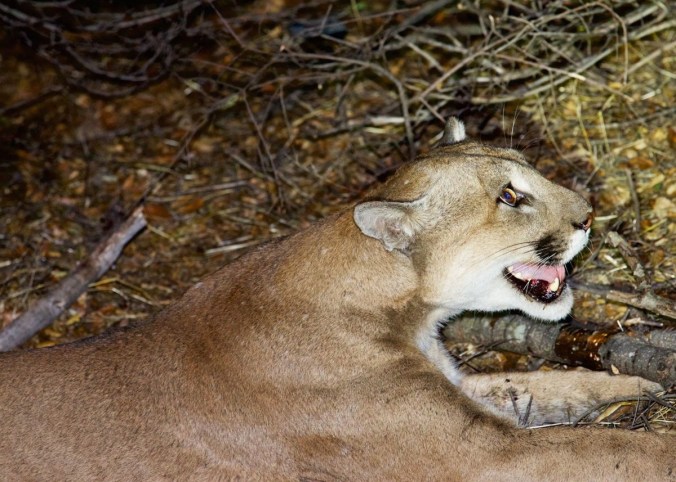
A lion known as P-45 has killed scores of domestic animals—and attracted passionate fans. Courtesy National Park Service

I favor a walk in the woods where pumas feel naturally at home. That said, the world has been changing faster than we like, and faster than pumas can adapt. We have had so many wildcat stories in these pages since we started in 2011, it is impossible to count at this point; also not possible to link back to one that matches the content of Dana Goodyear’s wow piece in the upcoming issue of the New Yorker:

LIONS OF LOS ANGELES

Are the city’s pumas dangerous predators or celebrity guests?

It was drizzling and gray, late fall, on the old Rickards Movie Ranch, high in the Santa Monica Mountains, in rural, red-state western Malibu. Continue reading

I Hope To See You At Chan Chich Lodge

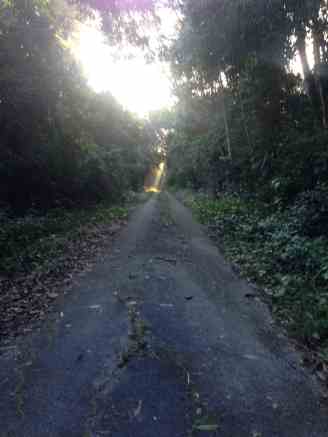
CCLWalk.jpgYesterday in these pages we welcomed you to visit the new website for and the actual place, Chan Chich Lodge. It bears repeating. This time by me personally. Please come here.

The snapshot to the right, taken on my phone just minutes ago on my morning walk, says the same. If you combine it with the last time I was walking these paths, you will see one more reason why I walk every morning.

I walk the roads and paths at Chan Chich every morning with the hope of seeing wildlife, and knowing that breathing the air here is better than doing so almost anywhere else on the planet. It is pure.

Between the puma-sighting snapshot and now I was in India. I have just arrived to Belize again and expect to be here for some time. I did not see any big cats this morning, but the birdlife is as abundant as ever, and their song just now provides very good cheer. If you need more information on why to come to Chan Chich, or how, or when, just let me know.

Model Mad, Governor

Thanks to the New Yorker website for this one. No image required. These two paragraphs say plenty about a model mad governor of one state of the union that is resisting the dark clouds of the new political climate, but do read the whole post:

…“At my age, I can go pretty solidly for twelve hours,” Brown, who is fifty-six years old, said. “So, if you have a nine-to-five job, that gives you a couple of hours to be at your local airport to protest the immigration order. Continue reading

Model Mad, Boycott

3500-1

Travis Kalanick wrote in an email to Uber staff on Thursday that he stepped down after he spoke with Trump about his immigration executive order ‘and its issues for our community’. Photograph: Danish Siddiqui/Reuters

We appreciate the Guardian’s continued attention to stories that illustrate model mad
actions, wherever or however they might happen. The fertility of the soil, the richness of the ecosystem in which people are expressing themselves in novel model mad manner, is helping us imagine we will see through the dark cloud sooner rather than later:

Uber CEO steps down from Trump advisory council after users boycott

Travis Kalanick says participation in president’s strategic and policy forum has been ‘misinterpreted’ as endorsement of Donald Trump’s agenda Continue reading

Climate, Change & Mayan Foodways

casanova-and-yam-moo-1-57-add46e959487e457c4f775d87f6b1a404fb955fa-s1400-c85.jpg

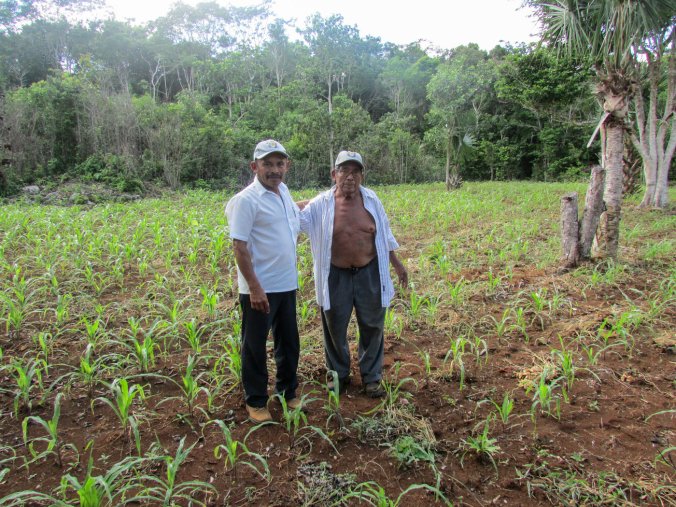
Farmers Gualberto Casanova (left) and Dionisio Yam Moo stand among young corn plants in Yam Moo’s improved milpa plot. Gabriel Popkin

We are grateful as always to our friends at the salt, one of National Public Radio (USA)’s great occasional series, for this story (the photo after the jump is a beauty, so read on):

Mayans Have Farmed The Same Way For Millennia. Climate Change Means They Can’t

by Gabriel Popkin

Dionisio Yam Moo stands about four-and-a-half-feet tall, and his skin is weathered from years in the tropical sun. A “proudly Mayan” farmer, he grows corn, beans and vegetables on a six-hectare farm in Mexico’s Yucatán peninsula. The farm is surrounded by dense tropical forest, and crops grow amid fruit trees in thin soil, with the peninsula’s limestone bedrock protruding in places. Continue reading

Clean Energy, Nordic Style

norway-dam

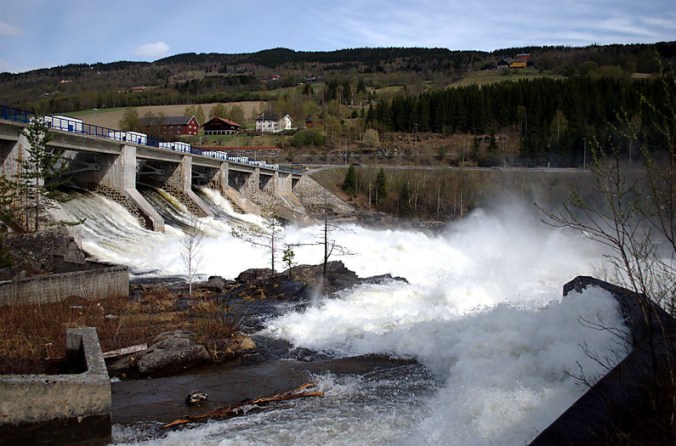
Hunderfossen Dam, Norway via Sigurd Rage/Flickr

Thanks to Anthropocene:

Nordic countries offer important lessons for clean-energy transition

Continue reading

Model Mad, Effective

2900.jpg

Utah’s congressional delegation has vigorously fought to open Ute tribal land, currently partially protected by the Bears Ears National Monument, above, to drilling. Photograph: Francisco Kjolseth/AP

Thanks to the Guardian for first bringing this to our attention, another example of model mad, and a pretty big deal too:

Lost & Found, Continental Edition

rexfeatures_1617558h-800x533.jpg

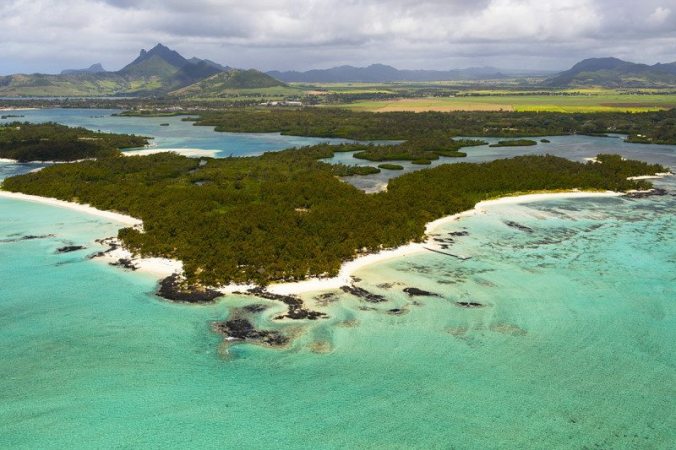
Mauritius sits on part of an ancient continent. Keystone USA-ZUMA/REX/Shutterstock

Long-lost continent found submerged deep under Indian Ocean

An ancient continent that was once sandwiched between India and Madagascar now lies scattered on the bottom of the Indian Ocean.

The first clues to the continent’s existence came when some parts of the Indian Ocean were found to have stronger gravitational fields than others, indicating thicker crusts. One theory was that chunks of land had sunk and become attached to the ocean crust below.  Continue reading

Waterway Blockage, Beautiful & Beastly

28259178814_9c787fd9ea_o.jpg

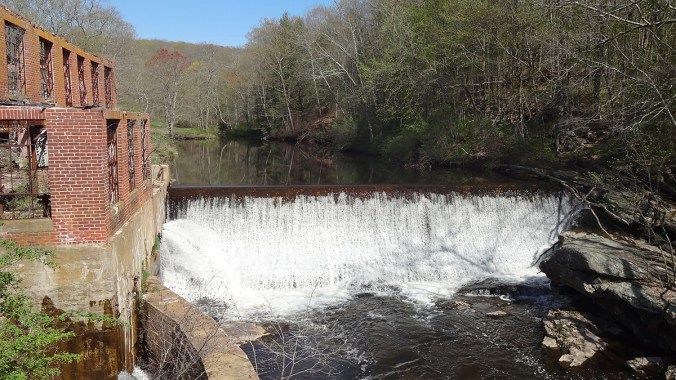
Norton Mill Dam view from the bridge. Photo © Lia McLaughlin / USFWS through a Creative Commons license

Thanks to the Nature Conservancy’s Cool Green Science for this story:

Outtakes: Exploring America’s Most Dammed Waterways

by JENNY ROGERS

Sally Harold has one eye on the river and one on the cars whizzing by as we stand on a road near the freeway. A river restoration specialist for The Nature Conservancy’s Connecticut River program, she’s showing me a map of the state, obscured with dots representing dams. To our left, a burned-out mill building looms over a small river. To our right, the road that leads northeast to Hartford. Continue reading

Trees & Sustainability On Small African Farms

Image_trees.jpg

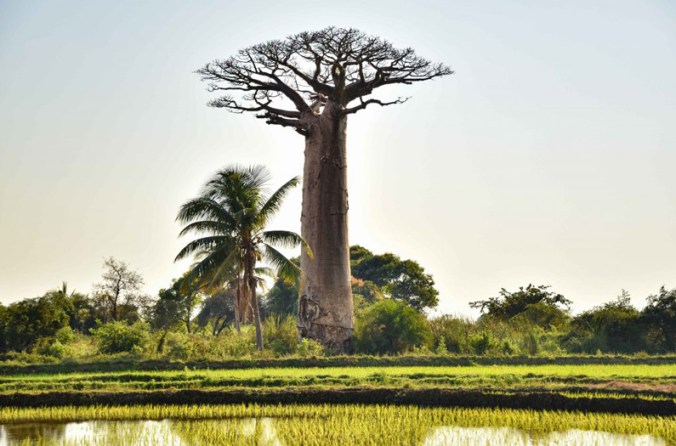
Baobab and palm tree/Rod Waddington via Flickr

Thanks to Anthropocene for this summary:

Trees improve the environment—and bottom line—on small African farms

Tagimoucia, A Glimpse Of Heaven

02fiji-superJumbo.jpg

Tagimoucia has attained a kind of celebrity status because of its beauty and rarity. Credit Lam Yik Fei for The New York Times

For Fijians, this flower is viewed rarely enough to enhance its sacred status; for the rest of us, a photograph like the one above is like a siren call to come, behold it:

A Rare Pacific Islander Captivates Its Neighborhood

TAVEUNI ISLAND, Fiji — In Fiji, flowers can take on a spiritual, magical significance. They are strung together as garlands for ceremonies and festivals or worn as an ornament behind the ear on any given day.

The South Pacific archipelago is home to about 800 species of plants found nowhere else in the world. But the most special is the tagimoucia, a crimson and white flower that hangs down in clusters like a chain of ruby raindrops. Because of its beauty and rarity, it has attained a kind of celebrity status. Continue reading

Model Mad, March

02march-1485980066966-master768

A women’s march in Fairbanks, Alaska, last month. The movement inspired a group of scientists to organize their own demonstration in Washington. Credit Robin Wood/Fairbanks Daily News-Miner, via Associated Press

We have not had a shortage of model mad stories, which may be the silver lining to the cloud, so thanks to the Science section of the New York Times for this contribution:

Listen to Evidence’: March for Science Plans Washington Rally on Earth Day

By

Within a week of its creation, the March for Science campaign had attracted more than 1.3 million supporters across Facebook and Twitter, cementing itself as a voice for people who are concerned about the future of science under President Trump.

Now, hoping to transform that viral success into something approaching the significance of the women’s march last month, the campaign has scheduled its demonstration in Washington for Earth Day, April 22. Continue reading