
female (Atlanta, Georgia)
female (Atlanta, Georgia)
 After a year of waiting, the paper that I wrote with Justin and John is finally published! This is a journal article that arose from an accidental encounter with a juvenile Barn Owl in a small cave that I noticed on the side of a trail we were on while exploring the Hellshire Hills. This southern region of Jamaica is not one in which we expected to see the Golden Swallow, but we wanted to check anyway, as well as look out for some of the rare tropical dry scrub species we might find in the area, like the Jamaican Iguana, previously thought extinct.
I briefly hinted at this paper in an old post after our return from Jamaica, but didn’t mention it after that since I knew a published article would tell the story more fully, albeit more technically and with science instead of storytelling as a priority. In the cover photo above I’ve included a link to the PDF version of Caribbean Naturalist journal issue 37, which contains our article, but I also want to summarize our findings in lay terms for those less familiar with the biological jargon.
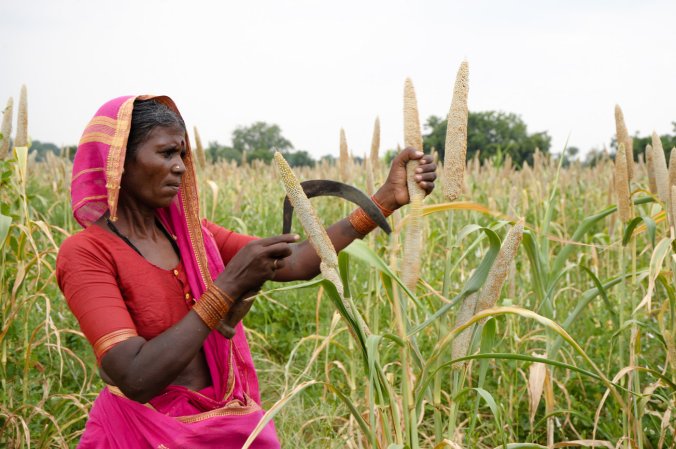
A woman farmers harvests pearl millet in Andhra Pradesh, India. Millets were once a steady part of Indians’ diets until the Green Revolution, which encouraged farmers to grow wheat and rice. Now, the grains are slowly making a comeback. Courtesy of L.Vidyasagar
Thanks to the folks at the salt for this note on millet:
Getting people to change what they eat is tough. Changing a whole farming system is even tougher. The southern Indian state of Karnataka is quietly trying to do both, with a group of cereals that was once a staple in the state: millet. Continue reading

Golden State point guard Stephen Curry is one of Under Armour’s highest-paid endorsers. Credit Gary A. Vasquez/USA Today Sports, via Reuters.
Still no shortage of model mad stories two weeks in to this series. Are we all ready to “jump off” like this man, who put a good portion of his livelihood on the line to speak his mind:
Stephen Curry became the latest athlete to weigh in on President Trump when he took issue with comments made about the president by the chief executive of his primary sponsor, Under Armour.
In an interview with CNBC on Tuesday, Under Armour’s Kevin Plank described Trump as “a real asset” to the country.
In an interview on Wednesday with The San Jose Mercury News, Curry responded, Continue reading

Bagalkot, Karnataka
Leigh Guldig
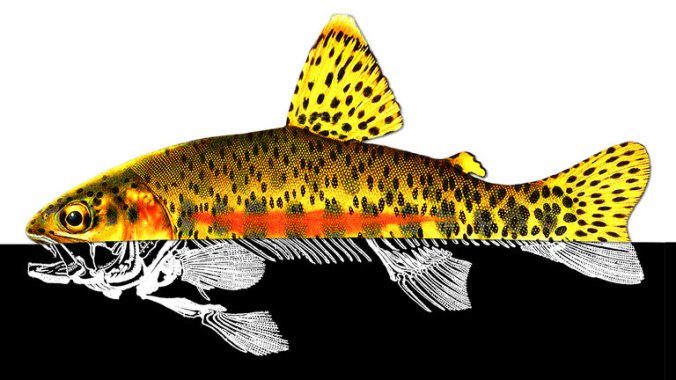
Please take a few minutes to read what follows to the end, and share it as far and wide as you can. Our thanks to Chris Wood–president and chief executive of Trout Unlimited, which needs and deserves our support for exactly the reason stated below–for writing, and the New York Times for publishing this clear statement:
THE eastern brook trout, whose native haunts in the Appalachians are a short drive from my home in Washington, is a fragile species. It requires the coldest and cleanest water to survive, and over the past two centuries, its ranks have been decimated by all that modern society could throw at it. Today it lives in a fraction of its historic range.
One reason? Thousands of miles of prime brook trout streams have been polluted by poorly regulated historic coal mining, and what has been lost is difficult to bring back. Groups like Trout Unlimited have worked with partners to restore more than 60 miles of wild trout streams damaged by acid mine drainage in Appalachia. But it is hard, painstaking work — it has taken the better part of two decades and millions of dollars, and the fact is that it would take many lifetimes to revive all the streams in need of resuscitation. Continue reading
Thanks to the Nature Conservancy’s Cool Green Science, and specifically Lisa Feldcamp, for this note and video on adaptive coastal folks:
“It hurt my heart to see how [the beach] had been deteriorated,” says Norris Henry of St. Andrew’s Development Organization. “I know in the past there was a nice beachfront, where you can play cricket, you can play football, you can run. But it’s so sad to see it is no longer there.” Continue reading

The Cold War–era writings of the Czech writer Václav Havel offer ideas on how dissidents can resist “the irrational momentum of anonymous, impersonal, and inhuman power.”PHOTOGRAPH BY MIROSLAV ZAJIC / CORBIS VIA GETTY
This post by Pankaj Mishra fits the bill for the theme we have been following, as the excerpted several paragraphs below will illustrate:
VÁCLAV HAVEL’S LESSONS ON HOW TO CREATE A “PARALLEL POLIS”
…Born in 1936, Havel came of age in Czechoslovakia, whose Communist rulers repeatedly imprisoned and continuously surveilled him while suppressing many of his writings. Defiant right until 1989, when he engineered the fall of the Communist regime, Havel came to be celebrated in the West as a “dissident,” a word commonly used to describe many in Communist countries who valiantly struggled against a pitiless despotism. Continue reading

Sivarpanam Palace, Tamil Nadu
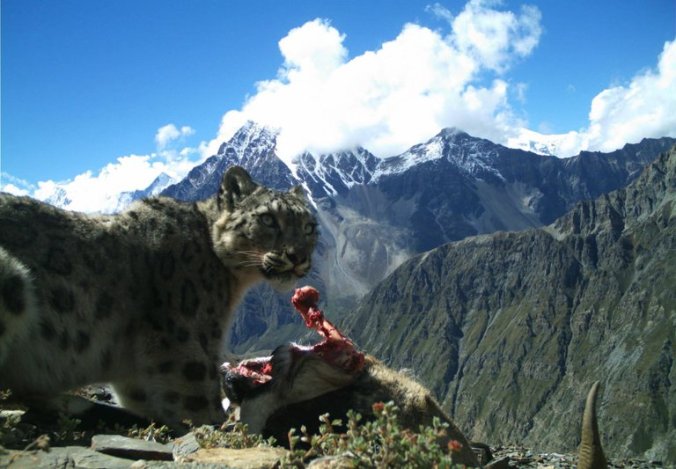
A snow leopard in the Himalayas eating its prey. Credit Madhu Chetri
The New York Times’ always-appreciated Science section, once a Tuesday feature, has been joined by many features made possible by the wonders of modern technology, and the news organization has also responded creatively to the competition made possible by all that wondrous technology. This article by Nicholas St. Fleur is a good example of why we check in on the Trilobites feature of the website daily:
How Do You Save Snow Leopards? First, Gather Their Droppings
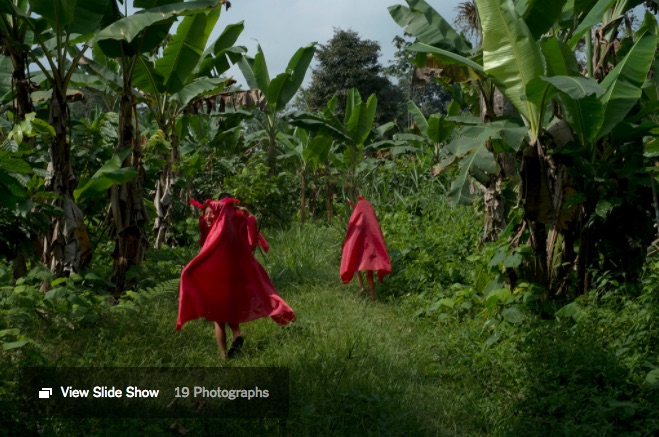
Credit Emilia Lloret/Native Agency
We will all be the beneficiaries, no doubt:
Nurturing New Storytellers in Africa and Latin America
By David Gonzalez
For some people, the idea of “serious” photography conjures up dramatic scenes of suffering, violence and poverty. This can be especially so in parts of Latin America and Africa, where careers have been made by foreign journalists who go in looking for drama. While no doubt there are pressing issues in these regions, there are also scenes of daily life, or less dramatic situations, that go unnoticed, slanting how a global audience sees people and places. Continue reading

Brown Pelican. Photo by ALAN SCHMIERER / Flickr in the Public Domain
Thanks to Cool Green Science:
Five Endangered Species Recoveries You’ve Never Heard Of
by Christine Peterson
More than 40 species have been officially recovered by the Endangered Species Act. Some, like bald eagles and peregrine falcons, have received a lot of publicity.
Here are five lesser known – but no less interesting – stories of recovery. Continue reading

male – Vijayapura, Karnataka
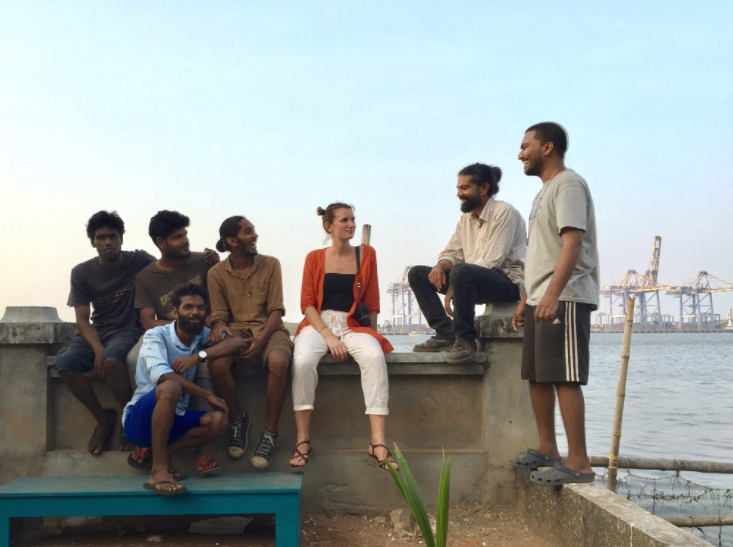
Myself and the Kochi-Muziris Biennale volunteers of The Pepper House.
I often struggle to formulate the words to describe transformative experiences. But now, looking at the film I developed from my month in India, waves of nostalgia and inspiration flutter to me. This post is the India I felt, saw, and loved for 30 days.
I have been fascinated by India since I was four years old, when my preschool teacher brought Sri Lankan rice and curry to class. The sensation of spicy food and description of spice plantations soaked deeply into my curious brain. Throughout my childhood I researched India, and fell even deeper in love, imagining my own body amidst the color and chaos. It was not until I arrived in college (this year), that I would have sufficient time for my first trip to India.
Though I studied Indian culture before arriving, no amount of reading or advice could have prepare me for what I would experience. Continue reading

Dong Energy, a Danish company, is installing 32 turbines that stretch 600 feet high off the coast of Britain. Credit Andy Teebay
Thanks to the New York Times for this news from the world of alternative energy:
Offshore Wind Moves Into Energy’s Mainstream
LIVERPOOL, England — When engineers faced resistance from residents in Denmark over plans to build wind turbines on the Nordic country’s flat farmland, they found a better locale: the sea. The offshore wind farm, the world’s first, had just 11 turbines and could power about 3,000 homes. Continue reading

Mother Jones staffers celebrate after winning the 2017 Magazine of the Year award.
We are not normally watching awards shows, but this story catches our attention because of some notable winners in the world of magazines, some of which we monitor regularly for stories relevant to our purpose. And in particular at this moment, when we have been monitoring the news for examples of creative protest, we realize that we had neglected or avoided some of these publications because of their partisan positioning (there is enough of that without our joining in). But this magazine today joins our list of regularly monitored sources because they have been relentlessly pursuing important stories, for a long time: Continue reading
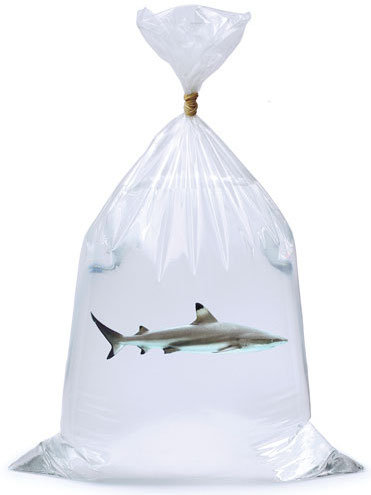 We appreciate Anthropocene’s ongoing efforts to summarize important scientific findings related to the environment, conservation and related topics. Earlier this week Emma Bryce offered “The invisible boundaries of ocean refuges protect even wide-roaming creatures” — a worthy read about these spaces providing more benefit than expected:
In recent years, we’ve preserved several million square kilometers of ocean inside Marine Protected Areas (MPAs), the wildlife reserves of the sea. By cordoning these areas off from commercial fishing, undersea mining, and development, we hope to protect the species within them. But does it actually work? Continue reading
Leimhakong, Manipur

This wild hog from Hawaii was raised at the National Wildlife Research Center in Fort Collins, Colo. Feral pigs in the wild tend to eat anything containing a calorie â from rows of corn to sea turtle eggs, to baby deer and goats. Rae Ellen Bichell/NPR
We appreciate the excellent science produced by employees of the federal government of the USA, both the theoretical and applied problems they tackle depending on their specialty. Thanks to those who deal with creatures like this, who have in common with their feline counterparts in some locations the misfortune of bumping up against human interests. Figuring them out and accommodating them humanely seems a worthy scientific cause:
Scientists Get Down And Dirty With DNA To Track Wild Pigs
by Rae Ellen Bichell
In the foothills of Colorado’s Rocky Mountains, a gravel road leads to a 10-foot-tall fence. Type in a key code, and a gate scrapes open. Undo a chain to get behind another. Everything here is made of metal, because the residents of this facility are experts at invasion and destruction. Continue reading
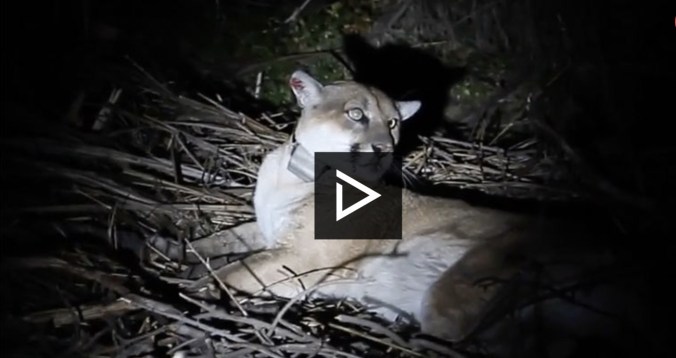
In case you did not see it yesterday, take a look at this when you have the time to read it in full. For now, over a quick coffee, click the image above to go to a video, 5:30 minutes long, to understand what the National Park Service is doing on behalf of this majestic lost cat:
The carnivore biologist Jeff Sikich captures and examines a mountain lion in the Santa Monica Mountains. Courtesy National Park Service
 Organikos