Scientist, Illustrator, Forgotten Metamorphosist

24tb-merian08-superjumbo

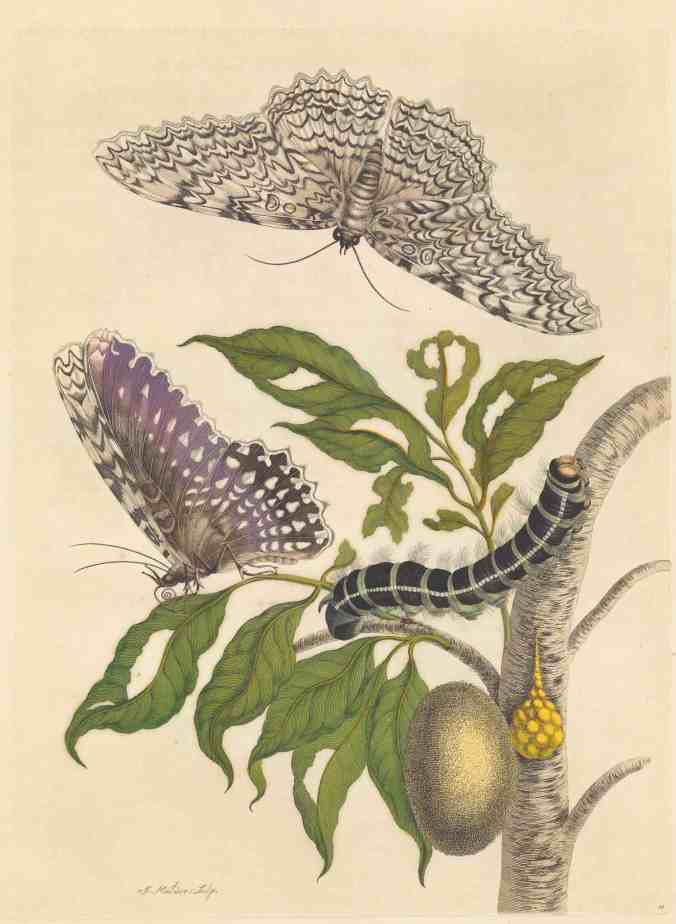
In some of Merian’s drawings, butterflies and caterpillars didn’t match. CREDIT MARIA SIBYLLA MERIAN, METAMORPHOSIS INSECTORUM SURINAMENSIUM, AMSTERDAM 1705, THE HAGUE, NATIONAL LIBRARY OF THE NETHERLANDS

Any story with Metamorphosis in it is bound to get our attention, but a long-forgotten scientist getting her due is the intrigue that makes this story by JoAnna Klein–A Pioneering Woman of Science Re‑Emerges After 300 Years–coinciding with the republication of this book below, worthy of the read:metamorph

Maria Sibylla Merian, like many European women of the 17th century, stayed busy managing a household and rearing children. But on top of that, Merian, a German-born woman who lived in the Netherlands, also managed a successful career as an artist, botanist, naturalist and entomologist.:

“She was a scientist on the level with a lot of people we spend a lot of time talking about,” said Kay Etheridge, a biologist at Gettysburg College in Pennsylvania who has been studying the scientific history of Merian’s work. “She didn’t do as much to change biology as Darwin, but she was significant.” Continue reading
Model Mad, NPS

4212

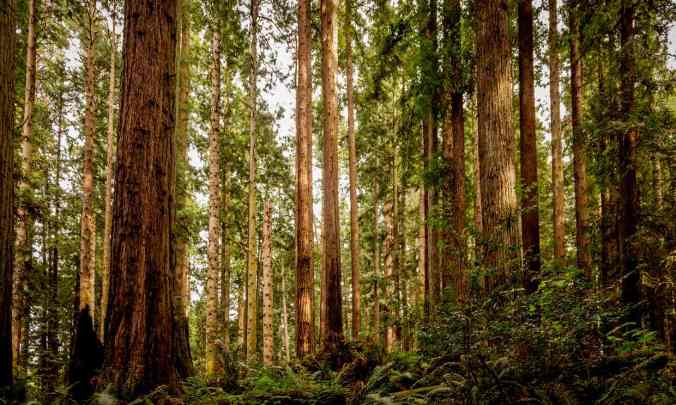
Redwood national park in California. Photograph: Jeffrey Schwartz/Alamy

We like what we see of the madly determined folks risking their professional careers in the interest of the environment and social justice:

National Park Service climate change Twitter campaign spreads to other parks

A day after three climate-related tweets sent out by Badlands National Park were deleted, other park accounts have sent out tweets that appear to defy Trump

The National Park Service employees’ Twitter campaign against Donald Trump spread to other parks on Wednesday, with tweets on climate change and a reminder that Japanese Americans were forcibly interned in camps and parks during the second world war.

A day after three climate-related tweets sent out by Badlands National Park were deleted, other park accounts have sent out tweets that appear to defy Trump. One, by Redwood national park in California, notes that redwood groves are nature’s number one carbon sink, which capture greenhouse gas emissions that contribute to global warming…

…Golden Gate national park in California said in a tweet that 2016 was the hottest year on record for the third year in a row. The tweet directed readers to a report by Nasa and the National Oceanic and Atmospheric Administration, also known as Noaa…

…The tweets went beyond climate change.

Death Valley national park tweeted photos of Japanese Americans interned there during the second world war, a message that some saw as objecting to Trump’s pledge to ban Muslims from entering the country and a proposal to restrict the flow of refugees to the United States…

Read the whole story here.

Model Mad, McKibben

McKibben-ABadDayfortheEnvironmentwithManyMoretoCome-1456x750-1485299497.jpg

PHOTOGRAPH BY DOUG MILLS / THE NEW YORK TIMES / REDUX

Bill McKibben is the founder of 350.org and we have posted on him so many times in the past for his environmental and other forms of activism we sometimes forget that he also has a day job, as the Schumann Distinguished Scholar in environmental studies at Middlebury College. Today he posted in a manner that captures well what we meant when we used the word mad, and qualified our intent to remain madly determined:

…There’s not the slightest evidence that Americans want laxer environmental laws. A poll released last week showed that nearly two-thirds of Americans would prefer that the E.P.A.’s powers be preserved or strengthened. Solar power, meanwhile, polls somewhere in the neighborhood of ice cream among Democrats, Independents, and Republicans alike. Continue reading

If You Happen To Be In Williamstown

photogclark

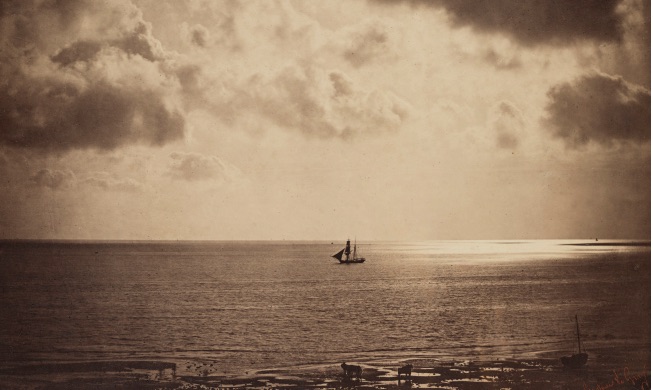
Thanks to Louis Menand, whose post THE MAJESTY OF EARLY PHOTOGRAPHY brought to our attention this exhibit (his comment on the museum itself, shared at the end of this post, is worthy of a read to the end):

…Right next to “Photography and Discovery” is another small exhibit, also of works the Clark owns, of early-nineteenth-century British paintings, many by Turner and Constable. I looked in to try out Galassi’s thesis, and you really can see the continuity between what those painters were doing, exploring the effects of sunlight on everyday subjects, and what the photographers would start doing a few years later…

The museum’s description makes us think of the parallels between photography and travel in terms of opening up horizons to an ever-widening audience:

When photographs were first widely produced and distributed during the second half of the nineteenth century, they offered viewers new ways to discover unknown people, places, and things. This exhibition explores how photographers considered these subjects during the medium’s first seventy-five years. During this exciting period, images were captured for many different reasons—from documentation to curiosity—and they came in many forms, including deluxe book illustrations, portable portrait cards, and frame-worthy landscapes. Continue reading

Farmers, Chefs & Connections

img_4605-57_custom-d46437c2f4f68a0472e362f267f4bb0477ec940a-s1400-c85.jpg

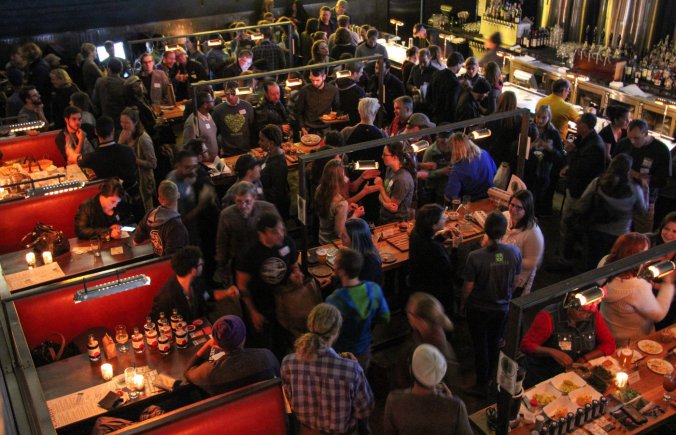
Farmers and chefs looking for their perfect match at Bluejacket, a restaurant and brewery in Washington, D.C. Dan Charles/NPR

Thanks to the folks at the salt, over at National Public Radio (USA), one of the greatest investments any country has made in broadcast news and features:

‘Speed Dating’ For Farmers And Chefs: ISO A Perfect Local-Food Match

By Dan Charles

…Ashley Heaney and Mark Heaney, from Green Acres Family Farm in Gapland, Md., are sitting in a booth on one side of the room, looking expectant and a little tense. They have a cooler full of eggs from their pasture-raised chickens beside them. This is their chance to show off those eggs to a collection of big-city chefs.

They’re here for matchmaking, though not of the romantic sort. It’s an annual “speed-dating” event where farmers get set up with chefs, in an effort to put more local food on restaurant tables. Continue reading

Spanish Speleological Speculation

CJ-3_1.jpg

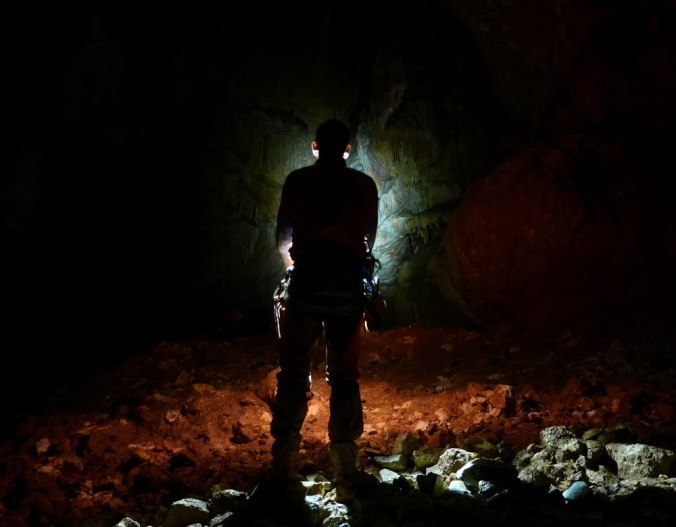
Raul Perez Lopez peers into the darkness of CJ-3, a cave that’s mysteriously losing its oxygen. (Credit: Antonio Marcos Nuez)

Discover Magazine’s blog has a post by Anna Bitong, who offers a few clues to help us understand what is happening in the deep recesses of a cave in Spain:

…A sign at the entrance warns visitors not to enter. Continue reading

Where Were You, Natalie Angier?

24antsjp2-master675

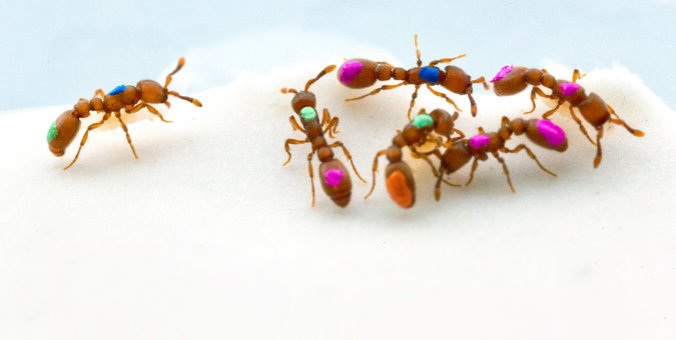
By using gene knockout techniques, the researchers made some raider ants display asocial behavior. Credit Béatrice de Géa for The New York Times

We had a long run of links since 2011 to her wondrous science reporting, and then we had not seen her since this past September; suddenly she has come back on our radar, unexpectedly but predictably awesome:

Whether personally or professionally, Daniel Kronauer of Rockefeller University is the sort of biologist who leaves no stone unturned. Passionate about ants and other insects since kindergarten, Dr. Kronauer says he still loves flipping over rocks “just to see what’s crawling around underneath.”. Continue reading

If You Happen To Be In The USA

audubonzip

Thanks to Audubon, as always, for taking us somewhere else, if only for a moment. Forget the events around you long enough to click the banner above; consider the native foliage you might plant when weather permits: Continue reading

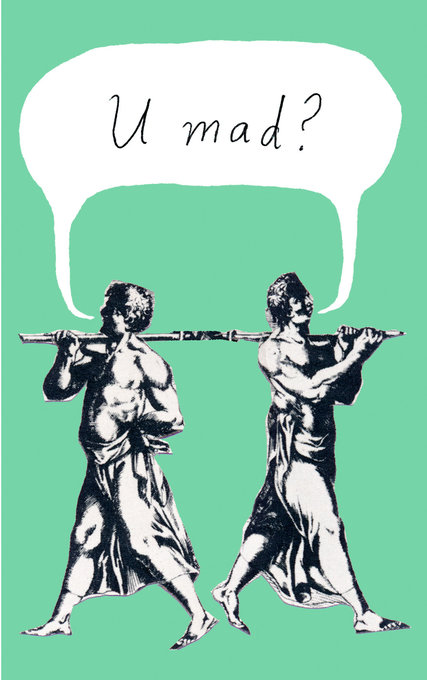
Mad, Yes

0115-bks-ivorytower-blog427-v3As we approach our 8,000th post on this platform we realize that for the nearly six years we have been posting there was plenty of hopeful, helpful news related to community, collaboration and conservation–the themes we committed ourselves to at  the outset.

Times seem different now, to state the obvious. And yes we are “mad” about what is happening around us. Madly determined. It will take discipline to remain focused and find the news that fits our purpose here. But we intend to.

The point has not been to ignore the bad news, of which there has been plenty in recent years, but to share a few notices each day that highlight better news. Or possible solutions. The spirit of our intent, which has been to support “the fight” as needed but remain civil to the end, is captured well in this book review:

How to Be Civil in an Uncivil World

By

Raduan Nassar, Back To The Land

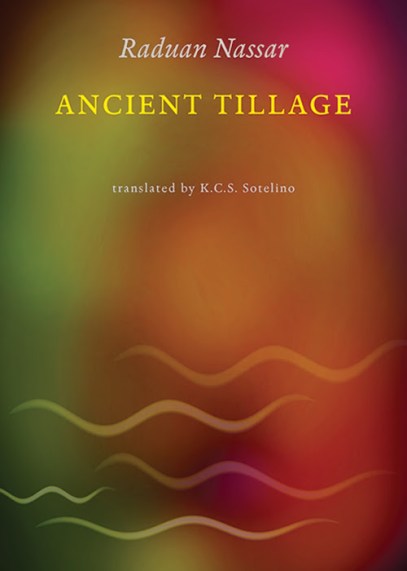
9780811226561On January 31st, 2017 New Directions Publishing is bringing this masterpiece, published originally in Brazil in 1984, to an English-reading audience for the first time:

For André, a young man growing up on a farm in Brazil, life consists of “the earth, the wheat, the bread, our table, and our family.” He loves the land, fears his austere, pious father, who preaches from the head of the table as if from a pulpit, and loathes himself as he begins to harbor shameful feelings for his sister Ana. Lyrical and sensual, written with biblical intensity, this classic Brazilian coming-of-age novel follows André’s tormented path. He falls into the comforting embrace of liquor as—in his psychological and sexual awakening—he must choose between body and soul, obligation and freedom.

I was completing a degree in literature the year this was first published, but Portuguese was not an option for my reading, nor was Brazil really on my map at that time. As a result, or for whatever other reasons, I never heard of this book before.

Work assignments took me to Brazil several times in the intervening decades, and Latin America has been home base for most of the last two decades. I know I must read this, and soon, so it has just moved to the top of my next-book list. But for a very different reason the author has my attention, thanks to this:

WHY BRAZIL’S GREATEST WRITER STOPPED WRITING

In 1984, at the height of his literary fame, Raduan Nassar announced his retirement, to become a farmer. Continue reading

Scotland’s Awesome Accomplishments

4248

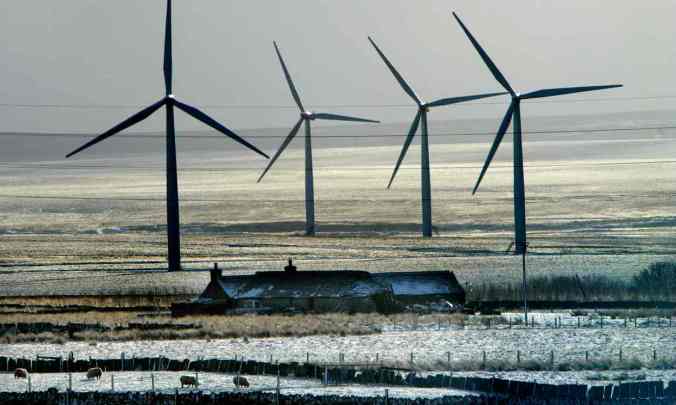
Scotland’s new strategy calls for a totally carbon-free electricity sector by 2032. Photograph: Murdo Macleod for the Guardian

Thanks to the Guardian for their excellent environmental coverage:

Scotland sets ambitious goal of 66% emissions cut within 15 years

Holyrood ministers aim higher after hitting target of 42% cut by 2020 six years early, but say Brexit poses challenge Continue reading

Sunrise Over Thevara

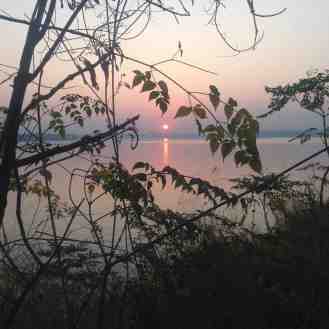
thevaraRecently I have been on morning walks extending miles across the waters from Thevara (the land on the left across the water in the photo above) our neighborhood starting in 2010.

In the early years, while getting to know our new neighborhood, I snapped photos mainly of people and took notes.

Continue reading

Flying Squirrels & Moonlight Gliding

flying-squirrel-2

Alexander V. Badyaev

We had not known of bioGraphic until just now, and want to shout out to the source before anything else. Our thanks to the California Academy of Sciences, who we look forward to hearing from more in the next few years, for the service that bioGraphic provides to all of us. Vigilance, informed by science, will be more important than ever. You know what we mean.

calacadscience

bioGraphic is powered by the California Academy of Sciences, a renowned scientific and educational institution dedicated to exploring, explaining, and sustaining life on Earth.

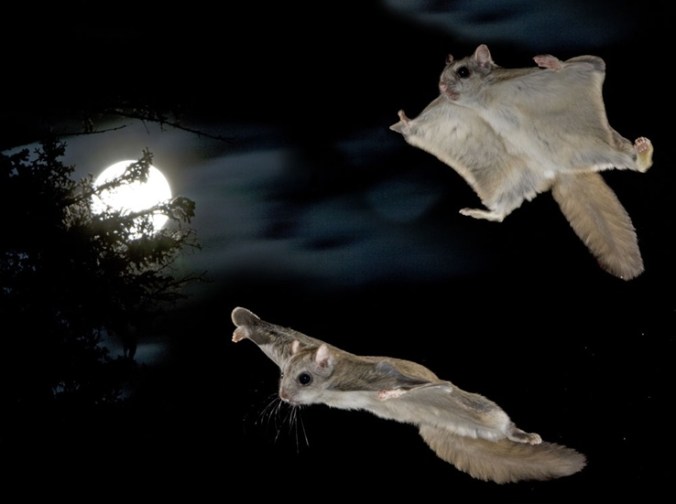
This recent story in bioGraphic seems like as good an option as any to link you to. We realize now that we have not posted any stories on the flying squirrels of the Malabar coastal region where we have been based since mid-2010, so glancing at this creature in the western USA habitat first seems a fine reminder of a pending task. Thanks for this story and photographs by Alexander V. Badyaev:

After listening all day to relentless warnings of “severe winter weather” and poring over equipment manuals to determine the lowest operating temperature for various pieces of photographic gear, I decided to stick with the plan. A few hours and several miles of snowshoeing later, I was hard at work in the diminishing February twilight, setting up lines of strobes and high-speed cameras along gaps in the tree canopy that framed a forest lake at the edge of Montana’s Bob Marshall Wilderness. I knew this lakeshore to be a primary movement corridor for a resident female northern flying squirrel (Glaucomys sabrinus), and based on observations from previous nights, I expected my nocturnal subject to launch herself across the lake sometime between 2:20 and 2:50 a.m. Continue reading

An Uncommon Conundrum

22eagles1-jumbo-v5.jpg

Illustration by Kelsey Dake

For our bird-centric and conservation-focused readers especially, this is a rich one:

When the National Bird Is a Burden

Bald eagles have been the emblem of the United States for more than two centuries. Now, in some parts of the country, they’re a nuisance. Continue reading

Take Note Of NRDC

NRDC.jpg

In times that try our souls in so many ways, it helps to know that organizations like this one are prepared, and worthy of your consideration for your support:

We rely on wilderness not only to inspire and enjoy but also to protect our watersheds, clean the air we breathe, and provide a home for the diverse species that enrich our world. Continue reading