Grasslands, Underdogs & Hope

tnc_88008054_preview_cropped-1260x708.jpg

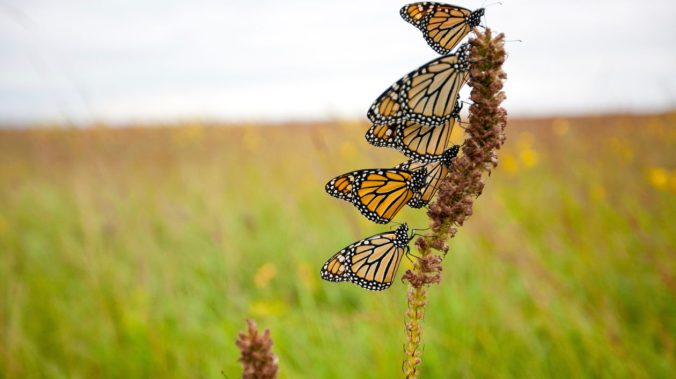
Butterflies congregating on the Nature Conservancy’s Bluestem Prairie, considered one of the largest and best northern tallgrass prairies in the United States, designated by Minnesota as a state natural area. Photo © Richard Hamilton Smith

We agree with the sentiment, never underestimate the underdog; more often than not, we root for the underdog. Thanks to the Nature Conservancy’s Cool Green Science for the reminder, in an ecological context:

Can Grasslands, The Ecosystem Underdog, Play an Underground Role in Climate Solutions?

By Marissa Ahlering

Never underestimate the underdog — in sports or in ecosystems. My favorite baseball teams, the Royals and the Cubs, reminded us of this over the last two years, and prairies (the underdog in the world series of ecosystems) proved this again recently in an analysis demonstrating that grasslands have a role to play in our climate change solutions (Ahlering et al. 2016).

Globally, grasslands are one of the most converted and least protected ecosystems (Hoekstra et al. 2005). The rich soil of Earth’s grasslands plays an important role in feeding the world and because of this much of our grassland has been converted to row-crop agriculture. Loss of grasslands is a big problem for two reasons: Continue reading

Urban Shape & Ecoefficiency

mini-sao-paulo.jpg

Thanks to Anthropocene for this summary of a counterintuitive finding:

To save energy on heating and cooling, look at the shape of cities, not just their buildings

Catch Da Lion

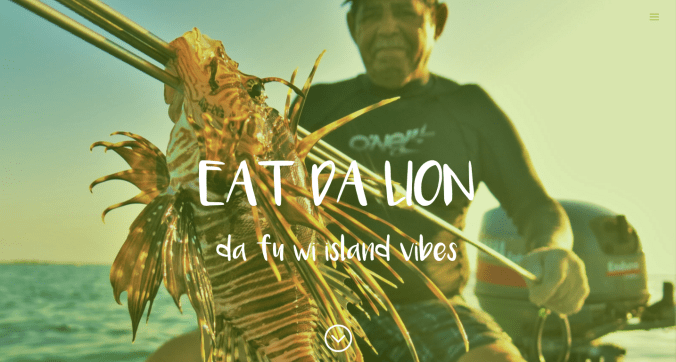
Our contributors have posted frequently about the implications of lionfish as invasive species on this site, but we’re always happy to support new programs and initiatives, especially in Belize.

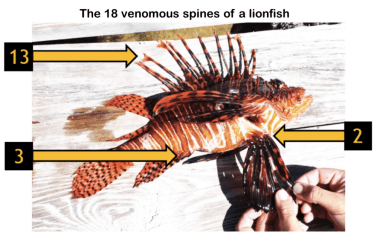
This one is particularly fun and informative, explaining exactly how to manage the spines, how to catch them, how to eat them and how to wear them!

Multiple programs are popping up to help reduce the impact of this invasive species…

Get involved!

  1. Ask your local dive shop, tour operator or tour guide about going out to catch lionfish! Many businesses around Belize offer guests the chance to go out and remove lionfish from our beautiful reefs!
  2. Find that friend who has a boat and head out to the reef to go catch lionfish yourself! See the FAQ below for more information on the tools you will need!
  3. Organize or participate in a Lionfish tournament! Lionfish tournaments have been organized in San Pedro, Caye Caulker, Dangriga and Placencia. Anybody can form a team and enter to catch the most, biggest & smallest lionfish for prizes and good fun!Interested in organizing one, contact us here for support regarding best practices, tournament rules and the materials you will need to get started!
  4. OR, join one of Blue Ventures’ Lionfish expeditions, to get involved in research & culling efforts in Bacalar Chico Marine Reserve!
  5. OR join ReefCI’s lionfish programme

Now you try!

Continue reading

A Spice Primer

spice

Our work in the land of spices, the Malabar coast of India, has taught us a thing or two about spices, but we never tire of hearing an expert share the fundamentals of their knowledge (click the image above to go to the podcast):

Lior Lev Sercarz, chef and owner of La Boîte, a destination spice shop in New York City, joins us to discuss his book The Spice Companion: A Guide to the World of Spices. He offers ways for home cooks to try new flavor combinations and make custom spice blends with a curated collection of 102 spices. He also details their histories and origins, and includes information on where to buy and store spices, five traditional cuisine pairings, and three quick suggestions for use.

Rapid Radical Progress

gettyimages-627186506

GETTY IMAGES

In our seventh year based in Kerala, India we have experienced progress each year in the quality of connectivity, but another state to the north may become India’s superstar of connectivity, faster than we can imagine:

One Indian State’s Grand Plan to Get 23 Million People Online

By Hui Wu

THE TRENCH RUNNING along the road linking Kodicherla and Penjarla in southern India is just 5 feet deep and about half as wide. Yet it carries the promise of a better life for the people of those villages, and all of Telangana.

Within the ditch lie two pipes, a large black one carrying fresh water and smaller blue one containing a fiber optic broadband cable. The government of Telangana, a state born of the 2014 secession from Andhra Pradesh after its residents accused the government of systematic neglect, is doing something unprecedented in India: bringing broadband internet to every rural home in the region, some 23 million people in all.

Of the 4 billion people around the globe without access to the internet, one-quarter of them live in India. Continue reading

Back To The Land, And A Future

18Farmers5-superJumbo-v2.jpg

Vincent Martin, right, made a living selling health club memberships in Paris until he left his job about five years ago. “Land is key,” he said. Credit Dmitry Kostyukov for The New York Times

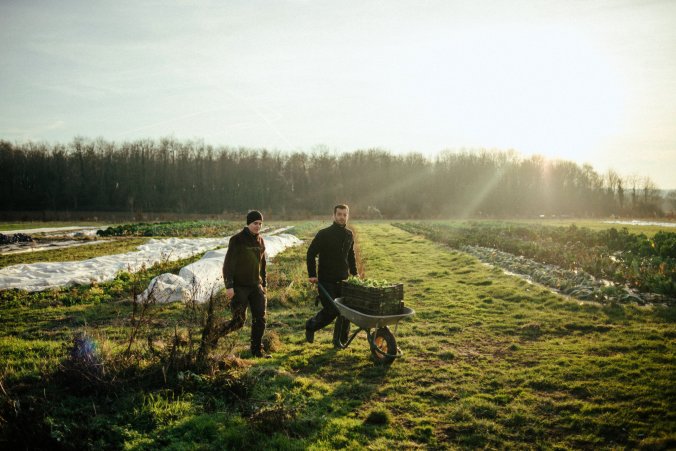
We are going back to the land this year, in Belize, and can relate to the description and explanation these ex-urbanites give for their retreat to the rural, agricultural life of their forebears:

Life on the Farm Draws Some French Tired of Urban Rat Race

By

SAULX-LES-CHARTREUX, France — Two years ago, Elisabeth Lavarde decided to quit her office job in Paris and start a new life in Saulx-les-Chartreux, a small town with two butchers and one baker just south of the capital.

Ms. Lavarde, 39, is now an apprentice farmer at a 24-acre farm that grows organic vegetables, sold directly to local consumers. New farmers like Ms. Lavarde usually make what they see as a decent salary of about 1,500 euros, or about $1,600, a month, slightly above the French minimum wage.

“I wanted a job with more meaning,” she said. “I felt like I was tilting at windmills.” Continue reading

Montenegro, 2017

5565

Wild and wet … Lake Skadar national park, Montenegro. Photograph: Alamy

It is now ancient history, but it may as well be yesterday, since I can look at the photo above and it has no less of an impact on me. When Montenegro was still part of what remained of ex-Yugoslavia, La Paz Group worked in partnership with UNDP on a project for the Prime Minister of this soon-to-be independent nation. He was visionary, and wanted to replicate what Costa Rica had accomplished as a small ecologically diverse country–harnessing sustainable development to ensure his country would not become the victim of the forces of mass tourism.

Skadar Lake was the crown jewel in the country’s potential attraction of ecologically-oriented travelers, and the perfect complement to the wild beauty of the coast line and the spectacular mountains. Montenegro has done a very good job in the decades since my first visit to Skadar Lake (standing exactly where the photographer above stood, looking at my own photos from that visit), communicating its commitment to those principles. Nonetheless, the challenges never go away, so we wish them continued success in fighting the dark forces:

Montenegro’s pristine Lake Skadar threatened by new resort

Tourism in Montenegro is booming, but the approval of plans for a new ‘eco-resort’ has led to protests from conservationists who fear it will threaten a stunning national park Continue reading

Economic Models Adapting To Evolving Challenges

tnc_61185884_preview_cropped.jpg

Aerial view of flooded rice fields participating in California’s BirdReturns program. White areas are dense gatherings of birds. Photo © Drew Kelly for The Nature Conservancy

The Moneyball approach to thinking about how to make the next big breakthroughs in conservation–not surprising that we are hearing this from The Nature Conservancy’s best and brightest:

Economics: The Next Frontier in Conservation Science

BY ERIC HALLSTEIN, SARAH HEARD

Engaging in markets is not new for The Nature Conservancy. But with our roots as a land trust, we thought about markets in a very specific way. We bought property to protect biodiversity using donor and public funding. We were in the market for “externalities.” Continue reading

Ancient Grain, Great Again

11rye-slide-it3z-master768

It is not quite as ancient as geological time, but rye grain goes way back. And deserves as comeback, we think, almost regardless of all the nifty innovations that will determine the future of grain-growing. While we are busy with greatness-making, our thought is at this moment, let’s not forget the grains that got us here:

Rye, a Grain With Ancient Roots, Is Rising Again

By Julia Moskin

Any adventurous eater who has wandered into the woods of modern Nordic cuisine has probably tripped over a loaf of rye bread. There is wonderfully chewy rugbrod at Great Northern Food Hall in Grand Central Terminal, spice-scented Swedish limpa at Plaj in San Francisco, and darkly rugged toast at Bachelor Farmer in Minneapolis. Continue reading

Patagonia, Geological Time & Food History

tb-tomatillo1-master768

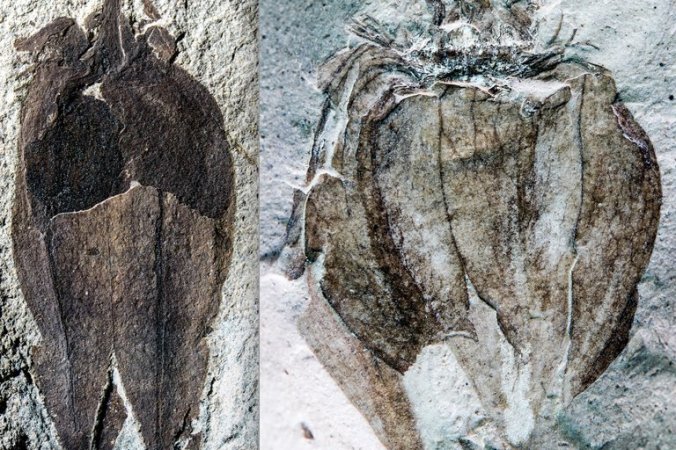
Two fossils of a newly discovered species of tomatillo that are 52 million years old. CreditPeter Wilf

They had us at Tomatillo. But mention fossils, geological timeframe, discovery and Patagonia all in the same headline and there we go:

Tomatillo Fossils, 52 Million Years Old, Are Discovered in Patagonia

By Nicholas St. Fleur

The nightshades have an ominous reputation, but this large plant family is more than just its most poisonous members, like belladonna. It contains more than 2,400 different species, including some of the most widely consumed fruits and vegetables in the world, such as potatoes, tomatoes and peppers. Continue reading

Boosting Crop Yields Without GMO

27294597002_ae07a7229e_k

Yann Coeuru/Flickr.com

Thanks to Anthropocene for this summary on agricultural technology possibly breaking through the GMO debate in the near future:

A non-GMO approach to producing bigger, better wheat

by Catherine Elton

Researchers have developed a new technology that not only increases the yield of wheat plants, but also makes them more resilient to drought. What makes this technology so interesting is that—if  successful in field trials—it might provide an alternative to genetic modification approaches to boosting wheat yields. Continue reading

Shellfish, Climate Change & Future Shock

ap_286343091944_custom-bffe1e8195b88f3f61deab4f6911189881930511-s1100-c15

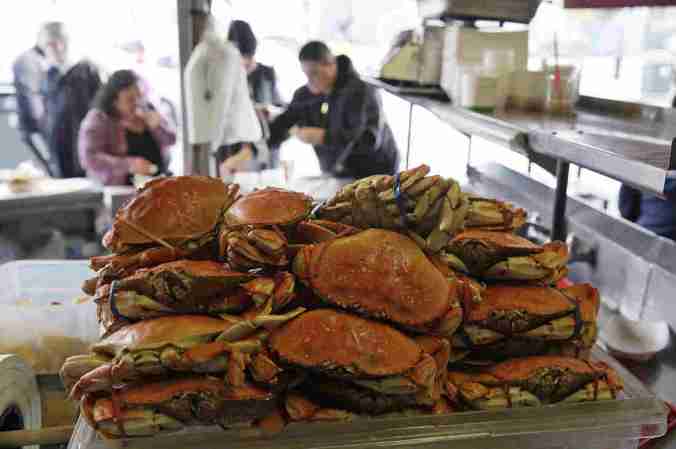
Dungeness crabs for sale at Fisherman’s Wharf in San Francisco. California’s Dungeness crab season was shut down in 2015, when record high ocean temperatures and lingering toxic algae blooms raised the domoic acid in shellfish to unsafe levels. A new study links dangerously high levels of the neurotoxin to warmer ocean temperatures, suggesting such closures could become more common in the future. Eric Risberg/AP

Thanks to the salt folks over at National Public Radio (USA) for one more bit of bad news related to our food preferences and the future as affected by climate change:

Warming Oceans Could Boost Dangerous Toxin In Your Shellfish Dinner

CLARE LESCHIN-HOAR

West Coast crab fishermen just ended an 11-day strike over a price dispute. But a more ominous and long-term threat to their livelihood may be on the horizon. A new study in the Proceedings of the National Academy of Sciences has found a link between warming ocean conditions and a dangerous neurotoxin that builds up in sea life: domoic acid. Continue reading

Ruby Sea Dragon, First Live Portrait


13Tb-seadragon2-superJumbo.jpg

A ruby sea dragon that washed up on the Point Culver cliffs in Western Australia. Credit Zoe Della Vedova

Click the image above, a Ruby Sea Dragon washed ashore, to go to a moving image of another member of this creature’s species, alive and well in the wild waters off Australia:

For the First Time, a Ruby Sea Dragon Flaunts in Front of the Camera

By

Famous for their flamboyant, leaflike appendages and mesmerizing movements, sea dragons are aquatic works of art. Since the 19th century, marine biologists had thought that only two types of these enchanting fish existed — the leafy and weedy — until they discovered a third among museum specimens in 2015: the ruby sea dragon. Continue reading

Bioluminescence Better Understood

14505155544_2d3fa95c7c_k-1260x708 (1).jpg

Thanks to Cool Green Science for shedding more light on a topic we have commented on from time to time since starting this platform:

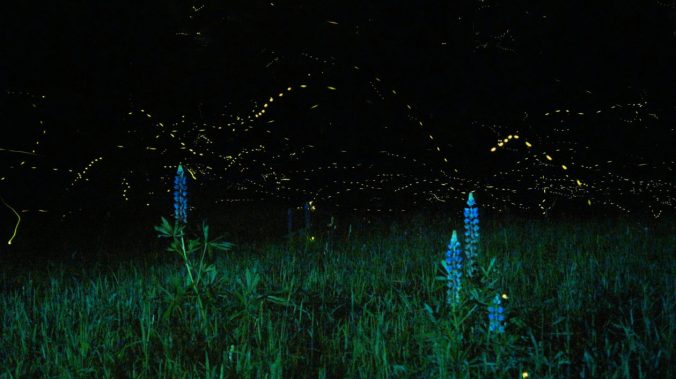
Living Light

What makes some living things glow?

by JENNY ROGERS

For two weeks each year at the beginning of summer, fireflies light up a portion of Great Smoky Mountains National Park. They glow in unison or in waves as males communicate with females in an elaborate mating dance that no one fully understands. There are at least 19 firefly species in the park, but Photinus carolinus is one of the only fireflies in America known to light in unison. Tourists arrive by the thousands to watch. Continue reading