
Thanks to Anthropocene for this summary of a scientific news item worthy of our attention:
A cheaper way to pull carbon dioxide from the air, turn it into crystals
Thanks to Anthropocene for this summary of a scientific news item worthy of our attention:
A cheaper way to pull carbon dioxide from the air, turn it into crystals
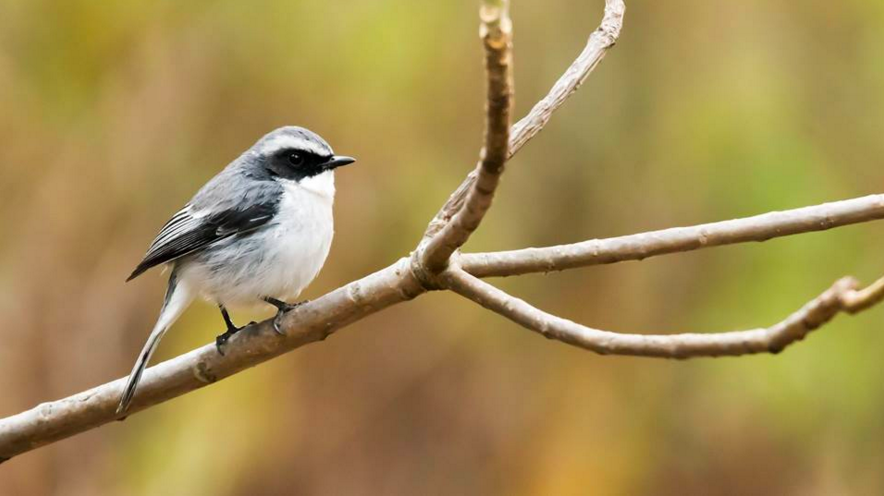
male – Sattal, Uttarakhand

Jane Alexander describes, about half way through the conversation above, being in Belize with Alan Rabinowitz several decades ago for birdwatching, and how it changed her life.  She has been a committed conservationist ever since, as she also describes in this 2012 interview in Audubon Magazine. Anyone who uses an extra 15 minutes of fame – – after a lifetime endowed with plenty of it, well earned for her professional accomplishments — for this purpose is a class act in our book. She has a book that looks worthy of her, according to the publisher’s description:
A moving, inspiring, personal look at the vastly changing world of wildlife on planet earth as a result of human incursion, and the crucial work of animal and bird preservation across the globe being done by scientists, field biologists, zoologists, environmentalists, and conservationists. From a longtime, much-admired activist, impassioned wildlife proponent and conservationist, former chairperson of the National Endowment for the Arts, four time Academy Award nominee, and Tony Award and two-time Emmy Award-winning actress. Continue reading

The remote Cuvette Centrale peatlands in the central Congo basin is one of the most carbon-rich ecosystems on Earth. Photograph: Simon Lewis/University of Leeds
This story was also covered in the New York Times, but the Guardian had a jump on the scoop, and included a photo (above) that more effectively helps to understand peat’s role in carbon capture; so we feature their story here:
World’s largest tropical peatland found in Congo basin
Carbon-rich peatlands could store three years’ worth of world’s total fossil fuel emissions, say scientists Continue reading

Thekkady, Kerala
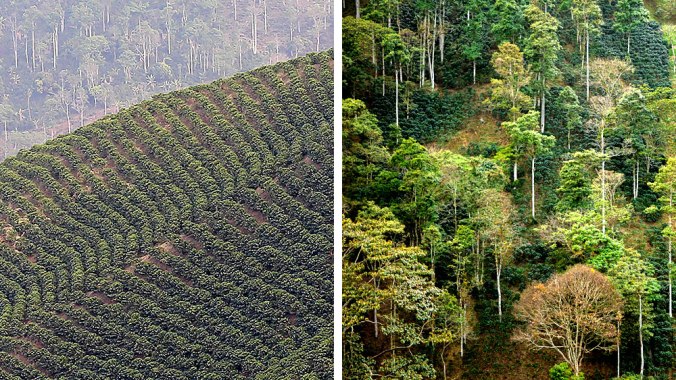
Sun-grown coffee (left) is a monoculture of coffee bushes. Shade-grown coffee (right) offers more habitat for forest species. Photos: Chris Foito/Cornell Lab Multimedia; Guillermo Santos).
Our lives in the New World Tropics has allowed a frequent convergence between birds and coffee, even in the most simple terms of enjoying birdsong in our garden over the first morning cup. That very garden of our home in Costa Rica sits in what was historically cafetal (a coffee finca), with large trees shading the coffee that still grows along the little stream that runs along the property line. Blue-crowned motmots (the Central American cousin to the Andean Motmot mentioned below, have been frequent residents.
The coffee plantings at our home are insignificant compared to the 100+ acres of Gallon Jug Estate shade-grown coffee at Chan Chich. Of the nearly 350 bird species recorded in the Chan Chich Reserve’s 30,000 acres, a large percentage are migratory, making their home in the coffee as well as the healthy forest habitats that make up the reserve.
Sustainable agriculture is rarely a “get rich quick scheme”, but taken within the context of the “seventh generation stewardship”, the benefits will continue to outweigh the costs.
In Colombia, Shade-Grown Coffee Sustains Songbirds and People Alike
By Gustave Axelson
Early one morning last January, I drank Colombian coffee the Colombian way—tinto, or straight dark.
I sipped my tinto while sitting on a Spanish colonial veranda at Finca Los Arrayanes, a fourth-generation coffee farm and hotel deep in northwestern Colombia’s Antioquia region. The sun had not yet risen above the high ridges of the northern Andes. In the ambient gray predawn light, the whirring nocturnal forest insects were just beginning to quiet down.
My senses of taste and smell were consumed by the coffee, which was strong and bold in a pure way, the flavor flowing directly from the beans, not a burnt layer of roast. But my eyes were trained on a small wooden platform that held a couple of banana halves. The first bird to visit was an Andean Motmot, one of Colombia’s many Alice in Wonderland–type fantastical birds. It sported a green-and-turquoise coat and black eye mask, and it was huge—longer than my forearm, with a long tail with two circles at the end that swung rhythmically from side to side like the pendulum of a clock.
The motmot flew away and I took another sip of coffee to be sure I didn’t dream it. Another bird soon landed on the platform to pick at the bananas. This one was yellow, though Colombians call it tangara roja, because males of this species are completely red. In its breeding range, birders from the Carolinas to Texas know it as the Summer Tanager.
For more than 5 million years, a rainbow of Neotropical migrant birds (tanagers, warblers, and orioles) has been embarking on epic annual migrations from breeding grounds in North America to the New World tropics. In Colombia, these wintering areas are a lot different now than they were just 50 years ago. From the 1970s to the 1990s, more than 60 percent of Colombian coffee lands were cleared of forest as new varieties of sun-grown coffee were planted. During that same period, populations for many Neotropical migrant species plummeted—a drop many scientists say is related to deforestation of the birds’ wintering areas across Central and South America.
And yet, coffee doesn’t require deforestation. Continue reading

We have not seen one yet, apart from Uber and Lyft (which we have been grateful for as users already), but when we do see any pure form(s) of this mythical app our support will be early and often:
Carpooling apps could slash congestion, fuel use, and emissions

Atlanta, Georgia
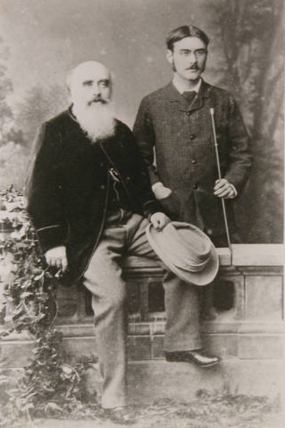
John Lockwood Kipling with his son Rudyard Kipling, 1882. © National Trust/Charles Thomas
Kipling is almost a household name for many in our group, but primarily in the context of Rudyard Kipling, the writer of the well-known stories and fables about India. When researching the author a few years back I was surprised to learn about his talented father, whose beautiful illustrations graced the early editions of several of his son’s books.
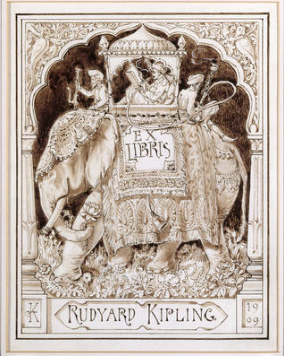
Rudyard Kipling’s bookplate ‘Ex Libris’, Lockwood Kipling, 1909. © National Trust Images/John Hammond
Those lucky enough to be in London this month can visit the Victoria & Albert Museum for the exhibition Lockwood Kipling: Arts and Crafts in the Punjab and London.
More of note, not only was the senior Kipling an artist, writer, museum director, teacher, and influential figure in the Arts and Crafts movement – he was also a conservationist, distinguished for promoting the traditional textile crafts of India and what is now Pakistan.
The exhibit coincides with Conferences and Symposia related to the 3-year international research project on Kipling’s legacy.
The 19th century Arts and Crafts revival in British India is a fascinating chapter in the international history of art and design. However, John Lockwood Kipling’s career as designer and architectural sculptor, curator and educator, illustrator and journalist, has received little attention. Continue reading
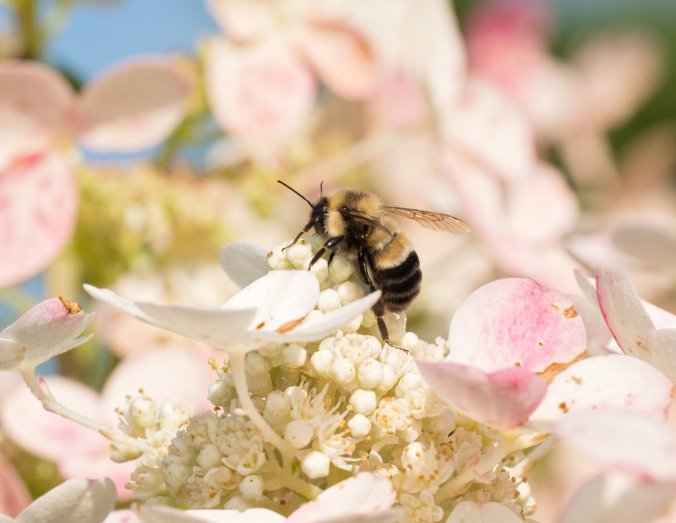
The rusty-patched bumblebee, once common across the continental United States, has been designated an endangered species. Credit Clay Bolt
One more gift of protection:
A Bumblebee Gets New Protection on Obama’s Way Out
By and
The Obama administration, rushing to secure its environmental legacy, has increased protection for a humble bumblebee. Continue reading

Photo by Josh Ewing/Bears Ears Inter-Tribal Coalition
The Food & Environment Reporting Network updates our understanding of the added significance of Bear Ears Monument, and its detractors:
Bears Ears Monument Is A Win For Tribal Food Sovereignty. Will Trump Undo It?
By Kristina Johnson
Seven years ago, the Navajo tribal council in southeastern Utah started mapping the secret sites where medicine men and women forage for healing plants and native people source wild foods. They wanted to make a case for protecting the landscape known as Bears Ears, a place not only sacred to their tribe, but to many other tribes in the region, going back thousands of years. In one of his final acts in office, President Obama late last month created the 1.35-million-acre Bears Ears Monument, in a move that proponents say will safeguard the area’s ecology and guarantee food sovereignty for the region’s Native Americans.: Continue reading
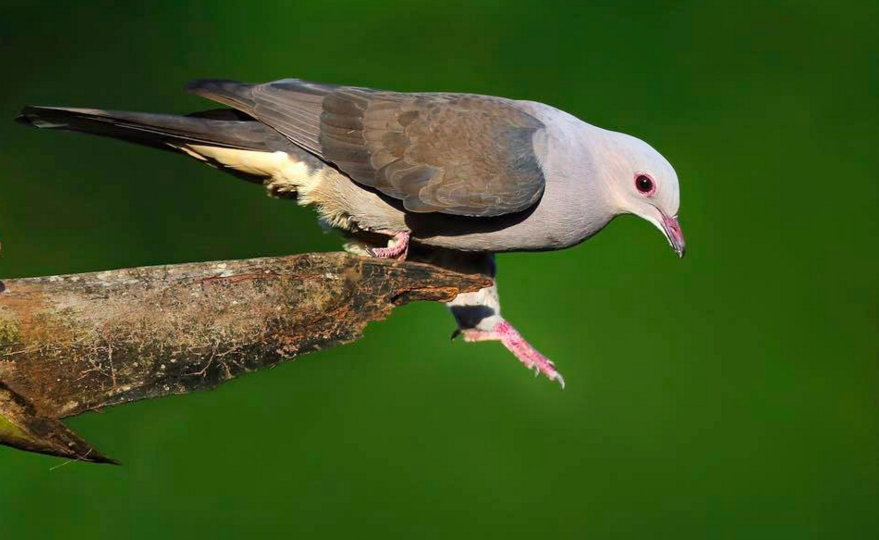
Mapusa, Goa
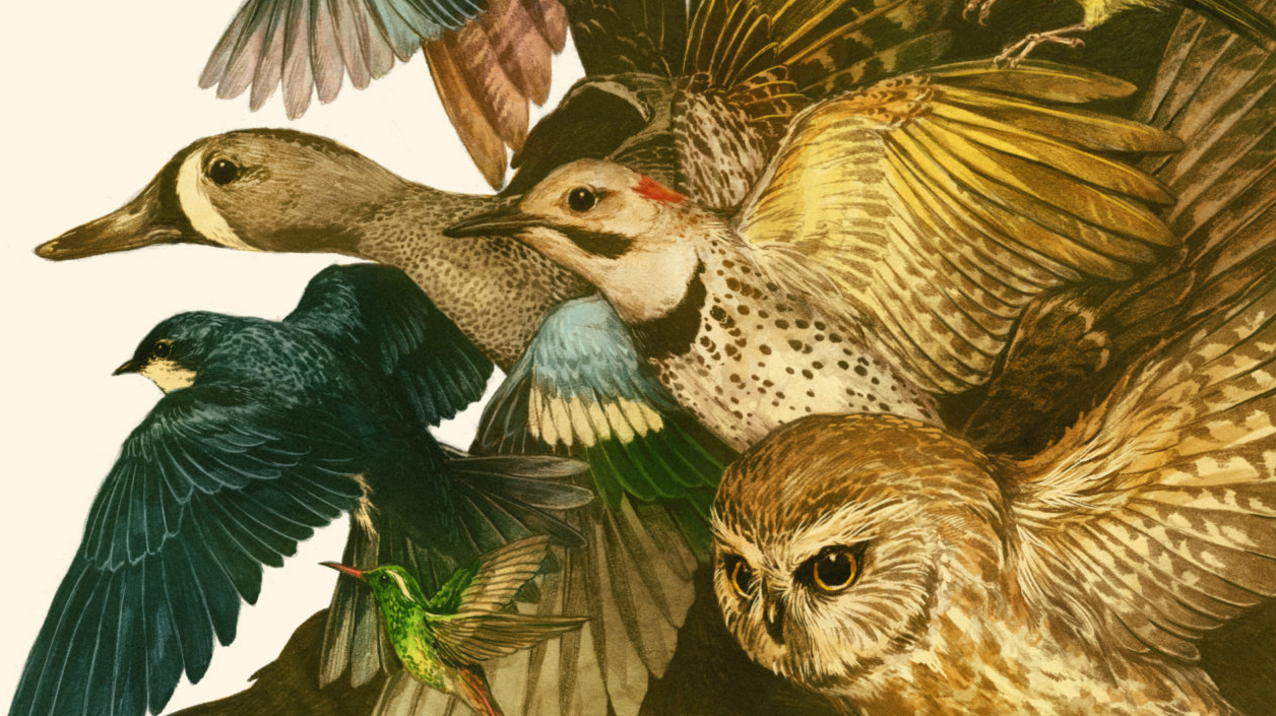
Violet-crowned, blue-throated and magnificent hummingbirds, along with a dozen other bird species, have been recorded at the the Conservancy’s 380-acre Ramsey Canyon Preserve. © Teagan White
Thanks once again to the Nature Conservancy’s Cool Green Science blog for simultaneously highlighting conservation history as well as inspiration to spend time outdoors. We stand with the TNC and all organizations in support of the legendary legislation that illustrates the core principles of wildlife and land stewardship.
The Audubon Society states it simply, the Migratory Bird Treaty Act protects birds from depredatory human activities. And the more we involve ourselves in birding activities, the more appreciation and awareness we have for the fragility of our ecosystems and the biodiversity they sustain.
A Birding List for the New Year

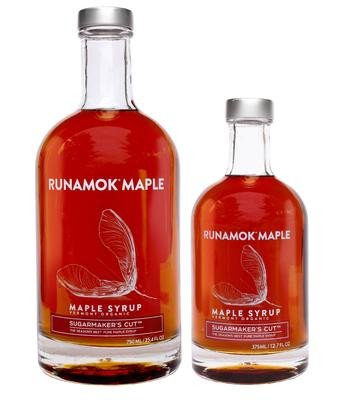 When we saw this the other day, it had us thinking that 2017 was already off to a crafty-bottled-flavor start. Now another non-alcoholic liquid we adore, crafted and packaged with flair.
Several among the contributors to this site have connections to maple syrup consumption going back decades, most notably Harrington’s of Vermont circa 1970s. So, combining nostalgia with artisanal and organic, Runamok had us at maple:
Sugarmaker’s Cut™ The Season’s Best Maple Syrup Continue reading
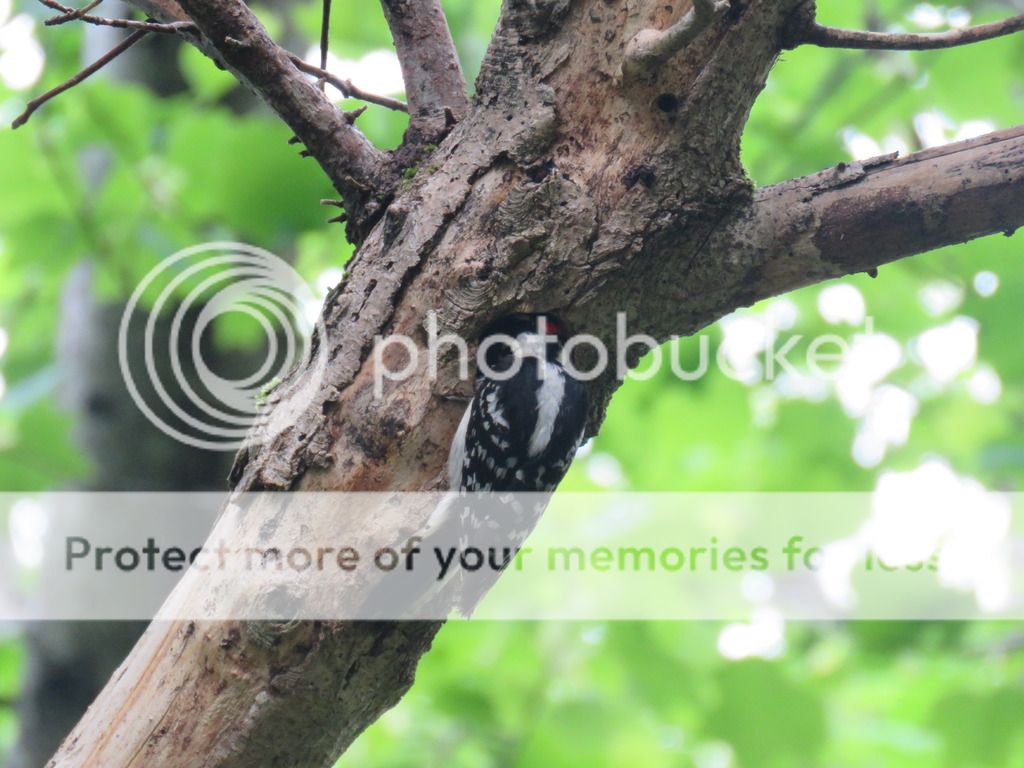
male – Atlanta, Georgia
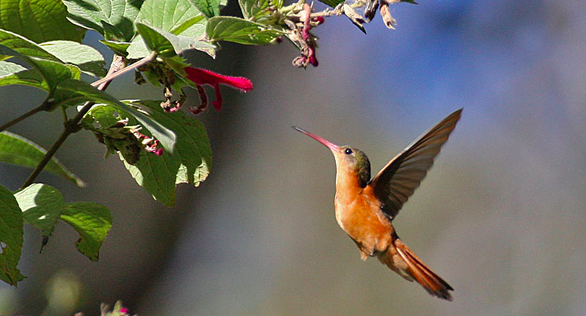
Cinnamon Hummingbird (Amazilia rutila) Sierra El Tuito, Jalisco, Mexico 21/01/2008 © Glen Tepke
The Chan Chich team was recently host to Christmas Bird Count participants from the Belize Audubon Society. Assisted by the Chan Chich guides, the team of ten birders tallied a total of 185 species over a 2-day period. Among the most notable species, was the addition of the Cinnamon Hummingbird, which is the furthest inland record in the country. This tiny coastal hummingbird has been steadily expanding its range inland, but this time it reached Laguna Verde, the natural, spring-fed lake within the Chan Chich conservation area. Continue reading
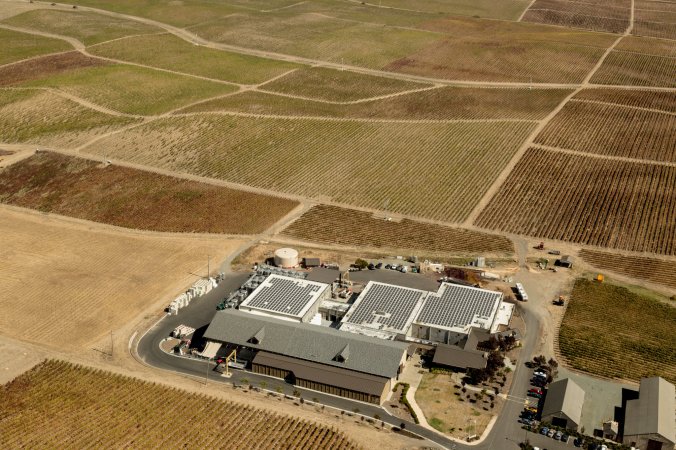
Solar panels dot the buildings at the family’s Carneros Hills Winery. Jason Henry for The New York Times
When a family does its homework on the property that represents its livelihood and our own appreciation for their craft, we take note just as we do when the professor teaches:
Falcons, Drones, Data: A Winery Battles Climate Change
Jackson Family Wines is among California
winemakers employing both high-tech and old-school
techniques to adapt to hotter, drier conditions.By
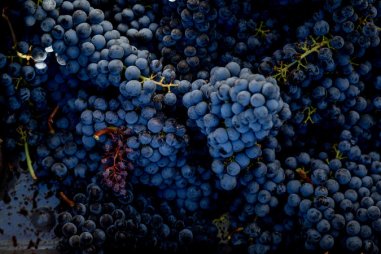
Harvested grapes. Jackson Family Wines is one of the largest family-owned winemakers in the country. Jason Henry for The New York Times
On a misty autumn morning in Sonoma County, Calif., Katie Jackson headed into the vineyards to assess the harvest. It was late in the season, and an army of field workers was rushing to pick the grapes before the first rains, however faint, began falling.
But on this day, Ms. Jackson, the vice president for sustainability and external affairs at Jackson Family Wines, was not just minding the usual haul of cabernet, chardonnay and merlot grapes. She also checked on the sophisticated network of systems she had put in place to help crops adapt to a changing climate.

Kevin Hooyman
When a professor does years of research and teaching on a topic related to this particular pond, and then takes the additional effort to share his observations in cogent form as an op-ed, we believe it is worth at least 5-10 minutes of reading time:
What the Muck of Walden Pond Tells Us About Our Planet
By
In 1845, Henry David Thoreau repaired to a cabin in the woods beside Walden Pond “to front only the essential facts of life, and see if I could not learn what it had to teach.” During the last two years, my students and I have come to that same pond to see what we could learn from the sediments beneath it. Continue reading
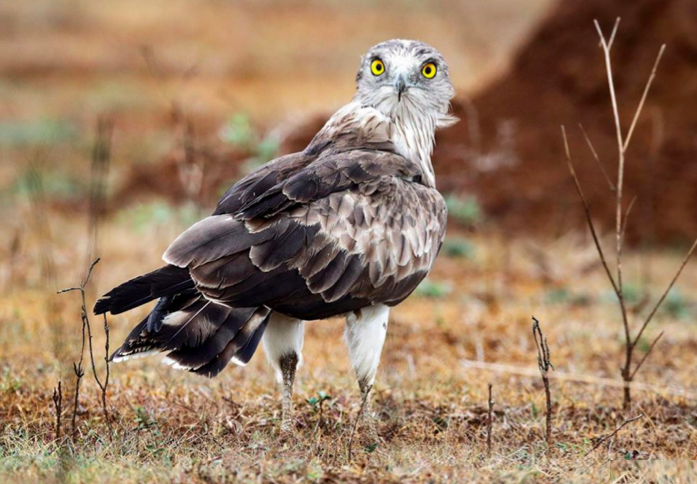
Bangalore, Karnataka

We knew Jerry Jeff Walker was one of the greats, but two things we did not know about him: he is the man who wrote the song Mr. Bojangles (no secret, we just did not know it) and he has considered Belize his second home for a very long time (again no secret, we just did not know it). If you click the banner above you will see more details about the concert series, which sounds like a blast, coming up in a few weeks. But since it is sold out, we still suggest planning for a visit to Belize, in which case you should click the image below.
 Organikos