
Latpanchor, West Bengal
Latpanchor, West Bengal
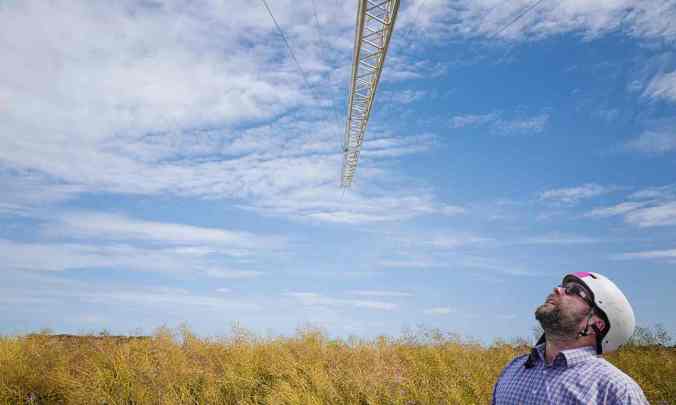
Bill Hampton, chief executive of Kite Power Solutions. Photograph: Sarah Lee for the Guardian
Kite power to take flight in Scotland next year
Kite Power Solutions plans to open UK’s first kite power plant and predicts the technology could global ease energy costs
Rob Davies Continue reading

The Rose Reading Room is luxurious in the way that only certain shared spaces can be. Its grandeur attracts its visitors, and is in turn amplified by their presence: the true urban symbiosis. PHOTOGRAPH BY DREW ANGERER / GETTY
It was the room in the photo above where I sat, in the early 1990s, collecting some data for a research project that would eventually become my doctoral dissertation. I had been in that room once or twice in my youth, but as an adult on a specific mission (little did I know the data collected that day would help me develop ideas that we now call entrepreneurial conservation within La Paz Group) the room barely registered in my notice. Except as a very practical place to read some historical documents.
So I am delighted to see that room again after a long time. It looked great to me the last time I saw it. Now I can say wow for different reasons. The legacy of the room is protected, and perhaps renewed for another hundred years. If you click the image and go to a larger viewing with greater detail, you will understand why the word luxury fits in the title of this post on the New Yorker website.
It is not our practice to use the word luxury because it is so laden with old and often inappropriate (considering the ecological condition of the planet, considering advances in socio-economic development, and considering other modern sensibilities) meanings. So we appreciate when others take care in how they use it:
THE ROSE READING ROOM AND THE REAL MEANING OF “LUXURY” IN NEW YORK CITY
To say that the ceiling of the Rose Main Reading Room, at the New York Public Library’s main building, on Fifth Avenue—the biggest room in the biggest public-library branch in the country’s biggest city—is an ornate piece of work is putting it mildly. Continue reading

male – Dunwoody, Georgia, USA
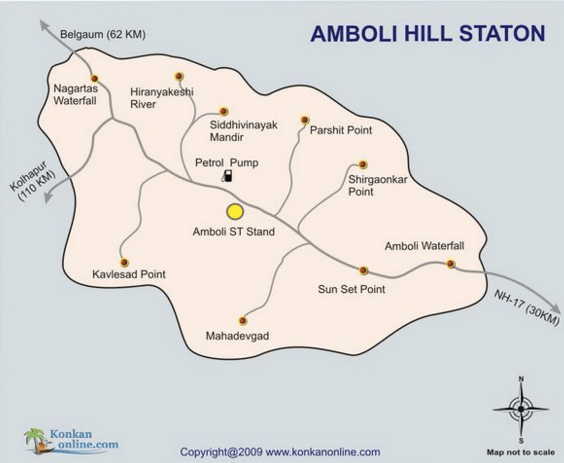
We wouldn’t be true to one of our core interests if we didn’t take birding into account while doing our reconnaissance of the natural and cultural activities surrounding Aarvli.
Crist’s trip to the Amboli Reserve earlier in the week was one such visit. A quick search of eBird hotspots turned up Amboli Village (with a count of 116 species) and Amboli Forest (with a count of 65 species). The map above gives a brief sense of the multiple look out points that could prove to be excellent birding opportunities. Continue reading
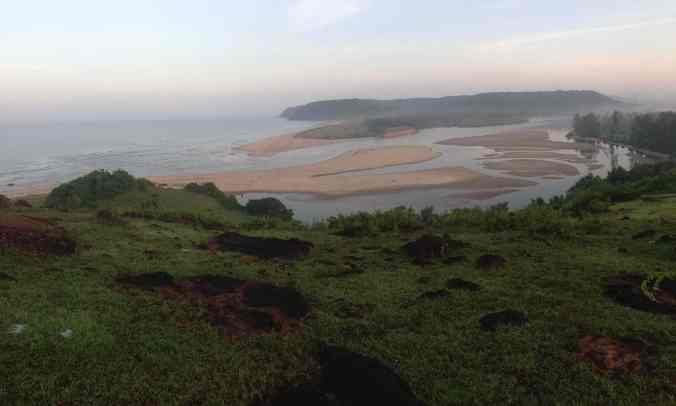
As soon as there is enough light each day I start my walk from the Aarvli bluffs to the water below. I start in the estuary, then move along the sea. The patterns around sunrise are not unlike those at sunset.
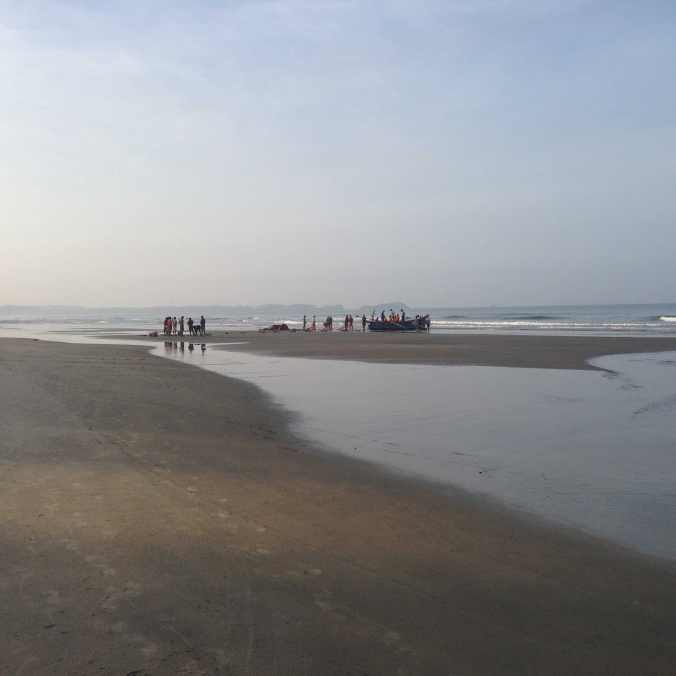
Fishing with this type of boat is a community activity, day in and day out. Many are required to get the boat back onto shore, first with the nets coming off and then the boat being block and tackled up the sand. Continue reading
This is a series of videos realized to launch “Save The Truffle” a new brand aiming to promote traditions and the conservation of the White Truffle of Alba. In this videos Agnello Renato, one of the last and most important “trifulau” (truffle seeker) of the zone, shares his stories about being a truffle seeker.For this project I took care of shooting, lighting and editing.
Creative project by Grid Studio.
Our family has a very happenstance connection to truffles that goes back to some sustainable tourism development work I carried out in Croatia starting in 2000, which led to our nirvanic 2006-2007 spent on an island in the southern Adriatic. But on my first visit to Croatia, in late autumn 2000, on a weekend off from work a local friend took me to Istria and the rest is history. You either love them or you probably will be disgusted by them, and I was in the former camp. A month later, coming home to my family in Costa Rica, I had some vacuum-packed fresh truffles; since then, we have been devotees.
A few years later, Milo became an encyclopedic mycophile, and a few years after that Seth had the chance to take a mycology courses at Cornell as an undergrad. So we are all happy to see this campaign represented by the logo above left. The article that brought our attention to this campaign is worth a read, whether you are a foodie, a fungist, or any kind of traditionalist. Click the logo to see some of the early creative work emerging for the campaign. We look forward to seeing more, but for now appreciate the journalist’s keen eye for what really matters in this story:
Amid Hills of Wine and Truffles, a Mission to Give Fungus Room to Breathe
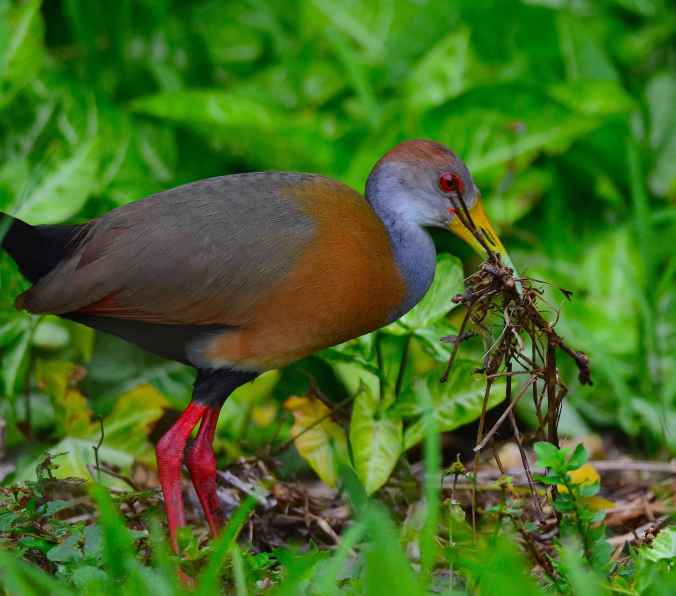
(formerly Gray-necked Wood-Rail) Gallon Jug Estate, Belize
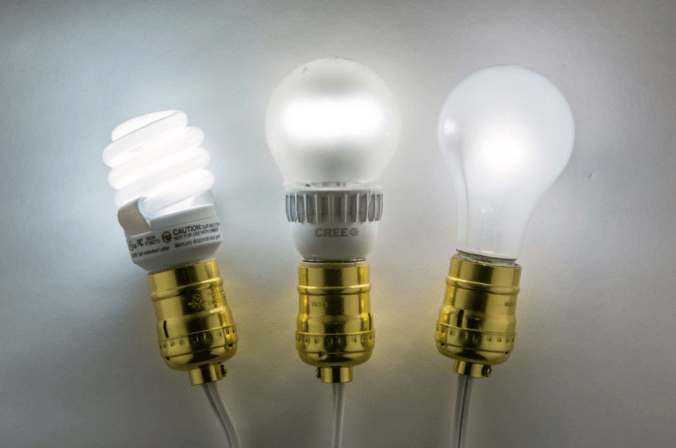
Selling “light,” not light bulbs, is one way that companies producing long-lasting L.E.D. bulbs hope to stay in business, even after “socket saturation” sets in.
PHOTOGRAPH BY TONY CENICOLA / THE NEW YORK TIMES / REDUX
In a business world of planned obsolesce and consumer world “throw away behavior”, it’s enlightening to see how companies are handling “doing good by doing well” for the both the environment and the consumer’s pockbook.
TRYING TO SOLVE THE L.E.D. QUANDARY
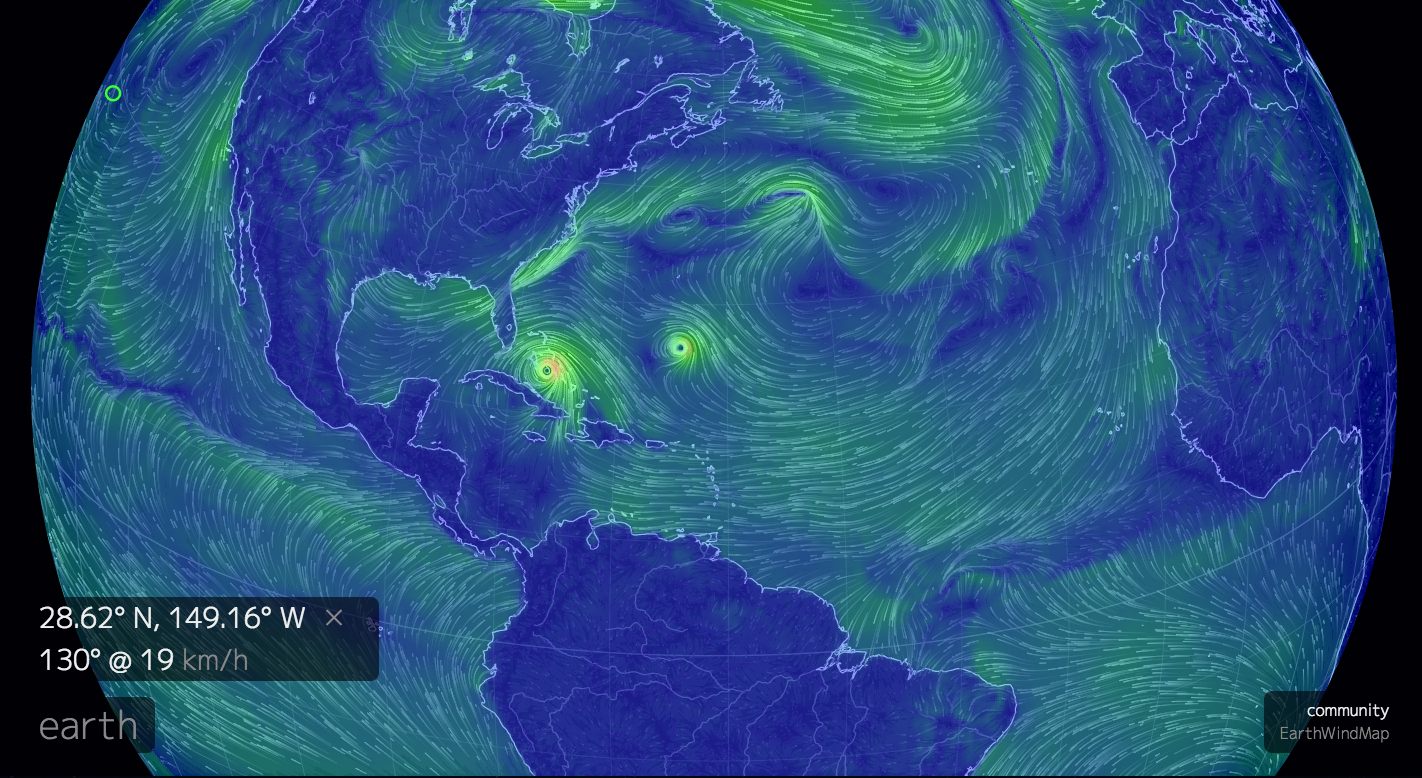
Long before we tackled the science to allow a view of what Carl Sagan would come to call “our pale blue dot”, there were artists and explorers who imagined the vastness of the world and took off into the unknown – both figuratively and literally.
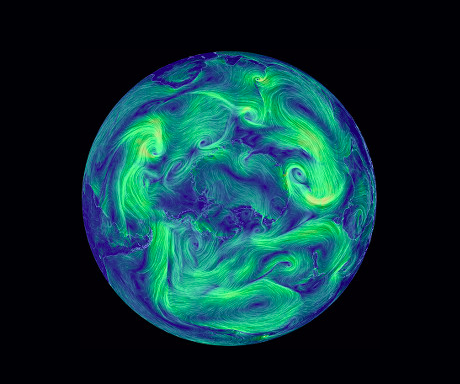
EARTH collaborates with information from scientific organizations such as NASA and NOAA to create an interactive visualization of global weather conditions forecast by super computers updated every three hours. The actual global images are a fascinating swirl of wind and current, reminiscent of a Vincent Van Gogh painting. The ocean surface current estimates are updated every five days, ocean surface temperatures and anomaly from daily average (1981-2011) are updated daily, and ocen waves are updated every three hours – all of which combine to present a moving canvas of what is presently occurring on this blue marble of a planet.
About The Art
EARTH, by Cameron Beccario, is a near real-time visualization of global weather conditions forecast by supercomputers. This vivid capture depicts intricate, dramatic swirling patterns of wind streamlines reminiscent of oil paintings of the Impressionists. Continue reading
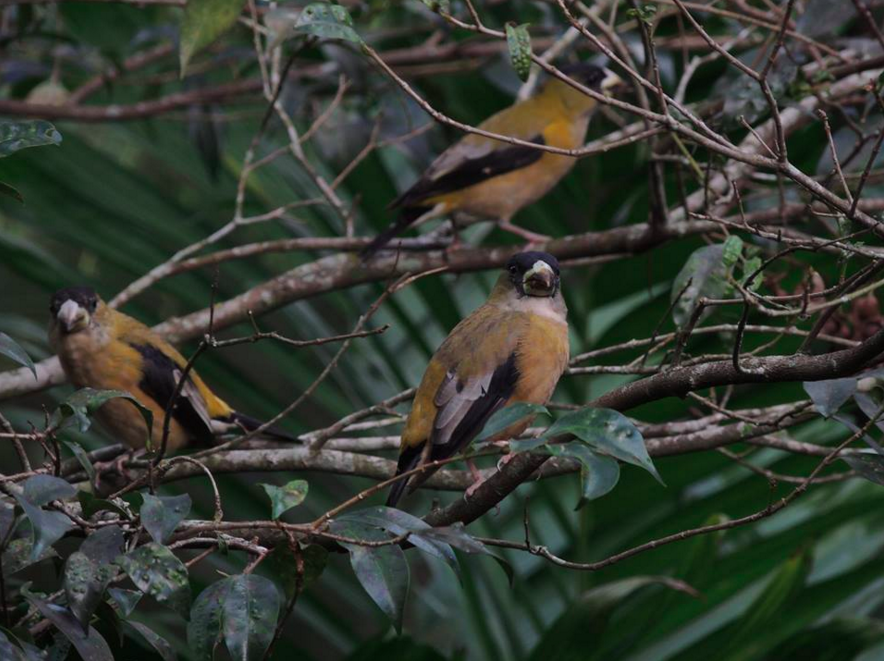
females – Guatemala City, Guatemala
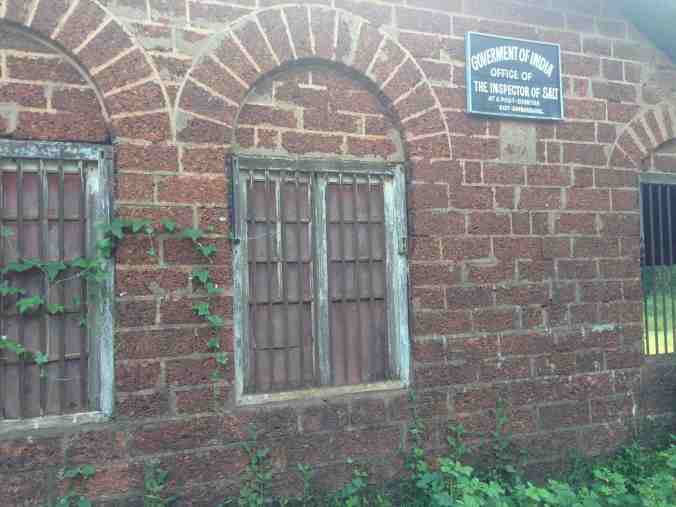
Where I am located, since last week and until next, there is an abundance of flavors; both in terms of intensity and in terms of diversity. Thanks to a longstanding tradition of ensuring that those flavors pop, there is not only salt, but salt inspection. Only the finest will do, and the finest is also harvested locally. Just as the fish is harvested locally as in the photo below, taken a few hundred meters from where I am typing right now.

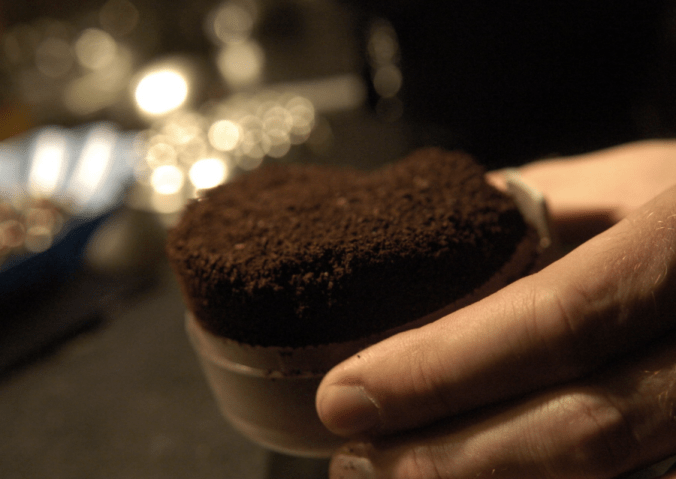
Researchers are experimenting with using used coffee grounds to filter pollutants out of water. Credit RJ Sangosti/The Denver Post via Getty Images
Coffee lovers that we are, it’s amazing that we almost missed this piece of news…
Each year, coffee manufacturers, restaurants, cafes and home brewers worldwide produce about six billion tons of coffee waste… If not rotting in a dump or fertilizing a garden, the grounds end up in animal feed and biofuels.
But researchers in Italy have found a new home for the stinky old coffee bits — by infusing them into a porous foam that removes heavy metals from polluted water, according to a study published this month in ACS Sustainable Chemistry and Engineering.
“We use a lot of coffee here in Italy,” said Despina Fragouli, the author of the study and a materials scientist at the Istituto Italiano di Tecnologia. She and her team develop new compounds from agricultural waste — like turning cacao husks into a material for preserving and packaging food.
Naturally, they wondered “What about coffee?” Continue reading
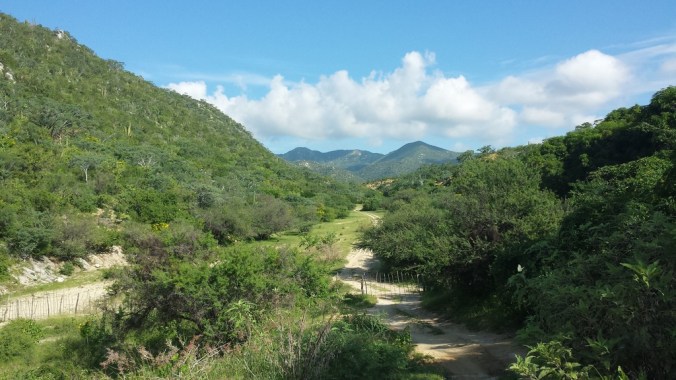
Scenic side road on the way to El Triunfo.
If queso was a food group it would certainly be my favorite. But that’s not what this post is about – even though cheese is a primary ingredient in many Mexican dishes and I had lots of it this past weekend. What this post is really about is the kinds of unexpected quirks one encounters when road tripping in Baja California Sur (B.C.S) and the unusual, but interesting conversations that come up with locals. Seth and I covered three towns: La Rivera, El Triunfo, and Todos Santos, for different lengths of time, but each with a distinctive story to tell.
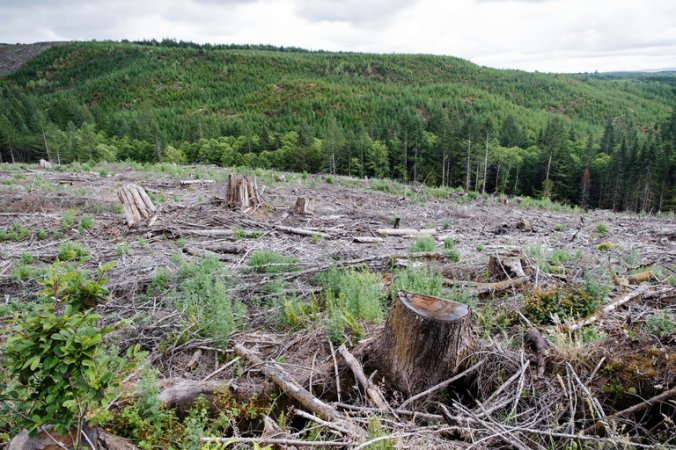
Clear-cutting along Highway 30 in Oregon. A bipartisan group of senators wants the government to assume that burning forests to generate electricity does not add carbon dioxide to the air but is instead “carbon neutral.” Credit Leah Nash for The New York Times
We have stayed away from politics as much as possible on this platform, except to celebrate innovative successes in the interest of conservation; but this news item is a must-share due to the gravity of its weirdness:
Next ‘Renewable Energy’: Burning Forests, if Senators Get Their Way
Eduardo Porter
President Obama’s Clean Power Plan — the central plank in his strategy to combat climate change — is in danger.
It’s not just that it is under attack in court, where its legality was challenged last week by a coalition of 28 states and scores of companies and industry groups. Or that fossil fuel interests and Republicans in Congress will keep trying to block it, whatever the courts decide.
The president’s plan to reduce emissions of heat-trapping carbon dioxide from the nation’s power sector could be undone within a matter of weeks by an unlikely bipartisan collection of senators that includes staunch Republican climate change deniers as well as Democrats who support the administration’s strategy. Continue reading
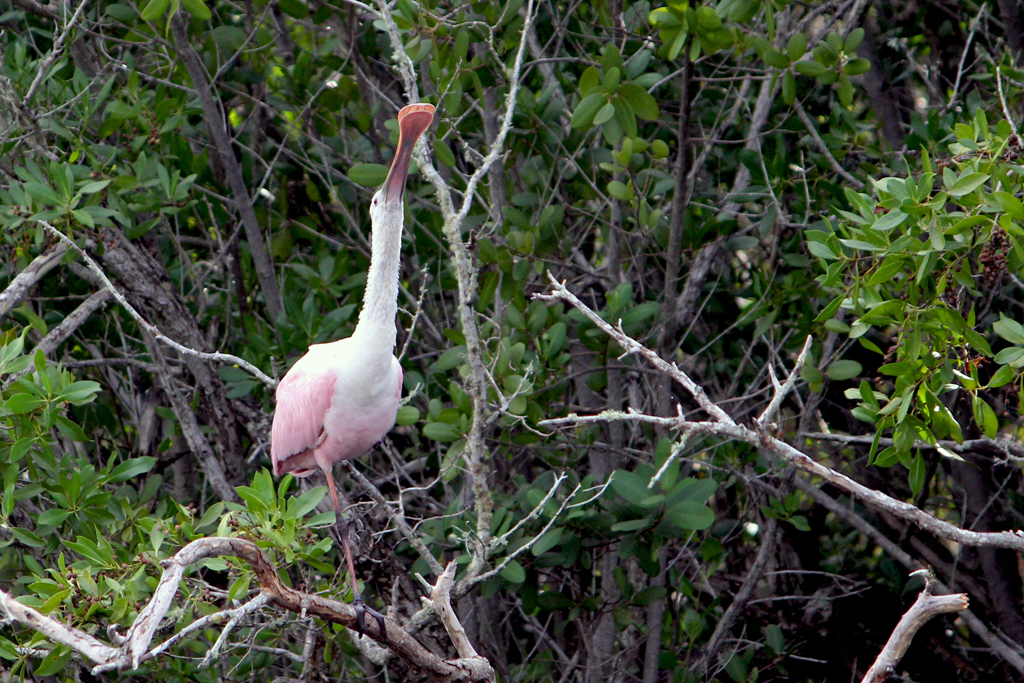
photo credit: Stephen Crafts
Ding Darling National Wildlife Refuge, Sanibel Island, Florida
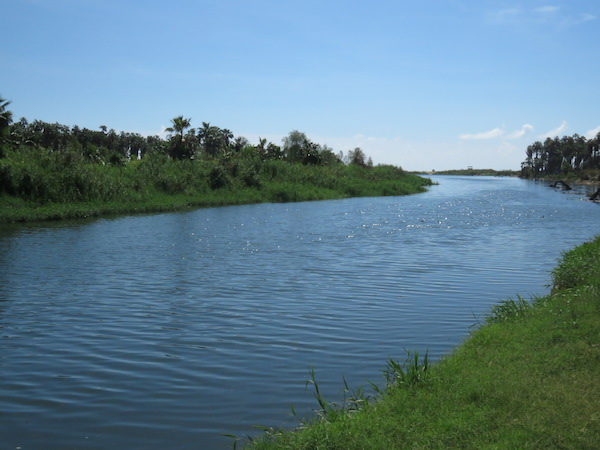
Since last week, I’ve been based back at Villa del Faro in Baja California Sur, Mexico, where I’ll be co-managing the property with Jocelyn for a good while. In addition to having the opportunity to see what kind of birds show up here in their winter migration, I’m also hoping to have time to check out the surrounding region for other birding hotspots. I’ll do this not only for my own interest, but also because we may get guests here in the future who are bird-watchers. I’d like to be able to recommend areas based on my own experience, so they don’t have to rely solely on eBird, which helps find certain spots but can’t give you any directions that Google Maps doesn’t have.
Nevertheless, eBird is one of the best ways to quickly figure out what locations within a region are popular for birding, whether because they have lots of species or because lots of birders pass through there (or both). Continue reading

Bodhi Tree—Los Angeles, California
We liked it the first time around, and appreciate his extension:
DRAWING THE WORLD’S GREATEST BOOKSTORES
By Bob Eckstein
It was a little more than two years ago that I walked around New York, drawing pictures of the city’s endangered landmark bookstores. Continue reading
We’ve been posting on the environmental impact of the invasive lionfish ever since contributor Phil Karp took on the project of building a demand for the notoriously difficult to catch fish. Helping to build a market for the delicious meat and beautiful spines created income for local fishermen and their families in numerous areas of the Caribbean.
ReefSavers was created with all these goals in mind. Founded to gain control of the Lionfish population in the southeast US and Caribbean, they work toward both harvesting and developing a stable market in which supply can always meet the current demands. By unifying
the organizations working to control the Lionfish outbreak into a cohesive market place. Channeling all harvested Lionfish through a centralized market place will allow for a more stabilized fishery. With the creation of the Lionfish Market Place organizations will have a centralized place to sell their catch and buyers will not have to worry about limited supplies. By opening the Lionfish Market buyers for the whole state of Florida will be connected with a more constant supply, in turn this access will help to grow the industry and put revenue into the hands of the people trying to fight the outbreak.
The ReefSavers team came up with innovative strategies to help with supply and demand logistics, fanning the market for the fish for both chefs and more importantly, consumers. Welcome the Lionfish Invasion Tour in Gainsville, Florida! Continue reading

We believe in the core principle from market-based economics that incentives drive behavior. We lean toward behavioral economics as a more robust and believable model than the standard “homo economicus” (read oversimplified but mathematically model-able idea of human decision-making) taught to most 20th century students. We believe that desire for recognition is an incentive commonly found among super-achievers. And this explains why “big” prizes are created and tend to matter over time. Not to suggest that geniuses chase prizes (on the contrary, much of the time).
But the Nobel probably inspires its fair share of young academics in a few fields. For that reason we find this editorial opinion piece quite compelling, especially due to the first example given:
In the mid-1960s, Robert Paine, a scientist at the University of Washington in Seattle, discovered a hidden organizing principle in the coastal ecosystem he was studying. When a certain species of starfish was present, a panoply of algae, limpets, barnacles, anemones and mussels lived in delicate, dynamic balance. But when he removed the starfish and tossed them into the ocean, that balance collapsed and one kind of mussel took over.
Dr. Paine coined a term to describe the starfish’s outsize influence: keystone species. Keystone species have since been identified in forests, in grasslands, in the ocean and even in the human gut. The concept has become one of ecology’s guiding theoretical principles, Continue reading
 Organikos