From the Oxford English Dictionary, skipping past the obsolete and rare definitions of the word organic, and picking the ones we find most interesting for our purposes, all of which predate by decades, and even centuries, one of the latest uses of the word organic in the categorization of a method of agriculture:
Belonging to the constitution of an organized whole; structural.
Of or relating to an organized structure compared to a living being.
Of, relating to, or characterized by connection or coordination of parts into a single, harmonious whole; organized; systematic.
Designating a work of art in which the parts seem naturally or necessarily coordinated into the whole; (Archit.) (in the writings of Frank Lloyd Wright) designating a style which attempts to make a unity of a building and its setting and environment; (also, more generally) designating any of various styles in which the character of buildings is more or less reminiscent of a living organism.
Characterized by continuous or natural development; (Business) designating expansion generated by a company’s own resources, as opposed to that resulting from the acquisition of other companies.
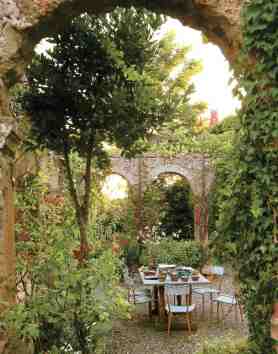
We care about these definitions because the word organic comes into our conversations constantly. We have avoided overuse in these pages of this and other words that we care about. But recently this word stands out, worthy of more of our attention. We will use it more, but carefully. A balance is required.


 Fighting Big Oil and Big Banks to Save Sacred Lands, Precious Water and Unraveling Climate



 There is a 5-10 minute read in the upcoming issue of the New Yorker that helps put two decades into a narrow but interesting perspective. 20 years ago I was in the process of moving my family to Costa Rica for a job I had accepted one year earlier. I remember the period described below, which could be considered the transition to life online, as we now know it. Odd to think it was happening just as we moved to a kind of Garden of Eden. Slate has been a part of “life online” ever since. I was mainly drawn to Kinsley, one of the sharpest of thinkers and communicators. He is long, long gone from Slate. But the experiment was fruitful; Slate is alive and well even as the media landscape is oversaturated with copies of copies of copies:
 Organikos