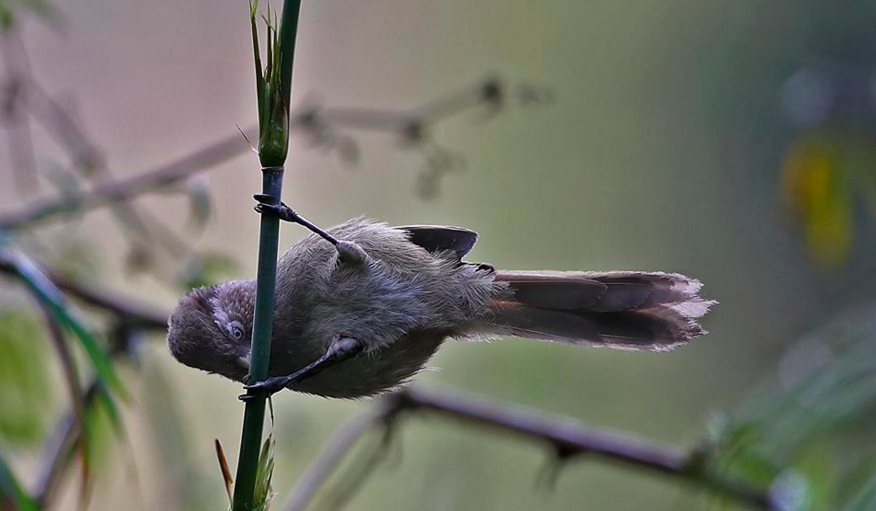
Neora Valley National Park, Darjeeling, West Bengal
Neora Valley National Park, Darjeeling, West Bengal
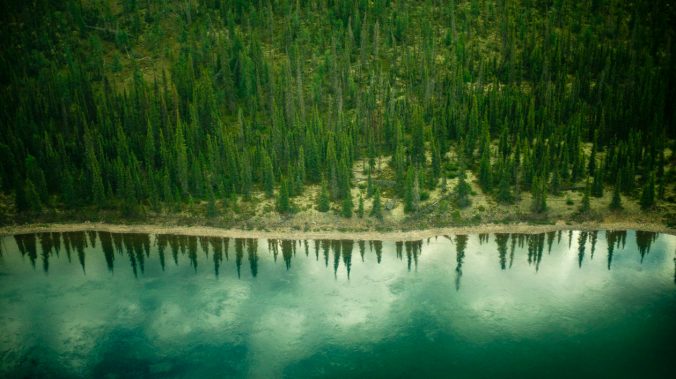
Aerial view of the Thelon River and forest landscape of Canada’s far northern Thelon Game Sanctuary. The refuge is the largest and most remote game sanctuary in North America. For the Akaitcho Dene people, the Upper Thelon River is “the place where God began.” In 2011 The Nature Conservancy’s lead scientist Sanjayan and Canada program director Dr. Richard Jeo went on an expedition through through this pristine area with young members of the Dene First Nation. They traveled by canoe along the Thelon River ending in North America’s largest and most remote wildlife refuge, the Thelon Game Sanctuary. This photograph is from that trip. PHOTO CREDIT: © Ami Vitale
Thanks to Cool Green Science, the conservation science blog of The Nature Conservancy, for this sobering update on the state of affairs of meeting conservation targets (um, those related to whether or not this planet will be one our future generations will be able to live on):
Global Wilderness Areas in Decline Despite Conservation Targets
BY JUSTINE E. HAUSHEER
Conservation today operates in a world of targets: Protect 17 percent of terrestrial systems and 10 percent of marine systems by 2020; keep global climate change below 1.5 degrees Celsius by 2100; halve the rate of natural habitat loss.
But despite widespread adoption of protected area targets, wilderness areas are still declining rapidly across the globe. Now, new research shows that 9.6 percent of all global wilderness has disappeared in the last 20 years. Continue reading

A fundraising campaign for Fidencio Sanchez has raised more than 50 times the original $3,000 that was sought. Go Fund Me
We can say, with no ideological intent whatsoever, that it is not good news that an elderly man in a prosperous nation must depend on the kindness of strangers; but if we add one iota of oomph to the momentum of a story like this going viral, we are more than happy to share occasions when that kindness is demonstrated with drama:
Strangers Raise $165,000 In 3 Days To Help Chicago Popsicle Vendor, 89
It was just a glimpse, but the scene spoke volumes — and started a push for help. Joel Cervantes Macias was struck by the sight of an elderly man pushing his cart of frozen treats on Chicago’s 26th Street, so he took a photo. That was last week; as of Monday afternoon, Macias had raised more than $165,000 to help a stranger. Continue reading
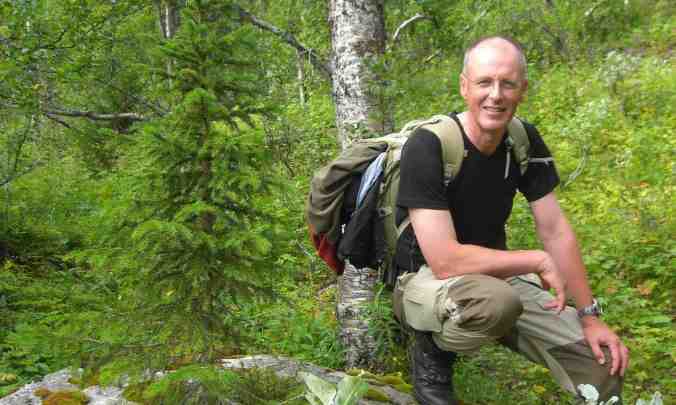
Trees a crowd … Peter Wohlleben and friends. Photograph: Peter Wohlleben
The man who thinks trees talk to each other
Beech trees are bullies and willows are loners, says forester Peter Wohlleben, author of a new book claiming that trees have personalities and communicate via a below-ground ‘woodwide web’
Early this year I linked out to a profile of Peter Wohlleben, and that post was remarkably well received. The post about the woodwide web concept more recently, clearly connected conceptually, was also well received, while pointing to the findings of other researchers (if you did not listen to the Radio Lab piece, do yourself a favor and do so). I am happy to link to more about the ideas in this book, and to learn more about the man himself:
Trees have friends, feel loneliness, scream with pain and communicate underground via the “woodwide web”. Some act as parents and good neighbours. Others do more than just throw shade – they’re brutal bullies to rival species. The young ones take risks with their drinking and leaf-dropping then remember the hard lessons from their mistakes. It’s a hard-knock life.

Heroes are, by definition, not easy to come by. When they get profiled, read it (this one is thankfully not merely fluff):
…The ordeal, and the perspective of middle age, snapped him to attention and caused him to refine the company’s mission. In the eighties, he’d been feeling increasingly uneasy about being a businessman and about the transformations and compromises that seemed inevitably to accompany corporate success. The company, he worried, was straying from its hard-core origins. “I was faced with the prospect of owning a billion-dollar company, with thousands of employees making ‘outdoorlike’ clothing for posers,” he said early in 1991, in a speech to the employees, in which he outlined his misgivings and his new resolutions. These subsequently appeared in the Patagonia catalogue, as a manifesto, under the heading “The Next Hundred Years.” Continue reading
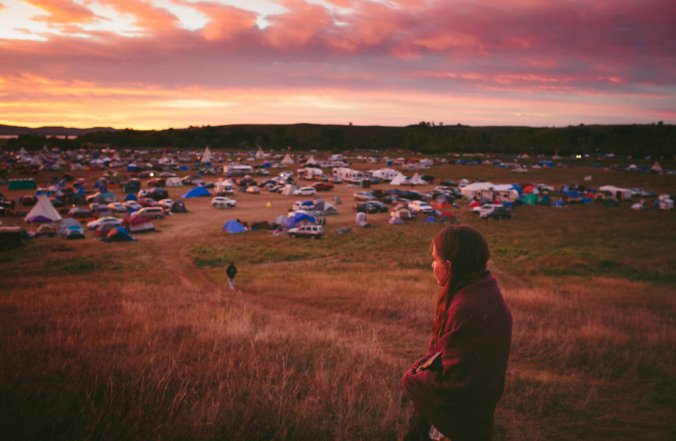
Susan Leopold, a member of the Patawomeck tribe of Virginia, watching the sun rise over an encampment where thousands have come to protest an oil pipeline near Cannon Ball, N.D. Credit Alyssa Schukar for The New York Times
This is a great follow up to the earlier stories we read on this topic. We appreciate that the New York Times is now giving this as much attention as it deserves, and doing so with the dignity and respect that the protesters deserve:
From 280 Tribes, a Protest on the Plains
NEAR CANNON BALL, N.D. — When visitors turn off a narrow North Dakota highway and drive into the Sacred Stone Camp, where thousands have come to protest an oil pipeline, they thread through an arcade of flags whipping in the wind. Each represents one of the 280 Native American tribes that have flocked here in what activists are calling the largest, most diverse tribal action in at least a century, perhaps since Little Bighorn. Continue reading
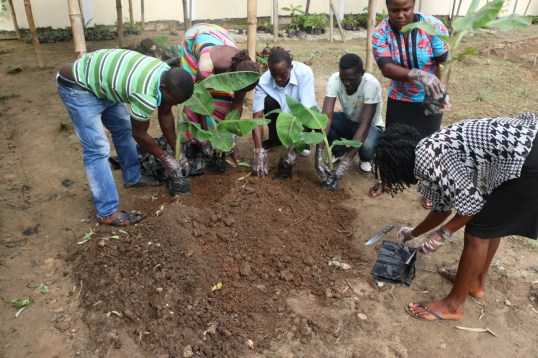
The Nigerian government is giving young ex-fighters the opportunity to help secure their country’s food production by providing them the resources and education to become a new generation of farmers. The new agricultural training program is not only an example of the government’s efforts to fulfill its longstanding pledge of reintegrating ex-militants into society productively, but also an example of a peaceful solution that reflects a government’s foresight of what could truly progress the welfare of its country.
In the summer of 2009, then-president of Nigeria, Umaru Musa Yar’Adua, declared a general amnesty for the armed militants who had plagued the country’s oil-rich Niger Delta, the area made up of nine states in the south of the country. The region had seen a dramatic rise in attacks on oil refineries and the kidnapping of foreign workers beginning in the early 2000s. Many of the armed fighters were young men living in poverty with few job prospects, who were attempting to take by force what they felt the government owed them.
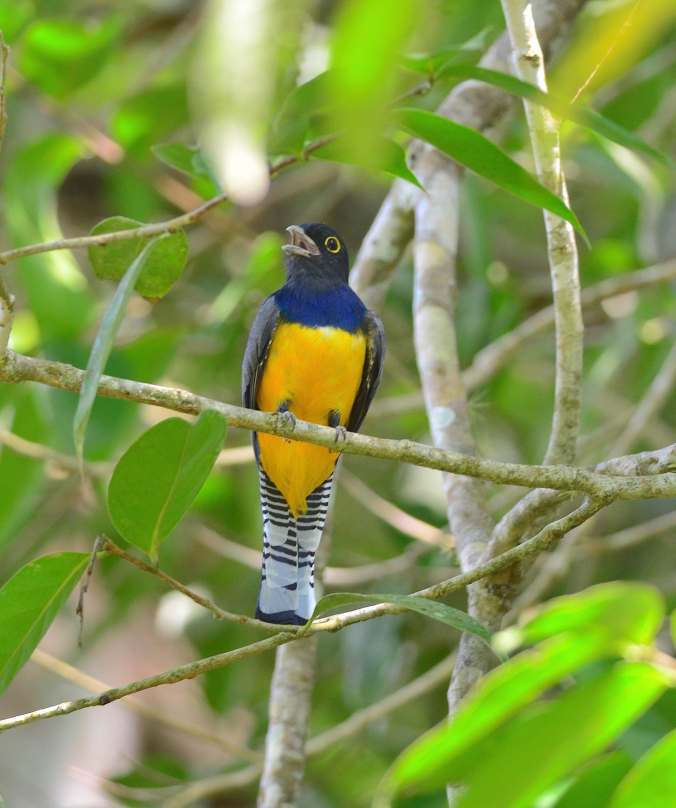
male – Gallon Jug Estate, Belize

Five Flower Lake. Source: thousandwonders.net
Located in the northern part of Sichuan province in China, Jiuzhaigou National Park is comprised of a speckling of multi-colored lakes surrounded by deep woodlands and impressive conic waterfalls in between precipitous mountains. Given the high altitude of the jagged valley, 4,800 meters, the landscape has a range of diverse forest ecosystems over the 300 square km and half of which is virgin forest. About 140 bird species inhabit the valley as well as a number of endangered plant and animal species, including the giant panda, the Sichuan takin, and the golden snub-nosed monkey. Continue reading

This July 15, 2016, file photo, U.S. The “Moonhouse” in McLoyd Canyon, near Blanding, Utah, is shown during U.S. Interior Secretary Sally Jewell tour. Hundreds of people who oppose the proposed Bears Ears National Monument in southeastern Utah showed up at Senate field hearing Wednesday, July 27, 2016, in Blanding on the polarizing topic. The meeting comes just weeks after Jewell visited the area and hosted a public town hall to hear from people from both sides. (AP Photo/Rick Bowmer)
The Atlantic has another story we appreciate today, besides this one. Whether Utah wants it or not, the designation sounds appropriate, and we appreciate the creative efforts of the President of the USA to dust off the Antiquities Act for this purpose:
…1.9 million acres in southeast Utah that President Obama is pondering designating a national monument. The “ears” in question are twin buttes hovering over the surrounding San Juan County, a sprawling stretch of wilderness that now finds itself at the white-hot center of a brawl over public-land management, presidential authority, and the 110-year-old Antiquities Act. Continue reading

Aerial view of the Elk River Wind Project near the small town of Beaumont, in the southern Flint Hills region of Kansas. This 150 MW wind farm came on-line in December 2005. The one hundred 1.5 MW wind turbines are located several miles South of Beaumont. © Jim Richardson via Cool Green Science
As the human population around the world grows, demand for food and energy will increase. Land conversion will become more and more rampant as countries grow crowded for space – any unprotected forests are sure to be felled to make way for people, and if not people, then their cows/crops, and if not that, then their fossil fuel wells. That’s a pretty dire picture, but there are always measures that can be taken to try limiting the development of land for new energy production, in an effort to slow the loss of nature and habitat for wildlife. A new article in the peer-reviewed journal PLOS ONE claims that demand for energy will be the largest driver of land conversion, at least in the US.
The main solutions that the researchers offer to mitigate “energy sprawl” are “Improved siting, energy conservation, and more end-use energy production like rooftop solar.” according to lead author Anne Trainor. That way, energy production will have a lower carbon footprint and less impact on natural areas as well. My main takeaway from Trainor’s thoughts on her paper, which Cara Byington covered for Cool Green Science, is that, “If you’re saving energy, you’re saving land.” Continue reading
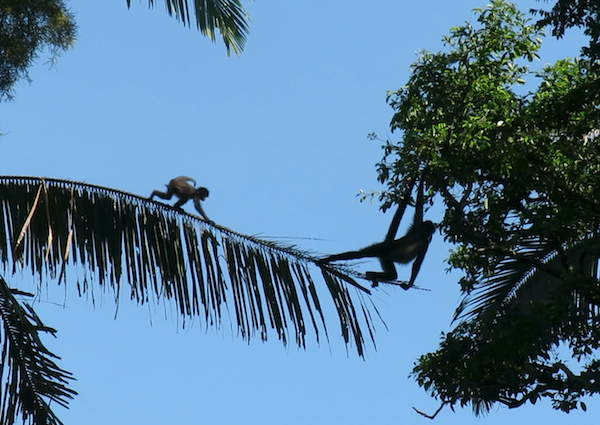
Photo by Seth Inman
Spider monkey encounters are commonplace at Chan Chich Lodge. Whether it be during an early morning bird walk or a late afternoon read on the porch futon, spider monkeys will likely make their swinging appearance from the tree top branches at some point during the day. They are curious, but daring creatures that will have no shame in shaking up a couple of branches above your head and letting fruits fall on you if they feel threatened (an inexplicable reaction in my mind when I humbly walk through the trails hoping to catch sight of a Tody Motmot).
Having been in Belize for over a month, I have several memorable anecdotes to share about spider monkeys, but I will share two that I believe encapsulate the magnificence of these intelligent creatures.

Genetically modified mosquitoes could be the solution to Hawaii’s quickly disappearing avian population, including the island’s famous honeycreepers. PHOTOGRAPH BY RESOURCE HAWAII / ALAMY
Michael Specter writes frequently (but not exclusively) about frighteningly unpleasant, sometimes devastatingly horrible topics with grace not often found in technically rigorous writing. Here, in a short post, he addresses the prospects of a technology many rightly fear and its potential to address many rightly feared environmental (the one in the title below obviously catches our attention) and health challenges:
COULD GENETICALLY MODIFIED MOSQUITOES SAVE HAWAII’S ENDANGERED BIRDS?
Every four years, thousands of environmentalists gather at the World Conservation Congress to assess the state of the planet, and to consider what might be done to protect it. Continue reading

If you happen to be (or work) in Cincinnati, you will likely notice that the city is setting precedent as one of the “greenest,” most innovative cities in the US. According to an article published on Triple Pundit, the city is one of the fastest growing centers for technology innovation and it is employing that expansion to propel its 60 sustainability initiatives as outlined in the Green Cincinnati Plan, which covers a whole spectrum of topics from renewable energy, to transportation, to food waste.
“In addition to benefiting the environment, our initiatives must make economic sense (save money, create jobs) and improve quality of life for residents (improve public health, mobility, connectedness)” explained Ollie Kroner, the Sustainability Coordinator for the City of Cincinnati.
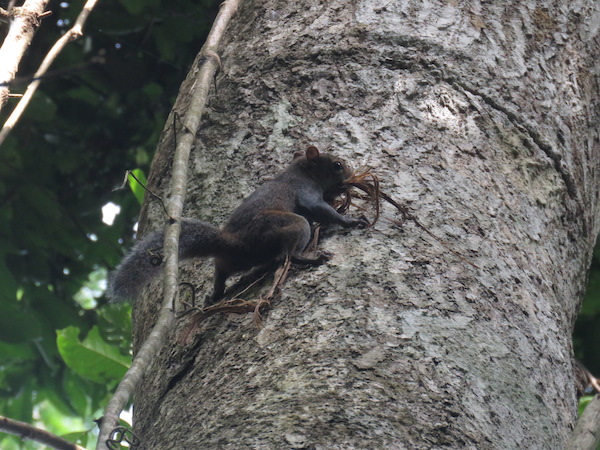
Unfortunately, we haven’t seen anything as exciting as a jaguar recently, but morning walks at the Lodge have been fruitful nonetheless. Mostly I look for birds, but any mammal spotted is one worth seeing – even a squirrel, given that the most common species here is one only found in Central America. I’m most used to the Eastern Gray Squirrel of the United States, as well as the smaller Variegated Squirrel of Costa Rica’s Central Valley and the cute Red-tailed Squirrel in the volcano regions. Here at Chan Chich, the Deppe’s Squirrel is a dark brown with frosted gray on the tail, and it is much more timid than the acclimatized suburban rodents of the East Coast in the US.

The Clear Orb is a proposed glass desalination dome 40 meters in diameter, lined with solar cells to generate power to pump seawater. Inside the orb, the sun’s heat would distill the saltwater through evaporation and condensation. The project could generate 3,820 megawatt hours of electricity and 2.2m liters of fresh water a year. The underbelly of the orb is covered in fins that can turn wave action into electricity. Artists: Jaesik Lim, Ahyoung Lee, Jaeyeol Kim, Taegu Lim from Seoul, South Korea.
Photograph: Land Art Generator Initiative
In recent months we’ve seen some interesting competitions blending technology with art and aiming to improve the world in some way, like lionfish hunting, wildlife crime controlling, and milk tea brewing. But a biennial public art contest organized by the Land Art Generator Initiative, featured last week in The Guardian, might be the most impactful in terms of scale and long-term inspiration – although the anti-poaching stuff is pretty good too. Alison Moodie writes (and make sure to follow her first link!):
These ideas illustrate the possibility of marrying aesthetics with renewable energy and water technology and educate the public about the challenges of addressing climate change and feeding a growing population.

Protesters demonstrate against the Energy Transfer Partners’ Dakota Access oil pipeline near the Standing Rock Sioux reservation in Cannon Ball, North Dakota, U.S. September 9, 2016. REUTERS/Andrew Cullen
We are happy that the trouble-maker who brought this to our attention, and those pictured above are heard by the Trouble-Maker-In-Chief of the USA (who we hope uses his remaining four months in that office to similar good effect):
The Obama Administration Temporarily Blocks the Dakota Access Pipeline
The surprise move came after a federal judge declined to stop the 1,100-mile fossil fuel project’s construction.
The Standing Rock Sioux Tribe and the hundreds of Native protestors who have joined them in rural North Dakota won a huge but provisional victory in their quest to stop the Dakota Access pipeline, as the U.S. government announced late on Friday afternoon that it was voluntarily halting work on the project. Continue reading
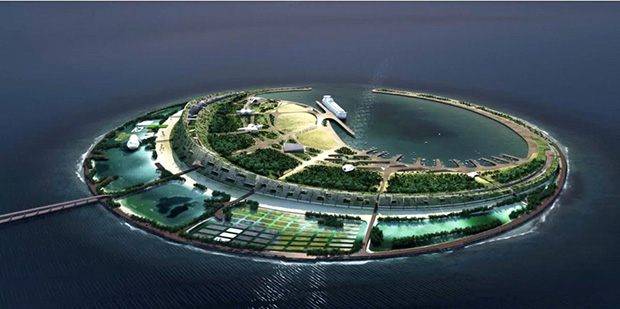
We do not need to love everything everafter created by architects whose earlier work we have been in love with; but we at least take a look:
High Line architects create volcano-style resort
Diller Scofidio + Renfro beat Foster + Partners in a competition to design a new international resort in China
Could Hainan, China’s smallest and most southerly province, become a new international tourist destination? That’s certainly the Chinese government’s ambition, which hopes to draw in thousands of international leisure travellers to this island province, 800 miles southwest of Hong Kong, by 2020.
Hainan Airlines Group announced the winner of its competition to design a 250-hectare resort which will be built on an artificial island in Haikou Bay, just off the coast of Hainan’s capital, Haikou. Continue reading
Outskirts of Bangalore, Karnataka
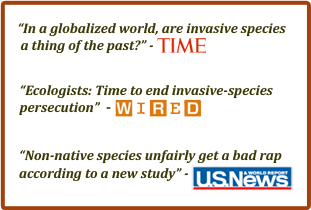
Headlines from news sources responding to a pair of scientific articles from 2013 that highlighted the importance of scale in assessing the effect of invasive species. Photo by Diana Lutz.
Five years ago this month, I wrote in a post titled Preventing Invasive Fire that, “Absolute regulation of invasive species is not possible. We cannot search every inch of soil that enters a country for microorganisms, dormant insect eggs, or plant seeds. But controls must be imposed, and more severe ones than currently in place. The intensely focused damage (biodiversity loss) that a male and female zebra mussel, emerald ash borer beetle, Asian carp, or fire ant can have on a vulnerable ecosystem is much greater than the thinned-out costs of higher taxes or more stringent customs inspections.”
The following year, I discussed the merits of Integrated Pest Management in helping eradicate or at least control pests, which are sometimes introduced from other countries. Reading today about a plan in North Carolina to use beetles as a predator of the hemlock woody adelgid, an aphid-like invasive species from east Asia, I am reminded of those two posts from the past, inspired by Cornell courses in environmental governance and entomology.
 Organikos