Protecting Your Skin but Damaging the Reefs

55689f39e6421d77d1ba9021e7b43052

Image via scidev.net

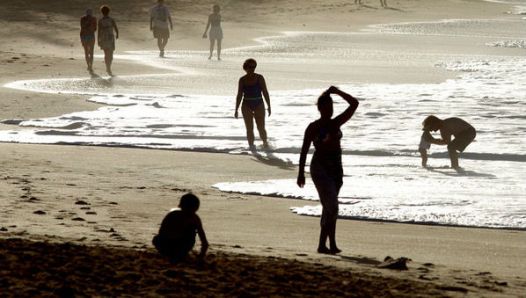
Sunscreen helps protect us from harmful sun rays, especially during the summer months when we habitually frequent the beach and enjoy the undulating caress of rolling waves. What we don’t usually take into account, however, is the impact that our “protective” sunscreen has on marine life, specifically coral reefs. Studies have shown that ingredients in sunscreen, such as oxybenzone for example,  leach the coral of its nutrients and bleach it white. This not only kills the coral but also disrupts the development of fish and other wildlife.

Chemical compounds in sunscreen lotions cause irreparable damage to reefs, which are crucial to the livelihoods of 500 million people in the tropics, scientist and policymakers said at the IUCN World Conservation Congress on 3 September. Hawaii is leading a legislative effort to ban the use of sunscreen that contains oxybenzone or similar harmful agents at its beaches. Continue reading

Mislabeling Fish Products

07fraud-master768

Source: New York Times

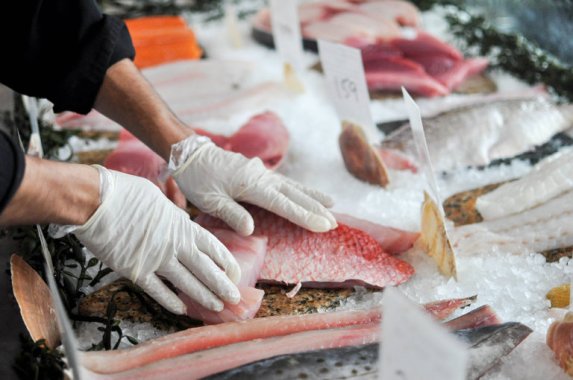
Mislabeling fish products, as well as others food products, is a global issue that researchers have struggled to accurately gauge the severity of. It has also been tough to ascertain if efforts to control the fraudulent practice are making progress. According to a report on seafood fraud released on Wednesday, 1 in 5 seafood samples tested worldwide turn out to be completely different from what the menu or packaging says. The ocean conservation group that created the report, Oceana, tested 25,000 seafood samples, and of those, 20 percent were incorrectly labeled.

“It is likely that the average consumer has eaten mislabeled fish for sure,” said Beth Lowell, the senior campaign director for Oceana and an author of the paper. “You’re getting ripped off, while you enjoyed your meal you’re paying a high price for a low fish.”

Continue reading

Biofuels: Worse than Petroleum-based?

Image via thehindubusinessline.com

Image via thehindubusinessline.com

A few years ago, I wrote about two cases of industrialized biofuel production, based on corn and sugarcane in the US and Brazil, respectively. Both of these sources are first-generation biofuels, and there is no doubt that second- and third-generation sources, which often don’t require land conversion or threaten food security, are better alternatives to petroleum-based fuels. A new study funded by the American Petroleum Institute and carried out by the University of Michigan Energy Institute has created headlines declaring biofuels to be non-carbon neutral, but many find the research to be too limited. Prachi Patel reports:

Biofuels have for years divided energy experts and environmentalists. Critics say that they displace farmland and cause deforestation. Proponents argue they are a green, low-carbon alternative to petroleum-based fuels.

A new analysis adds fuel to the incendiary topic. Researchers report in the journal Climatic Change that biofuels might harm the climate more than petroleum. Substituting petroleum fuels with biofuels in American vehicles has led to an increase in net carbon dioxide emissions over the eight years covered by their study, they calculate.

Continue reading

Yosemite, Bigger & Better

ap_16251730452359_custom-c087184ae5c62fc4faaf27c7f89712aed7b80839-s1400-c85

A photo provided by The Trust for Public Land shows Ackerson Meadow in Yosemite National Park, Calif. Visitors to the park now have more room to explore nature with the announcement on Wednesday that the park’s western boundary has expanded to include Ackerson Meadow, 400 acres of tree-covered Sierra Nevada foothills, grassland and a creek that flows into the Tuolumne River. Robb Hirsch/AP

The full story here. All we can say is a three-letter word (no spoiler, so after the jump):

Yosemite National Park is growing by 400 acres — the largest expansion to the park since 1949.

NPR’s Nathan Rott reports that the new addition to the park, a stretch of land along the western boundary of Yosemite, has historically been used for logging and cattle grazing.

The Trust for Public Land, a conservation group, bought the land from private owners for $2.3 million and donated it to expand the park. The purchase was supported by the Yosemite Conservancy, National Park Trust and American Rivers, as well as private donors.

“The area includes a sprawling grassy meadow, wetlands and rolling hills dotted with tall pine trees, and is known to be home to at least two endangered species,” Nathan reports. Continue reading

From A Favorite Trouble-Maker

591.jpg

‘We see the effects of warming on land: the floods, the droughts, the refugees headed towards temporary safety.’ Photograph: Malcolm Francis/NIWA

Please click here so that credit goes to the source for this editorial by one of the thinkers we regularly turn to, one of our favorite sources of reminder to take action:

So, just as a refresher, it’s always good to remember that we live on an ocean planet. Most of the Earth’s surface is salt water, studded with the large islands we call continents.

It’s worth recalling this small fact – which can slip our minds, since we humans congregate on the patches of dry ground – because new data shows just how profoundly we’re messing with those seven seas. The International Union for the Conservation of Nature has published an extensive study concluding that the runaway heating of the oceans is “the greatest hidden challenge of our generation”. Continue reading

Keeping Shakespeare in Mind

Illustration by Mathew McFarren

Illustration by Mathew McFarren

Quite a few of our team can attest to the power of a liberal arts education, especially when put in such a joyful context.

Scott L. Newstok’s convocation speech to the Rhodes College class of 2020 embraces this joy, adding the cheeky tweak of asking the incoming class to approach their college experience in the “spirit of the 16th century”.

Building a bridge to the 16th century must seem like a perverse prescription for today’s ills. I’m the first to admit that English Renaissance pedagogy was rigid and rightly mocked for its domineering pedants. Few of you would be eager to wake up before 6 a.m. to say mandatory prayers, or to be lashed for tardiness, much less translate Latin for hours on end every day of the week. Could there be a system more antithetical to our own contemporary ideals of student-centered, present-focused, and career-oriented education?

Yet this system somehow managed to nurture world-shifting thinkers, including those who launched the Scientific Revolution. This education fostered some of the very habits of mind endorsed by both the National Education Association and the Partnership for 21st Century Learning: critical thinking; clear communication; collaboration; and creativity. (To these “4Cs,” I would add “curiosity.”) Given that your own education has fallen far short of those laudable goals, I urge you to reconsider Shakespeare’s intellectual formation: that is, not what he purportedly thought — about law or love or leadership — but how he thought. An apparently rigid educational system could, paradoxically, induce liberated thinking.

“Take advantage of the autonomy and opportunities that college permits by approaching it in the spirit of the 16th century. You’ll become capable of a level of precision, inventiveness, and empathy worthy to be called Shakespearean.”
So how can you think like Shakespeare?

Continue reading

Pandas & Baboo

dsc01051_zpsamb3vgjs

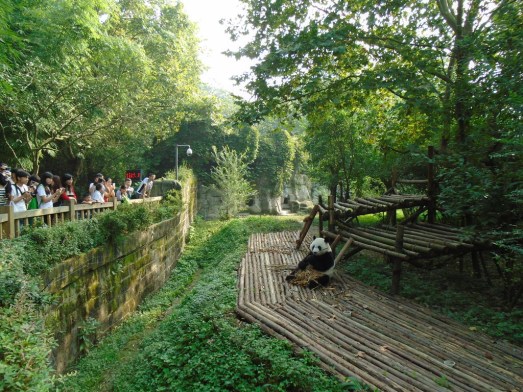
Giant panda feasting on some bamboo at Chengdu Research Base.

Reading this morning’s news about the giant panda being moved from “endangered” to “vulnerable” by the International Union for Conservation of Nature, reminds me of my small stuffed (artificial) panda bear called Baboo and the backstory to getting him.

During my semester abroad in China two years ago, I made a trip to Sichuan province and visited the Chengdu Research Base of Giant Panda Breeding. I had never seen a panda before and the opportunity to watch many of them (not only the giant panda, but also the red panda) was an opportunity I did not want to miss.

Continue reading

Case for Human Settlement Enhancing Ecosystems

clamshells

Source: conservationmagazine.org

A recent scientific publication in Nature Communications enlightens us to the possibility that human settlement does not always equate to land degradation, and in some cases, improves the local ecology. Here’s the results of the study as shared in Conservation Magazine:

Researchers studied temperate rainforest on Calvert and Hecate islands, off the central coast of British Columbia, Canada. This forest is very wet, receiving an average of 4 meters of rainfall a year, and has acidic, nutrient-poor soils. The dominant tree species is western redcedar (Thuja plicata).

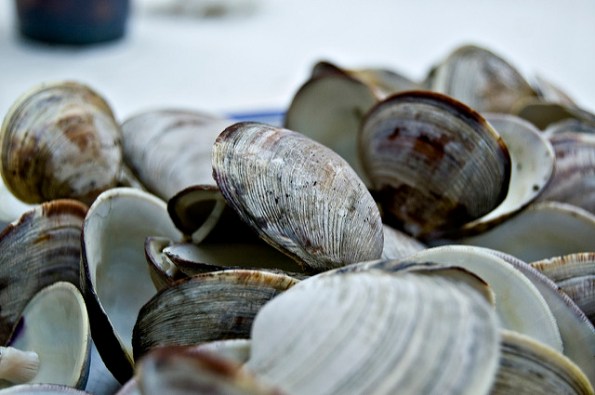
The coastline is also dotted with semi-permanent settlements where First Nations groups, as indigenous people are known in Canada, lived seasonally or year-round. Especially over the past 6,000 years, people intensively harvested shellfish from intertidal areas and built up large shell middens—some up to 5 meters deep—near their settlements.

Continue reading

Cornell University Campus Pursues Geothermal Heating

© Cornell Marketing Group

© Cornell Marketing Group

In 2009, Cornell faculty, staff, and students came together to create a Climate Action Plan that made a goal of making the Ithaca campus carbon neutral by 2035. Since then, gross emissions have already been reduced by about 30% through several measures, such as installing solar farms and ceasing the use of an old coal-powered energy plant. Now, a new initiative to keep the campus warm in winter with a geothermal project called Earth Source Heat might help reduce emissions by another 38%. Syl Kacapyr reports for the Cornell Chronicle:

Cornell is pursuing a project that has the potential to eliminate an estimated 82,000 metric tons of carbon from its annual footprint and establish one of the country’s most advanced geothermal systems to heat the 745-acre Ithaca campus – an effort that could demonstrate a new scalable model for using this sustainable energy source throughout the U.S. and almost anywhere in the world.

Continue reading

British Wildlife Photography Awards

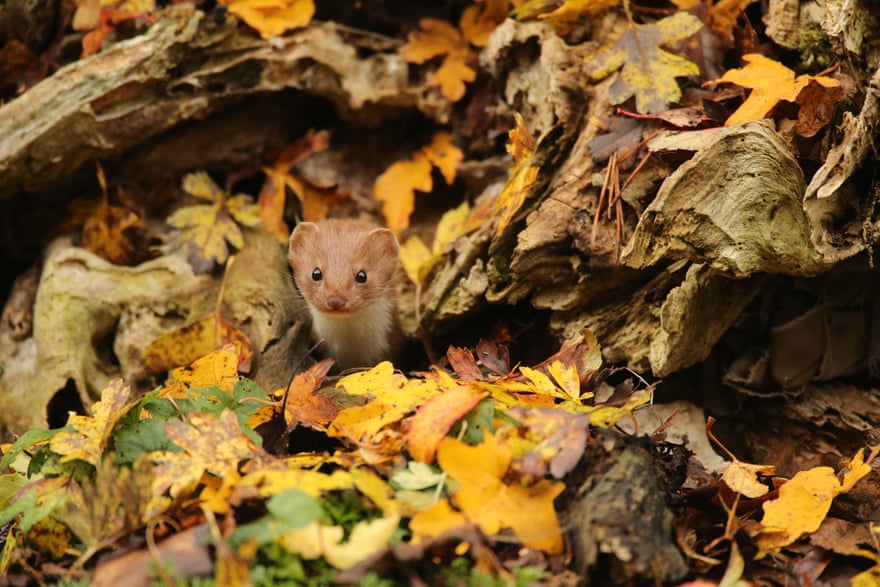
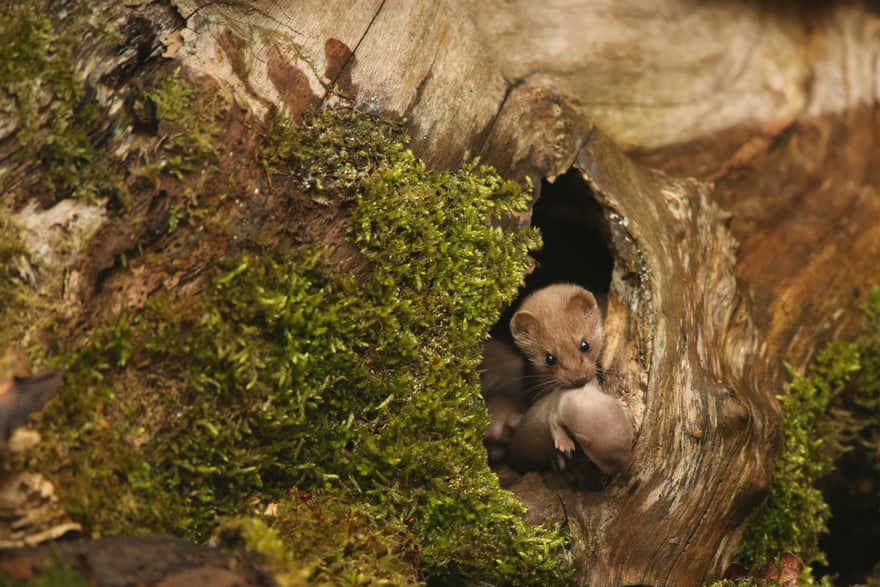
British autumn season winner: Robert E Fuller, ‘Common weasel’, North Yorkshire, England. Photograph: Robert E Fuller/British Wildlife Photography Awards 2016

British autumn season winner: Robert E Fuller, ‘Common weasel’, North Yorkshire, England. Photograph: Robert E Fuller/British Wildlife Photography Awards 2016

We like to feature different nature photography competition winners here, because the audience always wins, as we put it two years ago. This week, The Guardian is featuring a competition that we hadn’t heard of yet: the British Wildlife Photography Awards. This contest has interesting categories, including photos of Britain in its four seasons of spring, summer, autumn, and winter – all of which were won by a photograph of a family of common weasels:

British summer season winner: Robert E Fuller, ‘Common weasel’, North Yorkshire, England. Photograph: Robert E Fuller/British Wildlife Photography Awards 2016

British summer season winner: Robert E Fuller, ‘Common weasel’, North Yorkshire, England. Photograph: Robert E Fuller/British Wildlife Photography Awards 2016

Continue reading

Sanitation’s Reincarnations

Still from video by The New Yorker

Still from video by The New Yorker

Some trash can be found and then turned into art, like the pieces of plastic that were built into sculptures at the National Zoo. Other trash is not necessarily garbage, but merely objects that someone doesn’t have the space or energy to take care of, and that man’s trash can become another man’s treasure. A man who worked for the New York Department of Sanitation for about thirty years spent a good part of his career collecting and curating things people threw away, but which caught his eye as interesting treasures, as David Owen explains:

Saving Treasures from the Trash

A Sanitation worker shows off the notable items he has rescued from curbs and bins over the course of thirty years.

Nelson Molina grew up in a housing project in East Harlem, in an apartment where his mother still lives. “Starting when I was nine years old, in 1962, I had a passion for picking up,” he said recently. “I had, like, a three-block radius. I would look through the garbage and pick up toys that people threw out, and I would fix them. I had two brothers and three sisters, and I was like Santa Claus to them.” Continue reading

An Object Lesson on Tote Bags

We discovered the “essay and book series about the hidden lives of ordinary things” called Object Lessons through The Atlantic a few months ago, when we shared an article on real cheese. Today, I learned an unsettling – and to borrow a phrase – inconvenient truth about tote bags. Pretty much any time I go grocery shopping I use a couple reusable totes, unless I need some plastic shopping bags to replenish my trash-can liner supply, so what the folks at Object Lessons have to say about the issue is very informative about how we need to change the way we look at certain everyday objects:

For at least a few decades, Americans have been drilled in the superiority of tote bags. Reusable bags are good, we’re told, because they’re friendly for the environment. Disposable bags, on the other hand, are dangerous. Municipalities across the country have moved to restrict the consumption of plastic shopping bags to avoid waste. Many businesses have stopped offering plastic sacks, or provide them for a modest but punitive price. Bag-recycling programs have been introduced nationwide.

Continue reading

Regenerative Agriculture Revolution

kempfhero

Source: Modern Farmer

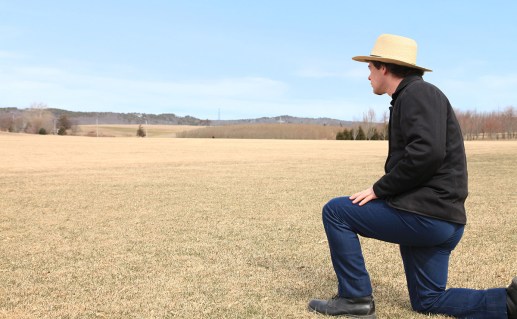
Organic farming is the agricultural “trend” that we keep hearing about for the future, but what about a different type of farming method that is not certified organic but is still environmentally friendly? The following is the story of John Kempf, a young Amish man who embarked on a quest to rescue his family farm from worsening disease and pest problems and from it all, became a staple in the alternative-agriculture lecture circuit and founder of a consulting company, Advancing Eco Agriculture (AEA). Here’s his story as shared on Modern Farmer:

Once he finished school at age 14, Kempf went to work on his family’s fruit and vegetable farm in northeastern Ohio, overseeing irrigation, plant nutrition and herbicide and pesticide applications. In the fields, Kempf used horses instead of a tractor, with a sprayer powered by a small Honda engine.

It was a trying time for the family. Pests and disease were ravaging the crops, and Kempf found himself mired in escalating chemical warfare against them, with little success. Things hit a low point in 2004, when well over half of the Kempfs’ mainstay crops – tomatoes, cucumbers, zucchini and cantaloupes – were lost. With the family staring at an increasingly bleak financial situation, Kempf, then 16, set off on his mission to relearn everything he’d been taught about farming.

Continue reading

Doing More for Protected Lands and Oceans

3500

Photograph: Owen Humphrey’s/PA

Almost fifteen percent of the Earth’s land is enclosed in national parks or other protected areas, which accounts for approximately 20 million sq km. This figure is close to an internationally agreed goal to protect 17 percent of the land surface by 2020. Comparatively, ocean conservation only accounts for 4 percent of total surface of the ocean, covering 15 million sq km. In spite of these statistics – which reflect a positive outcome of the increased attention and importance given to land and ocean conservation – there are concerns over how well these areas are managed and whether they effectively protect endangered species, as Seth wrote a few days ago.

progress report by the UN Environment and the International Union for Conservation of Nature (IUCN) warns that some of the most biodiverse ecosystems are not being protected and that the management of many protected areas is deficient.

Less than 20% of areas considered crucial hubs for species are fully protected, the report states, with countries routinely failing to assess the effectiveness of their national parks nor provide wildlife corridors that allow animals to roam between protected areas.

Continue reading

Our Attention to Plants (or Lack Thereof)

landscape-1439490128-plants

Compared to “juicy” pop culture news, nature-lovers and conservationists constantly have to fight for people’s attention on subjects like endangered animals or protected wildlife. However, the struggle for plant devotees to garner people’s interest on green eukaryotes is much more difficult, except maybe for some garden-popular flowers and vegetables, and perhaps a few trees, but otherwise plants go unnoticed.

Conservation efforts are devoted overwhelmingly to animals; compared to the hundreds of plant species easily found but mostly overlooked in our environs. There’s even a formal name for this: plant blindness. And in a study published in the journal Conservation Biology, biologists Kathryn Williams and Mung Balding of Australia’s University of Melbourne ask whether it’s inevitable: Are people hard-wired by evolution to ignore the vegetal world? Can something be done about it?

“We are absolutely dependent on plants for life and health, but so often they fade into the background and miss out in the direct actions we take to protect our planet,” says Williams. “I wonder how the world would look if more people, instead of seeing a wall of green, saw individual plants as potential medicine, a source of food, or a loved part of their community.”

Continue reading

Measuring Natural Gas Emissions

7686687614_9cb11eafc2_z

A natural gas well in Hamilton, Pennsylvania. Source: triplepundit.com

Last spring the U.S. Energy Information Agency (EIA) predicted that natural gas would generate more power in 2016 than coal, and now that natural gas has taken that lead, it is under close scrutiny as a “cleaner” alternative to coal. From the EIA’s latest Short-Term Energy Outlook, natural gas also beat out coal for carbon dioxide emissions from power generation.

“Energy-associated carbon dioxide (CO2) emissions from natural gas are expected to surpass those from coal for the first time since 1972. Even though natural gas is less carbon-intensive than coal, increases in natural gas consumption and decreases in coal consumption in the past decade have resulted in natural gas-related CO2 emissions surpassing those from coal.”

And the agency isn’t talking in fractions of a percentage point, either. EIA puts the emissions figure for natural gas at 10 percent greater than coal for 2016.

Continue reading