Russkaya Arktika National Park Expanded

Big sky can be seen above Tegetthoff Island.
Photograph by Cory Richards, National Geographic Creative

We have lots of land conservation news going on right now (just scroll down), which can only be a good thing, and is perfect timing given the US National Park Service centennial. Jocelyn will be posting a close-up feature of a park later today, but first I invite you to imagine a new arms race between Russia and the United States – not of weapons, but rather in the sphere of conservation through protected national park expansion. President Obama just quadrupled the area of marine national monument Papahānaumokuākea, and now Prime Minister Dmitry Medvedev of Russia expanded the island region of Russian Arctic National Park by over eighty percent. In this case, I say, the more friendly competition the better! Brian Howard reports on the Russian expansion:

Made up of more than 190 islands, Franz Josef Land is a mostly uninhabited area that is encased in sea ice for much of the year. Yet the rocky, glaciated islands are home to stunning biodiversity. The newly expanded park will protect habitat for such species as the Atlantic walrus, bowhead whale, polar bear, narwhal, and white gull.

Continue reading

Novel and Efficient Mosquito Control

The predator cues emitted by the Backswimmer, a mosquito larvae predator, trigger a stress response in the mosquitoes, which impairs their immune system.
Photo © E. Van Herk

Two weeks ago we saw a chemically-baited, solar-powered trap for mosquitos implemented in Kenya. New research – conducted only in the laboratory so far – has shown the potential for another chemical cocktail to be used in a very different way for mosquito control, hopefully in a manner that can reduce quantities of pesticide applied in eradication efforts. From the EurekAlert press release by the Belgian University of Leuven:

Existing strategies for mosquito control often involve the use of pesticides that harm the environment. These pesticides are increasingly less effective as well, as insects can become resistant to existing products relatively quickly.

Biopesticides are a possible alternative. The most commonly used biological pesticide is the Bacillus thuringiensis israelensis (Bti) bacteria. Unfortunately, mosquitoes are already developing a resistance to this pesticide as well. This means we have to keep increasing the dose of Bti to kill mosquitoes, so that this biological substance, too, is beginning to harm the environment.

Continue reading

Renewable Energy = Renewed Job Market

Workers with Bella Energy install solar panels on a rooftop in Boulder on July 25, 2014. Photo © Denver Post

The energy that is generated from coal needs to keep decreasing relative to alternative energy sources if we want to reduce the release of pollutants and greenhouse gases into the atmosphere and rely on renewables instead. But for many people working in the coal industry, this change represents unemployment and poverty. In Colorado, a plan to train coal workers for solar energy jobs may be able to ameliorate the situation. Lea Terhune reports for Share America:

What does greater use of green energy mean for workers in more traditional energy sectors? A Colorado initiative may have the answer: put the workers where the jobs are. Consider the findings of Michigan Technological University professor Joshua M. Pearce and associates: There are nearly 209,000 solar workers in the United States, compared to about 150,000 remaining jobs in the coal industry. Hence Colorado’s plan: train unemployed coal workers to install solar panels.

“Our results show that there is a wide variety of employment opportunities in the solar industry, and that the annual pay is attractive at all levels of education,” Pearce writes in the Harvard Business Review.

Continue reading

A Milky Package

milkplastic

Source: American Chemical Society

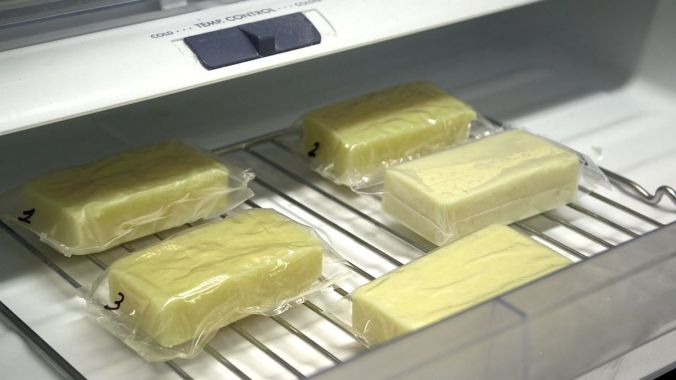
On numerous occasions we have written about the need to reduce consumption of plastics and the need for alternative, sustainable food packaging. Fortunately, researchers have developed a food packaging that is much better at keeping food fresh than regular plastics – it’s also biodegradable and edible. Yes, you read correctly, edible! This new packaging is made of casein from milk proteins, which are clear and fairly pliable, and has little flavor. This material has other unique applications  in addition to being used as plastic pouches and cling-style wrap. Continue reading

Podcast: The Magic of Salt

Yuya Shino / Reuters via The Atlantic

Almost exactly five years ago, I quoted Mark Kurlansky’s book focused on the history of an Atlantic fish species, Cod. I knew he’d written another book on the history of salt, but haven’t read it yet. With a podcast episode from Gastropod that was featured in The Atlantic recently, I got a nice summary of the subject and learned even more about the current issues revolving around sodium.

Salt is a magical substance. It reduces bitterness, enhances sweetness, boosts flavor, and preserves perishable foods. Without it, we would die: The human body can’t make sodium, but our nerves and muscles don’t work without it. It was considered rare until quite recently, so it’s hardly surprising that, throughout history, salt has been the engine behind empires and revolutions. Today, there’s a new battle in the salt wars, between those who think that we eat too much of it and it’s killing us—and those who think most of us are just fine. Join us for a serving of salt, seasoned with science, history, and a little politics.

Continue reading

Papahānaumokuākea Quadrupled

Humuhumunukunukuāpua`a, the state fish of Hawaii (reef trigger fish) via statesymbolsusa.org

Hot on the heels of the creation of the new Katahdin Woods and Waters National Monument comes the expansion of Papahānaumokuākea Marine National Monument, which was designated by President George W. Bush in 2006 and became a World Heritage site four years later. This growth in the protected area quadruples the conservation monument’s size to 582,578 square miles and has been accomplished under President Barack Obama’s use of the Antiquities Act. Oliver Milman reports:

The monument, which is now double the size of Texas, stretches outward from the north-western Hawaiian islands and includes Midway Atoll, famed for its former military base and eponymous battle that was crucial in the US defeat of Japan in the second world war. The protected area is now larger than the previous largest marine reserve, situated around the Pitcairn Islands and announced by the UK last year.

Continue reading

A New National Monument

gettyimages-454072594_custom-c478935973f2d700617482299bf825218fd6b3e6-s800-c85

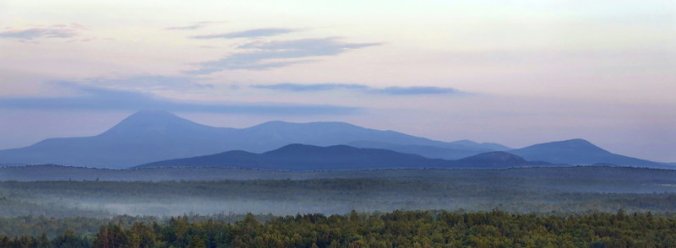
Early morning haze colors from Mount Katahdin and its surrounding mountains. All images from: npr.org

Just in time for the U.S. National Park system centennial, a total of 87,500 acres of mountains, forests and water were donated yesterday by the co-founder of Burt’s Bees, Roxanne Quimby, and then declared a national monument. President Obama announced the creation of the Katahdin Woods and Waters National Monument, a land that used to feed paper mills and is now permanently protected from lumber extraction. The monument will be managed by the National Park Service and allow recreation while protecting resources.

The designation of the woods as protected territory has been in the works for years — and has been controversial among locals, who worried about federal oversight of lands that used to be central to the regional economy.

Continue reading

Polled Brits Support EU’s Strong Wildlife Protection

We featured an opinion editorial from Friends of the Earth CEO Craig Bennett in The Guardian about Brexit’s effect on the environment exactly two months ago, and now the same publication is sharing pretty good news from a YouGov opinion poll in the UK whose results were released today. Apparently, a significant majority of Brits who were polled are in favor of laws protecting wildlife and their habitat that are at least as strong as the EU regulations already in place, but which wouldn’t apply post-Brexit. Some even support stronger environmental protection in the farming industry than current EU Common Agricultural Policy, especially wanting a ban in neonicotinoid pesticides. Damian Carrington reports:

Much of the protection of British wildlife and the environment stems from EU’s birds and habitat directives, but these will have to be replaced when the UK leaves the bloc. Farming minister George Eustice campaigned for the UK to leave the EU and told the Guardian in May that these directives were “spirit crushing” and “would go”.

Continue reading

Elephant Footprint Land

We know how much an Asian elephant eats, but until today we didn’t know the biodiversity footprint of African elephants – that is, the literal biodiversity in the footprints left by these massive animals as they walk around, hopefully avoiding beehives. John Platt reports for Scientific American on the ecosystem engineers’ effects from walking:

When you weigh upwards of 6,000 kilograms, you tend to leave a trace of yourself wherever you walk. That’s definitely the case with African elephants (Loxodonta africana), which, according to new research, is actually a boon for dozens of other, much tinier, species.

As discussed in a paper published this week in the African Journal of Ecology, elephant feet play an important ecological role in Uganda, and probably in other countries. As elephants walk through the forest, they leave deep footprints behind them. These footprints then fill up with water, creating little foot-shaped microhabitats for at least 61 different microinvertebrate species from nine different orders.

Continue reading

eBird Workshops in Guatemala

First of all I would like to give to you a brief introduction of myself since it’s the very first time I have the great opportunity to write a post here – by the way thanks Amie, Crist and Seth Inman for the invitation.

I am a 20 year old birder from Guatemala and I have been in touch with nature and birds since I was a little kid. I remember being carried by my dad on his back and going out to the field to go birding. He needed to take care of me but he didn’t want to just stay at home wasting valuable hawk migration time, so he took me with him no matter what. I remember I enjoyed it A LOT, not only because I liked being carried, but the memories of the field guide open in my dad’s hands and his binoculars hanging by his neck and his trying to point out the bird and later showing it to me in the book are things I will never forget. Of course I was too young to actually spot the bird and appreciate it in the field but I do remember looking at the birds carefully in the field guide. A few years later I was so excited when he gave to me my first pair of binoculars as a Christmas present! I felt like a pro ornithologist (although I didn’t know that word yet). That same year he bought his first spotting scope so when I wasn’t able to see the bird and observe it through my binoculars myself he would find it on the scope so I could enjoy the beauty, behavior, different plumages – everything of the birds. I immediately fell in love with birding and all of what biding had to offer to me. Continue reading

The Legacy of U.S. National Park System

glaciernationalpark_davesizer800

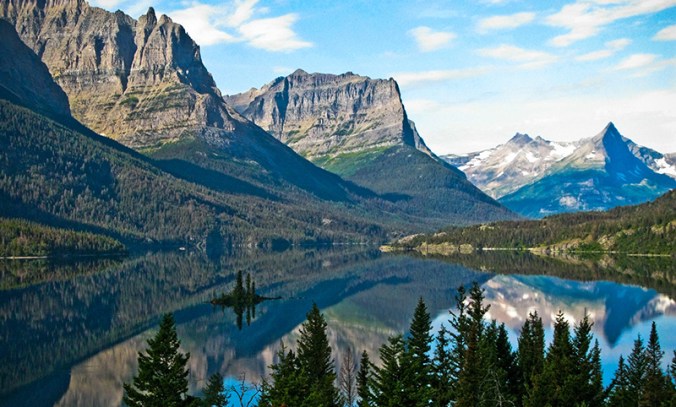
Saint Mary Lake in Glacier National Park, Montana. All images from: Yale News

Thanks to Yale News for a wonderful commemoration to the history and value to the scientific community of the U.S. National Park system – visit our National Parks category page for over a hundred posts on the subject – as we celebrate its centennial today (US time, it’s still August 25th):

As the United States marks the centennial of the National Park Service, which was officially established 100 years ago this week, the nation’s parks are being widely celebrated for their natural grandeur and vistas, their wildlife, and their abundant recreational opportunities.

Far less appreciated though is the critical role that the U.S.’s 59 national parks and hundreds of other park service units play in scientific research, providing unspoiled, protected, and accessible landscapes that host research that can be done few other places. In fact, with a long history of data and field study on everything from wildlife to wildfires, the national parks offer scientists an incredibly rare living outdoor lab. And the high profile of the parks in the American imagination often provides an avenue for conveying that research to the public.

Continue reading

Addressing and Absorbing Oil Spills

salvinia

Water lettuce and aquatic fern are misnomers for the type of task these plants might be used for in the near future. German researchers recently discovered that Salvinia molesta, an aquatic fern, and Pistia stratiotes, a type of water lettuce, have a specialized leaf anatomy that not only repels water and traps air, but also traps a lot of oil. The leaves of these plants are covered with tiny, hairlike structures called trichomes that allow the plant to float on the water surface and when dried, absorb more oil than two commercial oil absorbents used for oil spill cleanup, Duerex Pure and Öl-Ex.

[The] existing methods of dealing with oil spills all have significant drawbacks. Chemical dispersants and burning can spread toxins around, while environmentally friendly materials like sawdust and wheat straw absorb water in addition to oil, making cleanup messy and inefficient.

Continue reading

“Bye Bye” to Dolphin Selfies

5400

Dolphins are one of the most adored aquatic mammals due to their charismatic and friendly nature. In Hawaii, spinner dolphins attract thousands of tourists to the island every year, but the lack of regulation on human interaction with these social creatures is changing their behavior and disrupting their sleep cycle:

Spinner dolphins are nocturnal, foraging in the deep ocean at night and returning to shallow waters to rest during the day, said Susan Pultz, the chief of conservation planning and rule-making for the National Marine Fisheries Service.

“When you get the numbers [of tourists] we’re seeing, they’re constantly disturbed all day long. That’s their resting period,” said Pultz.

“As we all know, if you don’t rest day after day after day, it does affect your fitness.”

Continue reading

America’s Only Full-time Tea Taster

The “Green Giant” mechanical tea harvester, one of only a few in the world, does the manual work of 500 people. Wayne’s View Photography/Courtesy of Charleston Tea Plantation

versus

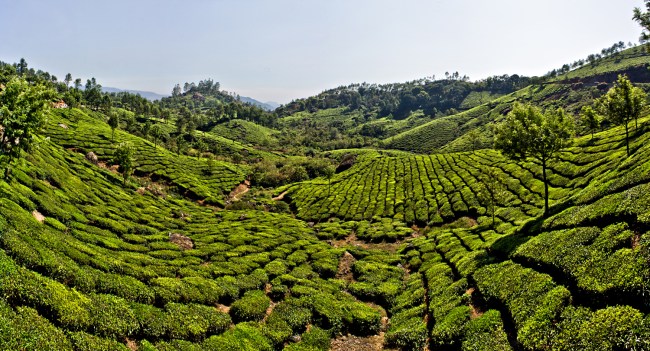
A Munnar tea estate in Kerala, India, where tea leaves are picked by hand. Photo by Milo Inman.

The two photos and their implications offer a pretty big contrast, but what they have in common is Camellia sinensis, the tea plant.  Continue reading

Some Sea Snakes Lead Dehydrated Lives

Photo © NatGeo

Sea snakes are interesting creatures, and we’ve written about them before, both as heat-stealers in an article on kleptothermy and as victims of uncontrolled fishing for “medicinal” purposes in the Gulf of Thailand. Science writer Ed Yong discusses one particular species of sea snake that lives so permanently in the Pacific ocean that it barely gets to drink fresh water, apart from what it skims off the ocean surface during rains:

If someone asked you to think about a global animal that has spread over much of the earth, you’ll probably think of something like the brown rat, the rock pigeon, or us humans. You probably won’t think about the yellow-bellied sea snake.

It’s a striking animal—two to three feet in length, with a black back and yellow belly. And it is extraordinarily far-ranging for a snake. It lives throughout the Pacific Ocean, which is already more area than all the continents combined, and the Indian Ocean too. Of all the tetrapods—the animal group that includes mammals, birds, reptiles, and amphibians—this little-known snake is one of the most abundant and widespread.

Continue reading

Another Night Excursion at Chan Chich

1

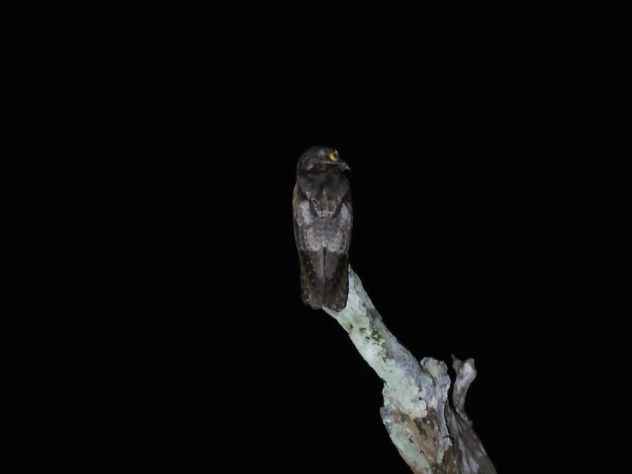
A Northern Potoo on a tall exposed limb seen during the outing

A few nights ago we went out on another night drive, to look for nocturnal animals. Seeing wildlife in the dark is always a challenge, and one has to be prepared to come back relatively empty-handed, especially in comparison to a lengthy jaguar sighting. This second time around, we saw fewer birds and just one mammal apart from deer: a young gray fox, but it was still a very pleasant ride through the forest at night, feeling the cool breeze and looking up to see the stars.

Continue reading

Rhode Island’s Offshore Wind Turbines Completed

One of five turbines that make up the Block Island Wind Farm, the first offshore wind farm in the United States, off the Rhode Island coast. Credit Kayana Szymczak for The New York Times

Less than a month ago we shared the story in WIRED about the Block Island Deepwater Wind farm, and now, construction is finished! That may seem like trivial news to Europeans with coastline who have been enjoying offshore wind power for years now, but given that this is the first project of its kind in the US, it’s an exciting sign of progress to come in renewables for a nation with one of the largest carbon footprints. Justin Gillis reports for the New York Times:

BLOCK ISLAND, R.I. — The towering machines stand a few miles from shore, in a precise line across the seafloor, as rigid in the ocean breeze as sailors reporting for duty.

The blades are locked in place for now, but sometime in October, they will be turned loose to capture the power of the wind. And then, after weeks of testing and fine-tuning, America’s first offshore wind farm will begin pumping power into the New England electric grid.

Continue reading