“Bye Bye” to Dolphin Selfies

5400

Dolphins are one of the most adored aquatic mammals due to their charismatic and friendly nature. In Hawaii, spinner dolphins attract thousands of tourists to the island every year, but the lack of regulation on human interaction with these social creatures is changing their behavior and disrupting their sleep cycle:

Spinner dolphins are nocturnal, foraging in the deep ocean at night and returning to shallow waters to rest during the day, said Susan Pultz, the chief of conservation planning and rule-making for the National Marine Fisheries Service.

“When you get the numbers [of tourists] we’re seeing, they’re constantly disturbed all day long. That’s their resting period,” said Pultz.

“As we all know, if you don’t rest day after day after day, it does affect your fitness.”

Continue reading

America’s Only Full-time Tea Taster

The “Green Giant” mechanical tea harvester, one of only a few in the world, does the manual work of 500 people. Wayne’s View Photography/Courtesy of Charleston Tea Plantation

versus

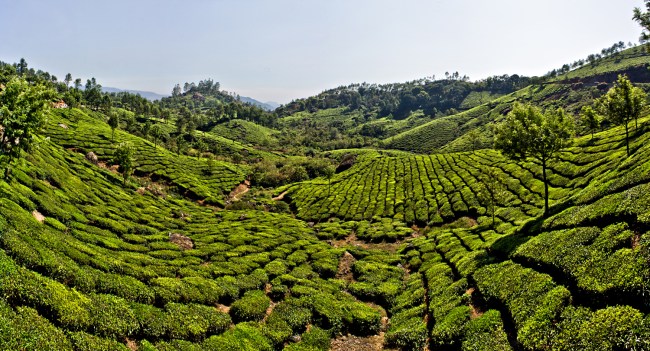
A Munnar tea estate in Kerala, India, where tea leaves are picked by hand. Photo by Milo Inman.

The two photos and their implications offer a pretty big contrast, but what they have in common is Camellia sinensis, the tea plant.  Continue reading

Some Sea Snakes Lead Dehydrated Lives

Photo © NatGeo

Sea snakes are interesting creatures, and we’ve written about them before, both as heat-stealers in an article on kleptothermy and as victims of uncontrolled fishing for “medicinal” purposes in the Gulf of Thailand. Science writer Ed Yong discusses one particular species of sea snake that lives so permanently in the Pacific ocean that it barely gets to drink fresh water, apart from what it skims off the ocean surface during rains:

If someone asked you to think about a global animal that has spread over much of the earth, you’ll probably think of something like the brown rat, the rock pigeon, or us humans. You probably won’t think about the yellow-bellied sea snake.

It’s a striking animal—two to three feet in length, with a black back and yellow belly. And it is extraordinarily far-ranging for a snake. It lives throughout the Pacific Ocean, which is already more area than all the continents combined, and the Indian Ocean too. Of all the tetrapods—the animal group that includes mammals, birds, reptiles, and amphibians—this little-known snake is one of the most abundant and widespread.

Continue reading

Another Night Excursion at Chan Chich

1

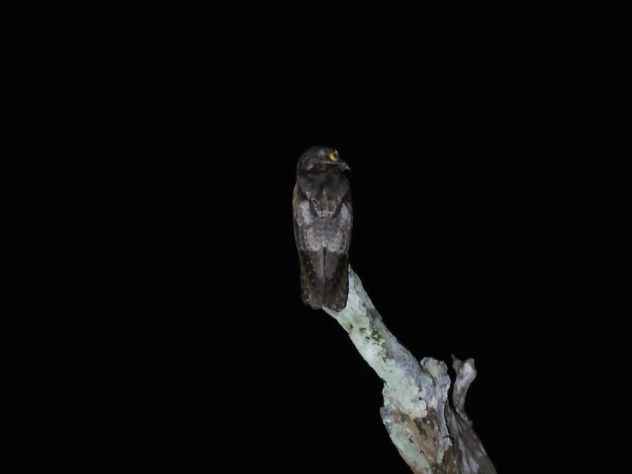
A Northern Potoo on a tall exposed limb seen during the outing

A few nights ago we went out on another night drive, to look for nocturnal animals. Seeing wildlife in the dark is always a challenge, and one has to be prepared to come back relatively empty-handed, especially in comparison to a lengthy jaguar sighting. This second time around, we saw fewer birds and just one mammal apart from deer: a young gray fox, but it was still a very pleasant ride through the forest at night, feeling the cool breeze and looking up to see the stars.

Continue reading

Rhode Island’s Offshore Wind Turbines Completed

One of five turbines that make up the Block Island Wind Farm, the first offshore wind farm in the United States, off the Rhode Island coast. Credit Kayana Szymczak for The New York Times

Less than a month ago we shared the story in WIRED about the Block Island Deepwater Wind farm, and now, construction is finished! That may seem like trivial news to Europeans with coastline who have been enjoying offshore wind power for years now, but given that this is the first project of its kind in the US, it’s an exciting sign of progress to come in renewables for a nation with one of the largest carbon footprints. Justin Gillis reports for the New York Times:

BLOCK ISLAND, R.I. — The towering machines stand a few miles from shore, in a precise line across the seafloor, as rigid in the ocean breeze as sailors reporting for duty.

The blades are locked in place for now, but sometime in October, they will be turned loose to capture the power of the wind. And then, after weeks of testing and fine-tuning, America’s first offshore wind farm will begin pumping power into the New England electric grid.

Continue reading

Mobile Farmers Market Headed to Austin Neighborhoods

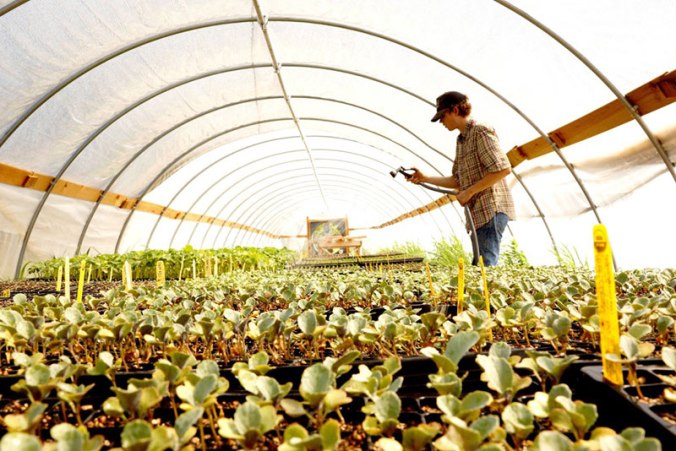
ben-watering-transplants-2

Source: Farmshare Austin

We have shared on previous occasions the benefits of organic farming. Well, getting affordable organic produce to neighborhoods who don’t have a single grocery store is commendable task, and the mission of Farmshare Austin. The non-profit organization received a grant from the city to help launch the program, which will make designated weekly stops in neighborhoods around Austin that lack access to organic fruits and veggies.

“Large areas of the city and county do not have full-service grocery stores, and it can be difficult for people in these places to get fresh, affordable food for themselves and their families,” [says] Taylor Cook, Farmshare Austin’s executive director. The market will target four areas, for now, that need the service most, and it will park in each district through an afternoon and evening. Cook says besides offering fresh seasonal produce from the organization’s 7-acre organic farm, they will also offer other staples, like cooking oil, on hand, so residents will have access to everything they need to cook a meal. The program accepts SNAP benefits and participates in the Sustainable Food Center’s Double Dollars program, allowing consumers using food assistance  to double their buyer power for fruits and vegetables. The pilot program will begin next month and run through the end of December. Cook says they hope to expand the mobile farmers market program in the coming years.

Continue reading

Bikes Starting to be Made in USA Again

This latest post in our common bicycle theme is not about any novel designs or materials being used to make the pedal-powered machines, but rather a feature from The New Yorker website on the new bicycle manufacturing scene in the US, particularly in Detroit, where a crashed automobile industry left a city in dire need of revival. Omar Mouallem writes:

In 1896, the Detroit Wheelmen opened an ornate new clubhouse, complete with an auditorium and a bowling alley. The Detroit Free Press called it “the most modern club house of any cycling organization in the west.” Its forty-thousand-dollar cost (about $1.1 million today) was paid for by the club’s four hundred and fifty members, who included John and Horace Dodge, the co-owners of Evans & Dodge Bicycle Company, one of more than three hundred U.S. manufacturers during the bike boom of the eighteen-nineties.

Continue reading

The History of America’s National Parks through Maps

03_gettysburg_battlefield-adapt-1190-1

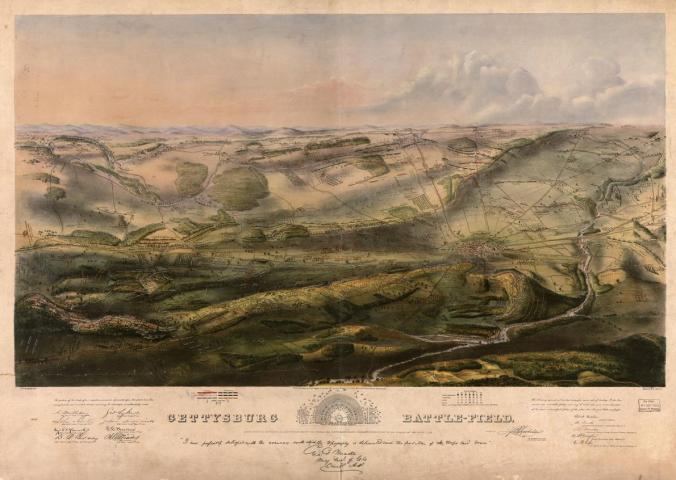
A map depicting the three-day battle of Gettysburg. Source: Library of Congress

Later this week, on August 25th, will be the U.S. National Park Service centennial (more about that on the day in question). So for all history buffs out there, you might enjoy the following article by National Geographic that provides a historical context to several topographical maps of the national parks (a somewhat contrasting view to yesterday’s post on fictional map creation) and their uncharted contribution to historians many years later.

By Betsy Mason

CAMBRIDGE, Mass.—John Badger Bachelder arrived at Gettysburg before the soldiers’ bodies were buried. He spent the next 84 days studying the battlefield by horseback and filling notebooks with the accounts of injured soldiers from both sides of the battle. He even took some of the wounded back to the scene so they could point out their positions and recount what had happened.

Continue reading

Upcycling Food Waste

bread_custom-ab4e4080afab7c1e3e53752023eca6d1b512719e-s800-c85

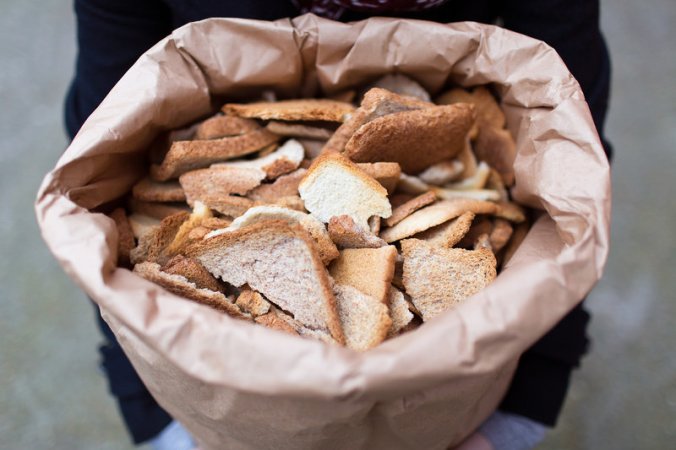
Crusty heels of loaves of bread which are used to make Toast Ale. All photos from: npr.org

We are no strangers to the food waste crisis. We recently wrote about the average landfill contribution per person per state in the U.S. and on prior occasions have shared stories about the severity of poor “waste” management.  At the same time, we acknowledge that there are people who are leading the cause to reduce the amount of food thrown away and salvage the unwanted scraps into healthful and tasty food, or otherwise useful products. It is important for us to share these stories to serve as inspiration for those with an entrepreneurial spirit and to inform citizens how they can support these businesses or organizations.

Toast Ale is a London-based company that sources fresh, surplus bread that would otherwise be thrown out to brew suds and create beer. The company believes it has found an environmentally friendly way to tap into the booming craft beer market. Continue reading

First-ever Electricity Surplus in India

Unregulated coal mining is polluting rivers in Meghalaya, India (Flickr/ECSP via climatechangenews.com)

We’ve covered a couple examples of alternative energy in India, but in general there’s a long way to go towards providing electricity to even most of the population, which generally suffers power outages. Now, the country has a surplus for the first time, but at what cost? Indian energy is still mostly in coal, and six of the country’s cities are in the top ten worst-polluted in the world. Tali Trigg writes for his blog Plugged In on Scientific American:

Like Germany, India has struggled to achieve power selling parity between its southern and northern regions, but is finally starting to see prices close-to-equal across the country. While India’s achievement is remarkable from one point-of-view, the fact remains that 300 million Indians still do not benefit as they have no access to electricity and most of the added capacity is from highly-polluting coal power causing grievous air quality.

Continue reading

Superlens from Spider Silk

(a) Nephila edulis spider in its web. (b) Schematic drawing of reflection mode silk biosuperlens imaging. The spider silk was placed directly on top of the sample surface by using a soft tape, which magnify underlying nano objects 2-3 times (c) SEM image of Blu-ray disk with 200/100 nm groove and lines (d) Clear magnified image (2.1x) of Blu-ray disk under spider silk superlens. Images © Bangor University and Oxford University, via EurekAlert

We’ve seen silk made without spiders, photomicrograph competitions, and the development of a new underwater microscope, but never thought that a strand of spider’s silk could be put under a normal microscope to then magnify an image even more than previously possible with current technology. But biologists from the Department of Zoology at Oxford University provided the silk know-how for engineers at the Bangor University’s  School of Electronic Engineering to create a natural superlens:

Extending the limit of classical microscope’s resolution has been the ‘El Dorado’ or ‘Holy Grail’ of microscopy for over a century. Physical laws of light make it impossible to view objects smaller than 200 nm – the smallest size of bacteria, using a normal microscope alone. However, superlenses which enable us to see beyond the current magnification have been the goal since the turn of the millennium.

Continue reading

The Bosnian Tree Elder

122212_web

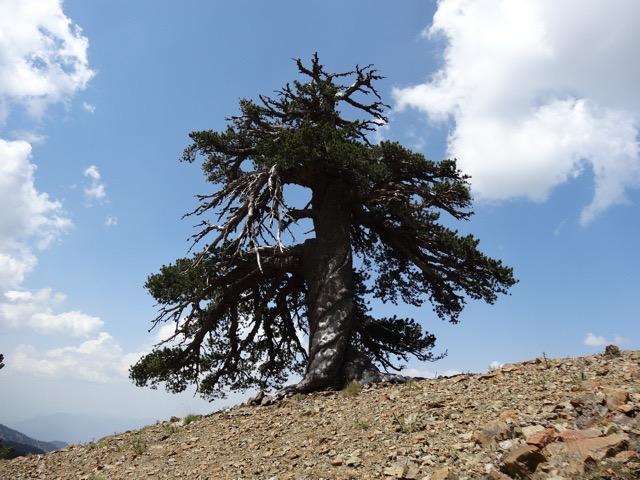
Certain species of trees can grow to be very old, and a group of scientists from Stockholm University  discovered a Bosnian pine (Pinus heldreichii) that would certainly classify as ancient. The solitary Bosnian pine is growing in the highlands of northern Greece and has been dendrochronologically dated– that is, analyzed to see how old the tree is – to be more than 1075 years old, making it the oldest known living tree in Europe.

“It is quite remarkable that this large, complex and impressive organism has survived so long in such an inhospitable environment, in a land that has been civilized for over 3000 years” says Swedish dendrochronologist, Paul J. Krusic, leader of the expedition that found the tree. It is one of more than a dozen individuals of millennial age, living in a treeline forest high in the Pindos mountains.

Continue reading

Fantastic Fantasy Maps Generated By Code

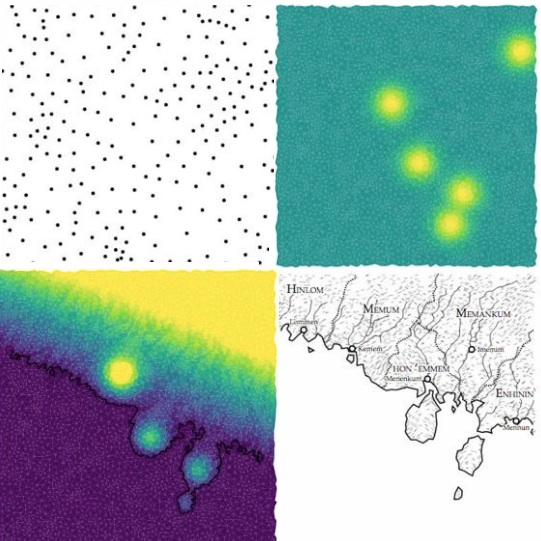
Different steps in the creation of a code-generated map that mimics real-world coastal landscape formation by erosion. Images by Martin O’Leary

There is no shortage of posts on maps here, but only one has been focused on the maps published in fantasy or fiction novels to set the scene. Two others have been linked to conservation, with one formatted in an amusing way. Then there’s my series on Icelandic cartography, starting in 1585 and continuing through 1849, then 1875, and finally 1906. But this is the first I hear about realistic fantasy maps created every hour by a bot – or computer program – coded by glaciologist Martin O’Leary and then tweeted on Twitter. And you can even go through the steps yourself and create a map of your making on his website! Betsy Manson writes for NatGeo:

As you travel northeast along the shore of southern Nimrathutkam, the first town you’ll encounter is Ak Tuh, followed by Nunrat and Nrik Mah before you reach the coastal city of Tuhuk, the largest urban area in the region of Mum Huttak.

If these sound like places out of a fantasy novel you read as a teenager, you’re not far off. Nimrathutkan is the result of an automated map generator that was inspired by those novels. The map bot, created by glaciologist Martin O’Leary of Swansea University in Wales, combines imaginary place names with fake terrain to produce fantasy worlds, tweeting a new one every hour from the Twitter account @unchartedatlas.

Continue reading

An Abandoned Quarry Transformed

img_9482-1

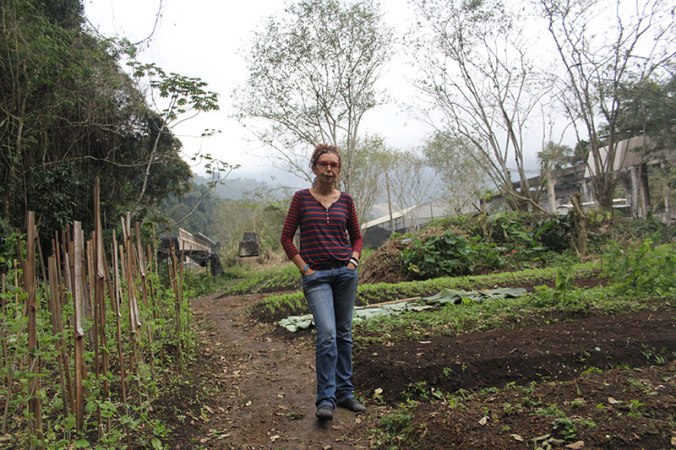
Fátima Anselmo, owner of Orgânicas da Fátima. All photos from: modernfarmer.com

The following is a story about a woman in Rio de Janeiro whose passion for sustainable farming, along with the support of a loyal community, allowed her to transcend an unforeseen hardship and turn an industrial wasteland into a fruitful organic farm. Here’s the story as told on Modern Farmer:

On a steep, forested hillside, in what was once a quarry in Rio de Janeiro, Fátima Anselmo scoops a handful of loose, dark soil from one of her garden beds. “It’s alive!” she says, holding the dirt in the air.

The whole place, in fact, is bursting with life.

Continue reading

Our Landfill Contribution


asset4

The diagram above provides a clear illustration of the amount of waste each person contributes to the landfill per year in the U.S. It is a regrettable outcome that results from decades of unresponsive national policies and unsustainable urban development, but can be remedied with a multilateral shift towards a circular economy, according to Nithin Coca, journalist for Triple Pundit LLC.

One of the reasons that America went down the path of throw-it-away is related to the reason we decided to build vast suburbs instead of dense, sustainable, walkable cities. We have a lot of land compared to most other developed countries. The same space we used to build suburbs, roads and an auto-centric culture, we also used to hide our waste as we moved into a throw-away economy.

Continue reading