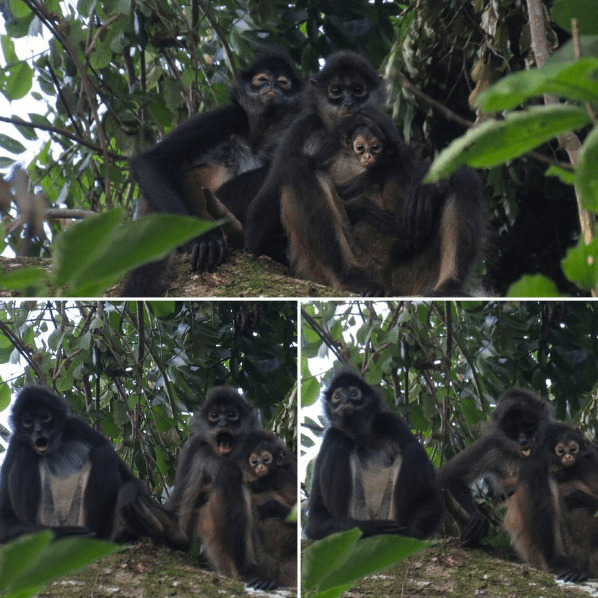
Chan Chich Spider Monkeys

Pretty much any time you walk out in the woods at Chan Chich Lodge, at some point during your hike you should be able to hear the rocking branches that are a sign of either spider monkeys or howler monkeys moving or eating in the treetops. And if you’re lucky, the swinging simians might stop and watch you with an uncannily familiar curiosity (or boredom), interrupting their normal activity for a minute or two before continuing on their way.
During the period in which we observed the family of three in the video above, the father yawned at least nine times, while the mother did so at least five times. Continue reading

A New Weekly Feature!


inside20sun20over20the20mountains

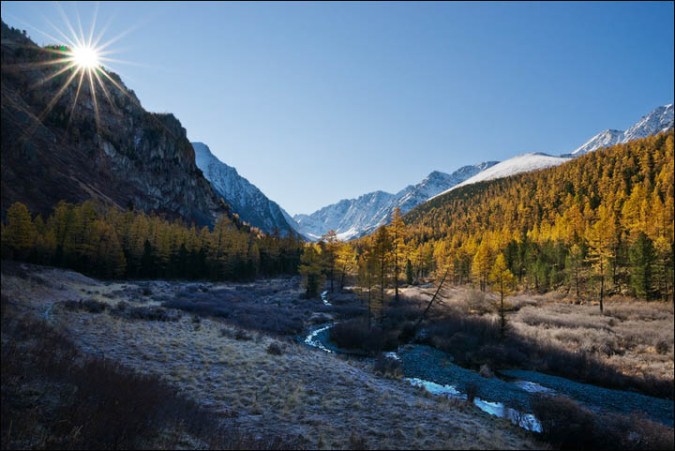
Ergaki National Park. Source: siberiatimes.com

Drawing inspiration from our site’s Bird of the Day, a new weekly feature titled National Park of the Week will publish every Sunday starting on August 28th. We love birds – but other wildlife too! – and we love the environment they (as well as we) live in, so we decided to start this new “column” (if this was a newspaper) to promulgate the protected areas that reflect the range of biodiversity and natural beauty around the globe. Although this weekly article has the words national park in the title, all types of government-protected areas, such as refuges, reserves, sanctuaries, and parks, will be featured in this category.  Continue reading

Isthmus of Panama Younger than We Thought

Split by the Isthmus of Panama: Species of butterfly fish, sand dollar and cone snail that today live on the Pacific and Caribbean coasts of Central America are very closely related. Genetic sequencing shows that only 4 to 3 million years ago, each pair was a single species, demonstrating that marine connections between the oceans must have existed until that time. (Image by Coppard et al., via The Smithsonian)

It’s probably not something you’ve given much thought to, unless perhaps you’ve visited Central America in the past and experienced first-hand the incredible biodiversity displayed in such a small area. Part of the reason why this little strip of land has so many different species of animals and plants is that it connects two very large continents that used to be separate, but it also has given birth to new aquatic species via evolution, as you can see from the image above. Previous thought on the topic had been that the Isthmus of Panama rose from the ocean roughly between 23 and 15 million years ago, but a very large and very interdisciplinary team of researchers – mostly with some link to the Smithsonian Institution, which has its Tropical Research Institute in Panama City – have reaffirmed that the enormously important geological change occurred around 3 million years ago.

Continue reading

Cycling through the Belize Forest

img_0970_zpsbst6nigh

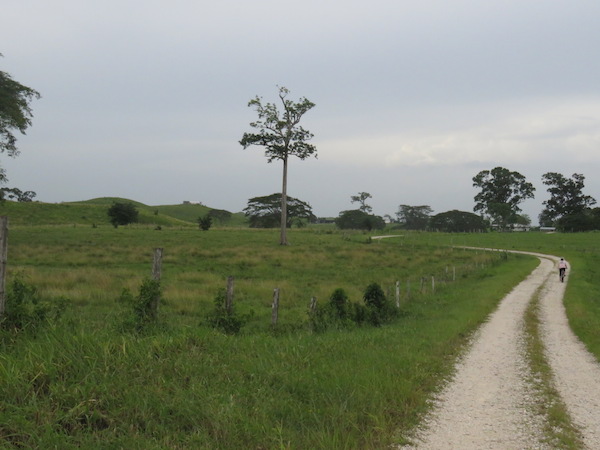
There are plenty of activities at Chan Chich Lodge that will expose you to a variety of forest wildlife and immerse you in the nature of Belize, such as the walking tours, horseback riding, canoeing, or the driving tours. But one of the lesser known activities that can also provide the same thrill as the other ones is bicycling.

I went on my first bike ride along the main road a week ago.  For the first mile starting from the compound area, the paved road offered a smooth ride past the suspension bridge and up until the “Y” intersection. I turned the handlebar to the left and my bike dropped a half-inch to the lower, limestone gravel road. The gravel pebbles started out small, boosting my confidence that I would make it to edge of cattle pastures of Gallon Jug estate, about five miles out. Continue reading

Most Orangutans are Left-handed

Image © playbuzz.com

It may seem like a strange title, but this post, which partly continues our celebration of orangutans (see how you can help the endangered species by avoiding palm oil), comes from this week’s Science Friday segment on whether other animals display a preference for left or right in their daily lives, the way humans do. A couple of our contributors here are lefties, making up a small percentage of the total, while 66% of orangutans are left-handed! Nicole Wetsman writes:

The human tendency to be right-handed is obvious—especially if you’re a lefty, and have to deal with right-handed desks and scissors, not to mention spiral notebooks.

But humans aren’t the only members of the animal kingdom that show handedness, or the preference for one hand over the other. Other primates exhibit right-handed or left-handed proclivities, as do animals that don’t technically have hands. For instance, research has shown that some mice are righties while others are southpaws, and that some tree frogs preferentially jump away from predators in one direction over another.

Continue reading

Enhancing the L.A. River


img_0431_kb

Nature Conservancy biologist Sophie Parker in the Glendale Narrows section of the Lost Angeles River. Source: Yale E360

It might be hard to believe, but at one point in time the Los Angeles River was characterized by perennial and seasonal wetland, seeps, springs, swamps, riparian forests, and mud and alkali flats. Starting in  1938 and until 1960, however, the river underwent a radical transformation, as it was enclosed by a concrete straitjacket for 51 miles to funnel the water through a channel that prevents flooding.

In its natural state [the L.A. River] was often little more than a trickle for nine months of the year. During the rainy season, however, the small, braided stream would turn into a powerful, churning river. It behaved like a dropped firehose, wildly lashing the Los Angeles valley, scouring gravel and soil across a seven-mile-wide floodplain, and carving a new course with every deluge. When the waters receded, a mosaic of fertile marshes, ponds, and other wetlands remained.

Now the L.A. River will undergo another profound change in the near future that will release parts of the river from its man-made confines and allow for  the water to transgress more naturally. The U.S. Army Corps of Engineers, in collaboration with the City of L.A.  and conservation groups, completed a plan to remove three miles of concrete, enhance an 11-mile run through the Elysian Valley called the Glendale Narrows, and restore lost habitat. Continue reading

Keystone, Canary, and Weedy Species

canary_art22-1068x479

Art © US State Dept./Doug Thompson

We wrote on these two biodiversity conservation ideas in the last month, and will continue to develop that theme for some time. Writing for The Guardian, biologist James Dyke explains a recent scientific study he was involved in that divided organisms into three distinct types, with “canary” species being the most important to monitor as indicators for ecosystem health:

The Earth’s biodiversity is under attack. We would need to travel back over 65 million years to find rates of species loss as high as we are witnessing today.

Conservation often focuses on the big, enigmatic animals – tigers, polar bears, whales. There are many reasons to want to save these species from extinction. But what about the vast majority of life that we barely notice? The bugs and grubs that can appear or vanish from ecosystems without any apparent impact?

Continue reading

Community Food Systems Minor at Cornell

Compost demonstration in the Dedza region, Malawi. Photo by Catherine Hickey via cornell.edu

Classes are starting at Cornell University around now, and there’s a new minor in town: Community Food Systems, a multidisciplinary study housed within the College of Agriculture and Life Sciences’ Department of Developmental Sociology. With elective courses from three categories (ethical and epistemic perspectives; ecological perspectives; and agricultural perspectives) in wide-ranging departments like philosophy, natural resources, economics, and anthropology, the minor also includes a required practicum with a community-based organization that works on “just, equitable and environmentally sound” food systems. Krisy Gashler writes for the Cornell Chronicle:

Scott Peters, professor of Development Sociology, said the minor has been a years-long process of discussion among faculty, staff and community partners, and was developed through the Food Dignity project, a 5-year, $5 million grant from the Agriculture and Food Research Initiativeand support from a Cornell Engaged Curriculum development grant.

Continue reading

Getting over “Range Anxiety” and into Electric Cars

electric-car-charger

Source: Conservation Magazine

If you have ever considered buying an electric car but haven’t done so in fear of the car battery dying before getting to a charging station – which is known as “range anxiety” – fear no more. A new study shows that most American drivers do not go beyond the distance that today’s electric cars can go in a single battery charge in one day.

87 percent of the vehicles on the road could be replaced by low-cost EVs on the market today even if they were only charged overnight, say the MIT researchers who conducted the study published in Nature Energy.

If this large-scale swap were to happen, it would lead to roughly 30 percent less carbon emissions even—if the electricity were coming from carbon-emitting power plants.

Continue reading

World Orangutan Day

tnc_56625009_preview_cropped

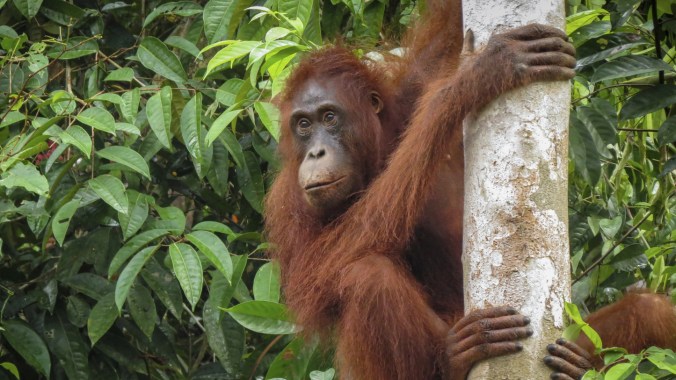
An orangutan in Tanjung Puting National Park in Borneo, Indonesia. All photos from: The Nature Conservancy

About a week ago we celebrated World Lion Day. Today we celebrate a different, long-limbed animal that likes to climb trees, the Orangutan. There are two species of this magnificent arboreal ape, both of which are facing potential extinction due to deforestation, poaching, the illegal pet trade and forest fires. As of last month, the status of the Bornean orangutan was classified as “critically endangered,” but conservationists are not giving up and are taking significant measures to improve forest management by working together with local communities and developing public-private partnerships.

The harmony between humans and apes began to unravel with the arrival of European explorers, who hunted them extensively during the 19thcentury. But it was not until the mid-20th century that human activities began to imperil orangutans’ existence. Extensive deforestation not only directly threatened orangutan habitat, it made the forest more easily accessible to humans. This led to both conflicts with orangutans, as the apes will eat crops, and made it easier for poachers to hunt the animals.

Continue reading

Slacklining in Rio

Image of Giovanna Petrucci via youtube.com

I wrote about slacklining last year, as James did the year before that, but we were nowhere near the class of skill practiced by professional slackers like those in Rio de Janeiro, where lots of young people go to the beaches and enjoy the relatively new sport in a much more acrobatic fashion than the simple balancing I’ve been doing in back yards and college campuses. Anna Jean Kaiser reports on the world champion of slacklining, an eighteen-year-old girl who practices in her hometown at Ipanema Beach:

RIO DE JANEIRO — Bouncing in the air above the sand of Ipanema Beach, not an Olympic venue in sight, is one of the most remarkable athletes in the world who has nothing to do with the Rio Games. Her name is Giovanna Petrucci, and her acrobatics rival those of the gymnasts and divers competing across this city.

Continue reading

Obliterating Weeds with Grit

weed-blaster

Source: modernfarmer.com

Herbicides are, unfortunately, a necessary product for most industrial farms, but given the rise in organic farming and the growing number of weeds becoming immune to the chemical poisons, other options have to be considered. Frank Forcella, a USDA agronomist, first had an idea to use apricot pits, considered an “agricultural residue,” as a weed killer when ground up with other waste and inserted in a sand blaster. He turned to his colleague Dean Peterson and together they bought a cheap sand blaster and started some simple experiments in a greenhouse.

Their initial work involved growing weeds next to a corn plant; when the corn was about six inches tall and the weed was about one to three inches tall, the researchers blasted both with a split-second application of grit.

It turned out that only the weeds got hurt. In fact, they vanished, while the corn plant was fine. This prompted a field experiment in 2012 with a bigger sand blaster mounted on an ATV. While Peterson drove, Forcella followed, crouched over with the sand blaster nozzle, blasting pigweed and other pesky sprouts.

Forcella’s “silly” idea turned into a feasible and successful solution for killing weeds.
Continue reading

Op-Ed: US National Protected Lands at Risk

From the New York Times, president of the Wilderness Society Jamie Williams writes an opinion editorial titled “Don’t Give Away Our Wildlife Refuges.” Perhaps given the global crisis I read the final word as refugees accidentally, so I was expecting something else entirely – maybe animals that are displaced by climate change. Instead, I learned that there is a relatively strong segment of the US Congress and state legislatures that are constantly trying to undermine the country’s system of public protected lands, sometimes in ways that could lead to the park or refuge’s destruction:

Tucked into the fiscal relief package for Puerto Rico this spring was a provision to give away a national treasure that belongs to all Americans — 3,100 acres of the Vieques National Wildlife Refuge. The proposal had nothing to do with the economic recovery of Puerto Rico. But it would have handed an important victory to extremists in Congress and state legislatures who want to grab national lands and turn them over to the states to be sold or leased.

Continue reading

The Adapters to Climate Change

field-notes-bangladesh-adapt-676-1

Bouyant fields made of plants and manure can support crops in Bangladesh. Source: National Geographic

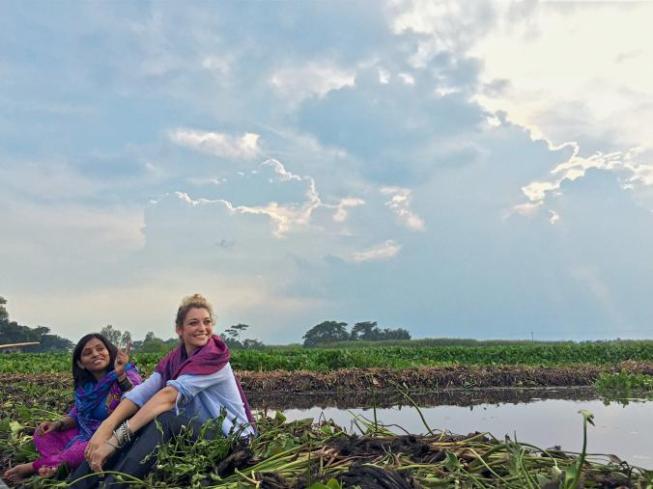
Climate change is a tough reality, but in spite of its devastating impacts on the natural environment, there are people who are drawing from their ingenuity to find alternative farming methods in the affected surroundings. Alezé Carrère, a National Geographic grantee, is on a journey to study the people and communities that are adapting to climate change, and she and a film crew are documenting cases into a video series called Adaptation.

[In 2012 Carrère] learned of a group of farmers in Madagascar who were figuring out how to farm in fields eroded by deforestation and heavy rains. Instead of depending on development aid to reforest washed-out areas, the farmers adapted. Soon they began to prefer farming in the eroded gullies, which became rich with water and nutrients.

Continue reading

In the Future, Windows May Be Made of Wood

CREDIT: UNIVERSITY OF MARYLAND AND ADVANCED ENERGY MATERIALS

It seems too weird to be true, but wood can be bleached and then soaked in epoxy to create a material not quite as transparent as glass, but which lets in plenty of non-glare light and insulates far better against heat. Scientists at the University of Maryland have patented the technology and are studying its applications in building for the future. One interesting feature of the wooden window is that it directs the diffused sunlight in the same direction regardless of the angle at which it enters the panel, which, as the lead author Tian Li says, “means your cat would not have to get up out of its nice patch of sunlight every few minutes and move over. The sunlight would stay in the same place. Also, the room would be more equally lighted at all times.” Sounds great!

Continue reading

The Development of Organic Farming

4437

All photos from: The Guardian

The debate of whether or not an organic diet is healthier has long been in question and does not yield a definitive scientific answer, but instead a consensual logical conclusion.  An organic diet is beneficial in that food free of pesticides and chemicals is safer and better for us than food containing those substances. Although organic agriculture occupies only 1% of global agricultural land, the growth of this industry is projected to increase as population growth, climate change and environmental degradation progress and will therefore necessitate agricultural systems with a more balanced portfolio of sustainability benefits.

With that prospect in mind,  John Reganold and Jonathan Wachter from Washington State University conducted a study, Organic Agriculture in the 21st Century, published in Nature Plants, that compared organic and conventional agriculture across the four main metrics of sustainability: be productive, economically profitable, environmentally sound and socially just.

[They] found that although organic farming systems produce yields that average 10-20% less than conventional agriculture, they are more profitable and environmentally friendly. Historically, conventional agriculture has focused on increasing yields at the expense of the other three sustainability metrics.

Continue reading