Feeding Fish with Methane?

Our last post on farmed fish revolved around grubs – dried black soldier fly larvae – as an alternative and more sustainable feed in aquaculture. Today I learned about yet another method for feeding fish that doesn’t involve catching wild fish or using petroleum-reliant grains, and actually helps control a problematic greenhouse gas, methane. Kristine Wong writes for Civil Eats, a website that acts as a “daily news source for critical thought about the American food system”:

Wild seafood is disappearing rapidly and many consumers have turned to farmed fish as a way to help reverse the trend. But finding a sustainable source of food for carnivorous fish such as salmon and tuna—which rank as the second and third most popular types of seafood in America—has been a persistent challenge for aquaculture producers.

Continue reading

A Rio Restaurant Feeding the Homeless

img_9450-hero

All images from modernfarmer.com

Before the start of the Olympics, I shared a story about Rio de Janeiro that put a slightly dour mood onto the prospect of the international event. However, there are other important stories to share that cast a much brighter light on Brazil’s second-most populous city. Here’s an inspirational story about a restaurant in Rio that exemplifies a business model rooted on two principles, altruism and sustainability, and is helping solve two major problems in the city: feeding the homeless and decreasing food waste.

by Andrew Jenner

It’s coming up on 1 p.m. on Saturday, and the kitchen staff is hard at work. On one end, they’re chopping cabbage, onions, chayote, and a chicken. On the other, another pair of cooks preps a tangerine and carrot sorbet. Massimo Bottura—a dude with owlish glasses whose establishment in Italy was just named the world’s best by the British magazine, Restaurant—peeks over their shoulders with encouragement and a caution: easy on the sugar, OK?

In the front of the house, volunteers wander to and fro, harried people jab their phones, and a Telemundo TV crew jockeys for a few minutes with Bottura and David Hertz, the Brazilian chef and social entrepreneur who represents the other half of the brains behind the place. Outside, a generator outside throws off diesel fumes and a hellish racket, while construction workers tear apart the sidewalk to—Bottura and Hertz desperately hope—fix some issue with the kitchen’s gas supply. It’s one of a million little problems this little restaurant has faced, but Refettorio Gastromotiva is the little restaurant that could.

Continue reading

New Mosquito Trap Tested With Mixed Success

A mosquito trap that runs on solar electricity and mimics human odor as bait. Credit Alexandra Hiscox via NYTimes

We’ve seen solar power used for many things here, but not yet as a source of power for insect trapping.  On the island of Rusinga in Lake Victoria, Kenya, scientists from the Netherlands, Kenya, and Switzerland tested new traps that use electricity from solar panels to release a chemical similar to the carbon dioxide we exhale (which attracts mosquitos) and a blend of chemicals that mimic human odor (which also draws in the blood-suckers) as bait for the disease-bearing biters. From the New York Times:

Although the traps appeared quite effective at lowering mosquito populations, they had some significant drawbacks.

Because they need power from rooftop solar panels, they are relatively expensive. Still, the panels appealed to residents who could also use them to power a light bulb or charge a cellphone.

Continue reading

An Alternative Sustainable Fertilizer

poopstory_hero2

Source: modernfarmer.com

There is no clean way to say this but…sewage sludge might just be the next thing to help grow the produce you consume. A recent study published in the journal Frontiers in Nutrition states that thermally conditioned sewage sludge could replace commercial chemical fertilizer as a sustainable option for improving soil properties. The greatest advantage of this alternative fertilizer is that it re-uses essential and finite phosphorus resources, which are commonly sourced from non-renewable phosphate rocks.

Sewage sludge is now a readily available substitute of commercial fertilizers in agriculture due to technological improvements that have increased the phosphorus content of it. Therefore, Andry Andriamananjara from the University of Antananarivo (Madagascar), along with his colleagues, decided to assess its effectiveness using a phosphorus radiotracer technique to measure the availability of phosphorus for plants in thermally conditioned sewage sludge.

Continue reading

Adjutant Storks and their Conservation Brigade

A rag picker looks for valuables among a group of Greater Adjutant Storks in a garbage dump site near Deepor Beel Wildlife Sanctuary in Assam. Photo by Ritu Raj Konwar, via The Hindu

Looking at the photo above, you may not see much to like in the Greater Adjutant, a type of stork found primarily in northern India and parts of Cambodia. But these big birds are important scavengers in their ecosystem, helping to break down dead animals. In this way they’re like vultures, a similarly-maligned group of relatively unattractive birds. As you’ll read below, many rural communities in India historically did not welcome the Greater Adjutant, which is classified as endangered by the IUCN. But storks, like other large avian families such as vulture and cranes, are not doing too well on a global scale: of the nineteen species of stork, the IUCN labels fifteen of their population trends as decreasing; four are endangered, while two are near-threatened and three are vulnerable. All of which makes the news from the state of Assam in India even more heartening:

On a cloudy day in July, in a remote village in northeastern India, Charu Das excitedly imitates the awkward movements of a stork with her hands.

In a few months, the greater adjutant stork—called hargilla, which means “swallower of bones” in Sanskrit—will descend on this hamlet, situated in Assam’s Brahmaputra Valley, to breed in large numbers.

Continue reading

The Arctic Struggles

p043qgl8

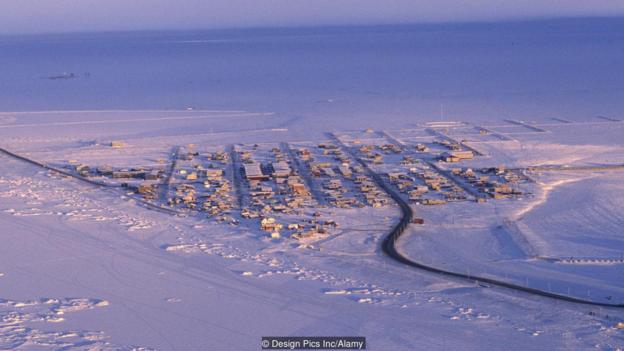
Barrow, Alaska. All photos from: BBC Earth

There is plenty of news on the alarming reduction of polar ice caps and the detrimental effect it has on polar bear populations. However, there is another, hidden problem that is hurting a different community just as much as these giant bears, and it is affecting the humans living in the northernmost town in the United States: Barrow, Alaska.

The big unspoken worry in the north is that large deposits of chemical pollutants are trapped within the ice.

For decades that was not a problem. But now rising temperatures are causing the ice to melt faster than ever. The area of summer sea ice has shrunk by 10% per decade since 1979, and in May 2016 the ice extent was the smallest in 38 years.

That means trapped chemicals like polychlorinated biphenyls (PCBs) are escaping and infecting animals like seals, the prey of choice for everything from polar bears to people.

Many of these chemicals have been banned for decades. They have been confined deep in the ice all this time and are perfectly preserved, like the sap-stuck mosquitos in Jurassic Park.

A study published in 2015 followed subsistence hunts from 1987 to 2007 and found significant amounts of PCBs in the internal organs and blubber of locally-harvested seals. The researchers concluded that, while levels of older banned contaminants are dropping, modern pollutants are rising.

That is problematic, because native Alaskans’ diets are largely comprised of seal.

Continue reading

Interview with a “Trash-Man”

One meter by one meter surface sample at Kamilo Point on the Big Island, Hawaii. More than 84,000 pieces of micro-plastic were counted. (Photo credit: Nick Mallos via GreenSportsBlog)

Plastic polluting the oceans of the world is something we don’t like to report on, but do anyway, since it’s such a widespread and high-impact issue. Below, Lew Blaustein of GreenSportsBlog interviews the Ocean Conservancy’s Director of Trash-free Seas, Nick Mallos. The Ocean Conservancy works toward science-based efforts to protect the ocean and its wildlife, as well as human communities that rely on healthy marine ecosystems.

GreenSportsBlog: Director of Trash Free Seas. That is one cool job title. How did you get to the Ocean Conservancy and the “Trash Man” moniker?

Nick Mallos: I’ve been working on trash in the ocean for the better part of a decade, with the last six years at Ocean Conservancy so “Trash Man” seems to fit perfectly. Before that, while at Dickinson College (Carlisle, PA), where I earned a BS in Biology and Marine Science, I spent a semester in the Caribbean to study lemon sharks. While on the Island of South Caicos, I saw that massive amounts of trash and plastics were washing ashore on its north side. This got me interested in marine debris and what was needed to do to remove it.

Continue reading

Reducing Air-Conditioner Use

10airconditioner-master768

Source: New York Times

More than 90 percent of American homes have air-conditioners, which accounts for approximately 6 percent of all the country’s residential energy use and translates to about 100 million tons of carbon dioxide released every year. To save on energy consumption, one can turn off the AC units while not present in the room or increase the thermostat to a higher temperature so that the AC will not turn on as often. However, another aspect of air-conditioners that is not frequently talked about is the actual chemical compounds in AC systems that are responsible for keeping a room cool on a hot summer day. The compounds are called hydrofluorocarbons (HFCs), and it’s a greenhouse gas that contributes to global warming.

HFCs represent a small portion of total greenhouse gas emissions, but they trap thousands of times as much heat in the atmosphere as carbon dioxide.

Good news: If your air-conditioner is working properly, it won’t release HFCs into the atmosphere. Some HFCs are released during the manufacturing process, if your air-conditioner or refrigerator has a leak, or when you throw a unit away, possibly causing some molecules to escape, especially if it’s disposed of improperly (Here’s some guidance on proper disposal).

Continue reading

Growing Number of Trees on Farmland

tree-on-farm

Source: Conservation Magazine

The number of tree coverage on farms is on the rise, and a recent study published in the journal Scientific Reports has added this hidden cache of carbon storage to the global carbon count. Researchers found out that farms sequester four times as much carbon as current estimates indicate, using remote sensing and a land cover database.

Researchers found that 43 percent of farmland across the globe had at least ten percent tree cover in 2010. Including the carbon sequestering capacity of this tree cover increased storage capacity estimates for farmland from 11.1 gigatonnes of carbon to 45.3 GtC. At least 34 GtCs of this storage capacity is from trees. They also found that between 2000 and 2010, tree cover on farms increased by two percent. This resulted in a 2GtC, or 4.6 percent, increase in biomass carbon.

Continue reading

Understanding The Limits Of Growth

k10544Compared to birds, jaguars, national parks and such, this book sounds like a snoozer. But as we scan the media for ways to understand the precarious predicament of the natural world, this book sounds worthy of the challenge (thanks to NYRB) as we contemplate the balance between the environmental costs of all that growth versus all the dramatic improvements in health and other welfare:

…a magnificent book on the economic history of the United States over the last one and a half centuries. His study focuses on what he calls the “special century” from 1870 to 1970—in which living standards increased more rapidly than at any time before or after. The book is without peer in providing a statistical analysis of the uneven pace of growth and technological change, in describing the technologies that led to the remarkable progress during the special century, and in concluding with a provocative hypothesis that the future is unlikely to bring anything approaching the economic gains of the earlier period. Continue reading

Architectural Challenge

071416_GSD_268.jpg

Harvard Graduate School of Design PhD student, Lauren Friedrich’s thesis researched how architecture can facilitate physical well being and what that means for workplace design. Here she is seen in Gund Hall with her model of proposed Gund Hall renovations. Harvard University. Kris Snibbe/Harvard Staff Photographer

Because design is frequently part of the assignments we take responsibility for, we monitor our reading lists for interesting stories about architecture, about interior spaces, about how these impact our experiences; and here is a worthy pick. It reminds us of the creative crew we had with us in India a few years back:

Design for movement

Graduate thesis explores changing relationship between architecture and healthy living

By Christina Pazzanese, Harvard Staff Writer

At a basic level, architecture is like a shoe: a useful tool designed to protect the human body from harm caused by the natural elements.

Yet over time, we can become over-reliant on its comfort, losing our dexterity and our ability to withstand even the slightest discomforts. So what is meant to help us may, in fact, hinder us by making things too easy, removing all physical challenges and other stressors that are essential for optimal health.

It doesn’t have to be that way, says Lauren Friedrich, a 2016 graduate of Harvard’s Graduate School of Design (GSD). What if instead of disconnecting the human body from the man-made landscape, architectural design used creativity and reorientation to create spaces that challenged our physical skills and encouraged, rather than minimized, a range of movements that supported better health?

That’s the question Friedrich set out to explore in her master’s thesis, a project that takes a multidisciplinary approach incorporating insights from experts across Harvard in neuroscience, biomechanics, physical therapy, choreography, and ergonomics, and ideas from people who patronize public spaces. Her thesis also cleverly reimagines GSD’s Gund Hall as a flexible fun house full of passageways that encourage circulation and “resting nets.” The Gazette spoke with Friedrich about her novel research. Continue reading

National Parks Service, Careers Of Import In Important Places

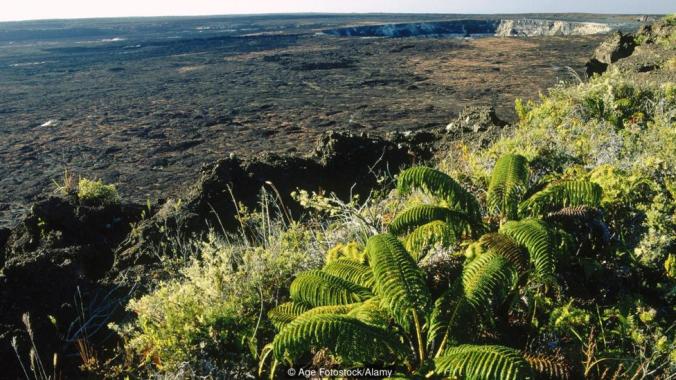
Kilauea, Hawaii Volcanoes National Park. Big Island, Hawaii. USA

Paul Banko bikes through lava flows and fern forests to get to work (Credit: Age Fotostock/Alamy)

Continuing the celebration of the National Parks Service (USA) centenary, thanks to the BBC for this notable story:

In 2002, the last pair of wild ‘alalā disappeared from the forest. Biologist Paul Banko is fighting to return this rare charismatic bird to the wild.

By Shannon Wianecki

Paul Banko has an enviable commute: he rides his bike through cooled lava flows and dense fern forests to reach his office at Hawai‘i Volcanoes National Park. He’s been climbing trees, poking around in nests and rescuing imperilled birds here since his teenage years. Continue reading

Upcoming Circular Model in Clothing Industry

1_web_72dpi_landscape_800

All photos from Yale E360

Clothing is a daily necessity (a vanguard nudist might disagree with that statement). Every day after getting out of bed we change into a a set of clothes before stepping out of our homes because it is a daily habit that we have adopted even before we had the ability of dressing ourselves when we were babies. This practice we have developed, when you add up clothing that gets worn out and must be replaced, is very costly to the environment considering people in the U.S. dispose of about 12.8 million tons of textiles annually, which amounts to about 80 pounds per person.

Growing cotton, the most-used fabric in fashion, requires water and agricultural chemicals. (Organic cotton is an exception.) While cotton is grown on just 2.4 percent of the world’s cropland, it accounts for 24 percent and 11 percent of global sales of insecticides and pesticides, respectively, according to the World Wildlife Fund. The Sustainable Apparel Coalition — an alliance of retailers, brands, and nonprofits — has been working for about five years to measure and reduce the industry’s environmental footprint.

Recycling has become a rallying cry in the apparel industry, with H&M as its most vocal evangelist. The Swedish firm launched a 1-million euro contest to seek out ideas for turning old clothes into new, invested in Worn Again, a company that is developing textile recycling technology, and enlisted hip-hop artist M.I.A. to produce a music video called Rewear It that aims to “highlight the importance of garment collecting and recycling.” With Nike, H&M is a global partner of the Ellen MacArthur Foundation, whose mission is to drive a transition to a circular economy — that is, an industrial system in which everything at the end of its life is made into something new, in contrast to today’s economy, where most consumer goods are produced, used, and then thrown away.

Continue reading

Preserving Darkness

13darksky-web01-superjumbo

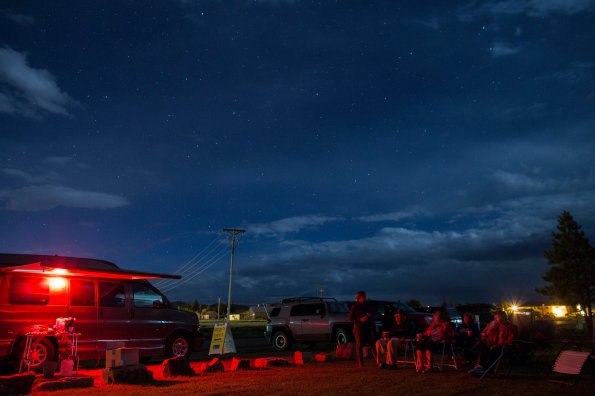
Members of Dark Skies Inc. look for meteors in Westcliffe, Colorado. Source: New York Times

A few days back we wrote about the Perseid meteor outburst taking place between August 11th and 12th and I sincerely hope you had the opportunity to find a remote location with low night pollution to see it because it was truly a cosmic phenomenon (we lay some futon cushions on the back of a pick-up truck, drove out to an area of Gallon Jug fields at three in the morning, and laid back to gaze at the meteor shower).

A couple thousand miles away, residents of towns in the Wet Mountain Valley of southern Colorado, Silver Cliff and Westcliffe, were able to enjoy the display early Friday morning because even from the town’s limits they can see the Milky Way. It is rare to find a town with such low light contamination, but it isn’t a coincidence. Locals have sustained efforts for more than a decade to dial down on the outdoor lighting by not only dimming the light potency but also requiring lights to face downward. These communities are preserving the beauty of gazing out into a star-filled night sky and have benefited from the visitors who started to visit for the purpose of stargazing. Here’s the story as reported by the New York Times:

WESTCLIFFE, Colo. — As people around the world stepped into their backyards or onto rooftops to peer up at the annual spectacle of the Perseid meteor shower early on Friday morning, few of them had a view like Wilson Jarvis and Steve Linderer.

Continue reading

New Snake Species Discovered in Mexican Mountains

A specimen of the new species, Geophis loranca, in life. Photo © Miguel Ángel de la Torre Loranca

Last time we mentioned a new species being discovered, it was also long, thin and reddish, but in the form of a toxic cave worm. The freshly-found reptile, which when translated from its scientific name would be called “Loranca’s earth snake,” is a red and black burrowing animal that is only found in a very localized region of east central Mexico, as the collaborative team of Mexican university researchers wrote in their academic journal article published in ZooKeys:

These burrowing reptiles are seldom encountered and, consequently, have been poorly studied. Furthermore, several species have restricted distribution, making them particularly vulnerable to extinction.

Continue reading

The Recovery of the Island Fox

3000

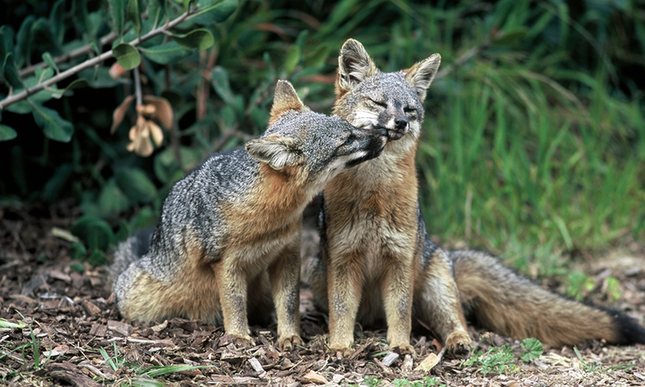
Island Foxes. Source: The Guardian

We are happy to share another win for wildlife conservation. One of America’s rarest mammals, the island fox, has experienced a record-breaking recovery twelve years after the species was declared endangered. Here’s the story from The Guardian:

The US Fish and Wildlife Service (FWS) has delisted three subspecies of island fox – endemic to the San Miguel, Santa Rosa and Santa Cruz islands – just 12 years after they were granted endangered species protections due to a catastrophic 90% population loss.

The island fox is one of the smallest canids in the world, around the size of a domesticated cat. They are thought to have evolved on the channel islands, located off southern California, over the past 6,000 years and initially thrived due to a lack of predators, feasting on mice, crickets and the occasional crab.

However, the island fox suffered badly during the late 1990s after use of the pesticide DDT wiped out bald eagles on the islands. Golden eagles, which prey on the foxes, quickly replaced the fish-loving bald eagles, leading to numerous fox deaths.

Continue reading

Patrimonial Matrimonial Innovation

10tuscany1-master768.jpg

A fort atop the Italian town of Montalcino. In October, residents there and in neighboring San Giovanni d’Asso will vote on whether to merge the two communities. CreditNadia Shira Cohen for The New York Times

Although we appreciate, even adore, the wines and the fungi referenced in this story, it is worth reading for a look at practical issues facing aging towns that possess world class patrimony:

A Merger of Brunello and Truffles? 2 Tuscan Towns May Be Better Together

By

SAN GIOVANNI D’ASSO, Italy — Two small towns in southeastern Tuscany, one famous for red wine, the other for truffles and organic grain, are considering a municipal marriage of convenience that could blur their cherished identities, separately formed over the centuries.

With a population of just 853, San Giovanni d’Asso can no longer deliver basic services to its citizens on a daily basis. Left with only three town officials to do the work, something as simple as getting an identity card drawn up and stamped requires making an appointment days in advance.

So the town’s mayor, Fabio Braconi, picked up the phone back in 2014 and sought help from a neighbor, Montalcino, 10 miles to the south across rolling wheat fields. Continue reading