Biodiversity, Conservation, Questions

natural-history-collection1.jpg

From Conservation, a provocative question answered in the summary of a scientific investigation:

IS BIODIVERSITY THE ENEMY OF NATURE?

It’s easy to use a word so often that its meaning is taken for granted. Nuances are lost, conceptual freight laid aside, assumptions unexamined. Take biodiversity: just a few decades old, the word is now ubiquitous, a default frame for thinking about nature — and that’s not necessarily a good thing. Continue reading

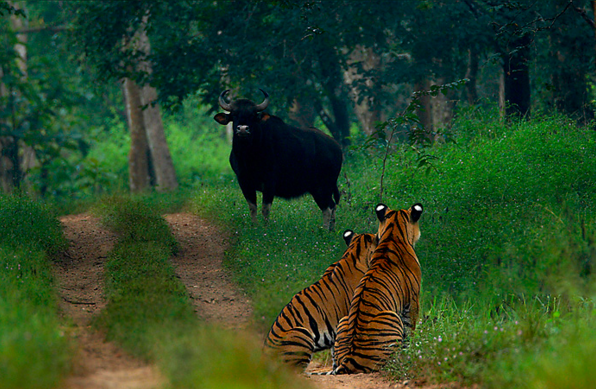
A Tiger’s Tale Redux

Photo credit: Sudhir Shivaram

Photo credit: Sudhir Shivaram

International Tiger Day is my excuse to remember this post from three years ago, as a continued reminder of the importance of doing whatever we can to save these amazing creatures in the wild.  Meeting wildlife photographer Sudhir Shivaram, and some talented participants of his master bird photography workshop, (many of whom now contribute to this site), has consistently given all of us a window into wildlife viewing that few of us have the privilege to enjoy.

I actually write this from Chan Chich Lodge in Belize, a location that offers the amazing opportunity to be in the habitat of “new world” cats such as jaguar, puma, ocelot, margay and jaguarundi. We’ll write about what we’ve seen so far and what the fantastic staff has shared with us in separate posts – as here we want to honor the tiger. Continue reading

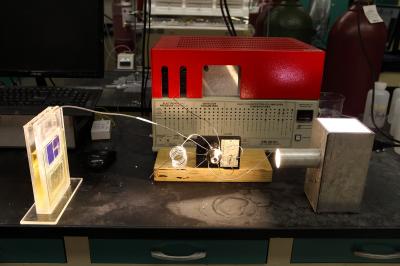
Cool Chemistry

120556_web

Source eurekalert.org

Increasing levels of CO₂ are the principle cause of the alarming climate changes that we have observed in the past several decades, so why not use the same chemical compound that is causing all our woes to generate fuel, or electricity, as we saw here a few days ago? The scientific community is well aware of the common and “conventional” renewable energies, so researchers at the University of Illinois at Chicago have engineered a solar cell that converts atmospheric carbon dioxide directly into usable hydrocarbon fuel, using only the sunlight for energy.  This new invention removes the necessity of batteries and solves two crucial problems: Continue reading

US to Build First Offshore Wind Farm off R.I.

A GE Renewable Energy offshore wind turbine off the coast of Belgium. Photo © GE via Wired.com

Wind power is a recurring subject here, and although there are thousands of turbines across the United States, none so far have been built collectively along the coast. Since so much of the US population is collected in coastal areas, having electricity produced closer to them is key to reduce loss via transportation. Brendan Cole reports for WIRED about the upcoming wind farm in Rhode Island:

BUILDING IN RHODE Island isn’t easy. Hurricanes and tropical storms barrel through its quaint coastline towns, interrupting perfect summer weekends. Freezing winters bring blizzards that can shut down the entire state. And every season features corrosive salty winds, biting at the coast as if sent by a Britain still seething at the first American colony to declare independence.

Continue reading

Can the Cement Industry Reduce CO2 Emissions?

Photo of Blue Circle Southern Cement factory near New Berrima, New South Wales, Australia, by WikiMedia Common contributor AYArktos

Portland cement is named for the area in England where it was first made almost three-hundred years ago, and is the standard ingredient used to create concrete around the world. Despite being a very useful building material that can be applied in a variety of ways without expensive technology, cement production is associated with carbon dioxide emissions, primarily from when the original limestone is decarbonized and from the massive amounts of fuel needed to fire up the kilns to make cement. Robert Hutchinson of the Rocky Mountain Institute writes an informative piece for GreenBiz on how the industry might change, and why:

The toughest climate challenges involve large global industries, with no good substitutes. One of these produces the material literally under our feet — concrete. Every year, each of us in the U.S. uses about one-third of a ton. Fast-growing developing countries use far more. Globally we produce over 4 billion metric tons of Portland cement per year — the key ingredient in concrete and responsible for the majority of its CO2 footprint — driving over 5 percent of total anthropomorphic CO2.

Continue reading

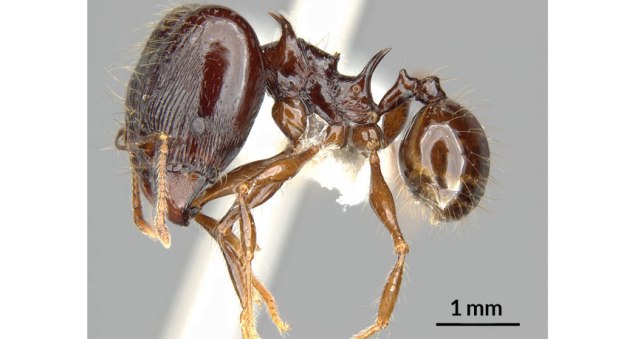
The Big Headed Ant


072716_ca_ants_feat_new

Source sciencenews.org

Whether it be inside or outside of our homes, ants are everywhere on land. The Pheidole drogon and Pheidole viserion worker ants, found in the rainforests of Papua New Guinea, are ones that have spines protruding from their thoraxes, an intimidating sight for anyone or anything trying to tangle with them. However, researchers suggest that the thorny-looking spine might instead be a muscular support for the ant’s over-sized head, which is used to crush seeds. Continue reading

The Most Avid Fans of Flying

weimerskirch3hr_860

Photo © AURÉLIAN PRUDOR/CEBC CNRS

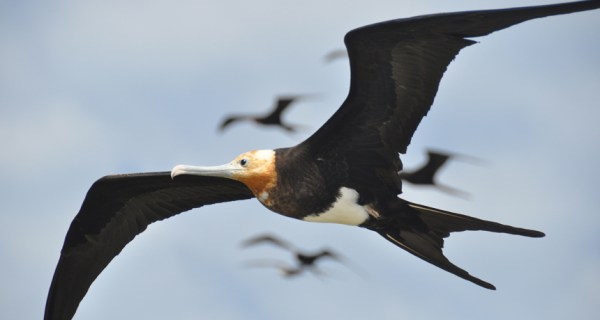
Who enjoys flying? I do (on planes, of course) and birds certainly do as well (they better because they do a lot of it)!  According to recent study, frigatebirds can drift in the skies for up to two months without landing (I think this makes them the biggest fans of flying, along with albatrosses, another ocean-faring flier). In order to do this, the seabird seeks out routes with strong and upward-moving currents to save energy on its flights across the ocean. By hitching a ride with favorable winds, frigates can fly more than 400 kilometers a day (which is the equivalent of a daily trip from Boston to Philadelphia) and avoid having to flap their wings as much.

For instance, the birds skirt the edge of the doldrums, windless regions near the equator. For this group of birds, that region was in the Indian Ocean. On either side of the region, the winds blow steadily. The winds come from cumulus clouds (the ones that look like fluffy cotton balls), which frequently form in the region. Riding upward-moving air currents underneath the clouds can help the birds soar to altitudes of 600 meters (about a third of a mile).

The birds don’t just stop there, though. Sometimes they fly higher into the [cumulus] clouds…[and] use the rising air inside the clouds to get an extra elevation boost. It can propel them up to nearly 4,000 meters (2.4 miles).

Continue reading

American Coots

The title may be reminiscent of recent movies like “American Sniper,” or “American Hustle,” or slightly older ones such as “American Psycho” and “American Beauty.” But as the video suggests, the American Coot is a type of bird, a wading species in a family called Rallidae, which most non-birders probably haven’t heard of because the birds are typically either near water or hiding in dense vegetation. Coots, along with rails, gallinules, and crakes, make up the Rallidae family, and all these types of birds like to stay on the ground, very rarely flying or venturing into trees unless it helps escape a predator. They’re more closely related to cranes than to ducks.

Continue reading

“Kissing” Corals

Source discovermagazine.com

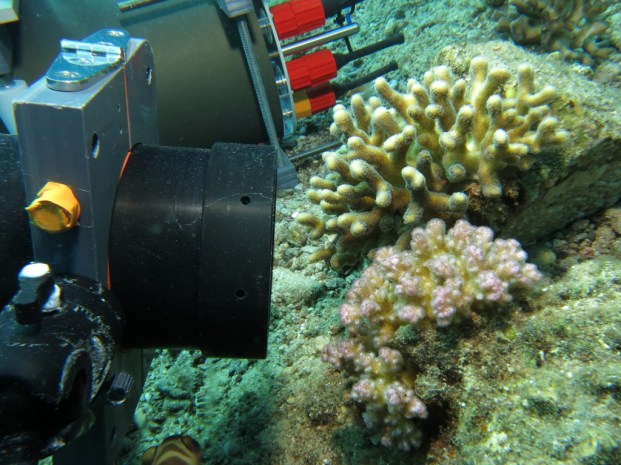
You don’t have to be a romantic to appreciate the underwater rainbow canvas that is a coral reef and marvel at the fact that these organisms have been spotted exchanging an underwater embrace, a behavior researchers have termed “polyp kissing.”

A first-of-its-kind underwater microscope that can observe coral polyps at resolutions of up to 2 micrometers while still remaining a safe distance away allowed marine biologists to watch coral behavior in real time. Not only did they see two species of coral fighting for territory (a previously observed behavior), but also two corals entwine their gastrovascular openings in the act of “polyp kissing” (a previously unknown behavior). Continue reading

First Solar Plane Voyage Around the World

After a pit stop in Oman Solar Impulse 2 sets off for Ahmedabad, India on 10 March 2015 Photograph: Jean Revillard/Solar Impulse

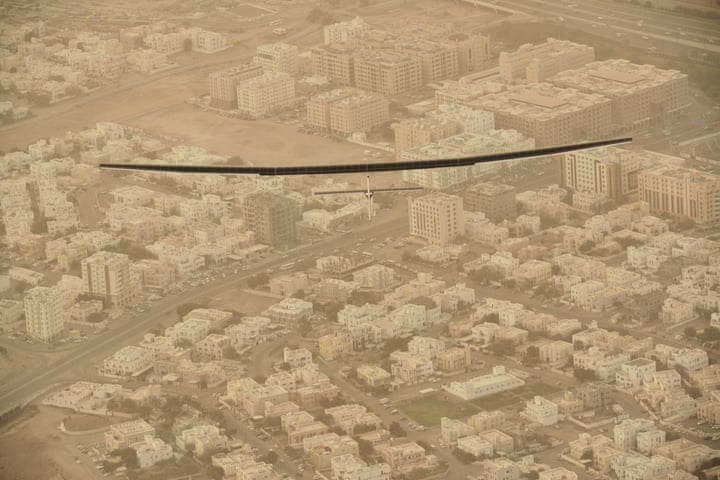
The strange rear profile you see in the photo above is that of the Solar Impulse 2, a two-ton plane (a Boeing 747 weighs 154 tons) with solar panels on its wings that made history this week as it completed a round-the-globe voyage over the course of roughly three weeks in flight. The Solar Impulse 2 and one of its pilots, André Borschberg, broke the record for the longest nonstop solo flight ever a few weeks ago, when Borschberg flew from Japan to Hawaii. Damian Carrington reports for The Guardian:

The final leg of the feat, aimed at showcasing the potential of renewable energy, was a bumpy one, with turbulence driven by hot desert air leaving the solo pilot, Bertrand Piccard, fighting with the controls.

The plane, which has a wingspan wider than a Boeing 747 and carries more than 17,000 solar cells on its wings, began the circumnavigation in March 2015 in Abu Dhabi. It has since crossed both the Pacific and Atlantic Oceans using no fossil fuel and has spent more than 23 days in the air.

Continue reading

Pigeons Helping with Health Research

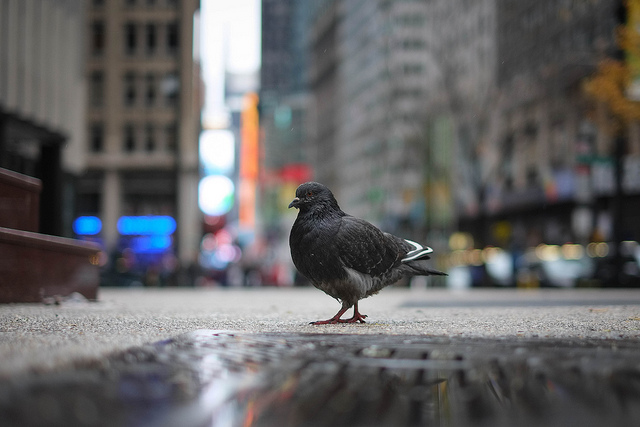
newyorkpigeon

Source conservationmagazine.org

For most city dwellers, pigeons are just another speck in the hustle and bustle of urban life and are only truly noticed when they don’t move out of the way fast enough as you stride down the sidewalk. However, for environmental health scientist Rebecca Calisi from the University of California, Davis, pigeons are her primary focus and the basis of her research for potentially finding areas in cites with high level of contaminants dangerous to humans.

Continue reading

GPS Turtle Eggs to Track Poachers

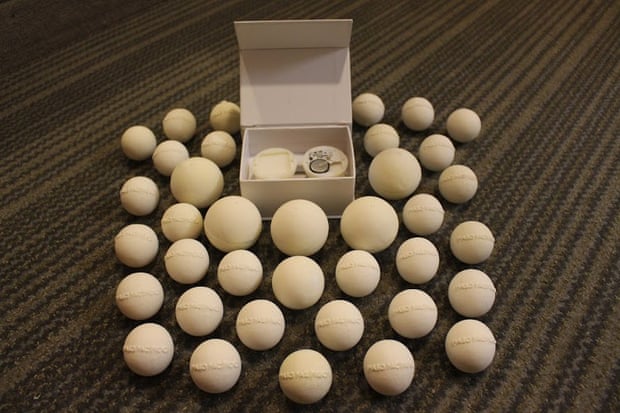
Prototypes of Paso Pacifico’s fake eggs. The small balls on the outside hold the GPS transmitter which will then be fit into the larger shells, forming the inner ring of the photograph. Photograph: Eduardo Bone via The Guardian

Last time we mentioned sea turtles it was also in the context of protecting them from poaching. These threatened ocean species lay eggs on public beaches and certain people enjoy eating those eggs, or even the turtle meat itself. Thanks to a great project by USAID called the Wildlife Tech Challenge, there will soon be a potential means to tracking where poachers are selling the illegal turtle eggs, as Jeremy Hance reports:

“Every year millions of sea turtle eggs are taken by poachers for sale on the black market. Paso Pacifico’s solution has the potential to reveal the trade routes and destination markets for trafficked sea turtle eggs,” the U.S. Agency for International Development (USAID) said.

The USAID recently awarded Paso Pacifico $10,000 for its idea through their Wildlife Tech Challenge, a contest to tackle wildlife trafficking through technological innovation. The Wildlife Tech Challenge is also supported by the National Geographic Society, the Smithsonian Institution, and TRAFFIC.

Continue reading

When Silence Is Golden

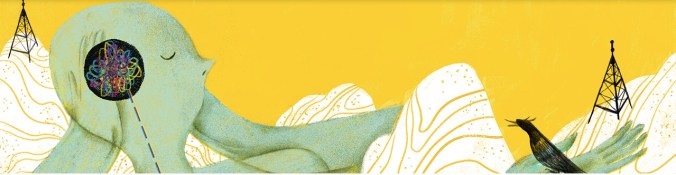
Finland

It is not a principle of branding, per se, that silence is golden; just the opposite normally, since getting the message out is the point, and messages seem defined by noise, however subtle or clever. But Finland, by way of this article in Nautilus, has had me thinking, in the couple days since I read it, about alternative views on the value of silence, on messaging, on branding:

One icy night in March 2010, 100 marketing experts piled into the Sea Horse Restaurant in Helsinki, with the modest goal of making a remote and medium-sized country a world-famous tourist destination. The problem was that Finland was known as a rather quiet country, and since 2008, the Country Brand Delegation had been looking for a national brand that would make some noise.

Over drinks at the Sea Horse, the experts puzzled over the various strengths of their nation. Here was a country with exceptional teachers, an abundance of wild berries and mushrooms, and a vibrant cultural capital the size of Nashville, Tennessee. These things fell a bit short of a compelling national identity. Someone jokingly suggested that nudity could be named a national theme—it would emphasize the honesty of Finns. Someone else, less jokingly, proposed that perhaps quiet wasn’t such a bad thing. That got them thinking. Continue reading

Green Rooftops

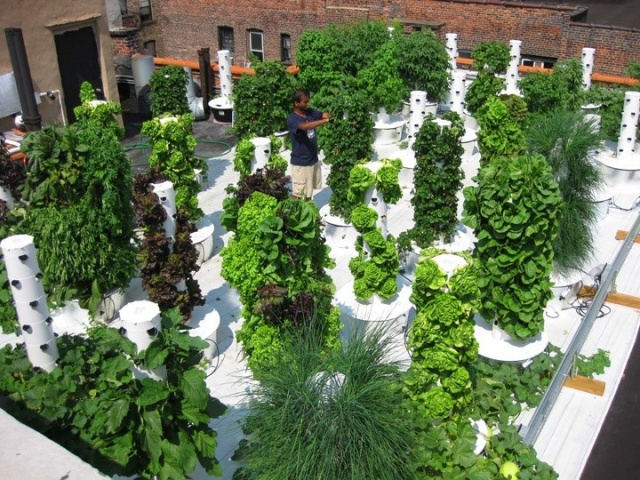
rooftop20hydroponic20garden_zpsaz6euobl

Source Pinterest.com

According to the Population Reference Bureau, since 2008 more than half of the total global population lives in urban areas. What does this mean for farmers and the food industry? It means that as cities expand, farmland is receding farther away from the markets that supply the city consumers. In effect, the food has to travel longer distances, which increases their cost and environmental impact. However, there is good news for those with a green thumb (or pinky!) and creative mind (here are some examples we’ve written about previously). Continue reading

New Zealand Plans to Eliminate Invasive Mammals

Illustration of a Brown Kiwi chick. A History of the Birds of New Zealand. 2nd ed. by W.L. Buller (London, 1888). page 326 via WikiMedia Commons

It is not surprising that one of the nations that stands to lose the most from invasive mammals is also the first country in the world to announce its ambitious plan to remove them all by 2050, but the islands of New Zealand have a lot of work ahead of them to eradicate animals like rats, stoats, and possums – around nineteen and a half million US dollars worth of work, which will be the government investment in a new public-private joint venture called Predator Free New Zealand Limited . And now that deforestation has been controlled better, it’s time to protect the country’s wildlife another way. The kiwi illustrated above, for example, is one of five species in New Zealand, all of which are threatened or endangered, or critically endangered, thanks to predation by invasive mammals that the flightless birds can’t avoid.

Continue reading