New Species in Toxic Colorado Cave

These worms in Colorado’s Sulphur Cave are believed to live on the chemical energy in the sulfur in the cave, similar to deep-ocean tube worms. On the left are streamers—colonies of microorganisms similar to those in hot springs in Yellowstone National Park. PHOTOGRAPH BY NORMAN R. THOMPSON

We like the discovery of new species, and caves are cool too. And beneath Steamboat Springs in Colorado, USA, a cave full of noxious carbon dioxide and hydrogen sulfide gas has harbored a new species of worm, as well as weird bacteria formations called snottites. Erika Engelhaupt reports for NatGeo’s Phenomena blog:

Lurking below the quaint ski town of Steamboat Springs, Colorado, lies a cave belching deadly gases. Its ceiling is dotted with snottites, dangling blobs that look like thick mucus and drip sulfuric acid strong enough to burn holes through T-shirts. And the whole place is covered in slime.

So why would anyone want to go there?

Continue reading

Antibiotics, Even Worse than Anticipated

© Conservation Magazine

We disagree with having cows filled with antibiotics, primarily because of the problems created by bacterial resistance to drugs given without cause. But now we’re learning that there’s even more wrong with antibiotics in cattle: their dung releases more methane. Catherine Elton reports for Conservation Magazine:

Antibiotic use and overuse in livestock has long been controversial, as it has been linked to antibiotic resistance in humans. Livestock are regularly given antibiotics to keep them healthy in overcrowded or unsanitary conditions, or even to boost their growth.

Now, a study published recently in the Proceedings of the Royal Society B has documented for the first time that antibiotics given to cows also increase the emissions of the greenhouse gas methane from cow dung.

Continue reading

Archaeoastronomy

William Gadoury used the position of a constellation to identify the location of a possible Maya city where an anomaly, shown above in a satellite image, was observed. Further study on the ground is required to determine the nature of this feature. IMAGE COURTESY OF ARMAND LAROCQUE via NATGEO

We have shared stories about Mayans, and especially the archaeological questions surrounding them, before; and also discussed the modern region that was once the civilization’s stronghold more recently. And although we missed the original news covering this interesting hypothetical discovery by a Canadian teenager, his recent interview with NatGeo brought the aspiring “archaeoastronomer’s” ideas to light, and we certainly hope Mr. Gadoury is right about the undiscovered settlement. Below, the first reporting by National Geographic, on May 11 of this year:

For gee-whiz value, the announcement has been hard to beat: A Canadian teenager discovers a lost Maya city without even stepping foot in the Central American jungle.

Unfortunately, this “discovery” appears to be the well-intentioned, albeit faulty, result of modern Western education colliding with an ancient civilization that saw the world in a very different way.

Continue reading

Greener Trucks and Buses Emerge

Wrightspeed’s new range-extended electric powertrain can be installed as a retrofit to a standard diesel garbage truck, more than doubling mileage and lowering carbon dioxide emissions up to 68 percent.

We are all fans of electric vehicles and what they represent for a transition away from fossil fuel dependence in daily life, drastically reducing carbon emissions with transportation, and lower noise pollution. Cheryl Katz reports for GreenBiz.com about a shift to electric vehicles — not for consumer use, but commercial:

The clang of garbage cans still probably will wake people way too early in the morning. But in Santa Rosa, California, at least, the roaring diesel engine will be quiet, replaced by a silent, electric motor.

The electric garbage trucks scheduled to begin rolling there this summer may be less alluring than the sporty vehicles that engineer Ian Wright helped design as co-founder of Tesla Motors. But Wright, who left the high-end electric car company to start Wrightspeed, maker of electric powertrains for medium- and heavy-duty commercial vehicles, is on a campaign to force large, carbon-belching engines off the road.

Continue reading

Weeding and Stopping Compost Hurts Farms

NatureNet Science Fellow Danny Karp checking on his field experiments in an organic romaine lettuce field. © The Nature Conservancy (Cara Byington)

We regularly report on innovations in agriculture, such as biofeedback and “certified transitional” ingredients, but also on tried-and-true methods like composting, or removing weeds in alternative ways. Cara Byington from The Nature Conservancy’s Cool Green Science blog reports on a recent study on nature and farmers:

A new paper in the Journal of Applied Ecology finds that two farm-based food safety practices – removal of non-crop vegetation in and around fields, and abandonment of composting – actually hurt farmers without making food safer.

“The practices are unnecessary,” said Danny Karp, lead author on the study. “Not only are they ineffective for their intended purpose, they damage growers by decreasing crop yields and pest control.”

Continue reading

A Sperm Bank for Coral Reefs

An example of a coral spawning, in this case, the species Orbicella faveolata, or mountainous star coral. Credit: Schmahl/FGBNMS

Ocean health matters to us, and the state of our corals is one of the most at-risk elements of marine ecosystems. So many species depend on coastal communities of these strange lifeforms, and with acidification and pollution of sea waters, the reefs are in danger of slowly but surely dying out. Thankfully, there are efforts underway to conserve coral in an unusual way – freezing and storing their sperm. Julie Liebach reports for Science Friday:

You’ve heard of seed banks—precious vaults that keep plant genetic material frozen for posterity’s sake. But what about coral banks?

For more than a decade, marine biologist Mary Hagedorn has been cultivating the art of carefully freezing coral sperm through a process known as cryopreservation. Her goal is to bank as many species as possible for use in future research and restoration, and to train other scientists to follow her lead.

Continue reading

Sea Sonata

Sometimes a moment of Zen is meant to be just that. In this case the ingenuity of the concept and the elegance of the execution increase the impact all the more. The sea creates random chords with this natural musical instrument as the waves push air through 35 tuned subterranean tubes set into the steps.

For a period of time some of of our team called Croatia home. This is definitely a Siren Call to return…

Selling Invasive Species Online

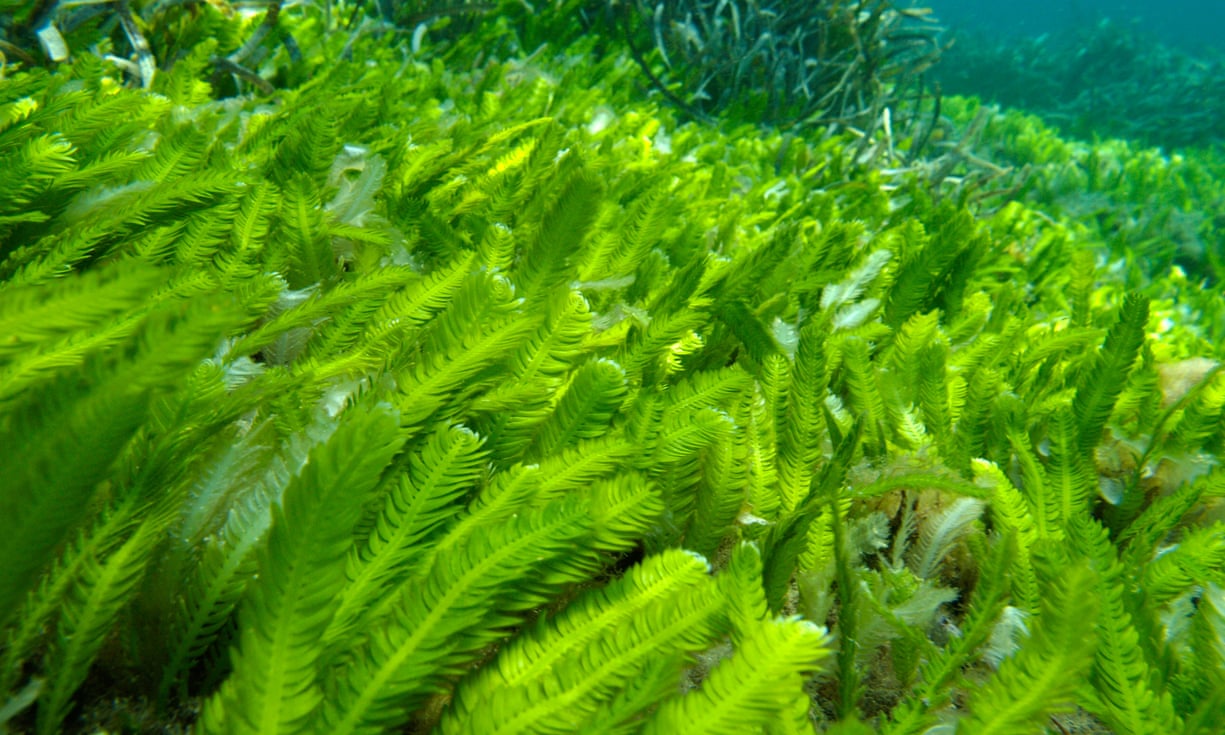
A seller, who was offering to export killer algae (Caulerpa taxifolia) from the UK said he thought it was unlikely that the plants would find their way into the environment if they were disposed of properly. Photograph: Alamy Stock Photo

We report on the problems of invasives pretty often on this blog, whether its herps, plants, fish, or even mammals. Today, I learned that many of the opportunistic organisms creating problems in the US and UK, as well as Australia, are sold online by merchants on eBay and Amazon, often with no legal repercussions despite trading in banned species. In an article written for The Guardian, Karl Mathiesen discusses the issue. After reading it, I thought of the opportunity for citizen scientists to “tip off” their governments after spending a couple minutes online, browsing for internet traders in invasive species. I’ll be looking into that in the weeks to come. For now, Mathiesen reports:

A killer algae, a monstrous pondweed, a tree that has infested the Everglades and a dozen more of the US’s most environmentally destructive plants have been discovered for sale on eBay. Online traders told the Guardian that ignorance of the law led them to create listings that had spread hundreds of illegal specimens across the country.

Continue reading

A Moth’s Dark Side Evolution

A mutation giving rise to the black form of peppered moths has been discovered and is estimated to have occurred around 1820. Photo by Ilik Saccheri

The story of moth populations turning from light grey to sooty black in England during the Industrial Revolution is a popular schoolbook lesson of evolution, but an explanation for the genes responsible for the change had not been clear until now. Ed Yong reports for Nat Geo’s Phenomena blog:

In the early 19th century, coal-fired power stations belched a miasma of soot over the English countryside, blackening trees between London and Manchester. The pollution was bad news for the peppered moth. This insect, whose pale speckled body blended perfectly against the barks of normal trees, suddenly became conspicuous—a white beacon against blackened bark, and an easy target for birds.

As the decades ticked by, black peppered moths started appearing. These mutants belonged to the same species, but they had traded in their typical colours for a dark look that once again concealed their bodies against the trees. By the end of the century, almost all the moths in Manchester were black.

Continue reading

The King of Sting

I’ve heard about the Schmidt Pain Scale before, having lived and worked in the tropics for long enough to have seen first-hand, and countless times, two of the insects with the most painful stings on his index: the bullet ant and the tarantula hawk. Of course, I haven’t sought out their stings and will actively avoid the two hymenopterans as much as possible, but Justin Schmidt has been doing the opposite with insects around the world for years. From the TNC Cool Green Science blog:
A yellow jacket just stung you. You jump, scream and shout expletives.

Or, if you’re Justin Schmidt, you describe the sting as such: “Hot and smoky, almost irreverent. Imagine W.C. Fields extinguishing a cigar on your tongue.”

Schmidt might be called the King of Sting: He’s spent much of his career researching bees, wasps and ants, including the chemical make-up of their venom. He’s traveled to six continents to track down stinging insects.

Continue reading

Lionfish Removal and Awareness Day Festival


Photo credit: Erin Spencer

Photo credit: Erin Spencer

I’ve posted previously about the lionfish invasion that is threatening coral reef and other marine ecosystems throughout the Caribbean, Gulf of Mexico, and Southern Atlantic Seaboard of the United States. As I’ve noted in earlier posts, it is the general consensus of the scientific and conservation community that eradication of lionfish from the Atlantic is impossible. However, there is growing evidence that systematic removal efforts can be effective in controlling lionfish populations and in reversing their negative impact on reef health. The challenge faced by marine protection agencies and marine resource managers is how to undertake these removals on a regular and financially sustainable basis. I’m convinced that this challenge can best be met by an integrated approach involving coordinated action by public and private actors complemented by the creation of markets for lionfish products.

All of these elements were in evidence at the Lionfish Removal and Awareness Day festival in Pensacola, Florida which I attended last month. Organized by the Florida Fish and Wildlife Conservation Commission (FWC), the two-day event included a lionfish derby (with more than 8,000 lionfish removed by volunteer divers), lectures about the invasion and the threat that it poses, lionfish cooking and tasting, and sale of lionfish products.

Notable among the sponsors of the event was Whole Foods, which had announced a few weeks earlier that it was going to begin selling lionfish at its stores in California and Florida. The move by whole foods was sparked by the decision late last year of Monterey Aquarium’s Seafood Watch program to list lionfish as a best choice under its sustainable seafood recommendations, citing the invasive nature of the species. As I had noted in a previous post, Seafood Watch had previously declined to list lionfish due to the absence of an established commercial fishery, but to their credit, the group responded to what they described as a “grassroots campaign” and revisited the issue. Moreover, since taking the decision to list lionfish, Seafood Watch has been active in raising awareness about the invasion and in promoting lionfish consumption. Continue reading

Palm Oil Problems

By now not many people who are literate and connected to global news can say they did not know that palm oil is problematic; they can only say either that they care, or do not. Knowing where your biodiesel comes from may influence what you can do about this problem:

Leaked figures show spike in palm oil use for biodiesel in Europe

Steep rise between 2010 and 2014 shows link between EU’s renewable energy mandate and deforestation in south-east Asia, say campaigners

3000 (2)

A forest activist inspects land clearing and drainage of peat natural forest Sumatra, Indonesia. Photograph: Ulet Ifansasti/Getty Images

Leaked trade industry figures show a five-fold increase in the use of palm oil for biodiesel in Europe between 2010 and 2014, providing new evidence of links between deforestation in southeast Asia and the EU’s renewable energy mandate. Continue reading

Dare To Be Deep

feature_daretobedeep.jpg

CPAWS has been around for decades, but we seem to have missed it in these pages in the five years we have been linking out to notable conservation initiatives:

The Canadian Parks and Wilderness Society (CPAWS) is Canada’s only nationwide charity dedicated solely to the protection of our public land and water, and ensuring our parks are managed to protect the nature within them. In the past 50+ years, we’ve played a lead role in protecting over half a million square kilometres – an area bigger than the entire Yukon Territory! Our vision is to protect at least half of our public land and water so that future generations can experience Canada’s irreplaceable wilderness.

The Dare to be Deep initiative just came to our attention:

Every second breath we take comes from the ocean that covers 70% of our planet. The ocean also regulates the temperature of our planet, and provides us with an important source of protein and food. Continue reading

Fourth Estate Considerations

the_fourth_estateWhen we started this exercise, aka blogging, we wanted to keep a running tab of “things” we care about as they showed up in various news sources, and to comment on those topics as often as we could share relevant examples from our own daily activities. Community, collaboration and conservation have been the catch-all topical themes.

Depending on the news for this exercise, not surprisingly we care about the state of the news in all its business/profession dimensions. We have a particular fondness for long form written journalism, and a particular loathing for its polar opposite, whatever that might be called. Gossip-mongering, ugh. So when I first saw headlines announcing that a gossip-mongerer had suffered a legal defeat last week, I smiled at the headline but could not otherwise be bothered to read the details. That changed dramatically when I read the short item below:

How Peter Thiel’s Gawker Battle Could Open a War Against the Press

BY NICHOLAS LEMANN

Probably the most important case in American press law is New York Times Co. v. Sullivan (1964), in which the Supreme Court, in a unanimous decision, made it just about impossible for a “public figure” to win a lawsuit against a news organization. Justice William Brennan, in the majority opinion, wrote, “The constitutional guarantees require, we think, a Federal rule that prohibits a public offi­cial from recovering damages for a defamatory falsehood re­lating to his official conduct unless he proves that the state­ment was made with ‘actual malice’—that is, with knowl­edge that it was false or with reckless disregard of whether it was false or not.” This standard, built on in succeeding cases, made this the country with the most pro-free expression, and specifically pro-press, laws in the developed world; post-Sullivan protections extend from publications to individuals, and from libel to invasion of privacy. “Libel tourism” means looking for a pretext to sue an American publication in England or some other friendlier venue, especially if you’re a celebrity. Conversely, the purveyors of recent monster revelations, like Wikileaks, have taken pains to find American publishing partners, because the right to publish is far more substantial here than elsewhere. Continue reading

New Marine Park in Malaysia

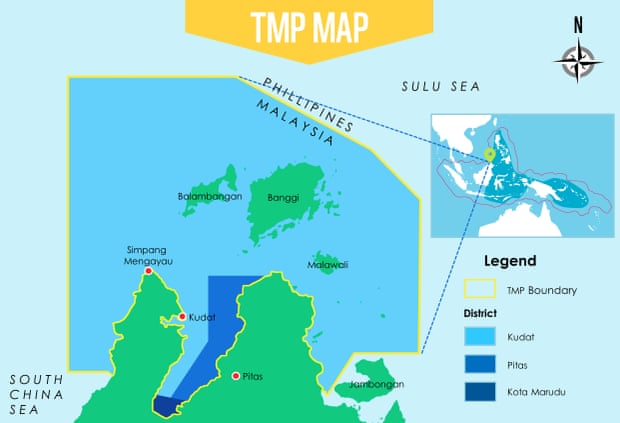
A map of the new Tun Mustapha marine protected area, which occupies just under one million hectares of seascape, including more than 50 islands. Illustration: WWF Malaysia

The more protected areas for wildlife in the world the better, in our book. So we’re happy to hear that Malaysia has created a new marine park, the largest of its kind in the country, that covers a million hectares, or around two million football fields. With so many coral and fish species in the region, it’s a great step forward for conservation in an area at risk for over-fishing or poor practices like blast or cyanide fishing. Johnny Langenheim reports:

Malaysia has just established the biggest marine protected area (MPA) in the country. The Tun Mustapha park (TMP) occupies 1m hectares (2.47m acres) of seascape off the northern tip of Sabah province in Borneo, a region containing the second largest concentration of coral reefs in Malaysia as well as other important habitats like mangroves, sea grass beds and productive fishing grounds.

It is also home to scores of thousands of people who depend on its resources – from artisanal fishing communities to the commercial fisheries sector – making it in many ways a microcosm of the entire Coral Triangle bioregion, where environmental protection must be balanced with the needs of growing coastal populations.

Continue reading