Weed-whacking Goats in New York City

Photo © babygoatsandfriends.com

Goats are fun creatures, providers of milk, cheese, and meat, and also simply petting experiences. Apparently, they can even be rented out as lawn-mowing weed controllers, eating unruly plants where pesticides would otherwise be used. And certain parks in New York City are getting goats on contract to meet that need, as Olga Oksman reports for The Guardian:

Overexcited children and reporters mill around the fence enclosing part of the Prospect Park woodlands. “Daddy, daddy, look!” one eager little boy yells. Everyone is craning their necks, raising their cameras to get a shot. The latest celebrities to grace Brooklyn are a group of eight weed-eating goats, and they are taking up residency through the end of the summer.

Later this week, Prospect Park has arranged a wine and cheese reception so the public can formally meet the goats, which range from Nubian to Angora and Pygmy breeds. Tickets have already sold out.

Continue reading

Solar Thermal vs Photovoltaics

Photo © German Aerospace Center

Solar power is always on our radar, but we understand that storing the electricity from photovoltaics can be an issue. Today we are learning about a new solar technology for the first time, even though it revolves around something that we benefit from every day: the sun’s heat. Umair Irfan reports for Scientific American‘s ClimateWire section on this interesting idea being researched in Europe:

COLOGNE, Germany—At Germany’s aerospace agency, the next frontier is capturing the sun here on Earth and keeping it on tap.

In a 4-year-old glass and steel building near the Cologne-Bonn Airport, researchers at the German Aerospace Center (DLR), Germany’s equivalent of NASA, are working on new ways to produce more heat than light in order to smooth over intermittency, one of the biggest drawbacks of solar power on the grid.

Continue reading

A Just So Story by DNA

A few years ago we shared a story similar to the one below, where Kipling’s Just So Stories were linked with reporting on modern evolutionary biology; a year before that, at the beginning of this blog’s start in India, we discussed Kipling’s ties to that country and its wildlife. From the New Yorker‘s Elements section comes the story “How the Giraffe Got Its Neck,” by Anthony Lydgate:

It’s difficult to know what to make of the giraffe. It shuffles like a camel (right legs forward, then left legs) but runs like a rabbit (hind legs forward, then front legs). Its distinctive aroma repulses many ticks but enchants certain people. It bellows, hisses, and moans in the wild, and in captivity it hums in the dark. It naps with its head aloft but sleeps like a swan, with its head on its haunches. Had Aristotle ever seen a giraffe, he might have said that it was the product of an interspecies dalliance at the watering hole, which he thought of as a kind of zoological swingers’ club—a place where “bastard animals are born to heterogeneous pairs.”

Continue reading

The American Burying Beetle

American burying beetles. Photo © St. Louis Zoo via Cool Green Science

Beetles, apart from being the most numerous type of insect in the world, comprise the largest group of animals in general, with somewhere between three- and four-hundred thousand species described; and that doesn’t even count the presumably undiscovered ones hiding out in some unexplored corner somewhere. We’ve covered dung beetles before, but also mycokleptic species, and now we’re learning about a very important carrion beetle in North America known as the American burying beetle from Ted Williams at The Nature Conservancy’s Cool Green Science blog:

The shiny black, orange-spotted adults can approach two inches in length. Offspring beg both parents for food, inducing regurgitation by stroking their jaws like wolf pups. They’re federally endangered American burying beetles, largest of the 31 species of North American carrion beetles.

Riding on the adults like oxpeckers are orange mites that keep them and their larval food supply free of fly eggs and microbes.

Continue reading

Waste Not, Want Not

Indian weddings (and other big parties) serve a lot of food — and have a lot of leftovers. Now there's a plan in Mumbai to share the surplus with those who are hungry. Mahesh Kumar A./AP

Indian weddings (and other big parties) serve a lot of food — and have a lot of leftovers. Now there’s a plan in Mumbai to share the surplus with those who are hungry.
Mahesh Kumar A./AP

Living in India provides daily examples of life’s major contradictions: silence and chaos, simplicity and grandeur, lack and excess… Traditional Indian weddings illustrate the examples of abundance – even the most modest of weddings will represent some version of the the proverbial “groaning board” – be it traditional banana-leaf thali of south India or an elaborate multi-course dinner in towering tents. Whenever food is prepared for a crowd there’s potential for waste, even in the so-called “developed world”.

The beauty of this inspiring story is how it taps into Mumbai’s dabbawalla system, taking advantage of the extraordinary logistics of a food distribution system that has functioned well for decades. (If you’ve never seen Ritesh Batra’s beautiful film The Lunchbox, run and find it now…)

India has 194.6 million undernourished people — that’s more than half the world total.It’s what people mean when they talk about “food insecurity:” the economic and social condition of limited or unpredictable access to adequate food.

But in a study published in the August 2015 issue of the journal Lancet, researchers found that India also has 46 million obese citizens.

The dabbawallas — Mumbai’s lunch delivery collective — have stepped in with an initiative they’re calling the Roti Bank. Their aim is to connect the have-nots with the have-too-muchs.

“We deal with food every day, so we’re ideally placed to fix this,” says Dashrath Kedare, a co-founder of the Roti Bank and a leader of one of the dabbawalla unions. Continue reading

Southward, Ho!

160523_r28182-290x149-1462985555 (1)

I had never before had the experience of beholding scenic beauty so dazzling that I couldn’t process it, couldn’t get it to register as something real. ILLUSTRATION BY BLEXBOLEX

We are happy any time this novelist takes time from his main craft to devote time to what seems to be his main personal passion, which might be identified as birding, or else more broadly speaking the environment in which birds thrive (or not). From this week’s New Yorker, another journey far away, southward, by Jonathan Franzen with an eye to environmentalist perspective:

The End of the End of the World

An uncle’s legacy and a journey to Antarctica.

BY

Two years ago, a lawyer in Indiana sent me a check for seventy-eight thousand dollars. The money was from my uncle Walt, who had died six months earlier. I hadn’t been expecting any money from Walt, still less counting on it. So I thought I should earmark my inheritance for something special, to honor Walt’s memory.

It happened that my longtime girlfriend, a native Californian, had promised to join me on a big vacation. She’d been feeling grateful to me for understanding why she had to return full time to Santa Cruz and look after her mother, who was ninety-four and losing her short-term memory. She’d said to me, impulsively, “I will take a trip with you anywhere in the world you’ve always wanted to go.” To this I’d replied, for reasons I’m at a loss to reconstruct, “Antarctica?” Her eyes widened in a way that I should have paid closer attention to. But a promise was a promise. Continue reading

“Certified Transitional” Ingredients

An interior view of Clif Bar headquarters in Emeryville, California. Photo © GreenBiz Group

We put a lot of stock in organic farming, as well as eating and drinking. If companies do it right, sourcing organically can make a difference. So it’s uplifting to read that two companies we support by buying their delicious products, Clif Bar and Kashi, are making an effort to bolster the organic ingredient supply chain by leading a new category for crops produced by farmers who are in the three-year process of switching from conventional agriculture to an organic label; it’s called “Certified Transitional.” Lauren Hepler reports for GreenBiz:

Inside an airy, post-industrial space situated on the East side of the San Francisco Bay, several brightly colored mountain bikes and the sail of a kite surfing set hang from a lofted ceiling above some 350 employees sprawled across the 150,000-square-foot headquarters of Clif Bar.

Outside, a small organic gardening plot has been set up next to the free daycare center for the children of employees at the famously outdoorsy food company.

“We start ’em young,” jokes Dean Mayer, Clif Bar’s communications manager.

Continue reading

Hydropeaking Dams = Fewer Insects

Hoover Dam, photo © US Bureau of Reclamation

Although we’ve heard of dams causing environmental and community problems before, we’ve also seen how they can be beneficial to society, and it’s clear that they’re a double-edged sword. Most recently on the topic, we learned that with proper planning and design, hydropower can be less of an enemy to conservation. Now, research highlighted in Conservation Magazine displays the possibility of helping native river-reliant insect populations by adjusting how dams “hydropeak,” or change river flow to compensate for electricity demand. Sarah DeWeerdt reports:

Scientists know that hydropower dams often decrease the abundance and diversity of aquatic insects downstream. But until now it wasn’t clear why—after all, dams cause a range of environmental stressors such as alterations in water flow, temperature, and sedimentation.

A massive new study led by the U.S. Geological Survey lays much of the blame on hydropeaking, the practice of varying river flows below a dam depending on electricity demand. Because of hydropeaking, the amount of water released from a dam can vary by as much as ten-fold throughout the day, creating an artificial intertidal zone that propagates for hundreds of kilometers downstream.

Continue reading

Xandari, Monday Morning

WestPoolSunrise

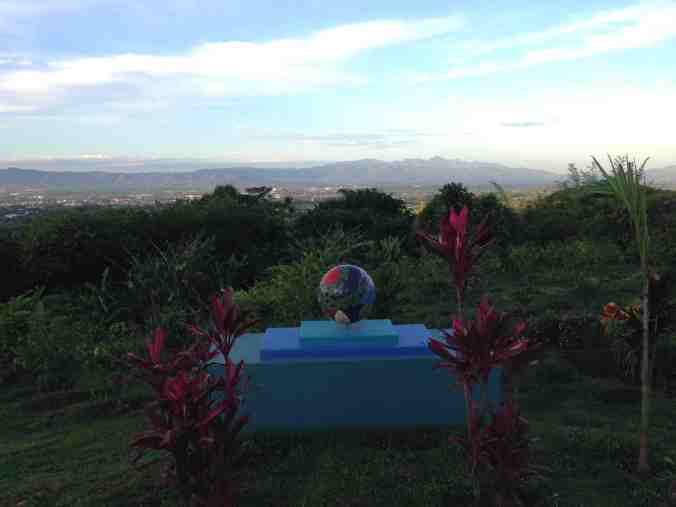
We are currently in the middle of filming a series of short films at Xandari, here in Costa Rica, to match the series of short films we have made of the various Xandari properties in Kerala, India. The film crew arrives at 4:45 so we can catch the rising sun, which I find best viewed from the west edge of the property. Above you can see some of the coffee planted in the last two years, in the midst of one of Xandari’s highly productive organic vegetable gardens. The film crew is drawn to this space at sunrise and sunset. Soon you will see why, cinematically. For now, some more images from the edge of the forest reserve, following Saturday morning’s outing; this time focused on various introduced species of flora that complement Costa Rica’s most famous introduced species of plant (high grade arabica coffee). Continue reading

Antler Awareness

The Conservancy’s Justin Jones rounds up some antlers.  Photo © The Nature Conservancy (Matt Miller)

In Oregon, elk populations have grown so large that they are threatening a key forest tree species: the aspen, whose leaves turn a vivid yellow in the fall and create amazing landscape scenes, particularly in the western United States. To raise awareness of the issue and also generate funds for local children, people near The Nature Conservancy’s Zumwalt Prairie Preserve go out and search for elk antlers that have been shed each spring, then sell the antlers. Matt Miller writes for the TNC blog:

As our vehicles roll to a stop along the muddy track, a postcard-perfect scene stretches before us. Rolling prairie dotted with beautiful wildflowers, with towering snow-capped peaks in the background. But the kids around me don’t notice any of it.

“Antler!” one of them cries, and the group is off, running across the rolling hills. A youngster is soon hoisting an impressive elk antler over his head. His friends look on with admiration, but soon another antler is spotted, and another.

Continue reading

We Never Tire Of This Clever Creature

baird_beetle-5336-1--e98afd45ca45c51af0b6ec49cc8417c456611fbb-s1400-c85

Scientists at the University of Lund in Sweden have shown that dung beetles use mental “snapshots” of the Milky Way to navigate. E. Baird / Lund University

Thanks to National Public Radio (USA) for this story, which we link to even though we just recently linked back to some earlier stories on the same.

And speaking of NPR, one of the podcasts that originates on its New York City affiliate WNYC–Radio Lab, which was featured in some of our earliest posts–this episode featuring another beetle may have been the greatest of all time.

Dung Beetles Navigate Poop-Pile Getaways Using Celestial ‘Snapshots’

It’s not easy being a dung beetle.

Besides the obvious fact that they eat, well, dung, the act of just getting a meal is an involved process.

In the most elaborate carry-out scenario, the dung beetles must first stake claim to their piece of poop at the main dung pile, then shape it into a sphere for easy transport, fend off other dung beetles trying to steal it, and then — using the stars to navigate — determine the fastest way to roll their prize away to a safe spot for consumption. Continue reading

Thank You, WWF Mexico, For Your Work In The Gulf Of California

2362

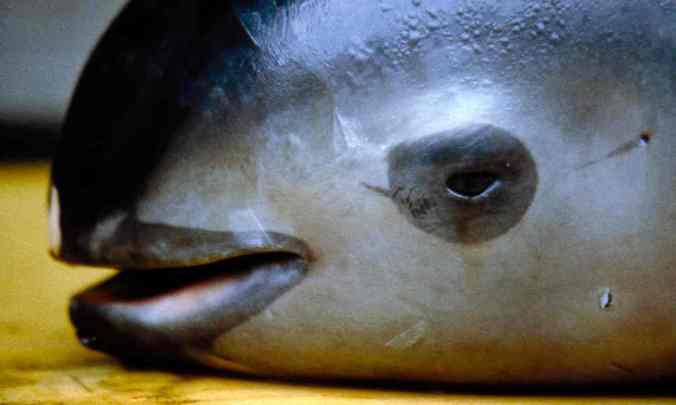
There are just 60 vaquita marina left in the wild, according the the latest estimate. Photograph: Ho New/Reuters

Even when there is tragic news, we take some comfort in seeing the WWF’s ongoing efforts to counter our worst tendencies as humans to deplete natural resources irresponsibly. Thanks the Guardian, and its French colleagues, for this news:

World’s smallest porpoise ‘at the edge of extinction’ as illegal gillnets take toll

Now only 60 of Mexico’s vaquita marina left despite the navy enforcing a ban on the fishing net, latest study shows

Environmentalists warned on Friday that Mexico’s vaquita marina, the world’s smallest porpoise, was close to extinction as the government reported that only 60 were now left. Continue reading

Xandari, Early Saturday Morning


Falls

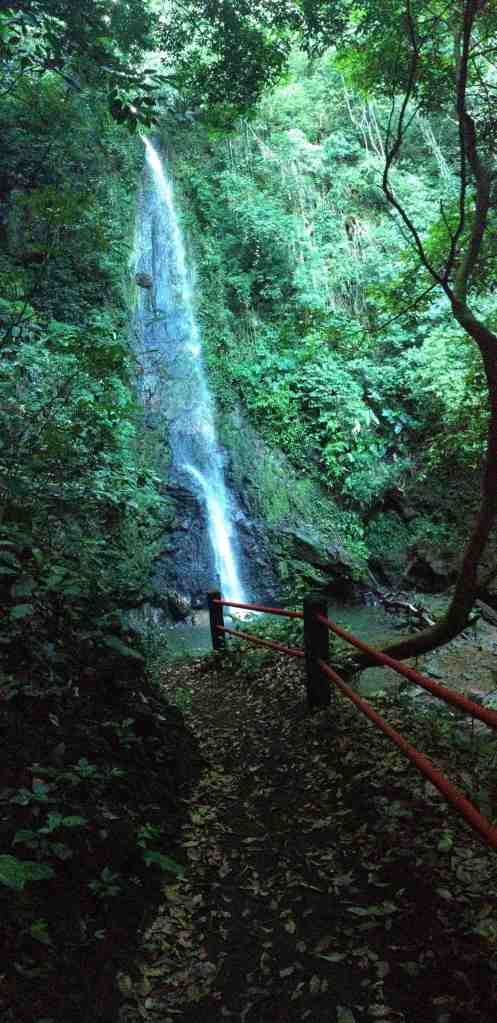
I have walked these trails hundreds of times during the nearly two decades since I first stepped foot in Xandari’s forest reserve. Somehow I never tire of this particular stretch, which is a testament to the fundamental charisma of water, and the special charisma of water falling from a significant height. Continue reading

Human – Pachyderm – Apium Collaboration

Innovation takes many forms. It’s especially satisfying when that innovation works with nature instead of against her. Examples of creative collaboration to solve environmental issues, be they unusual agricultural pest control or ways to avoid human/wildlife conflict such as this Elephant and Bee project are happy news indeed.

Some of our team live in Kerala, India – and know from personal experience the intelligence, and perseverance of elephants, when confronted with an obstacle to plants or trees they crave. This beehive fence concept is incredibly clever, taking advantage of the elephants’ natural fear of bees to keep them safe from potentially deadly conflict.

“I congratulate Dr. King as the winner of this important award. Her research underlines how working with, rather than against, nature can provide humanity with many of the solutions to the challenges countries and communities face. Continue reading

Science Cannot Serve Two Masters

overfishing_custom-1e6a0790cb0cea389c8c2aa9c4927c8b6f5686a1-s1400-c85.jpg

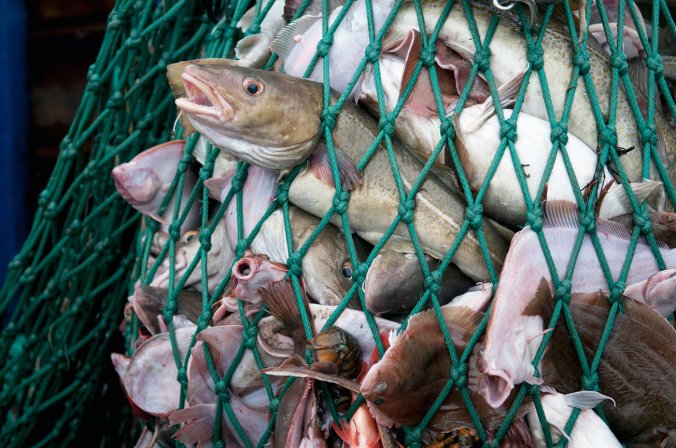
A fishing dragger hauls in a net full of Atlantic cod, yellowtail flounder and American lobster off the coast of New England. Greenpeace says Ray Hilborn, a prominent fisheries scientist known for challenging studies that show declines in fish populations, failed to fully disclose industry funding on some of his scientific papers. Jeff Rotman/Getty Images

Go to the dictionary, or notes from a science course you might have taken, to be reminded of the definition of how this body of knowledge operates, and the importance of avoiding bias is evident. When it relates to the survival or collapse of species, avoiding bias seems even more important than the definition implies. Science serves the interest of objective, verifiable truth; not economic or political interests (thanks to National Public Radio, USA):

Fisheries Scientist Under Fire For Undisclosed Seafood Industry Funding

A prominent and outspoken fisheries scientist at the University of Washington is under attack from Greenpeace for not disclosing industry funding in several scientific papers stretching back to 2006. Continue reading