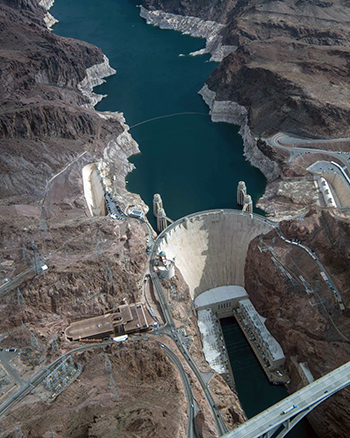
Hoover Dam, photo © US Bureau of Reclamation
Although we’ve heard of dams causing environmental and community problems before, we’ve also seen how they can be beneficial to society, and it’s clear that they’re a double-edged sword. Most recently on the topic, we learned that with proper planning and design, hydropower can be less of an enemy to conservation. Now, research highlighted in Conservation Magazine displays the possibility of helping native river-reliant insect populations by adjusting how dams “hydropeak,” or change river flow to compensate for electricity demand. Sarah DeWeerdt reports:
Scientists know that hydropower dams often decrease the abundance and diversity of aquatic insects downstream. But until now it wasn’t clear why—after all, dams cause a range of environmental stressors such as alterations in water flow, temperature, and sedimentation.
A massive new study led by the U.S. Geological Survey lays much of the blame on hydropeaking, the practice of varying river flows below a dam depending on electricity demand. Because of hydropeaking, the amount of water released from a dam can vary by as much as ten-fold throughout the day, creating an artificial intertidal zone that propagates for hundreds of kilometers downstream.