The Little Things In Life Provide New Perspective

wealthofunsu

This is a new and expanded view of the tree of life, with clusters of bacteria (left), uncultivable bacteria called ‘candidate phyla radiation’ (center, purple) and, at lower right, the Archaea and eukaryotes (green), including humans. Credit: Zosia Rostomian, Lawrence Berkeley National Laboratory

It has been years since we sourced our last story link from this source, but we chose the perfect day to go back snooping. Those of us who learned our trade in Costa Rica have long believed that there is a lot to be said for charismatica microfauna, and this news gets us thinking back on that topic with new perspective:

Wealth of unsuspected new microbes expands tree of life

The tree of life, which depicts how life has evolved and diversified on the planet, is getting a lot more complicated.

Researchers at the University of California, Berkeley, who have discovered more than 1,000 new types of and Archaea over the past 15 years lurking in Earth’s nooks and crannies, have dramatically rejiggered the tree to account for these microscopic new forms.

“The tree of life is one of the most important organizing principles in biology,” said Jill Banfield, a UC Berkeley professor of earth and planetary science and environmental science, policy and management. “The new depiction will be of use not only to biologists who study microbial ecology, but also biochemists searching for novel genes and researchers studying evolution and earth history.”

Continue reading

Message In A Bottle, Future Perfect

Print

Researchers are hoping to “assist” evolution in order to produce hardier corals and tougher trees. ILLUSTRATION BY HARRY CAMPBELL

We are just browsing through the new edition of one of our favorite weekly sources of material–favored for its variety of topics, and its long form approach–and this Kolbert report hits the right spot for starting a new week with vim and vigor and creative spark:

Unnatural Selection

What will it take to save the world’s reefs and forests?

Ruth Gates fell in love with the ocean while watching TV. When she was in elementary school, she would sit in front of “The Undersea World of Jacques Cousteau,” mesmerized. The colors, the shapes, the diversity of survival strategies—life beneath the surface of the water seemed to her more spectacular than life above it. Without knowing much beyond what she’d learned from the series, she decided that she would become a marine biologist.

“Even though Cousteau was coming through the television, he unveiled the oceans in a way that nobody else had been able to,” she told me. Continue reading

Journeys That Set Our Lives In Motion

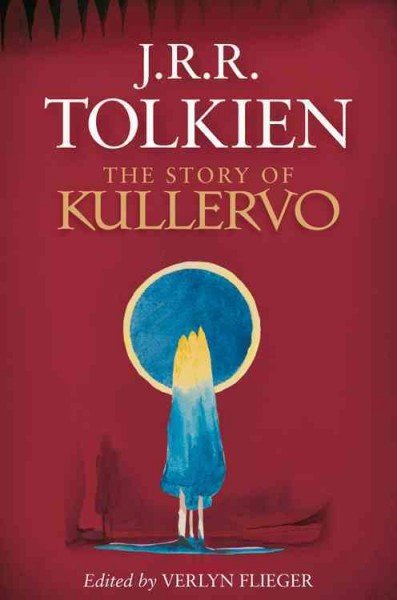
9780544706262_custom-197e5387589323c99cfd561caf58b83ba52e68bb-s500-c85

You do not need to be an admirer of the works of this author to appreciate the value of the story told in this book review (thanks to National Public Radio, USA):

In 1913, the 21-year-old Ronald Tolkien should have been studying for his exams. He was halfway through his Classics degree — the subject all the best students did at Oxford in those days. Getting admitted to Oxford on a scholarship was a great opportunity for young Ronald, an orphan who had always struggled to stay out of poverty. A Classics degree would have set him up for almost any career he chose. But he wasn’t studying. Instead, he was trying to teach himself Finnish.

Why would a brilliant student with so much at stake let himself go astray at such a crucial time? There were two reasons: love and the Kalevala.

Tolkien’s twin obsessions at the time were his future wife, Edith Bratt, and the Kalevala, the national epic of Finland. This collection of poems, myths, spells and hero-tales had been collected and published in the early 19th century, but the poems themselves are thought to be far older. Its unique voice, resembling no other European mythology, thoroughly captured the mind and heart of young Tolkien. “The almost indefinable sense of newness and strangeness … will either perturb you or delight you,” he wrote at the time. Continue reading

Food For Thought

PollanLecture_audienceByTonyRinaldosm

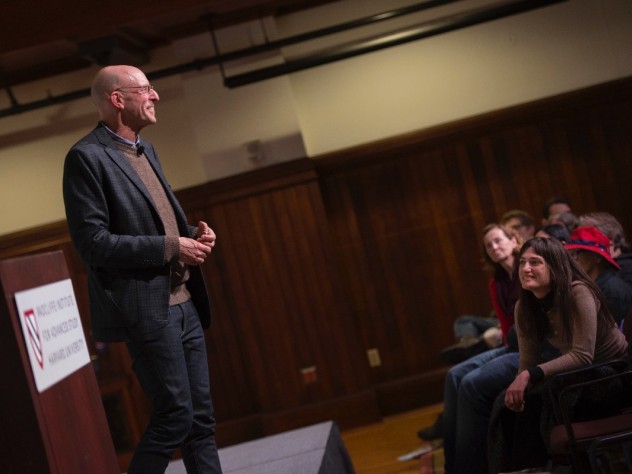
Author Michael Pollan speaks to a packed house at Radcliffe. Photograph by Tony Rinaldo

And to round out our links outward today on food-related themes, this one from Harvard Magazine seems a fitting complement to today’s two other news-feature items:

Michael Pollan’s Crooked Writing Path

WHETHER HE IS WRITING a book on big farming and the way Americans think about food, or interviewing terminal cancer patients who have had life-altering experiences through hallucinogenic drugs, author Michael Pollan’s career as a writer has been anything but traditional. Continue reading

Get Ready For New Foods

4167

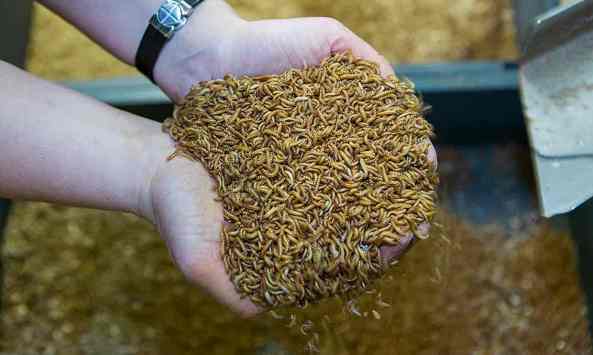
Edible insects are currently expensive, but bug farmers believe economies of scale will bring lower prices. Photograph: Proti-Farm

We cannot help but wonder which type of salt may be considered most appropriate for the new menu items coming soon to a table near you; but seriously, get ready:

The worm has turned: how British insect farms could spawn a food revolution

With meat prices expected to soar, agricultural entrepreneurs believe invertebrate livestock can provide the protein we need. But will the mainstream ever be ready to eat mealworms?

It could be the tumbledown, moss-covered drystone walls marking the boundaries of land that has been farmed since the arrival of the Norse settlers. Or the gentle meanderings of the river Eden through the shadows of the Cumbrian fells. Or the proximity of the Settle-Carlisle railway line. All in all, Thringill Farm seems an unlikely setting for a 21st-century food revolution. Continue reading

Know Your Salt

salts_750

What once was a simple decision between iodized table salt or sea salt has become a sensory overload. Walk into Whole Foods to restock on salt and you’ll be confronted with a dazzling array of colors, textures and price points.

Thanks to EcoWatch for this primer on the various salt choices we face:

Salts have exploded with popularity. What once was a simple decision between iodized table salt or sea salt has become a sensory overload. Walk into Whole Foods to restock on salt and you’ll be confronted with a dazzling array of colors, textures and price points. But, what really differentiates specialty salts? Are expensive salts actually worth the money?

Here is a guide to nine different culinary salts that will help you decide what salt is best for your needs.

1. Table

Table salt is created by superheating natural salt to 1,200 degrees Fahrenheit, which destroys most beneficial compounds. Fortified with essential iodine, table salt is also bleached and devoid of trace elements, so it’s certainly not the healthiest salt you can shake. This type of salt can often contains additives to slow moisture absorption so it is easy to sprinkle in your salt shaker. Continue reading

Audubon Focuses on Corvids in Latest Issue

Corvid Behaviors poster by the Cornell Lab of Ornithology

“Meet the Bird Braniacs,” reads the header for three stories in the March-April issue of Audubon Magazine, highlighting the American Crow, Eurasian Jay, and Common Raven as especially smart species of bird (the three of them are Corvids, or members of the Corvidae family). In the different research projects covered in the Audubon pieces, the idea of empathy in birds is explored by Nicky Clayton at Cambridge University with Eurasian Jays; the problem of deterring Common Ravens from predating upon desert tortoises is a challenge for Tim Shields in the Mojave desert; and the general intelligence of the American Crow is studied by John Marzluff at the University of Washington. All the articles are quite interesting and worth a read online if you have the time. Below, a brief excerpt from the three essays, by Michael Balter, Alisa Opar, and Kat McGowan, respectively:

“I love you!” says Nicky. “I love you!”
“I love you!” says Lisbon
.

Nicky Clayton has shoulder-length blonde hair and a posture that reflects her background in dancing.  She is a scientist. She is very smart. Lisbon is a bird, a Eurasian Jay. He’s pretty smart, too. Like most Eurasian Jays, especially the males, Lisbon is also a good mimic. So it’s not clear whether he really loves Nicky, although he certainly likes it when she gives him a worm.

If he loves anyone, it’s probably Rome, his longtime mate. Lisbon and Rome, both eight years old, have been together since they were just two. They share a wired enclosure out here at the edge of Madingley, a peaceful, manicured English village a few miles west of Cambridge.

Clayton, 53, moved to Cambridge University about 16 years ago, around the time when she was becoming an international science superstar for her investigations into avian intelligence. As part of the deal, the university agreed to construct several aviaries at its Madingley annex according to Clayton’s specifications. They’re not fancy, but the birdcages include plenty of space for the captives to fly around, play, and mate, as well as special compartments where they collaborate with Clayton in state-of-the-art bird cognition experiments. Today the aviaries house about 70 birds, including Eurasian Jays, Western Scrub-Jays, and Rooks, all members of the corvid family. At night, the caws and kuks can be heard over much of the village.

Continue reading

Finding a Boiling River in Peru

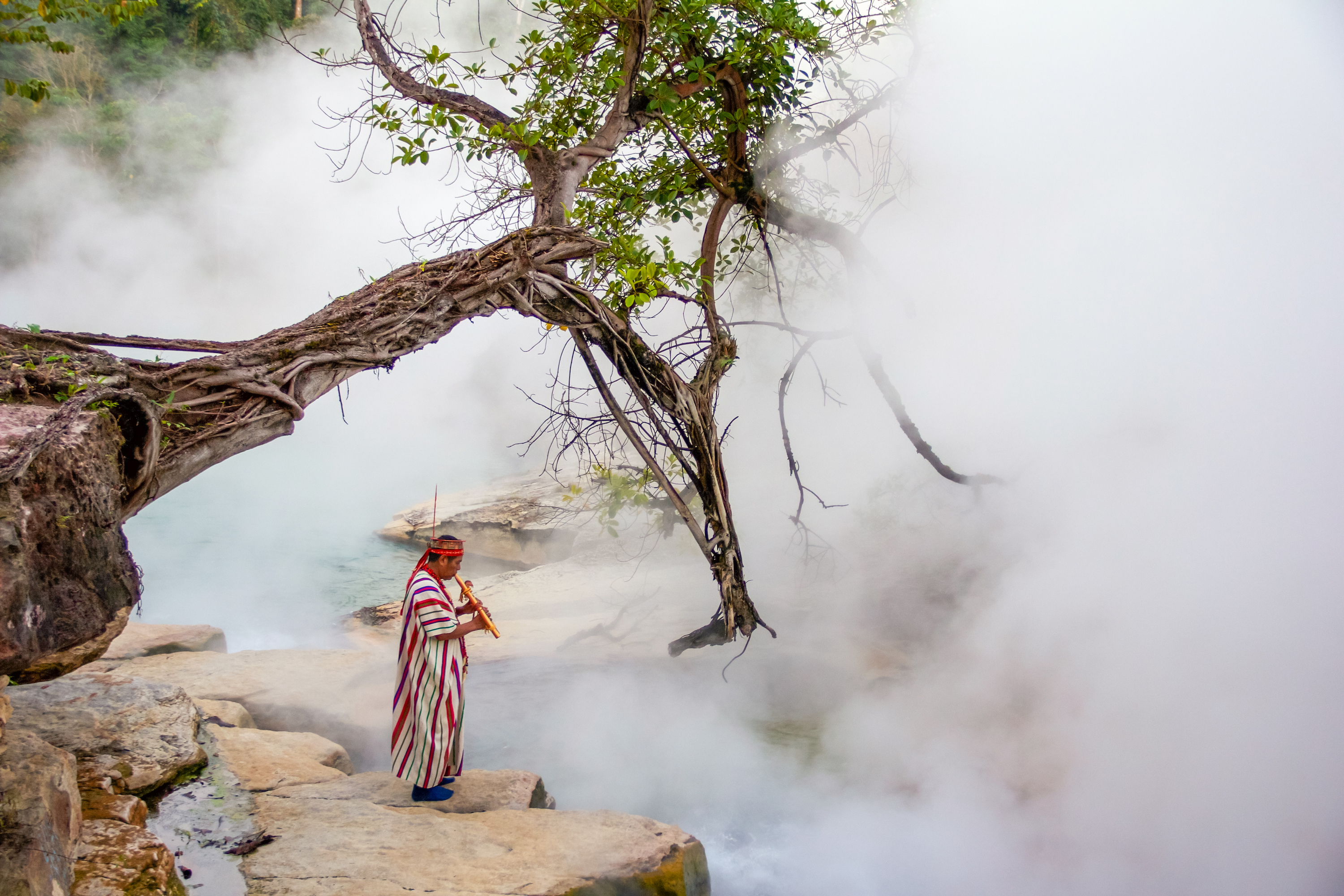
The Boiling River and an Amazonian shaman. Photo by Sofia Ruzo

Thanks once again to Chau Tu at Science Friday’s weekly written article, we’ve learned something new about the natural world, and it sounds like pretty much everyone except maybe a couple hundred people were unaware of its existence too: a steaming-hot river in the Amazon of Peru that isn’t volcanically heated. As Andrés Ruzo, the first geoscientist to study the water body, said in his TED Talk on the subject in 2014 (just released this February), “At a time when everything seems mapped, measured and understood, this river challenges what we think we know. It has forced me to question the line between known and unknown, ancient and modern, scientific and spiritual. It is a reminder that there are still great wonders to be discovered.” Here’s more from Chau Tu on the subject, and make sure to visit the Boiling River Foundation website.

Andrés Ruzo first heard about the Boiling River from his Peruvian grandfather, who shared a legend with him when he was a kid about the Lost City of Gold in Peru. “One of the details of the story was a ‘river that boils,’” Ruzo recalls.

Twelve years later, when Ruzo was studying at Southern Methodist University in Texas to become a geophysicist, he asked colleagues and other experts if they knew anything about a large river that boiled in the Peruvian Amazon. No one had; some scoffed at the inquiry. While thermal rivers do occur on earth, they’re generally tied to active volcanic or magmatic systems—neither of which were known to exist in the Amazon jungle, they said.

Continue reading

Endangered Natural History

The Spectrum of Life, at the American Museum of Natural History, an evolutionary trip through the amazing diversity of life on Earth. Credit Matthew Pillbury/Benrubi Gallery

We’ve said often that we’re die-hard supporters of natural history museums before, and even quite recently. So it’s nice to see yet another article championing the role these institutions can have in scientific discoveries, education, and more. Here’s an op-ed in last Sunday’s New York Times by Richard Conniff, highlighting some threats to some US museums:

When people talk about natural history museums, they almost always roll out the well-worn descriptive “dusty,” to the great exasperation of a curator I know. Maybe he’s annoyed because he’s spent large sums of his museum’s money building decidedly un-dusty climate-controlled storage sites, and the word implies neglect. (“Let me know,” the curator advises by email, “if you want to hear me rant for an hour or so on this topic.”)

Worse, this rumored dustiness reinforces the widespread notion that natural history museums are about the past — just a place to display bugs and brontosaurs. Visitors may go there to be entertained, or even awe-struck, but they are often completely unaware that curators behind the scenes are conducting research into climate change, species extinction and other pressing concerns of our day. That lack of awareness is one reason these museums are now routinely being pushed to the brink. Even the National Science Foundation, long a stalwart of federal support for these museums, announced this month that it was suspending funding for natural history collections as it conducts a yearlong budget review.

Continue reading

Interview with a Jurassic Park Paleobiologist

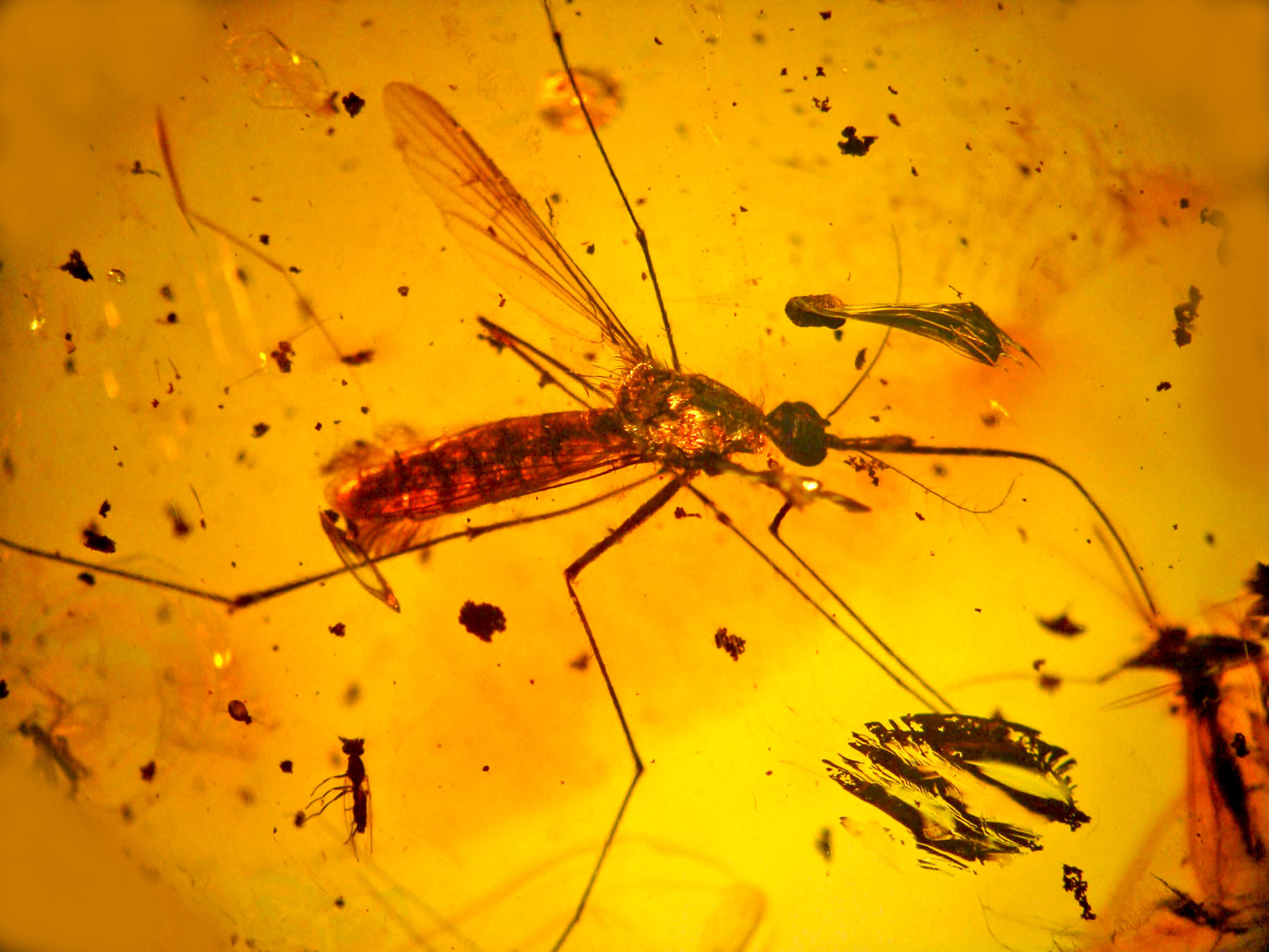
An elephant mosquito from Poinar’s collection. Photo by George Poinar, Jr. via Science Friday.

Many of our readers have likely read or watched Jurassic Park, or one of the sequels of the film, and know that the DNA for the fictionally first-recreated dinosaur came from the blood sample within a giant mosquito trapped inside prehistoric amber. Well, Michael Crichton actually got this idea from a true scientific discovery, although it didn’t revolve around dinosaurs. We’ve discussed de-extinction on the blog before, and actually featured the paleobiologist referred to in this post’s title a couple months ago. Now, Chau Tu at Science Friday has interviewed the scientist, George Poinar, Jr., regarding his experience working with amber-clad specimens from millions of years ago, his thoughts on de-extinction, and more:

Poinar would find, among other specimens, the oldest known bee, the first known bat fly fossil, and the most complete flower from the Cretaceous Period. And just this past February, he co-authored a paper in Nature Plants describing a new species of neotropical flower found in amber from the mid-Tertiary Period.

Science Friday recently spoke with Poinar, 79, now a courtesy professor in the Department of Integrative Biology at Oregon State University, about what led him to investigate specimens trapped in amber, his thoughts on de-extinction, and his inspirations.

Continue reading

Threats to Monarch Butterflies and How We Can Help

A Monarch butterfly caterpillar feeding on the leaves of a milkweed plant. Photographed at the Grapevine Botanical Gardens. Photo © TexasEagle/Flickr through a Creative Commons license, via TNC

We’ve covered monarch butterflies plenty of times in the past, whether it was reporting survey results showing that many households in the US would pay to help create habitat for the species, showcasing a citizen science project by the Xerces Society to count the winged invertebrates during their migration, or simply highlighting the needs of the orange butterfly in general and how to become involved. Now, given increased media coverage of the Monarch, the Cool Green Science blog for The Nature Conservancy is summarizing hazards and helpers of the species:

Twenty years ago, monarch butterflies occupied so much area in Mexico during the winter you could see it from space. It totaled about 20 hectares, or almost 50 acres, with millions if not billions of butterflies clinging to trunks and branches of trees.

Today, that area is around 4 hectares. The previous year had 1.1 hectares, says Brice Semmens, Assistant Professor at the Scripps Institution of Oceanography at the University of California San Diego.

Semmens was the lead author on “Quasi-extinction risk and population targets for the Eastern, migratory population of monarch butterflies” published recently in the journal Scientific Reports. It is one paper in a long line of sobering butterfly news.

Continue reading

Meander


Welcome! Walk barefoot in the sand…you know you want to!

Stroll through the meandering pathways and wander past curated views of trees rustling in the wind.

Fundamentally, Xandari Pearl is an invitation to relax and rest, pearl-like, in the arms of curved walls, to the lullaby of the sea.

Come see for yourself…


Digiscoping in the Tropics

IMG_20160328_161007193_zpsc015qsss

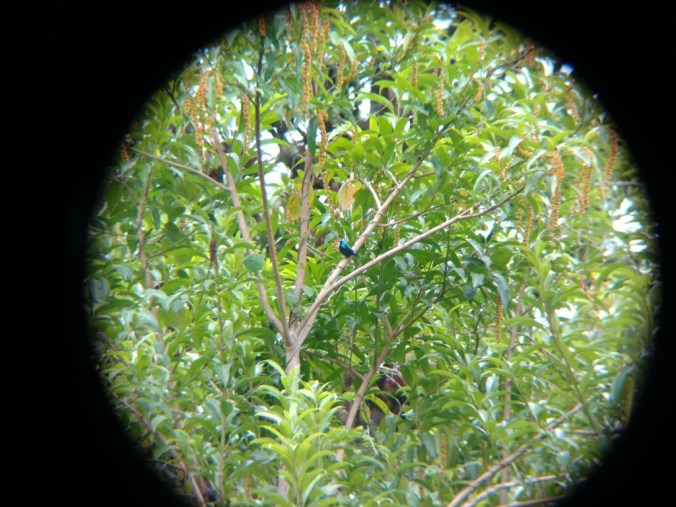
A male Scarlet-thighed Dacnis before zooming in with the camera in the digiscope setup

The first time I digiscoped, I wasn’t aware of the term, and I was using a small, borrowed point-and-shoot camera with a guide’s spotting scope. The results ended up here on the blog, though the images are, in retrospect, fairly low quality. In certain cases, however, digiscoping–basically the pairing of a scope with a camera for photography–can yield quite good shots of wildlife, and is arguably more versatile than having a big camera with a telephoto lens attached. Just check out Sharon Stiteler’s photos in her digiscoping article on Audubon’s webpage last year, or simply look up “digiscoping birds” to find some stunning images. Note, however, that digiscoping almost always refers to using a scope, or, in other words, a high-end piece of optic technology that costs anywhere between $400 and $3000–and that’s without the tripod.

This slideshow requires JavaScript.

Continue reading

Biodiversity May Protect Against Wildfires

Photo of a Southern brown bandicoot by John O’Neill via Wikimedia Commons.

New research in Australia’s forests and bushlands indicates that terrestrial biodiversity–or more precisely, a higher number of different mammal species–can help prevent wildfires given the way the critters alter their ecosystem. We’ve heard about different creative management options for fires before, and we care deeply for biodiversity preservation efforts, so this seems like one of those win-win scenarios if it can be implemented. Jason Goldman reports for UW’s Conservation Magazine on research published in Animal Conservation:

One factor leading to increased wildfire susceptibility might be surprising: biodiversity loss. In particular, the extinction of small, ground-dwelling mammals may prime Australia’s bush to burn.

Wildfires certainly threaten biodiversity in some cases. According to the IUCN, 179 mammal, 262 bird, 146 reptile, 300 amphibian, and 974 plant species can count wildfire (and fire suppression) among their existential threats. More wildfires means less wildlife, even accounting for the many ecosystems that are already fire-adapted. But according to a new study published in the journal Animal Conservation, it works the other way around too.

Matt Hayward, a conservation ecologist at Australia’s Bangor University and the Australian Wildlife Conservancy, argues that restoring biodiversity could reduce the likelihood of a wildfire starting—or of spreading rapidly once it’s begun.

Continue reading