
A series of blog posts since we debuted here in 2011 shows that we are Thoreauvians–quite likely referencing that 19th Century American writer more than any other writer. Our conservation ethos would explain that devotion. And yet, always at the ready to reconsider, in the spirit of small-l liberalism, we are open to the possibility that we had it wrong on this front all along. For example, at least one contributor to this blog, at 17 years old, took a can of spray paint and committed a crime in the form of grafitti, with a quotation from Thoreau spread across nearly 30 feet of a wall that had gone up in a place where the 17-year old was sure that wall did not belong. How could that have been right? And if wrong, while Thoreau was certainly not to blame, was it evidence that sometimes Thoreau has been improperly invoked?
The opening six paragraphs of this article– revisionism at its small-l liberal best–will likely hook you to read it to the end, if the paragraph above rings any bells:
On the evening of October 6, 1849, the hundred and twenty people aboard the brig St. John threw a party. The St. John was a so-called famine ship: Boston-bound from Galway, it was filled with passengers fleeing the mass starvation then devastating Ireland. They had been at sea for a month; now, with less than a day’s sail remaining, they celebrated the imminent end of their journey and, they hoped, the beginning of a better life in America. Early the next morning, the ship was caught in a northeaster, driven toward shore, and dashed upon the rocks just outside Cohasset Harbor. Those on deck were swept overboard. Those below deck drowned when the hull smashed open. Within an hour, the ship had broken up entirely. All but nine crew members and roughly a dozen passengers perished. Continue reading →


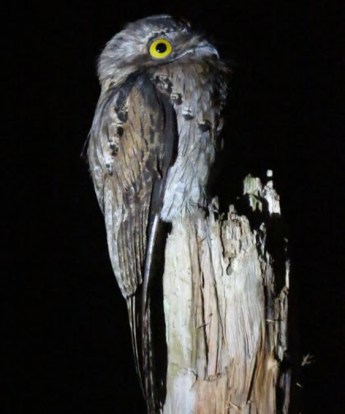 A few days ago, Timothy Boucher, a senior conservation geographer at The Nature Conservancy, shared his choice for his personal “Bird of the Year,” the Rufous Potoo, which he saw in Ecuador and was apparently the 5,000th bird to be checked off on his life list.





 Organikos