Hyundai Motor Co believes hydrogen fuel cell vehicles are the future for eco-friendly cars despite challenges of limited infrastructure and slow sales. South Korea’s largest automaker has sold or leased 273 Tucson fuel cell SUVs since beginning production in 2013, lower than its 1,000 target, mostly in Europe and California. Fuel cell cars represent a bigger opportunity than electric cars because competition is less fierce. Hydrogen-powered cars also give more flexibility to designers. They can be scaled to big vehicles such as buses as well as small cars.
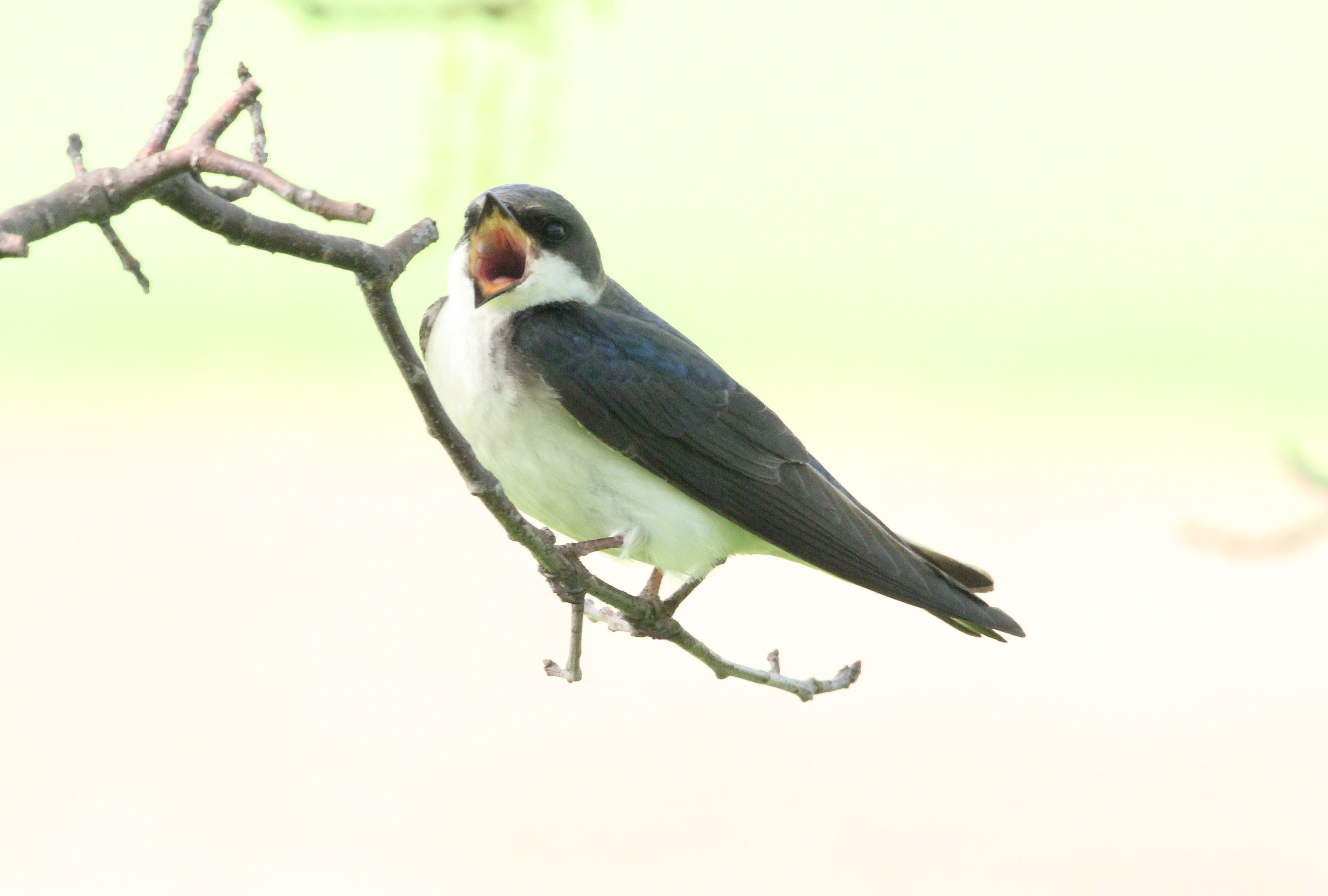
Bird of the Day: Tree Swallow
The Village Capital of Light

Scorrano, a little village turns into the Capital of the Luminarie for a few days a year. PHOTO: Gorgonia.it
Continue reading
Meet the Godwit in North Korea

A godwit made international headlines in 2007 when she was confirmed to have flown for seven days and nights without stopping to a feeding ground in China. That was the longest nonstop flight by a land bird ever recorded.
To the untrained eye, it’s just a lot of birds on an otherwise deserted stretch of muddy, flat coastline. But for ornithologists, North Korea’s west coast is a little piece of paradise each spring — and both the birds and a dedicated group of birdwatchers travel a long way to get there. The birds being watched aren’t exactly household names — bar-tailed godwits (Limosa Iapponica), great knots (Calidris Tenuirostris) and dunlins (Calidris Alpina).
Bird of the Day: Crested Serpent Eagle – Juvenile
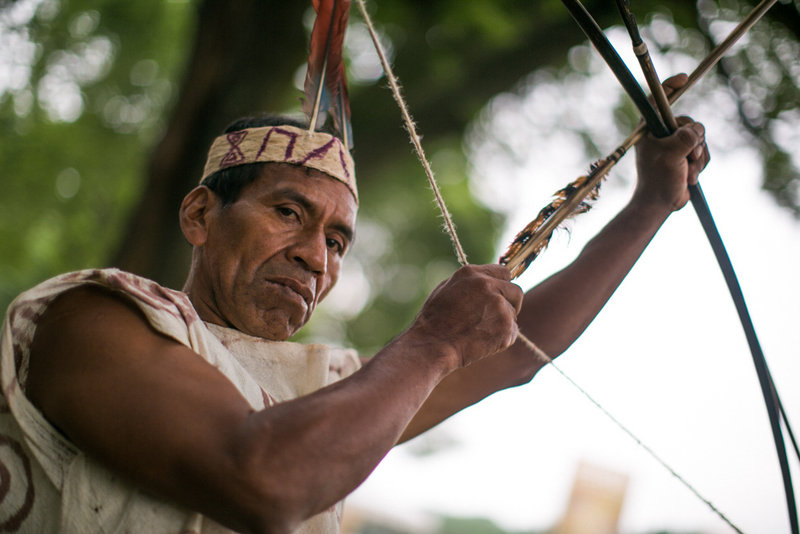
Hunger Games and Peru’s Wachiperi

Victorio Dariquebe Gerewa displays his bow and arrow at the Smithsonian Folklife Festival in Washington, D.C. PHOTO:
Ben de la Cruz/NPR
Girls and women in the Peruvian Andes are also asking to learn — but for a different reason. They want to be able to hunt for meat and fish so they don’t have to rely on the men to bring home food.
“The world is modernizing, and women are starting to want to use the bow,” says Sergio Pacheco, a skilled archer who’s part of the tiny Wachiperi community — population estimates range from 90 to 140 — in a remote region of Southeast Peru. “They say, ‘We are just women in the family, so what happens when our father dies? We need to learn this to be able to take care of our families.'”
From Coal Mine to Land Art

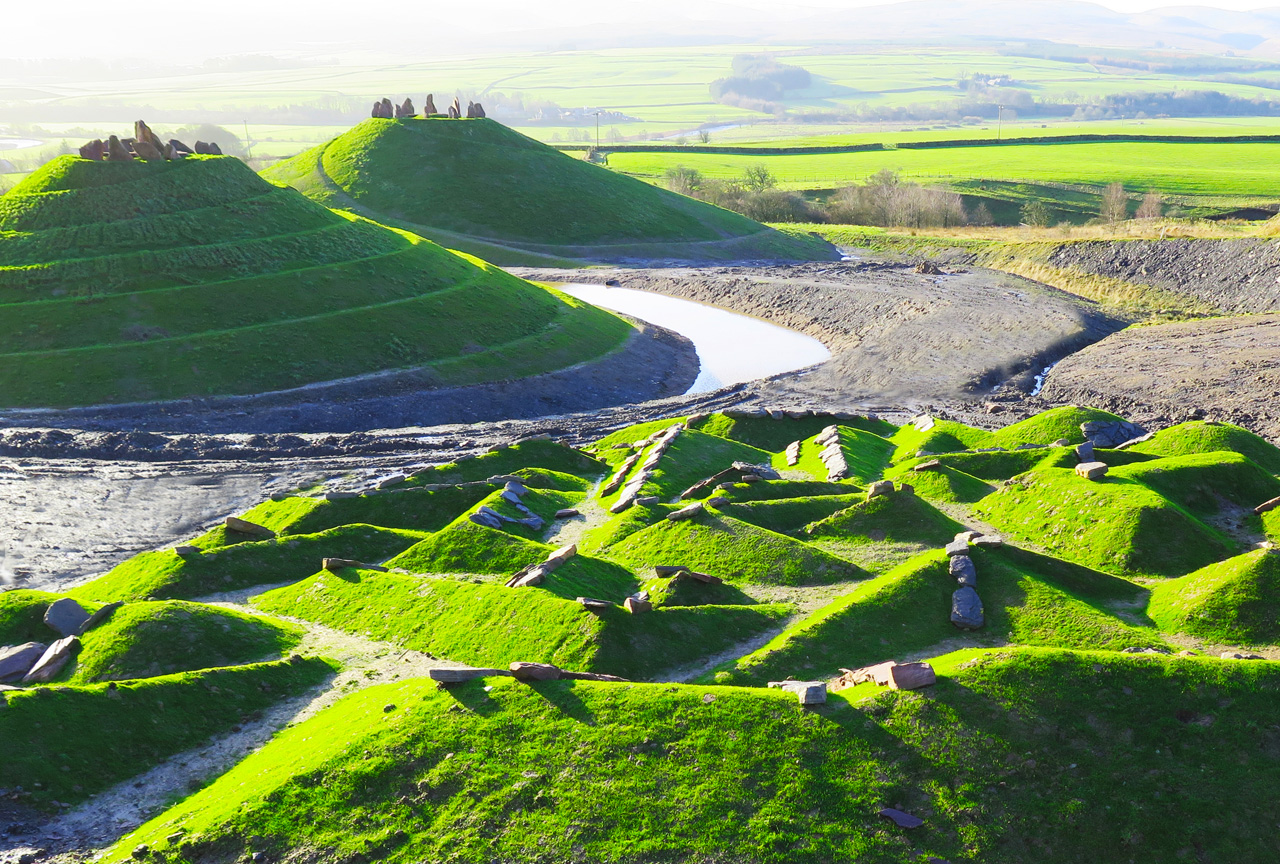
In five years, Scotland plans to run on nothing but renewable energy. Towards that, a start has been to look at deserted coal mines. PHOTO: CoExist
In five years, Scotland plans to run on nothing but renewable energy. The country’s few remaining coal mines are shutting down, leaving a question: How should towns deal with the ugly scars left behind by abandoned mines? Near the village of Sanquhar, the answer is a massive, 55-acre work of land art. Looking like a modern Stonehenge, it builds a miniature multiverse from 2,000 boulders found on the site. Locals, sick of looking at the former mine, lobbied the landowner—Richard Scott, the Duke of Buccleuch—to do something. But they wanted to go beyond just adding a little grass to cover the scarred earth, and build a replacement that might draw visitors to boost a struggling economy. The duke turned to architect Charles Jencks to turn the mine into art.
Bird of the Day: Dusky-capped Flycatcher
A Brick to Breathe Easy?
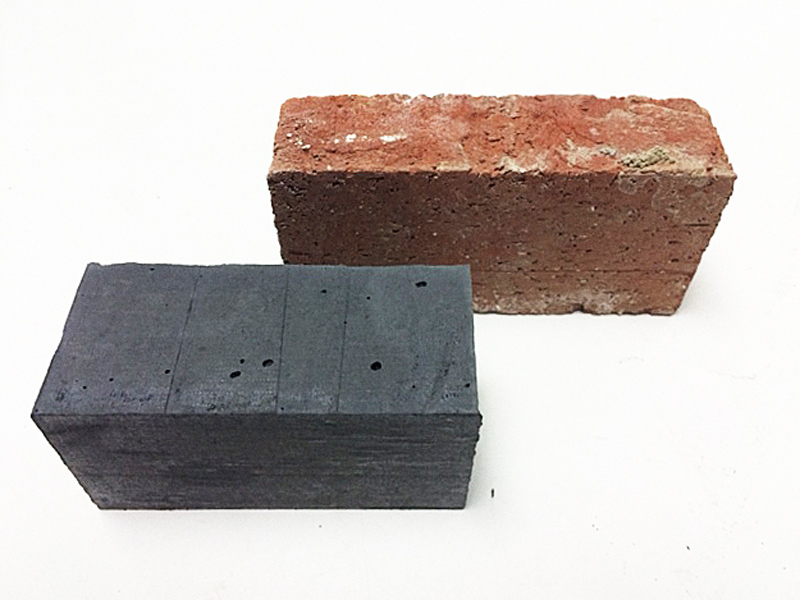
India’s brick industry, spread out over 100,000 kilns and producing up to 2 billion bricks a year, is a big source of pollution. To fire to hot temperatures, the kilns use huge amounts of coal and diesel, and the residue is horrendous: thick particulate matter, poor working conditions, and lots of climate-changing emissions. MIT students have created an alternative. The Eco BLAC brick requires no firing at all and makes use of waste boiler ash that otherwise clogs up landfills.
When Gardens Go Vertical
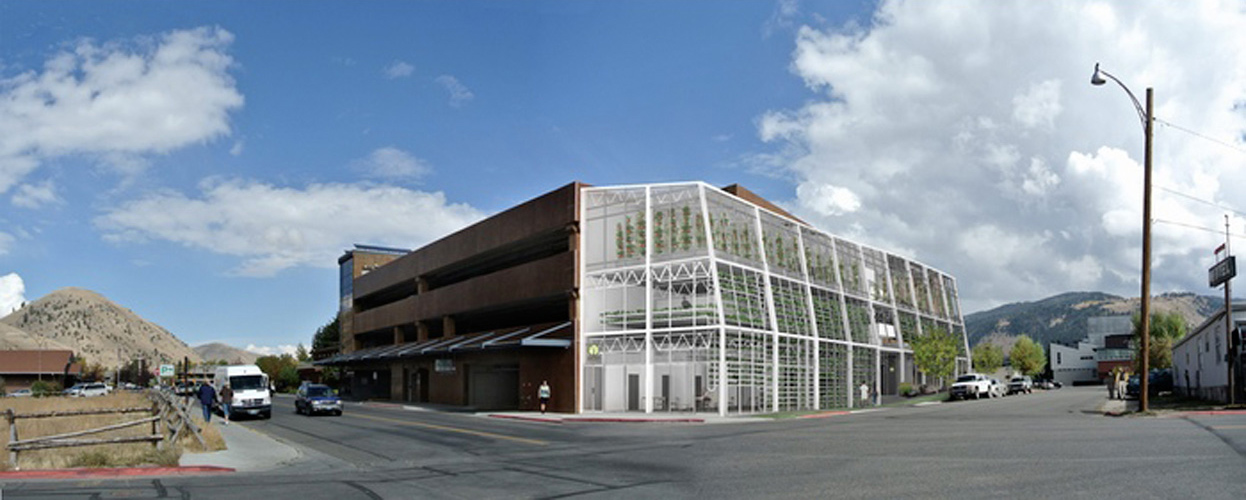
Jackson, Wyoming, is an unlikely place for urban farming: At an altitude over a mile high, with snow that can last until May, the growing season is sometimes only a couple of months long. It’s also an expensive place to plant a garden, since an average vacant lot can cost well over $1 million. But the town is about to become home to a vertical farm. On a thin slice of vacant land next to a parking lot, a startup called Vertical Harvest recently broke ground on a new three-story stack of greenhouses that will be filled with crops like microgreens and tomatoes.
Winnie-the-Pooh Wants to Save the Bees

Planting a bee-friendly tree beneath Warwick Castle. Via The Telegraph.
Last month, I shared a story from Cornell’s orchards, where apple blossoms were pollinated this year solely by local wild bee species rather than commercial honeybees. Funnily enough, the same day I posted that story, the science editor for The Telegraph wrote a piece concerning bees across the Atlantic, where the British Beekeepers Association has partnered with one of the original Winnie-the-Pooh illustrators to make a new story encouraging children to care for these productive insects. As Pooh tells Piglet in the new story when they realize there is a shortage of honey, “you can only be careful for so long before you run out altogether.” Sarah Knapton reports:
Beekeepers are also hoping to engage children by encouraging them to bake with local honey, become beekeepers, visit nearby apiaries and throw seed-bombs to help the spread of wildflowers.
New illustrations show AA Milne’s characters Christopher Robin, Piglet, Tigger, Eeyore and Pooh making a vegetable patch in the Yorkshire Dales, building a bee box in the shadow of the Angel of the North in Gateshead, and planting a flowering tree in the shadow of Warwick Castle.
The friends are also pictured dropping bee-balls in Birmingham, painting in Sherwood Forest, Nottinghamshire and visiting a honey show in Glastonbury.
Fancy Some Meat Done Inca-style?

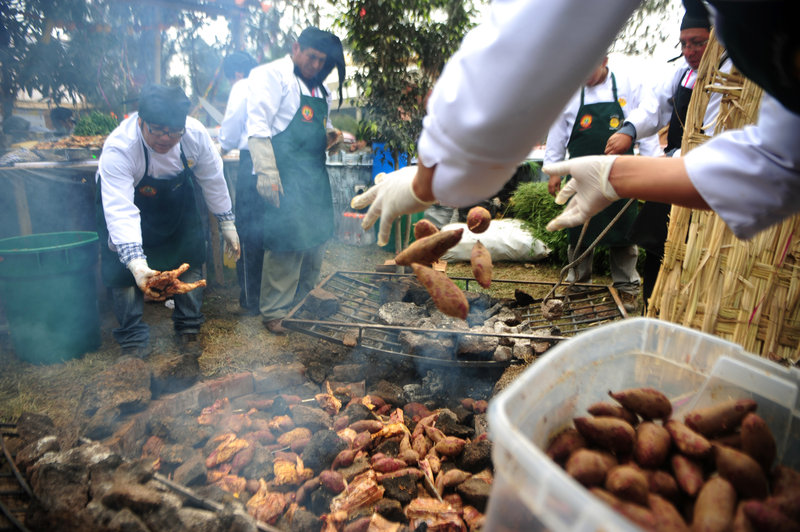
People throw potatoes into a pachamanca during a gastronomic fair Mistura in Lima. PHOTO: Ernesto Benavide
What’s the epitome of summer for a lot of Americans? It’s communing around a grill, with friends and family, waiting for a slab of meat to cook to juicy perfection. In Peru, people like to gather around heat and meat, too. Except the heat — and the meat — are buried in the ground. It’s called pachamanca, a traditional way of cooking that dates back to the Inca Empire. The pit cooking technique has evolved over time but remains an important part of the Peruvian cuisine and culture, especially in the central Peruvian Andes all year-round for family get-togethers and celebrations. Imagine a cornucopia of dozens of potatoes and corn ears and giant slabs of well-marinated meat, stacked carefully in layers. Pachamanca is that cornucopia turned upside-down and sealed for hours.
Should Animal Deaths Worry You?

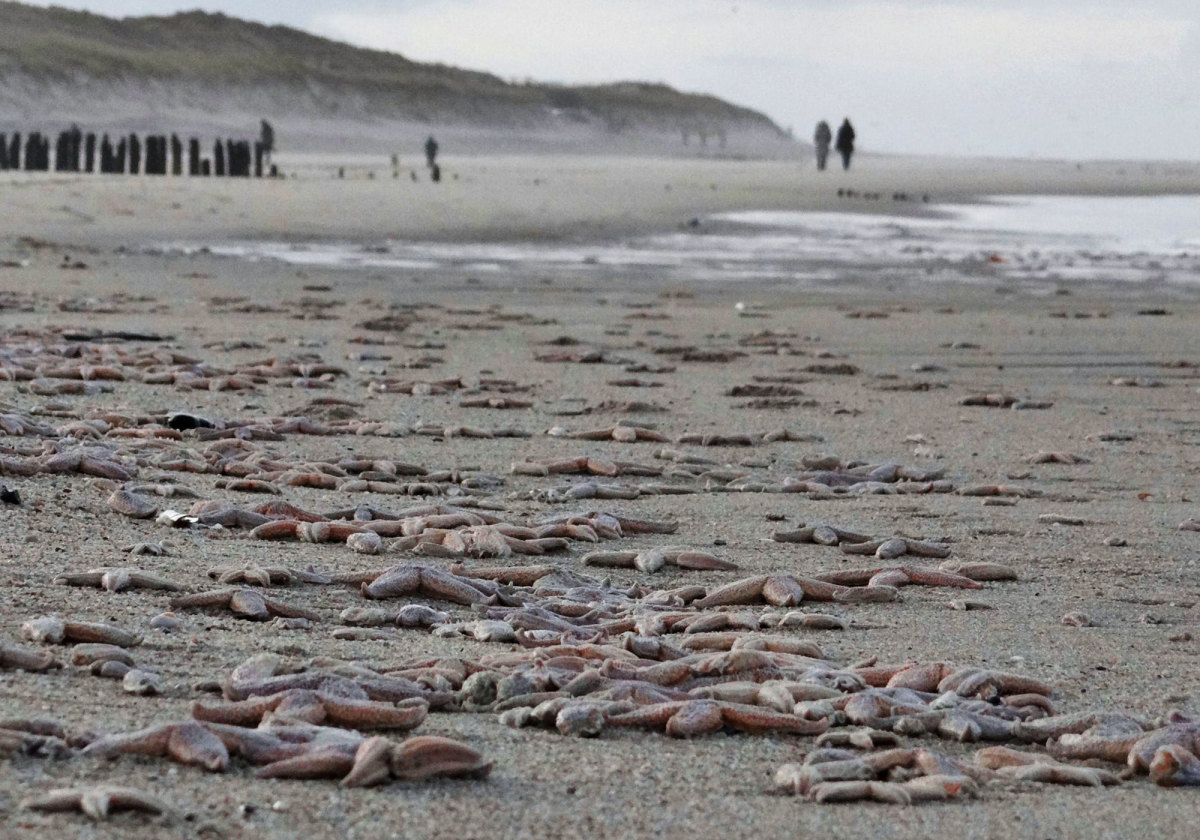
Dead starfish line the shore of the German island of Sylt. Mass wildlife die-offs have been interpreted as omens of an impending environmental collapse. PHOTOGRAPH BY DANIEL FRIEDERICHS
Mass-mortality events are sudden, unusual crashes in a population. If you think that you are hearing about them more often these days, you’re probably right. (Elizabeth Kolbert described frog and bat die-offs in a 2009 article; her subsequent book won a Pulitzer Prize recently.) Even mass-mortality experts struggle to parse whether we’re witnessing a genuine epidemic (more properly, an epizootic) of these events. They have also raised another possibility: that we are in the throes of what one researcher called an “epidemic of awareness” of spooky wildlife deaths.
Bird of the Day: Rufous-throated Solitaire

Portland Gap, Jamaica
The Tradition of a Most Dangerous Game

The Calcio Storico is an ancient form of football from 16th century Italy, which originated from the ancient Roman ‘harpastum’, and is played in teams of 27, using both feet and hands. Sucker-punches and kicks to the head are prohibited but headbutting, punching, elbowing, and choking are all allowed
Welcome to Calcio Storico, a centuries-old competition in Florence with very few rules and the sort of human wreckage generally associated with the gladiators. Dating back to 16th century Italy, today’s calcio storico (see photos from The Guardian here), or historic soccer, may be both the most violent form of soccer in the world. It is played only in Florence, Italy, where four 27-man teams representing four historic Florentine neighborhoods—Santa Croce, Santa Maria Novella, Santo Spirito, and San Giovanni—face off to beat each other to a pulp, every June. Kicks to the head are forbidden. So are fights of two or more against one. Everything else goes, making the goal of moving a leather ball from one end of the field to another seem like a side note to the bloody proceedings.
Big Fish, Small Fish

Encouraging consumers to eat fish such as herring, mackerel, and butterfish might, ironically enough, be the best way to save those species. PHOTO: Nutritional Thinking
From the beginning of time and until relatively recently, little fish had only big fish to fear. Since the middle of the twentieth century, however, some little fish—forage fish, to be precise—have faced radically increased threats from humans, and, by extension, from the pigs and chickens that the fish are increasingly being fed to. Forage fish are now threatened worldwide, which has potentially troubling implications for the entire food chain. In conservation circles, the suggestion lately is that encouraging consumers to eat small fish might, ironically enough, be the best way to save them.
Bird of the Day: Crested Kingfisher
Making Solar Follow Through
In Japan, country club memberships famously went for millions of dollars in the late 1980s. Then, too many courses were built in 1990s and 2000s during a real estate boom. Now the nation faces the question of what to do with its abandoned golf courses. Meanwhile, Japan’s energy strategy in the aftermath of Fukushima calls for roughly doubling the amount of renewable power sources in the country by 2030. It is already building solar power plants that float on water. Perhaps inevitably, then, the nation has turned to building solar plants on old golf courses.
A Scooter That Charges Faster Than Your Phone
India is the world’s second largest market for two-wheelers, and more than 14 million two-wheelers were sold last year. But electric scooters, so far, aren’t too big a part of that pie. When electric two-wheelers were first introduced nearly a decade ago, companies were betting big. They had a brief honeymoon period between 2008 and 2010, with sales more than doubling during that time. But all that dwindled once the government slashed its Rs22,000 ($346) subsidy for lithium battery packs in 2012. From selling 100,000 units two years ago, sales plunged to 21,000 units by 2014. But Ather Energy is bent on revising the trend.
Travel Made Easy Through Air
No, we are not talking flying here. But the Curvo, the world’s first non-linear aerial ropeway for second tier urban commutation. Pollution and traffic-free, the service, operational on electricity, would be on steel frames spreading at a distance of around 90-100 m running through the existing arterial and other roads to avoid congested streets of the city. There will be elevated stops at every distance of 750 m and the cars would be able to gain speed of about 4.25 m per second (12.5 km/hour) with the ability to carry an estimated 2,000 people every hour. Curvo is expected to be introduced in 18-24 months. The cabins will have an accommodation capacity of 8-10 persons.