Plastic Aplenty

Forty per cent of the small turtles travelling through Moreton bay were recently found to have consumed plastics and more than two-thirds of the endangered loggerhead turtle, too. PHOTO: Mark Kolbe/Getty Images

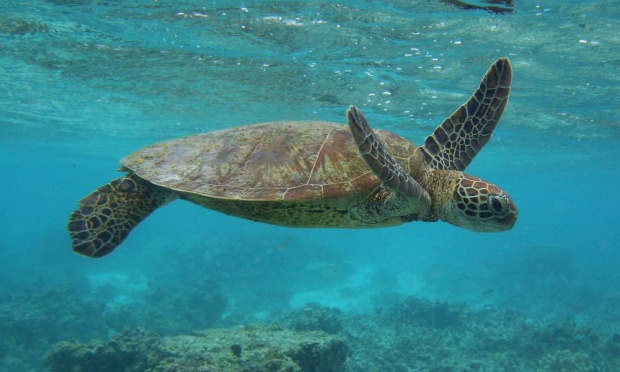
Forty per cent of the small turtles travelling through Moreton bay were recently found to have consumed plastics and more than two-thirds of the endangered loggerhead turtle, too. PHOTO: Mark Kolbe/Getty Images

Queensland – said to be Australia’s dirtiest state (discarded rubbish recorded at levels almost 40 per cent above the national average). Also home to Moreton Bay, the only place in the country where dugongs gather in herds and which has a significant population of the endangered loggerhead sea turtle. Over celebrating its coastal flora and fauna on World Oceans Day, the state and its leaders found themselves mulling a ban on single-use plastic in the area. Here’s why.

Continue reading

Casual Cultural Conservation Through Dance

The only working Danish windmill in the US.

A few weeks ago I visited a friend from Cornell whose family lives in Nebraska and comprises a good portion of the Scandinavian Folk Dancers of Omaha. I’d seen them perform before at the New England Folk Festival in April, held in Mansfield, Massachusetts, but unfortunately at that point my phone’s camera wasn’t the right tool for the job of documenting their great dancing. This time, when the group performed on a much more intimate stage at the Danish Tivoli Festival in Elk Horn, Iowa, (Elk Horn and neighboring Kimballton apparently make up the largest rural Danish settlement in the US) I was ready with my camera and was able to take some half-decent videos of several of the dances. The audio quality isn’t the best given the slightly windy conditions, but hopefully you can get a general feel for the experience in the video below.

We’ve featured some thoughts on dance on the blog before, especially given Kerala’s Continue reading

More (Offshore) Power to You, Germany

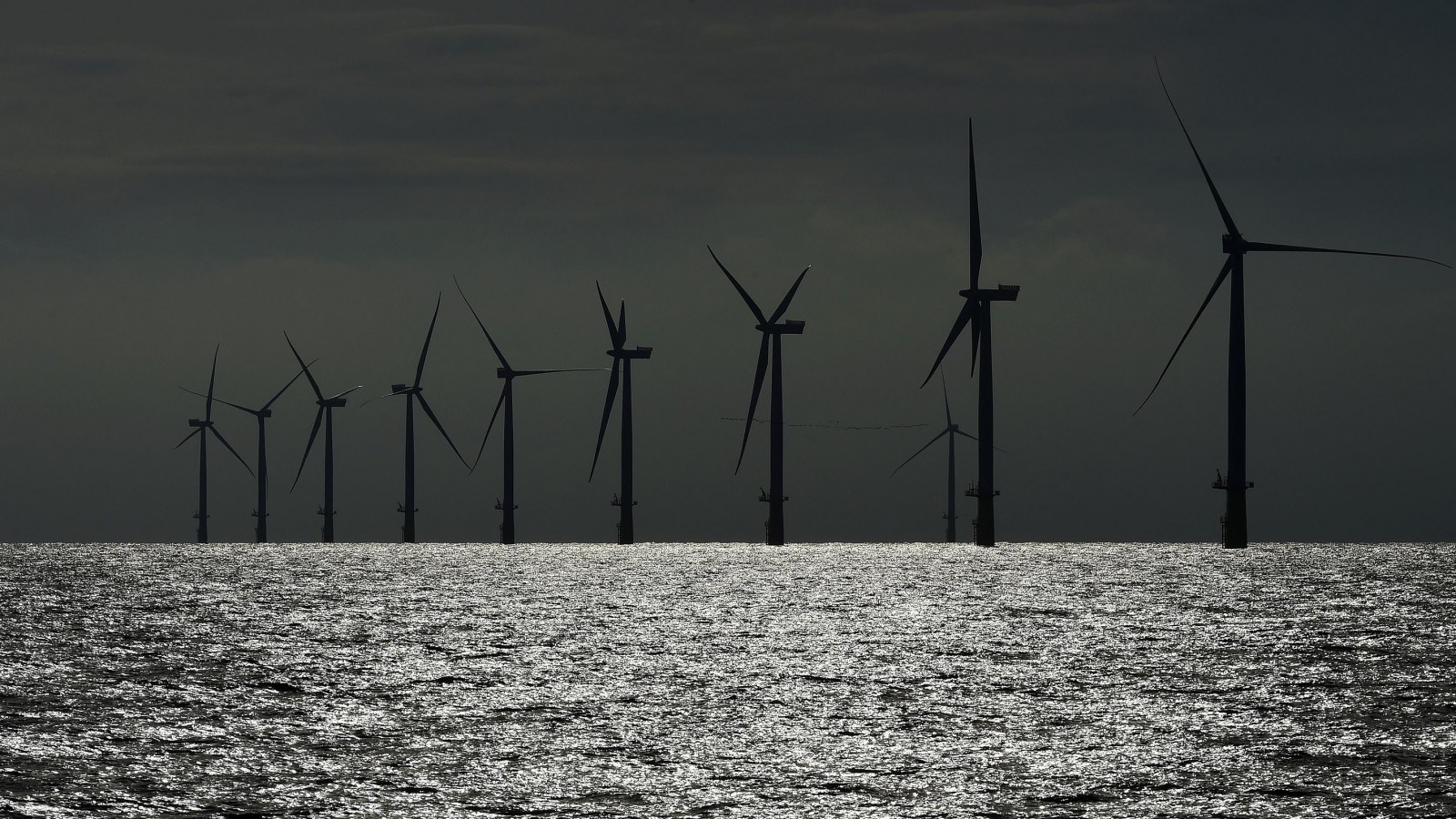
Germany is set to overtake the UK as the biggest installer of offshore wind globally, Denmark comes behind the UK by capacity, followed by Belgium and China PHOTO: Reuters/Fabian Bimmer

Germany is set to overtake the UK as the biggest installer of offshore wind globally. Denmark comes behind the UK by capacity, followed by Belgium and China. PHOTO: Reuters/Fabian Bimmer

We first discussed wind energy, as a viable resource to power the world’s needs, almost three years ago. Prior to that and in the time hence, Germany has done much about it. The country has chalked out a plan to replace nuclear power plants with offshore wind farms in a bid to use renewable energy round-the-clock. Importantly, the country is sticking to its plan. Above all, it is building on it.

Germany has hugely ambitious green goals. Five years ago it set a goal to produce 18% of its energy from renewables by 2020 (latest figures show it having reached 12.4%). The country also wants to reduce greenhouse gas emissions by 40% by 2020, compared with 1990 levels, and by 80% by 2050. The transformation is knows as the Energiewende—literally “energy turn.”

Continue reading

A Ticket on the Eco-friendly Supersonic, please

Supersonic flight is one of the four speeds of flight. speeds up to five times faster than the speed of sound. PHOTO: NASA

Supersonic flight is one of the four speeds of flight. It has speeds up to five times faster than the speed of sound. PHOTO: NASA

Imagine flying at more than twice the speed of sound. At that speed, a London to New York flight lasts under 3.5 hours. And the last time that happened was in 2003, just before the supersonic Concorde ceased operating. More than a decade later, there are conversations on whether the supersonic culture can be revived. There are arguments for both sides and the latest is news about the talent at NASA working on making commercial supersonic flight eco-friendly.

Unless you have access to a F-22 fighter jet, you probably haven’t been able to fly faster than the speed of sound since the last Concorde flight in 2003. NASA wants to change this. The agency said that it is spending over $6 million to fund research into cheaper and greener supersonic travel. This isn’t NASA’s first attempt to bring back supersonic travel. It has been (literally) pushing the boundaries of flight for years. NASA’s predecessor was involved in building the first supersonic plane in 1946, and the agency has been working on concepts since 2006 with companies like Lockheed-Martin and Boeing that may one day lead to a new generation of planes that get you places very quickly.

Continue reading

Yoga And Its Contents

9780307593511_custom-96a370c39830fd94be59575d59bbffb4c13ce088-s500-c85We have been intrigued by news reports that the leader of the country where many of Raxa Collective’s contributors are based, and where yoga comes from, is leading an effort to get his country more devoted to its practice, and thereby export more of one of India’s most important innovations.

This intrigue is piqued especially after listening to an interview with the author of a book on this very subject–how yoga came to be disseminated from India to elsewhere–which puts the book on the top of our monsoon season reading list.

If you happen to be in Delhi two weeks from today, join in:

…On 21 June – the new International Yoga day – Narendra Modi, India’s prime minister, hopes the world will join in. The grass near India Gate will be transformed into the venue for what it is hoped will be the biggest single yoga session ever held, with up to 45,000 people running through a 35-minute routine.

The participants will include 64-year-old Modi, most of his government and, they hope, a range of celebrities. Officials have been sent to round up volunteers from scores of countries to reinforce the international credentials of the ancient Indian practice…

Meanwhile, listen to this interview to learn more about yoga’s journey to the West:

Continue reading

Fifty Shades of Black

Ivanpah, the world's largest concentrating solar power plant, located just southwest of Las Vegas,  can produce a whopping 392 megawatts of solar energy to power 140,000 California homes with clean energy

Ivanpah, the world’s largest concentrating solar power plant, located just southwest of Las Vegas, can produce a whopping 392 megawatts of solar energy to power 140,000 California homes with clean energy PHOTO: Inhabitat

So we’ve all learnt, at some time or the other, that black absorbs light the maximum. And that the sun is one of the best sources of clean and renewable energy. Now, put two and two together. Yes, we are definitely talking tapping the sun’s light and heat. And we need a black surface to do so. The catch: the color needs to be as black as black can get.

Continue reading

The (Eco-friendly) Sound of Music

Eco-friendly and environment-friendly – the terms have become all too familiar now. From being used at green summits and in corners where the gatekeepers of conservation meet, they’ve entered mainstream vocabulary. The words are a call-to-action, they are rules, and have come to define a way of life. What is interesting is to see how much of this ‘eco-friendliness’ is thoughtfully designed for use, innovated and improved upon, and finally marketed and delivered as utilities. Over being mere concepts and terminologies, how much of this ‘friendliness’ can be used on a day-to-day basis. Yes, we heard about how biking can power phones but let’s hear more.

Continue reading

Humans At Their Best, In The Water, In The Extreme

Team Blackfish set sail Thursday morning in what organizers called the first human-powered boat race to Alaska. Credit Evan McGlinn for The New York Times

Team Blackfish set sail Thursday morning in what organizers called the first human-powered boat race to Alaska. Credit Evan McGlinn for The New York Times

Too much dullness and dimwittedness recently. We need a break from that. We like the optimism of Team Blackfish and their fellow sailors:

A Race to Alaska: No Motors, but No Limits on Imagination

PORT TOWNSEND, Wash. — Scott Veirs and Thomas Nielsen have a little wooden plank mounted on their boat, just in front of the seat where they plan to take turns, for days on end, pedaling a bike-chain-driven propeller shaft all the way to Alaska.

“If in doubt,” the sign reads, “try some optimism.”

That could be the motto for the entire field of competitors in what is billed as the first race of its kind — human powered to Alaska — which set off Thursday morning from this city on the shores of Puget Sound, heading north across open water. The 54 entrants in the Race to Alaska— solo efforts and teams, novices and old-salt veterans — were fueled by a mix of determination, ingenuity and upward of 6,000 calories a day, but no motors. Continue reading

Mining Companies Gonna Mine

MAËLLE DOLIVEUX

MAËLLE DOLIVEUX

We try to stay away from stereotypes, cliche, cute kitten videos and memes. But the editorial below will leave you with heightened awareness of just how low mining companies can go, literally, figuratively and spiritually to get what they want. Rio Tinto is a cliche, a nightmare about killing the earth and any cultural artifacts that get in the way of its profits. Let’s awake from this nightmare. Come on, Arizona, be better than this:

Selling Off Apache Holy Land

Lydia Millet

ABOUT an hour east of Phoenix, near a mining town called Superior, men, women and children of the San Carlos Apache tribe have been camped out at a place called Oak Flat for more than three months, protesting the latest assault on their culture. Continue reading

It’s About Bee-ing Alive

Must-watch: A stunning time-lapse video of the first 21 days of a bee's life by photographer Anand Varma

Must-watch: A stunning time-lapse video of the first 21 days of a bee’s life by photographer Anand Varma

Your first instinct when around a honeybee is to keep distance. But not for Indian American photographer Anand Varma. When he was asked to photograph a story on honeybees for National Geographic magazine, he knew he was going to have to take a different approach to capture new views of one of the world’s most photographed insects. And he did, his photographs forming a brilliant timelapse video of the first 21 days in a bee’s life. Over the video and the stellar photographs, the exercise addresses a key issue: the disappearance of bees and colonies dying quickly. Now why is this a problem?

Continue reading

Women of Their Worlds

In the small hilly Indian state of Meghalaya, a matrilineal system operates - but some men are campaigning for change PHOTO: Karolin Kruppel

In the small hilly Indian state of Meghalaya, a matrilineal system operates – but some men are campaigning for change PHOTO: Karolin Kruppel

What does the north-eastern Indian state of Meghalaya and a valley on the border of Yunnan and Sichuan provinces of China have in common? They are home to a couple of the handful matrilineal communities that still exist. In an age where most important offices of power are held by men, it is critical to evaluate how these communities hold on to a way of life unchanged for thousands of years. Not to forget the challenges they face in continuing to look at women as the driving force and the soul of their existence.

Continue reading

The Indonesian Forests May Breathe Now

Loss of forest habitat through pulp and paper logging and palm oil plantations has pushed endangered species such as the Sumatran tiger, rhinoceros, elephants and the orangutan closer to extinction. PHOTO: Greenpeace

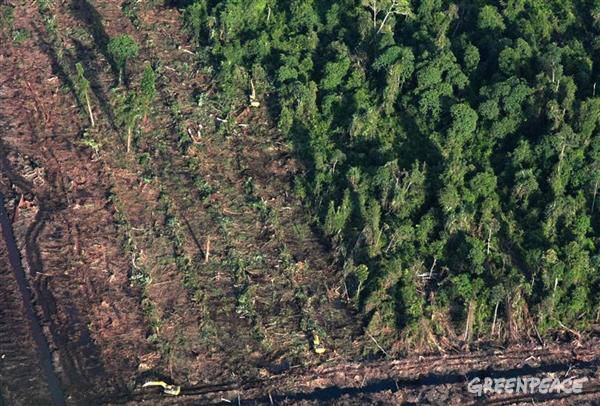
Loss of forest habitat through pulp and paper logging and palm oil plantations has pushed endangered species such as the Sumatran tiger, rhinoceros, elephants and the orangutan closer to extinction. PHOTO: Greenpeace

Indonesia has the third largest tropical rainforest in the world. The country is also the world’s largest producer of palm oil, fifth largest of coal, and tenth largest producer of pulp and paper. To say these industries are tied to resources of the land is to state the obvious. But to say that the activities are fast eating into forest cover is a matter of concern. Which is precisely why when a company like Asia Pacific Resources International Limited (APRIL) – the country’s second largest paper and pulp company – announces that it will completely eliminate deforestation in its operations, the world takes notice.

Greenpeace Australia Pacific said the “good news” came after more than 40,000 Australians emailed Australian paper supplier Office Brands asking it to stop buying from APRIL because its paper was sourced from Indonesia’s old-growth rainforests. The announcement comes after rival Indonesian company Asia Pulp and Paper (APP) announced in 2013 it would cease logging in natural forests. This followed a decade-long Greenpeace campaign that cost APP more than 130 corporate customers including Disney, Mattel and Hasbro.

Continue reading

Another Step Forward for Merlin

© Visipedia

I don’t mean the bird species, which is found in North America and also in different varieties elsewhere in the world. I’m not talking about the wizard, either. I’m referring, rather, to the Merlin Bird ID app that I wrote about last month. It turns out that Cornell Tech and Caltech, working together as a team called Visipedia, have been developing a new tool with the Cornell Lab of Ornithology for Merlin Bird ID that involves computerized identification of bird photos. Called Merlin Photo ID, this beta-stage program can take an image of one of North America’s most common bird species (a pool of 400) and identify it after a human user has pointed out where its bill, eye, and tail are.

And after testing it out for a bit I learned that it doesn’t even need all of those Continue reading

Getting Social Underwater

 A coral grouper (Plectropomus leopardus) being cleaned by a cleaner shrimp (Urocaridella antonbruunii), in the Maldives. --- Image by © Jason Isley - Scubazoo/Science Faction/Corbis

A coral grouper (Plectropomus leopardus) being cleaned by a cleaner shrimp (Urocaridella antonbruunii), in the Maldives. — Image by © Jason Isley – Scubazoo/Science Faction/Corbis

Let’s talk social behavior. We know much about human relations and the social activities of animals like the chimpanzee. But how about underwater? Yes, the waters, too, are filled with social interactions if rapport between coral groupers and giant moray eels are anything to go by. Several studies have followed how the duo teams up to hunt and have their own ‘code’ of vigorous shimmying, head-stands and head-shaking to communicate about prey. Now, while gestures are commonplace among humans and are expected of intelligent animals like monkeys and dogs, how do fish manage this complex communication with their tiny brains? Redouan Bshary may be the man with the answers.

Continue reading

Museums, Libraries, And An Innovative Hybrid

DRAWING BY LINYU YEN, COURTESY THE SKETCHBOOK PROJECT

DRAWING BY LINYU YEN, COURTESY THE SKETCHBOOK PROJECT

Museums, as well as libraries and other community institutions get a disproportionate share of our attention on this blog. When we see a random variation like the following, we cannot help but follow the trail (thanks to Jordan Kisner):

One recent Wednesday afternoon, a man wandered into a library on North Third Street in Brooklyn and asked how he could sign up for a library card. The young woman behind the counter smiled and explained that at this particular library there were no cards—or even traditional books. The Brooklyn Art Library, housed in a Williamsburg storefront with unfinished floors and exposed piping, is, instead, home to the Sketchbook Project, a collection of crowdsourced sketchbooks that is, according to its staff, the largest in the world. The project was founded in 2006, when Steven Peterman and Shane Zucker, two art students living in Atlanta, began mailing blank Moleskines to anyone who wanted one for a small fee, and then archiving whatever came back. Now anyone can pay twenty-eight dollars for a sketchbook, or sixty-three dollars for a digital membership, which means that their books will be scanned in full and archived online in a digital library. Continue reading

Sweden, Take Our Trash, too?

With Swedes recycling almost half (47 percent) of their waste and using 52 percent to generate heat, less than 1 percent of garbage now ends up in the dump PHOTO: Shutterstock

With Swedes recycling almost half (47 percent) of their waste and using 52 percent to generate heat, less than 1 percent of garbage now ends up in the dump PHOTO: Shutterstock

Now, to ask someone to take your garbage will be met with censure in any part of the world, but not in Sweden. Since the country’s waste incineration program began in the 1940s, 950,000 homes are heated by trash; this lowly resource also provides electricity for 260,000 homes across the country, according to statistics. But there’s a problem: there is simply not enough trash.

Americans, in general, are bad at recycling. In 2010, U.S. residents recycled 34% of their waste—an embarrassing amount compared to European countries like the Netherlands, Germany, and Austria, where people recycle almost all of their waste. In Sweden, people are so diligent about recycling that just 4% of all trash ends up in landfills, It’s a heartening statistic, but it has led to a problem for the country—there’s not enough garbage to power the country’s large waste-to-energy program. Sweden’s solution: import trash. More.

Continue reading

Over Bullets and Blood Trails

No, this is no story of gore or of violence that have come to be a mainstay of sentences framed around Karachi and Pakistan. No, sir, no. But, this is still a story of a battle – one where paint brushes and colors are the arms for the cause of reclaiming a city. For a city whose walls are spattered with political slogans, hate graffiti and dubious advertisements of faith healers, a group of artists have a makeover in mind. They don’t talk about the healing power of art for nothing.

According to Wajiha Naqvi, the ‘I Am Karachi’ campaign manager, the consortium is trying to create a counter-narrative to promote tolerance, peace and diversity through reclaiming public spaces in the city. For her, the idea behind ‘Reimagining the Walls of Karachi’ is to evoke a sense of civic activism, unity and interest among the residents of Karachi, inspiring individuals and communities to take ownership by protecting their walls, their spaces and, ultimately, their city.

Continue reading