“The Great Empty,” more Full than its Sobriquet Implies

Photo © Gerrit Vyn

What will you be doing this Wednesday 5/20 at 8pm EDT? If you’re in the United States and have a television, you should consider watching a PBS Nature documentary on the Greater Sage-Grouse (male in mating display pictured left) and other wildlife members of the vast community that lives in the sagebrush plains that span eleven western states and hundreds of thousands of miles. Titled “The Sagebrush Sea,” the film is the first of its type shot and produced by the Cornell Lab of Ornithology, and it promises to be quite entertaining and educational about this vast and daunting landscape. A friend who was in one of my freshman-year classes at Cornell has been helping out in the editing room as an employee at the Lab this spring, and he tells me that its been a really rewarding experience. Just from watching the trailer below you can see why!

You can check out the PBS Nature schedule webpage to see when the broadcast Continue reading

Bees, Plans, Action

honeybee_custom-80bb7e068307e617ad8b91b388850f0445d6b9e0-s1300-c85

The federal government hopes to reverse America’s declining honeybee and monarch butterfly populations. Andy Duback/AP

The bee crisis is not new, but it remains a red hot issue of great importance to all of us (thanks National Public Radio, USA):

Plan Bee: White House Unveils Strategy To Protect Pollinators

BRIAN NAYLOR

There is a buzz in the air in Washington, and it’s about honeybees. Concerned about an alarming decline in honeybee colonies, the Obama administration has released a National Strategy to Promote the Health of Honey Bees and Other Pollinators.

NPR’s Dan Charles says the strategy, despite its rather bureaucratic title, is pretty straightforward: “The government will provide money for more bee habitat and more research into ways to protect bees from disease and pesticides.The Environmental Protection Agency also will re-evaluate a class of insecticides called neonicotinoids … which are commonly used on some of the most widely planted crops in the country.”

As NPR’s Allison Aubrey has reported:

Continue reading

Peddle-Powered Phone Juice

bikecharger3

Thanks to EcoWatch for this article that, in a place like India where bicycles are a mode of common transport, and mobile phones are ubiquitous, is pointing us to a practical green innovation:

Charge Your Battery While You Bike to Juice Up Your Phone

Lorraine Chow

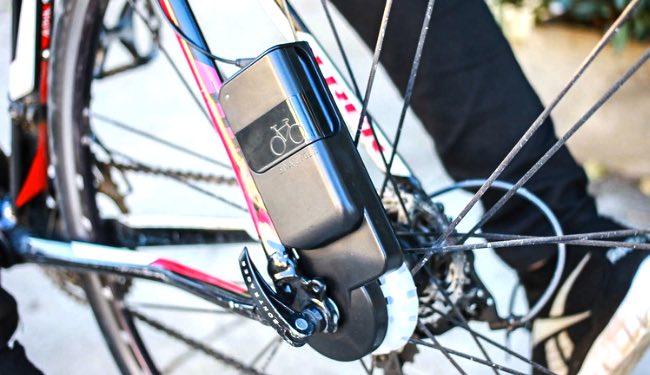
Who needs a power outlet when you have a bike? The Ride-A-Long charges your electronics as you pedal, providing a portable renewable energy source for bike-enthusiasts.

Biking is already pretty environmentally friendly, but this takes it to the next level.

Created by Siva Cycle, the product can juice up any USB-powered device such as smartphones and cameras whenever and wherever you’re biking. Simply mount the Ride-Along to any standard bicycle’s back wheel, and as you ride, the wheel delivers juice to the integrated generator and charges its 1650 mAh battery, kind of like a hand-cranked radio. Continue reading

Merlin App Recognized in 2015 NSF Showcase

Prairie Warbler © Gerrit Vyn

Last week, an online video event was held to celebrate and showcase work funded by the National Science Foundation, called the NSF 2015 Teaching and Learning Video Showcase: Improving Science, Math, Engineering, and Computer Science Education. 112 videos featuring innovative work in these fields were shared on the website, and 21 were recognized as Facilitators’ Choice, Presenters’ Choice, and/or Public Choice projects.

From the Showcase website’s About page, here are the criteria for recognition in each category:

During the event, facilitators from each resource center will select a few videos, which will recognize extraordinary creativity in the use of video to share innovative work to determine the “Facilitators’ Choice.” In addition, all presenters will have the opportunity to vote for their favorite videos to determine “Presenters’ Choice.” Finally, all public visitors to the event will be asked to select those videos that they find most compelling. Those with the greatest number of public votes will receive “Public Choice” recognition.

The Cornell Lab of Ornithology’s Merlin Bird ID app was one of only 3 projects to Continue reading

Thank You, Oxford!

thThanks to the Guardian for its ongoing coverage of environmental news, including great attention to Oxford University’s environmental stewardship; also, especially to George Monbiot for his role at the paper as a shaker-upper:

Damian Carrington

But UK’s second biggest university by endowment says it will not bow to campaigners’ demands for full divestment from fossil fuels

The University of Oxford has ruled out future investments in coal and tar sands from its multi-billion pound endowment, but said it would not divest from all fossil fuels as demanded by thousands of students, academics and alumni.

Campaigners welcomed the move as a victory for the fast-growing fossil fuel divestment campaign, as it was the first time the university had made clear its position on the issue.

“Many world leaders have studied under Oxford University’s spires,” said Andrew Taylor, at campaign group People & Planet. “They should be taking notes today. The lesson is: it’s time to phase out coal and axe tar sands.” Continue reading

Leopards And Humans Peacefully Cohabitating In India

An elderly priest descending to Perwa village from a temple devoted to Lord Shiva on Perwa Hill where he lives, one of the many holy slopes in the region that is also home to leopards. Credit Richard Mosse

An elderly priest descending to Perwa village from a temple devoted to Lord Shiva on Perwa Hill where he lives, one of the many holy slopes in the region that is also home to leopards. Credit Richard Mosse

If you are coming to visit one of Raxa Collective’s properties in south India, and want a recommendation for a visit to another part of India, this may be on our to do list (we need to go check it out first, and will let you know):

Life Among the Leopards

Continue reading

If You Happen To Be In Harlem…

harlemeatup

Those of us based in Kerala, India won’t be able to celebrate at this event, but we surely hope some of our readers can. It came to our attention via some inexplicable psychic Soul Food connection and boy do we wish we could be there!

As the banner states, the festival honors the food, culture and spirit of a part of New York with a storied history of Renaissance and decline. The celebration itself is evidence of Harlem’s Neo-Renaissance. Cultural talks, Food strolls, Dinners, and Cooking demonstrations are incorporated into the festival program. Continue reading

If You Happen To Be In Georgia…

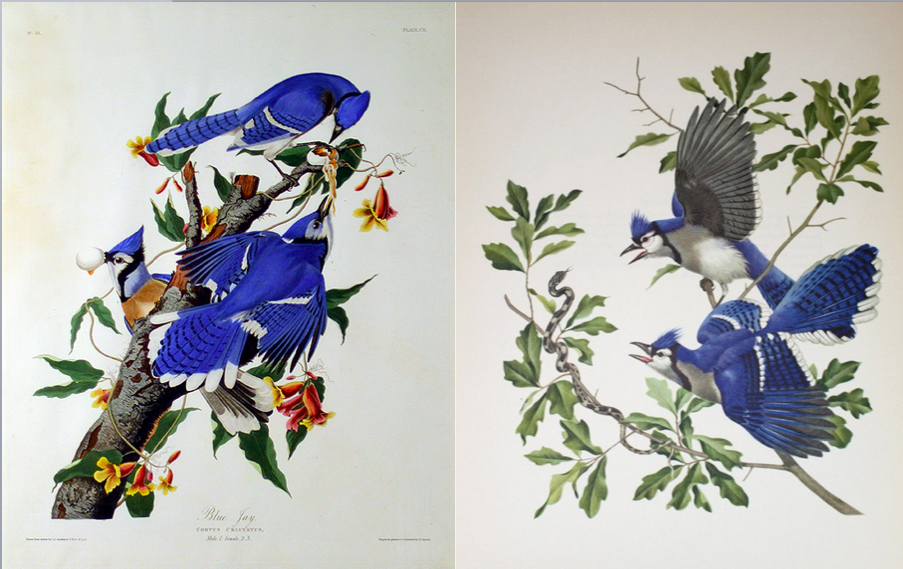
Blue Jays. Left: John James Audubon; Right: Athos Menaboni

Blue Jays. Left: John James Audubon; Right: Athos Menaboni

It should come as no surprise to visitors to this site that a significant amount of our attention is taken up by birds. Their importance is manifold, not just environmentally, but artistically. We’re also fans of the Liberal Arts, so we’re particularly excited to see these interests come together this month at two Liberal Arts colleges in Georgia.

One does not have to be a birder or an art aficionado to have heard of John James Audubon. Much of the world knows the name due to the Audubon Society, but fewer have heard of Athos Menaboni, who Times Magazine once called “Audubon’s heir”, despite the fact that the two men never met. Continue reading

SolaRoad’s First Seven Months

More than 150,000 bicyclists have used the road in the last six months in the Netherlands, where many people commute by bike. Photo credit: SolaRoad

More than 150,000 bicyclists have used the road in the last six months in the Netherlands, where many people commute by bike. Photo credit: SolaRoad

When we first linked out to this story some months ago, it did not get the number of clicks and reads as we expected. So now that we read a bit more about the results since November, all we can do is recommend that you pay attention:

SolaRoad, the world’s first “solar road,” has only been in operation since November, but it’s already generating more power than expected. SolaRoad is a bike path in Krommenie, a village northwest of Amsterdam in the Netherlands, that also functions as a massive solar array. The project was developed by TNO, the Province of Noord-Holland, Ooms Civiel and Imtech. Continue reading

We Love Salamanders, But Their Invasion Must Be Stopped

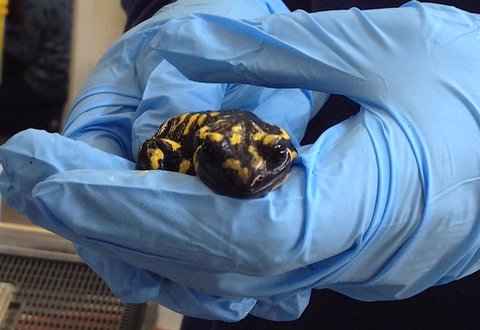
A healthy fire salamander from a captive-bred collection at a British zoo. Other specimens were infected with a fungus that has already devastated salamanders in continental Europe and could spread to North America.Credit Pria N. Ghosh

A healthy fire salamander from a captive-bred collection at a British zoo. Other specimens were infected with a fungus that has already devastated salamanders in continental Europe and could spread to North America.Credit Pria N. Ghosh

Our attention to stories reported in various media outlets about invasive species takes many forms, but invariably they are alarming, this one being no exception:

Pressure Builds for Swift U.S. Action Against Spreading Salamander Threat

There are signs of hope for American salamanders in the face of a potential biological catastrophe — a fungus that could be carried here through the global trade in exotic pets. Federal wildlife officials have signaled a crackdown may be coming on imports of amphibians.

Here’s the sequence of events.

Last year, biologists identified a virulent imported fungusBatrachochytrium salamandrivorans, as the cause of a steep drop in salamander populations in continental Europe. Herpetologists quickly began pressing United States agencies and officials (Dot Earth, Op-Ed article) to clamp down on the global exotic pet trade to cut the chances of the disease reaching the United States — which has the most diverse salamander population in the world.

In March, experts renewed their calls for action, frustrated with the lack of acknowledgement by federal wildlife agencies that this was an urgent issue. Continue reading

Nell Zink, Come To Kerala!

Bricklaying “was more valuable for my intellectual life than my entire college career.” PHOTOGRAPH BY GARETH MCCONNELL

Bricklaying “was more valuable for my intellectual life than my entire college career.” PHOTOGRAPH BY GARETH MCCONNELL

No doubt, Nell will be a good fit among La Paz Group’s global community of artistically and/or conservation-oriented invitees, many of whom you have not likely heard of, some of whom are more famous, but all with unusual talents and interests. Thanks to Kathryn Schulz for another invitation-worthy story: Nell Zink turned her back on the publishing world. It found her anyway.

The kookaburra in the Berlin Zoo is ten thousand miles from home, squat, top-heavy, large of beak, attractive of plumage, and making what is, ounce for ounce, the loudest, strangest sound I have ever heard emerge from a living creature. It begins with a classic evil laugh, bwaaahahahaha, à la Vincent Price in “Thriller,” then the bird throws back its head and lets out a series of hoots, like a plump British woman with an unbecoming but infectious laugh or a parrot that grew up in a frat house, dissolves into giggles, transitions to a chortle, appears to become an entire dinner party going to pieces, then starts to pull it together, O.K., O.K., the guests wiping their eyes and settling down, until out comes a little chuckle and hahahahoik!ha, the bird is cracking up again. Continue reading

The Backwater People

575089_10150918571289853_1457265890_n405076_10150918554669853_598114346_n536168_10150918550609853_1466449891_n

403444_10150918538279853_1979644412_n536569_10150918550049853_1662385843_n564242_10150918578019853_1707328119_n546381_10150918587689853_1296825258_n

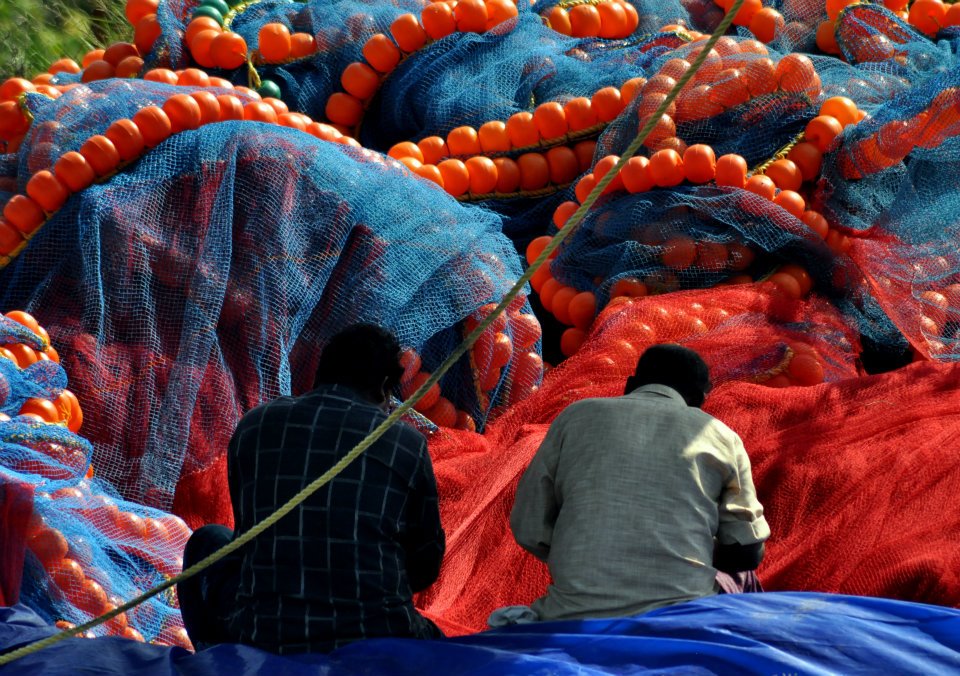
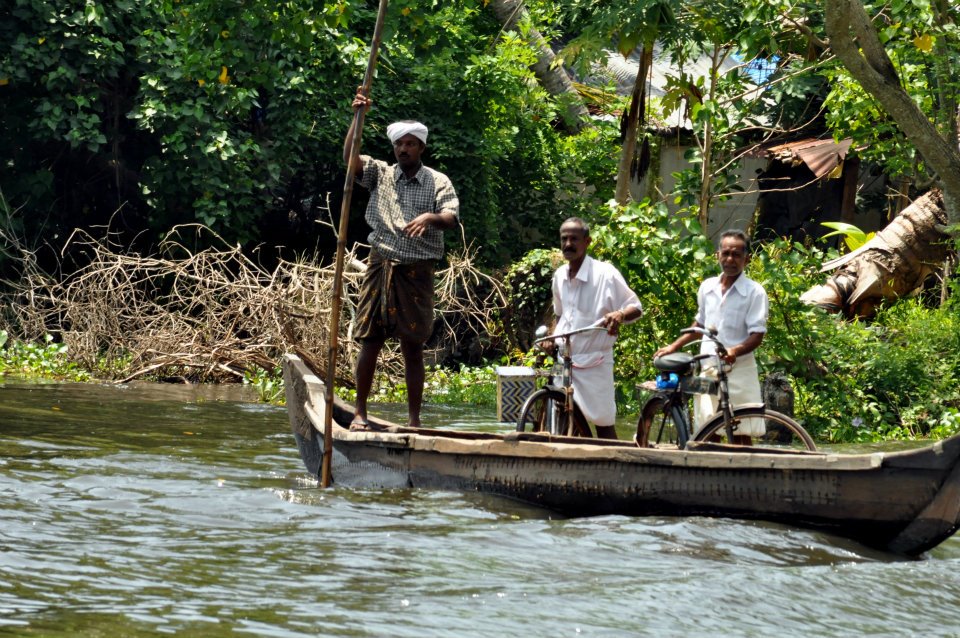
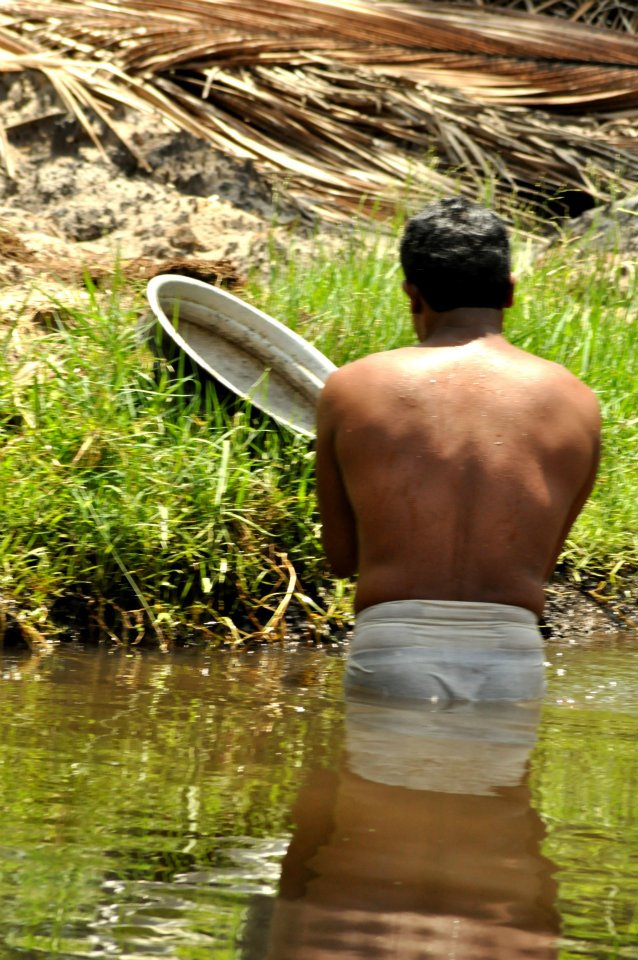
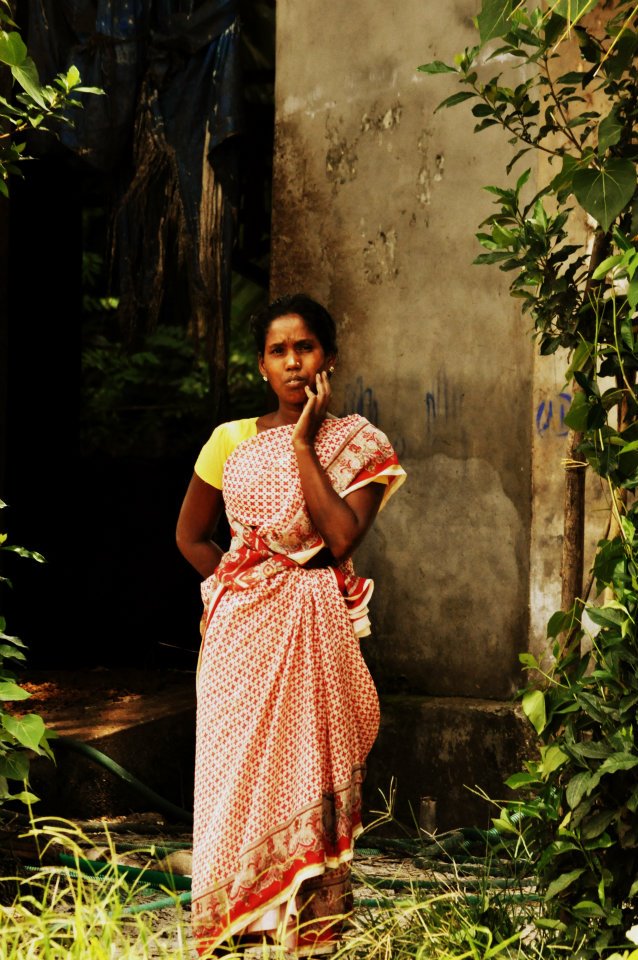
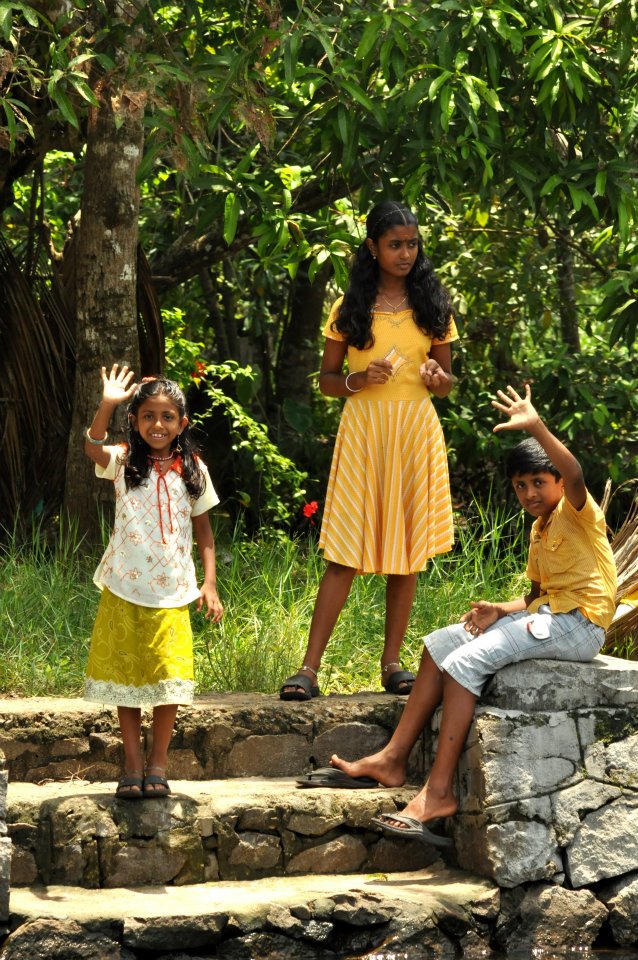
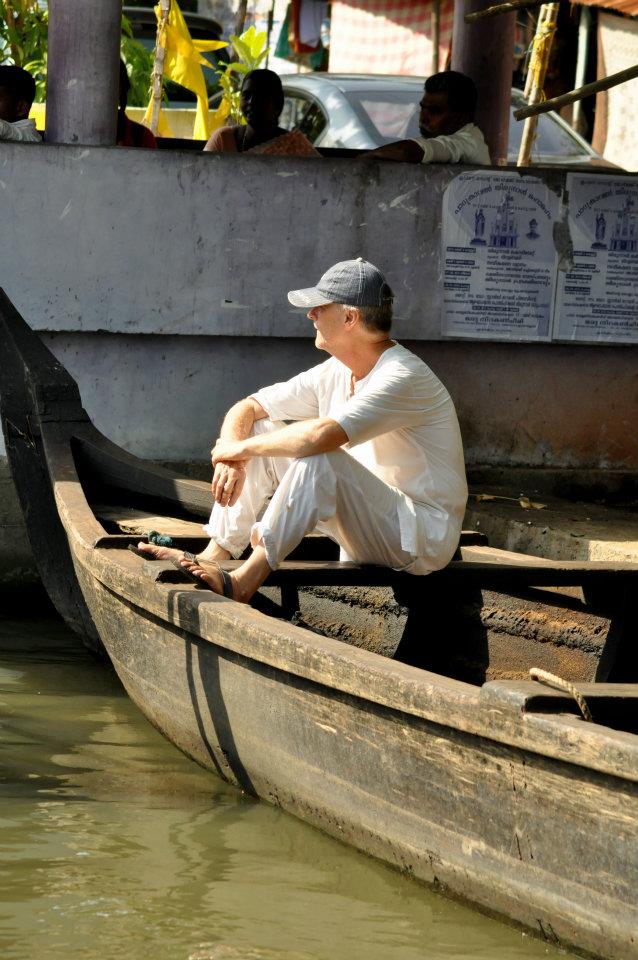
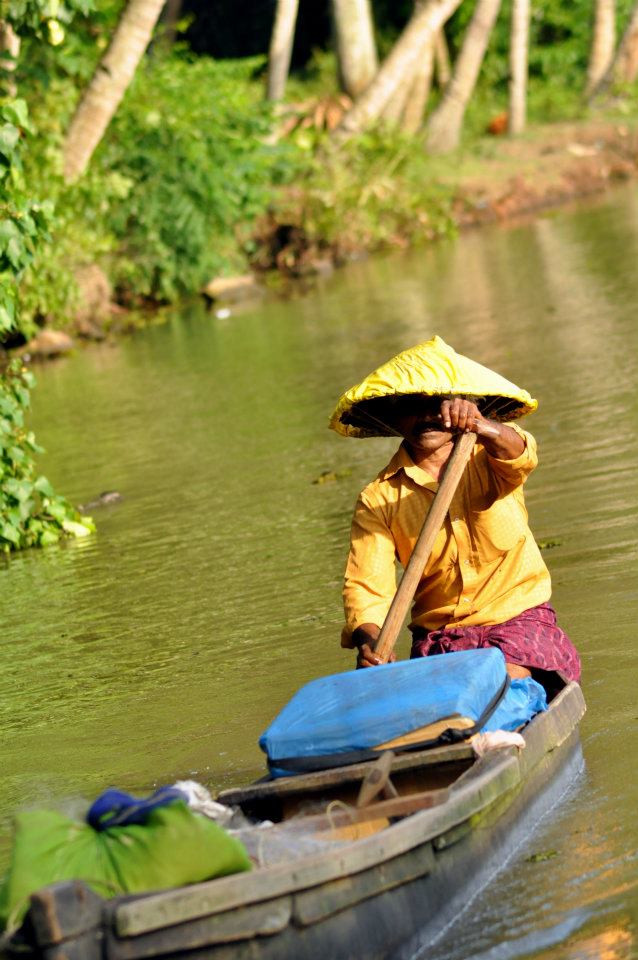
Think Kerala, think backwaters. The world’s most fascinating water world, the network of canals, rivers and waterways runs along half of Kerala and is a tourists’ mecca. Imagine golden sunrises, lush green paddy fields, palm leaves dancing in the river breeze, long stretches of silence save for the ripples, pink kissed dusk and night company of stars. Beautiful, right? Probably why even President Barack Obama, the first US president to visit India twice, mentioned the backwaters in one of addresses on a recent visit. And then there are the houseboats – your floating home on the waters, with its windows opening to a moving tapestry of blue and green. Not to forget the backwater people – generations who depend on the water for all their needs, a people seemingly untouched by the ways of time.

Continue reading

Creative Solutions To Seemingly Impossible Challenges

A protester opposes allowing Royal Dutch Shell drilling rigs to dock in Seattle on their way to Alaska. Credit David Ryder for The New York Times

A protester opposes allowing Royal Dutch Shell drilling rigs to dock in Seattle on their way to Alaska. Credit David Ryder for The New York Times

After a shockingly depressing, disappointing decision by the President of the USA to approve Shell’s drilling plan in the Arctic (this company is clearly not ready for the responsibility–what happened to your better, judicious self, Mr. President?!?), it is heartening to see citizens’ creative counter-tactics (even if this particular David does not beat this particular Goliath, thank you anyway, thinking people of Seattle, for trying):

Continue reading

A Brief Global Big Day Summary

Bush Thick-Knee, Brisbane, AU. Photo by Brian Sullivan, via eBird.

On Saturday, while visiting Chicago, I was only able to get a very short amount of time birding for a total of seven species. In the meantime, over twelve-thousand people around the world, across about 110 countries, saw 5,892 species (reported so far, and including the paltry seven I saw).

The photo on the left is of a Bush Thick-Knee, an Australian species that was the first seen during the Global Big Day. In Panama, the Lab’s Team Sapsucker got 320 species, and in New Jersey, at the World Series of Birding, the Cornell Redheads defended their championship title from last year.

One of the species I saw on Saturday was the Chimney Swift, a bird I hadn’t seen before, so that was exciting! If you want to follow more about the Global Big Day, check out eBird’s page!

Big Picture Rewilding

George Mobiot doesn’t just think about otters and eagles – he thinks BIG, back to the megafauna that once inhabited the temperate climates of the globe.

Rewilding offers us this fantastic opportunity to start restoring systems, or allowing them to restore themselves. I see it as reintroducing missing plants and animals, then stepping back and letting nature get on with it.