The Two People of a Land

First Nations peoples are also excessively marginalized in the public health system, and at least 1,200 aboriginal women have been reported missing or murdered over the past 30 years PHOTO: Daniella Zalcman

First Nations peoples are also excessively marginalized in the public health system, and at least 1,200 aboriginal women have been reported missing or murdered over the past 30 years PHOTO: Daniella Zalcman

Indigeneity comes at a premium today. From the hyper-local experience of taking local buses or tuk-tuks to food that is loudly ‘branded’ as authentic and traditional, the focus is on the native narrative. Today is also about the stories and people of the land – often oppressed and relegated to numbers of casualties until acknowledged, rehabilitated, and apologized to. Like the indigenous population of Canada.

Our languages are coming back. Our songs are coming back. But not everything is returning — some things have been lost forever. That’s the price of our ancestors being forced to assimilate – GRAHAM PARADIS, OJIBWE AND MÉTIS
Continue reading

Playing by the Sun

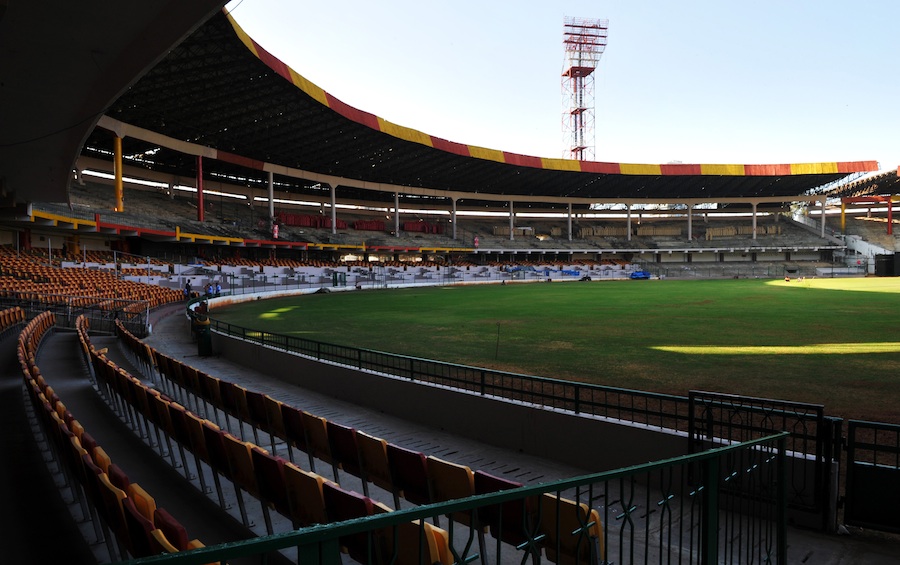
A general view of the inside of M. Chinnaswamy Stadium cricket stadium. PHOTO: DIBYANGSHU SARKAR/AFP/Getty Images)

A general view of the inside of M. Chinnaswamy Stadium. PHOTO: DIBYANGSHU SARKAR/AFP/Getty Images)

Well, nothing unites all of India like a good game of cricket. And when the legendary game takes a green turn for the better at one of the country’s premier cricketing grounds, it makes news. The heart of the matter: The M Chinnaswamy Stadium at Bengaluru is the only solar-powered cricketing ground in the entire world.  Continue reading

To Touch is to See

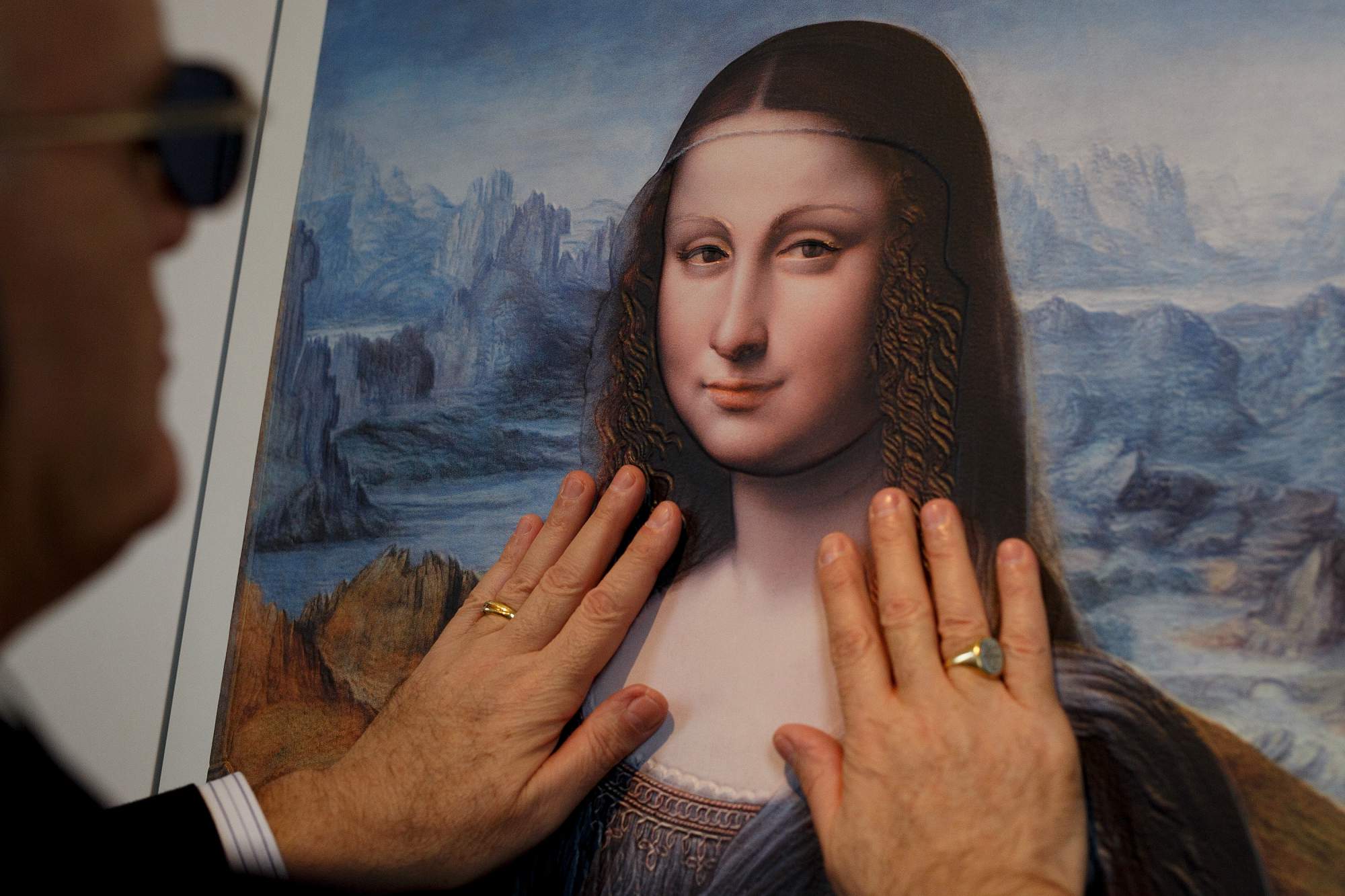
The paintings at Prado Museum in Madrid employ the Didu technique. PHOTO: Pablo Blazquez Dominguez

What is the place of hand sanitizer in a museum when all you are constantly reminded is to not touch the exhibits? But till June 28, the Prado Museum in Madrid will keep those at hand. For visitors – those with sight and the blind – are encouraged to feel their way around duplicated 3-D works of the likes of Francisco Goya (regarded both as the last of the Old Masters and the first of the moderns), Diego Velazquez (of the Spanish Golden Age) and even one painted by Leonardo da Vinci’s assistant. And those gifted with sight can don opaque glasses and be guided by their hands. Isn’t there more than just one way to see art?

Continue reading

A Goodbye to Utility Bills?

Life off the grid? An actuality realized by just a few and romanticized by the rest. But if things go as per plan, Bratislava-based Nice Architects and their seven-year project Ecocapsule will make this possible by the end of 2015. Imagine having to pay no utility bills, being able to set up your own egg-shaped home in any corner of the planet, and being super sustainable through a life powered by the wind and the sun! Yes, let’s go get that dream!

Continue reading

The Future of Parking is Here!

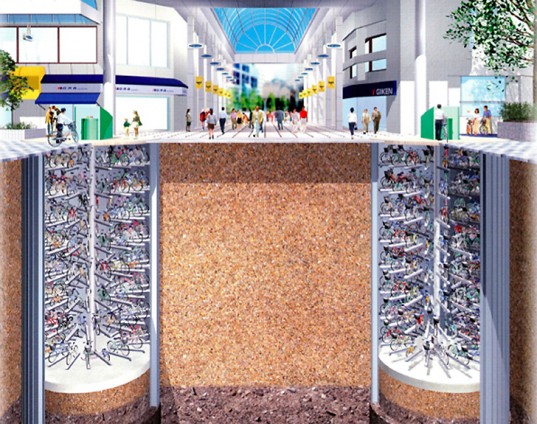
Developed by construction company Giken, the robotic system stores the cycles in a 11-meter deep well PHOTO: GIKEN LTD

Developed by construction company Giken, the robotic system stores the cycles in a 11-meter deep well PHOTO: GIKEN LTD

If there is one problem that puts developed and developing countries on the same footing, it is parking space. And Japan seems to have found a way around it. At least for bicycles. Considering that they are carbon neutral and land value is high, hindering the commissioning of exclusive bicycle roads and parking lots, this idea could be the future. Eco-cycle is an anti-seismic mechanical underground parking lot for cycles, designed along the concept of “culture above ground, function underground”. So when in Japan, particularly around Kounanhoshi Park, head to this bicycle elevator. Wait as the electronic card reader scans your membership (fee around $15 a month) code, remove pets and all valuables from the cycle, and stand back as your wheels make an eight-second journey to its slot. On your return, scan the code and your ride reaches you in a jiffy. More pedal power to that someone who really gave parking some extra thought!

Detailed photos (and some Japanese) here.

Planting the Oak Back in Oakland

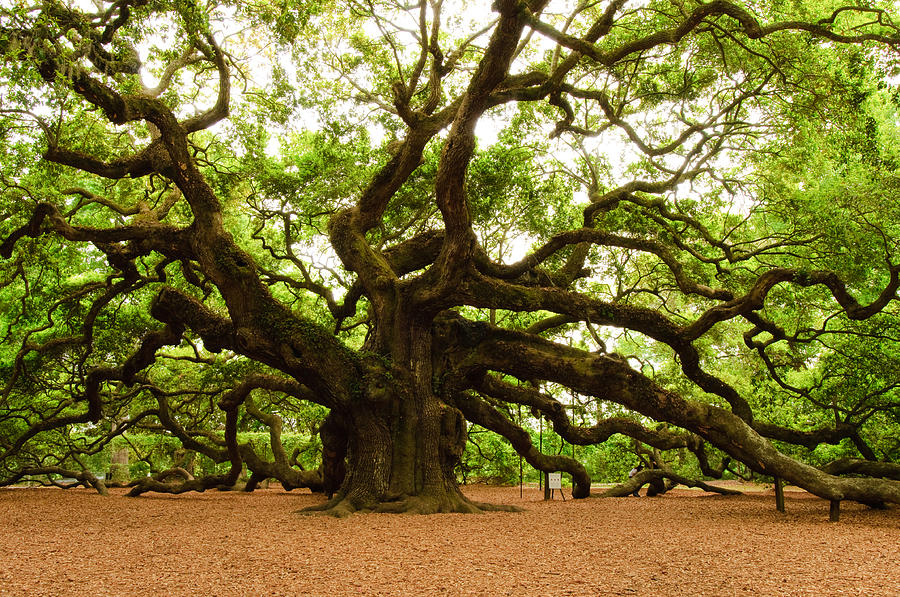
Felled to make way for developments, oaks are now being nurtured to better urban health. PHOTO: Louis Dallara

What’s in a name… Shakespeare’s 400-year-old line is timeless and oft repeated. For it goes beyond a few syllables and rests on the very soul of the matter. And going by a few volunteers setting up an inaugural stand of 72 coast live oaks in a West Oakland park, it seems like someone felt it, too. Say Oakland and you’d invariably conjure up images of woodlands and acorns. That and given that the oak is America’s national tree, you’d expect vast woodlands and tributaries of branches. Instead, sentiment is attached to the few oaks that still stand their ground in the face of development and there’s a “re-oak” campaign underway. In good time, we hope.

“Names are a powerful way to think about a place,” said Walter J. Hood, a landscape architect and professor at the University of California, Berkeley, who lives and works in Oakland and came up with the idea of resurrecting the city’s forgotten groves. “If a landscape changes, your way of life changes,” he said, “whether it’s a freeway cut into a neighborhood or a new dense canopy of trees.”

Read the New York Times report here.

In Art’s Holy Name, From Italy

When you are a native of the land, you inevitably end up being a guide. From the fastest route to reach the airport, places to visit in Fort Kochi and Mattanchery, and the lowdown on where to get the best seafood – it is assumed that you know it all. And, rightly so. For every textbook guide on India/ Kerala will tell you that you shouldn’t miss what’s left of the Chinese fishing nets, about taking a walk in Jew Town and catching a cultural performance or two. The Santa Cruz Basilica, too, will be on the must-do list. But only a native can tell you of the Italian Jesuit priest, who studied Michelangelo’s repertoire in Rome, and came to Cochin after he was commissioned to paint in churches. And that he died here, too.

Continue reading

Taxi! (Green) Taxi!

Taxis have grabbed headlines in recent times, globally. The world is yet to recover from the news of losing Nobel laureate and Princeton University mathematician John F Nash Jr. and wife Alicia  – inspiration behind the film A Beautiful Mind – in a New Jersey car crash on Saturday. Soaring summer temperatures in the Indian subcontinent and resultant heat strokes are forcing cabbies to stay off roads in the afternoons. Then, there’s the heartwarming story of Dhananjay Chakraborty from Kolkata, whose taxi is green in every sense. Continue reading

Lichens: Unlikely Citizen Science Subjects

Photo via gmilburn.ca

We’re avid fans of citizen science, in part because of its breadth of possibilities. People can study historical documents, look for birds, record phenologies in forests, hunt lionfish, count butterflies, and perform dozens of other activities to help discover more about the world around and before us. One thing we didn’t expect to ever see was a citizen science initiative covering something as seemingly — but obviously looks can be deceiving — as lichens. Lisa Feldkamp reports for The Nature Conservancy’s science blog, Cool Green Science, excerpted in parts below:

Welcome to the exciting world of lichens. And no, that’s not oxymoronic.

A lichen is actually a composite organism: algae or cyanobacteria living with a fungus symbiotically. That definition, admittedly, doesn’t help their charisma factor.

But look at them closely and you’ll see a wonderful, colorful tapestry.

Get out a hand lens or microscope and an even more amazing world is revealed.

“One of the cool things about lichens is their ability to survive extremes,” says Tiffany Beachy of Great Smoky Mountains Institute at Tremont. “When it’s dry they shrivel and look like they’ve dried out, but with a drop of water they turn green.”

One of the most unique inhabitants of lichen is the tardigrade (a.k.a. water bear) is the first life-form with a proven ability to survive in the vacuum of space.

However, lichens have an Achilles’ heel: air pollution.

Continue reading

Clothed in History

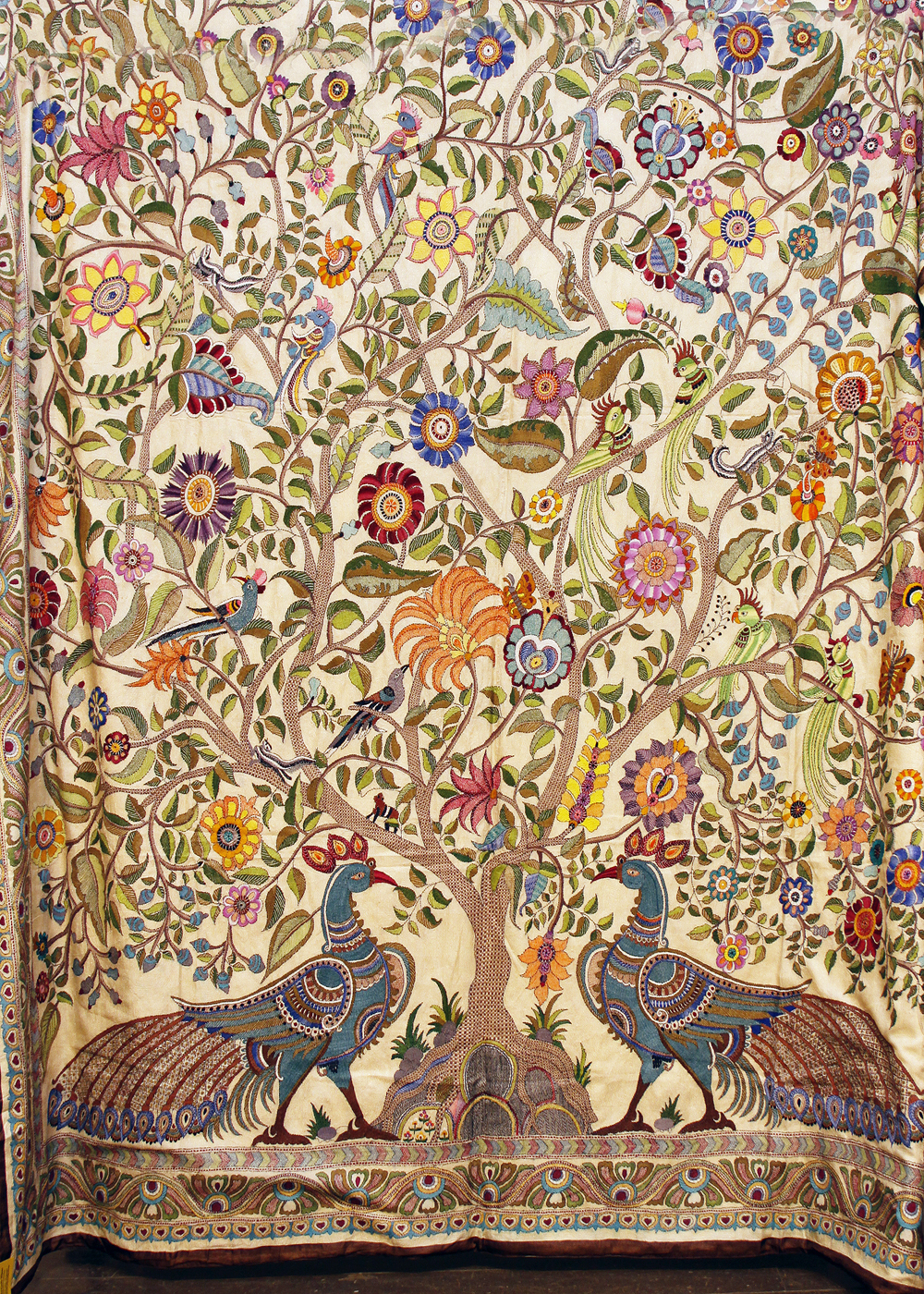
Kalamkari embraces the world of gods and was once used to decorate temples and chariots. Today, in India, it is the face of a dying craft of printing by hand. PHOTO: J Niranjan

If you happen to be around the Metropolitan Museum of Art (gallery 199 in specific) or have Internet hours in hand, the ongoing exhibition titled Sultans of Deccan India (1500-1700) is worth a dekko. A show of opulence enjoyed by kings of the Deccan region in India, the exhibition features 200 artifacts that explore poetic lyricism in paintings, exquisite metalwork, and a distinguished form of fabric production. Known as kalamkari, this cotton fabric is painstakingly dyed using natural vegetable colors and decorated with intricate and detailed paintings by hand. Practised and protected by a small community in the state of Andhra Pradesh today, the family craft faces the Herculean task of survival in the face of plagiarism, lack of government support, and the decreasing number of artisans.

Continue reading

The Impressiveness of Cephalopod Sight

Photo via EuclidLibrary

We’ve long known that octopuses have some of the most powerful eyes among invertebrates, but a recently published article in the Journal of Experimental Biology titled “Eye-independent, light-activated chromatophore expansion (LACE) and expression of phototransduction genes in the skin of Octopus bimaculoides” is showing that members of cephalopoda (octopus, squid, cuttlefish) may also have light-sensitive cells in their skin that effectively transform the large outer organ — already famous for its color- and shape-shifting qualities — into a perceptive one as well. The science sections of the New York Times and The Guardian, along with National Geographic‘s Phenomena webpage, all cover the story (click on the reporter’s name to reach the original articles):

Octopuses can mimic the color and texture of a rock or a piece of Continue reading

The Whole Truth

The last time potholes really had our attention was almost three years ago, when Russian ad agency Voskhod painted local politicians’ faces around garish potholes in the town of Yekaterinburg. Over the years and particularly during our stay in India, bumpy rides have come to be a way of life. There’s the initial irritation over a wheel jumping into a hole, some amount of cursing the government for not getting around to fixing them, and then resignation – this has almost come to be a ritual. But when we happened to chance upon Chicago-based Jim Bachor’s ‘art-titude’ towards potholes, it was pleasant to see how the issue had become apolitical in that it did not scream for attention from the government. Instead, the passive activism appears more of a manifestation of citizen ownership. And, a good sense of art and humor.

Continue reading

Let’s talk food

Lettuce

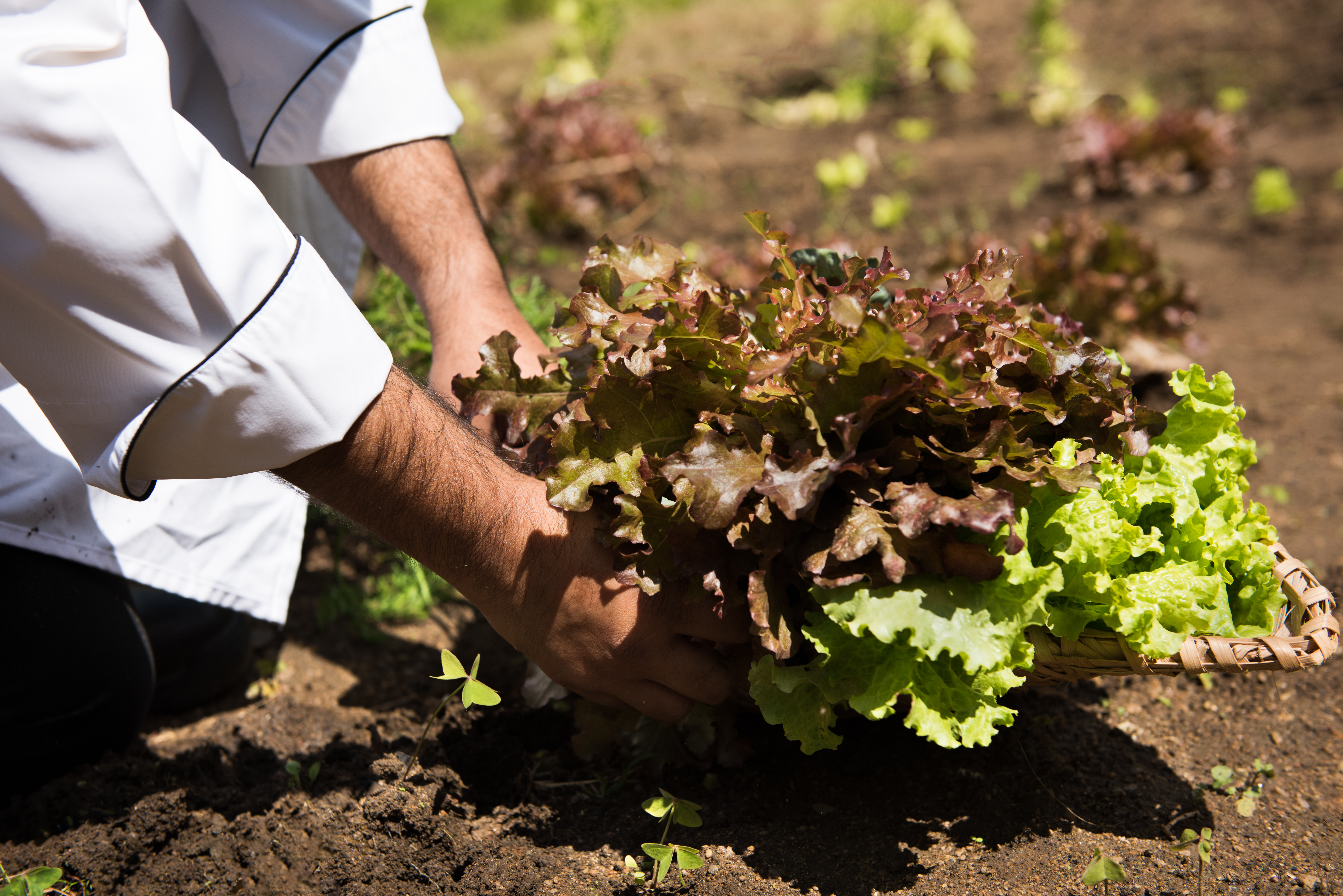
At Cardamom County in Thekkady, we take food seriously. From composting leftovers to growing our own food, we do it all. PHOTO: Deepshika Jain

There’s no denying duality when it comes to any life phenomenon. Let’s take growth and decay, abundance and poverty, negligence and responsibility. Bring food into this equation and you cannot have a greater marker of different standards of living across the globe. So while we were taking stock of produce harvested from our “edible” gardens at Cardamom County and Xandari Pearl, the conversation happened to linger on food security. And then someone mentioned France recently banning all supermarkets from spoiling or throwing away unsold food.

The measures are part of wider drive to halve the amount of food waste in France by 2025. According to official estimates, the average French person throws out 20kg-30kg of food a year – 7kg of which is still in its wrapping. The combined national cost of this is up to €20bn. Of the 7.1m tonnes of food wasted in France each year, 67% is binned by consumers, 15% by restaurants and 11% by shops. Each year 1.3bn tonnes of food are wasted worldwide.

Continue reading

Art in the House

Straddling the colorful neighborhoods of Mattanchery and Fort Kochi, Xandari Harbour (XH) is in good art company. With galleries hugging the street at every corner and local cafes dedicating their walls to the cause of promoting artists of the land, you are never too far from colors. The second edition of the Kochi Muziris Biennale too played its role in resuscitating street art and bringing art vocabulary into everyday conversations. The canvas so full of action and art being our foremost form of decor in rooms and at the restaurant, 51, it was an obvious choice when it came to bringing life to the bland walls of our staff cafeteria. Continue reading

The Barred Antshrike

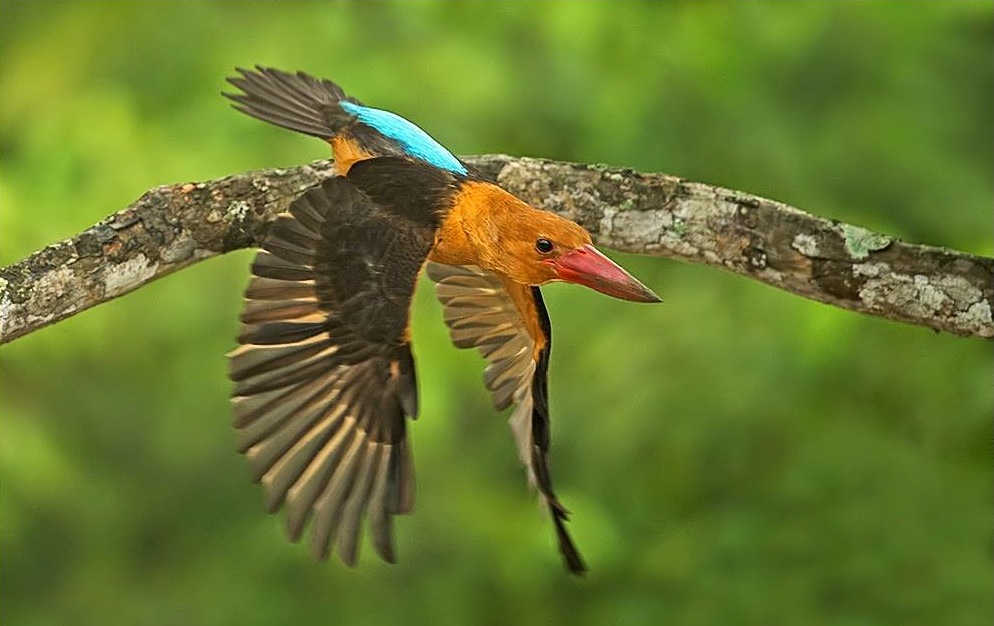
Last weekend, a former minister of the environment for Costa Rica was staying at Xandari with his wife. Avid birders with life lists, they noticed a binder on the lobby’s coffee table with the cover image pictured above. The binder was the product of work James and I did last summer, highlighting forty interesting species of resident birds on Xandari’s property. After the table of contents, the first featured bird — the Barred Antshrike — was a surprise to the visiting couple. They’d been birding the Central Valley for years, but they’d never seen the species, and they simply didn’t believe that it could be found in such an accessible location.

Politely, the couple smiled at the binder-creators’ mistake and set out Continue reading

Mother’s Day Redux: Bluebird and her Babies

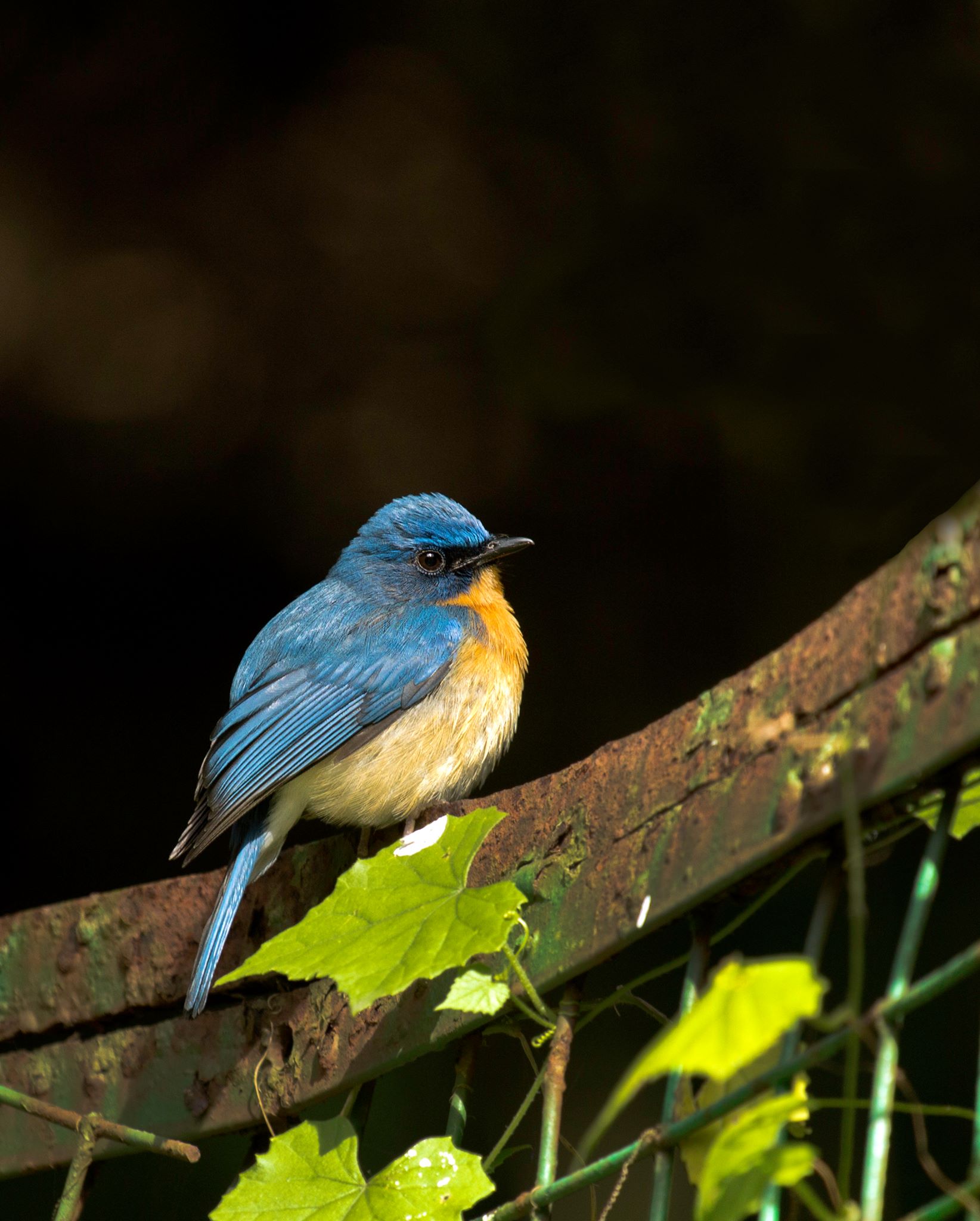
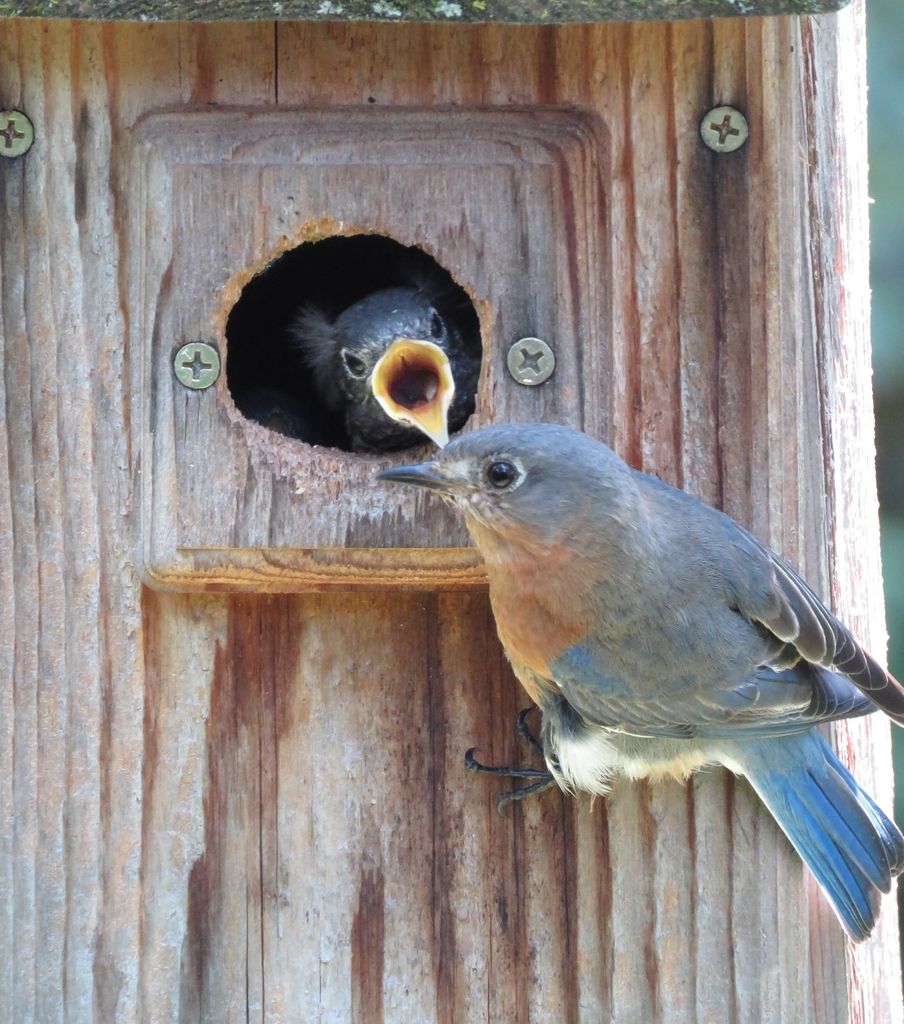
Mother bluebird feeding babies on Mother’s Day

A little less than a month before mother’s day (May 10th), a pair of bluebirds made their nest in one of the bluebird houses in our backyard in Atlanta. I was away studying at the university at the time, but my parents described to me in phone conversations the process familiar to anyone who has seen birds build a nest in their yard: first the birds made tentative visits to the site, then they began to carry in straw, twigs, and grass, finally the mother Continue reading

A feast for your eyes

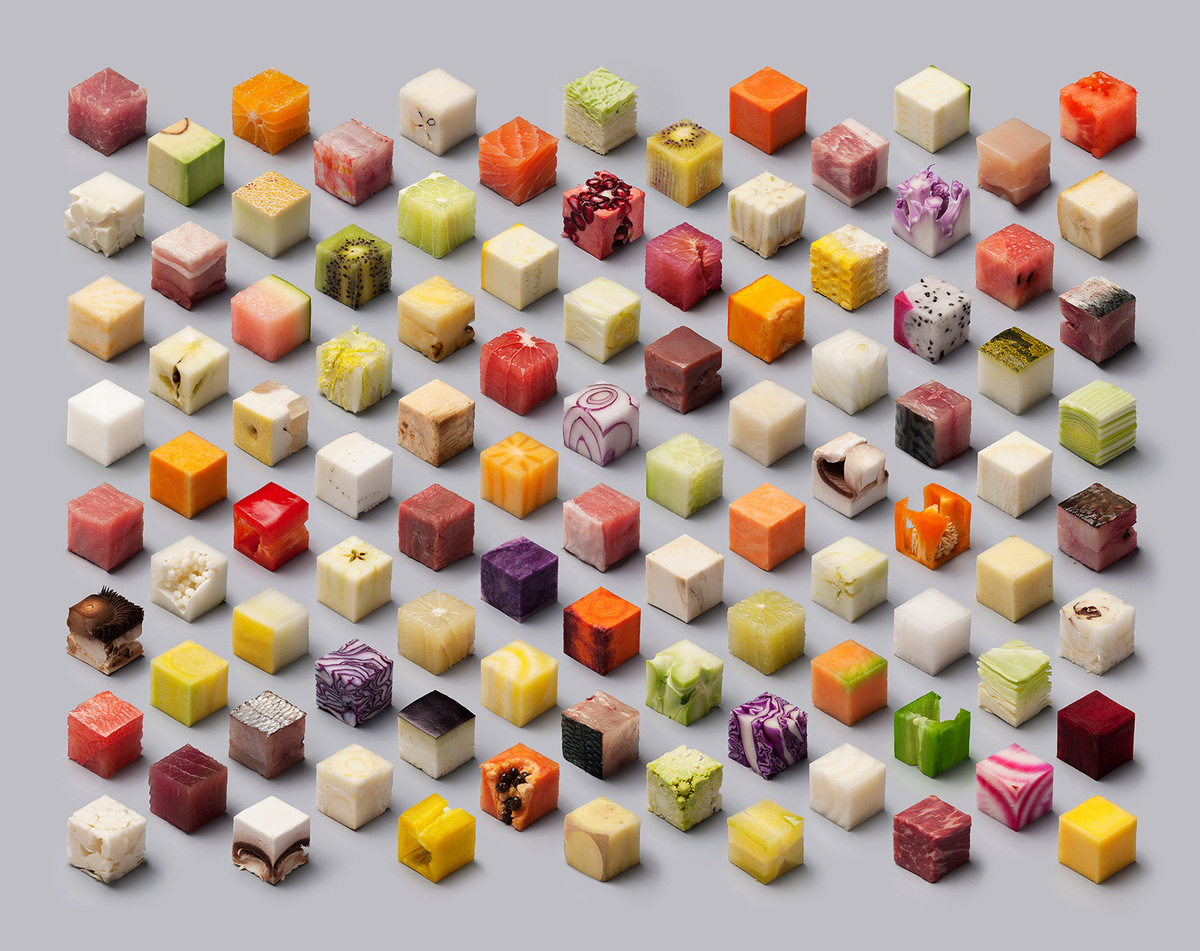
98 2.5 cm cubes of raw food make this stunning isosymmetric photograph. COURTESY: Lernert & Sander

98 2.5 cm cubes of raw food make this stunning isosymmetric photograph. COURTESY: Lernert & Sander

When it comes to food, they say you eat with your eyes first. And you cannot help but do just that when it comes to Lernert & Sander’s new work, Cubes. May be that’s after you’ve tried identifying as many of the 98 cubes of raw food (we couldn’t help ourselves, too!). Commissioned by Dutch newspaper De Volkskrant last year for a feature on the nation’s eating habits, the duo started with what they could find in their neighborhood grocery store. Each type of food was then cut into cubes of 2.5 cm with a custom-designed tool, placed equidistant from the camera, each row photographed separately, and the entire image put together using digital compositing. No, absolutely no use of Photoshop. The equal distances and the one single size put all the vegetables, fruits and meats on equal footing. The digital editing turned the physically impossible feat into visual reality.  Continue reading