We Love Salamanders, But Their Invasion Must Be Stopped

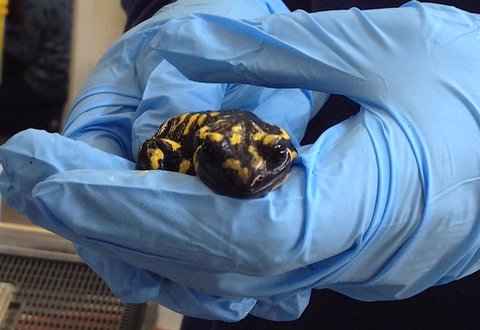
A healthy fire salamander from a captive-bred collection at a British zoo. Other specimens were infected with a fungus that has already devastated salamanders in continental Europe and could spread to North America.Credit Pria N. Ghosh

A healthy fire salamander from a captive-bred collection at a British zoo. Other specimens were infected with a fungus that has already devastated salamanders in continental Europe and could spread to North America.Credit Pria N. Ghosh

Our attention to stories reported in various media outlets about invasive species takes many forms, but invariably they are alarming, this one being no exception:

Pressure Builds for Swift U.S. Action Against Spreading Salamander Threat

There are signs of hope for American salamanders in the face of a potential biological catastrophe — a fungus that could be carried here through the global trade in exotic pets. Federal wildlife officials have signaled a crackdown may be coming on imports of amphibians.

Here’s the sequence of events.

Last year, biologists identified a virulent imported fungusBatrachochytrium salamandrivorans, as the cause of a steep drop in salamander populations in continental Europe. Herpetologists quickly began pressing United States agencies and officials (Dot Earth, Op-Ed article) to clamp down on the global exotic pet trade to cut the chances of the disease reaching the United States — which has the most diverse salamander population in the world.

In March, experts renewed their calls for action, frustrated with the lack of acknowledgement by federal wildlife agencies that this was an urgent issue. Continue reading
Nell Zink, Come To Kerala!

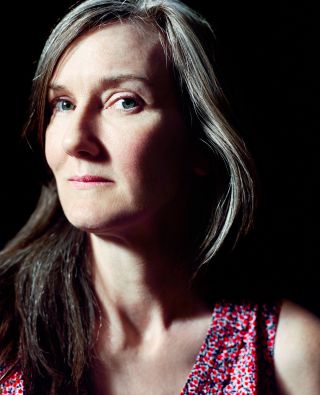
Bricklaying “was more valuable for my intellectual life than my entire college career.” PHOTOGRAPH BY GARETH MCCONNELL

Bricklaying “was more valuable for my intellectual life than my entire college career.” PHOTOGRAPH BY GARETH MCCONNELL

No doubt, Nell will be a good fit among La Paz Group’s global community of artistically and/or conservation-oriented invitees, many of whom you have not likely heard of, some of whom are more famous, but all with unusual talents and interests. Thanks to Kathryn Schulz for another invitation-worthy story: Nell Zink turned her back on the publishing world. It found her anyway.

The kookaburra in the Berlin Zoo is ten thousand miles from home, squat, top-heavy, large of beak, attractive of plumage, and making what is, ounce for ounce, the loudest, strangest sound I have ever heard emerge from a living creature. It begins with a classic evil laugh, bwaaahahahaha, à la Vincent Price in “Thriller,” then the bird throws back its head and lets out a series of hoots, like a plump British woman with an unbecoming but infectious laugh or a parrot that grew up in a frat house, dissolves into giggles, transitions to a chortle, appears to become an entire dinner party going to pieces, then starts to pull it together, O.K., O.K., the guests wiping their eyes and settling down, until out comes a little chuckle and hahahahoik!ha, the bird is cracking up again. Continue reading

The Backwater People

575089_10150918571289853_1457265890_n405076_10150918554669853_598114346_n536168_10150918550609853_1466449891_n

403444_10150918538279853_1979644412_n536569_10150918550049853_1662385843_n564242_10150918578019853_1707328119_n546381_10150918587689853_1296825258_n

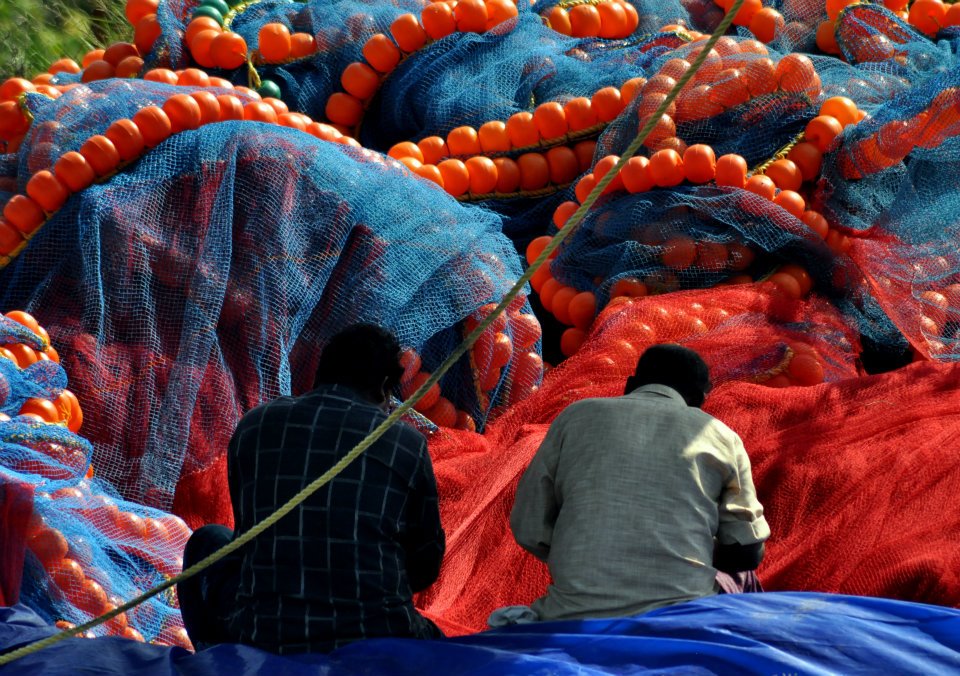
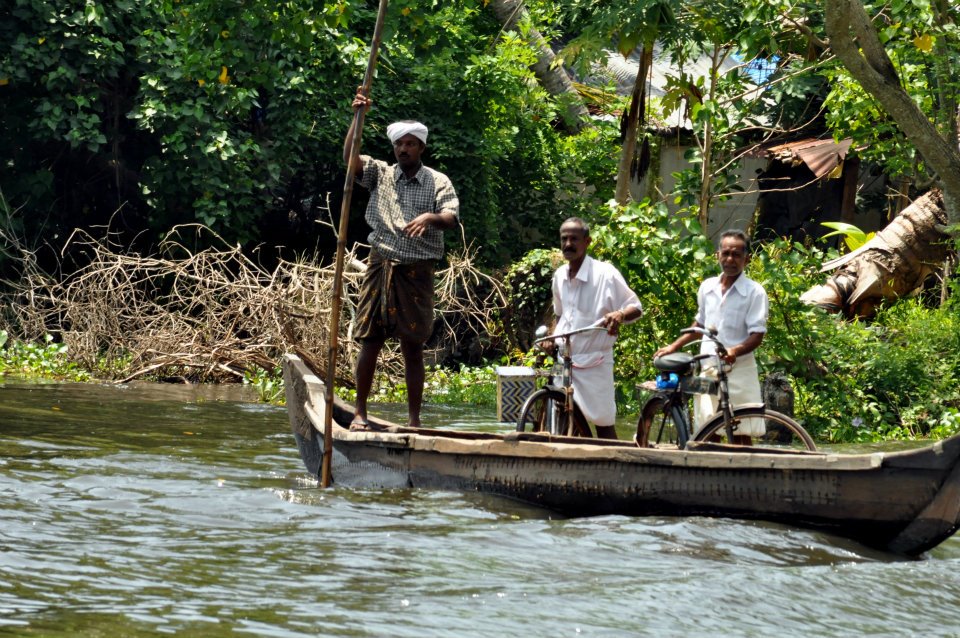
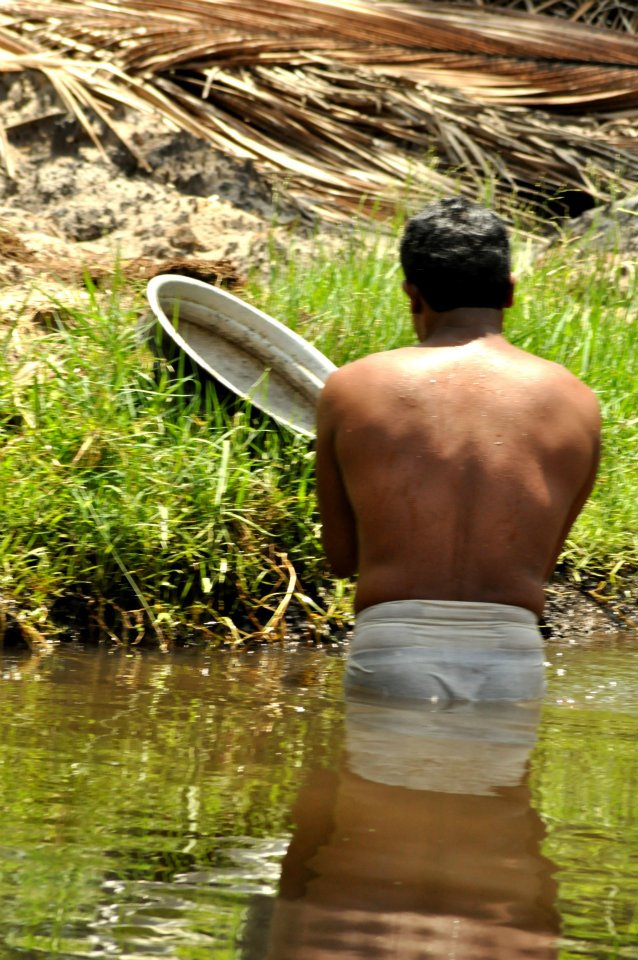
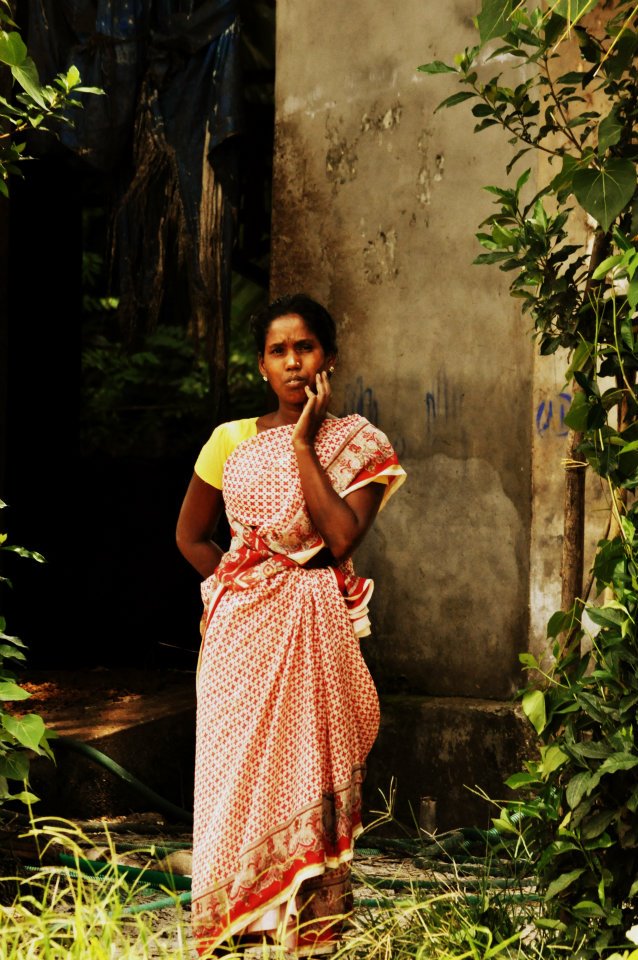
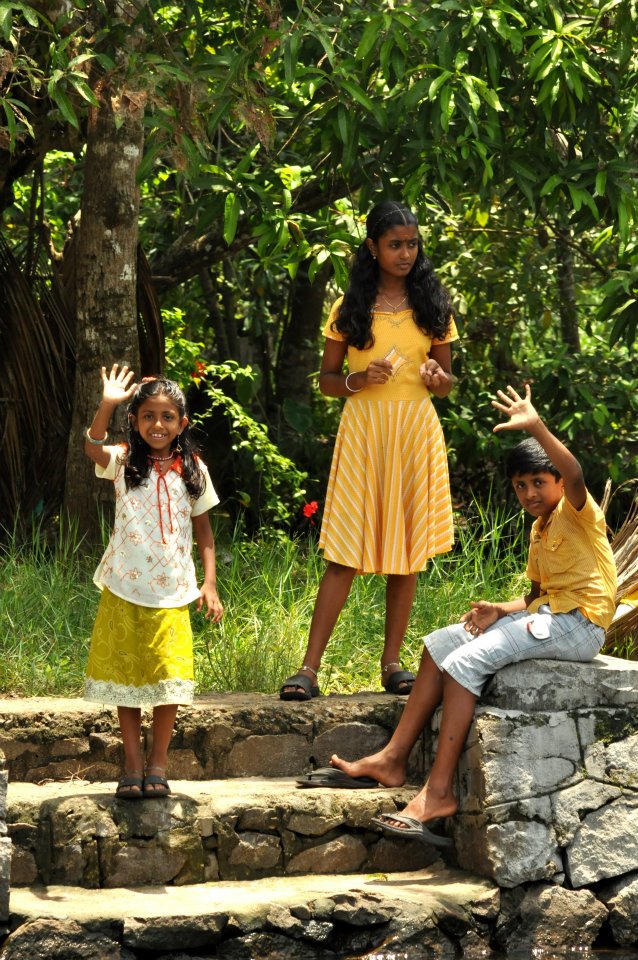
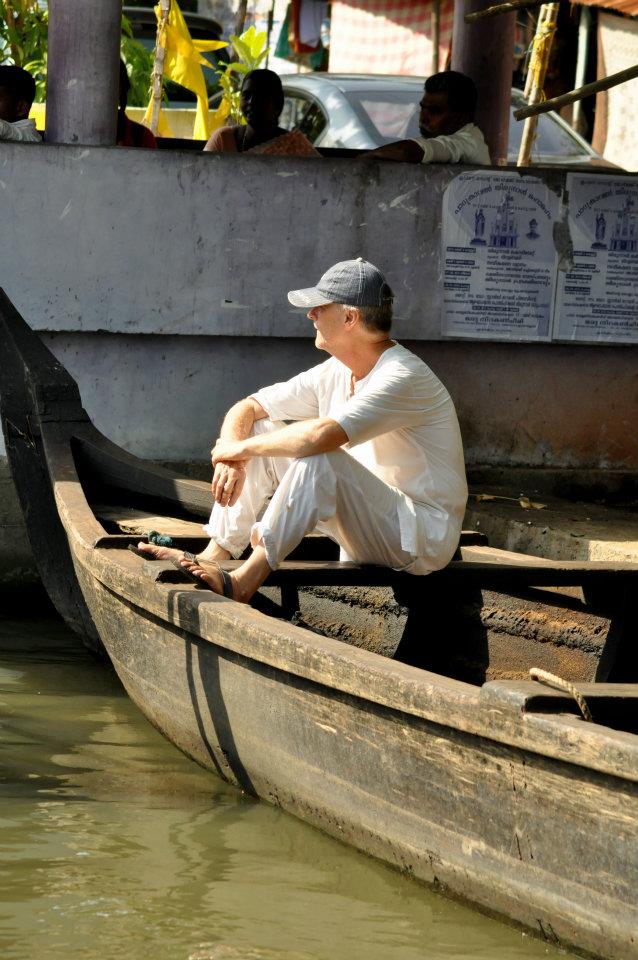
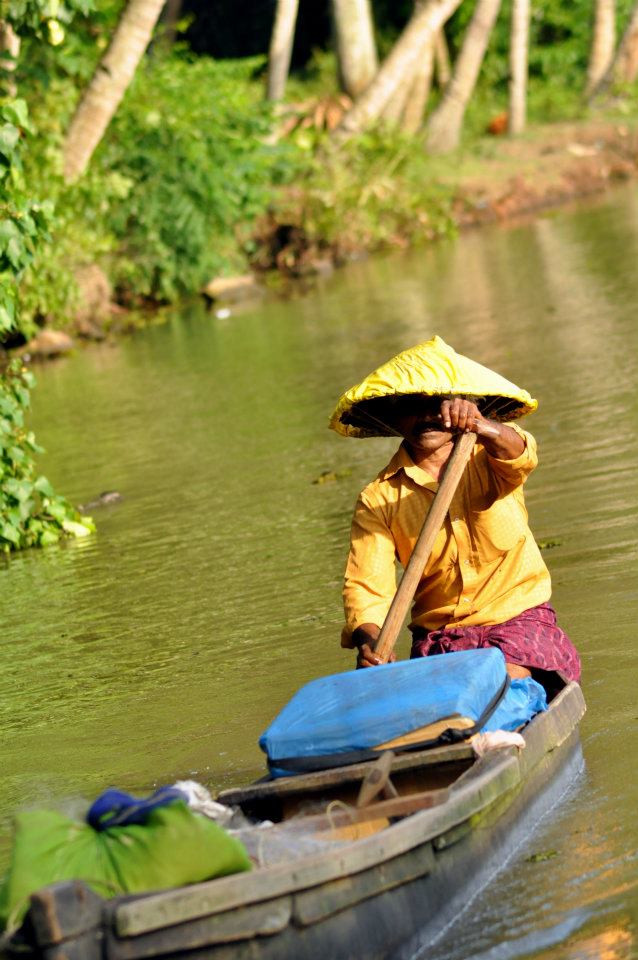
Think Kerala, think backwaters. The world’s most fascinating water world, the network of canals, rivers and waterways runs along half of Kerala and is a tourists’ mecca. Imagine golden sunrises, lush green paddy fields, palm leaves dancing in the river breeze, long stretches of silence save for the ripples, pink kissed dusk and night company of stars. Beautiful, right? Probably why even President Barack Obama, the first US president to visit India twice, mentioned the backwaters in one of addresses on a recent visit. And then there are the houseboats – your floating home on the waters, with its windows opening to a moving tapestry of blue and green. Not to forget the backwater people – generations who depend on the water for all their needs, a people seemingly untouched by the ways of time.

Continue reading

Creative Solutions To Seemingly Impossible Challenges

A protester opposes allowing Royal Dutch Shell drilling rigs to dock in Seattle on their way to Alaska. Credit David Ryder for The New York Times

A protester opposes allowing Royal Dutch Shell drilling rigs to dock in Seattle on their way to Alaska. Credit David Ryder for The New York Times

After a shockingly depressing, disappointing decision by the President of the USA to approve Shell’s drilling plan in the Arctic (this company is clearly not ready for the responsibility–what happened to your better, judicious self, Mr. President?!?), it is heartening to see citizens’ creative counter-tactics (even if this particular David does not beat this particular Goliath, thank you anyway, thinking people of Seattle, for trying):

Continue reading

A Brief Global Big Day Summary

Bush Thick-Knee, Brisbane, AU. Photo by Brian Sullivan, via eBird.

On Saturday, while visiting Chicago, I was only able to get a very short amount of time birding for a total of seven species. In the meantime, over twelve-thousand people around the world, across about 110 countries, saw 5,892 species (reported so far, and including the paltry seven I saw).

The photo on the left is of a Bush Thick-Knee, an Australian species that was the first seen during the Global Big Day. In Panama, the Lab’s Team Sapsucker got 320 species, and in New Jersey, at the World Series of Birding, the Cornell Redheads defended their championship title from last year.

One of the species I saw on Saturday was the Chimney Swift, a bird I hadn’t seen before, so that was exciting! If you want to follow more about the Global Big Day, check out eBird’s page!

Big Picture Rewilding

George Mobiot doesn’t just think about otters and eagles – he thinks BIG, back to the megafauna that once inhabited the temperate climates of the globe.

Rewilding offers us this fantastic opportunity to start restoring systems, or allowing them to restore themselves. I see it as reintroducing missing plants and animals, then stepping back and letting nature get on with it.

Ferry Around

DSC_2039

The Cochin harbor lights caught on the move from the ferry

“Airrrrr, waterrrrrr and laaaaaand” – my first grade Geography teacher chanted the three main modes of transport until we pony-tailed girls were sure to never forget them. While travel by land was a plain daily affair, air transport completed family vacations. It was the much-awaited – but timed – visits to the grandparents, their home on an island in the backwaters, that sparked my love for the ferry.

As with love of all kinds and sizes, it began with the unknown. “How much water is there in the river,” “Will we die if the boat breaks”, “How works the ferry” – curiosity trumped grammar in my little world. There were some answers but the fascination stayed because how could wooden planks and boards placed across two large canoes carry people and vehicles! So every time the car reached the water’s edge, out jumped a little girl with 5 rs ($0.08), stood on tiptoes to reach the greasy ticket counter and waited until the father maneuvered the car to climb onto a ladder placed between the ferry platform and the edge of the boat (craving to do justice to this bit but Physics is not my cup of my tea). If I promised to not go close to the railings, I was allowed to stand out in the open, letting the river breeze ruffle my curls and rouse up conversations I’d drown my grandparents in.

Yesterday, the ferry was about a little girl reaching her elders on an island where once there was no bridge. Today, two decades on, the ferry is the bridge that connects the old and the new, brings together kindred and the wayfarers, and tells her stories of the land and its people. Continue reading

Extreme Recycling

Filtering membranes in an Orange County, Calif., water purification facility. The plant opened in 2008 during the state's last drought. Credit Stuart Palley for The New York Times

Filtering membranes in an Orange County, Calif., water purification facility. The plant opened in 2008 during the state’s last drought. Credit Stuart Palley for The New York Times

As the California drought continues public and private sector organizations look to solutions to comply with the State’s mandatory water reduction measures. In addition to desalination plants coming back on line and rainwater harvesting, communities are looking at ways to overcome the “yuck factor” of water recycling.

Less “extreme” versions have been in place for some time, as household wastewater goes through layers of treatment processes that break it down to its prime components of “H, 2 and O”. The results have been used for irrigation for years, but it’s possible to purify the water to sparklingly clear levels.

Used already in craft beer brewing, extreme purified water is one of the array of ideas being implemented to manage California’s ever-growing problems. Dealing with consumers is essentially a marketing problem, more so in this case than the norm.

Water recycling is common for uses like irrigation; purple pipes in many California towns deliver water to golf courses, zoos and farms. The West Basin Municipal Water District, which serves 17 cities in southwestern Los Angeles County, produces five types of “designer” water for such uses as irrigation and in cooling towers and boilers. At a more grass-roots level, activists encourage Californians to save “gray water” from bathroom sinks, showers, tubs and washing machines to water their plants and gardens. Continue reading
Rewilding’s Great Rewards

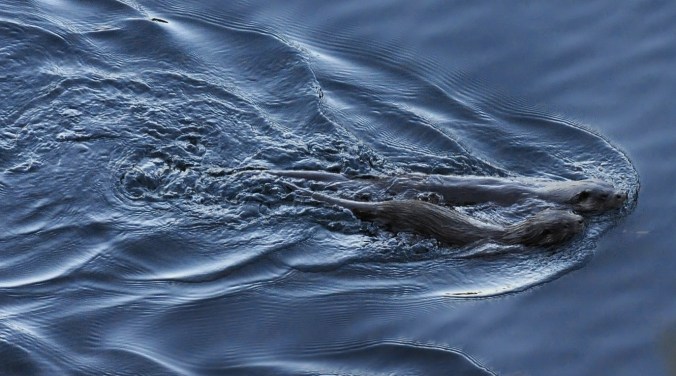
Otters near Shieldaig Island, Loch Shieldaig, Scotland. Photograph: Steve Carter

Otters near Shieldaig Island, Loch Shieldaig, Scotland. Photograph: Steve Carter

Although he may not use the term, George Monbiot believes in biophilia. His devotion to the concept of rewilding is evident in both his actions and his words, and his expressive writing about nature’s resilience and the richness of “ecological interactions” prove the point. His description of a recent trip to the Scottish highlands exemplifies both the draw of nature and his response to it:

As I came over a low ridge, I noticed a disturbance in the water below me, a few metres from the shore. I dropped into the heather and watched. A moment later, two small heads broke from the sea, then the creatures arced over and disappeared again.

After another moment, the larger one – the dog otter – scrambled out of the water with something thrashing in its mouth. He dropped it on to the rocks, gripped it again, then chewed it up. Then the bitch emerged from the sea beside him, also carrying something, that she dispatched just as quickly. They plunged in again, and I watched the trails of bubbles they made as they rummaged round the roots of the kelp that filled the shallow bay. Continue reading
Waste, Quantified Into Profit

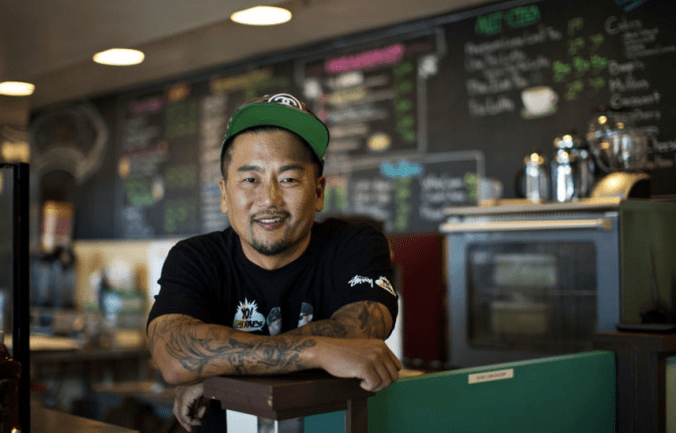
With a new chain called Loco’l, the chef Roy Choi is hoping to create competitively priced, sustainable fast food, primarily by minimizing waste. CREDIT PHOTOGRAPH BY MARIO ANZUONI / REUTERS VIA LANDOV

With a new chain called Loco’l, the chef Roy Choi is hoping to create competitively priced, sustainable fast food, primarily by minimizing waste.
CREDIT PHOTOGRAPH BY MARIO ANZUONI / REUTERS VIA LANDOV

Food Trucks are the ultimate “pop up” upstarts, with their expansive ranges between classic and trendy. Roy Choi, who New Yorker writer Lauren Markem calls “the godfather of the foodtruck movement” wants to do more than serve great, locally sourced food at his new venture Loco’l’s. His “fast food” restaurant concept located in San Francisco’s Tenderloin District, will be inspired by the goal of working toward a waste free kitchen. In order to keep the costs down in what is a notoriously wasteful segment of the restaurant market, Choi is going lean using a software that helps create a more sustainable kitchen.

In tapping into waste, Choi and Patterson hope to marry fiscal prudence with environmental idealism. According to a report published in 2012 by the Natural Resources Defense Council, the amount of wasted food in the U.S. has increased by fifty per cent since the nineteen-seventies, to the point where more than forty per cent of all food grown or raised in the United States now goes to waste somewhere along the supply chain. This in turn means that vast amounts of fossil fuels, water, and other resources are being wasted in the production of unused food. Continue reading

Collective Roots

Attention to detail is a highly prized attribute in all aspects of the work we have been doing in India since 2010, and we hope it doesn’t seem pedestrian to extend that concept to something as commercial as shopping. Some people may beg to differ, but there are many cases where the “consumer transaction” is so much more.

We’ve spent many happy hours in exploration to find sustainably produced, cottage industry items. A trip to Gujarat led us to the Kala Raksha Trust. Walks in Cochin led us to the Vimalalayam Convent School, and the NGO A Hundred Hands has introduced us to many of the wonderful craftswomen whose products we highlight, including designer Usha Prajapati from Samoolam.

We’ve been great fans of the results of her work with the women of Bihar from the moment we saw it, and hearing her personal story adds a beautiful dimension to the concept of “self-help”. Thanks to FvF (Freunde von Freunden) for their inspiring online interview.

Samoolam, Usha’s design collective, which is making a name for its beautiful hand-crocheted lifestyle products, is incredible not just because its founder is young, talented and inspiring, but because its process of creation is held together by a network of strong and talented women much like her – women who make things happen, who are changing their worlds, one crochet bead at a time.

Continue reading

Water Play

What a privilege to watch the extremely playful cubs of the Sukhi Patiah Tigress enjoying in the Patiah water body at Bandhavgarh National Park!

We spent around 1 1/2 hrs with these cubs playing in the water. We learn so much about these tigers when we do the sunrise to sunset photo safari in the parks. For example, our understanding has been that tigers are active in the morning and late evenings. But these cats are smart, they become far more active after the regular safari timings. 
Continue reading

Best hands forward

IMG_3038

Musician Sami Yaffa hits the right note at the table

IMG_3037[1]

Mina Soliman appears sadya-ready!

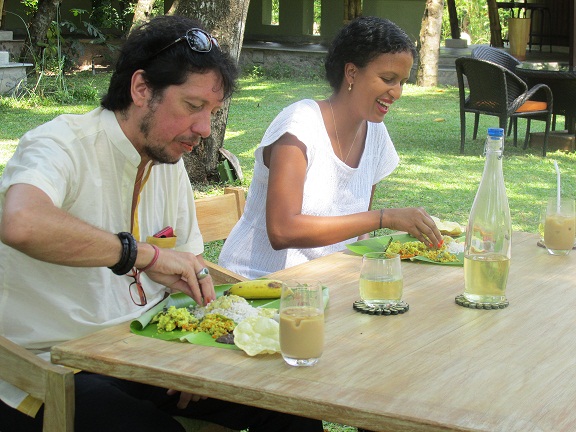
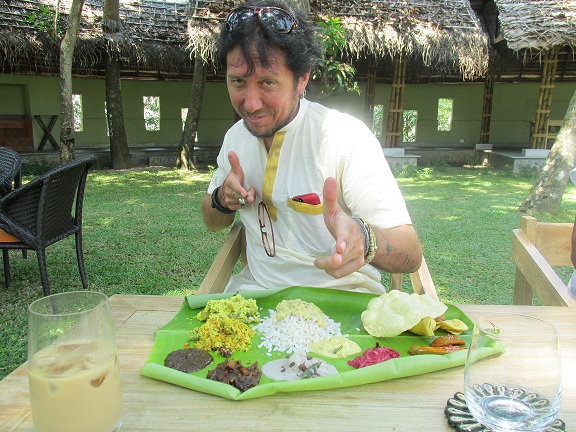
We are people of experiences – the ones we’ve walked, run and barreled into and the ones we create. At RAXA, we take the latter seriously. So when you come down to stay with us by the Kochi harbour or navigate the world-renowned backwaters in our hand-stitched houseboats, you’ll see us work at crafting the finest and personal of them all. Bass guitarist Sami Yaffa and his partner, designer Mina Soliman will agree.

Their stay with us by the Mararikulam beach went beyond the comforts of their villas. There was definitely a stop by the kitchen because don’t we all travel the world plate by plate? Only that the plates and cutlery were on a little holiday of their own this time. A plantain (banana) leaf met the couple at the table and, well, they had to put their best hands forward. It was the call of the Sadya.

Continue reading