The Rufous-throated Solitaire

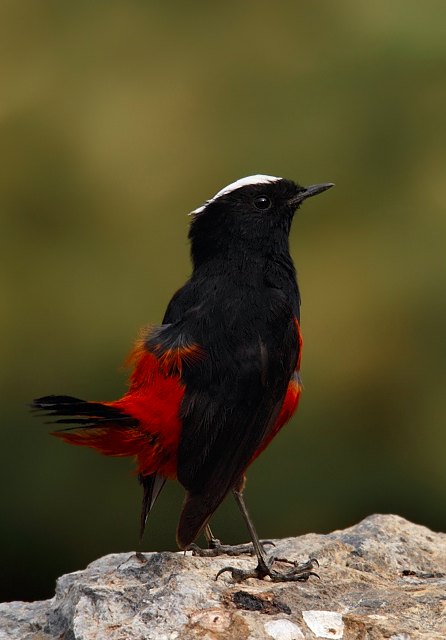
Back when I wrote about our ascent of Blue Mountain Peak, I mentioned that the Rufous-throated Solitaire is a bird that can be pretty tough to spot.

In that prior post, I had a picture of the same individual featured in the video above. If you turn the volume up, you can hear all the shrill details of the bird’s call, and imagine sounds like those echoing through the misty hills — the guidebook to Jamaican birds actually describes the vocalizations as “ventriloquial,” which we found to be accurate.  Continue reading

Green, Cause And Effect, Explained

Photo Illustration by Andrew B. Myers for The New York Times

Photo Illustration by Andrew B. Myers for The New York Times

Considering she is one of our favorite science writers, it has been a while; just over a year in fact, since we last we read of her, at which time she was in one of our favorite locations. The wait was worth it, because this article helps us understand why we reference green so often in these pages:

…Goethe praised green as the “soothing” marriage of the chromatic opposites yellow and blue. George Washington called green “grateful to the eye,” and painted his Mount Vernon dining room a brilliant verdigris. And let’s not forget that everybody’s favorite elephant, Babar, wore a dapper suit in a “becoming shade of green.” Continue reading

Ethiopia, Diaspora, Community, Success

21MARATHONweb3-sfSpan-v3

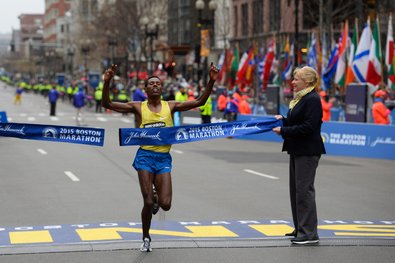
C.J. Gunther/European Pressphoto Agency. Lelisa Desisa crossing the finish line. As he rounded Hereford Street for a well-honed sprint to the finish, he cast off his hat in pre-emptive triumph and waved to the crowd.

Today’s news about an Ethiopian man winning the Boston Marathon gives me the hook to write a post that has been on my mind since Friday. Back before I knew much about Ethiopia from actual experience, I heard an interview with a man from Ethiopia, an emigre in New York City. Adopted man. Adopted city. And a worldview, a lifeview, that I could relate to with a powerful intensity that I did not fully understand at the time:

This Time, Lelisa Desisa Wins Boston Marathon for Himself

Something in that interview began changing the structure of my thoughts about Ethiopia. And then within months of that one of our colleagues from the Zaina Lodge project started telling me that the next place I “must, must, must” explore is Ethiopia. The dial moved even further because that colleague told me stories I could hardly believe about the beauty of Ethiopia. And when I finally made my first visit, I was nonetheless awed beyond what the colleague had led me to expect. So, Ethiopia has been on my mind every day for a couple months now.

And then a couple of days ago, another Ethiopian emigre to New York City checked in to Marari Pearl. Continue reading

A Traveler in My Own Land – Introduction

Dear coffee-stained diary,

1016402_10151817477384853_833963116_nIt’s been a while since you and I turned pages together, but then there were no new stories to tell. Now we say ‘hello’ at the start of a new line for am on the road again; taking paths that wind through tea gardens and forests, hug beaches and overlook a harbor in this homeland I call Kerala (India). The sights are plenty, so are the stories.

Yours to know are tales of ships docking here to trade in spices and those of communities striving to keep their identities alive. Yes, you’ve had your generous share of the history of the Chinese fishing nets but perspectives are things of beauty. Oh, I almost forgot the people. Continue reading

Stripes in Focus

Understanding Depth of Field

I get a lot of queries asking me how I blur the background in my images. First let me say that I don’t manipulate my images. There are some folks on the internet who do it regularly using photoshop…but in my case it’s mainly due to shallow depth of field by using a long tele lens and lower aperture number.

A lot of beginners feel that equipment is the main thing for good images. Not necessarily…though is plays an important role. The primary thing is understanding the key concepts of photography, which is as simple as understanding the exposure triangle: the combination of ISO, aperture and shutter speed and what kind of impact they have on images. Continue reading

The Great Golden Swallow Gear Review: Part 4

A mongoose in the Havahart 1090

Havahart Medium 1-Door Collapsible Easy Set Trap, Model 1090:

Justin:  Great product all-around.  Lightweight, foldable, and easy to set once you’ve learned how to do so.  It’s a solid unit that can take some hits and very rarely did the trap spring by itself.

Garmin Oregon 650 3-Inch Worldwide Handheld GPS with 8MP Digital Camera:
Justin:  Most reliable and intuitive GPS that I’ve ever used.  The touch screen and layout is user-friendly and easy to navigate.  I chose this unit based on reviews that claimed it’s its high-sensitivity, WAAS- and GLONASS-enabled GPS receiver and HotFix® satellite prediction would allow for reliable accuracy, even in deep forest in remote locations.  Sure enough, even under the most dense canopy cover, we were always able to quickly gain satellite reception and an accuracy of 30ft or better.  In less demanding environments, satellite precision was 5ft or less.  The ability to load Continue reading

Full-Spectrum Farming

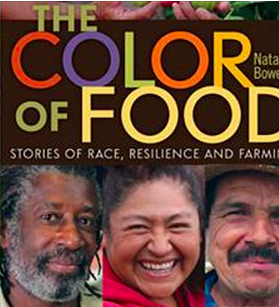
We haven’t met Natasha Bowens but her perspectives on the cultural empowerment of growing one’s own food tell us she’s a kindred spirit.

 Storytelling & Photography

The Color of Food is photographic and documentary in nature because I wanted to capture the personal stories of these farmers while also changing the image of agriculture as it is currently portrayed in the media. This project is not only political in it’s message, but also helps us celebrate and preserve the history, tradition and beautiful culture that make up our agricultural communities.

Continue reading

Sun, Sense, Sensibility

In Hawaii, where 12 percent of the homes have solar panels, handling the surplus power is putting pressure on the state’s biggest utility, which is fighting to reduce what it pays for the energy. By Erik Braund and Eugene Yi on Publish Date April 18, 2015. Photo by Kent Nishimura for The New York Times.

In Hawaii, where 12 percent of the homes have solar panels, handling the surplus power is putting pressure on the state’s biggest utility, which is fighting to reduce what it pays for the energy. By Erik Braund and Eugene Yi on Publish Date April 18, 2015. Photo by Kent Nishimura for The New York Times.

Thanks to the New York Times for their ongoing coverage of how we manage to make do on this planet, including in the various well known gardens of Eden:

Continue reading

Eco-Modernist Strategy

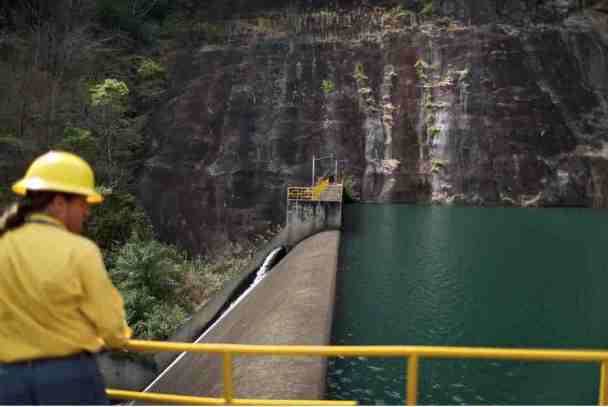
A dam in Guanacaste Province, Costa Rica, drives a hydroelectric plant. Developing nations will require large amounts of new energy to achieve American and European living standards. Credit Joe Raedle/Getty Images

A dam in Guanacaste Province, Costa Rica, drives a hydroelectric plant. Developing nations will require large amounts of new energy to achieve American and European living standards. Credit Joe Raedle/Getty Images

We are in the sustainable development camp through and through, but Mr. Porter’s point is well taken:

A Call to Look Past Sustainable Development

Eduardo Porter

The average citizen of Nepal consumes about 100 kilowatt-hours of electricity in a year. Cambodians make do with 160. Bangladeshis are better off, consuming, on average, 260.

Then there is the fridge in your kitchen. A typical 20-cubic-foot refrigerator — Energy Star-certified, to fit our environmentally conscious times — runs through 300 to 600 kilowatt-hours a year.

Continue reading

Brew-born Time Travel

Chef Andrew Gerson of Brooklyn Brewery organized a dinner party featuring ingredients used by Dutch settlers and Native Americans living in 1650s New York City. Courtesy of Brooklyn Brewery

Chef Andrew Gerson of Brooklyn Brewery organized a dinner party featuring ingredients used by Dutch settlers and Native Americans living in 1650s New York City. Courtesy of Brooklyn Brewery

Thanks to the folks at the salt, and National Public Radio (USA) for this one:

Brooklyn Brewery Dares Diners To Eat Like Dutch Settlers

HANSI LO WANG

You can find food from just about any part of the world in New York City.

The Brooklyn Brewery is trying to push New Yorkers’ palates even further by going back in time.

This week, it hosted a dinner party inspired by the local cuisine of Dutch settlers and Native Americans in the 1650s.

Back when New York wasn’t even New York yet, and before the English took over in 1664, the Dutch called the city New Amsterdam.

Continue reading

In The Name Of Chocolate

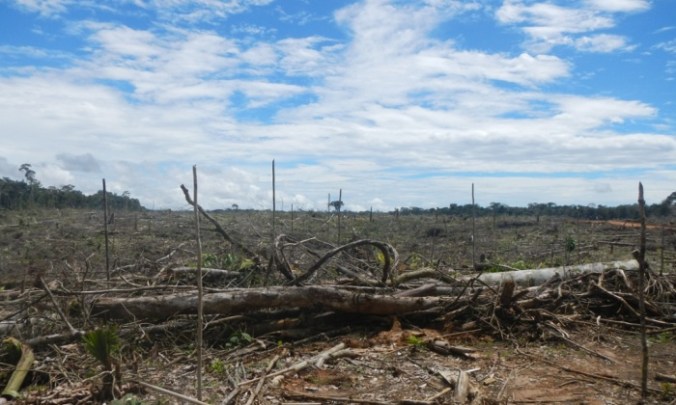
The Tamshiyacu plantation in northern Peru where it is alleged a United Cacao subsidiary illegally cleared primary rainforest. Photograph: Environmental Investigation Agency

The Tamshiyacu plantation in northern Peru where it is alleged a United Cacao subsidiary illegally cleared primary rainforest. Photograph: Environmental Investigation Agency

Thanks to the Guardian‘s renewed environmental reporting efforts for this investigative delicacy:

Can Peru stop ‘ethical chocolate’ from destroying the Amazon?

NGOs allege illegal deforestation of primary rainforest to plant cacao and oil palm

David Hill

Cattle-ranching, logging, mining, highways, hydroelectric dam projects, oil and gas, soy, oil palm. . . These are what first come to mind to many people when thinking about how the Amazon is being destroyed, but what about chocolate too?

NGO Environmental Investigation Agency (EIA) released a report on 7 April mainly about monoculture oil palm plantations, which it describes as a “major new threat to Peruvian forests.” The report, Deforestation by Definition, focuses on the Romero Group, Peru’s “largest economic actor”, and what it calls the “Melka Group”, a network of 25 companies recently established in Peru and controlled by businessman Dennis Melka, a major player in the destructive oil palm industry in Malaysia.

According to EIA, two “Melka Group” companies have illegally deforested an estimated “nearly 7,000 hectares” of mainly primary rainforest in Peru over the last three years, and others have acquired at least 456 “rural properties” and requested the government set aside another 96,192 hectares.

Continue reading

So Much Expertise, So Little Time

Kris Snibbe/Harvard Staff Photographer With Charlie Rose as moderator, a panel of experts in science, politics, business, economics, and history shared their views during Monday's Presidential Panel on Climate Change at Sanders Theatre. “The challenge of climate change is profound. The risks it poses are dire. Confronting those dangers is among the paramount tasks of our time,” said President Drew Faust in introducing the discussion.

Kris Snibbe/Harvard Staff Photographer. With Charlie Rose as moderator, a panel of experts in science, politics, business, economics, and history shared their views during Monday’s Presidential Panel on Climate Change at Sanders Theatre. “The challenge of climate change is profound. The risks it poses are dire. Confronting those dangers is among the paramount tasks of our time,” said President Drew Faust in introducing the discussion.

Thanks to the Harvard Gazette, and the panelists who took the stage last week for another in ongoing series of assessments of the urgency of need for action on climate change:

There is hope in global action to fight climate change, in the slow adoption of wind and solar power, in moves by the U.S. government to cut emissions from vehicles and power plants, in the lead taken by some businesses to clean up operations and draw attention to the problem.

But it’s too late to avoid several more degrees of warming by the turn of the next century, too late to completely stave off dramatic melting, and too late to avoid the slow swamping of Pacific island nations, whose thousands of years of history and culture seem certain to be swallowed by rising seas. Continue reading

Stephan Brusche, Come To Kerala!

Stephan Brusche (@isteef)

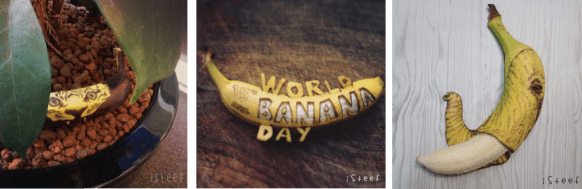
Stephan Brusche (@isteef) From left to right: tiger, WBD, elephant

Hospitality is in our DNA, but we always want to go the extra mile for the those who tickle our creative fancy. In fact, World Banana Day touches us on multiple dimensions, and we thank our newest contributor, Rosanna Abrachan, for bringing it to our attention.

Stephen Brusche is someone who clearly enjoys playing with his food, and scrolling through his gallery it was close to impossible to choose favorites from over 200 fabulously creative examples, crafted with a wink and smile at both the sacred and the profane. We settled on 2 of our iconic Kerala fauna above, but be prepared to lose yourself in the images when you visit his site. Continue reading

The Great Golden Swallow Gear Review: Part 3

Seth displaying his catch. Photo by Justin Proctor.

Thermarest Prolite Plus sleeping pad:

Seth: Comfortable and light, these pads kept us insulated and padded even on cement floors, but the compression sack that is supposed to store the pad is far too small. I don’t recommend sleeping on these on a hot, humid day at around noon.

Justin: This is the first thermarest I’ve used in my life. I’ll probably never have to buy another. I slept comfortably on this thermarest every night, whether it was lying on concrete, a tiled floor, or a more forgiving forest floor. I threw out the ludicrously small sack that came with this otherwise good product on the second day.

John: Don’t ask me, I just sleep on an old yoga mat. I should also point out that it took Seth and Justin a few minutes to deflate and roll these up every morning.


ExOfficio Men’s Boxer, Curfew, medium: (worn by Seth – see photo)

Seth: These highly expensive pairs of underwear are fast drying, don’t retain bad odors, and are quite breathable. Their only downside is that there’s a bit too much fabric in the seat, so they can be wedgie-prone.

Justin: I think Seth just wanted to beat me on the pricing of luxury undies.

John: What’s underwear?


Continue reading

A One-Sentence Pitch For Vegetarianism

Jeff J Mitchell/Getty Images

Jeff J Mitchell/Getty Images

This pitch has nothing to do with ethical treatment of animals, which of course is a compelling case of its own; and is different from earlier vegetarian pitches we have shared, also compelling. It is suddenly meatless Friday. Thank you for this clear, simple pitch, vox:

California’s devastating drought is focusing attention on the water footprint of various foods — particularly delicious, delicious almonds, which require about a gallon of water each.

But as various analyses show, red meat is far worse than even almonds on this score. It takes almost twice as much water to produce a calorie of beef as it does to create a calorie of almonds. Any discussion of how to eat to best preserve water needs to begin with this sentence: Continue reading

48 Hours Of Rainforest Fate

Nikki Burch

Nikki Burch

We have read this in both its original home, and here on vox, and commend it as much as we recommend it:

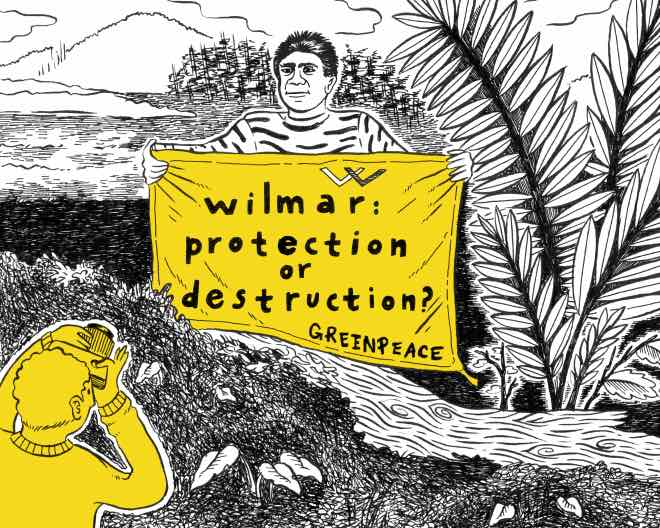
Glenn Hurowitz sat down for his Thanksgiving meal discouraged. He’d spent 2013 flying halfway around the world to cultivate a fragile relationship with Kuok Khoon Hong, CEO of the world’s largest palm oil corporation, Wilmar. Kuok was the linchpin, Hurowitz believed — a single person who might turn the entire palm oil industry around. Wilmar buys palm oil from 80 percent of the world’s suppliers. If Kuok committed to buying only from farmers who promised not to cut down the rainforest, it would set off a chain reaction that might save hundreds of species from extinction and squelch one of the world’s biggest sources of carbon emissions. But after months of progress, the signals he’d been getting from Kuok were not encouraging. Continue reading