Cinchona Botanical Gardens

a view of the valleys and Westphalia in the shadows of Portland Gap and some Blue Mountain peaks above

Since my last post, we’ve been several places and seen lots of things, but none of the areas we’ve visited have been so naturally “post-worthy” as the Cinchona Botanical Gardens above Westphalia, in the mountains of St. Andrew Parish. Somehow we had gathered from several people’s hearsay that we should practically expect ancient ruins, with perhaps some scattered floral gems growing feral among old dilapidated structures and a few exotic trees towering over the grounds. As you can see from the photo below, these vague rumors were partially true.

the old Garden Commissioner’s house/office, in need of some minor remodeling


Continue reading

Progress, Evolution & Design

Screen Shot 2015-03-21 at 10.38.33 AM

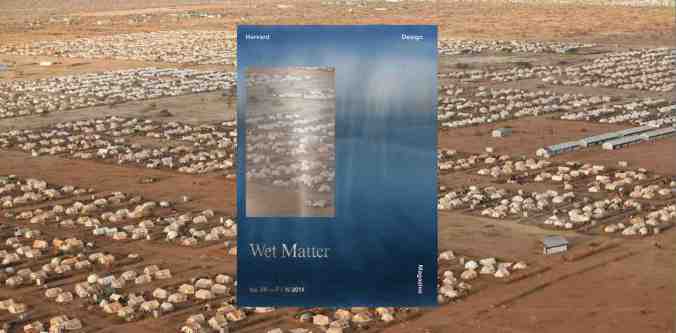
Thanks to the Harvard Gazette for bringing our attention to this magazine, published twice yearly by the Harvard University Graduate School of Design:

Making print modern

New look for Harvard Design Magazine deepens focus on ‘Wet Matter’

By Corydon Ireland, Harvard Staff Writer

In an age of bits and bytes and pixels and text on screens, Harvard Design Magazine — relaunched in a new format last year ― fervently embraces the thingness of print, the quotidian actuality of paper and ink.

The right wordsmiths were on hand to recast and renew the magazine, which is produced at the Harvard Graduate School of Design.

Continue reading

Progress, Destruction & Roads

Nijhuis-Habitat-Fragmentation-320

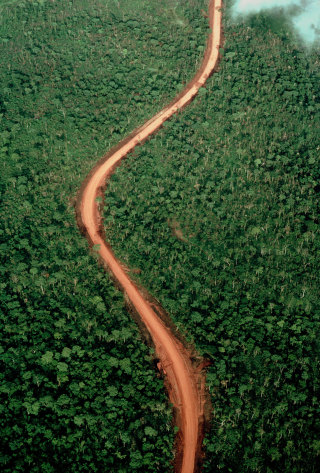
A new study looks at the worldwide effects of habitat fragmentation. CREDIT PHOTOGRAPH BY GEORG GERSTER / PANOS

From the Elements section of the New Yorker’s website, this note on roads, a clear symbol (and tangible form) of what most of us would count as progress, related to development, is worth a two minute read. Another reminder that roads, like other signs of progress, can also have unintended and irreversible destructive consequences for nature, for habitat that also sustains human life:

The first paved highway across the Brazilian Amazon began, in the nineteen-seventies, as a narrow, hard-won cut through dense rainforest. The road, which connects the northern port city of Belém with the country’s capital, Brasília, twelve hundred miles away, was hailed as a huge step in the region’s development, and so it was: it quickly spawned a network of smaller roads and new towns, drawing industry to the Brazilian interior. But the ecological price was high. Today, much of the Belém-Brasília highway is flanked by cattle pastures—a swath of deforestation some two hundred and fifty miles wide, stretching from horizon to horizon. Across the planet, road construction has similarly destroyed or splintered natural habitats. In equatorial Africa’s Congo Basin, logging roads have attracted a new wave of elephant poachers; in Siberia, road expansion has caused an outbreak of wildfires; in Suriname, roads invite illegal gold mining; and in Finland, so many reindeer are killed by cars that herders have considered marking the animals with reflective paint. Continue reading

Not In Our Kitchens, But Maybe In Yours?

This is a subject that we will be seeing more of, for sure. But for the record, a basic rule we live by at Raxa Collective is that we never have and never will slip such critters into food on the sly. We see the day coming, though we are not confident to predict how soon, when it is taken for granted that some portion of protein in the diets of people in even the most well-developed economies comes from insects. One more story in that vein,from our friends at the EcoWatch website, inspired by the recent TedX talk linked to above:

Maybe you’ve see little cans of chocolate-covered ants or grasshoppers in the exotic food section of your grocery and thought to yourself, “Yuck—who eats that?” Insects may not come to mind when you think of superfoods. But they could be the next hot “alternative” protein. They’re low in fat and loaded with fiber.

You might be surprised to learn you may have been eating insects already. Continue reading

Clothing Past, Experienced In The Present

One of Hortense Mitchell Acton’s Callot Soeurs gowns in the Camera Verde of Villa La Pietra. The gold and silver lace at the neck, the apron skirt, and the five metallic rosettes across the chest recall the forms of a Gothic cathedral. The sleeves are made of metallic lace, now oxidized. PHOTOGRAPHS BY PARI DUKOVIC

One of Hortense Mitchell Acton’s Callot Soeurs gowns in the Camera Verde of Villa La Pietra. The gold and silver lace at the neck, the apron skirt, and the five metallic rosettes across the chest recall the forms of a Gothic cathedral. The sleeves are made of metallic lace, now oxidized. PHOTOGRAPHS BY PARI DUKOVIC

It is likely that the New Yorker is the publication we link to the most, between its magazine and its website. If so, there is a reason. They care about stories we care about, enough to put their best writers and photographers on the task:

PortfolioMARCH 23, 2015 ISSUE

Twenty-One Dresses

BY AND

A number of years ago, a young painting conservator entered a forgotten storeroom in a fifteenth-century Florentine villa and stumbled on a pile of Louis Vuitton steamer trunks. She opened them and discovered a collection of exquisite dresses, the kind usually seen only in movies, or inside protective vitrines in museums. Closer inspection revealed silk labels, hand-woven with the name “Callot Soeurs.” Continue reading

Place, Memory And Experience At Present

Screen Shot 2015-03-20 at 7.02.51 AM

Our kind of project, and we look forward to the experience:

MADE WITH KICKSTARTER

In Japan, a Farmhouse Becomes a Journalist’s Elegy

UK Birders Unite

Voting for a National Bird seems like the perfect example of a ornithologically related Citizen Science activity.

Two amazing things happened in the mid 60′s. The Robin was voted Britain’s national bird and…

The surprising thing is neither has happened since.

Well, all that is about to change. David Lindo (AKA The Urban Birder) feels the Robin’s many decades in power needs to be challenged, so he is fronting a campaign to help find Britain’s new national bird. Running alongside this year’s General Election will be this alternative Election, which we’d love you to take part in. Continue reading

A Bite Into the Past

Shanghai airport selfie

Singapore airport selfie

Singapore is a strange yet interesting place to experience a 16 hour layover in between flights from India and the Gold Coast of Australia where I have recently arrived. It’s a mecca for travel and a melting pot for cultures from around the globe. Upon arrival, I found myself starving after refusing to buy a $14 turkey sandwich from my low-budget airline. Luckily I also found myself surrounded by restaurants with countless choices of different cuisines inside of the airport. Of all the choices, I couldn’t force myself to part ways with the amazing smell of Indian spices and I sat down and ordered my “go-to”, my “Kerala heaven on a plate”: lacha paratha and a beef biriyani. I took my first bite and it took me way back… Continue reading

The Critic As Cold Water Splashed Refreshingly On The Face Of Modernity

Schjeldahl-Bjork-690

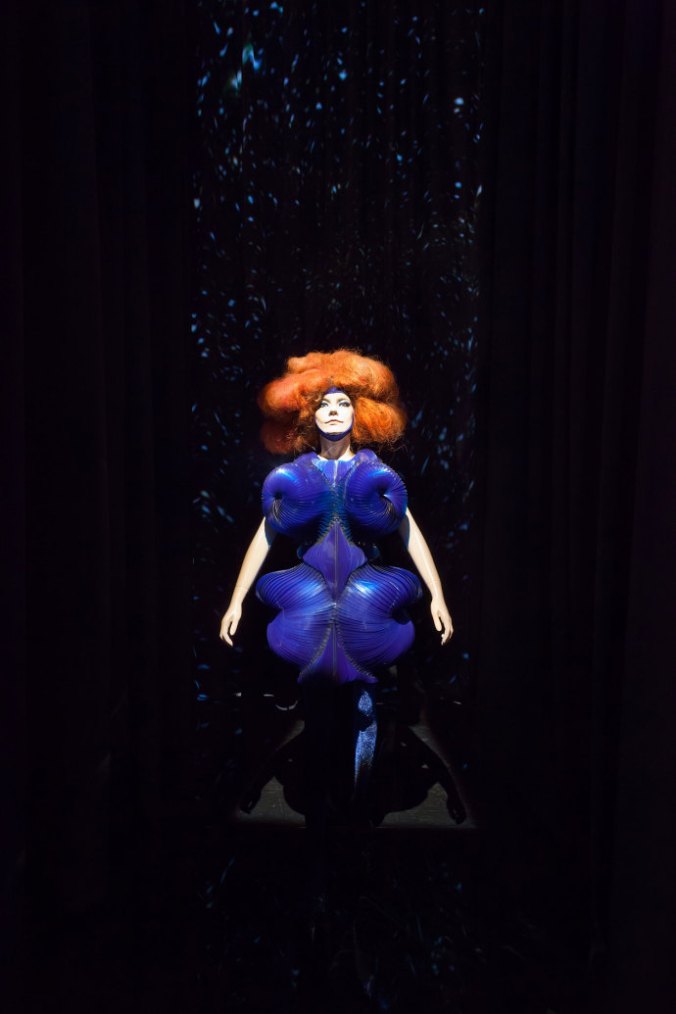
Björk is a restlessly experimental (and therefore fallible), tremendous creative force, not a tarnishable brand. CREDIT PHOTOGRAPH BY JONATHAN MUZIKAR


The opening paragraph of this brief review is worth the click, but the point we would like to bring to your attention is what follows. Sometimes an artist’s museum show can be taken down, critically speaking, with the museum bearing the brunt of the shame. And this point is directly linked to the now well-established concern that art in our age is as much a racket as it is an essential embodiment of culture. This reviewer, and his peers quoted in the opening paragraph, remind us of why we depend on critics for the insight that comes with an occupation whose singular focus is to help us decide whether a certain journey is worth making, or not:

…And yet Björk is unscathed. All the critics (now including me) hasten to acknowledge her musical genius and personal charisma. No detour into lousy taste—even at times her own, as in her partnership, lately ended, with the mercilessly pretentious Matthew Barney—can dent her authenticity. Her music videos (an oasis at the show, in a screening room) typically bring out the best in collaborating directors, musicians, designers, costumers (notably the late Alexander McQueen), and technicians. But if she chances to bring out the worst in star-struck curators, so what? Björk is a restlessly experimental (and therefore fallible) tremendous creative force, not a tarnishable brand. Continue reading

“What’s Life Without Cumin?”

Cumin Globe at 51

Cumin Globe at 51

My friends and family might roll their eyes at the frequency they’ve heard me state the title of this post, but given cumin’s importance in the cuisines of the world, it bears repeating. The spice’s ubiquitous place around the globe dates back to the Old Testament. Seeds excavated in India have been dated to the second millennium BC. Egyptians used it as a spice as well as one of the many ingredients required for mummification. Its heavy use in Greek, Roman and Assyrian cuisines help earn its place in the pantheon of spices.

“Once it has been introduced into a new land and culture, cumin has a way of insinuating itself deeply into the local cuisine, which is why it has become one of the most commonly used spices in the world,” writes Gary Nabhan, author and social science researcher at the University of Arizona Southwest Center, in his recent book, Cumin, Camels, and Caravans.

Nabhan’s book is really a much broader look at the spice trade and its relationship to history and culture. But cumin earned a spot in the title “because it is so demonstrative of culinary globalization,” Nabhan writes.

Cumin has also literally been popular since the dawn of written history.

In English, at least, cumin has a singular distinction – it is the only word that can be traced directly back to Sumerian, the first written language. So when we talk about cumin, we are harkening back to the Sumerian word gamun, first written in the cuneiform script more than 4,000 years ago. Continue reading

Marari Pearl Is Open; Some Promises We Can Make, And Others We Cannot

A policeman found a rare natural pearl (above) in his seafood stew that may bring $10,000 to $15,000 at auction.  PHOTOGRAPH COURTESY KAMINSKI AUCTIONS

A policeman found a rare natural pearl (above) in his seafood stew that may bring $10,000 to $15,000 at auction. PHOTOGRAPH COURTESY KAMINSKI AUCTIONS

March 13 we had the opening party for Marari Pearl. The festivities were fantastic; our team is stoked to serve. We are ready for you. Come on over! We have a thing for the pearl, as you will discover. We do serve seafood, primarily, and we set high expectations. However, they should be kept in check relative to the good fortunes of this patron at a restaurant in New England:

Cop Finds Rare Pearl Worth 10,000 Clams—in His Clam Stew

Formed by a grain of sand? Hardly ever in natural pearls; it’s usually to enclose a parasite.

Continue reading

Chocolate’s Guardian Angels

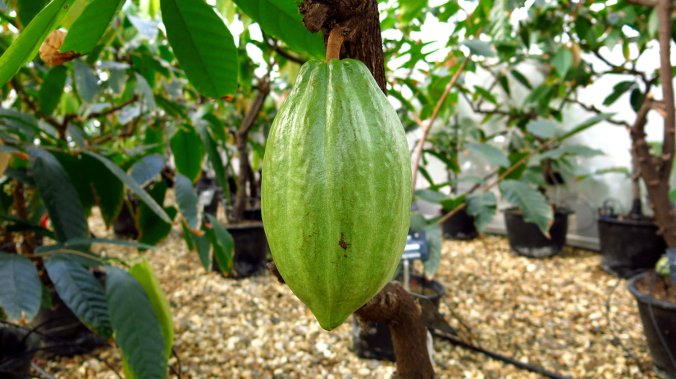
cocoa-quarantine-022_wide-39016c6d94530c4ab8f0cde5365f072e7d22cf61-s1500-c85

Rows of potted cocoa plants from around the world. Before a cocoa variety from one country can be planted in the other, it first makes a pit stop here, at a quarantine center in rural England. Courtesy of Dr. Andrew J. Daymond

Chocoholics have plenty to celebrate in this age of chocolate renaissance. But also plenty to worry about. Conservation is the answer to some of those worries, and collective action is the mechanism by which some of the conservation must be carried out. This article, again from “the salt” thanks to National Public Radio (USA), gives us one example:

The Fate Of The World’s Chocolate Depends On This Spot In Rural England

Walk into a row of greenhouses in rural Britain, and a late English-winter day transforms to a swampy, humid tropical afternoon. You could be in Latin America or Sub-Saharan Africa. Which is exactly how cocoa plants like it.

“It’s all right this time of year. It gets a bit hot later on in the summer,” says greenhouse technician Heather Lake as she fiddles with a tray of seedlings — a platter of delicate, spindly, baby cocoa plants.

Since she started working here at the International Cocoa Quarantine Centre, eating chocolate doesn’t feel the same.

“You certainly know all the work that goes into producing that chocolate bar, and all the potential threats that could be there in the future,” Lake says.

Continue reading

Feathers’ Maps Rediscovered

Map

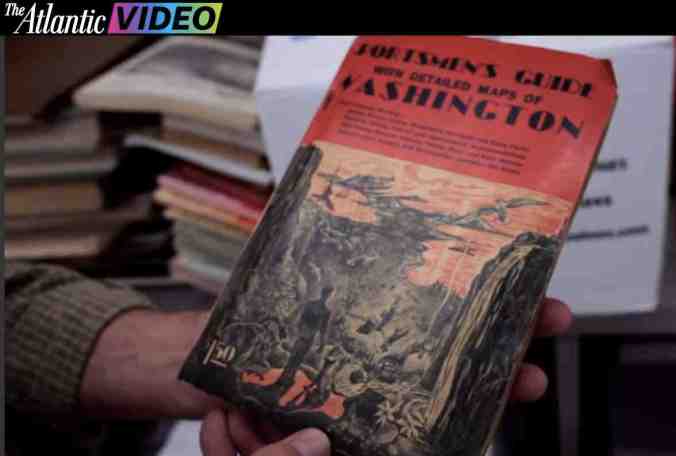
Thanks to the Atlantic‘s website for this Editor’s Pick, a fascinating video about a map collection and its conservation:

‘A Hidden Treasure’: The Unusual Story Behind a Rare Map Collection

Video by Alec Ernest

In this short documentary produced for the Los Angeles Review of Books, Alec Ernest digs into the story behind an extraordinary private collection of maps discovered by Glen Creason, a librarian.

Continue reading

Jane Goodall, Journey On

Michael Christopher Brown/Magnum, for The New York Times. Jane Goodall on Lake Tanganyika, offshore from Gombe Stream National Park in Tanzania.

Michael Christopher Brown/Magnum, for The New York Times. Jane Goodall on Lake Tanganyika, offshore from Gombe Stream National Park in Tanzania.

A journey to Greece in 1969 planted a seed in me that grew into my life’s ambition. Another in 1983 led to meeting Amie, and fusing our life’s ambitions together. Together we went to Costa Rica in 1995, which led to continuing our joint life’s journey abroad.

Jane Goodall Is Still Wild at Heart

Half a century ago, she journeyed into the Tanzanian jungle to change how the world saw chimpanzees. Today the world’s most famous conservationist is on a mission to save their lives.

I believe in the power of a journey to change one’s life path. In the story that follows, this woman’s singular life’s journey is just one more example, albeit an extreme and heroic one, of why we believe in the power of a journey. She visited Cornell while I was a graduate student, and Amie and I were deeply moved by what she came to say. Seth was a one year old and Milo was not yet a “twinkle in the eye.”

The child-sized t-shirt we bought to support the Jane Goodall Institute with our limited graduate student funds was passed from older brother to younger until neither of them could fit into it any more, by which time we were well into our new lives in the emerging field of entrepreneurial conservation in Costa Rica.  In no small part, our family’s dedication to conservation is an unexpected outcome of a short journey across campus that Amie and I made to listen to Jane Goodall talk about her long life’s journey. Continue reading