Old Primate, New Name

Captive lesula from the DRC. Photograph: Maurice Emetshu/AFP/Getty Images

Captive lesula from the DRC. Photograph: Maurice Emetshu/AFP/Getty Images

Thanks to the Guardian for this article on the discovery that there is a primate that had not yet been named:

It all started with Georgette’s pet monkey. Deep in the Democratic Republic of Congo (DRC) rainforest, in the remote village of Opala, a team of researchers noticed a little girl with a strange-looking monkey on a leash in 2007. The girl, Georgette, told the scientists it was called ‘lesula,’ but no one had heard of it nor did the animal look like anything found in the DRC. They snapped a photo. Continue reading

Pi Day of the Century 3-14-15

It’s been a few years since we wrote about Pi, but we wouldn’t possibly skip the once in a century shout out to the famous irrational number when the numbers line up for a full 10 digits: 3/14/15 at 9:26:53 (AM or PM!) Add that it’s Albert Einstein’s birthday and we have a mathematical wow factor that can’t be missed.

Scientific American offers some great suggestions on how to celebrate, and where.

If there was ever a year to commemorate Pi Day in a big way, this is it. The date of this Saturday—3/14/15—gives us not just the first three digits (as in most years) but the first five digits of pi, the famous irrational number 3.14159265359… that expresses the ratio of a circle’s circumference to its diameter… Continue reading

Memory Restoration

Normally we avoid posting on what can be viewed as corporate advertisement, but we have to applaud the use of technology to assist in the healing process after the devasting Tōhoku earthquake and subsequent tsumani in 2011. Thousands of lives were lost, and survivers suffered the additional trauma of losing their homes, including the photographic mementoes of their loved ones.

Ricoh used their expertise in office imaging equipment to coordinate an amazing effort of 518 employee volunteers to find, clean and digitize  418,721 photos, returning 90,128 pictures to the people who lost them.

Ricoh is now offering a glimpse of how this monumental effort was conducted for future reference. The company would be delighted “if this record is useful for improving awareness towards disaster prevention or reconstruction support activities after the event of a disaster,” it says. Continue reading

If You Happen To Be In New York City

“The Grand Robe” (circa 1800-30), made by an artist from a Central Plains tribe. CREDIT COURTESY PATRICK GRIES AND VALÉRIE TORRE / MUSÉE DU QUAI BRANLY

“The Grand Robe” (circa 1800-30), made by an artist from a Central Plains tribe. CREDIT COURTESY PATRICK GRIES AND VALÉRIE TORRE / MUSÉE DU QUAI BRANLY

Talk about an epic show. Let’s go:

Moving Pictures

Plains Indian Art at the Metropolitan Museum.

By 

It began with horses and ended in massacre. The zenith of the cultures that are celebrated in “The Plains Indians: Artists of Earth and Sky,” a wondrous show at the Metropolitan Museum, lasted barely two hundred years. It started in 1680, when Pueblo Indians seized the steeds of Spanish settlers whom they had driven out of what is now New Mexico. The horse turned the scores of Plains tribes—river-valley farmers and hunter-gatherers who had used dogs as their beasts of burden—into a vast aggregate of mounted nomads, who ranged from the Mississippi River to the Rocky Mountains, and from the Rio Grande into Canada, hunting buffalo, trading, and warring with one another. The era ended with the killing of more than two hundred Lakota men, women, and children by federal troops at Wounded Knee, South Dakota, in 1890. Meanwhile, epidemic smallpox and other alien diseases took a toll far beyond that of military violence. The official census of 1900 found only a quarter of a million Native Americans in the entire United States. What ensued is a story of reservations—including the immaterial sort, which trouble the mind. But there’s an ameliorating epilogue of revivals and transformations of Plains heritage.

Continue reading

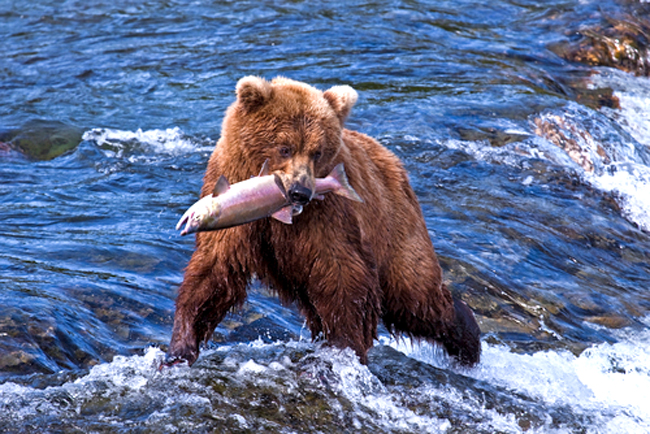
Leave The Grizzlies Be, And Just Watch

Grizzlies once roamed much of North America, from Mexico to the Yukon and from the West Coast through the prairies. Habitat loss and overhunting have since shrunk their range by more than half. Photo credit: Shutterstock

Grizzlies once roamed much of North America, from Mexico to the Yukon and from the West Coast through the prairies. Habitat loss and overhunting have since shrunk their range by more than half. Photo credit: Shutterstock

We are not opposed to hunting, when it is well regulated. With nature increasingly imbalanced due to habitat loss/change imposed by man, there are times when animal herds are in need of culling, or certain species experience overpopulation relative to their ecosystem carrying capacity. Hunting permits generate much-needed revenues for conservation.  Our favorite case study is one you can read on this site. But we cannot support hunting the largest animals on the planet.  We generally do not believe that licenses to kill the most charismatic of the “big game” will lead to their conservation. Read David Suzuki’s opinion piece and follow the trail where it leads you:

Watching grizzly bears catch and eat salmon as they swim upstream to spawn is an unforgettable experience. Many people love to view the wild drama. Some record it with photos or video. But a few want to kill the iconic animals—not to eat, just to put their heads on a wall or coats on a floor. Continue reading

All Hail This Whale Tale

Gray whale off the coast of Baja. Photo by Joe McKenna via Creative Commons

Gray whale off the coast of Baja. Photo by Joe McKenna via Creative Commons

Mr. Zimmer, whom we have been unintentionally neglecting as a source recently, has caught our attention again.  May we never tire of whale tales:

In May 2010, a whale showed up on the wrong side of the world.

A team of marine biologists was conducting a survey off the coast of Israel when they spotted it. At first they thought it was a sperm whale. But each time the animal surfaced, the more clearly they could see that it had the wrong anatomy. When they got back on land, they looked closely at the photographs they had taken and realized, to their shock, that it was a gray whale. This species is a common sight off the coast of California, but biologists had never seen one outside of the Pacific before.

Continue reading

10 Generations Of Citizen Science Yields Important Findings On Forest Life Cycles

shutterstock_256111780-680x450

Thanks to Conservation generally, and in this specific case to Jason G. Goldman, for their continued provision of these summaries of important scientific research findings:

Robert Marsham was an English naturalist who lived on an estate in Norfolk, UK until 1797. For sixty-one years, the researcher carefully noted the timing of both plant and animal species in the gardens surrounding his home, Stratton Strawless Hall. That included the first leafing dates of thirteen trees, flowering dates for a variety of other plants, as well as the records of animal occurrences on his property. It was for his painstaking attention to detail that he eventually became known as the “father of phenology,” the scientific study of the ways in which the passing of the seasons affects plants and animals.

Continue reading

Welcome Back, Fabulous Foxes

foxes2-sfSpan

We all knew these foxes could make it, if we made the effort together. They have made it off one of the worst lists possible, for a species, and are on the road to recovery. According to IUCN Red List Guidelines:

…a species may be moved  from a category of higher threat to one of lower threat if none of the criteria of the higher threat category has been met for five years or more…

This news, (thanks to the New York Times for reporting good news in their Science section, from time to time when good news is available) in no way makes the future indefinitely rosy for these creatures, so vigilance and diligence are still required, but we will chalk this up as a victory for conservation:

Imperiled Foxes on California Islands May Come Off Endangered List

Anthropocene Perspective

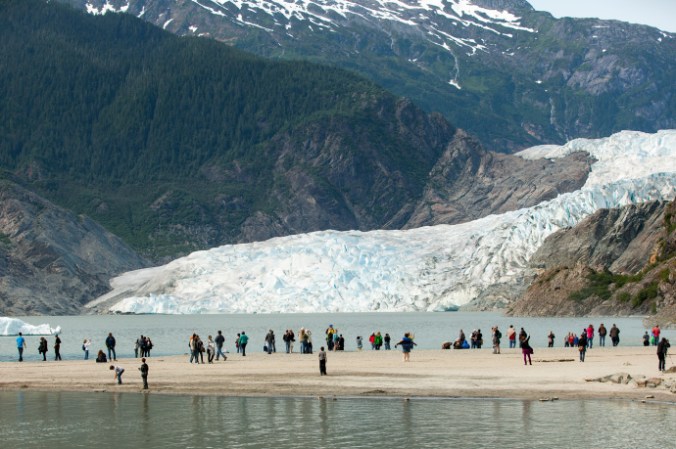
Tourists visit the the Mendenhall Glacier, in Alaska. Geologists are considering whether humans’ impact on the planet has been significant enough to merit the naming of a new epoch. CREDIT PHOTOGRAPH BY MATTHEW RYAN WILLIAMS/THE NEW YORK TIMES/REDUX

Tourists visit the the Mendenhall Glacier, in Alaska. Geologists are considering whether humans’ impact on the planet has been significant enough to merit the naming of a new epoch. CREDIT PHOTOGRAPH BY MATTHEW RYAN WILLIAMS/THE NEW YORK TIMES/REDUX

Thanks to, Michelle Nijhuis in general, for her science writing and environmental journalism–making these topics simultaneously fun and fascinating, if also sometimes depressing; and to the New Yorker for making space for this note in which she briefly explains the naming of the epoch we live in:

The duties of the Anthropocene Working Group—a thirty-nine-member branch of a subcommission of a commission of the International Union of Geological Sciences—are both tedious and heady. As the group’s chairman, Jan Zalasiewicz, whom Elizabeth Kolbert wrote about, in 2013, says wryly, “People do not understand the very slow geological time scale on which we work.” Yet the A.W.G.’s forthcoming recommendations may bring an end to the only epoch that any of us have ever known—the Holocene, which began after the last ice age, about twelve thousand years ago, and lasts to this day. The group’s members are pondering whether the human imprint on this planet is large and clear enough to warrant the christening of a new epoch, one named for us: the Anthropocene. If it is, they and their fellow-geologists must decide when the old epoch ends and the new begins.

In a paper published today in the journal Nature, Continue reading

Offsetting The Perfect Burger

sfs_potato_vindaloo-13---cred-joe-keller_wide-5a785d2066759cd77d2ecb8b9f7d4789ce169255-s1300-c85

Tomato paste gives the Potato Vindaloo its “backbone,” “structure” and “depth,” says America’s Test Kitchen’s Jack Bishop. “‘You probably wouldn’t identify it in the finished dish, but leave it out and you would notice the difference.” Joe Keller/Courtesy of America’s Test Kitchen

Fresh Air, an interview program on National Public Radio (USA), interviewed these same two people originally in 2013, and some members of Raxa Collective can still remember the description, in the podcast version of that interview heard while driving through south India, of grilling the perfect summer burger. And it inspired us to develop the perfect burger for south India, one of the few places in India where beef is available (due to the particular cultural mix of Kerala, in particular).

In the spirit of full circle, we are delighted to announce that Derek, in between Munnar joy rides and beach bliss responsibilities, has accomplished one of the missions we gave him for his time in Kerala, and its name is the Tico Burger (more on which, soon). At the same time, and just in time, to balance out our diets after taste-testing Derek’s burgers the same folks who inspired us to build a better burger are now providing insights on how to offset the carbon and karmic footprints of those burgers with some vegetarian cooking insider magic:

Just because a meal is vegetarian doesn’t mean it can’t be “meaty.” One trick to heighten the depth of flavors in plant-based dishes? Use ingredients that offer a pop of umami, say Bridget Lancaster and Jack Bishop of America’s Test Kitchen, who have released the new cookbook The Complete Vegetarian Cookbook. Continue reading

Recipe For A Hot Or Cold Day

By BRANDON CRUZ and MEGHAN GOURLEY. Image by Andrew Scrivani for The New York Times.

By BRANDON CRUZ and MEGHAN GOURLEY. Image by Andrew Scrivani for The New York Times.

You may have had it in France on a cold day. Or had it some other place, on a cold day; but speaking for ourselves, we never thought of it as a cold soup for a hot day.  Seems like a good fit for a harbor-facing restaurant approaching summer time…

Rooftop Solar Panels in Utility Corporation’s Cross-Hairs

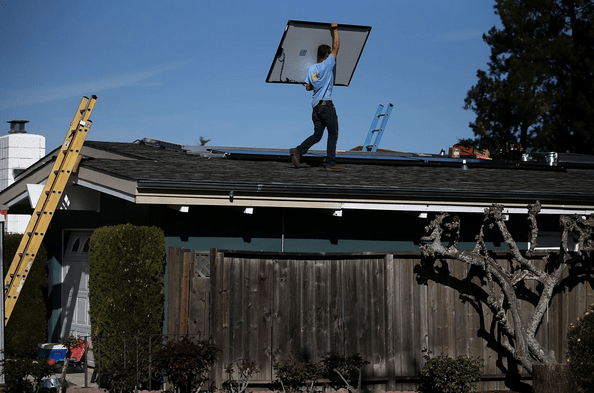
SolarCraft worker Craig Powell carries a solar panel on the roof of a home in San Rafael, Calif. The average price of photovoltaic cells has plummeted 60 percent since 2010. (Justin Sullivan/Getty Images)

SolarCraft worker Craig Powell carries a solar panel on the roof of a home in San Rafael, Calif. The average price of photovoltaic cells has plummeted 60 percent since 2010. (Justin Sullivan/Getty Images)

Conflicts between the use of alternative energy technologies such as solar and the status quo of fossil fuel based utility companies is nothing new, but was less of an issue when the infrastructure of the former was so costly few people could afford the investments required. But more efficient designs and lower production costs have made the panels and system more accessable to more people, enough so that utility executives are pushing for legislation that will stem the tide by mounting surcharges and other disincentives.

“The utilities are fighting tooth and nail,” said Scott Peterson, director of the Checks and Balances Project, a Virginia nonprofit that investigates lobbyists’ ties to regulatory agencies. Peterson, who has tracked the industry’s two-year legislative fight, said the pivot to public utility commissions moves the battle to friendlier terrain for utilities. The commissions, usually made up of political appointees, “have enormous power, and no one really watches them,” Peterson said. Continue reading

No-till Farming On The Rise

Brandon Thibodeaux for The New York Times. Cattle graze on farmland owned by Terry McAlister, near Electra, Tex. Mr. McAlister converted to no-till farming for its apparent economic benefits.

Brandon Thibodeaux for The New York Times. Cattle graze on farmland owned by Terry McAlister, near Electra, Tex. Mr. McAlister converted to no-till farming for its apparent economic benefits.

Thanks to the Science section of Tuesday’s New York Times for pieces regularly covering alternative approaches to agriculture, such as this one today:

Farmers Put Down the Plow for More Productive Soil

Soil-conservation farming, a movement that promotes not tilling fields and using “green” manures, is gaining converts in tough environments and markets.

Florida, Marbles Lost

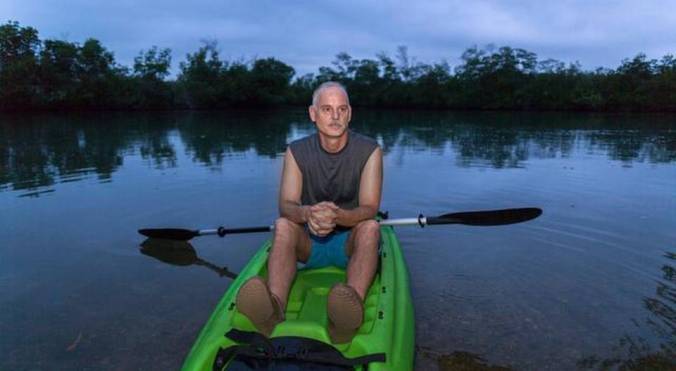
In 2013, Jim Harper, a nature writer in Miami, had a contract to write a series of educational fact sheets about how to protect the coral reefs north of Miami. ‘We were told not to use the term climate change,’ he said. ‘The employees were so skittish they wouldn’t even talk about it.’ JOHN VAN BEEKUM FOR THE MIAMI HERALD

In 2013, Jim Harper, a nature writer in Miami, had a contract to write a series of educational fact sheets about how to protect the coral reefs north of Miami. ‘We were told not to use the term climate change,’ he said. ‘The employees were so skittish they wouldn’t even talk about it.’ JOHN VAN BEEKUM FOR THE MIAMI HERALD

Knowing the Miami Herald has been recognized as a newspaper of reasonably high standards, we cannot chalk this up to careless reporting. We wish there was something intelligent to say about the news they report on this article, but are left without words, so we can only say read it for yourself:

The state of Florida is the region most susceptible to the effects of global warming in this country, according to scientists. Sea-level rise alone threatens 30 percent of the state’s beaches over the next 85 years.

But you would not know that by talking to officials at the Florida Department of Environmental Protection, the state agency on the front lines of studying and planning for these changes.

DEP officials have been ordered not to use the term “climate change” or “global warming” in any official communications, emails, or reports, according to former DEP employees, consultants, volunteers and records obtained by the Florida Center for Investigative Reporting. Continue reading

Resistance Is Not Futile

Pisonia with acidification graph 2009, Judy Watson, acrylic and chinagraph pencil on canvas, 214.5 x 191.5 cm

Pisonia with acidification graph 2009, Judy Watson, acrylic and chinagraph pencil on canvas, 214.5 x 191.5 cm

We have not seen him for a noticeable stretch of time, but glad to read the words of one of the singular voices of our generation, leading the charge, again:

In the third piece in the Guardian’s major series on climate change, Bill McKibben describes how relentless climate movements have shifted the advantage towards fossil fuel resistance for the first time in 25 years. But he argues triumph is not certain – we must not rest till the industry is forced to keep the carbon in the ground.

You can read previous pieces here

The official view: all eyes are on Paris, where negotiators will meet in December for a climate conference that will be described as “the most important diplomatic gathering ever” and “a last chance for humanity.” Heads of state will jet in, tense closed-door meetings will be held, newspapers will report that negotiations are near a breaking point, and at the last minute some kind of agreement will emerge, hailed as “a start for serious action”. Continue reading