The Critic As Cold Water Splashed Refreshingly On The Face Of Modernity

Schjeldahl-Bjork-690

Björk is a restlessly experimental (and therefore fallible), tremendous creative force, not a tarnishable brand. CREDIT PHOTOGRAPH BY JONATHAN MUZIKAR


The opening paragraph of this brief review is worth the click, but the point we would like to bring to your attention is what follows. Sometimes an artist’s museum show can be taken down, critically speaking, with the museum bearing the brunt of the shame. And this point is directly linked to the now well-established concern that art in our age is as much a racket as it is an essential embodiment of culture. This reviewer, and his peers quoted in the opening paragraph, remind us of why we depend on critics for the insight that comes with an occupation whose singular focus is to help us decide whether a certain journey is worth making, or not:

…And yet Björk is unscathed. All the critics (now including me) hasten to acknowledge her musical genius and personal charisma. No detour into lousy taste—even at times her own, as in her partnership, lately ended, with the mercilessly pretentious Matthew Barney—can dent her authenticity. Her music videos (an oasis at the show, in a screening room) typically bring out the best in collaborating directors, musicians, designers, costumers (notably the late Alexander McQueen), and technicians. But if she chances to bring out the worst in star-struck curators, so what? Björk is a restlessly experimental (and therefore fallible) tremendous creative force, not a tarnishable brand. Continue reading

“What’s Life Without Cumin?”

Cumin Globe at 51

Cumin Globe at 51

My friends and family might roll their eyes at the frequency they’ve heard me state the title of this post, but given cumin’s importance in the cuisines of the world, it bears repeating. The spice’s ubiquitous place around the globe dates back to the Old Testament. Seeds excavated in India have been dated to the second millennium BC. Egyptians used it as a spice as well as one of the many ingredients required for mummification. Its heavy use in Greek, Roman and Assyrian cuisines help earn its place in the pantheon of spices.

“Once it has been introduced into a new land and culture, cumin has a way of insinuating itself deeply into the local cuisine, which is why it has become one of the most commonly used spices in the world,” writes Gary Nabhan, author and social science researcher at the University of Arizona Southwest Center, in his recent book, Cumin, Camels, and Caravans.

Nabhan’s book is really a much broader look at the spice trade and its relationship to history and culture. But cumin earned a spot in the title “because it is so demonstrative of culinary globalization,” Nabhan writes.

Cumin has also literally been popular since the dawn of written history.

In English, at least, cumin has a singular distinction – it is the only word that can be traced directly back to Sumerian, the first written language. So when we talk about cumin, we are harkening back to the Sumerian word gamun, first written in the cuneiform script more than 4,000 years ago. Continue reading

Marari Pearl Is Open; Some Promises We Can Make, And Others We Cannot

A policeman found a rare natural pearl (above) in his seafood stew that may bring $10,000 to $15,000 at auction.  PHOTOGRAPH COURTESY KAMINSKI AUCTIONS

A policeman found a rare natural pearl (above) in his seafood stew that may bring $10,000 to $15,000 at auction. PHOTOGRAPH COURTESY KAMINSKI AUCTIONS

March 13 we had the opening party for Marari Pearl. The festivities were fantastic; our team is stoked to serve. We are ready for you. Come on over! We have a thing for the pearl, as you will discover. We do serve seafood, primarily, and we set high expectations. However, they should be kept in check relative to the good fortunes of this patron at a restaurant in New England:

Cop Finds Rare Pearl Worth 10,000 Clams—in His Clam Stew

Formed by a grain of sand? Hardly ever in natural pearls; it’s usually to enclose a parasite.

Continue reading

Chocolate’s Guardian Angels

cocoa-quarantine-022_wide-39016c6d94530c4ab8f0cde5365f072e7d22cf61-s1500-c85

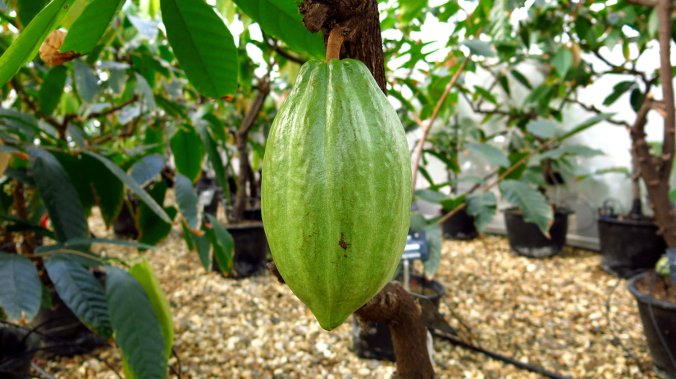
Rows of potted cocoa plants from around the world. Before a cocoa variety from one country can be planted in the other, it first makes a pit stop here, at a quarantine center in rural England. Courtesy of Dr. Andrew J. Daymond

Chocoholics have plenty to celebrate in this age of chocolate renaissance. But also plenty to worry about. Conservation is the answer to some of those worries, and collective action is the mechanism by which some of the conservation must be carried out. This article, again from “the salt” thanks to National Public Radio (USA), gives us one example:

The Fate Of The World’s Chocolate Depends On This Spot In Rural England

Walk into a row of greenhouses in rural Britain, and a late English-winter day transforms to a swampy, humid tropical afternoon. You could be in Latin America or Sub-Saharan Africa. Which is exactly how cocoa plants like it.

“It’s all right this time of year. It gets a bit hot later on in the summer,” says greenhouse technician Heather Lake as she fiddles with a tray of seedlings — a platter of delicate, spindly, baby cocoa plants.

Since she started working here at the International Cocoa Quarantine Centre, eating chocolate doesn’t feel the same.

“You certainly know all the work that goes into producing that chocolate bar, and all the potential threats that could be there in the future,” Lake says.

Continue reading

Feathers’ Maps Rediscovered

Map

Thanks to the Atlantic‘s website for this Editor’s Pick, a fascinating video about a map collection and its conservation:

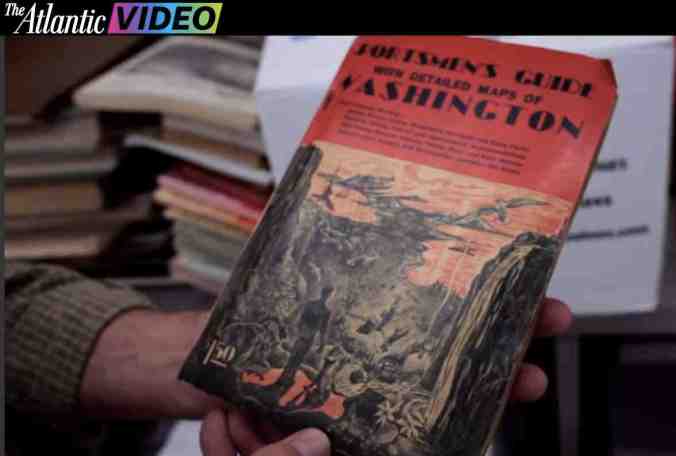
‘A Hidden Treasure’: The Unusual Story Behind a Rare Map Collection

Video by Alec Ernest

In this short documentary produced for the Los Angeles Review of Books, Alec Ernest digs into the story behind an extraordinary private collection of maps discovered by Glen Creason, a librarian.

Continue reading

Jane Goodall, Journey On

Michael Christopher Brown/Magnum, for The New York Times. Jane Goodall on Lake Tanganyika, offshore from Gombe Stream National Park in Tanzania.

Michael Christopher Brown/Magnum, for The New York Times. Jane Goodall on Lake Tanganyika, offshore from Gombe Stream National Park in Tanzania.

A journey to Greece in 1969 planted a seed in me that grew into my life’s ambition. Another in 1983 led to meeting Amie, and fusing our life’s ambitions together. Together we went to Costa Rica in 1995, which led to continuing our joint life’s journey abroad.

Jane Goodall Is Still Wild at Heart

Half a century ago, she journeyed into the Tanzanian jungle to change how the world saw chimpanzees. Today the world’s most famous conservationist is on a mission to save their lives.

I believe in the power of a journey to change one’s life path. In the story that follows, this woman’s singular life’s journey is just one more example, albeit an extreme and heroic one, of why we believe in the power of a journey. She visited Cornell while I was a graduate student, and Amie and I were deeply moved by what she came to say. Seth was a one year old and Milo was not yet a “twinkle in the eye.”

The child-sized t-shirt we bought to support the Jane Goodall Institute with our limited graduate student funds was passed from older brother to younger until neither of them could fit into it any more, by which time we were well into our new lives in the emerging field of entrepreneurial conservation in Costa Rica.  In no small part, our family’s dedication to conservation is an unexpected outcome of a short journey across campus that Amie and I made to listen to Jane Goodall talk about her long life’s journey. Continue reading

Old Primate, New Name

Captive lesula from the DRC. Photograph: Maurice Emetshu/AFP/Getty Images

Captive lesula from the DRC. Photograph: Maurice Emetshu/AFP/Getty Images

Thanks to the Guardian for this article on the discovery that there is a primate that had not yet been named:

It all started with Georgette’s pet monkey. Deep in the Democratic Republic of Congo (DRC) rainforest, in the remote village of Opala, a team of researchers noticed a little girl with a strange-looking monkey on a leash in 2007. The girl, Georgette, told the scientists it was called ‘lesula,’ but no one had heard of it nor did the animal look like anything found in the DRC. They snapped a photo. Continue reading

Pi Day of the Century 3-14-15

It’s been a few years since we wrote about Pi, but we wouldn’t possibly skip the once in a century shout out to the famous irrational number when the numbers line up for a full 10 digits: 3/14/15 at 9:26:53 (AM or PM!) Add that it’s Albert Einstein’s birthday and we have a mathematical wow factor that can’t be missed.

Scientific American offers some great suggestions on how to celebrate, and where.

If there was ever a year to commemorate Pi Day in a big way, this is it. The date of this Saturday—3/14/15—gives us not just the first three digits (as in most years) but the first five digits of pi, the famous irrational number 3.14159265359… that expresses the ratio of a circle’s circumference to its diameter… Continue reading

Memory Restoration

Normally we avoid posting on what can be viewed as corporate advertisement, but we have to applaud the use of technology to assist in the healing process after the devasting Tōhoku earthquake and subsequent tsumani in 2011. Thousands of lives were lost, and survivers suffered the additional trauma of losing their homes, including the photographic mementoes of their loved ones.

Ricoh used their expertise in office imaging equipment to coordinate an amazing effort of 518 employee volunteers to find, clean and digitize  418,721 photos, returning 90,128 pictures to the people who lost them.

Ricoh is now offering a glimpse of how this monumental effort was conducted for future reference. The company would be delighted “if this record is useful for improving awareness towards disaster prevention or reconstruction support activities after the event of a disaster,” it says. Continue reading

If You Happen To Be In New York City

“The Grand Robe” (circa 1800-30), made by an artist from a Central Plains tribe. CREDIT COURTESY PATRICK GRIES AND VALÉRIE TORRE / MUSÉE DU QUAI BRANLY

“The Grand Robe” (circa 1800-30), made by an artist from a Central Plains tribe. CREDIT COURTESY PATRICK GRIES AND VALÉRIE TORRE / MUSÉE DU QUAI BRANLY

Talk about an epic show. Let’s go:

Moving Pictures

Plains Indian Art at the Metropolitan Museum.

By 

It began with horses and ended in massacre. The zenith of the cultures that are celebrated in “The Plains Indians: Artists of Earth and Sky,” a wondrous show at the Metropolitan Museum, lasted barely two hundred years. It started in 1680, when Pueblo Indians seized the steeds of Spanish settlers whom they had driven out of what is now New Mexico. The horse turned the scores of Plains tribes—river-valley farmers and hunter-gatherers who had used dogs as their beasts of burden—into a vast aggregate of mounted nomads, who ranged from the Mississippi River to the Rocky Mountains, and from the Rio Grande into Canada, hunting buffalo, trading, and warring with one another. The era ended with the killing of more than two hundred Lakota men, women, and children by federal troops at Wounded Knee, South Dakota, in 1890. Meanwhile, epidemic smallpox and other alien diseases took a toll far beyond that of military violence. The official census of 1900 found only a quarter of a million Native Americans in the entire United States. What ensued is a story of reservations—including the immaterial sort, which trouble the mind. But there’s an ameliorating epilogue of revivals and transformations of Plains heritage.

Continue reading

Leave The Grizzlies Be, And Just Watch

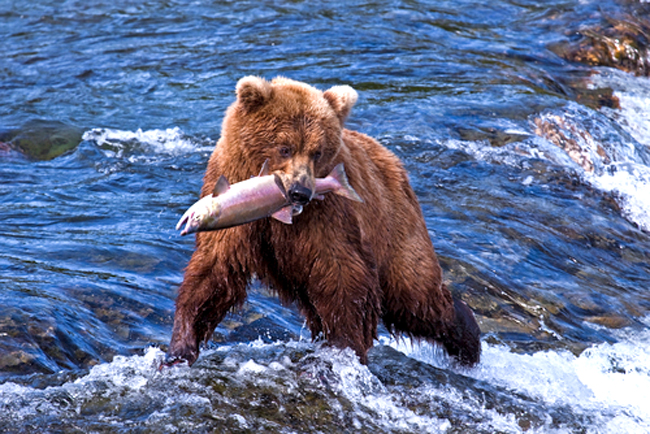
Grizzlies once roamed much of North America, from Mexico to the Yukon and from the West Coast through the prairies. Habitat loss and overhunting have since shrunk their range by more than half. Photo credit: Shutterstock

Grizzlies once roamed much of North America, from Mexico to the Yukon and from the West Coast through the prairies. Habitat loss and overhunting have since shrunk their range by more than half. Photo credit: Shutterstock

We are not opposed to hunting, when it is well regulated. With nature increasingly imbalanced due to habitat loss/change imposed by man, there are times when animal herds are in need of culling, or certain species experience overpopulation relative to their ecosystem carrying capacity. Hunting permits generate much-needed revenues for conservation.  Our favorite case study is one you can read on this site. But we cannot support hunting the largest animals on the planet.  We generally do not believe that licenses to kill the most charismatic of the “big game” will lead to their conservation. Read David Suzuki’s opinion piece and follow the trail where it leads you:

Watching grizzly bears catch and eat salmon as they swim upstream to spawn is an unforgettable experience. Many people love to view the wild drama. Some record it with photos or video. But a few want to kill the iconic animals—not to eat, just to put their heads on a wall or coats on a floor. Continue reading

All Hail This Whale Tale

Gray whale off the coast of Baja. Photo by Joe McKenna via Creative Commons

Gray whale off the coast of Baja. Photo by Joe McKenna via Creative Commons

Mr. Zimmer, whom we have been unintentionally neglecting as a source recently, has caught our attention again.  May we never tire of whale tales:

In May 2010, a whale showed up on the wrong side of the world.

A team of marine biologists was conducting a survey off the coast of Israel when they spotted it. At first they thought it was a sperm whale. But each time the animal surfaced, the more clearly they could see that it had the wrong anatomy. When they got back on land, they looked closely at the photographs they had taken and realized, to their shock, that it was a gray whale. This species is a common sight off the coast of California, but biologists had never seen one outside of the Pacific before.

Continue reading

10 Generations Of Citizen Science Yields Important Findings On Forest Life Cycles

shutterstock_256111780-680x450

Thanks to Conservation generally, and in this specific case to Jason G. Goldman, for their continued provision of these summaries of important scientific research findings:

Robert Marsham was an English naturalist who lived on an estate in Norfolk, UK until 1797. For sixty-one years, the researcher carefully noted the timing of both plant and animal species in the gardens surrounding his home, Stratton Strawless Hall. That included the first leafing dates of thirteen trees, flowering dates for a variety of other plants, as well as the records of animal occurrences on his property. It was for his painstaking attention to detail that he eventually became known as the “father of phenology,” the scientific study of the ways in which the passing of the seasons affects plants and animals.

Continue reading

Welcome Back, Fabulous Foxes

foxes2-sfSpan

We all knew these foxes could make it, if we made the effort together. They have made it off one of the worst lists possible, for a species, and are on the road to recovery. According to IUCN Red List Guidelines:

…a species may be moved  from a category of higher threat to one of lower threat if none of the criteria of the higher threat category has been met for five years or more…

This news, (thanks to the New York Times for reporting good news in their Science section, from time to time when good news is available) in no way makes the future indefinitely rosy for these creatures, so vigilance and diligence are still required, but we will chalk this up as a victory for conservation:

Imperiled Foxes on California Islands May Come Off Endangered List