Anthropocene Perspective

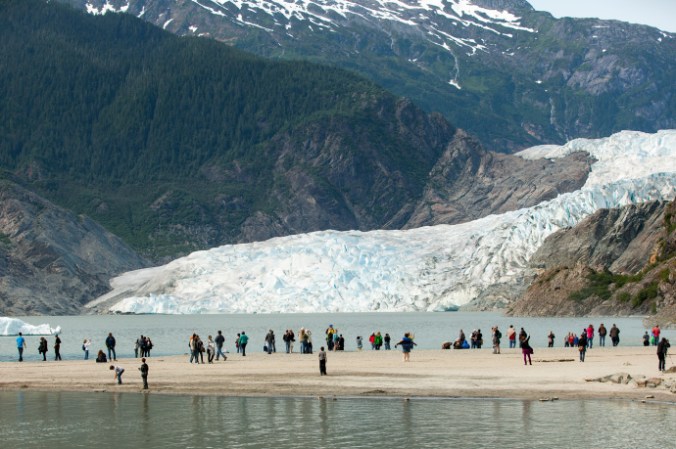
Tourists visit the the Mendenhall Glacier, in Alaska. Geologists are considering whether humans’ impact on the planet has been significant enough to merit the naming of a new epoch. CREDIT PHOTOGRAPH BY MATTHEW RYAN WILLIAMS/THE NEW YORK TIMES/REDUX

Tourists visit the the Mendenhall Glacier, in Alaska. Geologists are considering whether humans’ impact on the planet has been significant enough to merit the naming of a new epoch. CREDIT PHOTOGRAPH BY MATTHEW RYAN WILLIAMS/THE NEW YORK TIMES/REDUX

Thanks to, Michelle Nijhuis in general, for her science writing and environmental journalism–making these topics simultaneously fun and fascinating, if also sometimes depressing; and to the New Yorker for making space for this note in which she briefly explains the naming of the epoch we live in:

The duties of the Anthropocene Working Group—a thirty-nine-member branch of a subcommission of a commission of the International Union of Geological Sciences—are both tedious and heady. As the group’s chairman, Jan Zalasiewicz, whom Elizabeth Kolbert wrote about, in 2013, says wryly, “People do not understand the very slow geological time scale on which we work.” Yet the A.W.G.’s forthcoming recommendations may bring an end to the only epoch that any of us have ever known—the Holocene, which began after the last ice age, about twelve thousand years ago, and lasts to this day. The group’s members are pondering whether the human imprint on this planet is large and clear enough to warrant the christening of a new epoch, one named for us: the Anthropocene. If it is, they and their fellow-geologists must decide when the old epoch ends and the new begins.

In a paper published today in the journal Nature, Continue reading

Offsetting The Perfect Burger

sfs_potato_vindaloo-13---cred-joe-keller_wide-5a785d2066759cd77d2ecb8b9f7d4789ce169255-s1300-c85

Tomato paste gives the Potato Vindaloo its “backbone,” “structure” and “depth,” says America’s Test Kitchen’s Jack Bishop. “‘You probably wouldn’t identify it in the finished dish, but leave it out and you would notice the difference.” Joe Keller/Courtesy of America’s Test Kitchen

Fresh Air, an interview program on National Public Radio (USA), interviewed these same two people originally in 2013, and some members of Raxa Collective can still remember the description, in the podcast version of that interview heard while driving through south India, of grilling the perfect summer burger. And it inspired us to develop the perfect burger for south India, one of the few places in India where beef is available (due to the particular cultural mix of Kerala, in particular).

In the spirit of full circle, we are delighted to announce that Derek, in between Munnar joy rides and beach bliss responsibilities, has accomplished one of the missions we gave him for his time in Kerala, and its name is the Tico Burger (more on which, soon). At the same time, and just in time, to balance out our diets after taste-testing Derek’s burgers the same folks who inspired us to build a better burger are now providing insights on how to offset the carbon and karmic footprints of those burgers with some vegetarian cooking insider magic:

Just because a meal is vegetarian doesn’t mean it can’t be “meaty.” One trick to heighten the depth of flavors in plant-based dishes? Use ingredients that offer a pop of umami, say Bridget Lancaster and Jack Bishop of America’s Test Kitchen, who have released the new cookbook The Complete Vegetarian Cookbook. Continue reading

Recipe For A Hot Or Cold Day

By BRANDON CRUZ and MEGHAN GOURLEY. Image by Andrew Scrivani for The New York Times.

By BRANDON CRUZ and MEGHAN GOURLEY. Image by Andrew Scrivani for The New York Times.

You may have had it in France on a cold day. Or had it some other place, on a cold day; but speaking for ourselves, we never thought of it as a cold soup for a hot day.  Seems like a good fit for a harbor-facing restaurant approaching summer time…

Rooftop Solar Panels in Utility Corporation’s Cross-Hairs

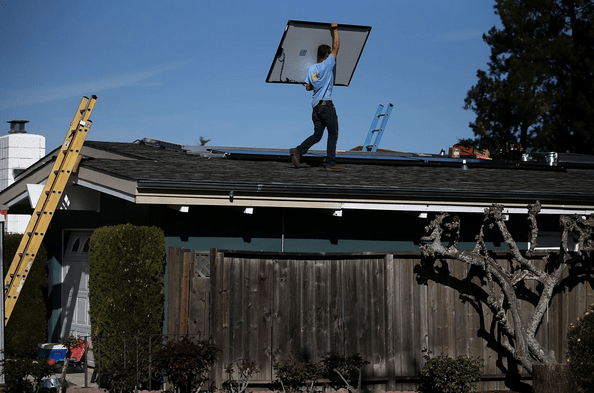
SolarCraft worker Craig Powell carries a solar panel on the roof of a home in San Rafael, Calif. The average price of photovoltaic cells has plummeted 60 percent since 2010. (Justin Sullivan/Getty Images)

SolarCraft worker Craig Powell carries a solar panel on the roof of a home in San Rafael, Calif. The average price of photovoltaic cells has plummeted 60 percent since 2010. (Justin Sullivan/Getty Images)

Conflicts between the use of alternative energy technologies such as solar and the status quo of fossil fuel based utility companies is nothing new, but was less of an issue when the infrastructure of the former was so costly few people could afford the investments required. But more efficient designs and lower production costs have made the panels and system more accessable to more people, enough so that utility executives are pushing for legislation that will stem the tide by mounting surcharges and other disincentives.

“The utilities are fighting tooth and nail,” said Scott Peterson, director of the Checks and Balances Project, a Virginia nonprofit that investigates lobbyists’ ties to regulatory agencies. Peterson, who has tracked the industry’s two-year legislative fight, said the pivot to public utility commissions moves the battle to friendlier terrain for utilities. The commissions, usually made up of political appointees, “have enormous power, and no one really watches them,” Peterson said. Continue reading

No-till Farming On The Rise

Brandon Thibodeaux for The New York Times. Cattle graze on farmland owned by Terry McAlister, near Electra, Tex. Mr. McAlister converted to no-till farming for its apparent economic benefits.

Brandon Thibodeaux for The New York Times. Cattle graze on farmland owned by Terry McAlister, near Electra, Tex. Mr. McAlister converted to no-till farming for its apparent economic benefits.

Thanks to the Science section of Tuesday’s New York Times for pieces regularly covering alternative approaches to agriculture, such as this one today:

Farmers Put Down the Plow for More Productive Soil

Soil-conservation farming, a movement that promotes not tilling fields and using “green” manures, is gaining converts in tough environments and markets.

Florida, Marbles Lost

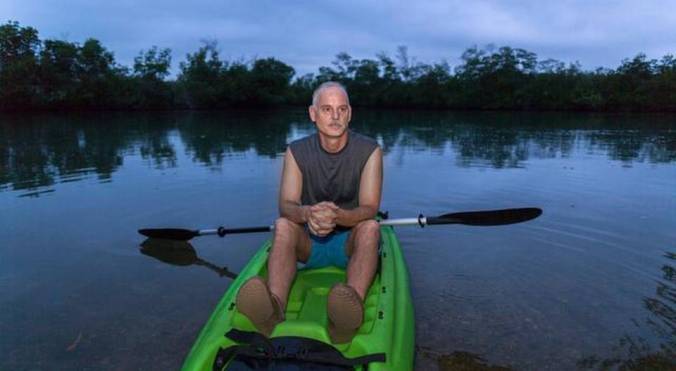
In 2013, Jim Harper, a nature writer in Miami, had a contract to write a series of educational fact sheets about how to protect the coral reefs north of Miami. ‘We were told not to use the term climate change,’ he said. ‘The employees were so skittish they wouldn’t even talk about it.’ JOHN VAN BEEKUM FOR THE MIAMI HERALD

In 2013, Jim Harper, a nature writer in Miami, had a contract to write a series of educational fact sheets about how to protect the coral reefs north of Miami. ‘We were told not to use the term climate change,’ he said. ‘The employees were so skittish they wouldn’t even talk about it.’ JOHN VAN BEEKUM FOR THE MIAMI HERALD

Knowing the Miami Herald has been recognized as a newspaper of reasonably high standards, we cannot chalk this up to careless reporting. We wish there was something intelligent to say about the news they report on this article, but are left without words, so we can only say read it for yourself:

The state of Florida is the region most susceptible to the effects of global warming in this country, according to scientists. Sea-level rise alone threatens 30 percent of the state’s beaches over the next 85 years.

But you would not know that by talking to officials at the Florida Department of Environmental Protection, the state agency on the front lines of studying and planning for these changes.

DEP officials have been ordered not to use the term “climate change” or “global warming” in any official communications, emails, or reports, according to former DEP employees, consultants, volunteers and records obtained by the Florida Center for Investigative Reporting. Continue reading

Resistance Is Not Futile

Pisonia with acidification graph 2009, Judy Watson, acrylic and chinagraph pencil on canvas, 214.5 x 191.5 cm

Pisonia with acidification graph 2009, Judy Watson, acrylic and chinagraph pencil on canvas, 214.5 x 191.5 cm

We have not seen him for a noticeable stretch of time, but glad to read the words of one of the singular voices of our generation, leading the charge, again:

In the third piece in the Guardian’s major series on climate change, Bill McKibben describes how relentless climate movements have shifted the advantage towards fossil fuel resistance for the first time in 25 years. But he argues triumph is not certain – we must not rest till the industry is forced to keep the carbon in the ground.

You can read previous pieces here

The official view: all eyes are on Paris, where negotiators will meet in December for a climate conference that will be described as “the most important diplomatic gathering ever” and “a last chance for humanity.” Heads of state will jet in, tense closed-door meetings will be held, newspapers will report that negotiations are near a breaking point, and at the last minute some kind of agreement will emerge, hailed as “a start for serious action”. Continue reading

A River Runs Through It, In Ethiopia

One of Ethiopia's many excellent national parks

One of Ethiopia’s many excellent national parks

This is not the post promised. It is a taste of why I must post, as promised. This canyon, this river, this view came early in our expedition and is among the strongest in my visual memory. It seemed fortunate, at the time, to catch this view at sunset but the more I think about it the more I am convinced that the place is worthy of a snapshot any time of the day. And it is worth making future visits, so next time I intend to navigate downriver (from the right in this photo), arriving at the place where I snapped this photo after hiking up the canyon. Continue reading

A Museum You Likely Never Heard Of

Aby Warburg (second from left) was the spirit behind the iconographic studies that dominated much of twentieth-century art history. CREDIT COURTESY THE WARBURG INSTITUTE At f

Aby Warburg (second from left) was the spirit behind the iconographic studies that dominated much of twentieth-century art history. CREDIT COURTESY THE WARBURG INSTITUTE

We mention and link to museums, and museum exhibits from time to time. For reasons related to our love and belief in libraries as essential institutions worthy of our civic support; but also related to our interest in entrepreneurial conservation.

Weird museum? Count us interested:

At first, the library of the Warburg Institute, in London, seems and smells like any other university library: four floors of fluorescent lights and steel shelves, with the damp, weedy aroma of aging books everywhere, and sudden apparitions of graduate students wearing that look, at once brightly keen and infinitely discouraged, eternally shared by graduate students, whether the old kind, with suède elbow patches, or the new kind, with many piercings. Continue reading

Muro de las Lágrimas: Historical Conservation in the Galapagos


151

Isla Isabela: Paradise with a dark history

I am currently on study abroad in Ecuador, which has provided me with a mountain of experiences to post about when my homework will allow. I recently had the good fortune to go to the Galapagos, a dream I’ve had since I realized they existed. I am still so struck by everything I saw. In this post, I’ll just highlight one of the places on Isla Isabela that started some good conversations among my classmates about historical conservation of sites of trauma. Also, I will share a poem I wrote about the location.

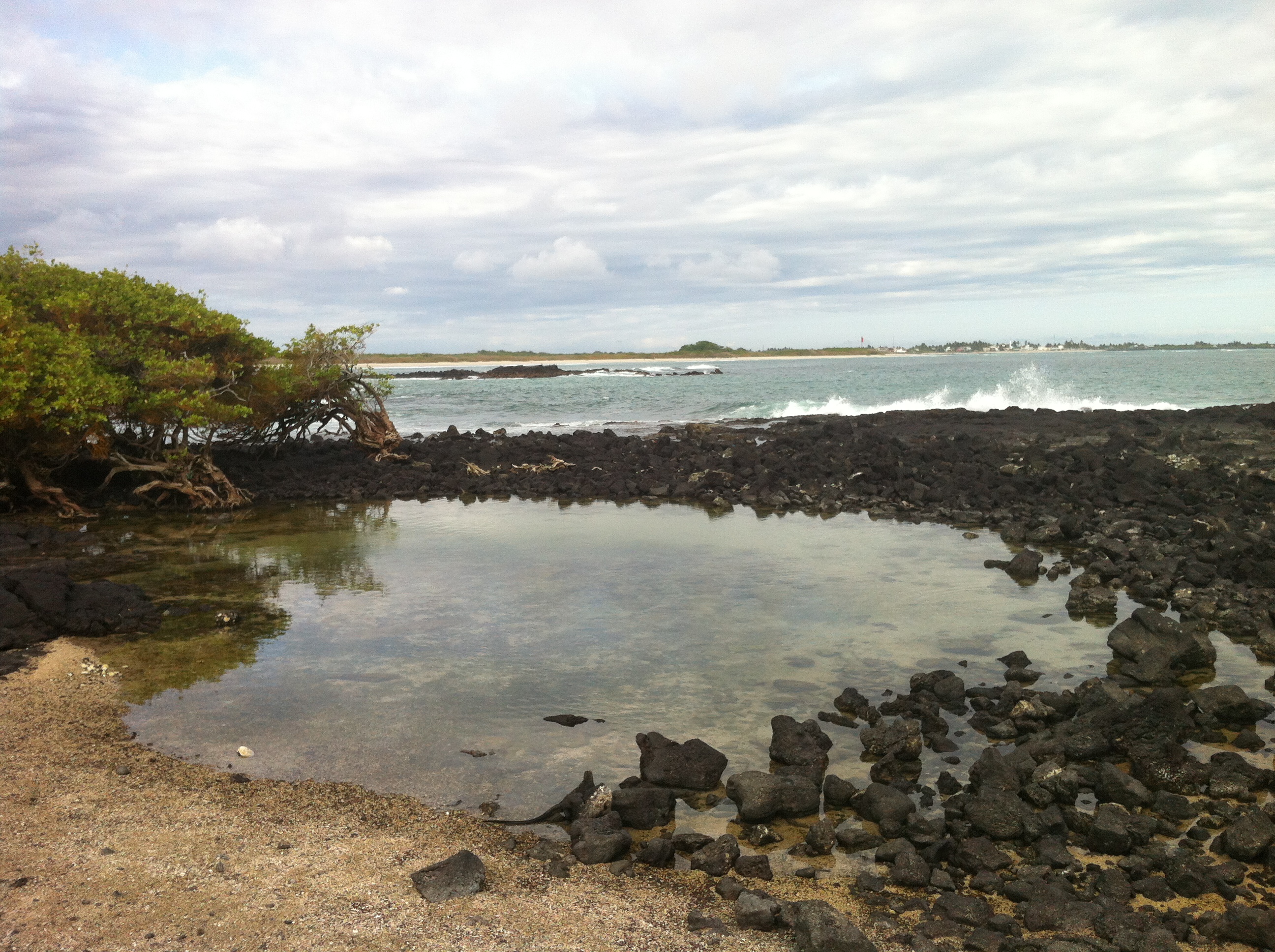
Former President Ibarra of Ecuador used the island of Isabela as a penal colony (1946-1956), where prisoners were forced to do agricultural labor. They had to carry lava rocks from all over the island to construct the walls of their own prison. There are stories that they would cry as they carried the rocks. I was told that bodies are inside the walls from the rocks falling down while they were building them. The saying that accompanies the island’s history is: Los valientes lloran y los cobardes mueren, which means “The brave cry and the cowards die.” After ten years, the prisoners escaped by creating a play for the guards about prisoners escaping. They got the guards drunk, and actually escaped during the play.

Despite the story of escape, it couldn’t feel like a happy ending. My friends and I were talking about how it felt to visit this site of trauma as tourists. What is the role of historians and purpose of preserving places exactly as they were in the past? Is it to empower us with memories that in our normal lives we couldn’t have access to? Who are these memories for? For some people, this type of oppression is not of the past. They don’t need external reminders because the struggle for survival is part of their daily lives. There was conversation in the group about how preserving sites of trauma allows many of us to experience a sense of empathy before moving on to our daily, more privileged lives. This is how the set-up of touring through the site of trauma left us feeling. Continue reading

Arizona Utilities: A Thorn in the Side of Distributed Generation

Nationwide, utilities have been wary of the expansion of residential solar (termed Distributed Generation in the energy industry), as we discussed in a previous post. The contentions between utility executives and DG providers came to head an announcement from Salt River Project.

SolarCity Files Lawsuit Against Salt River Project for Antitrust Violations

SolarCity’s dispute with SRP claims that that new surcharges “sabotaged” customers’ ability to generate their own power.

The crux of SRP’s (a major Arizona utility) new fee is this: all customers who have solar arrays installed after December of 2014 will be assessed a $50 “demand charge,” which will apply regardless of how much or little power the customer’s array produces. Therefore, any new residential solar customer should expect to pay at least $600 per year, in addition to their variable utility costs. SunPower, the solar company for which I work, has determined that the SRP fees have made residential solar non-viable overnight. SolarCity has taken the same position and is now suing the utility for antitrust violations.

Continue reading

What A Certain Change Of Scenery Can Do

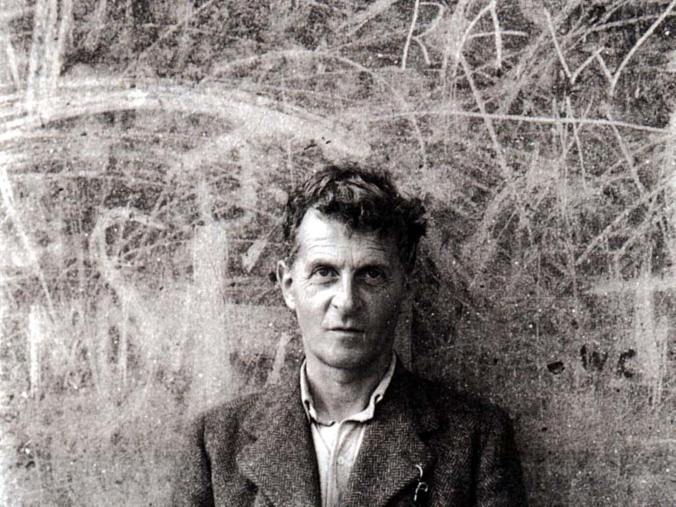
Ludwig Wittgenstein, who knew how to sully a chalkboard with the best of them.

Ludwig Wittgenstein, who knew how to sully a chalkboard with the best of them.

The photo above will make sense below, I hope. Read on. Derek is with us in Kerala for one more week before he moves on to Australia. I am reflecting on his time here, while also currently in conversation with prospective interns for the second half of 2015. And I just received news of Michael, the poet prince of past interns, who is currently on a tug boat in the Atlantic ocean. His experience, since graduating from Amherst College the year after he interned with us, is not typical of anything other than that we have had a very interesting variety of interns who go on to do very diverse, interesting, meaningful things of their own choosing.

These reflections are mixing up with reflections on Ethiopia that I hope to make enough sense of to produce one relevant post, soon. The meaning of our Ethiopia expedition, I already know, will have something to do with the value of perspective, and change of scenery, and leapfrogged expectations.

The pitch for an internship with us is related to those same values and is straightforward, in one sense: practical work experience in sustainable hospitality, social enterprise, or some variation of the two. The trickier part of the pitch is being clear about the value of spark plugs blowing out in the middle of the night before you’ve reached the top of the mountain.  It is not possible to predict what a particular spark plug moment is going to be like in the future, or even that a particular person will be ready for it.

But it is possible to predict that most of us, most of the time, benefit from removing ourselves from our comfort zone. We may have just one zen moment, or a whole string of them, or none at all. And any of those may be just the right thing for us. It is making the decision to put one foot forward in a particular direction, and living with it for as long as it is useful for you, that seems to be the real source of valuable life experience.

So, the photo. It is not necessary to know who this philosopher was, or even that he was a philosopher. Just knowing what follows is enough to appreciate that sometimes a change of scenery is the best way to prepare yourself for the next big thing in your life:

…He revolutionized philosophy twice, fought with shocking bravery in World War I, inspired a host of memoirs by people who knew him only glancingly—and for six years taught elementary school in the mountains of rural Austria. Biographers have tended to find this bizarre. Chapters covering the period after his teaching years, when Wittgenstein returned to philosophy, are usually called something like “Out of the Wilderness.” (That one’s from Ray Monk’s excellent Ludwig Wittgenstein: The Duty of Genius. The next chapter is called “The Second Coming.”) Continue reading

Redefining Recycling

In the early years of this site we highlighted a concept of “the fourth r” – focusing on the restaurants and events planners who support a form of social entreprenuership by donating excess food to local shelters. On an annual basis huge amounts of prepared foods go to waste in all forms of venues, but the classic buffet-style cafeteria is a long-term culprit. But luckily creative solutions have gone hand-in-hand with awareness of the problem. At the time we used the term “recycled” when taking about the food programs. Kudos to the new voices who redefined at as “repurposed.”

Back in 2011 when I was a student at the University of Maryland in College Park I once noticed a massive pile of trash in front of a dining hall. A closer look revealed that it was mostly food — a half-eaten sandwich, a browning apple and what appeared to be the remains of the day’s lunch special.

The heap was gross, but intriguing. Turned out it was a stunt to get students thinking about how much food they throw out each day.

Nowadays, students are coming face to face with their food waste, and its environmental and social impact, a lot more often. They also have more opportunities do something about it. Continue reading

Munnar in 24 hours

The classic 350cc Royal Enfield or “Bullet”

When I arrived in Kerala around 6 weeks ago it would never have occurred to me to drive here in India. Based on my first impression of driving I was overwhelmed just sitting in the passenger seat. But between making new friends and my thirst for experiencing more of this beautiful state, it’s amazing what a mere 45 days can do. But a journey is multi-faceted; it’s not only about where one is going, but how one gets there, and everything in between.

I arrived to Fort Kochi in the late afternoon in search of a Royal Enfield, a classic Indian-made motorcycle that I’ve had a crush on for a while now. The older models are “backwards” to the typical bike, with the gear foot-lever on the right side and the break lever on the left. I was determined to find the newer model where the arrangement is “normal”. After scouring the city and asking every bike rental and all the contacts available to me, it was apparent that there was no chance of finding what I was looking for. With that news I made the decision to go with what was available rather than what I wanted, (a perfect example of the flexibility that India demands) and I paid the Rs. 800, roughly $13 for the rental. I couldn’t believe what I’d just done: My first time driving in India and I’d rented a totally unfamiliar bike from an unfamiliar source with a 6 hour drive ahead of me, at night. My nerves were tingling at the realization!

Luckily, Dilshad, a friend from Marari Pearl who’d been planning everything for us, was with me. We started the drive through Cochin rush hour traffic. Slowly, I began to stretch my motorcycle-memory-muscles, and gradually the drive became more pleasurable. Soon enough, I was flirting with my 350cc beauty and she was smiling back.

Continue reading