Munnar in 24 hours

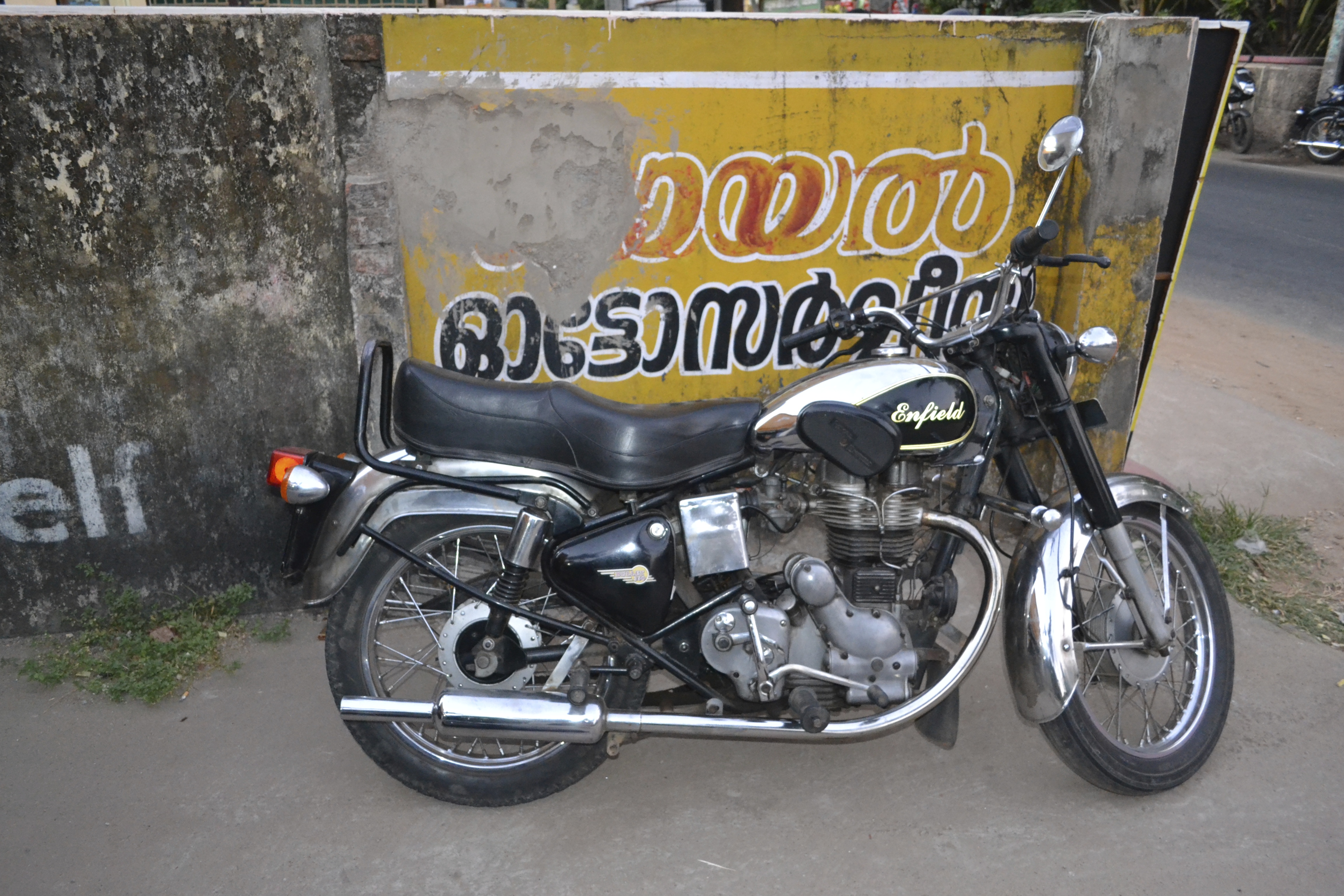
The classic 350cc Royal Enfield or “Bullet”

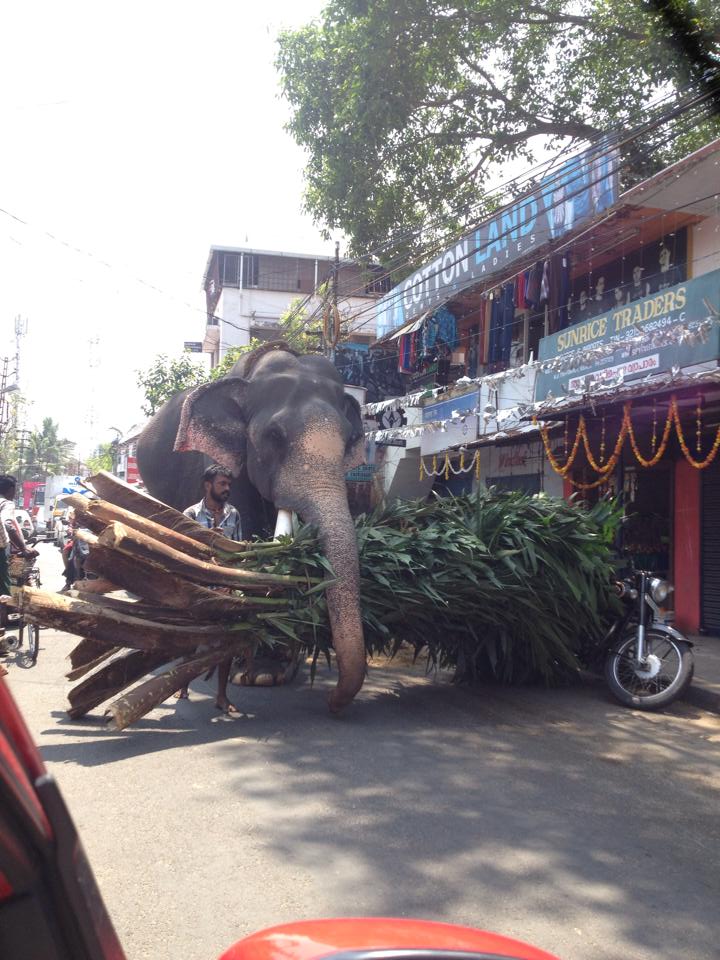
When I arrived in Kerala around 6 weeks ago it would never have occurred to me to drive here in India. Based on my first impression of driving I was overwhelmed just sitting in the passenger seat. But between making new friends and my thirst for experiencing more of this beautiful state, it’s amazing what a mere 45 days can do. But a journey is multi-faceted; it’s not only about where one is going, but how one gets there, and everything in between.

I arrived to Fort Kochi in the late afternoon in search of a Royal Enfield, a classic Indian-made motorcycle that I’ve had a crush on for a while now. The older models are “backwards” to the typical bike, with the gear foot-lever on the right side and the break lever on the left. I was determined to find the newer model where the arrangement is “normal”. After scouring the city and asking every bike rental and all the contacts available to me, it was apparent that there was no chance of finding what I was looking for. With that news I made the decision to go with what was available rather than what I wanted, (a perfect example of the flexibility that India demands) and I paid the Rs. 800, roughly $13 for the rental. I couldn’t believe what I’d just done: My first time driving in India and I’d rented a totally unfamiliar bike from an unfamiliar source with a 6 hour drive ahead of me, at night. My nerves were tingling at the realization!

Luckily, Dilshad, a friend from Marari Pearl who’d been planning everything for us, was with me. We started the drive through Cochin rush hour traffic. Slowly, I began to stretch my motorcycle-memory-muscles, and gradually the drive became more pleasurable. Soon enough, I was flirting with my 350cc beauty and she was smiling back.

Continue reading

Jamaican Golden Swallow Expedition Part Two: Into the Blue Mountains

IMG_2880_zpsyzulvsiy

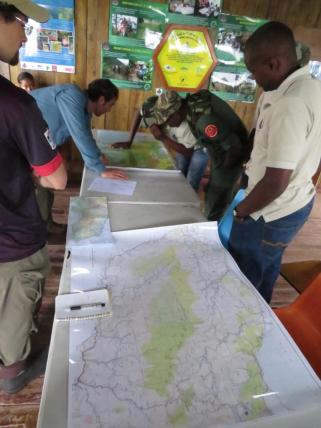
We’re back in Jamaica and now in the second portion of our trip, where we explore the Blue Mountains and John Crow Mountains National Park looking for any signs of the Jamaican Golden Swallow. We arrived at the main visitor center for the park in Holywell yesterday, where we met with park rangers as well as representatives of the Jamaican Conservation and Development Trust, the organization that runs the park. We introduced everyone to our project using an adaptation of the standard slideshow that Justin uses to explain his masters research in Hispaniola to people, and then opened the table for a discussion of the best possible areas to hike and survey.

IMG_2722_zpsvhhlep1v

Map exploration with representatives of the Jamaican Conservation and Development Trust

The park rangers had many helpful suggestions for certain regions that they thought best matched the type of habitat and un-birded nature that we’re looking for, and thanks to their help while poring over our maps we have a much better idea of where to go from here. The national park is simply so massive that any head start we can get on the right places to survey is a great help.

Today, we enjoyed some beautiful weather – blue skies and quite refreshing temperatures comfortably between the wind-chilled -10°F of Ithaca and the muggy 90°F of Cockpit Country. From our short hikes around the park so far we all agree that it’s an amazing area with stunning views and lots of potential for the Golden Swallow.

Continue reading

Words, Landscapes, And Pondering Ethiopia

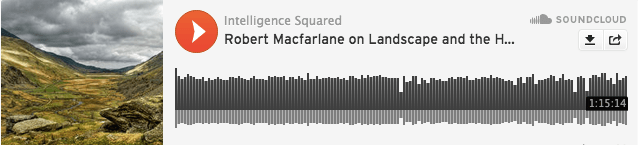
The most illuminating 75 minutes with earbuds on, in a long time or possibly ever (since my history with earbuds is only a few years old), by far, were spent listening to this. If you are a combined “words person” and “nature person”–how else would you have found your way to this blog?–then you will understand.

Ethiopia, from the perspective of our recent expedition which I have barely begun to process with words, was illuminated for me just a bit hearing this man talk about how we describe places and the impact that ecosystems have on us. Ecosystems serve as metaphors, he says. And that prepositions matter a great deal to how we communicate the impact ecoystems have on us, literally and metaphorically.

Ethiopia was an enriching experience, in these senses.  I will write separately on that illumination. For now, a bit more from Robert Macfarlane, the illuminator on nature, through words. After listening to the podcast of his lecture, I had to know who this was, and it brought me here:

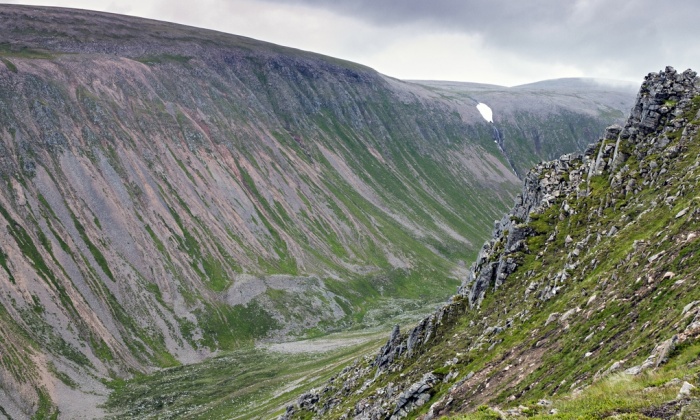
Làirig – ‘a pass in the mountains’ (Gaelic). Photograph: Rosamund Macfarlane

Làirig – ‘a pass in the mountains’ (Gaelic). Photograph: Rosamund Macfarlane

Eight years ago, in the coastal township of Shawbost on the Outer Hebridean island of Lewis, I was given an extraordinary document. It was entitled “Some Lewis Moorland Terms: A Peat Glossary”, and it listed Gaelic words and phrases for aspects of the tawny moorland that fills Lewis’s interior. Reading the glossary, I was amazed by the compressive elegance of its lexis, and its capacity for fine discrimination: a caochan, for instance, is “a slender moor-stream obscured by vegetation such that it is virtually hidden from sight”, while afeadan is “a small stream running from a moorland loch”, and a fèith is “a fine vein-like watercourse running through peat, often dry in the summer”. Other terms were striking for their visual poetry: rionnach maoim means “the shadows cast on the moorland by clouds moving across the sky on a bright and windy day”; èit refers to “the practice of placing quartz stones in streams so that they sparkle in moonlight and thereby attract salmon to them in the late summer and autumn”, and teine biorach is “the flame or will-o’-the-wisp that runs on top of heather when the moor burns during the summer”. Continue reading

Can Weasles Fly?

Photograph: Martin Le-May Twitter;

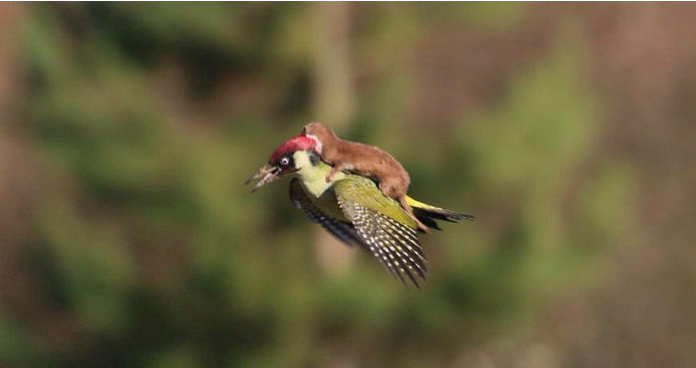
Weasel clutching on the back of a European green woodpecker; Photograph: Martin Le-May Twitter

According to Martin Le-May’s recent photograph that went viral a couple days ago, they can when they’re riding a woodpecker. I remember scrolling through Facebook and seeing the picture, but I didn’t take it seriously. There are many posts on Facebook that shouldn’t be taken seriously. We all have those friends who post everything and anything on the internet and swear it’s true. But how about National Geographic Magazine, is that credible enough? After reading the full article, and the research that went into proving it true, I am now a firm believer that it is, indeed, possible. And you?

Is the Photo Real?

As the viral video of the pig rescuing the baby goat taught us, just because something is cute doesn’t mean it’s real. But is the photo now known on Twitter as #WeaselPecker a fake? Continue reading

Mindo, Ecuador: Tourism without context


10930076_10202710170395184_2084746537557117191_n

An ethereal plant from the ginger family from an orchid garden in Mindo

I just got back from Mindo, Ecuador, a small town with a lot to do. It’s about an hour and a half from Quito and we took a bus through winding roads in a cloud forest with beautiful sights of waterfalls along the way. Upon arriving, we promptly found a hostel and went ziplining within the first hour. After that, we did a “tarzan jump” off a 30 meter platform into the cloud forest. In the afternoon, we went tubing followed by a tour of a chocolate factory. Before dinner that day, I had a full, multi-layered sensory experience of my body in nature. It wasn’t until later, when I saw a mural on a wall, full of paintings of gringos and tourists ziplining that I realized what was missing. Continue reading

Rimbaud In Ethiopia

Michael Tsegaye for The New York Times. The Arthur Rimbaud Cultural Center in Harar.

Michael Tsegaye for The New York Times. The Arthur Rimbaud Cultural Center in Harar.

For those involved in Raxa Collective’s recent scouting expedition in Ethiopia, since Harar was not on the itinerary we must consider Rimbaud’s endorsement during the next expedition:

Where Rimbaud Found Peace in Ethiopia

A Book Our For Our Collective Sympathies

Haunted by her father’s death, Helen Macdonald kept company with a bird of prey. CREDIT PHOTOGRAPH BY CHRISTINA MCLEISH / COURTESY GROVE ATLANTIC

Haunted by her father’s death, Helen Macdonald kept company with a bird of prey. CREDIT PHOTOGRAPH BY CHRISTINA MCLEISH / COURTESY GROVE ATLANTIC

Birds represent something important in our work, and it is not always clear exactly how and why, so every day we try to elaborate it for ourselves as much as for anyone.

If you did not take the moment to watch the video posted yesterday, or read the post from our boys in the Blue Mountains of Jamaica, no matter. Today those are complemented by a book review, of all things, that captures the essence of why we find birds so compelling, and helps us understand why their world has come to play such a vital role in this blog:

…Among those who know their birds of prey, the reputation of the goshawk is half Hamlet, half Lady Macbeth: mad, murderous, unpredictable, the kind of creature whose partners and intimates should brace themselves for trouble. “Spooky, pale-eyed psychopaths,”

Continue reading

Dirt Candy. Say It. Now Resist. It’s Futile.

Whenever we see a story about innovative, excellent food that involves no animals, we check on its suitability for this blog. We are not committed, by any means, to exclusive consumption of vegetarian cuisine but we believe going easy on the meat is a good way to do the green thing. This headline makes me think of the several of us contributing here who spent time in Ithaca, NY USA; and especially makes me think of a certain restaurant, Moosewood by name, that may have been the reference in Little Sprout Grows Up by Jeff Gordiner:

Ben Russell for The New York Times

Dishes at Dirt Candy tend to be composed and clever, but unapologetically crave-inducing. Here, the cabbage hot pot. Ben Russell for The New York Times 

Amanda Cohen Replants Her Vegetable Restaurant Dirt Candy.

Back when the chef Amanda Cohen was running her restaurant, Dirt Candy, out of an East Village nook that felt only slightly more commodious than a gopher hole, she received a call from someone representing a famous man who wanted to eat her food. Although they may hesitate to admit it, most chefs in New York would mount a synchronized swan dive into the iced-over Hudson River if it would help entice celebrities through their front doors. But Dirt Candy, in spite of being one of the most prominent and influential vegetarian establishments in the United States, was so small it almost qualified as a bonsai restaurant. Ms. Cohen had only 18 seats. She didn’t feel right giving a pair of nonfamous customers the cold shoulder. Continue reading

Mega-Meme Coffee Can Still Surprise

We care about coffee. Not only for 10th latitude reasons (geckos and coffee seem to go together), or 1,200 meter reasons (Xandari is perfectly located). Derek gets at it here, but there is more to say and the recent expedition to Ethiopia provides fodder for the next best post on topic. But that will come in due time.  Mainly, we just love coffee and we happen to work in places where it grows well.

So we watch for useful stories about coffee.Below is an excerpt from midway through a great piece from Atlantic‘s website, the most surprisingly interesting written piece on coffee in a long time, and as you have likely noticed coffee stories are a mega-meme these days:

Like many users of the Internet, I had actually already seen “Kill the K-Cup.” The mysteriously anonymous YouTube video was published this January, and spread widely. It spawned a hashtag #KillTheKCup (at the suggestion of the final frames of the video), which is still alive on multiple social-media platforms. Continue reading

Hackers, Lentils & Love In A Flower Bed

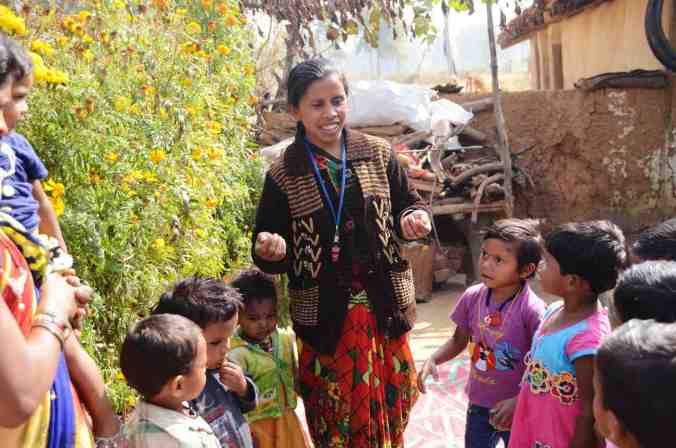
Nursery worker Shivkumari Pate leads children in a learning song. Pate works with the nonprofit Jan Swasthya Sahyog, which developed the first network of community nurseries. Ankita Rao for NPR

Nursery worker Shivkumari Pate leads children in a learning song. Pate works with the nonprofit Jan Swasthya Sahyog, which developed the first network of community nurseries. Ankita Rao for NPR

It would be remarkably easy to fill these pages with stories from India, from various places in Africa and Latin America where we also have projects, that give a strong sense that no matter how quickly solutions get hacked, there are more problems than can possibly be resolved; we spare you those most of the time. Instead, we point to stories like this one (thanks National Public Radio, USA):

…For decades, aid organizations tried to improve the health of moms and babies in Chhattisgarh. Little made a dent. But then a garden of flowers rose up in the state. Continue reading

Ornithology + Engineering = Bird Geek Bliss

Screen Shot 2015-03-03 at 8.09.05 AMThere are natural wonders that help answer important questions, such as those about what climate change has wrought in the distant past; and there are wonders of man’s creation that raise important questions, such as whether man can do anything to reduce his impact on climate change if he, collectively, puts his mind and energy into it.

And then there are those who study natural wonders for reasons that appear more prosaic than climate change and yet punch above their weight class in terms of getting the rest of us motivated to participate in solutions; ornithology and its amateur cousin bird watching are two of Raxa Collective’s favorite choices of what to pay attention to, just because:

ScienceTake | Hawk Cam Captures the Hunt

BY Poh Si Teng and James Gorman

Thanks to a helmet camera, researchers discovered that a goshawk mixes its methods of chasing its prey.

If You Happen To Be In New York

Always downtown in spirit, the Whitney relocates from Madison Avenue to the base of the High Line. CREDIT ILLUSTRATION BY MICHAEL KIRKHAM

Always downtown in spirit, the Whitney relocates from Madison Avenue to the base of the High Line.
CREDIT ILLUSTRATION BY MICHAEL KIRKHAM

If you have not read Justin’s post yet, stop here and go there.  It is much more important. But this is important to our archiving the ever-evolving and improving institutions related to the arts:

On May 1, the Whitney Museum opens in its new location, on Gansevoort Street. The eight-story building, designed by the Italian architect Renzo Piano, has sweeping views of the Hudson River, but they won’t pull focus from the inaugural show, an in-depth look at the permanent collection, which is anchored deep in the American modern and contemporary canon, from Marsden Hartley to Rachel Harrison. Continue reading

You No Sen, We Still Come

– A succinct (yet unabridged and uncensored) commentary on the Cockpit Expedition for Golden Swallows, by Justin Proctor

Why the hell didn’t I bring a change of pants on this trip?!”  That was a reoccurring thought I had almost six or seven times each day while hiking through or around Jamaica’s Cockpit Country.  After 6 months of off-and-on planning, I managed to dream up most of the Plan A, B, C, and D scenarios that would befall us and what gear we would need to combat/survive each of those adventures – yet, that second pair of pants just didn’t seem to hit my radar or the inside of my suitcase back in Ithaca.  [We leave for the second expedition tomorrow and you can bet that I’m currently wearing TWO pairs of pants just to make sure an oversight like that doesn’t repeat itself]

So it turns out that Gary Graves was right when he said it gets hot in those limestone hills.  It also turns out that Susan Koenig was just as right when she told me that you can’t just draw lines over satellite imagery of the Cockpit in a fun loop-de-loop pattern that would be ideal for hiking.  And well, the rest of the people who told us to bring gloves to counteract stinging plants and razor-sharp karst; that even though it rained all the time that there was no potable water to be easily found; and that you won’t understand a damn word that anybody is saying to you – yep, they were all right too.

But life finds a way, and I think that looking back on what I see as a fairly quick, jam-packed assault on the Cockpit, we made some damn good orange juice out of the lemons we were given.  Or maybe that was yam juice with a hint of rusty Nutella flaking off from the inner joints of my pocket knife.  Either way, we gave it our best and left with a good taste in our mouths.

What an absolutely amazing opportunity this has been to connect my graduate thesis work on Hispaniolan Golden Swallows with the Jamaican subspecies that once pocketed the hills and glades of Cockpit Country.  What a twist of good fortune that Gary Graves from the Smithsonian and I would share a common interest and be able to find a way to continue unraveling the mystery that surrounds this bird.  And what total luck that I have had such great friends to accompany me in a search for something that may not even be out there.

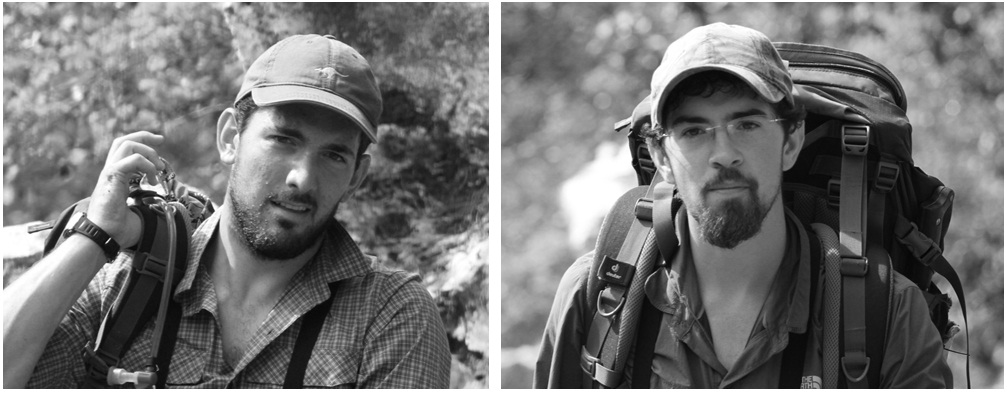
Seth and JZ

THE TROOPS:  (Left)  Seth Inman.  Historian, philosopher, rememberer of all things.  Some say he’s a God amongst men.  Others say he’s just a damn good guy. (Right)  John Zeiger.  Philanthropist, nurturer, rememberer of all things that somehow form a solid counter-argument to facts invented by Justin.  Some say his socks could make Gods weep.  Others say that he just has dirty feet.

Continue reading

Sugar Beets, Wherefore Art Thou?

shutterstock_79736593

A Dutch scientist has created a process for turning sugar beet leaves into protein. Photo credit: Shutterstock

Thanks to Ecowatch, we can consider the long lost love of our better, healthier selves, found:

Sugar Beet Leaves Create Vegan Protein Alternative

Katie Levans

A scientist in the Netherlands is turning plant waste into a potential substitute for environmentally unsustainable proteins like meat, dairy and soy. The Dutch government commissioned Peter Geerdink, a food scientist at TNO, to identify a use for the 3 million tons of beet sugar leaves produced each year and left to rot after the beets themselves are harvested. The result of his work is a vegan gluten-free plant-based protein extracted from the pressed green juice of sugar beet leaves that, according to Geedink, is as versatile as a chicken egg.

Continue reading