

Migle/Flickr
Several of us scouting in Ethiopia recently have been treated to roasted barley as a snack. It has us thinking about super foods, diet, wellness, taste of place, and lots more to ponder in future blog posts; for now, this catches our eye:
The Skinny Carb
A recent study shows that people who simply ate more fiber lost about as much weight as those who went on a complicated diet. Olga Khazan

A friendly caterpillar I found crawling around my tent’s rainfly on one of the last days in Jamaica.
We just finished our first week back in Ithaca, where temperatures have stayed below 0ºF most of the time and therefore we have stayed indoors most of the time. Mostly we’ve been writing up all our observations from the first expedition, digitizing our paper field notes and organizing our photos and videos; playing around with bird data in Excel, eBird, and ArcGIS (a mapping-data program); and looking at maps of the Blue and John Crow mountain ranges.

Photo by Janne Morem/Flickr. Could global warming be overcome by releasing light-reflecting chemicals into the atmosphere? With safety and efficacy at the forefront of debate, David Keith discusses the moral and political quandaries surrounding the science of geoengineering.
We have mentioned geothermal engineering on and related topics on than one occasion, but there is a more radical branch of engineering the thermal options at our disposal, with special regard to the climate change “solutions” debate. Thanks to Harvard Gazette for this informative interview on the topic:
Climate engineering: In from the cold
Keith says new reports will likely boost deeper look at geoengineering concepts
When the National Academy of Sciences (NAS) released a pair of reports this month on geoengineering, which involves deliberately intervening in the climate system to counter global warming, discussion of the controversial topic moved into the mainstream science community. The reports concluded that geoengineering is no silver bullet, and that further research is needed. Continue reading

Nandi Hills, Bangalore
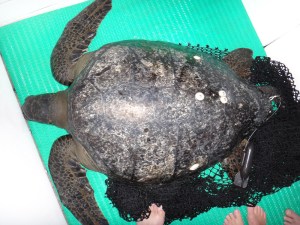
Sanjay the green sea turtle is equipped with satellite tags before being released into the ocean. (Courtesy of PRETOMA)
To this day, scientists have tracked three different turtles that have traveled between two of the most fragile and important island ecosystems: The Galapagos Islands in Ecuador and The Cocos Island in Costa Rica. We are just starting to understand the importance of these breeding grounds and their interconnectivity with turtle migration and reproduction.
One normal migration for turtles, one giant discovery for humankind.
With his 14-day journey from the waters of Costa Rica’s Cocos Island National Park to the Galapagos Marine Reserve in Ecuador, “Sanjay,” an endangered green sea turtle, established the first direct migration link between the two protected areas.
Sanjay was one of three green sea turtles tagged by scientists from the marine conservation groups Turtle Island Restoration Network and PRETOMA during a 10-day research expedition. Using a $4,000 satellite tag, biologists from the organizations were able to map Sanjay’s exact migration.
“It’s truly remarkable. Sanjay knew where he was headed, Continue reading
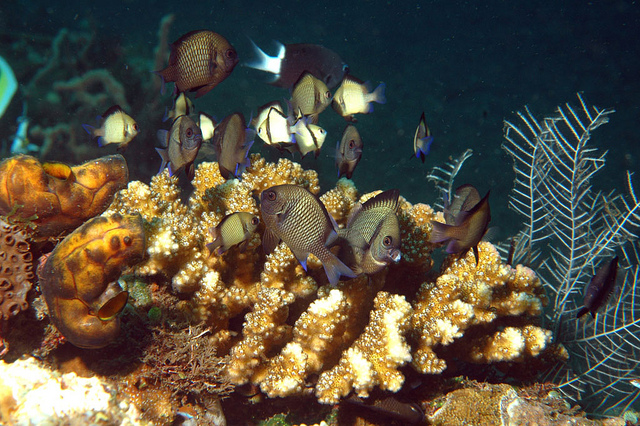
Coral garden in Indonesia. Credit: Global Environment Facility via Flickr (Creative Commons License)
We’re keeping an eye on the health of coral reefs in the Caribbean with the help of RAXA contributor Phil Karp, who has been writing specifically about the impact of invasive lionfish on the marine ecosystem. In this piece for Conservation Magazine, Sarah DeWeerdt discusses the option of taking a more active role in improving the health of corals through acclimatization:
The past several decades have been tough on the world’s coral reefs. Warming waters, ocean acidification, invasive predators, and toxic runoff have hammered these iconic hotspots of underwater biodiversity.
In response, conservationists have developed coral ‘gardens’ where young corals are reared to help rebuild damaged reefs. But some scientists worry that existing restoration strategies won’t match the pace and magnitude of the threats these animals face.
In a paper published February 2 in the Proceedings of the National Academy of Sciences, biologists from the Australian Institute of Marine Science and the Hawaii Institute of Marine biology propose a more radical approach, which they call assisted evolution.

Photo by Sophie Orzechowski

Photo credit: Davebloggs007/Flickr
Many of the RAXA Collective contributors could could easily get behind the motto: “Book Lovers Unite!”; many could be found with their noses in a book from early childhood to the present day. So when we read about these “pop up libraries” in various parts of the country the only response possible was excitement.
Books are an essential part of culture and the LFL concept of sharing creates an even greater community bond worth conserving.
Three years ago, The Los Angeles Times published a feel-good story on the Little Free Library movement. The idea is simple: A book lover puts a box or shelf or crate of books in their front yard. Neighbors browse, take one, and return later with a replacement. A 76-year-old in Sherman Oaks, California, felt that his little library, roughly the size of a dollhouse, “turned strangers into friends and a sometimes-impersonal neighborhood into a community,” the reporter observed. The man knew he was onto something “when a 9-year-old boy knocked on his door one morning to say how much he liked the little library.” He went on to explain, “I met more neighbors in the first three weeks than in the previous 30 years.” Continue reading
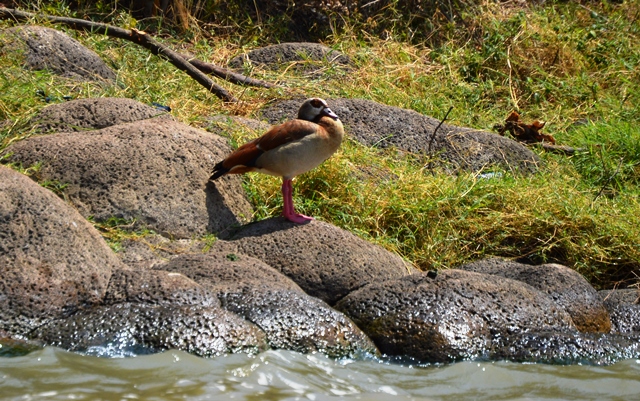
photo credit: Andrew Murphy

Melton
Note: Hey I’m John, a new author with Raxa Collective. I am working as a field technician on an expedition studying the Jamaican Golden Swallow with Justin Proctor and Seth Inman.
While traveling in the Jamaican bush, local people would often pleasantly surprise us. While passing us deep in the bush on a donkey with a pack saddle brimming with yellow yams, a local farmer with a ragged hat and torn work shirt told us about how he just spend the last week in Toronto with his Canadian girlfriend. A group of illegal mahogany loggers, upon seeing our camera equipment, enthusiastically asked us to help them film a music video. But by far, our favorite encounter was with Melton Manuel West.
We met Melton as we set up our camp in the late afternoon near BBQ Bottom Rd. He was walking from his home in the bush to go to the market in nearby Campbells. Like most people we met, he asked us about what we were doing. Intrigued by our project, he declared he would take us to the best places in the bush to see swallows. Then he sat down nearby and just hung out near our camp. At first we were suspicious, and it was a little disconcerting. Yet before he left, we agreed that he could guide us into the hills the next day. Continue reading
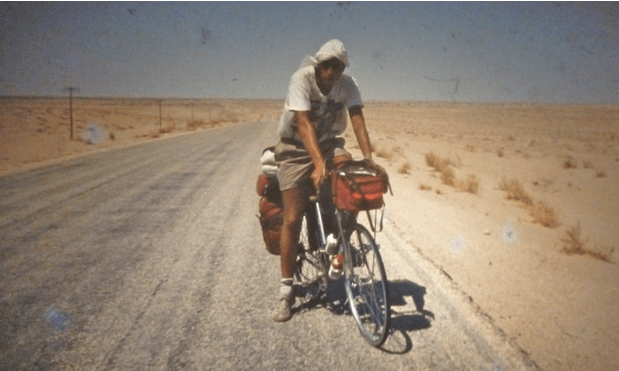
Trevor Ward on a cycle tour in the Sahara. Photograph: Trevor Ward
In the summer of 1988 Crist and I boarded a flight to Missoula, Montana, watching nervously through the window as the luggage that included our bikes and gear was loaded on the plane. We’d been “training” for several months, riding our bikes around New York City, our panniers filled with heavy phone books. Our 900 kilometer journey through the Canadian Rockies from Missoula to Jasper, Alberta – carrying all the requisite gear – was exhilarating, “impossible” and crazy, especially for biking novices such as ourselves. Reading about Trevor Ward’s experiences strikes a chord.
Back in the mid-1980s, I did something that members of my local cycling club found hilarious – I cycled to the Sahara Desert and back.
In their Lycra shorts and replica Peugeot and La Vie Claire racing jerseys, they laughed at my bike which, laden with panniers, tent, cooking stove, sleeping bag, spare tyres and even a small folding deckchair, had been transformed from a sleek blade of steel to something resembling the aftermath of a gas explosion.
My humiliation continued in the remotest parts of Tunisia and Algeria where groups of children would greet my arrival at their villages by throwing lumps of rock at my head. Continue reading
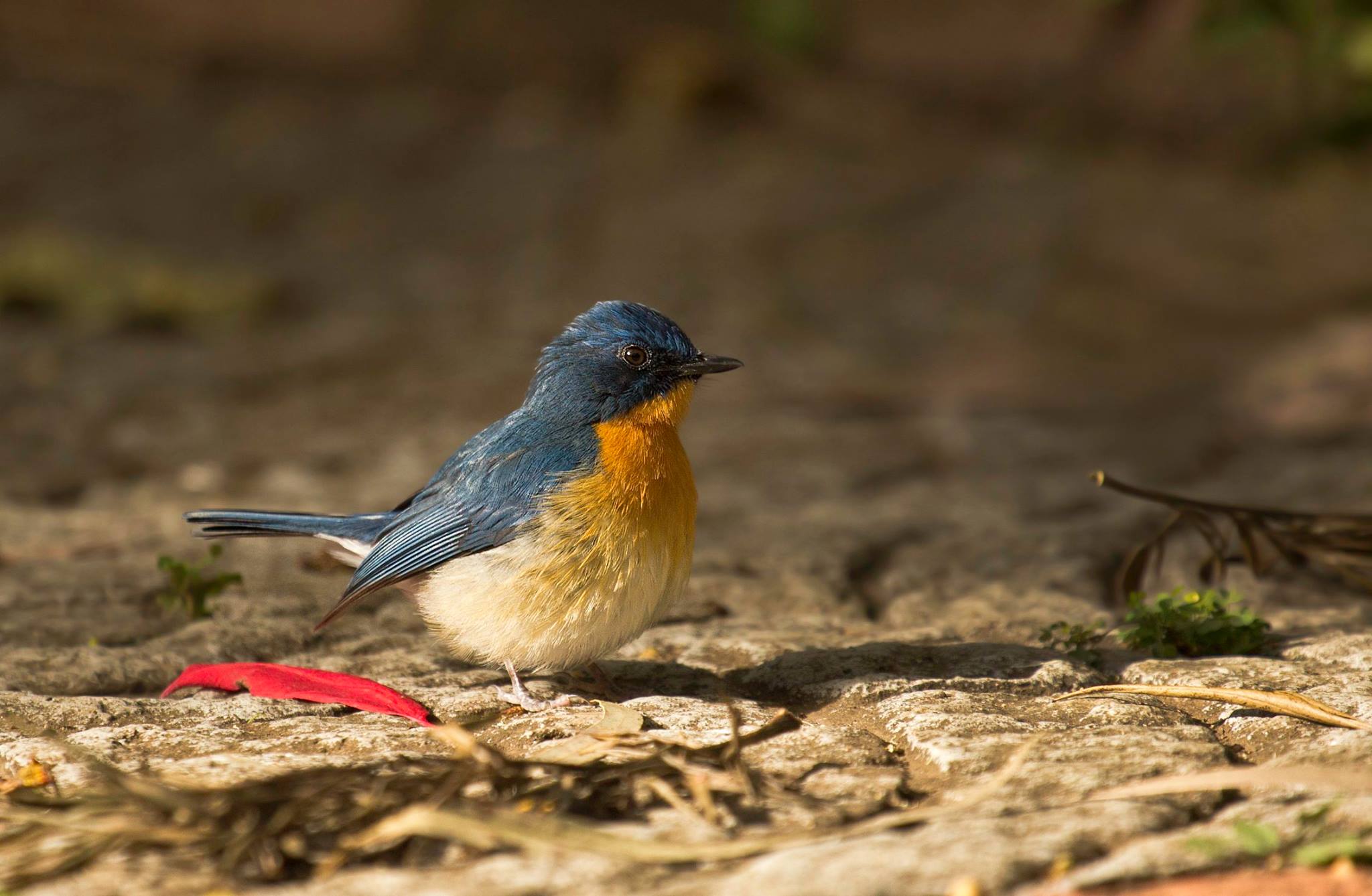
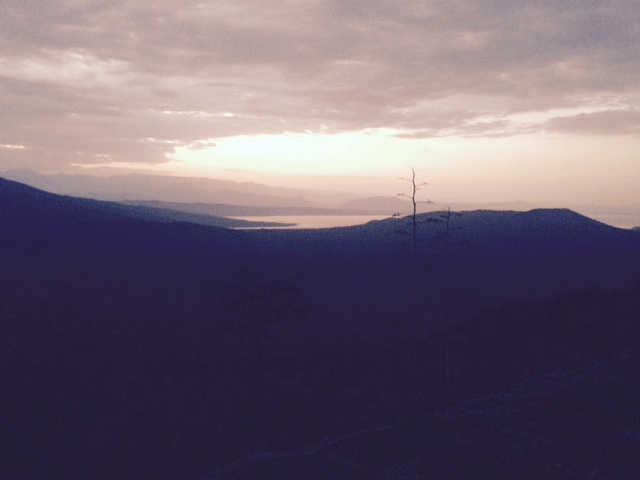
As coincidences go, this one is nothing but typical: Seth’s post about wrapping up the first leg of his scientific expedition in Jamaica is there to be read; this song is coming through the earbuds (do yourself a favor and find it; do the estate of the artist a favor by finding a legal copy to ensure royalties go where they belong); I am looking out over the most fertile lands in Ethiopia, getting ready to board a boat to pass by the hippos and 7-meter long crocodiles that live in the water in the distance (in the photo above) and then climb the hills to where the zebras roam, to see what we can see. And then perfectly, as I glance at the news, a small feature catches my attention:
When people ask where I live and I say Jamaica, it’s almost a given that someone will then randomly say “ah, Bob Marley” in response. It can grate that one man can define an entire country, but this man was that most rare of individuals, an icon, the man who introduced reggae to the world and who drove an equally iconic vehicle, a Series III Land Rover.
I care nothing about cars, but at the moment the story catches my attention I am deeply immersed in the earliest recordings of Bob Marley as preparation for the exploration of Ethiopia. So I read on about this car in Jamaica. And the playlist continues, now Chances Are (again, find it; from when the artist was living in the USA, but this was not released until years later and never got the airplay it deserved) makes me want to know even more about this Land Rover before getting into that boat. Thanks, Bob, for prepping me for the beauty of Ethiopia, and sending me on my way today in good spirits.

View of a foggy Barbecue Bottom valley in Cockpit Country
This past weekend, the first stage of the Smithsonian’s Jamaican Golden Swallow Expedition came to a close. After a full month of exploring Cockpit Country for whatever aerial insectivores we could find, we flew back to Ithaca on the 14th. Now we will process our data and imagery for two weeks while restocking for the second trip.

The bulk of our gear laid out for washing, drying, and sorting on the Windsor Research Centre’s lawn during our last day in Cockpit Country.
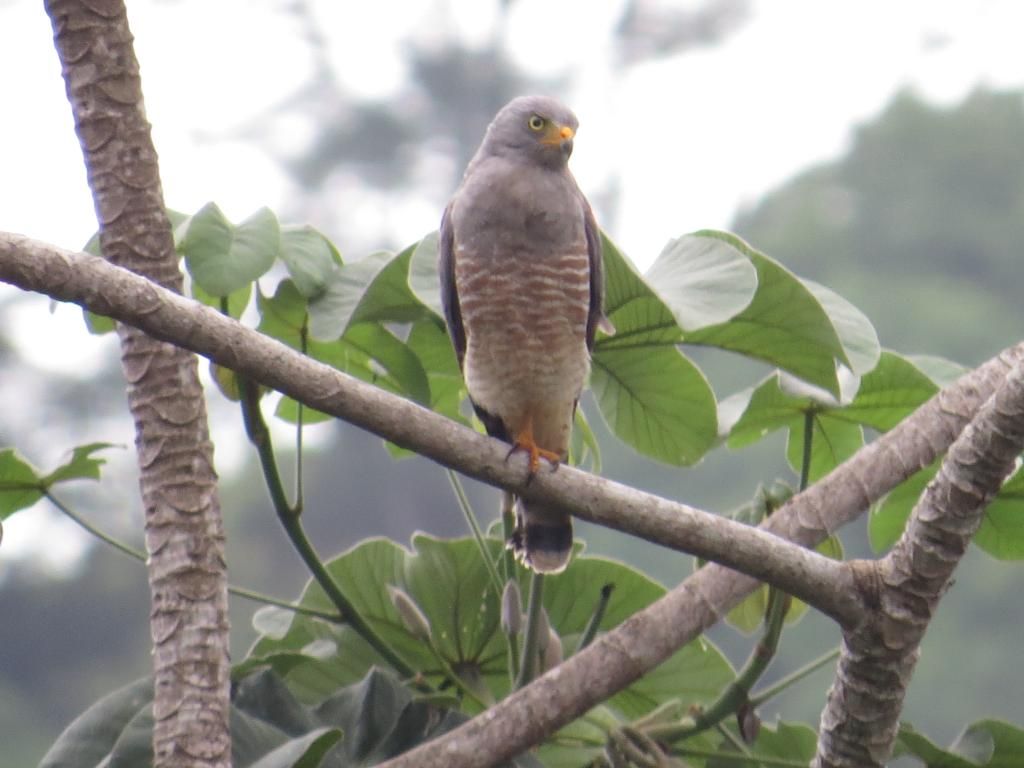

Petrified wood. Las Cruces, New Mexico. PHOTOGRAPH BY SHANE LAVALETTE
Contributors to our blog come and go. We wonder from time to time how the talents we saw in India, or Costa Rica, or elsewhere are being deployed today and will be deployed tomorrow. That is how it is with interns, and volunteers, as much as with other types of team members. Above, this, and a few of the other photographs in this post remind us of Milo’s first year with a camera, and his sense of spontaneity combined with visual acuity; someone who is a natural with that tool, the camera, and is ever on the lookout to tell a story with a snapshot:
Last week, the photographer Shane Lavalette set out on a road trip from Austin, Texas, to Joshua Tree, California. Each day, he posted austere, poetic photographs of the region’s landscapes and people to the New Yorker photo department’s Instagram feed, using the photo-editing app VSCO Cam. Continue reading
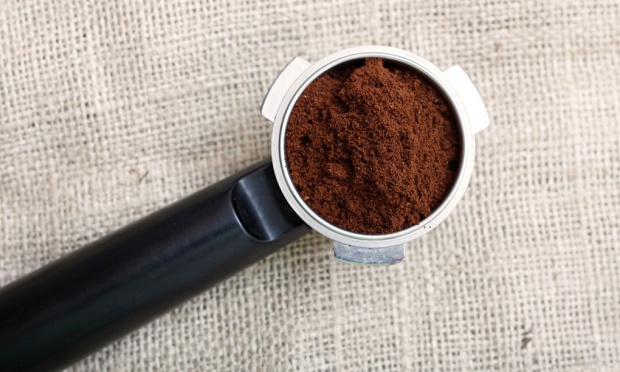
Scientists at the City University of Hong Kong can turn coffee grounds and stale bakery goods into a sugary solution that can be applied to manufacture plastic. Photograph: Alamy
We frequently talk about the recycling on these pages, with an eye toward the developing awareness that the concept is no longer limited to inorganic, static materials. This recent article in the Guardian indicates that plant cellulose based plastic is just the tip of the iceberg in the possible ways to convert the mountains of food waste in many parts of the world into materials with environmental benifits.
Scientists at the City University of Hong Kong have found that they can turn coffee grounds and stale bakery goods – collected from a local Starbucks – into a sugary solution that can be used to manufacture plastic. The food waste was mixed with bacteria and fermented to produce succinic acid, a substance usually made from petrochemicals, that can be found in a range of fibres, fabrics and plastics. Continue reading
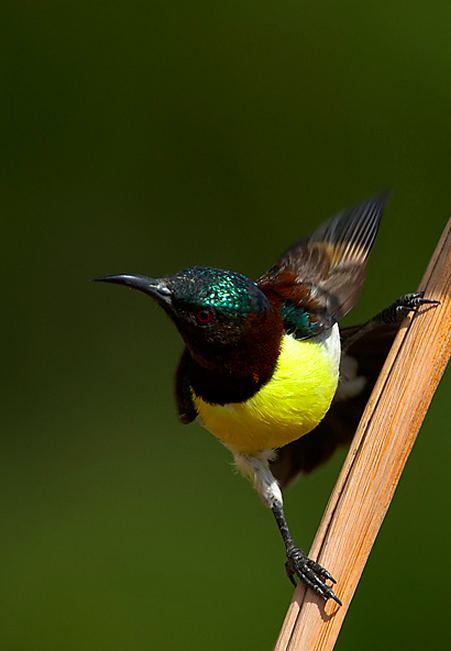
Camp Leopard Rock, Karnataka
 Organikos